Every Moment Mattered – Epilogue
At 01:48 on 13 November, Rear Admiral Daniel J. Callaghan’s relatively small landing support group of thirteen ships engaged the enemy. The Japanese force consisted of two battleships, one light cruiser, and nine destroyers.
Because of bad weather and confused communications, the battle occurred in near-pitch darkness and at almost point-blank range, as the ships of the two sides became intermingled. During the melee, the USS Juneau was struck on the port side by a torpedo launched by Japanese destroyer Amatsukaze, causing a severe list, and necessitating withdrawal.
Before noon on 13 November, Juneau, along with two other cruisers damaged in the battle—Helena and San Francisco—headed toward Espiritu Santo for repairs. Juneau was steaming on one screw, keeping station 800 yards off the starboard quarter of the likewise severely damaged San Francisco. She was down 12 feet by the bow, but able to maintain 13 knots (15 mph, 24 km/h).
During the next few hours, four pharmacists from Juneau had been transferred earlier in the day to the USS San Francisco to operate on its mortally wounded Captain, Cassin Young. Young would not survive the day.
A few minutes after 11:00, two torpedoes were launched from Japanese submarine I-26. These were intended for San Francisco, but both passed ahead of her. One struck Juneau in the same place that had been hit during the battle. There was a great explosion; Juneau broke in two and disappeared in just 20 seconds.
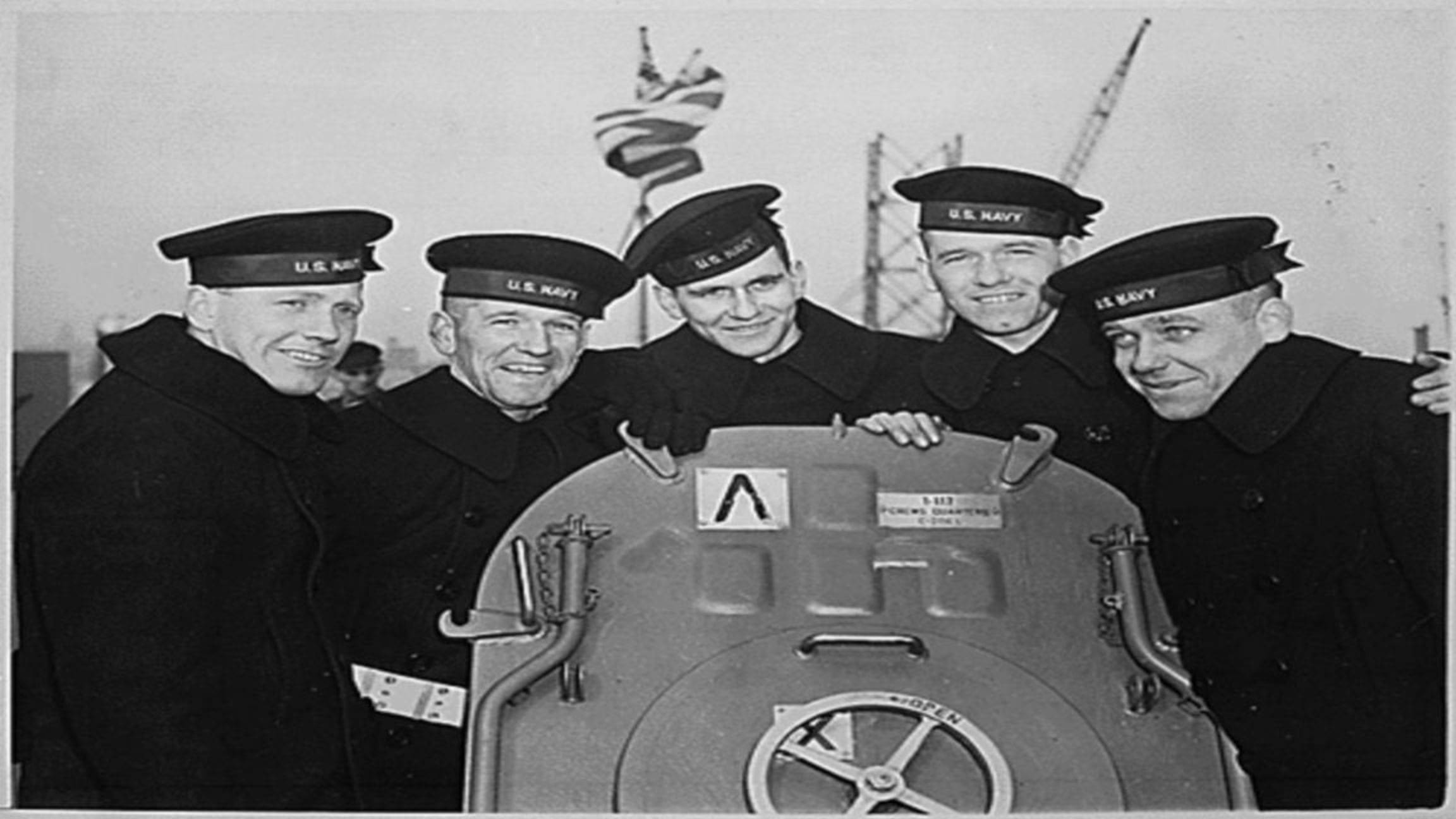
The Sullivan Brothers
Fearing more attacks from I-26, and wrongly assuming from the massive explosion that there were no survivors, Helena and San Francisco departed without attempting to rescue any survivors. In fact, more than 100 sailors had survived the sinking of Juneau. They were left to fend for themselves in the open ocean for eight days before rescue aircraft belatedly arrived. While awaiting rescue, all but 10 died from the elements and shark attacks. Among those lost were the five Sullivan brothers. Two of the brothers apparently survived the sinking, only to die in the water; two presumably went down with the ship. Some reports indicate the fifth brother also survived the sinking but disappeared during the first night when he left a raft and got into the water.
On 20 November 1942, USS Ballard recovered two of the ten survivors. Five more in a raft were rescued by a PBY Seaplane 5 miles away. Three others, including a badly wounded officer, made it to San Cristobal (now Makira) Island, about 55 miles away from the sinking. One of the survivors recovered by Ballard said he had been with one of the Sullivan brothers for several days after the sinking.
Subsequent to the loss, the Navy launched USS The Sullivans honoring the five Sullivan brothers who died in her sinking and the ship itself, respectively.
On 17 March 2018, the wreck of Juneau was located by Paul Allen’s research crew on board RV Petrel at a depth of about 4,200 m (13,800 ft) off the coast of the Solomon Islands.
The San Francisco Survived
The USS San Francisco did not die that night. Even with the loss of her Captain and the Admiral who was so beloved, the men who were on board refused to give up. The strength and resilience of the United States Naval fighting man was on full display from the beginning to the end of the battle.
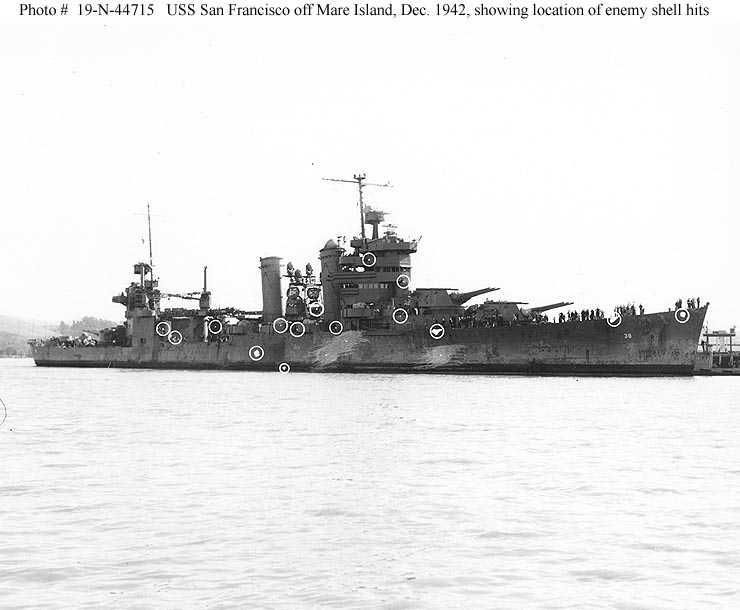
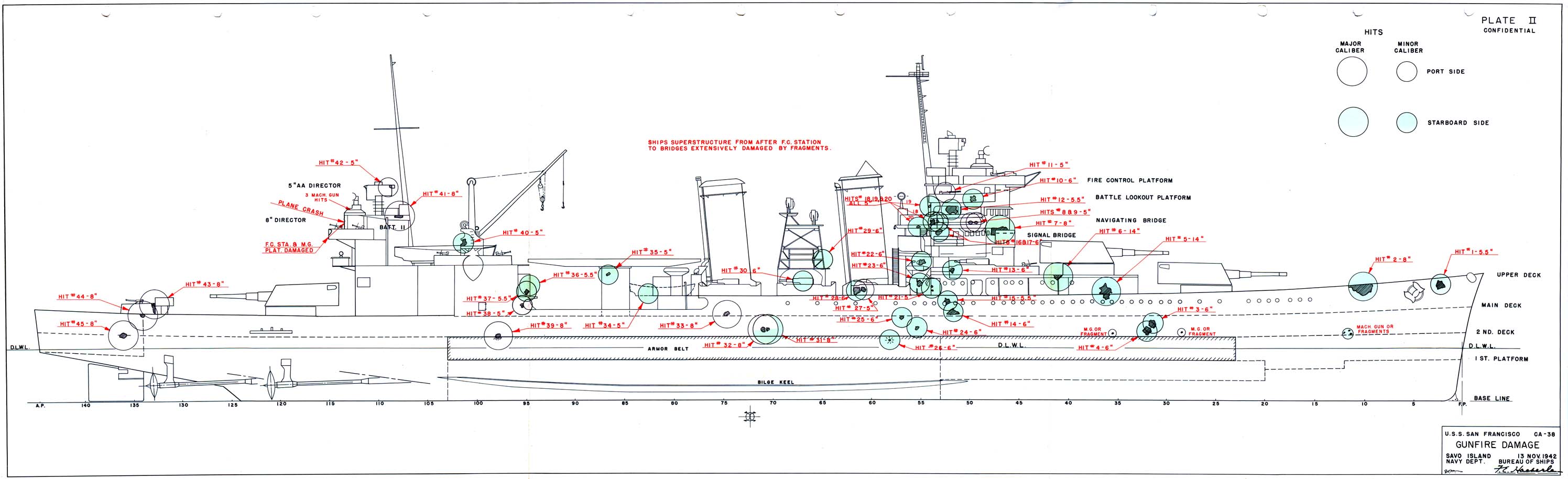
The San Francisco had received fifteen major caliber hits along with numerous others of smaller caliber. The damage knocked out the primary methods for steering and direction, the ship’s ability to fire back and there were twenty five separate fires burning around the ship. The major factor that is credited with saving the ship is that the Japanese had no time to switch from amour piercing ammunition and were using bombardment ammunition. The skilled seamanship of he officer of the deck, Lieutenant Commander Bruce McCandless, who had been knocked out by the first cruiser salvo, allowed the ship to be taken out of danger. Lieutenant Commander Shonland, the senior officer aboard, continued to fight the fires below. These two men would also receive the Medal of Honor for their actions that night.
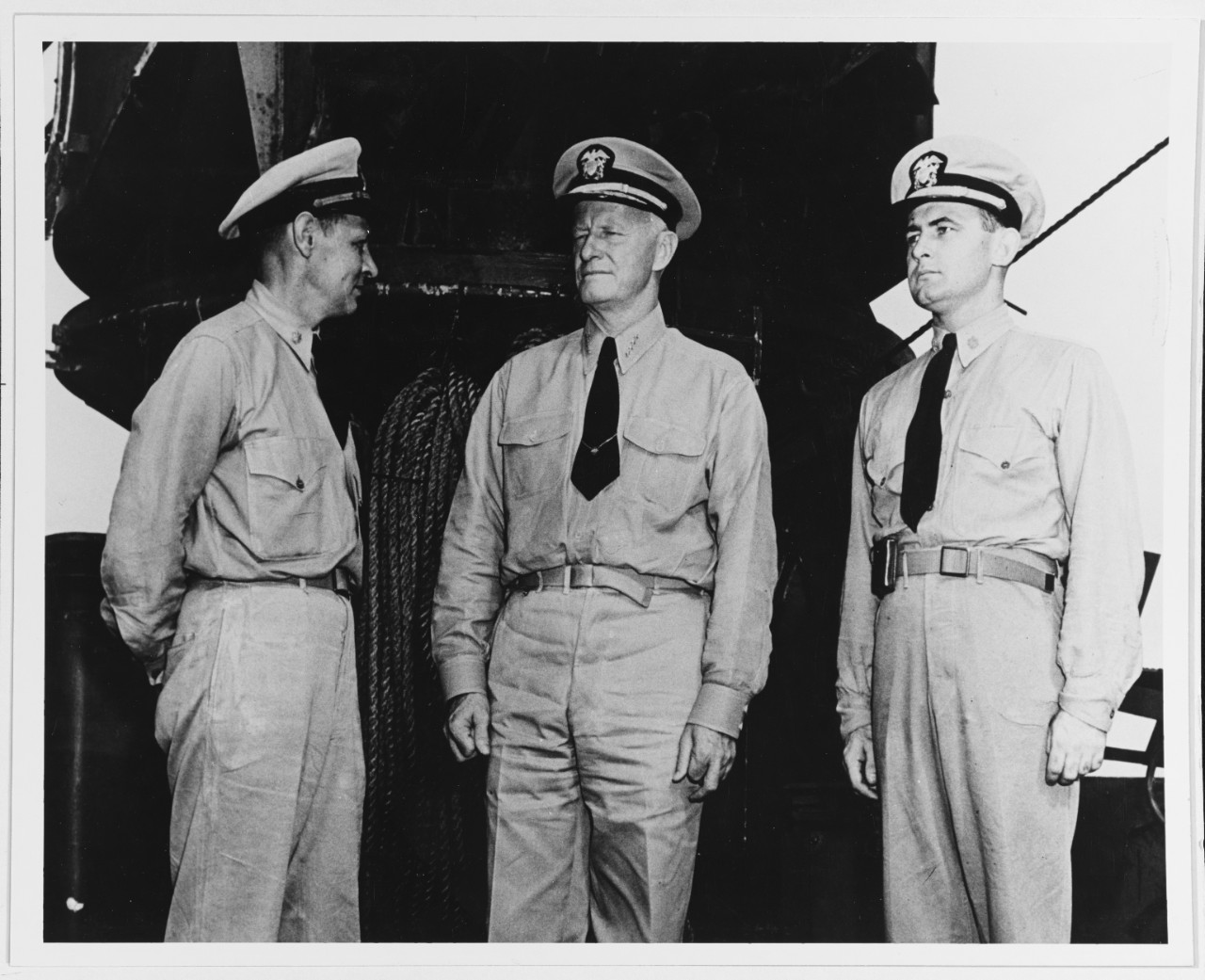
Who killed Cassin Young?
The absolute proof of who or what killed Cassin Young as well as Admiral Callaghan has been studied and disputed for many years.
From the Official Record of the Battle: Note 14 Action in this battle was confused from the start, and the reports are sometimes conflicting as to detail and timing. The divergences have been reconciled as far as possible, but it is probable that inaccuracies persist in the story as here given.
Source: Battle of Guadalcanal 11-15 November, 1942
Including the Enemy Air Attacks of 11 and 12 November; the Cruiser Night Action of 12 – 13 November; the Air Operations of 13, 14, and 15 November; and the Battleship Night Action of 14-15 November
Confidential [declassified]
OFFICE OF NAVAL INTELLIGENCE U.S. NAVY [1943]
“The San Francisco also gave the Hiyei everything she had. The American flagship, however, was struck by the enemy cruiser’s second salvo, and the Hiyei’s third salvo smashed her bridge, killing Admiral Callaghan and mortally wounding Capt. Young and others. Steering and engine control were shifted to Battle II, which was immediately destroyed, and Conn took over.”
https://www.history.navy.mil/research/histories/ship-histories/danfs/s/san-francisco-ii.html
At 0125 on the 13th, the enemy force was discovered about 27,000 yards to the northwest. Rear Adm. Callaghan’s task group maneuvered to intercept. At 0148, San Francisco opened fire on an enemy cruiser 3,700 yards off her starboard beam. At 0151, she trained her guns on a small cruiser or large destroyer 3,300 yards off her starboard bow. An enemy battleship was then sighted and taken under fire, initial range 2,200 yards.
At about 0200, San Francisco trained her guns on a second battleship. At the same time, she became the target of a cruiser off her starboard bow and of a destroyer which had crossed her bow and was passing down her port side. The enemy battleship joined the cruiser and the destroyer in firing on San Francisco whose port 5-inch battery engaged the destroyer but was put out of action except for one mount. The battleship put the starboard 5-inch battery out of commission. San Francisco swung left while her main battery continued to fire on the battleships which, with the cruiser and the destroyer, continued to pound San Francisco. A direct hit on the navigation bridge killed or badly wounded all officers except the communications officer. Steering and engine control were lost and shifted to Battle II. Battle II was out of commission by a direct hit from the port side. Control was again lost.
Control was then established in the conning tower which soon received a hit from the starboard side. Steering and engine control were temporarily lost, then regained. All communications were dead. Soon thereafter, the enemy ceased firing. San Francisco followed suit and withdrew eastward along the north coast of Guadalcanal.
Seventy-seven sailors, including Rear Adm. Callaghan and Capt. Cassin Young, had been killed. One hundred and five had been wounded. Of seven missing, three were subsequently rescued. The ship had taken 45 hits. Structural damage proved extensive, but no hits had been received below the waterline. Twenty-two fires had been started and extinguished.
http://www.researcheratlarge.com/Ships/CA38/GuadalcanalDamageRpt.html
Battle Damage report:
At 0200 SAN FRANCISCO resumed firing at an enemy battleship, probably the second battleship of the center group, on the starboard bow. At about the same time the SAN FRANCISCO was taken under fire by an enemy cruiser on her starboard side and a destroyer which had crossed her bow and was passing down her port side. At this time SAN FRANCISCO was making 17 knots. Shortly after 0200 SAN FRANCISCO was under enemy fire from three directions. The port 5″ battery engaged the destroyer but was put out of action except for gun No. 8. The starboard 5″ battery was put out of action by the first or second salvo which hit from the battleship on the starboard side. At the time of these latter hits SAN FRANCISCO was swinging left. The main battery continued firing on the battleship as long as it could bear.
The sequence of events from this point until the end of the engagement is uncertain. Many hits were received from both the battleship and cruiser on the starboard side and several from the destroyer on the port side before the latter vas put out of action. All officers on the navigation bridge except the communication officer were either killed or badly wounded by these hits. Steering and engine control were lost and were shifted to battle II.
At about 0200, San Francisco trained her guns on Kirishima. At the same time, she became the target of Nagara off her starboard bow and of a destroyer which had crossed her bow and was passing down her port side. The enemy battleship joined the cruiser and the destroyer in firing on San Francisco whose port 5 in (130 mm) battery engaged the destroyer but was put out of action except for one mount. The battleship put the starboard 5 in (130 mm) battery out of commission. San Francisco swung left while her main battery continued to fire on the battleships which, with the cruiser and the destroyer, continued to pound San Francisco. A direct hit on the navigation bridge killed or badly wounded all officers, except for the communications officer, Lieutenant Commander Bruce McCandless.[5] Command fell to the damage control officer, Lieutenant Commander Herbert E. Schonland, but he thought his own efforts were needed to keep the ship “afloat and right-side up”, so he ordered McCandless to stay at the conn. Steering and engine control were lost and shifted to Battle Two. Battle Two was out of commission by a direct hit from the port side. Control was again lost.
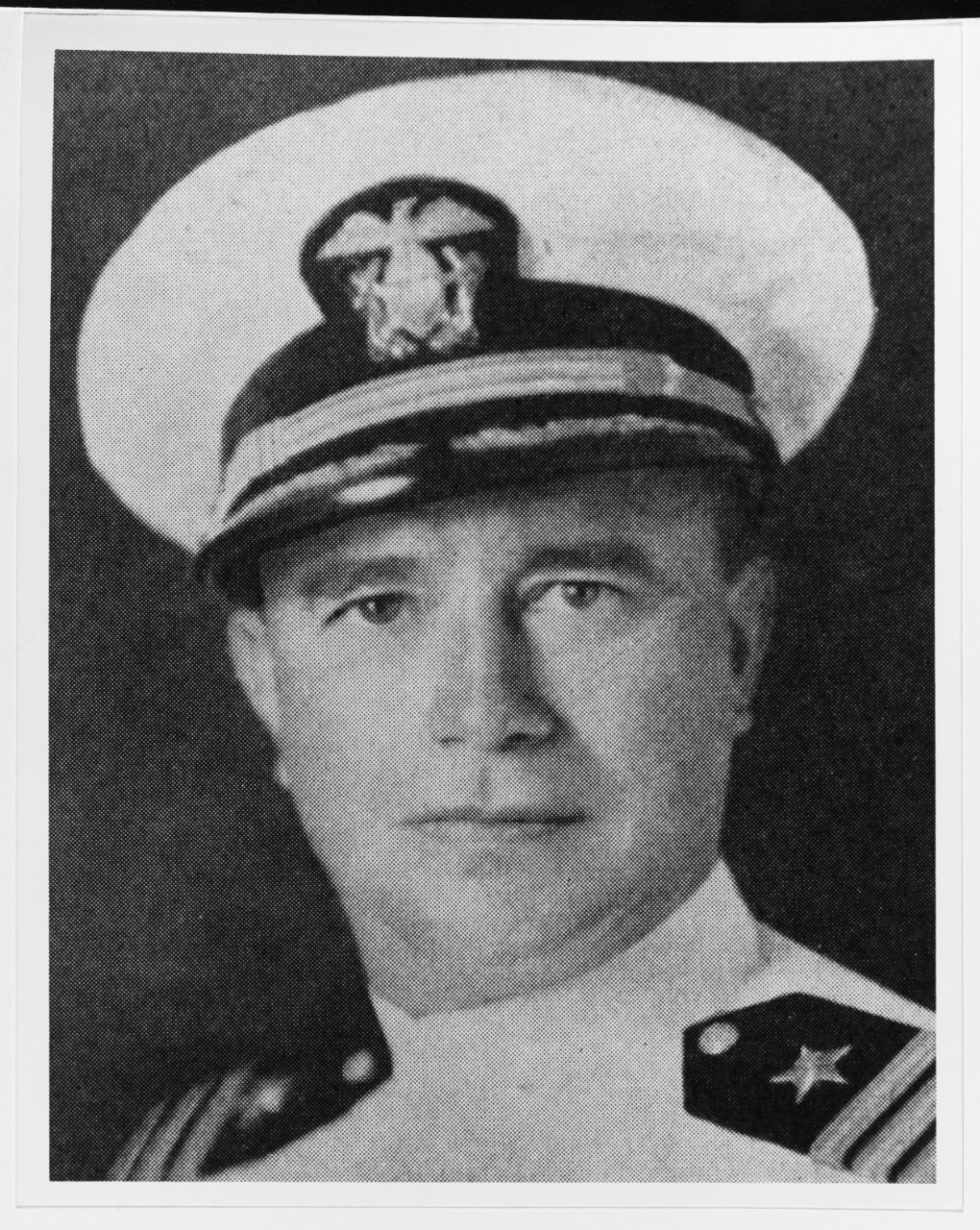
Captain Young was awarded the Navy Cross, posthumously, with the following citation:
“For extraordinary heroism in the line of his profession during action with enemy forces, on which occasion the force to which he was attached engaged at close quarters and defeated a superior enemy force. His daring and determination contributed materially to the victory which prevented the enemy from accomplishing their purposes.”
Captain Young was posthumously awarded the Purple Heart Medal, and was entitled to the ribbon for, and a facsimile of, the Presidential Unit Citation awarded the USS San Francisco with the following citation:
“For outstanding performance in action against enemy Japanese forces off Savo Island in the Solomon Islands on the night of October 11-12 and again in the early morning of November 13, 1942. In the latter engagement, the SAN FRANCISCO silenced and disabled an enemy battleship at a range of 3,000 yards, sank one enemy destroyer and damaged two other enemy vessels. Although heavily damaged by fifteen major caliber hits, she lived to fight again, her survival a distinctive tribute to the valorous spirit of her officers and men.”
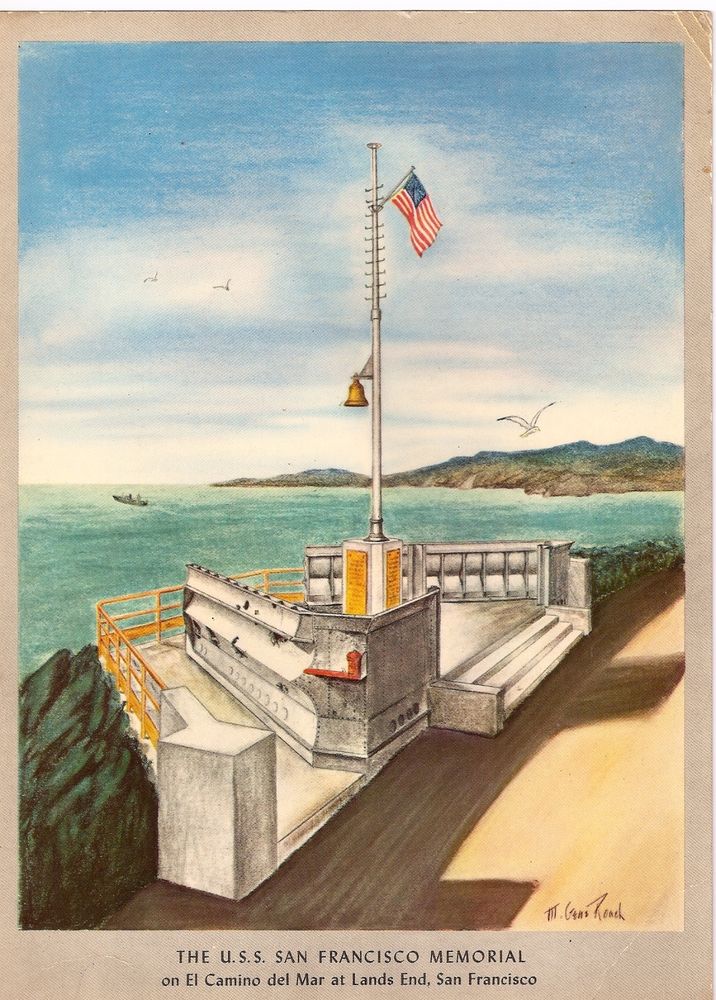
The following story was published in the Detroit Evening times. (Detroit, Mich), 14 Dec. 1942.
(From: Chronicling America: Historic American Newspapers. Lib. of Congress. )https://chroniclingamerica.loc.gov/lccn/sn88063294/1942-12-14/ed-1/seq-12/
The Big Ones First
“THE battered American cruiser San Francisco steamed through the Golden (late Friday morning and thus was HOME. She was home, because it was at the Mare Island Navy Yard on March 3. 1933, that she first dipped her keel in salt water. But it is what she is home FROM that has the American people down to the last man, woman and child voicing praise for her achievements and thankful prayers for her safe arrival.
A few short weeks ago, the San Francisco went into battle under the urging of a fighting slogan that will live in American history, and he repeated by proud Americans a thousand years from now. “We want the big ones first!”
THAT was what Rear Admiral Daniel J. Callaghan, commander of the task force of which the San Francisco was the flagship, said to his men as the battle began. They were his last words, for he died minutes later under the shattering impact of a 14-inch shell against the bridge of his vessel. Capt. Cassin Young of the San Francisco died with him. So did too many other officers and men. But the San Francisco went on in after “the big ones.” and GOT THEM. And there were plenty of “big ones” in the formidable Japanese invasion force the San Francisco met that day.
THE Japs were bent on getting reinforcements to Guadalcanal, and that was a vital job for them, and they are not in the habit of sending a boy to do a man s job. The first enemy to come under the San Francisco’s guns was a heavy cruiser, and she exploded under a salvo of direct hits and slipped under the tropic sea. Next, looming out of the night, came a huge Japanese battleship, and the San Francisco slugged her out of action— to be sent to the bottom by following American destroyers and aircraft. And even while this slugging match was on. the San Francisco found time to train her secondary batteries on an enemy destroyer and blow her out of the water.
ADMIRAL CALLAGHAN’S battle slogan had been MADE GOOD. The ship he loved had tackled the big ones FIRST and GOT THEM He didn’t have to live to see it done. He knew it would be done. And the men and the ship in which he had supreme faith kept faith with him The San Francisco took almost as much as she gave in that blinding 20-minute saga which President Roosevelt has called “one of the great battles of our history”. She received bruising and punishing wounds. She bore the grim evidence of those wounds into her home port of San Francisco.
But she also brought back the most convincing and thrilling story of a victory by a “good little guy” over “guys as big as they come” that American fighting men have ever enacted. It is the story of David and Goliath all over again. Goliath was a “big guy” too. The Bible tells us ‘his height was six cubits and a span.” He wore a brass helmet and a coat of mail, and had brass plates on his legs and shoulders. He carried a spear that “was like a weavers beam, and his shield was so big a companion carried it for him until he was ready to fight. And David was a “little guy.” He was so small Goliath mocked him. He had neither armor nor sword, but only five smooth stones, a shepherd’s bag and a sling. But he pitched into the big Philistine and slew him, whereupon all the other Philistines fled.
WHICH is just what the surviving Japs did. When the San Francisco got her big ones not merely first but GOOD. This is a wonderful story the San Francisco has brought to us Americans are wonderfully proud of her deeply grateful to her She and her brave men personify the American spirit in this war the spirit with which it being fought and will be won. The spirit which Dan Callaghan expressed best when he said “We want the big ones FIRST!”
When I started this project, I often wondered why a Medal of Honor Awardee that had also received the Silver Star (posthumously) had never really been recognized the way I would have expected.
There are a number of factors. The more famous commander (Callaghan) who was a favorite of President Roosevelt probably had some influence. But there were so many heroes and heroic actions going on at the time of his death, perhaps he just got pushed aside. That is a sad thing for a Navy man who believes in the words honor, courage and leadership.
The sequence of events that led up to the death of Cassin Young were all contributors to his passing. He had spent his entire lifetime preparing for this moment. His actions at Pearl Harbor surely saved his ship and the largest share of his crew. His contribution in this epic battle surely saved the lives of the embattle marines on Guadalcanal. The Japanese were never able to completely eradicate those brave warriors and their leaders forever lost their attitude that the American’s were not capable of fighting, even in the face of overwhelming odds. But in the end, the circumstances involving his death probably made his sacrifice inevitable. His entire lifetime is absolute proof that in any man’s life, every moment matters.

 theleansubmariner
Amazing battle. Courageous crews.
Enjoyed the entire series. Perhaps at some future date you might tie in an article on his name sake (USS Cassin Young DD-793), which, not surprisingly, served at the end of the war (and later) with distinction.
ICFTBMT1(SS) Maxey, USN (retired)
My original plan was to publish the book, but time and health are taking their toll. Part of the book tour would have included more about the destroyer. The destroyer’s story is pretty interesting considering that she was in service along with the USS Callaghan. Callaghan, like her namesake, did not fare so well in the war