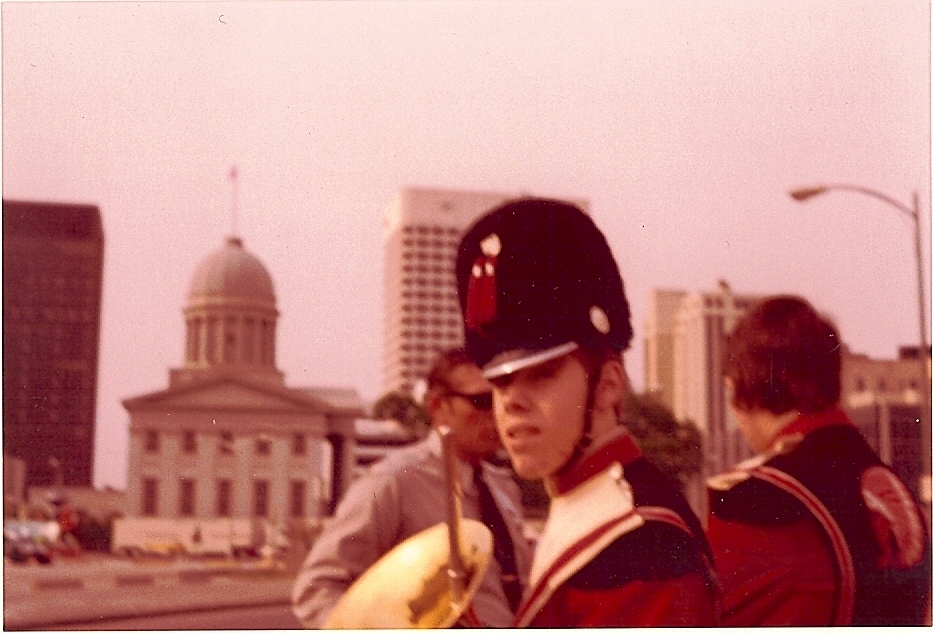
Before I joined the navy in 1972, my high school band was invited to participate in a parade in Norfolk Virginia.
Part of the trip included a trip to the Norfolk naval base. I will readily admit that most of the trip was focused on social events and spending time with the girl I was determined to marry when I got out of high school.
But we did get to tour the naval air station and later the actual naval station where a large number of ships were tied up. I’m fairly certain that seeing all of that hardware helped me to make a decision to sign up and set a new course for my life. There is a place on the base called the D&S piers. (To the untrained reader, that stands for Destroyers and Submarines). There were not that many submarines in the “S” part of the piers but there were a lot of destroyers. In 1972, the ones we saw would have been pretty common for their day. All were a mix of missile and gun carrying ships.
A few months later, I began my training on being a sailor and was given a book called the Blue Jackets Manual.
I’ve written about this book a number of times since I collect them. But my version would have been the nineteenth edition which was focused on preparing the modern day sailor for a mix of old and new challenges.
The old challenges would be a blend of understanding military requirements for a new sailor including first aid, damage control, seamanship and so on.
The new challenges would be in identifying the latest technologies that were to be found on both surface and submarine warfare units. We had classes and films on how to fight a ship and in many cases, the media was focused on what would have been the most common type of ship afloat: the Destroyer.
In 1972, as today, the destroyer or some variant of what we classify as a destroyer was the largest group of ships the navy had.
So, it would only be natural that most of the films and many of the training aides were built around that type of ship. We did see other types over the course of boot camp during damage control training, but I felt like I had been exposed to my fair share of fast-moving ships with a legendary history.
In the “history” part of our training, we learned about the early development of that type of ship and the importance they played in the great wars of the twentieth century. The need for fast ships to escort convoys during the darkest days of both wars was crucial. The epic battles of the War in the Pacific were also emphasized. The fact that a handful of destroyers and escort carriers were able to turn back a mighty Japanese battle group that included some of the powerful ships the IJN had left will forever be immortalized in the annals of naval warfare.
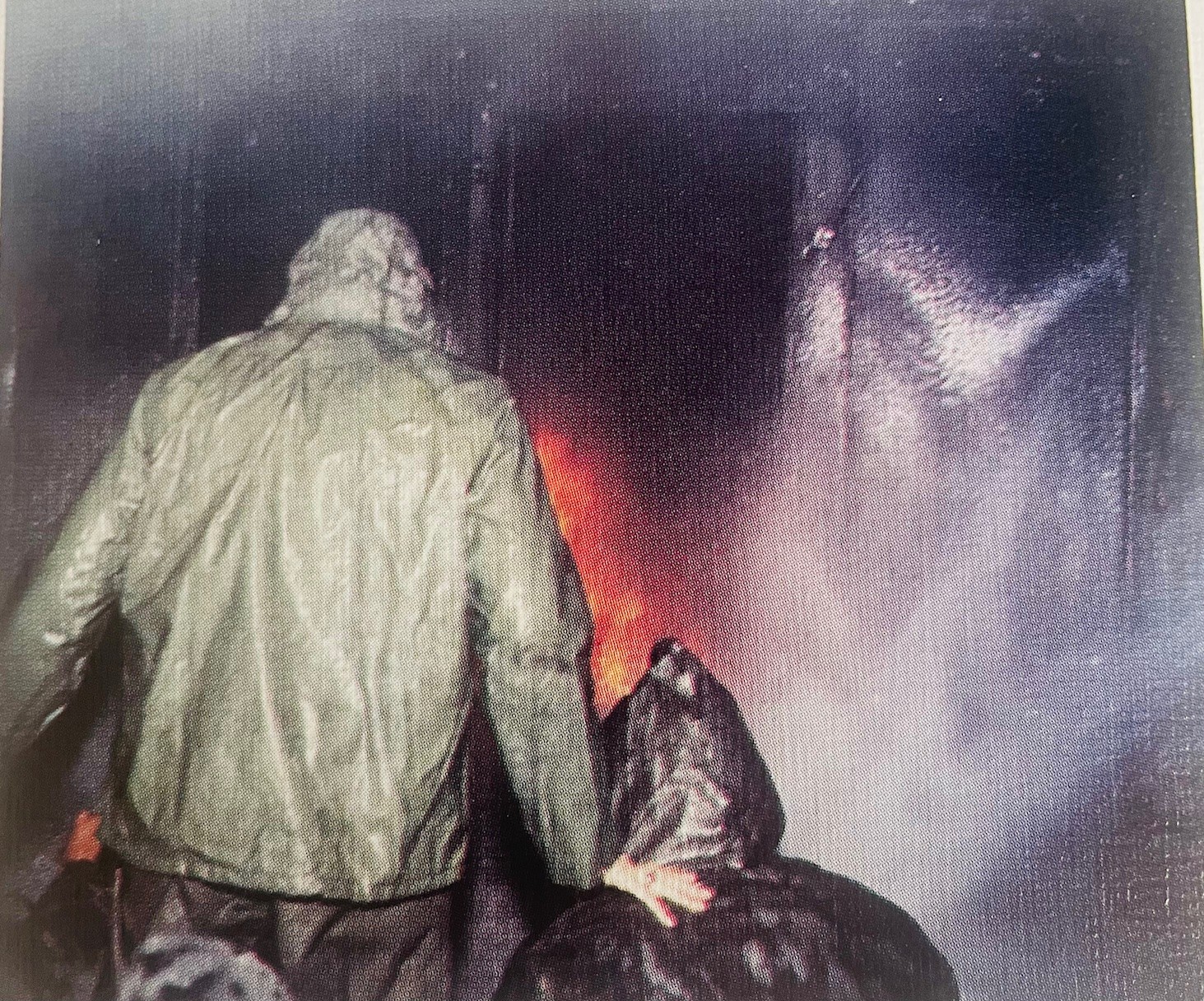
In damage control raining, we learned about the offensive and defensive capabilities of those ships as they combatted every manner of warfare that was potential. Missiles from over the horizon and NBC (nuclear, biological and chemical) warfare each required a special type of response and each response needed to be fast and effective. The lessons were both sobering and effective. By the time we actually got to put on out fire-fighting gear and enter the mock destroyer, we felt we were ready. And of course we were not on the first two rounds. The instructors made sure of that. In later years when I became the trainer, I would remember many of those lessons.
Of course, my path after initial training would take me to submarines.
However, my first duty station was in Pearl Harbor and Pearl was home to a great many ships that were still participating in the Vietnam War. You could tell the ones who had been on station since they were not the sleek and polished ships I remember seeing just a few years earlier in Norfolk. The sea had taken a toll on many of the ships and the sounds of paint chipping tools filled the harbor well into the evening.
The destroyers of my generation were going through somewhat of an identity crisis. I can’t really tell you all of the name and configurations. In the second world war, there were DD’s, DE’s, DM’s, FFG’s, FF, and on and on. Each type had a special purpose and what was really confusing was that some that once were destroyers were reclassified as cruisers.
I’m not sure I could pass an identification class now. I would probably have to start from scratch and hope that the navy board didn’t change them again until after I was finished.
This article from 65 years ago includes some great information about how the destroyer has consistently maintained its place in modern naval history. If you know the legends and stories around Arleigh Burke, you will appreciate this snapshot in Cold War history.
Montgomery County sentinel (Rockville, Md.), July 15, 1961, (SATURDAY ISSUE)
Navy Believes Destroyers Our Best Defense Against Soviet Submarine Threat
(EDITOR’S NOTE: For many years virtually since the end of World War II the United States has been engaged in a “cold war” which has threatened several times to erupt into a “hot war.” One of the biggest threats is the Russian submarine. Day and night, America’s “cop on the beat” the destroyer ls on patrol to defend against sneak attack or open assault in the event of a clearly declared war. This is the story of that relentless vigilance.)
By Edward V. McCarthy NEW YORK (UPI) U.S.
Navy destroyermen quote the frightening statistic that when Adolph Hitler started World War II, he had only 57 submarines and that, at this very moment, Russia has more than 400 active undersea boats.
And, as recently as March 8, Admiral Arleigh Burke, chief of naval operations, told the House Armed Services Committee:
“The total power of the Soviet submarine force is increasing.” The admiral added the grim warning that “the Soviets now have in operation a number of submarines believed to be capable of launching ballistic missiles, although, as far as is known, none of these are nuclear powered.”
“It is almost certain that the Soviet Union is actively engaged in a nuclear submarine construction program,” Burke stated.
The U.S. Navy believes one of the big answers to the Soviet submarine threat is the one-two punch which is packed in task forces comprised of one aircraft carrier and from six to eight high-speed destroyers equipped with fantastic new weapons and tracking devices.
Some of these devices still are top secret, but others can be discussed and they bade ill for enemy submarines trying to penetrate our coastal patrols in the Atlantic and Pacific oceans.
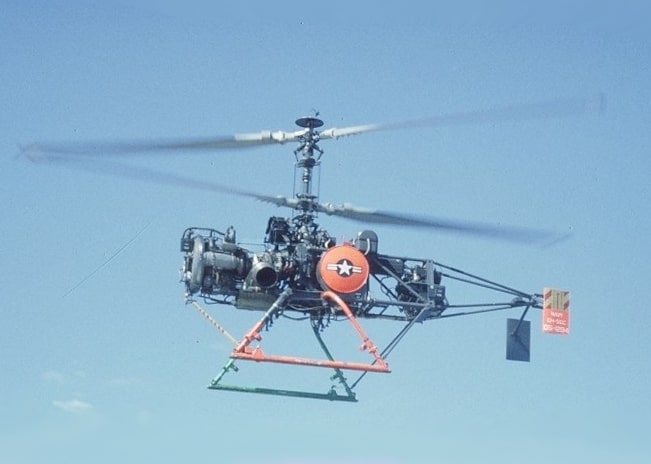
Take, for instance, a neat little gadget which soon will be operational which goes under the name “DASH” short for drone anti-submarine helicopter. This helicopter is unmanned and is controlled by radio from the destroyer which carries it In a hypothetical case, the destroyer, using electronic devices, locates an enemy submarine some distance away. Instead of wheeling about and racing for the submarine, which would have been done in the old days when depth charges were fired directly over a sub, the destroyer can Innocently continue its course away from the undersea boat.
But the DASH is launched in the direction of the submarine. When it reaches the area where the submarine is believed to be, it fires a torpedo.
This is no ordinary torpedo. It doesn’t have to be aimed directly at the sub. If it lands anywhere reasonably near it, the torpedo has devices which guide it right to the submarine, blasting the unsuspecting occupants still listening to the destroyer moving away from the area.
DASH also can carry, in place of the torpedo, a nuclear depth charge. The unmanned helicopter is a particular joy to the navy simply because it does not have to have a pilot.
The United States has no Kamikaze pilots. Even in all-out war, we want every assurance our fighting men have a chance for survival. With a manned helicopter, operations in bad weather are extremely hazardous at best.
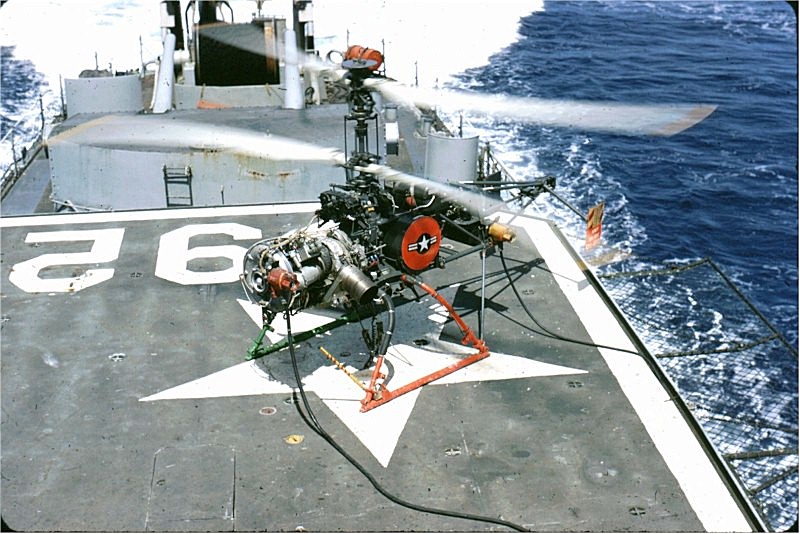
Flying one to the submarine contact, firing a torpedo and then landing on the home destroyer would be rough.
With the drone, if conditions are such that the helicopter cannot be brought back to the destroyer and safely landed it is expendable without loss of American life.
This science-fiction way of knocking out the enemy is a long way from the first American destroyer-types, which, in 1864, were 30-foot-long steam launches equipped with spar torpedoes in their bows, sent out against Confederate iron clads.
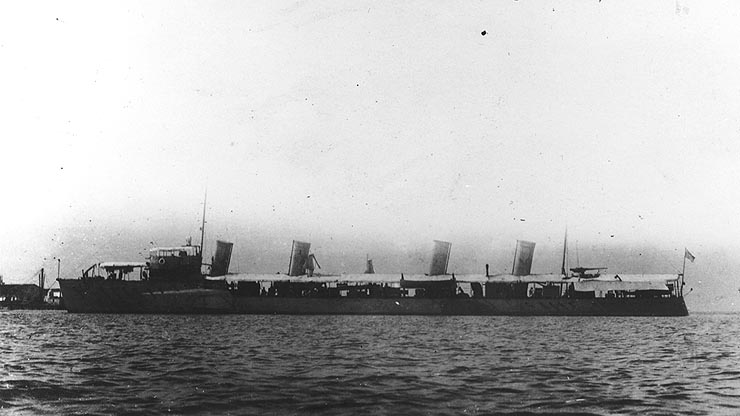
The first real destroyer, as such, was the U.S.S. Bainbridge (DD-1), launched in 1901.
This vessel was a 420-ton ship which carried torpedo tubes, 3-inch guns and had a speed of 28 knots.
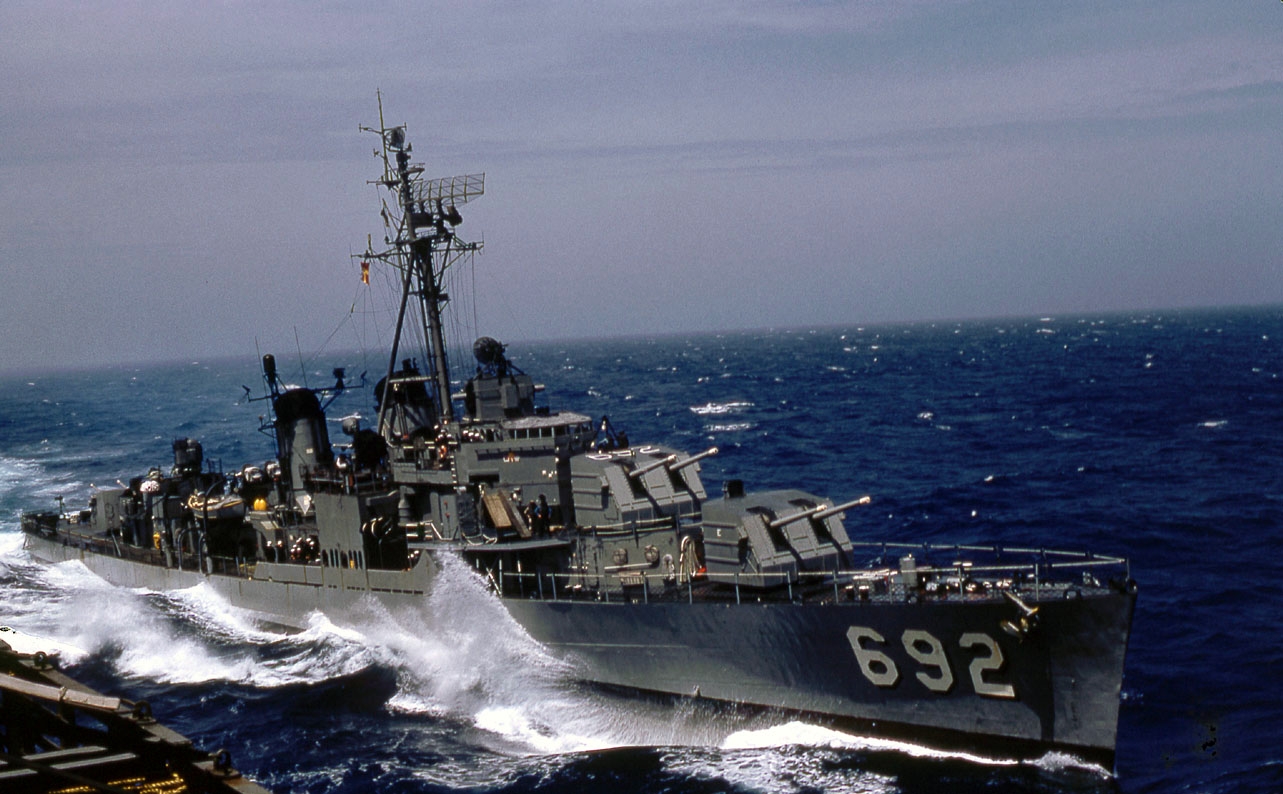
Today, destroyers of the Forrest Sherman class are 2,650 tons with a speed of “over” 30 knots.
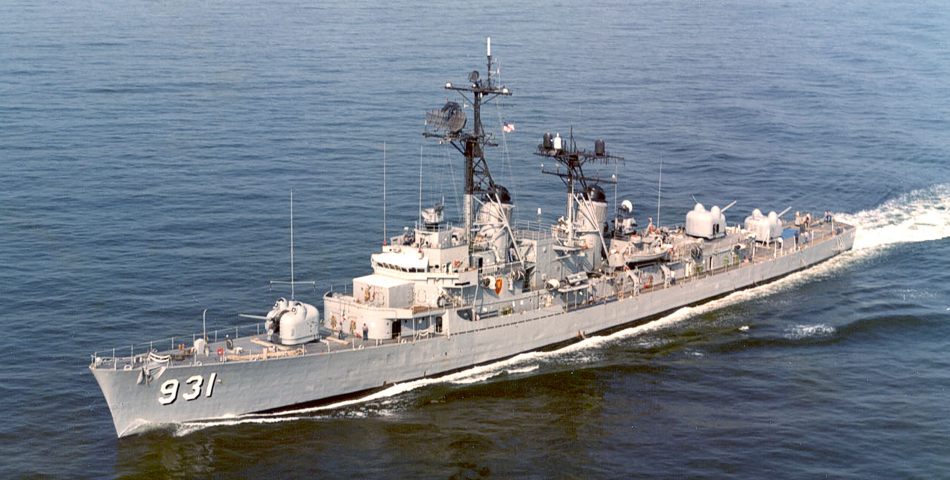
Their armament includes one automatic rapid-fire 5-inch dual purpose gun mount forward and two aft, along with several automatic 3-inch anti-aircraft guns; anti-surface and anti-submarine torpedoes; hedgehogs; depth charges; long-range radar and sonar equipment; and combat information centers crammed with electronic gear.
So much attention has been focused in recent years on nuclear weapons, inter-continental ballistic missiles, air-to-air missiles, etc., that the old “tin-can” as a destroyer is known to sailors is virtually forgotten or Ignored by the general public.
The tin-can, so-called because of its light armor, hasn’t been forgotten by the Navy, however. Burke told the armed services committee:
“The planned active fleet of 817 ships on June 30, 1961, will include 381 warships, 232 combatants and 204 auxiliaries. The warships include 14 attack carriers, nine anti-submarine carriers, 14 cruisers, one command ship, 225 destroyers, five fleet ballistic missile submarines and 112 other submarines.”
As can be seen, the destroyers outnumber all other warships in our navy. Aside from the daily function of ferreting out and keeping enemy submarines away from our Atlantic and Pacific shores, the destroyer squadrons have another key role, one which would be activated in time of war.
Fleet Admiral Chester Nimitz pretty well summed up the thinking in 1948 when he said “it is the function of the Navy to carry the war to the enemy so that it will not be fought on United States soil.”
To do this means convoying men, material and arms somewhere else.
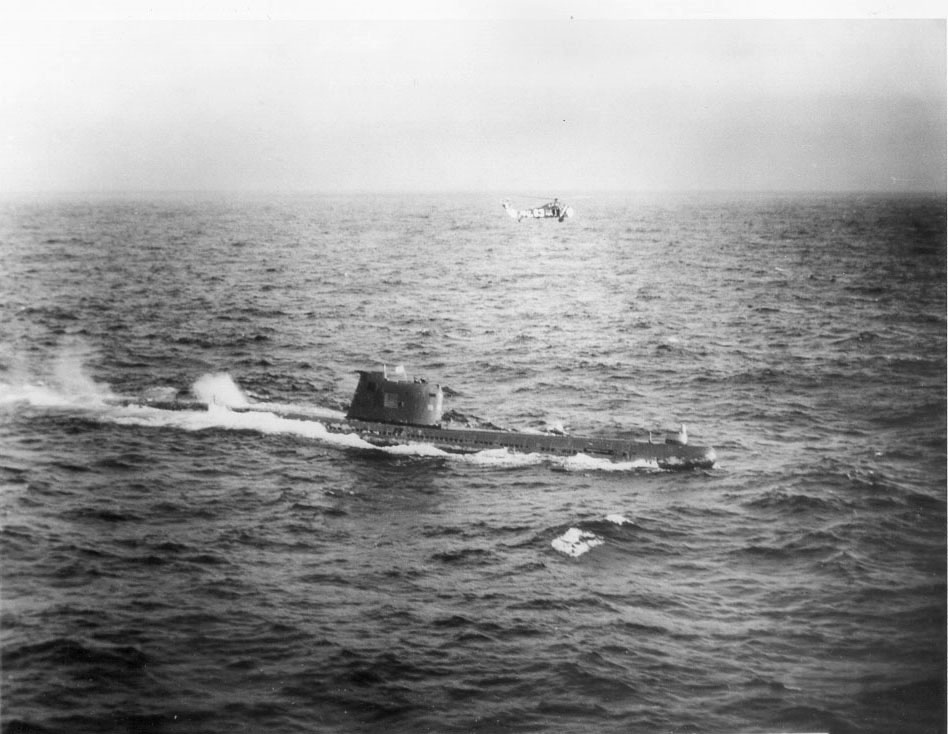
Waiting to knock out these convoys will be Soviet submersibles. The destroyers, and swift aircraft carriers, are the shield which can get the convoys safely overseas with their precious cargoes.
Recently, a new type of destroyer has been seen charging through the high seas. It is the guided missile destroyer. Destroyers in this class carry a twin-missile launcher on the fantail which features automatic loading.

All destroyers are being gradually converted to carry antisubmarine torpedoes of a new type known to the destroyermen as “underwater guided missiles.”
Another new device is a deep diving sonar designed to search beneath the “sound barrier” which exists in certain parts of the ocean where there are marked temperature changes which reflect sonar signals.
Another type of sonar being installed for long range submarine detection has been described by Burke as “really good, and they get under certain conditions fantastic ranges.”
To go along with the information provided with the new sonar equipment is what the Navy calls the ASROC. This is a long-range anti-submarine rocket system which can deliver a homing torpedo payload far out to where the unsuspecting submarines have been detected.

Postmortem:
The article was written in 1961. The Cuban missile crisis would occur a little over a year later. Destroyers would play a key role in the blockade. A complete story of destroyers during the Cold War can be found here: https://destroyerhistory.org/coldwar/
DASH was withdrawn from anti-submarine warfare (ASW) service in 1969 due to poor reliability. New methods of antisubmarine warfare include modern versions of UUW devices which will replace direct human intervention. The improvements in drone warfare will probably one day eliminate the need for any manned surface vessels. Not sure If I will live to see that day come but the advances of AI seem to be challenging all of our traditional thinking. Now if we could just develop an AI that would ensure peace while not stifling our need for actual freedom. I read a lot of science fiction when I was a young man. I have to be honest and admit that the fiction I read is no longer as fictional as it once seemed.


Like the hat you wore in the band photo…
My first patrol on the Lafayette (at the time considered long-in-the-tooth) we were going in circles North of Algeria when passive sonar heard the thundering herd of a carrier task force (the Enterprise as it turned out). We went deep and maneuvered underneath the Enterprise and sat there for about a week and were never picked up (so much for the destroyers and other escorts ‘protecting’ the Enterprise). Our captain finally decided to ring their bell and did an emergency surface to starboard and it hit the fan. Since that day (September 1973) it was decided that the best defense against submarines was another submarine.
One of my favorite stories (at least that I can tell)…