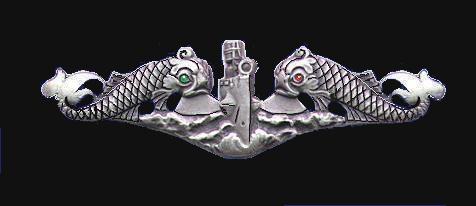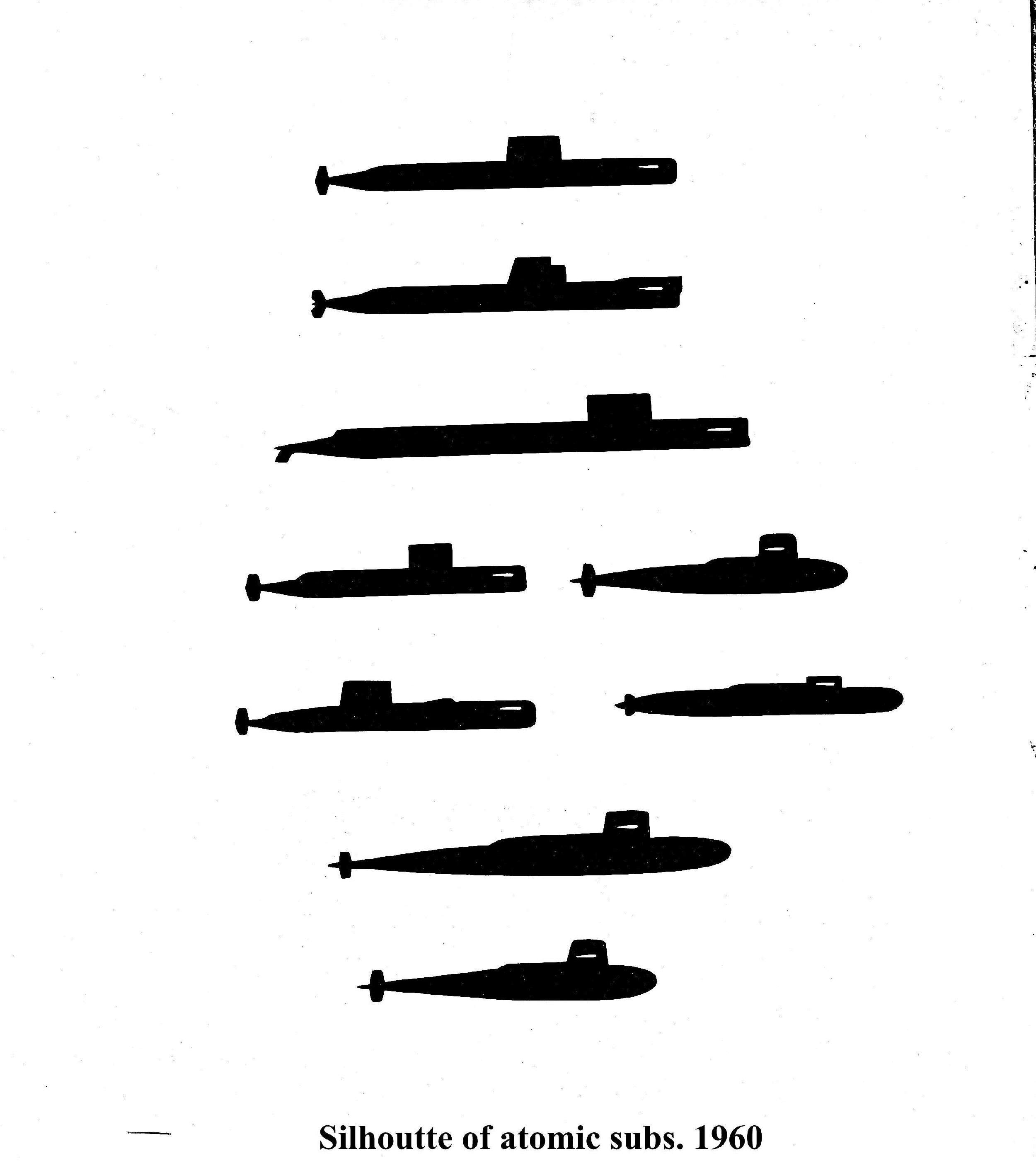
In April of 1962, I had not even turned ten years old. But I already had a fascination with submarines
But I was conscious of many of the things that were going on in the world. I read every book I cold find in the library about the wars that came earlier in the century. In school, we drilled to prepare in case an atomic war came to our shores. I remember the desks that we all crawled under in some vain hope that the desks would protect us from flying nuclear debris.
As I would get older, I would follow with interest the loss of the Thresher and later the Scorpion. The newspaper headlines from the days of the Thresher must have been a tremendous shock to the country. I didn’t know it at the time, but my Uncle Jack was an engineer with Westinghouse and had been involved with both the Nautilus and the follow on submarines.
But in 1962, the submarine service was still riding pretty high. The boats being built were faster and had more capabilities that any previous generation. The safety record was impeccable. Other navies struggled to just keep up with our development and any talk of the navy being second to any service was just simply bone-headed.
Every April is submarine month.
The following article was written in April of 1962 and is a remarkable encapsulation of the growth of the US Submarine Service in the years leading up to that point.
I teach a class on Monday morning for selected students at the nearby Naval Nuclear Power School. I developed a side deck which captures submarine development and particularly the Cold War. As I read this article, I realized that it is as close to my presentation as any I have ever seen. Actually, it is kind of scary how close. I swear, I never saw it before today.
It’s a bit longer than ones I post. But I promise its worth the read if you love submarines
The Key West citizen (Key West, Fla.), April 8, 1962
Submarines: Past, Present And Future Of Silent Service
When it is considered that the submarine is older than Christianity, has captured the interest of some of the greatest men in history and has made its appearance in wars dating back to our own revolution, the advancements made over the years do not seem particularly mysterious.
Yet, when we read of the unbelievable feats accomplished by Nautilus, Triton, Sea Wolf, Skate and the others of the family of the nuclear submarine mystery begins to materialize.
The last 62 years have brought the navies of the world a weapons system which has greatly influenced history. The last seven years have brought a revolution to the navies of the world and its influence on history cannot yet be comprehended.
On April 11. the United States Submarine Service will celebrate its 62nd birthday. This branch of the service, which with only 1.6 per cent of the Navy’s personnel was able to account for 55 per
cent of all enemy shipping destroyed during World War 11, is now armed with the weapons system which may well be the deterrent to World War 11, the mighty Polaris submarine.
Yet the submarine service is probably the least known and least understood of all the branches of the armed forces. It is hoped that through this series some of the mysteries of the “Silent Service” will be washed away and the realm of the submariner will be better understood by the general public.
The History of the Submarine
The record of man’s first attempts to master the depths beneath the sea is lost in a maze of ancient myths and legends. We do know that Aristotle reported that Alexander the Great used diving bells to get his men beneath the surface as a phase of his siege of Tyre in the fourth century before Christ.
Attempts made almost 100 years earlier were described by Herodotus. Alexander even had himself lowered into the sea in a glass barrel in order to observe the creatures of the sea. Attempts to build submarines are mentioned by Plinty, the elder, In 77 A.D.
The Florentine inventor Leonardo da Vinci completed plans for a submarine warship during the 17th century but fearing that this invention would make war even more horrible than it already was kept his plans secret.
The first successful building and operating of a submarine is credit to a Dutch physician Cornelius Van Drebel, in 1620. It is said that James the First of England became interested in Van Drebel’s “Eel Boat” and even took a short ride in it.
This may have been the spark that inflamed the inventive mind because by 1727 no fewer than 14 types of submarines had been patented in England alone.
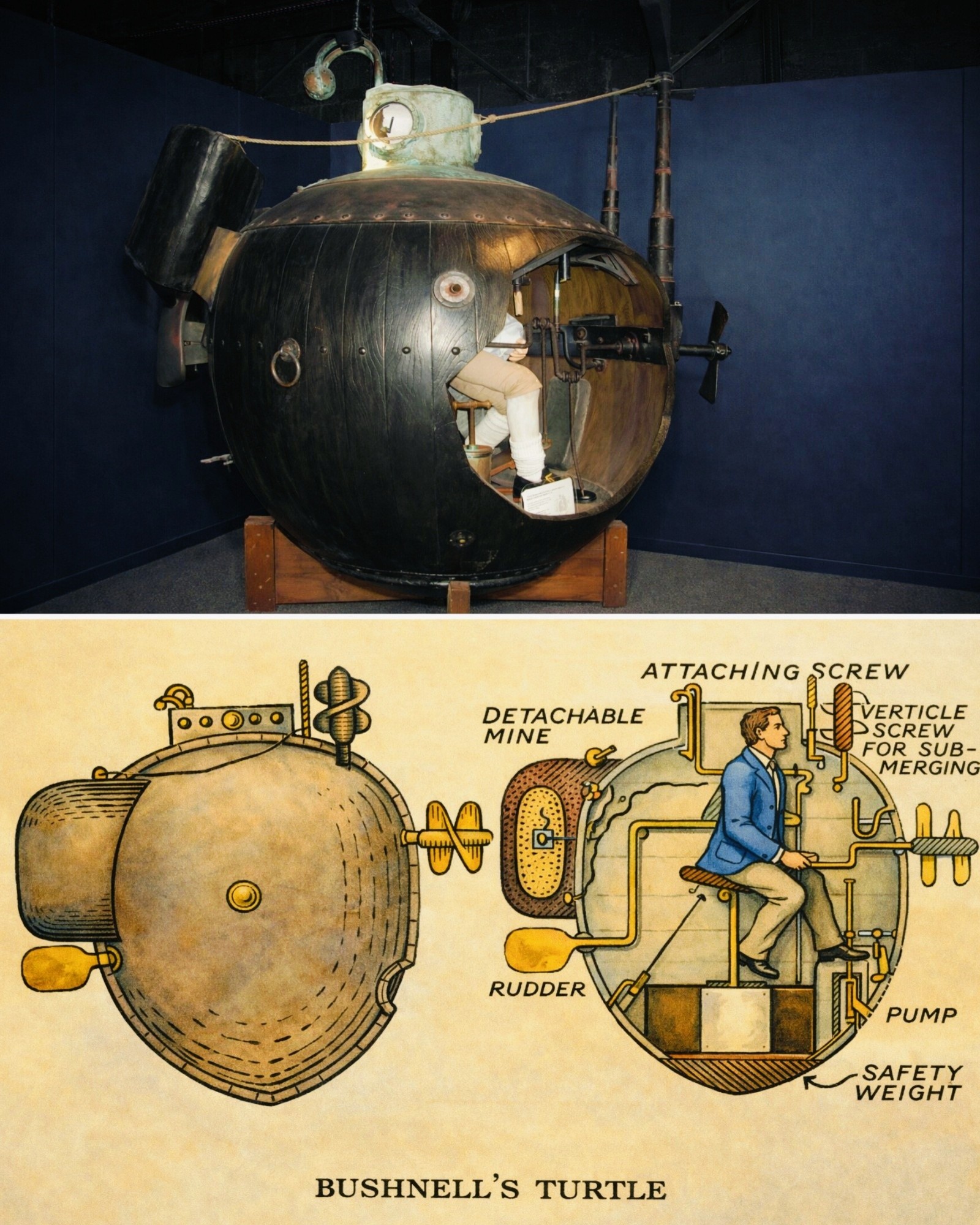
Efforts continued In Europe and in the United States and in 1776 David Bushnell built the first submarine to be used as an offensive weapon in naval warfare, the now famous Turtle.
Turtle was a major step forward in design technique and employed the same basic principles which are used today in the design of modern Nuclear Submarines.
Turtle operated as a submarine against the blockading British Fleet in New York Harbor bit unfortunately was unable to gain success in her attempts to sink the British ships.
Even Robert Fulton built a submarine but the French, for whom he built it, thought the idea to be ungallant, the British thought it to be impractical and the Americans devised methods to foil its attacks. Spurned in his efforts, Fulton quit his work on the submarine and turned to making history by inventing the first practical steamboat.
The first actual sinking of an enemy by a submarine was the Union Frigate Housatonic by the Confederate Hunley, the Hunley herself was sunk by the same blast that sent Housatonic to the bottom, but the feat was not overlooked by an Irish schoolmaster who was to come to America in the early 1870’s and build the first in a long line of submarines to be commissioned by the United Slates Navy.
Holland and Navy’s first Submarine
When John Phillip Holland left Cork. Ireland, and came to the United States in the early 1870’s, he brought with him a determination to build a submarine His early efforts went unsold but in 1895 the Navy Department contracted him to build the submarine Plunger. Specifications as required by the Navy were unrealistic, so Holland set about to build al his own expense another submarine, one that followed his own specifications.
On April 11, 1900, the United States Navy accepted his boat, called the Holland, and assigned its hull number 1, the first of more than 600 full numbers to appear on the sails of the submarines of the United States Navy.
The Holland was 54 feet long and displaced 74 tons. Armed with a single bow tornedo tube and three Whitehead Automotive Torpedoes as well as having a bow gun for surface action recessed into her hull. Holland packed considerable firepower for her time.
Her top speed was in the vicinity of eight knots on the surface and five knots submerged and she was powered by a storage battery, electric motor and a gasoline engine.
The Holland was so well accepted by Naval authorities that almost immediately they authorized the building of several more submarines.
Although viewed with skepticism and at times ridiculed by the surface conscious admirals of the world, other countries began to follow the lead of the United States and interest in the submarine spread. The Russians, the Japanese, the British and the Germans all set about to build or buy a submarine fleet.
In the United States progress between 1900 and 1914 remained steady. During that period of improvement in technique and equipment the Navy accepted 25 more submarines into the fleet.
The submarine had now grown in size and in capability. Her dangerous gasoline engine had been replaced by the safer and more reliable diesel engine. Her range and armament had been increased. She was soon to prove herself in combat.
The Submarine goes to War
Although Bushnell had used his Turtle during the Revolution and Hunley had sent a Union Frigate to the bottom in the Civil War, it was World War I that saw the submarine proved as a great offensive weapon. Even as it was happening, few people realized how great a weapon it was.
Winston Churchill, then First Lord of the Admiralty was one of the few who raised a voice in behalf of the submarine but British captains remained unaware of the tremendous capability of the new weapon.
In a single encounter they learned the hard way. On September 22, 1914, three British cruisers were sunk in rapid order by the German submarine U-9 in the North Sea.
Today, a captain seeing a ship torpedoed would make every effort to avoid a similar fate but when the U 9 sank the first of the three cruisers the other two returned to the side of their stricken sister and through contempt for the submarine or just plain ignorance made themselves sitting ducks for what was in fact a lethal menace.
In Germany, Grand Admiral von Tirpitz urged the Kaiser to resume the unrestricted submarine warfare that had prevailed before the sinking of the Lusitania. The Kaiser, fearful of forcing America into the war, refused to do so. Von Tirpitz resigned.
By the time the Kaiser realized his mistake in the spring of 1917 and reordered an unrestricted submarine warfare in the vain hope of overcoming the Allies, it was too late. Had Germany heeded the advice of von Tirpitz they may well have won the war but even in losing the toll taken by the German submarine was staggering.
Over 13,000,000 gross tons of Allied shipping went to the bottom as a result of submarine attacks. Included were 349 British warships. It is only the combined effort of the British and American fleets which resulted in the defeat of the German submarine menace that swung the balance in the favor of the Allies. Had the submarine threat not been broken the British Empire might well have been economically strangled.
The Germans were the only successful submarine power in the war. The British themselves won outstanding submarine victories in the Dardanelles and in the Baillie, where their surface fleet had met near disaster. On a single 48-day patrol into the Sea of Marmara, the British submarine E11 sent 46 ships to the bottom.
France had less success. Although she entered the war with 67 submarines, the lack of German surface activity left France with slim pickings.
The United States, who had started from the sidelines, the U. S. in power, lagged behind in the race. During the three years she watched from the sidelines, the U. S. increased her battleship, cruiser and destroyer strength but entered the war with only 24 up to date diesel power submarines. There were no victories credited to the U. S. submarines during the conflict.
The Allies won the war, and the submarine won her place as a fighting ship. The lessons learned were to be well remembered and the influence of the submarine was to present itself to even a greater extent in 25 years when the United States Submarine Service would carry the war to the enemy after the attack on Pearl Harbor had all but crippled the U. S. Pacific Fleet.
World War II
On the morning of December 7, 1941, Pearl Harbor was attacked. On that same afternoon the United States Submarine Service found itself with a mission that was to bring glory to the service, honor to its men and victory to its country.
Rut first it was to bring long hot patrols thousands of miles from home, hard fought battles, murderous depth-chargings, and all too often, the loss of another submarine.
When the Japanese attacked Pearl Harbor they overlooked the submarines and concentrated on the battleships. This mistake was to be a costly one because the submarines were ready.
The pre-war years when the best men in the service were carefully selected and then highly trained in the art of submarining had left the submarines fully prepared.
Even before the attack was over the submarines were slipping out of Pearl Harbor to hunt down the attacker. When they returned four years later the record they had written stood as witness to the cap abilities of the “Silent Service.’’
During the first few months of the war the submarines were the only naval force capable of offensive operation against the enemy in his own waters.
They carried the ball until the fleet could be rebuilt and returned to the battle and they carried it well. Patrols were launched from Pearl Harbor and from Manila the Asiatic Fleet submarine force was on the prowl.
On December 16, 1941, the “Swordfish” sank the first of 1,392 Japanese ships that were to become the victims of the U. S. submarines, the 9,000 ton freighter Atsutusar Maru. Over 5,630,000 tons of Japanese shipping, including 214 Naval vessels, were to be included in the score of the submarines.
One battleship, eight aircraft carriers, 15 cruisers, 42 destroyers and 23 submarines were to become the successful targets of U. S. torpedoes. The combined forces of the allies could not match their record. The submarines fired over 14,500 torpedoes. A lot of them were hits. The leaders, Flasher with over 100,000 tons to her personal credit; Tautog with 26 ships.
On the other side of the ledger was a high price for victory. Fifty-two submarines and almost 3,500 officers and men were lost. Records reveal that six submariners lost their lives for every non-submariner who died in naval service, exclusive of aviation.
A high price indeed, but not as high as the enemy, Japan lost 130 submarines, Italy 85 and Germany the astronomical total of 781.
The stories and deeds of the submarine service have filled books. The names of the heroes have
filled pages. They fought hard, they fought long, they fought well. The number of kills started at a few each month and rose to a high of 69 in a single month. When it was all over the Japanese empire had not been beaten, it had been drowned.
New Developments
The fleet type submarines of World War II had done a tremendous job and so had the men that manned them. By the time the final peace was signed the submarine service had claimed more
enemy shipping than any other branch of the service and more decoration for valor per man then any other branch of the Navy.
But the submarine service was not to rest on its laurels and the submarine was not to remain unchanged. During the years that followed the war radical changes appeared in both the hull design and the capability of the submarine.
The World War II fleet boat had been a surface ship that could submerge. Once submerged, its surface design limited its performance and its need for air to run the engines which charged its batteries forced it back to the surface in all too short a time.
It could not yet be made a true submersible but in order to better suit the submarine for operation beneath the sea everything about it was streamlined and the periscopes and masts were encased in a smooth sail.
In order to allow the submarine to breathe without, surfacing the snorkel tube was added. She was given greater battery capacity for increased speed and endurance.
Advanced techniques made her quiet and thus less apt to be heard by searching enemies and at the same time increasing her own listening ability.
The designation Guppy was tagged on the newly converted submarines Guppy for the initials of Greater Underwater Propulsion Power with a “Y” added for euphony. When she tied up to her sister the fleet type, they looked no more alike than does a Thunderbird look like a Model T.
Yet more was to come. Among the post war designs was the high-speed fast attack submarine.
New from the keel up, the fast attack was capable of greater speeds submerged than she was on the surface.
Variety began to show in the design of the submarine, a particular submarine for a particular job.
The SSK or hunter-killer submarine whose advanced sonar equipment enabled her to search out and kill other submarines. Cannibalistic, perhaps, but experience had proved that the best weapon against a modern submarine was another submarine. The SSR or radar picket submarine. whose modern radars combined with its ability to reach an advanced position undetected make it ideal for advanced scouting for a fleet or acting as an early warning radar station.
Submarines were converted or designed for troop carrying, minelaying, seaplane tending, launching and guiding missiles and other miscellaneous missions.
The submarines had been given more jobs to do and more to do the job with. Improvements in fire control systems made their torpedoes more accurate. Their design made them faster and more maneuverable. Modern electronic equipment made their eyes and ears sharper.
Still, one thing remained that held the submarine back. In order to charge the batteries that allowed her to run beneath the surface the submarine was forced to come up to get air for her engines.
The snorkle tube was a help but not the entire solution. The modem submarine was a better submarine, but still was not a true submarine and as long as it was locked to the
earth’s atmosphere it never would be.
While some drawing boards were bringing the existing submarines up to date and making them better, other drawing boards were creating the new and revolutionary.
Under Way on Nuclear Power
The revolution really began on June 14, 1952 when President Harry Truman laid the keel for the
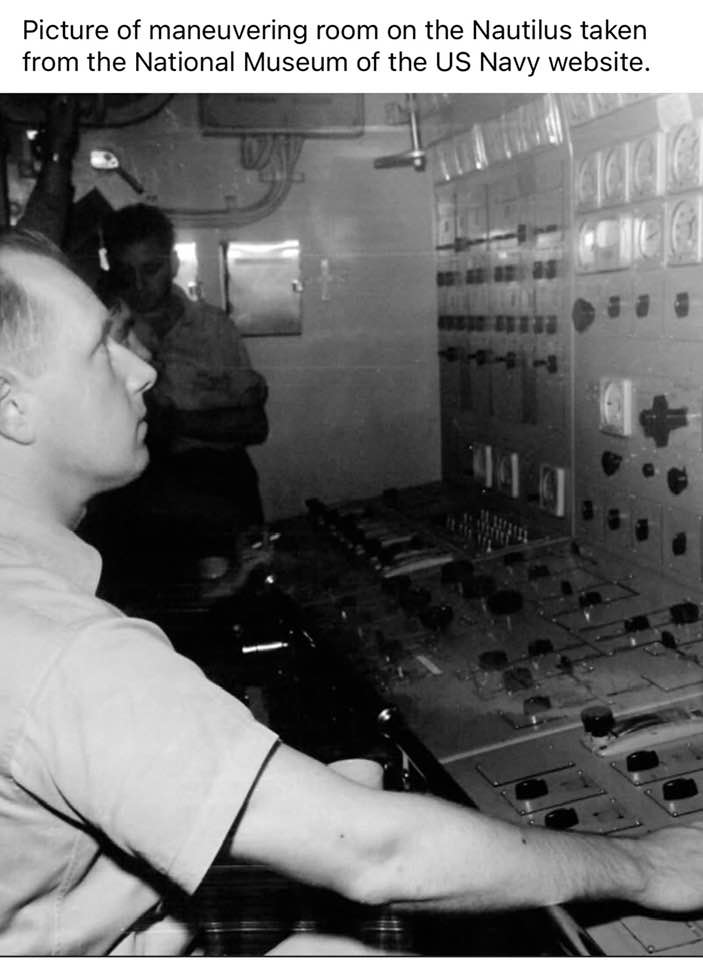
world’s first atomic submarine, but it was not until January 17,1955 that years of research and development paid off and the historic message, “Under way on nuclear power” was flashed from the bridge of the USS Nautilus.
As Nautilus stood out to sea the submariner’s dream became a reality. No longer would he have to come out from his hiding place beneath the waves. The world’s first true submarine was now operating.
Once submerged Nautilus became a completely self-supporting unit, a city beneath the sea. Her nuclear power plant supplied her with all her needs, and she was capable of continuous operation for an almost indefinite period of time. Her only limitations were the endurance of her crew and the size of the ocean she operated in.
Nautilus was to steam 60,000 miles on a lump of uranium the size of a golf ball. And while she steamed, she made history again and again, surpassing the hopes of even her greatest supporters.
In August 1958 she topped off a long list of firsts by cruising submerged under the polar ice cap. This feat not only created a tremendous stir in the world press but proved that submarines could operate anywhere and under any conditions.
But all her firsts were secondary and all her records secondary in comparison to her place as a milestone in man’s development and control of atomic energy for a peaceful industrial use.
Atomic energy had been harnessed and put to useful purpose, and it had been done with a safety that surpassed that of the modern American home. It has been proved that the crewman of an atomic submarine receives less radioactive radiation than does the average man in the street.
Nautilus was the first of the nuclear-powered submarines but by no means the last. By December 1961, 23 nuclear submarines had been built, 18 were under construction and another seven FBM’s were authorized by Congress.
As new submarines entered the fleet they rewrote the record books. Sea Wolf remained submerged for 60 days, completely independent of the earth’s atmosphere and proved
that extended submerged operations were not beyond the endurance of her crew.
Skate went under the polar ice from west to east and east to west, once in summer and once in winter, and surfaced at the North Pole where her crew played a soft ball game in which a home run was hit into tomorrow and the batter had to run around the world in order to touch all the bases.
Sargo spent 31 days under the ice and duplicated Skate’s surfacing at the North Pole. These feats proved that the Arctic Ocean was an operating area open to the nuclear power submarine regardless of the season.
Even as Nautilus, Sea Wolf, Skate, and Sargo astounded the world with their performances the architects of the Navy were looking forward to bigger and better thills. From their drawing boards was to come both Skipjack and the Fleet Ballistic Missile submarine.
The “Flying” Submarine
Although it was a known fact throughout the development of the submarine that the ideal shape for underseas craft was the shape that nature gave the fish, the limitations of the existing power plants had forced the designer to build submarines along the lines of the surface craft.
With the perfection of the nuclear power plant, the designer was given the power he needed to produce the perfect submarine. As a result. Skipjack was born.
Skipjack is actually the marriage of the blimp-like hull of Albacore and the power plant of Nautilus arid her sisters of the nuclear fleet. The combination gave the Submarine Service the most fantastic underwater vehicles ever built.
Hydrodynamically superior to her nuclear forerunners. Skipjack is so fast and maneuverable that design changes had to be incorporated in her in order to control her actions.
Her hull is completely free of protuberances, and she is propelled by a single large propeller which more than does the work of two small ones.
The traditional bow planes for submerged control had to be moved to the sail and the standard three man controls previously used to control submergence became a single control by which the crew can and literally does “fly” Skipjack through the ocean depths.
Her speed although classified, is in excess of 20 knots and she is so maneuverable that she is considered as performing “aquabatics” when she performs at high speeds.
The first of the advanced attack submarines. Skipjack is culmination of years of advanced hull design and nuclear propulsion development. Her performance has changed the entire concept of underseas warfare and her endurance is as yet undetermined.
In addition to the world’s fastest submarine the advances in nuclear power gave the United States Submarine Service the world’s largest submarine, USS Triton. Equipped with twin reactors, Triton is 447 feet long and displaces 5900 tons, exceeding in size both the French Surcouf and the Japanese 1-400.
Primarily designed as a radar picket submarine, Triton in 1960 performed a feat that is almost beyond belief. On May 10, 1960, she surfaced off the coast of Delaware having circumnavigated the globe submerged. In 84 days, during which she never surfaced. Triton traveled over 36,000 miles nonstop underwater. A truly amazing feat of both mechanical and human endurance.
Nautilus, Skate and Sargo had proved by their Arctic Sea cruises that submarines could operate anywhere at any time. Triton proved that they could do it unobserved for during her entire around the world cruise she remained undetected by friend and foe alike.
Next was to come the submarine that was to take advantage of it all; the submarine that could be hailed as one of the great deterrents to war; a submarine whose potential is so dynamic that if may well discourage any aggressive nation from provoking a war—the submerged, remained undetected for entire period. George Washington and her sister Fleet Ballistic Missile submarines.
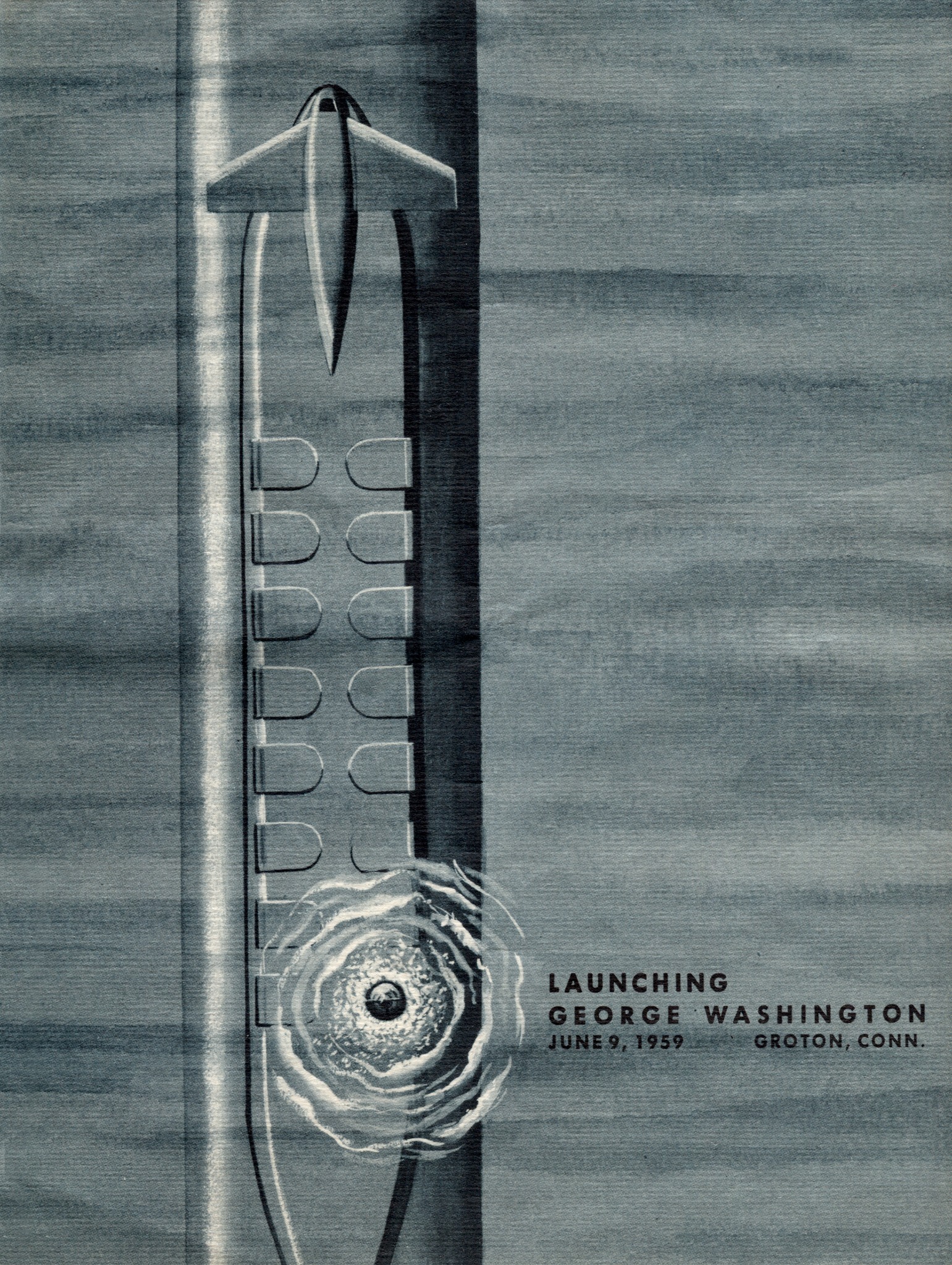
Polaris Power For Peace
If John Philip Holland who gave the Navy it’s first submarine could see the George Washington or any of her sister Fleet Ballistic Missile submarines, he could probably stare in disbelief. Over seven times as long and displacing 75 times as much as the Holland, the Fleet Ballistic Missile submarine is an engineering marvel.
Propelled by nuclear power and incorporating all the finest features of her predecessors, the FBM is so advanced that it takes the Navy as much as 18 months to train the crews that man them.
The George Washington’s principal weapon is the intermediate range ballistic missile Polaris, and she is capable of launching this weapon, of which she carries 16, while hidden far below the
surface of the ocean. The capabilities of this submarine and her weapons have presented a new concept in global warfare. Capable of remaining always submerged and undetected while she moved to the far reaches of the oceans, the FBM submarine can strike any place at anytime. From anywhere.
It may seem strange to some to consider as a power for peace a submarine that is capable of delivering single handed moment of destructive power than all the bombs dropped during World W11. but the Polaris firing submarine is just that.
With the ability to remain on station for extended periods of time, safe from detection, and because of their mobility virtually immune from attack, the Fleet Ballistic Missile submarine stands ever ready to strike back at any aggressor.
The 1.500-mile range of her nuclear tipped Polaris missiles put every major target in the world within her reach. To start a war is to invite destruction, and so the FBM submarine and the Polaris missile may give our nation the edge that will preserve the peace.
Sixty-two years of history have seen the Submarine Service develop from a small group with an experiment to a mighty group with mighty submarines and mighty weapons. Their submarines have grown from a small, almost insignificant “Submersible boat” to the perfect submersible. Their weapons from the short-range steam torpedo to the Intermediate Range Ballistic Missile.
On April 11, we wish them one and all many more years of growth. and pause with them for a moment as they remember those of the Silent Service who are still “On Patrol’’ and remain silent forever.