Did you ever get that feeling like someone is watching you?
No, I’m not talking about that natural paranoia some people feel in this modern age of electronic snooping. Although we do have some reason for concern. After all, if you have a smart phone, how many times has something you have been discussing with someone suddenly showed up on your device in the form of an ad or article. You hadn’t searched for the subject in any search engine. It just shows up like an unwanted relative at a Christmas party.
Well, in the beginning of the Cold War, we had many such intrusions. Sometimes those intrusions came from people on either side who sympathized with the philosophy or intent of the opposite side. The newspapers of the time were filled with stories about Russian spies who were citizens or recent emigrees that fed information to the USSR. We were not innocent angels either. A healthy CIA program spread agents all across the globe in order to obtain knowledge and information that would give us an advantage on the world stage.
So, it should not have shocked anyone that using submarines to gather information would be a powerful tool. Up until the second world war, the USSR was limited in their blue water capabilities. The former enemy of the USSR, Germany, certainly had mastered the use of submarines in a global sense. Their later model submarines were technically advanced and could do extensive damage to a fleet or commerce. It took a tremendous effort to defeat them and frankly, without having access to their secret codes, defeating the newer type submarines would have been even more challenging.
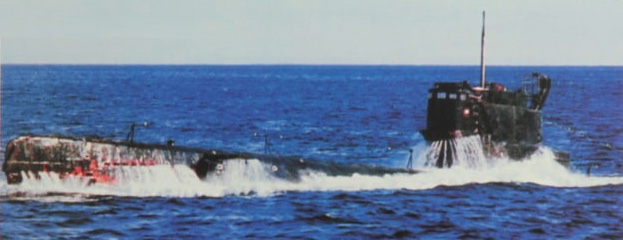
By 1954, the unspoken presence was becoming more well known
Rembert James, military specialist and veteran reporter, traveled extensively with the United States Fleets in the Atlantic and the Pacific. This was the first of three articles by him on the Russian submarines that had been training their periscopes on America’s coast since 1948. The articles, written after extensive interviews with United States submarine commanders, were distributed by the North American Newspaper Alliance.
THE SUNDAY STAR. Washington, D. C.
Sunday, DECEMBER 19, 1954
Periscopes Off Our Coast
Soviet Subs Have Been Roving U. S. Waters for Past 6 Years
By Rembert James
Military Editor, San Diego Union
SAN DIEGO. Calif., Dec. 18. Russian submarines are roving the oceans of the world. They have appeared and are continuing to be detected in the waters off the Pacific and Atlantic coasts of North America. This has been going on for Six years. Dozens of times detections have taken place off Washington, Oregon and California.
The United States Navy has given up-to-date confirmation of the presence of Russian submarines in American waters. It was supplied in public statements by Admiral Felix B Stump, commander in chief of the Pacific Fleet, and Admiral Jerauld Wright, commander of Atlantic forces of the North Atlantic Treaty Organization.
They declined to name specific places and dates, but much of that information has come from other sources.
These disclosures serve to underline facts that seldom are mentioned in close connection with one another, and so are seldom fully understood.
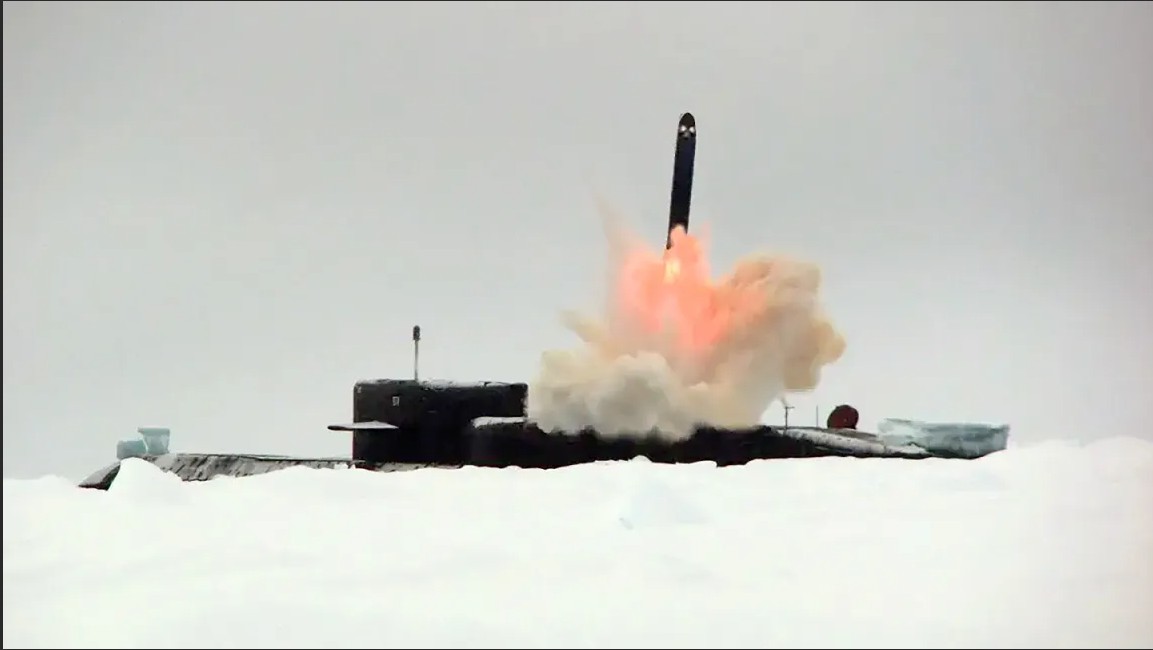
The first of these facts is that the Russians are looking us over, even taking photographs through their submarine periscopes possibly to be ready to shoot guided missiles at us.
Has Strong Defense.
The second of these facts is that the United States has a defense against the submarine menace that is better than any nation ever conceived of developing in the past.
If there is any aspect of modern warfare where the offensive is being overtaken, where the defense and counterattack are getting the upper hand, it is in submarine warfare.
The United States Navy has these anti-submarine warfare possibilities:
- Atomic and hydrogen bombs and the airplanes to deliver the bombs that would make submarine pens—the concrete-roofed operating bases of World War II – completely unusable within hours after the start of fighting.
- New fast killers of many types—airborne, waterborne and undersea craft—that would make the life of a Russian submarine extremely hazardous from the time the submarine left its mooring, until it arrived off its target.
Reds Got Nazi Subs.
These are some of the general facts. To understand the situation more clearly, it is necessary to be specific and to go back and trace how the Russian submarine activity has developed.
Russia got hold of most of Germany’s latest model submarines in 1945, at the end of World War 2. During the next two or three years, Russian naval personnel were trained to handle these submarines. Many of the subs are the so-called snorkel type, which has a breather pipe that can be extended above the surface of the water.
By 1948, the Russians were ready to try out their underwater seamanship in the world’s oceans Navy Secretary John L. Sullivan announced on March 25, 1948, that “submarines not belonging to any nation west of the Iron Curtain’’ had been sighted recently off the Pacific Coast. He said none had been nearer than 200 miles from the West Coast.
Two days later, the Navy sent search planes to scout for an unidentified submarine sighted by a Pan American plane 60 miles west of San Francisco.
Contact off Pearl Harbor.
These were the first reports of sightings of Russian submarines in this hemisphere. Some months later, on November 10, the Pacific Fleet headquarters at Pearl Harbor reported evidence of a possible submarine contact nine miles south of Pearl Harbor.
Unofficial naval sources in Honolulu said November 12 that the detection was positive.
The same month, only two weeks later, the Navy reported probable sighting of a snorkel type submarine in the Gulf of Mexico 20 miles offshore from the Corpus Christi (Tex.) Naval Air Station.
The following month there was a reported sighting of a foreign submarine off Malibu Beach, just north of Los Angeles. No American submarine was operating in the area at the time, but the evidence was not considered strong enough to record the positive presence of a Russian submarine off California.
Periscope Sighted.
This came more than a year later, in March and April of 1950. It started when a Navy pilot said he sighted the periscope of a submarine 40 miles at sea off Cape Mendocino, 40 miles south of Eureka, Calif. Navy planes and the destroyer Colahan hunted the submarine for days without success.
Reports of sightings kept coming, with evidence that the submarine was headed southward. On April 2, the 11th Naval District sent out PBM patrol planes from Fleet Air Wing 14.
They searched for eight hours off Point Augello, about 110 miles north of Los Angeles.
They failed to locate the submarine, but two parties of Coast Guardsmen confirmed the presence of the submarine and said it was definitely not American.
Destroyer Tracks Sub.
The sightings continued throughout 1950. The destroyer Blue tracked one unidentified submarine off the California coast several days before losing it.
During 1951 there were reports of Russian submarines off San Diego, San Francisco and Alaska.
The Navy started to discount reports of sightings in 1952. One that became public was from Boston, Mass., which relayed reports of a submarine sighting November 17, 1952, off Mount Desert Island, Maine. The Navy had no comment.
That same year the Navy received reports of submarines off Alaska, off the Dominican Republic coast in the Caribbean Sea and off Florida. The. Navy was inclined to discount these reports, at least publicly.
A report by the Coast Guard that a surfaced submarine had been seen five miles off the New Jersey coast caused the Navy to send planes and surface craft to hunt. There was no comment.
Silence Policy Explained.
All this adds up of course, to one thing: The Navy had adopted a policy of silence on reports of the presence of enemy submarines in United States waters.
A naval officer, speaking unofficially, recently explained why this is necessary.
“Let’s suppose the Russians sent 10 submarines, or 14 submarines, or whatever number you want to pick, and ordered these submarines to take photographs of the United States coastline,” he said.
“Suppose we detect these submarines and announce the exact number we detected. The Russians know how many they sent. If we tell how many we detect, they’ll know how good, or how bad, our detection system maybe.
“I don’t mean by this example to say that the Russians have ever sent any submarines here. I am just telling you why we don’t tell what we know.”
https://naval-encyclopedia.com/cold-war/ussr/soviet-submarines.php
Periscopes Off Our Coast (Part 2)
Russian Subs May Be Filming U. S. Ports for Missile Attacks
By Rembert James
Military Editor, San Diego Onion
SAN DIEGO, Calif., Dec. 20.
Intelligence reports reached Washington in the late summer of this year that the Russians had just about succeeded in building a hydrogen bomb small enough to be fitted to a medium size guided missile.
The Russians already have the guided missile, something like the United States Navy’s Regulus, which can be fired from a submarine and will travel 400 miles to its target
The Russians, of course, are known to have between 375 and 400 submarines.
This situation. naturally, would place any coastal area in the greatest peril in time of war.
In coastal cities the submarine menace would be much greater than the air attack danger.
It is of the most importance to Chicago, for example, that the Russians are building a chain of 150 air bases in the Arctic, Chicago is less than 3,600 miles across the North Pole, from Russia’s Franz Josef Lanx.
It is more important to San Diego, New York and San Francisco that Russia has a great submarine fleet and is sending it to sea on regular missions.
These Russian submarines, that have been roaming the world since 1948 in increasing numbers, have at least six reasons for doing so. These reasons are:
- Training of crews in submarine handling and tactics.
- Charting of ocean currents and making temperature records.
- Photographing of United States coastal cities through periscopes to be prepared for guided missile launching.
- Testing of United States coastal defenses and anti-submarine detection effectiveness.
- Planning of locations for wartime refueling of Russian seaplanes by tanker submarines.
- Landing of clandestine parties on United States and other shores for revolutionary, sabotage and spying purposes.
Jane’s Gives Estimate.
The Russians have plenty of submarines now to do all of these things. The most complete late estimate of Russian strength probably comes from the 1954-55 edition of Jane’s Fighting Ships, a standard reference book on the navies of the world.
Janes’ said Russia has an estimated 370 or 400 submarines in commission, including “a large number” of long-range boats. These are of two types. One has a displacement of 2,900 tons, a speed of 20 knots, and a range of 20,000 miles. The other has 1,600 tons displacement, a speed of 17 knots, and a range of3,000 miles.
Jane said the larger class has been seen in considerable numbers in the Pacific. It is estimated they are being built at the rate of 18 to 20 a year.
Most of the reasons why the Russians send out their submarines on missions these days are easily understood. Training of crews, the charting of ocean currents and the taking of temperature readings is standard practice in all the submarine forces in the world.
Could Refuel Seaplanes.
The planning of locations for wartime refueling of Russian seaplanes by tanker submarines is not unusual, either. The Russians have seaplanes, and their reconnaissance range could be extended greatly by submarine tanker refueling.
Testing of United States coastal defenses is important to the Russians because they would like to be able to lay mines in our shipping routes and even inside our harbors, in time of war.
Navy Secretary Charles S. Thomas said a few weeks ago that the Russians are capable of laying “cunning, versatile” mines in United States harbors and seaports. He said the new devices can be set to allow a given number of ships to pass them without harm before they explode.
Rear Admiral Wilson D. Leggett, chief of the Navy’s Bureau of Ships, also is on record expressing “acute concern” over the possibility that enemy submarines could lay mines in United States coastal waters.
Scientists Called In
He said the Navy’s mine countermeasure station in Florida is working overtime on the problem and has been enlarged to include a study group of talented scientists.
The landing of clandestine parties by unidentified submarines has been reported from various parts of the non-Communist world. The Philippines, the Caribbean, the coasts of Central America are the most frequently mentioned places in this connection.
Representative Hillings, Republican, of California, supplied the most recent and detailed information on this phase of underseas activity. He said he had received information that
Communist submarines operated off the coasts of Guatemala before the overthrow of the Communist government of President Jacobo Arbenz and that other non-United States submarines were seen off Nicaragua. He said apparently Russian and Czechoslovakian weapons were landed from a submarine in Nicaragua.
No aspect of Russian submarine activity, though, can possibly interest Americans as much as the thought that Moscow wants photographs of the United States coast line for guided missile launching purposes in case of war.
As all military ordnance men know, there are two types of missiles that might conceivably be fired from a submarine. One is the true guided missile that is subject to electronic controls and guidance after it takes off.
The other is a ballistic rocket, such as the German V-2. This rocket is aimed and fired, and its course cannot be changed. The types that can be launched from submarines have about the same maximum range —4OO miles—and the same speed, about a mile a second.
Can these missiles be knocked down in flight?
Air Force Secretary Harold E. Talbott answered this question the other day. He said that if you stand at one end of a long hallway and throw a needle, you might conceivably knock down a needle that somebody else has thrown at you from the other end of the hallway.
There is a chance in a million.
Periscopes Off Our Coast (Part 3)
US Navy’s Anti-Sub Defense Is Thousands of Miles in Depth
By Rembert James
Military Editor, San Diego Union
SAN DIEGO. Dec. 21. — While Russia has been building the world’s largest submarine force and designing guided missiles carrying warheads with hydrogen bombs to be launched at sea against coastal targets, the United States has been developing the greatest anti-submarine defense ever devised.
It is a defense in depth—4 thousands of miles in depth—and if the coastal cities survive the first few hours, or days, at the start of a new war. they should be reasonably safe from there on out.
This defense is built around hunter-killer groups of ships equipped with planes and helicopters. In addition, other airpower will attack and smash enemy submarine operating bases with nuclear bombs.
It is not likely that an enemy ever again will be able to maintain bombproof submarine pens as the Germans did. Bombs from the Allied planes bounced off the concrete tops of these shelters in World War II
In a new war, submarines will have to operate from a mothership, far at sea, and always on the move. It is hardly conceivable that the submarine force could operate long under such conditions. Refueling and reprovisioning would be difficult. Overhauling would be next to impossible.
Carriers Nub of Force
These submarines, homeless and harried, will be hunted down in the first weeks of a new war by United States hunter-killer groups centered around remodeled large carriers of the World War II type.
There will be hunter-killer submarines operating, too, but as it stands now the main anti-submarine duty will be carried by the carrier group.
These 27,000-ton carriers will cany several helicopters and two or possibly three types of airplanes. There will be 10 big carriers. Five of these carriers are already in anti-submarine service. They are the Princeton, Valley Forge, Enterprise, Leyte and Antietam.
The Philippine Sea soon is to undergo remodeling. The mothballed carriers Franklin and Bunker Hill are understood also to be scheduled for remodeling. The other carriers are yet to be designated.
‘Copters Fill Basic Need.
The helicopter was added to the anti-submarine arsenal only six months ago. It supplies a basic need in anti-submarine warfare—the detection and pinpointing of a submarine before the submarine can escape. A helicopter can hover and dangle a locating device in the water.
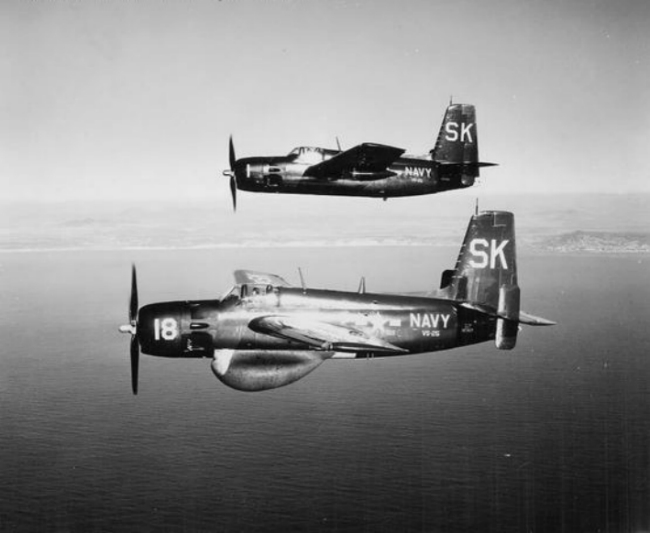
The Navy’s newest anti-submarine killer is an airplane, the Grumman S2F-1, nicknamed the Sentinel. It was tested for carrier use in mid-September. An S2F-1 took off and landed on the escort carrier Badoeng Strait. The Badoeng Strait is an experimental ship, a sister of the Point Cruz. In the same tests, the first night landing on a carrier with an S2F-1 was made.
The S2F-1 is designed to detect, track and destroy enemy submarines, a job that formerly required two planes. It has a crew of four and has two engines that drive propellers. It is intended to replace the single engine Grumman AF2-S Guardians.
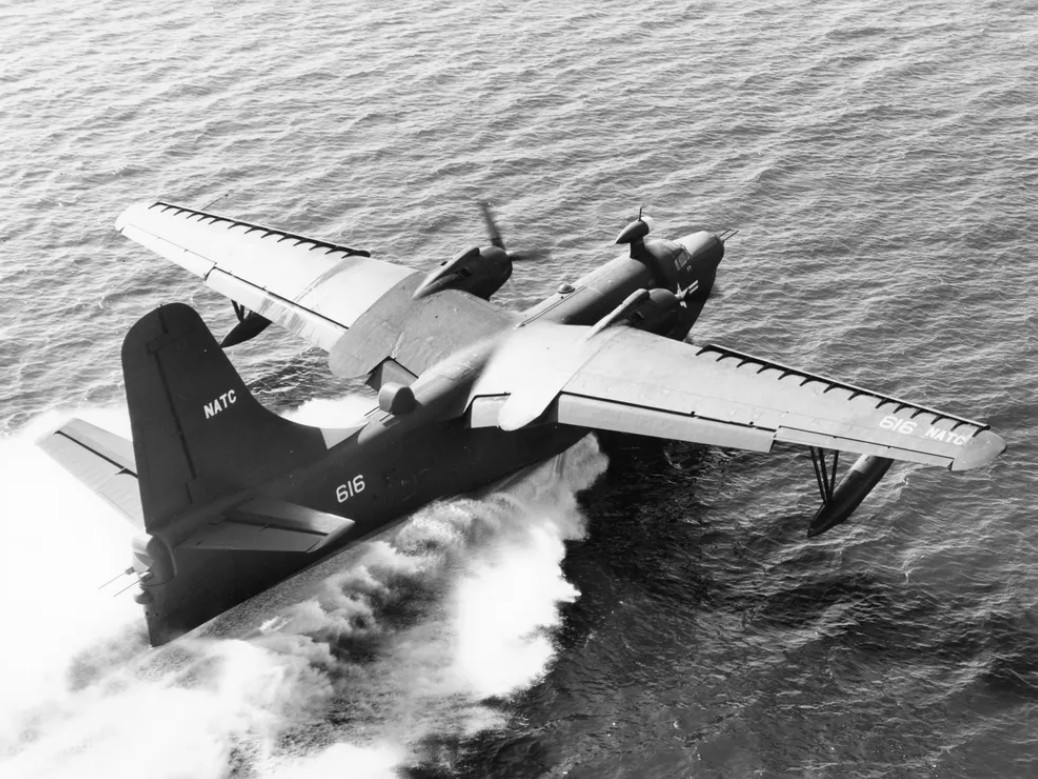
Another anti-submarine plane Is the PSM-2 Martin Marlin. The first unit to get the big gull wing. twin-engine craft was Patrol Squadron VP-47 at Alameda, Calif.
Atomic Depth Charge.
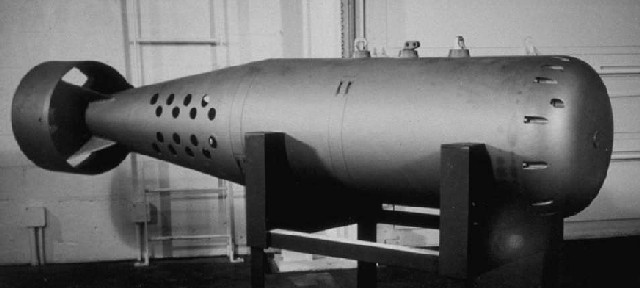
Modem anti-submarine weapons include an atomic depth charge, a spiraling torpedo that homes on its underseas target, quick-sinking depth charges, shaped-charge projectiles, and an undersea model of the bazooka rocket.
None of these, of course, would be useful unless the submarine could be found. Navy officials said a year ago that a new underwater listening device had been developed which could detect submarines miles away.
This device will be used by the Navy’s killer submarines that will lie beneath the water, listening for sounds of the movements of enemy submarines. The Navy has three new killer submarines. Six World War II fleet submarines are being modernized as killers.
Note about the PSM – 2 Martins:
Compared to other aircraft that entered service during the early years of the cold war, the Marlin was an anachronism. At a time when early jet fighters were going supersonic, the Marlin’s top speed was 251 mph, and it cruised at 150 mph on two Wright R-3350 turbo-compound radials. And the Marlin was a true flying boat: To get it ashore, crews had to attach a set of wheels as berthing gear.
Production aircraft were equipped with a powerful search radar in the nose and magnetic detection gear in the tail. The Navy didn’t expect Soviet subs to fight it out on the surface of the sea. Instead, the Marlin would attack with depth bombs and homing torpedoes. Designers had placed a weapons bay in the nacelle behind each engine. Together the two bays could pack 8,000 pounds of bombs, torpedoes, and depth charges. By the late ’50s, the Marlin was also carrying high-velocity aircraft rockets (HVARs) on underwing pylons. Against surface targets, Marlin crews hoped the rockets would keep enemy gunners’ heads down long enough for them to complete a bomb or torpedo run.
Sometime in the future, of course, the atomic submarine will be an even more Important part of this anti-submarine warfare.
After the Nautilus, the first atomic submarine, has finished operational trials sometime next year, her anti-submarine possibilities will be evaluated.
By the end of the nineteen fifties, many of the assumptions that the writer and his sources were tracking were clearly identified by planners and new systems and technology would address all of the concerns about our own fleet’s capacity to wage global warfare. Newer electronic warfare, newer weapons capabilities, advances in nuclear power and so many other advances would answer some of the questions raised. Even building an advanced capability to maintain and operate submarines in the far reaches of the world would be answered by stationing submarine refit facilities in places like Guam Scotland, Spain and later Italy.
Now the details of the massive Soviet submarine construction program—and most of their characteristics—are accessible. The recently published fifth volume of the comprehensive history of Russian-Soviet shipbuilding plus discussions with senior officials of the two remaining Russian submarine design bureaus, Rubin and Malachite, have provided detailed data on Soviet submarine programs of the Cold War.
From 1945 through 1991, the Soviet Union produced 727 submarines—492 with diesel-electric or closed-cycle propulsion and 235 with nuclear propulsion. This compares with the U.S. total of 212 submarines during that same time period — 43 with diesel propulsion (22 from World War II programs) and 169 nuclear submarines (including the diminutive NR-1). Not included are Soviet midget submarines or the single U.S. midget, the X-1 (SSX-1).
Antisubmarine warfare would advance as well with preplaced detection fields in strategic waterways that could monitor the coming and going of potentially hostile forces. By the sixties and seventies, satellite technology would give us the eyes in the sky we needed and advanced communication even when the submarines were in deep submerged operations.
But we can never make the assumption that someone is not watching and using their submariner service as part of that operation. What is more likely that the Chinese have already been operating and observing in the areas key to their Belt and Road Initiatives. Our navy must never lose sight of those who have a vested interest in learning all that they can about our defenses.


One thought on “Cold War Stories – Periscopes off our Coasts: 1954”