Chapter Sixteen (1929-1933) “When the World is at Peace, a gentleman keeps his Sword by his side.” – Wu Tsu
The Young’s would once more find themselves facing another cross-country transfer when Cassin was assigned to the Naval Academy for duty as an instructor. From August of 1928 until May of 1931, the family would live in Annapolis Maryland where LCDR Young joined the Engineering Department. The department had changed significantly since he graduated in 1916. The urgency to prepare naval officers for the challenging years ahead was growing with each passing year.
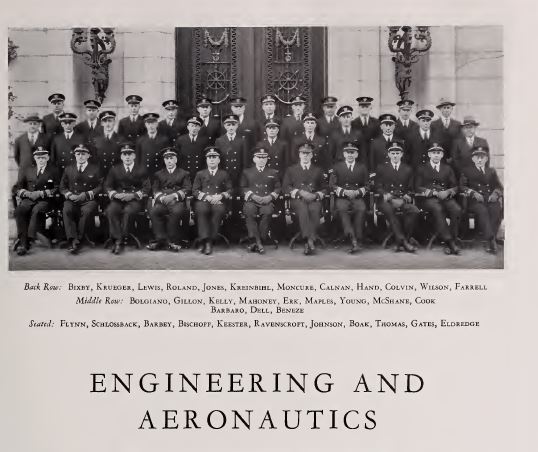
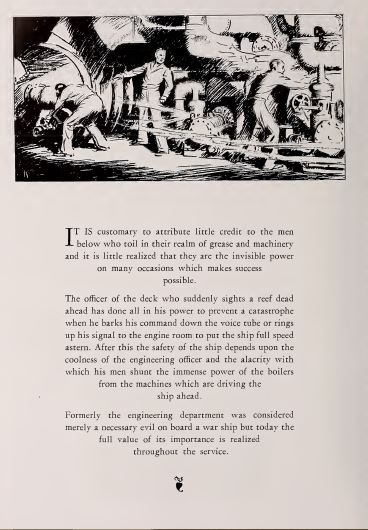
One of the prophetic passages that would occur in Cassin Young’s journey on his way to the Naval Battle of Guadalcanal was a short description in the 1930 Lucky Bag about the Engineering and Aeronautics Department where he taught:
“Battle – racing in column through a narrow channel. The ship ahead decommissioned by shellfire. Indicator thrust from “full speed ahead” to “stop’ or “full speed astern”
When Rear Admiral Bradley Fiske wrote his thoughts on Naval Tactics in 1912, Cassin Young was just beginning a life of education in the fine arts of naval warfare. Fiske’s paper was considered by many to be a benchmark that captured the tactical and practical aspects of naval maneuvers in war and peace. Two distinct ideas were enshrined in the thinking of the naval planners. Battleships were the backbone of the navy and battleships fought in a straight line. Fiske ended his masterful paper with the admonition that:
“We have been exercising at night maneuvers for several years, with little if any, definite result. We know little more than we did twenty years ago in regard to the best way to repel destroyers at night, and everybody seems to feel that about the only thing to do is to extinguish all lights, spread a “screen” out at least five miles away, and realize that if a destroyer gets within torpedo range we cannot prevent her from firing her torpedo at us. This being the case, would it not be better to drop these highly picturesque and laborious maneuvers for a while, and devote our time and our energies and our mental faculties to solving the practical and urgent problem of how to fight a column of battleships in the daytime?”
Japan and the coming threat
The Navy planners had already identified that Japan and her growing fleet would be the enemy in future conflicts and the navy had to continue to plan for the day when the reality of a shooting war would arrive. Even with the Great Depression settling in around the world, the Japanese were making movements into disputed territories. Just after Lieutenant Commander Young completed his tour at the Naval Academy, the Japanese army invaded Manchuria. This event is viewed by many as the beginning of the conflict in the Far East.
In 1929, the US Navy was becoming more aware of the dangers of the rapidly improving air forces. From the 1929 Secretary Report:
ANTIAIRCRAFT DEFENSE
“Cruisers building and authorized will be provided with the latest type of fire control and battery for defense against attack by airplanes, and similar batteries are being installed on other ships as rapidly as the batteries can be completed and the vessels made available for their installation. Antiaircraft batteries of the latest type have already been installed on the Maryland, West Virginia, Colorado, Tennessee, California, Oklahoma, Nevada, Lexington, and Saratoga, and are in process of manufacture for the Arizona and Pennsylvania.
Proving-ground tests and experimental firing in the fleet have not yet determined the type of machine gun best suited for use by surface vessels against aircraft. Efforts to develop an efficient and satisfactory design of machine gun for this purpose are being prosecuted vigorously, and when such a gun is found to meet the demands of service at sea it will be put into immediate production.”
Of the ships identified in the 1929 report concerning the need for antiaircraft protection, nearly all would be in Pearl Harbor on the morning of December 7th 1941.
In June of 1931, LCDR Cassin Young reported on board the USS New York BB 34 to serve as the Communications Officer and later as the first Lieutenant.
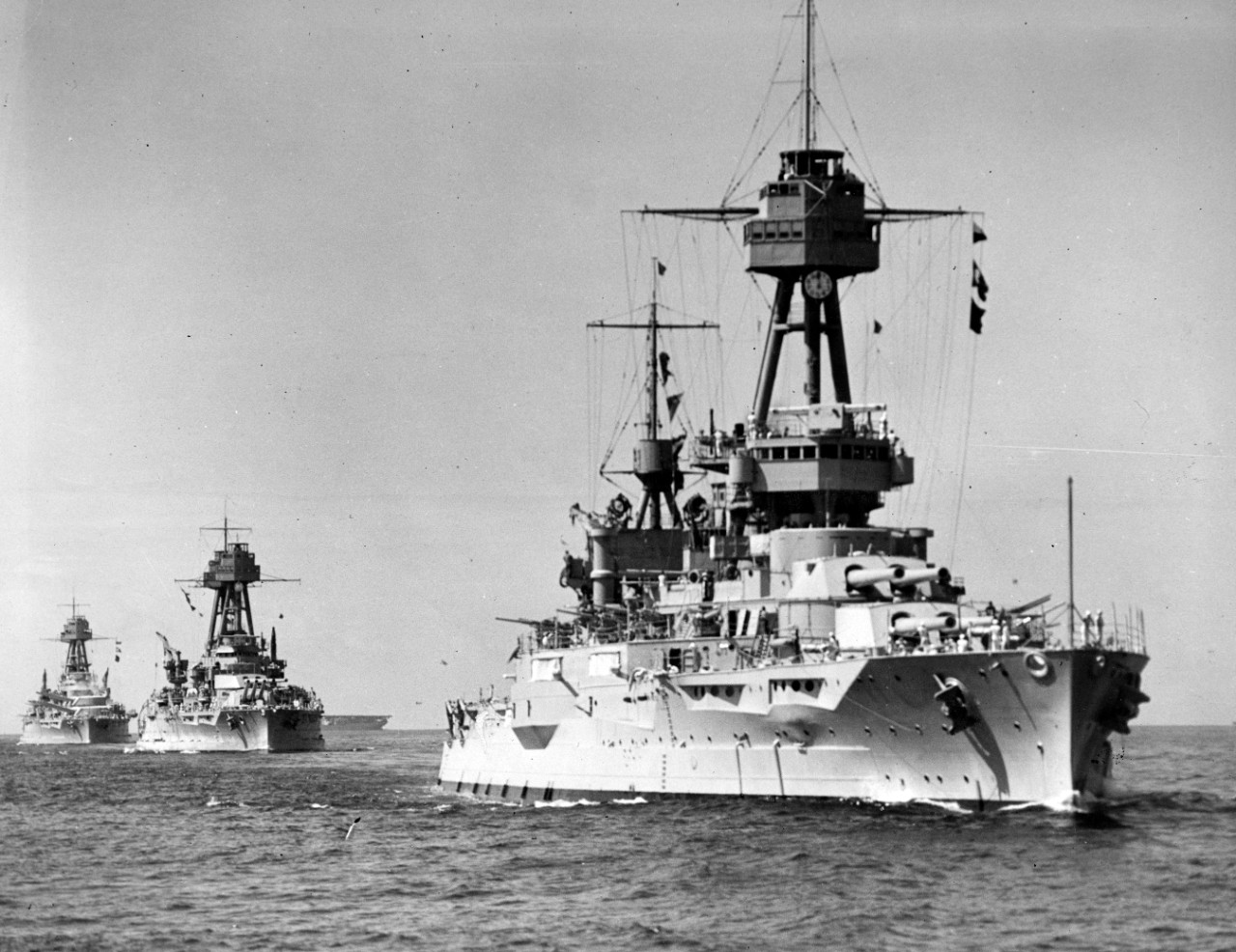
The New York had been in commission since even before the time Cassin had graduated from the Academy. By the late 1920’s she was considered obsolete but fell under the provisions of the Naval Treaty. These provisions allowed her to be up-fitted with new oil fired boilers, anti-aircraft guns and additional deck and side protection. The extension of range because of the new propulsion system was nearly negated by the instability at certain speeds caused by the addition of the torpedo “blisters”. But times were lean and building new ships of any kind during the depression was simply not agreeable to the powers that be. The great stock market crash of 1929 had ushered in a period of depression that had not been seen for many decades. Spending money for defense was not high on anyone’s priority list in those dark days.
Despite limits on funding, Fleet problems that had been held annually to demonstrate the capability of the United States Naval forces and identify any potential weaknesses continued. These exercises had been held every year since 1923 and were an opportunity for the Navy to practice strategy and tactics. Fleet Problem XIII focused on attacks on Hawaii, the Panama Canal and the west coast of the United States. The two groups that opposed each other consisted of the “Blue” and the “Black” forces. This particular problem coupled with the Army Navy Grand Joint Exercise 4 was a remarkable look into the future for the fleet and for the weakness of the overall strategy that led to events at of Pearl Harbor in 1941.
The Navy of the early 1930’s was in a very bad way. In the words of Admiral Richardson in his book Treadmill to Pearl Harbor, the years from 1931 to 1933 were “bleak ones for the Navy.”
He was quoting then Secretary of the Navy Charles Francis Adams who wrote in his annual report:
Curtailment of expenditures has been made principally at the expense of the fighting fleet.
The act making appropriations for the fiscal year 1932 provided funds for an enlisted strength of 79,700 men. This is the lowest number of men appropriated for in any year since the World War. Neither is there economy in our example of disarmament, which has not been followed by others. It is extravagance.”
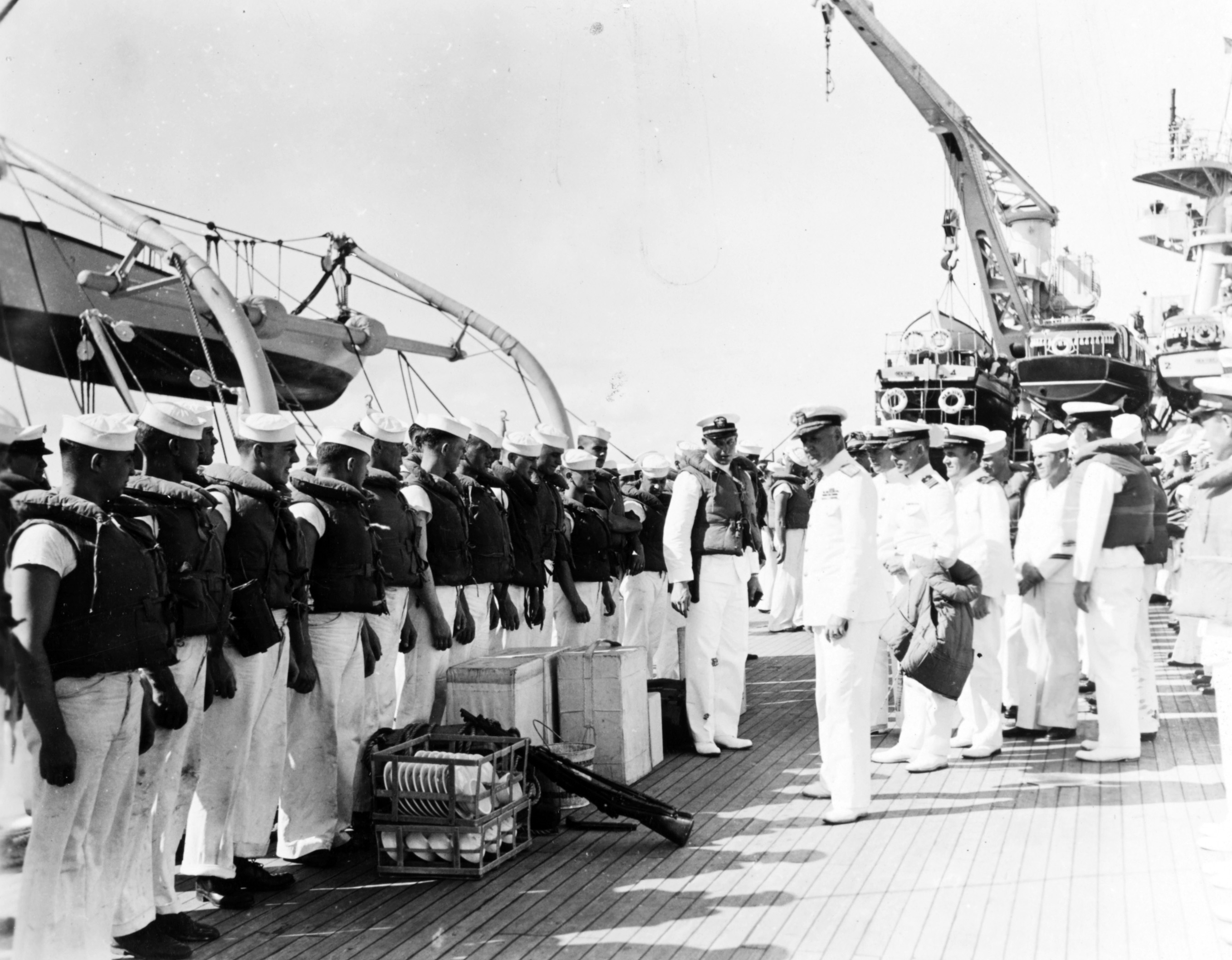
The global economic situation made it difficult for national leaders to gather the support they needed for a fleet that would be able to answer the threats rising in the east and west. The calls for Philippine independence and the continued focus on national isolationism made many of the Navy’s war plans hollow. Congress and the administrations would try and cut the national defense structure further and further in order to satisfy the critics at home who were facing economic insolvency. Ships and sailors cost money in the short term and the long term. Having large fleet exercises in the middle of a depression must have seemed like foolishness for those who did not understand that militarists in Japan and Germany were using the cover to grow their own forces.
Fleet Problem XIII and the corresponding Grand Joint Army Navy 4 allowed the fledgling aircraft carrier forces to demonstrate the weakness of the Hawaiian Island defenses as well as the decaying influence of the battleships.
Aircraft successfully launched an early morning attack on the island’s facilities and left devastation in their tracks. In March of 1932, the Blue force sailed from Hawaii to attack the Black forces defending the mainland of the United States. The battle results showed that even with the minimum amount of aircraft available at the time, battleships and many others were vulnerable to the air. Admiral Yarnell and others stated after the exercise that there was a need for six to eight carriers if the fleet were to be effective in future conflicts. None of those would be built because of the depression.
Cassin Young would spend the next few years continuing to learn his craft as a surface Commanding Officer on board the destroyer USS Evans, DD 78, a World War I Wickes Class destroyer stationed on the west coast.
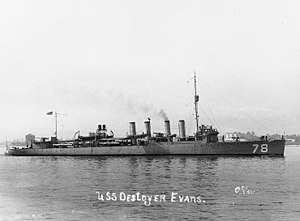
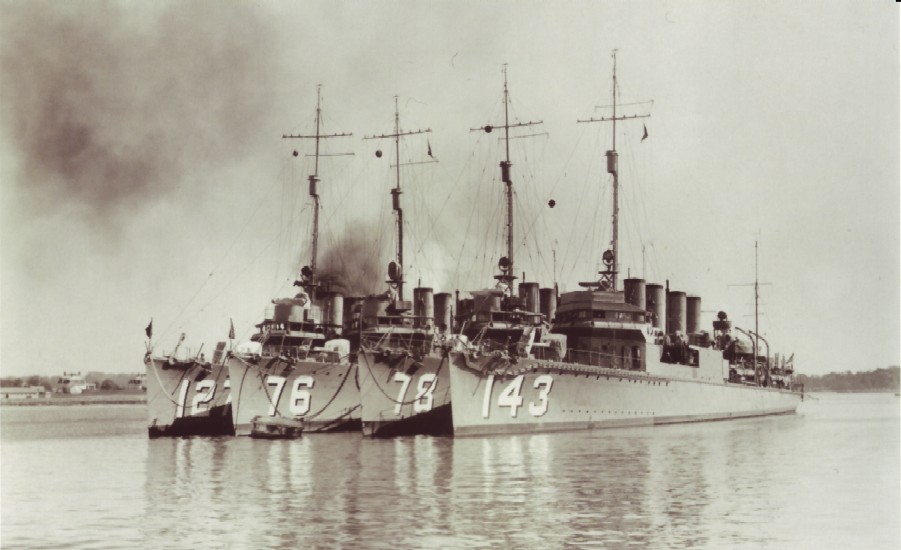
For the next few years, she would sail with the Battle Fleet conducting training and exercise sailing from San Diego to Alaska and Hawaii. The Evans was one of 110 destroyers built during the war and was a typical four stack destroyer. Her bridge and gun mounts were considered “wet” which made sailing them in harsh weather more of a challenge for the crews. Fleet Problem XIV was conducted off the California coast and would have been Young’s first assignment as a surface ship commanding officer. Both San Francisco and San Diego had been vying for the chance to be the main homeport for the fleet and San Diego was slowly but surely absorbing all of the ships and resources. She would remain the home for the fleet until the period just before the war.
After the stint as Commanding Officer, Young went on to serve in an administrative role with the Naval Headquarters Eleventh Naval District San Diego. Events around the world were already in place that would severely test the abilities of the United States Fleets to respond. In 1933, Germany and Japan resigned from the ill-fated League of Nations and by 1935 Germany had abandoned all treaties and reconstituted both their air forces and conscription into the army. Italy invaded Ethiopia and The Japanese consolidated their foothold in Manchuria. The illusion of peace was quickly evaporating all over the globe and the affects could be felt everywhere, including in the US Navy
In 1933, Secretary of the Navy Swanson defined the emerging role of the Navy in his Annual Report. It he recorded:
FUNDAMENTAL NAVAL POLICY OF THE UNITED STATES
“To create, maintain, and operate a navy second to none and in conformity with treaty provisions.
“To develop the Navy to a maximum in battle strength and ability to control the sea in defense of the Nation and its interests.
“To organize the Navy for operations in either or both oceans so that expansion only will be necessary in the event of war…
“To maintain the Marine Corps in strength sufficient to furnish detachments to vessels of the fleet, guards for shore stations, garrisons for outlying possessions, and to provide expeditionary forces in immediate readiness…
“To make war efficiency the object of all development and training and to maintain that efficiency at all times.
“To protect American lives and property.
“To support American interests, especially the development of American commerce and the merchant marine.
“To make foreign cruises to cultivate friendly international relations.
“To encourage and lead in the development of the art and material of naval warfare.
“To maintain a definite system of progressive education and training for naval personnel.
“To determine emergency material needs and to plan for procurement.
“To inspect systematically all naval activities and materials.
“”To cooperate fully with other departments of Government.
“To encourage civil industries and activities useful in war.
Recognizing that threats could come from either the Atlantic or the Pacific was a key driver to the management of the fleet. The push to locate the main fleet in the Pacific now had to be complimented with a balanced approach in the Atlantic. For the Navy, the implied threat of Japanese expansion was still the main driver for fleet problems well into the late 1930’s. But events late in the 1930’s changed the mindset of the powers in Washington enough to shift Fleet Problem XX to the Caribbean in 1939.
Cassin Young watched all of the changes from his role at Naval Headquarters and in his follow on assignment to command Submarine Division Seven in Pearl Harbor. The submarine fleet was slowly being upgraded for an expanded role during this time. New developments in diesel engines and operational equipment were allowing the boats to transcend their earlier role as harbor patrol and scouts for the battle fleets.
The changes would not come too soon as was evidenced a few years later in the aftermath to Pearl Harbor.
But the fatal flaw of American naval policy was found in the strict adherence to the conformity of the treaty limitations.
This adherence would cost the country greatly in the years to come.
Mister Mac
Next up – Chapter Seventeen: Sometimes course changes have unintended consequences

 theleansubmariner