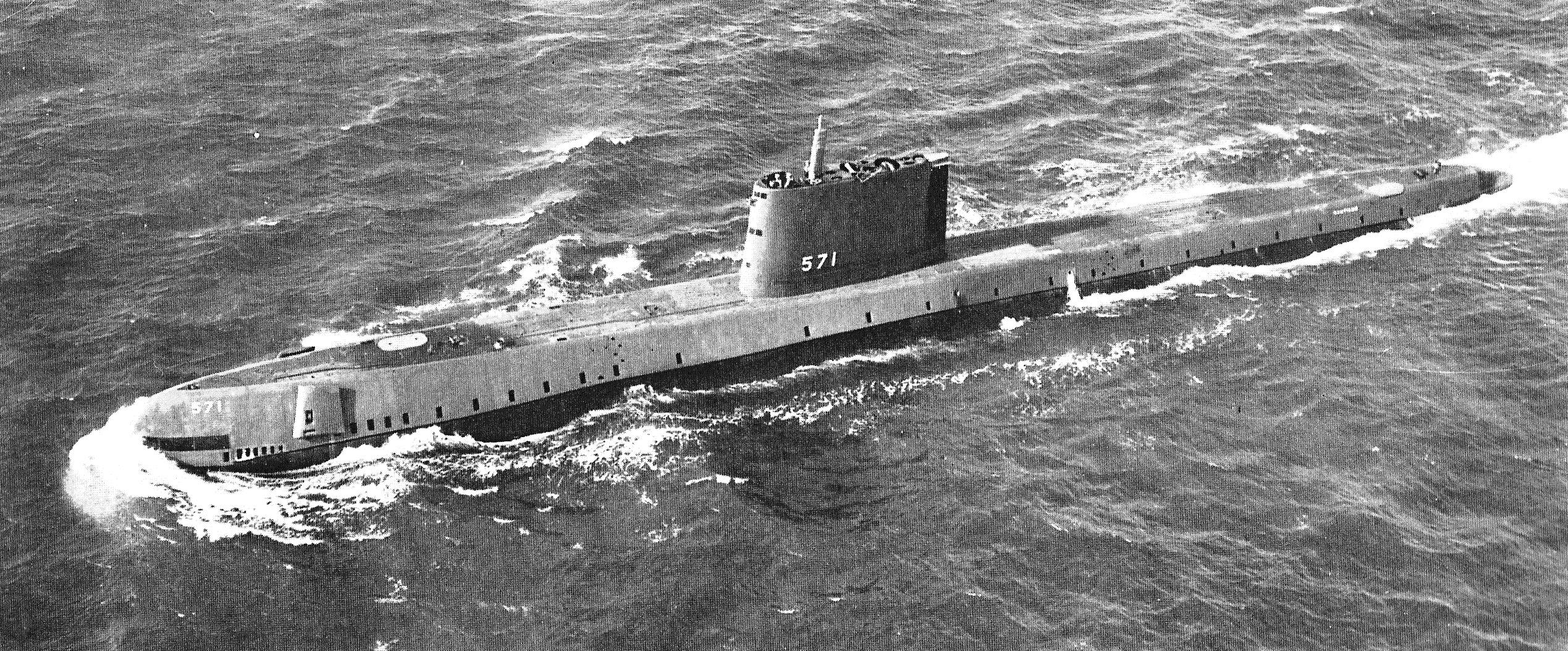
Looking at the launch and commissioning of the Nautilus the last few days, it seemed odd to me that the sea trials were somehow out of whack with what I was used to. The experience of building a submarine in the eighties was that you had the launch, fitting out, sea trials, then commissioning. Looking at other boats of that generation, that seemed to be a pattern.
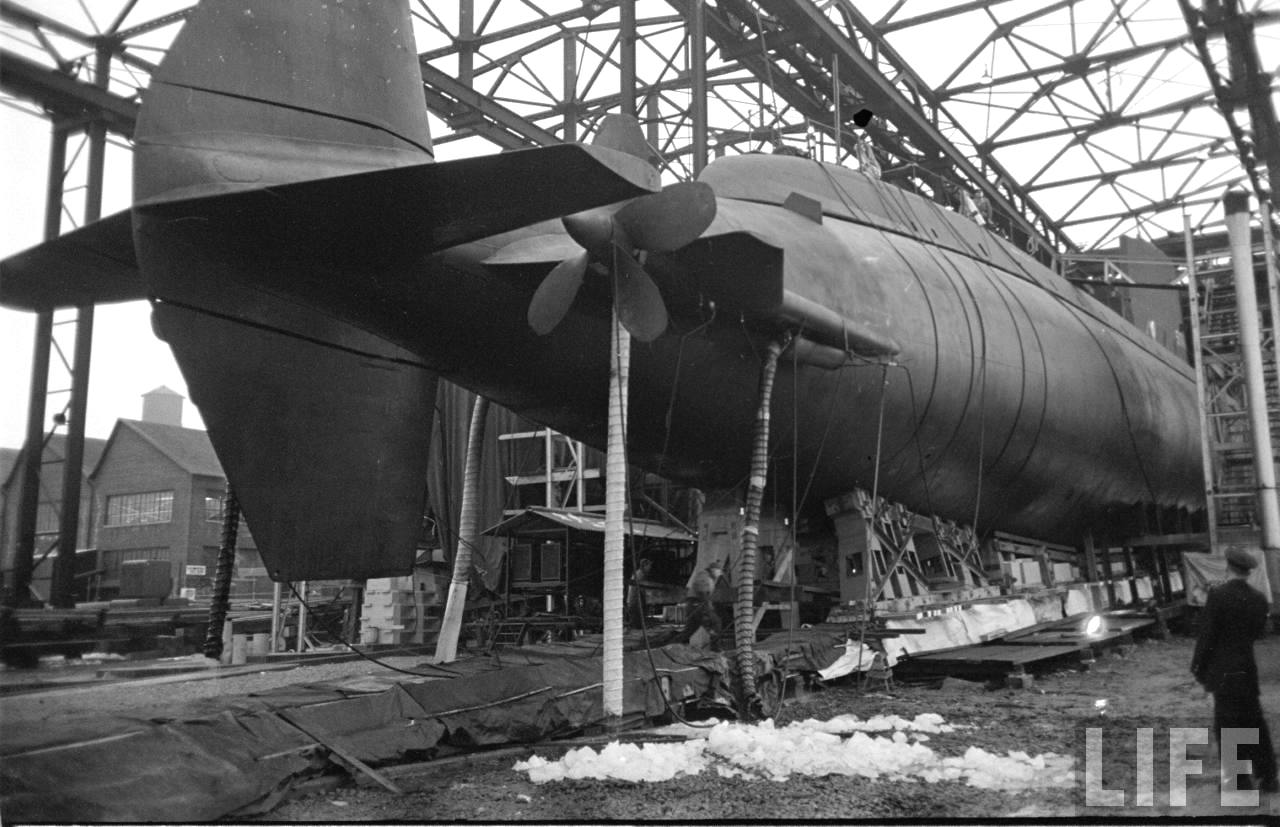
But Nautilus was the first and I am sure she was under intense scrutiny during construction. So, the gap of a few months from Commissioning and sea trials was puzzling to me but not completely unexpected. I found this interesting admission of a flaw in a public source rather telling. I think some shipyard people had a very bad October.

THE EVENING STAR, Washington, D. C. OCTOBER 6, 1954
Pipe Troubles Keep Nautilus from Duty at Least 3 Months.
Operational and test use of the atomic-powered submarine Nautilus will be delayed not less than three months because of the necessity for replacing piping which does not meet specification requirements.
Rear Admiral B. E. Manseau, acting chief of the Navy’s Bureau of Ships, made that announcement last night.
On September 18, the Defense Department announced that a 1 1/2-inch steam pipe failed during routine dockside tests. But it said that the piping had no connection with the nuclear propulsion plant.
The failure occurred in a pipe “the material of which did not meet specifications,” Admiral Manseau said.
Re check Made.
At the time of the Initial announcement, the Navy said a thorough recheck was being made of all piping and that replacement of some piping might be necessary with the result that the anticipated start of test operations late this month might be delayed.
It has now been determined, according to Admiral Manseau, that extensive replacement of steam piping will be necessary.
“An exact estimate of the delay cannot be made at this time,” he said. “There is no doubt as to the satisfactory completion and operation of the ship.”
He added that installation of material in connection with the nuclear part of the propulsion plant had been determined to be satisfactory.
Commissioned Last Week.
Only last Thursday the Nautilus was commissioned at Groton, Conn., where It Is being built by the Electric Boat Division of the General Dynamics Corp.
The Nautilus, the world’s first known atomic submarine, is the forerunner of a flotilla of nuclear-engined undersea fighting craft. Congress has authorized construction of two more nuclear powered submersibles and Secretary of Defense Wilson announced Monday that new developments had made it feasible for the start of a preliminary project looking toward the development of an atomic power plant for an aircraft carrier.
The 3,000-ton, $55-milllon Nautilus was launched last January by Mrs. Eisenhower. The submarine had been inbuilding since June 14, 1952. At the commissioning ceremonies Comdr. Eugene P. Wilkinson took over command. The ship has 11 officers and 85 enlisted men who have been handpicked by the Navy for the assignment.
December 30, 1954 – The submarine’s reactor was started up.
I can only imagine the reaction of Admiral Rickover in finding out that his premier project had some flaws right out of the gate. It probably explains why he became even more rigid and unforgiving over the years to come.
In my generation, the example of the USS Ohio demonstrated that flaws were still possible.
From https://nuclearcompanion.com/data/ohio-class-ssbn-726-ballistic-missile-submarines/#construction
Construction of the USS Ohio started in 1974 using a modular approach. Cylinders of 42-foot diameter were created at Quonset Point, Rhode Island, and then shipped to Electric Boat for assembly. After welding the cylinders together, a long cylindrical submarine was formed.

The keel-laying ceremony took place in April 1976, and by April 1978, the USS Ohio was moved out of the assembly building for final construction and launch. However, in December 1978, it was discovered that the USS Ohio’s nuclear reactor turbines were defective, causing a delay in the launch until April 11, 1979.
The submarine was finally delivered to the U.S. Navy after two years of testing on October 28, 1981, and commissioned on November 11, 1981. A significant factor in the delays was the replacement of faulty turbine rotors in the General Electric reactor, along with various design changes and the learning curve of building a new class of ships.
From the initiation of the Trident program in 1970 to the completion of the USS Ohio in 1981, more than 11 years passed, contrasting with the three years it took to develop the Polaris SLBM and complete the George Washington.

Operative Service
Commissioned on November 11, 1981, the USS Ohio was the first Trident submarine. Shortly after its commissioning, it began its demonstration and shakedown, launching its first Trident I missile on January 17, 1982.
After sailing into Peugeot Sound, Washington, and finishing a strategic out load at Bangor, the submarine achieved deployed status in late August 1982. This notable vessel then embarked on its first deterrent patrol on October 1, symbolizing the accomplishment of Initial Operational Capability.

Still sailing
To be honest, the life of the Ohio Class has shown the strength of her initial building. I was on Ohio from 1994-95 and it is amazing to me that the ships are still performing important missions around the globe. Forty-three years since commissioning is a pretty long time. Frankly, the USS George Washington was only about thirteen years old when I sailed her, and I considered her old based on the number of times major things broke. The Ohio’s will continue for a while longer while the Columbia is in the process of being developed. Hopefully the lessons learned will speed the process along in time for the next Cold War. I think it’s coming sooner than we are being led to believe.

 theleansubmariner
Always find your writing interesting.
Thanks. I take credit only for the bits I had to the historical newspapers and sources I discover.
Mac