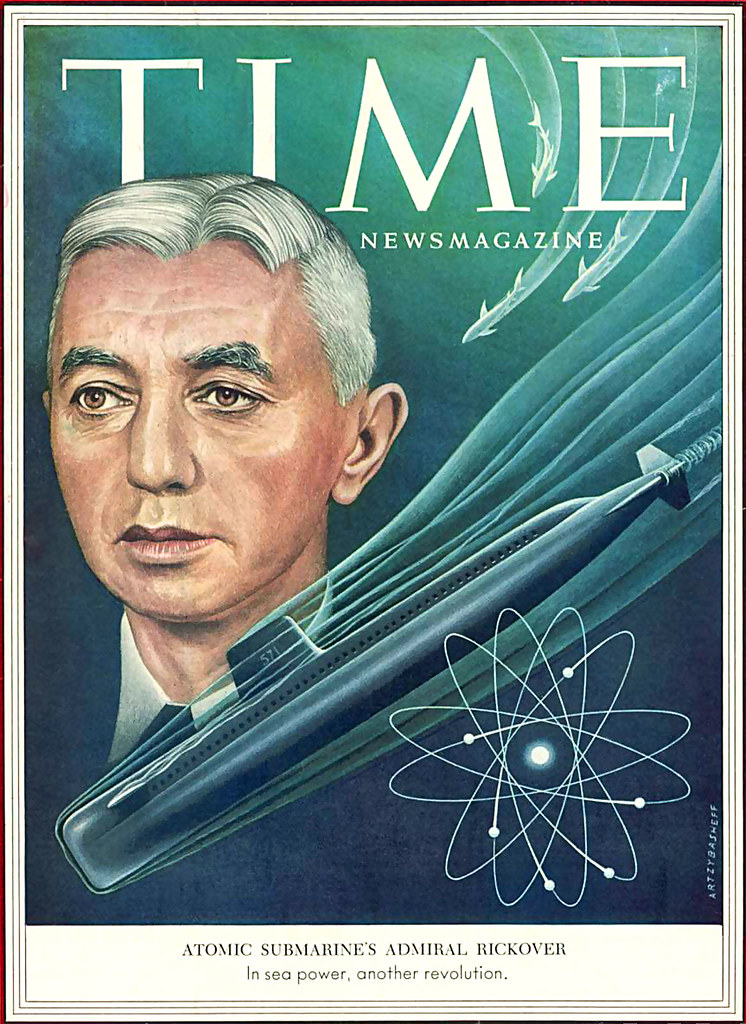
Overcoming being Overcome.
Once upon a time, I began to write a story about the importance of overcoming being overcome. We had grand illusions that this would be the book of a lifetime. At that point I had so many examples and thought the time was right. Well, the moment passed but the idea never did. Today (January 27) marks the birthday of one of the most remarkable overcomers in modern history.
I have rarely met a person that did not have to overcome difficulties on their way to success (however that is defined in their lives). The world does seem to play favorites sometimes though. Whether it is by birth, country of origin, pigmentation or upbringing, each of us comes to the game of life with plusses and minuses.
January 27, 1900, was a time of great struggles and transition all over the world.
The industrial revolution was in full swing as technology brushed up against man’s inability to adapt quickly enough to grasp it. While engineers all over the world were experimenting with electrical power and internal combustion engines, the world was still an agrarian based system. In America, the revolution of mass automobile manufacturing and flight were still a few years away.
The same can be said about most countries around the world.
The “Father of the Nuclear Navy” had very humble beginnings. He was born Chaim Godalia Rickover to a Jewish tailor on the 27th of January, 1900 in Makow, Poland. (I was reminded about one of the characters in Fiddler on the Roof and the story of their struggles as I read this in one of my references.)
This region was part of the Russian Empire where large antisemitic movements called Pogroms were underway in the early 1900s. These pogroms were a continuation of a decades long period of discrimination. For decades after the 1881 pogroms, many government officials held the antisemitic belief that Jews in villages were more dangerous than Jews who lived in towns. The Minister of the Interior Nikolay Pavlovich Ignatyev rejected the theory that pogroms were caused by revolutionary socialists, and instead he adopted the idea that they were a protest by the rural population against Jewish exploitation. With this idea in mind, he promulgated the notion that pogroms had spread from villages to towns. Historians today recognize that although rural peasantry did largely participate in the pogrom violence, pogroms began in the towns and spread to the villages.
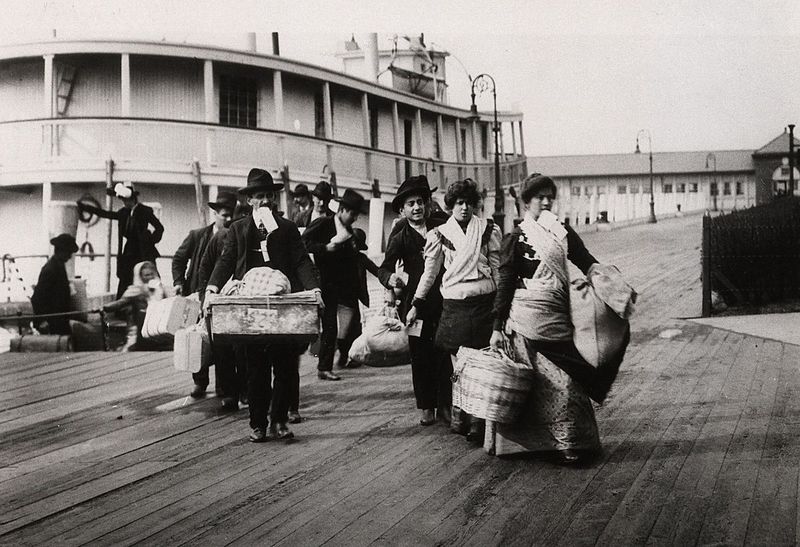
So, his father decided to move the Rickover family to the United States. The family eventually settled in Chicago where, now Hyman Rickover, would grow up.
From a recent article:
Humble Beginning to Naval Officer, Admiral Hyman Rickover: A Nuclear Legacy
Sean Bernstel
February 28, 2022
Hyman continued his education beyond grade school, an opportunity many immigrant children did not have. However, Rickover worked afternoons and weekends for Western Union so that he could help his family financially as well as continue his education. As he was finishing High School, Rickover hoped to continue his education even further by attending college but knew his family would not be able to afford it.
To overcome the financial obstacle of college education, Rickover sought an appointment to the United States Naval Academy where the tuition is free. This is no easy task. In order to attend the service academy, an applicant must be nominated by a member of congress. Luckily, when Rickover worked for Western Union, he frequently delivered messages to Chicago Congressman, Adolph Sabath. Through these interactions, he developed a key relationship with the congressman who eventually would give Rickover the necessary nomination to attend the Naval Academy. This story also provides a foreshadowing of how Rickover would use his relationships with members of Congress to make his own way.
The only obstacle left was the challenging entrance exams required to enter the Naval Academy. Displeased with the preparatory program provided, he instead isolated himself and studied in his own way in preparation. Though against the grain, his strategy proved successful and he passed the exams. Not doing things “by the book”, as you will see, is a common theme in the distinguished gentleman’s life. Thus, in the summer of 1918, Rickover entered the Naval Academy joining the Class of 1922 as a first-year midshipman, also known as a plebe. Over his 4 years, “Rickie” developed a reputation for studying without end and not being too keen to go on dates. This sentiment was immortalized in the 1922 Naval Academy Yearbook also known as the Lucky Bag.
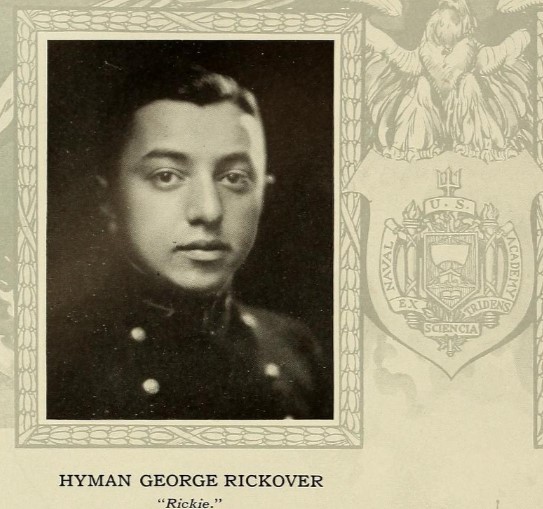
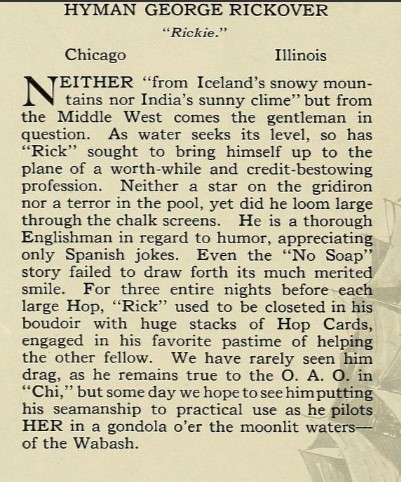
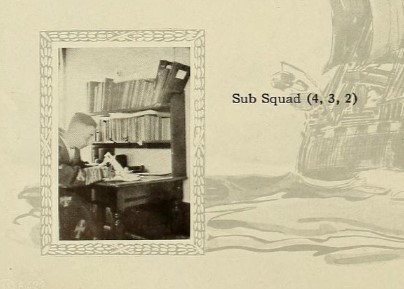
His senior photo can be seen in Fig. 1. In the summer of 1922, he graduated 107th in his class of 540 midshipmen and was commissioned as an Ensign in the U.S. Navy.
From the Lucky Bag
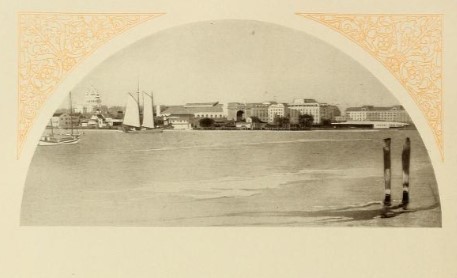
Annapolis
There at the gate of the ocean
Close to the voice of the tide
Annapolis stands like a beacon light.
Flashing its rays far and wide
Aye like a beacon we see her.
Rearing up men for the fight
Standing up proud in her power
Dazzling the world with her light. There neath the cross of marble
Or famous old sea fighters rest,
True to their mother the ocean,
Forever asleep at her breast
And there neath the dome of the chapel,
Lying in most honored state
Still hovers that undaunted spirit,
Paul Jones, the unconquered and great
Full man a grey bearded captain
Remembers the old lover’s lane
And down its green shadowed parkway
He longs to be strolling again.
The tidewater river that’s flowing.
Past Greenbury Point to the bay;
The winds that sweep in from the ocean
And carry the sting of the spray.
There stands the tribute to Somers.
And all of his time-honored band,
Mute spokesman of deeds by the workers
Who fashioned our own native land.
And filled with the breath of the warriors.
Whose pictures look down from the wall,
We roll back the years to their glory,
In the hush of Memorial Hall.
Then borne on the breezes of twilight.
Comes the sound of a sweet bugle call,
As the colors float down from the flagstaff
And the shadows of evening fall.
Once again comes the sound of the bugle.
Now softly, now sweet through the night,
And ever there gleams out to seaward.
The far-reaching rays of the light.
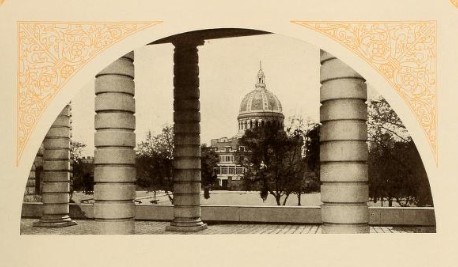
Rickover’s naval career began in 1918 at the Naval Academy; at this time, attending military academies was considered active-duty service, due in part to World War I.
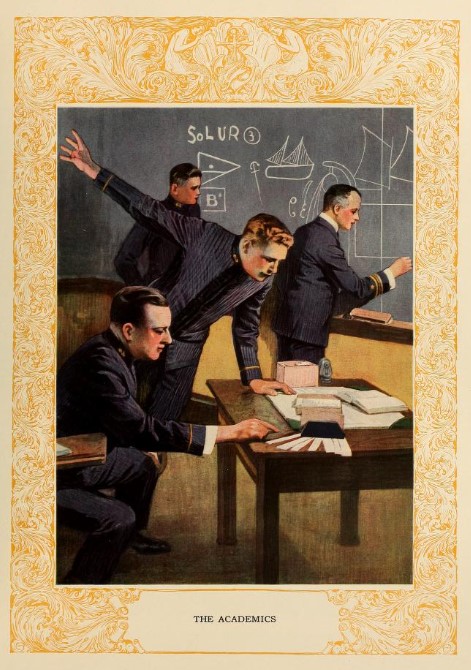
The obstacles he would have to overcome extended far beyond the normal academic obstacles all of the young men faced. Hyman was not from a family with money, power or influence. Most importantly, he was not a typical white Anglo Saxon protestant. He came from a foreign-born family and was Jewish at a time when being Jewish was not an advantage of any nature.
The prejudices that existed in Russia and Old Europe existed in America as well. It’s not always easy to remember but America was still a land made up of a large number of immigrants. While the melting pot was still churning, many of the old thoughts and biases still existed. I am sure that his time in the academy was affected by those beliefs.
He was also not athletic or disposed to pursue the trivial things that others did. His stature was small, and he focused more on education and exploration. It was his love of learning and continuous improvement that became his superpower.
In the end, he overcame all of the barriers and obstacles which allowed him to outlast and outperform all of his classmates.
From the Naval Historical Command:
On June 2, 1922, Rickover graduated 107th out of 540 midshipmen and was commissioned as an ensign. He joined the destroyer La Vallette on September 5, 1922. Rickover impressed his commanding officer with his hard work and efficiency, and was made engineer officer on June 21, 1923, becoming the youngest such officer in the squadron.

As early as 1922 La Vallette participated in antiaircraft training and witnessed the growing importance of naval aviation while serving as plane guard for Lexington (CV-2) during the destroyer’s final months of service. Also in 1922, La Valette was the first duty station of Ensign (later Vice-Admiral, permanent rank) Hyman G. Rickover, ‘ Father of the Nuclear Navy’. She decommissioned at San Diego 19 April 1930, and on 10 June 1931 was scrapped in accordance with the London Naval Treaty.
Assigned to the destroyer La Vallette (DD-315) home-ported at San Diego, Calif., Rickover briefly returned home to Chicago on leave before traveling to New York and boarding the transport Argonne (AP-4) on 16 July 1922. Unfortunately, his ship was at sea when Rickover arrived on the west coast on 13 August, and the Navy temporarily assigned him to the destroyer Percival (DD-298). Detached from temporary duty approximately a week later, Rickover boarded the storeship Arctic (AF-7), steamed northward to San Francisco, Calif., and reported for duty on board La Vallette on 5 September 1922.
Assigned the duties of assistant torpedo officer, commissary officer and supply officer and watch officer, Rickover spent his precious few off-duty hours reading, or studying La Vallette’s propulsion system, dedication that contributed to his appointment as the ship’s engineering officer on 21 June 1923. Over the next several months, the destroyer steamed southward along the South American coast, through the Panama Canal and into the Caribbean. Unfortunately, after La Vallette returned to San Diego in April 1924, Rickover fell ill. Relieved of his duties as engineering officer in August, he reported to the Mare Island Naval Hospital in Vallejo, Calif., a month later. Detached on 5 November 1924, he took leave for the remainder of the year.
On 21 January 1925, Rickover reported to his next duty station, the battleship Nevada (BB-36). Unfortunately, his illness quickly returned, forcing him to transfer to the hospital ship Relief (AH-1) for treatment on 1 May and his return to San Diego a month later. He returned to the ship in September and served as her electrical officer until April 1927.
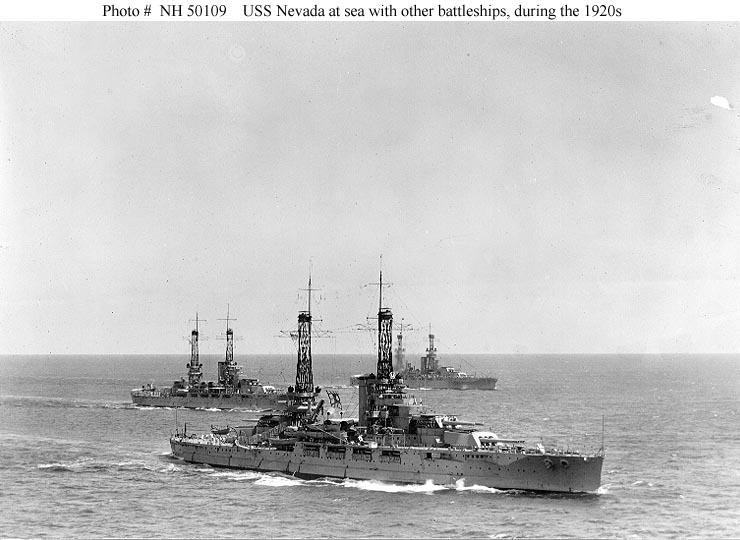
On 28 April 1927, Rickover detached from Nevada and reported to the Naval Postgraduate School in Annapolis. After a year’s instruction, he traveled north to New York and earned a Master of Science in Electrical Engineering from Columbia University.
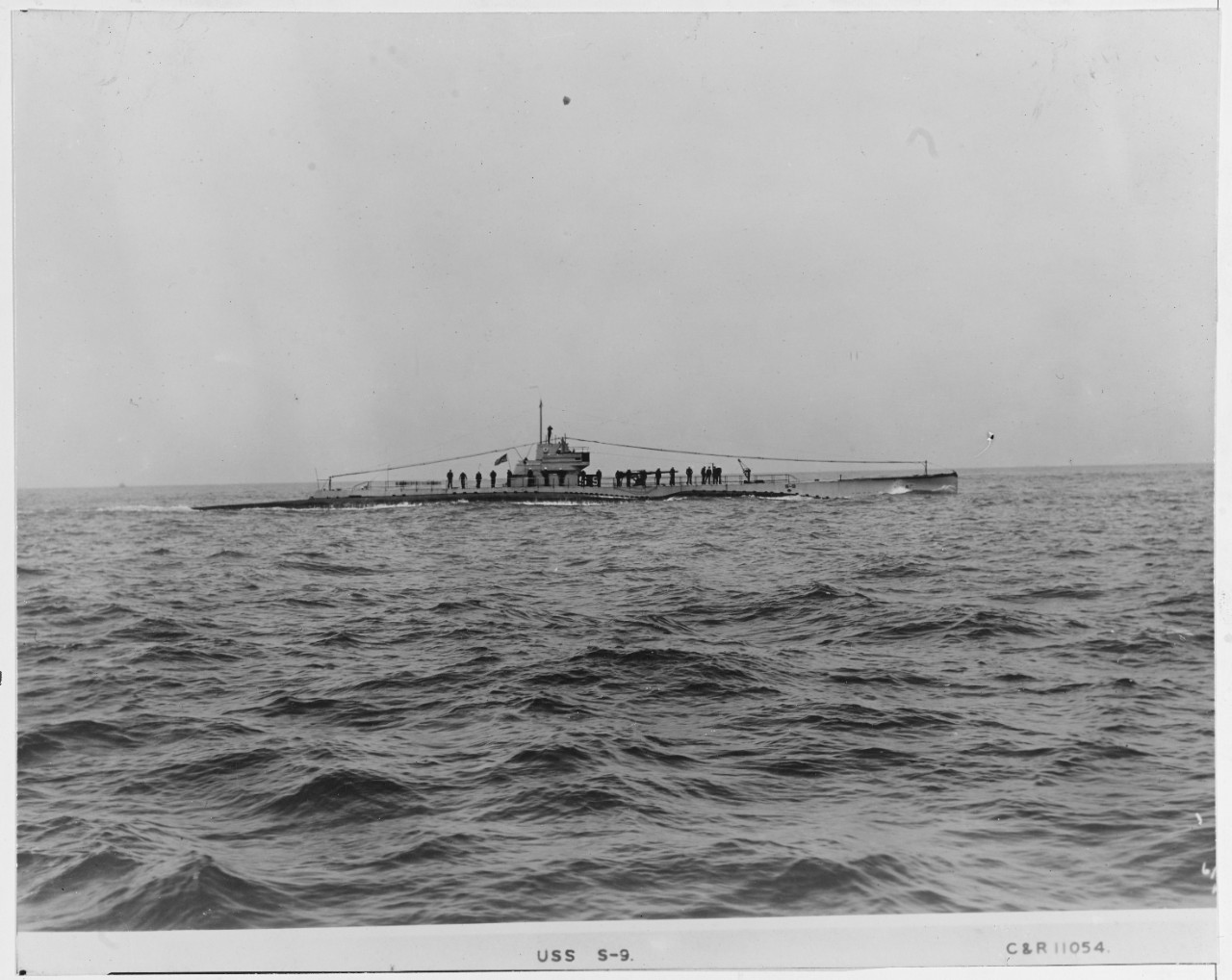
In 1929, Rickover received orders to report to the battleship California (BB-44) as her electrical officer. Because he had already served in that position, he requested that his orders be changed, and subsequently volunteered for the submarine branch. Shortly after he reported to the submarine base at New London, Conn., the Navy temporarily assigned Rickover to S-9 (SS-114) on 10 October until the start of the next submarine training course in January 1930.
Shortly after his successful completion of the six-month submarine training course, on 21 June 1930, the Navy assigned Rickover to S-48 (SS-159) as the boat’s engineer and electrical officer. After several months of rather uneventful service, on February 20, 1931, S-48 got underway from New London en route to the Panama Canal. Just over a week later, the boat moored at the submarine base at Coco Solo, C.Z., on 1 March. Two months later, Rickover was promoted to the boat’s executive officer and navigator. Later that fall, he took leave, returned to the United States and married Dr. Ruth Masters, PhD., in Litchfield, Conn., a union that would produce one son, Robert.
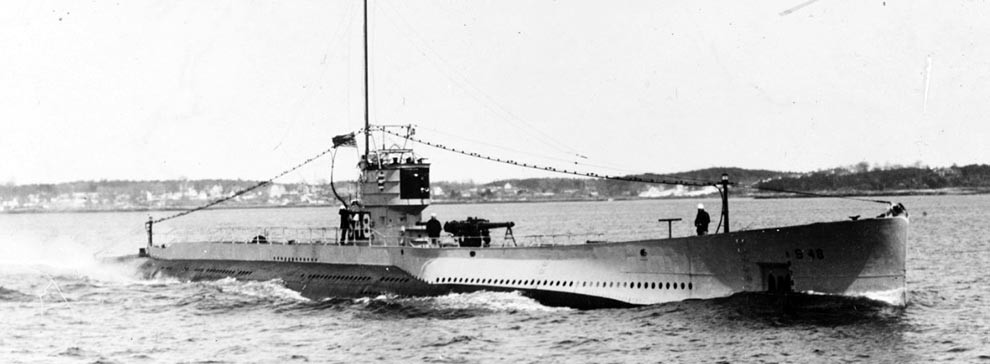
After three years of submarine service, Rickover was relieved as S-48’s executive officer on 2 June 1933 and assigned to the Office of the Inspector of Naval Material for the next two years. Despite once again being reassigned to sea duty in 1935, Rickover did not return to the submarine service. Instead, he served as the assistant engineering officer on board the battleship New Mexico (BB-40) until June 1937.
Promoted to the rank of lieutenant commander, Rickover assumed command of the minesweeper Finch (AM-9) on 17 July 1937. Assigned to the Asiatic Fleet and homeported in Tsingtao, China, Rickover took command of his ship only ten days after the Incident at Marco Polo Bridge sparked war between the Japanese and Chinese, hostilities that spread to Shanghai in August. Unfortunately, his shipboard command proved short lived. Relieved on 5 October 1937, the Navy re-assigned Rickover to the Cavite Navy Yard, Philippine Islands, where he would spend the next two years.
In August 1939, Rickover returned to the United States and reported to the Bureau of Engineering in Washington, D.C., where he would spend most of World War II. Shortly before the end of the war in the Pacific, in July 1945, the Navy finally gave him command of the ship repair facility at Okinawa, Ryukyu Islands. After the end of the war, Rickover became the Nineteenth Fleet inspector general in San Francisco, Calif.
In May 1946, the Navy assigned Rickover to the Manhattan Project at Oak Ridge, Tenn. Several months later, in November, he addressed the Submarine Officer’s Conference and forcefully advocated the construction of nuclear-powered submarines. Less than a year later, Rickover returned to Washington as a member of Rear Adm. Earle Mills’ staff at the Bureau of Ships (BuShips).
Frustrated by the Atomic Energy Commission’s lack of interest in nuclear naval propulsion, on 4 August 1948, Mills established a Nuclear Power Branch, led by Rickover, within BuShips. Rickover added to his responsibilities in February 1949 when the Atomic Energy Commission appointed him to their Division of Reactor Development.
Despite having already been passed over for promotion twice, Rickover was selected for promotion to rear admiral on 1 July 1953. While on active duty, he would be promoted once again to vice admiral on 24 October 1958. After 63 years of service, he retired from the Navy on 31 January 1982.
He passed away in Arlington, Virginia on 8 July 1986 and was buried in section five, grave 7000 at Arlington National Cemetery three days later.

 theleansubmariner