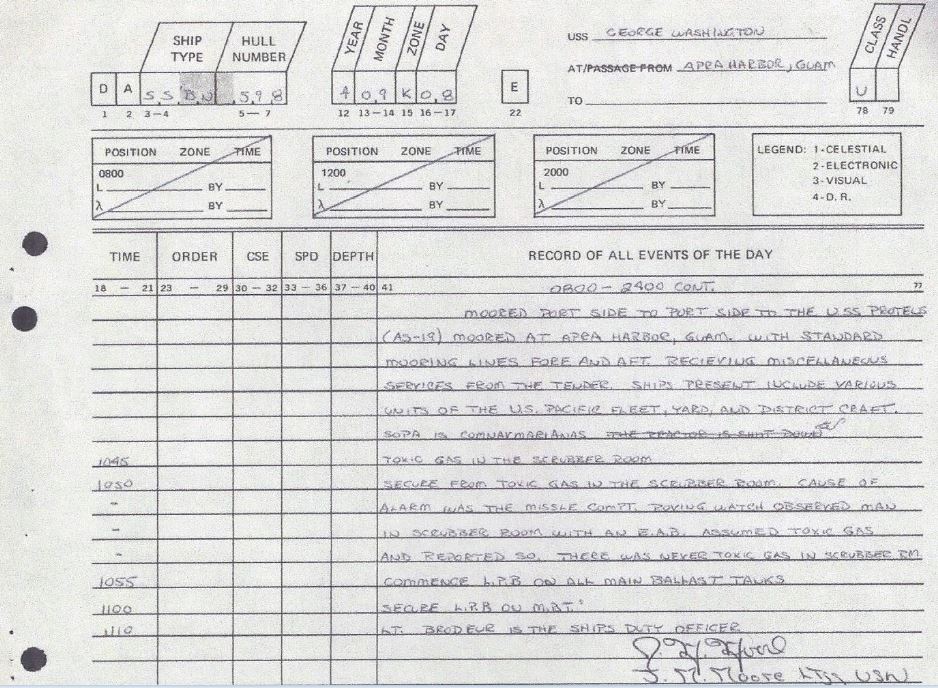
The SHIP’S DECK LOG SHEET NAVPERS 3100/2 (Rev 5-73)
I have been working on my application for PACT act benefits for a number of months now. One of the most frustrating things is trying to prove that we were where we were. Submarines are notorious for secrecy (which they should be) but in order to be considered under the new law, you have to go through a number of hoops. I had never considered filing for benefits before but as I am getting older my “presumptive conditions” are starting to work against me. Presumptive conditions are those conditions that are presumed to be linked to one of many types of toxins many of us were probably exposed to in the course of our duties.
In the course of discovery, a gentleman who served on the same boat as I served on in the same time period managed to get a copy of some of the boat’s in port deck logs. These logs are unclassified but have remained cloistered for over fifty years (or more). It was actually a pretty exciting find since it puts the boat where we said it was and there is no dispute possible about the timing. But looking at the set of logs I was provided brought back a flood of memories.
(Skip to the end for important information if you are seeking help)
I never gave much thought about the logs after I left the Navy.
But they were pretty standard and each one told a story. If you lived it, the story comes to life just from reading the words on the page. I spent several hours scrolling through the PDF files and I found myself remembering things I had not thought about for decades. Memories came back and I was once again a twenty year old sailor in a place half the world away. I could almost hear the hum of the machinery below decks and feel the thick damp air of the Marianas Islands once more.
The Navy log is an efficient way to tell the story. There are many reasons to keep the log. Historically, if anything needs to be analyzed at some future date, the log provides a wealth of information. But the information is useless unless you know the real story behind the abbreviated entries. You can’t know the stories unless you lived them.
The day in the life of a submarine
At the top of the sheet, neatly printed in block letters is the ship type and the hull number. The George Washington was an SSBN (ballistic missile submarine) and her hull number was 598. There was only one SSBN 598 and that will probably remain true for as far in the future as the Navy classifies that type of ship. The George Fish was unique in the fact that she was originally laid down as a Fast Attack boat. And she had a different name (Scorpion). If you knew where to look, you could even see the Scorpion name internal to the boat. It was actually a qualification question.
The next piece of information was the year, month, zone and date of the entry. In this case, the year was 1974 the month was September and the Zone was K. Finally, it was the eighth day. From my own experience, I could understand that the Gold Crew had already relieved the Blue crew and was most of the way through their refit period. This time period would be used to replenish stores, repair broken machinery, begin the training and familiarization with equipment and prepare for their patrol.
This was a Sunday, but in refit, there was no such thing as a Sunday.
Ships work continued as normal with the exception that some of the tender shops were lightly manned or not manned at all. The submarines did not have the luxury of a day off since pressure was always on to get back on station. If you were lucky, you got some liberty at the end of a work day but most of the time that meant a beer liberty at Andy’s Hut. I was an Auxiliaryman and can’t ever remember doing any recreational sports. Plus I was pretty junior so between duty and loading stores, there wasn’t too much time to play.
Interestingly enough, September 8 was the day that former President Nixon would be pardoned by his replacement President Gerald Ford. I suspect that few of the crew members had much time to react since they were pretty well preoccupied with their work. Plus, outside news came slowly to the boats. There was no internet, CNN did not exist and we relied heavily on the Armed Forces Broadcasting network which was certainly well controlled for many reasons. If you had the time, and who did, you might pick up a copy of Stars and Stripes but it was always about a week behind and not worth much in the way of news. You also didn’t get any texts or calls since cell phones did not exist.
On the particular day, the USS George Washington was at Apra Harbor, Guam.
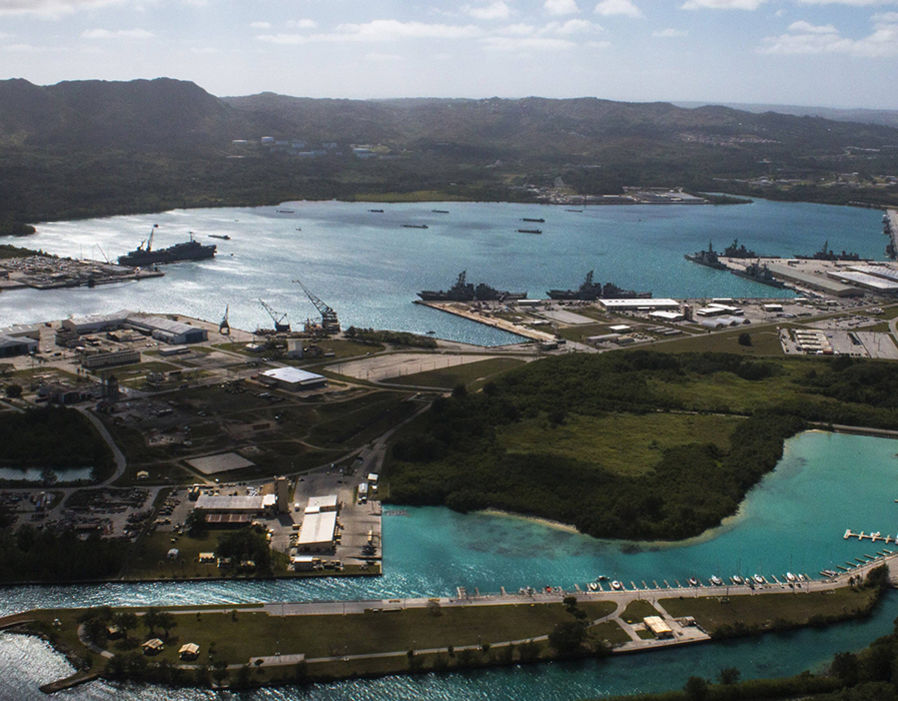
Apra Harbor was home to the tender USS Proteus (AS -19) and the site was known as Polaris Point. Even with the advent of Poseidon and later Trident missile boats, the name remained the same. I would visit it many times in the future on other submarines and the place seemed to never change. Rain followed by heat and humidity followed by more rain. Occasionally the rain would come in the form of a typhoon. But the Point remained active and does so to this day.

As I said before, the classification of this log was unclassified. I’m sure that was for administrative purposes and try and reduce the amount of classified documents that needed to be tracked.
There is a section on top for ship’s position but that was nearly always crossed off in port. It was the lower portion that really tells the story in port. The two relevant columns out of six are time and record of all events of the day.
The sheet I selected to review starts from 0800-2400 on that day. The summary paragraph is similar to most that I remember:
MOORED PORT SIDE TO PORT SIDE TO THE USS PROTEUS (AS-19) MOORED AT APRA HARBOR GUAM WITH STANDARD MOORING LINES FORE AND AFT. RECEIVING MISCELLANEOUS SERVICE FROM THE TENDER. SHIPS PRESENT INCLUDE VARIOUS UNITS OF THE U.S. PACIFIC FLEET, YARD AND DISTRICT CRAFT. SOPA IS COMNAVMARIANAS.
SOP was senior Officer Present Afloat which in this case was Squadron Fifteen’s commanding officer.
In October 1964, the permanent assignment of Commander Submarine Squadron Fifteen was changed from Pearl Harbor to Guam. A rear-echelon staff known as Commander Submarine Squadron Fifteen Representative was established in Pearl Harbor to handle the myriad of personnel and training functions connected with keeping the Polaris submarines crewed with the best-qualified and trained personnel possible.
On the morning of 29 November 1964, Proteus entered Apra Harbor, where she commenced setting up the third FBM replenishment site to support Polaris submarines. Subsequently, seven fleet ballistic missile submarines joined USS Proteus in Guam. Benjamin Franklin and Kamehameha arrived in 1966. Mariano G. Vallejo was commissioned and assigned to Submarine Squadron Fifteen in December 1966.
The year 1970 represented a significant period in the history of the squadron. During this period, the units of the 627/640 class completed Pacific service and departed for conversion to the Poseidon Weapons System, while 616 class overhaul units reported for duty as replacements in the Pacific Fleet strategic deterrent force.

In January 1973, Proteus returned to Guam and relieved Hunley, which departed Guam for conversion at Puget Sound Naval Shipyard, Bremerton, Washington. The return of Proteus to Guam marked the end of the first significant time period that Proteus had been absent from Guam since establishing SSBN REFIT Site III in 1964.
The replacement of 616-class SSBNs with 598/608-class SSBNs commenced in May 1973 when Nathan Hale departed for conversion to the Poseidon Weapons System, and was relieved by George Washington. Later in 1973 Patrick Henry and Robert E. Lee replaced Woodrow Wilson and John Adams. The following units were assigned to the squadron: Proteus (flagship), George Washington, Patrick Henry, Robert E. Lee, Henry Clay, Daniel Webster, Nathan Hale, Abraham Lincoln, Thomas A. Edison and Ethan Allen.
During 1974, replacement of 616-class SSBNs was completed with the 598/608 class. The departure of James Monroe, Daniel Webster, Henry Clay, and the arrival of Theodore Roosevelt resulted in the following units assigned to the squadron: Proteus (flagship), George Washington, Patrick Henry, Theodore Roosevelt, Robert E. Lee, Abraham Lincoln, Ethan Allen, Sam Houston, Thomas A. Edison, John Marshall and Thomas Jefferson.
From 25 December 1964 when Daniel Boone departed Guam on the first Polaris deterrent patrol in the Pacific until October 1981 when Robert E. Lee returned to Pearl Harbor from the last Polaris deterrent patrol, 23 different SSBNs completed 398 Polaris deterrent patrols in the Pacific in support of the United States strategic defense. On 30 September 1981, Submarine Squadron Fifteen ended its eighteen-year existence when it was disestablished in ceremonies on board Proteus in Apra Harbor, Guam.
The next entry was interesting to me.
1045 TOXIC GAS IN THE SCRUBBER ROOM
Right there in the middle of a refit, a casualty in my old work space.
The Scrubber room on a 598 class boat was between the missile compartment and the reactor compartment. Toxic gas could be any one of a number of things. They are mostly classified so I will just say this entry caught my attention.
The next entry at 1050 was:
SECURE FROM TOXIC GAS IN THE SCRUBBER ROOM. CAUSE OF ALARM WAS THE MISSILE COMPARTMENT ROVING WATCH OBSERVED MAN IN THE SCRUBBER ROOM WIH AN EAB ASSUMED TOXIC GAS AND REPORTED IT. THERE WAS NEVER TOXIC GAS IN SCRUBBER ROOM.
One can only imagine why the guy in the scrubber room was wearing an emergency air breathing mask. It certainly wasn’t a common practice in port but I’m sure it got some adrenaline pumping throughout the boat.
The last entry for the morning was to conduct on main ballast tank blow on all main ballast tanks. The George Washington had some leaky MBT valves and unknown at that time, there was also a small hole in the hull in the forward main ballast tanks that had been patched over by a yard person in Charleston a year before. It was sealed with EB Green, painted over and painted over again with deck material called non-skid. It was a small hole that didn’t present itself until the sun (which was really rare) finally heated the tank enough to soften the patch. I remember that day because when it blew, it looked like a while and scared the shit out of me. I was topside watch at the time and we were I the middle of an oxygen charge. This that know know why I was concerned.
The rest of that day was pretty routine for Guam. The boat lost shore power three times and had to snorkel. Always a dicey thing since our diesel was not the most reliable one in the fleet. Plus there was always drama when the lights and power suddenly failed. Our battery was also stressed to the limit. But that story is for another day.
This log is kind of a big deal though for those with presumptive conditions.
First, Guam was added as an area where Agent Orange exposure could be presumed. Guam was a staging point for missions into Vietnam and Agent Orange was stored there. I’m still not certain what quantities and who would have been exposed, but many of us took a lot of trips to Anderson Air Force base for supply pick-ups. In the periods before and after patrols, we did travel frequently to the other naval base. And in 1975 when the refugees from the fall of Saigon came to Guam on those previously owned naval ships and air force planes, they all lived at Orote point until they could be repatriated someplace else. As members of the Blue crew waited for the boat to return from the Goldies patrol, many of us left the Proteus on working parties at both Anderson and Arote.
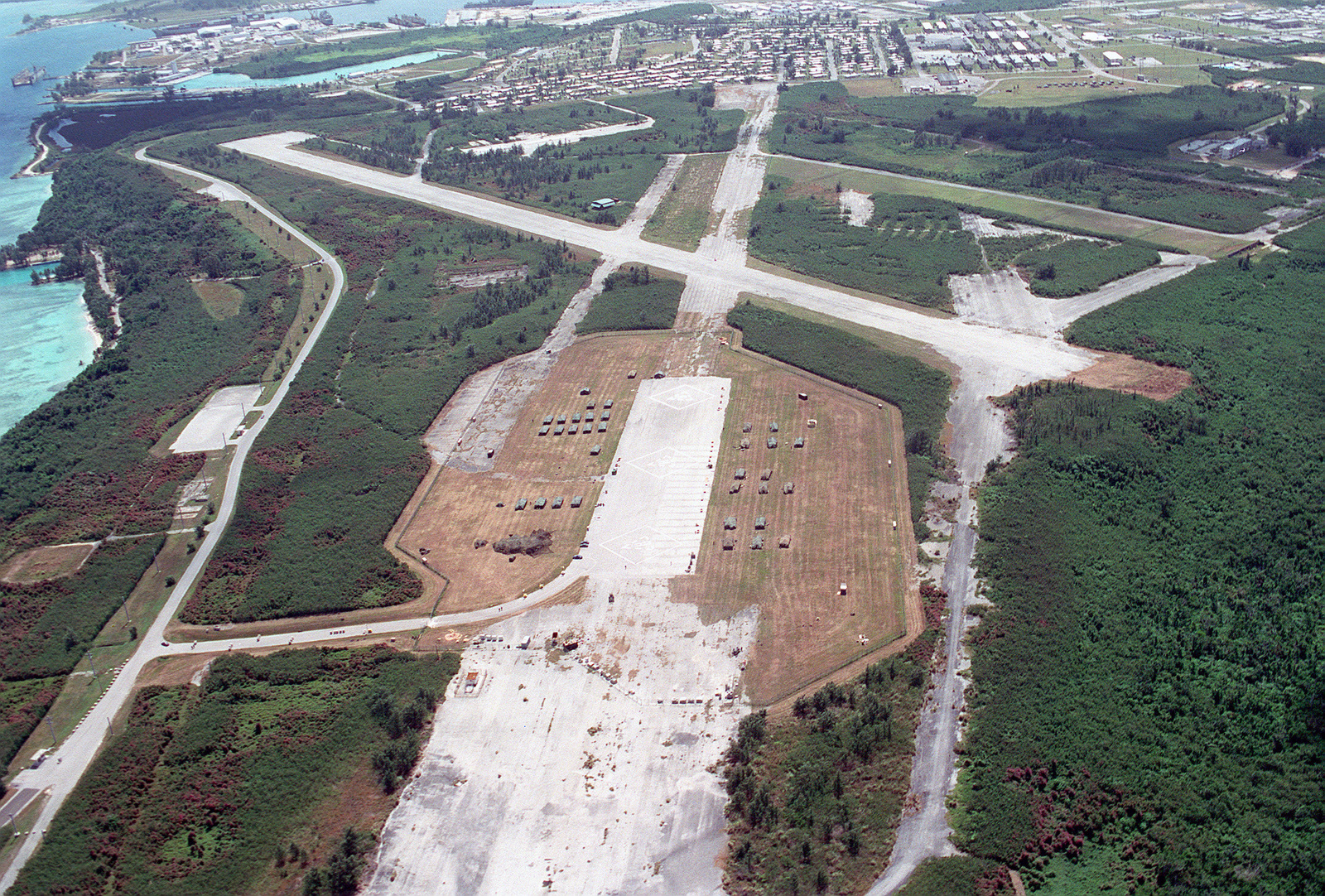
Of course none of that will be in a deck log. But I’m pretty sure I’m not the only one who remembers.
For those who might be affected by this Congressional Act, I would appreciate if you keep me posted should you have one of these presumptive conditions. I will do the same.


where can I find ships logs for USS Benjamin Franklin SSBN 640 years 69-72…I have searched with no luck..any help will be appreciated..Thanks Tommie Harger TMO2 (SS) email tommie4954@gmail.com
You can go to the NARA site, but their catalog won’t include any of our records after 1970. However you can send a request to them for the deck logs for 71-72. Each file has to be analyzed and have personal information redacted. They suggested asking for one or two months so if you can narrow it down you might get a response. The catalog is located at https://catalog.archives.gov/search-within/594258
thank you very much, just what I was looking for…
Thank you very much just what I was looking forâ¦
Sent from Mail for Windows 11
My name is Gregory A Lichau. I’m looking for the deck log for late 1974 to early 1075 Uss Lockwood DE 1064.
I was injured onboard and littered to the Dixie for treatment. Can’t remember the exact date.
My records have disappeared concerning my injury.
Help??? Have never received any compensation.
Greg
greglichau54@gmail.com
707 867 2855
This seems to be a great find for me. I was aboard the John Marshall in July of 1980, which puts me in Guam before the PACT act cutoff. In 2023, I was diagnosed with laryngeal cancer which was treated with radiation. I contacted the VA and told them my story. They encouraged me to file a claim and to do so in early August to get the full possible benefits of PACT.
it’s 18 months now and my claim is tied up in evidence gathering as it appears they are having difficulty placing the John Marshall in Guam on the dates I have given them. From your blog, maybe I should get info on the Proteus and see if it details the John Marshall tied up alongside for refit. I also served as shore patrol at Andy’s during refit, so that may be logged.
You may have gone into this, but how can I get Proteus logs for 1980? Is this a viable approach to help my claim?
Hi Ray. First, I am sorry for the cancer diagnosis. Hopefully you are making some progress. Second, did you go through a certified VSO when you filed? Feedback I have been getting from most who were successful was that they used an authorized VSO. Not a claim shark (those seeking to make money off of veterans) but someone who gained a certification work with veterans in PACT act cases. I used my county government VSO (retired Air Force Master Sergeant) and he had access to the VA screens that we do not have access to. He was able to shepherd me through the whole process and he got them to access Blue Water records which included Proteus. That is the magic that made my 100% claim go through. Proteus deck logs are not classified and should show ships tied up alongside. One other method that I have seen a lot of success with is testimony letters from fellow crew members of the boat you rode stating that you were in Guam, dates there, and any other pertinent information. I do not have the link to the DoD web site where ships deck logs are stored. I should have kept it but I have a lot going on right now. Keep me posted on your progress.
Mac
Hi Mister Mac, Tony O here. Really appreciate your site and the great posts. Am working a PACT Act claim for 2 types of cancer and other problems.
I was stationed on the USS Proteus (AS-19) from Dec 1980 to October 1982 and worked in the ET Shop and submarine navigation equipment.
The PACT Act Presumptive Agent Orange Guam date ended on July 30, 1980, therefore, I’m outside the window by 5 months (Dec 1980). Can you offer any feedback/thoughts on a case that is outside the window like mine?
Are there any resources that show Polaris Point Apra Harbor was exposed or is it a given?
Also trying to find some proof that we used Trichloroethylene (TCE) to clean parts. Can you point to any resources on that?
Thanks
Tony
mapllc100@gmail.com
Hi Tony
I am not aware of any resources for extension of PACT Act beyond the dates authorized. Sorry for that. Also have no knowledge or data on TCE since it is under a different category. If you are working with a certified VSO, they might be able to assist. I use the word certified purposefully. Most states have authorized and certified VSO’s that you do not need to pay. The ones that advertise their services for a fee are not always certified and simply take your money without great results. If you discover any additional resources in your search, please get back to me and I will add them to what I already know.
Mac