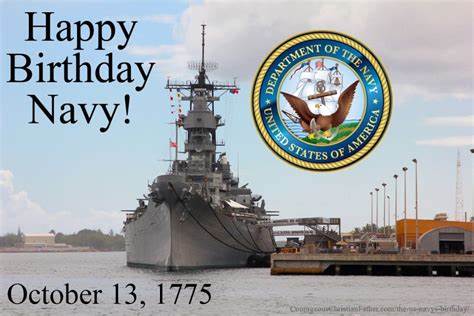
The United States Navy turns 248 years old this year.
Ships and aircraft of the fleet are sailing around the world today in defense of freedom, just as they have for most of her rich history. At this time, despite pressure from many quarters to change her focus, she remains the single most powerful and capable force afloat. She has been tested in battle and tested in peace and her men and women are still the best in the world.
The rise of China in a regional sense certainly has presented future planners with many new challenges. New weapons and technology will be the principle things that keep strategists up at night. But in the year 2023, our navy still owns the overall advantage in a global sense.
I often wonder if most average American’s know this.
As a naval historian (self-designated), I have studied the ebbs and flows of public support for a powerful navy. I guess because I joined the Navy when it was not very popular to be part of the armed forces in the early 1970’s, I am more sensitive to that support. Vietnam was ending as I assumed the watch and many negative connotations about the military in general were prevalent. After a disastrous public relations nightmare caused by our involvement in Vietnam, students were rioting in the streets and patriotism was considered egregious to too many people. Support for the military was at an all-time low and many of us felt it.
But a careful study of our nation’s fickle support for her armed services shows that it was present at many times throughout our history. After each war, the general public was ready to get back to normalcy and the results were a collective memory loss of what had just been achieved,
A hundred years ago, that was especially true.
The “Roaring Twenties” were underway and many people wanted nothing but peace and the savings of not having much in the way of a standing army or navy. Well minded leaders even imagined that peace could be maintained with a minimalist force of ships. The Washington Naval Arms Limitation Treaty was the vain hope of limiting the size and number of ships, planes and submarines in a world where gentlemen should just be able to talk things out without all of the messiness of war. So ships were scrapped and cut from the budget. Navy planners would just have to adjust and do the same with less. Manning was cut along with pay.
The Navy League saw the danger of complacency.
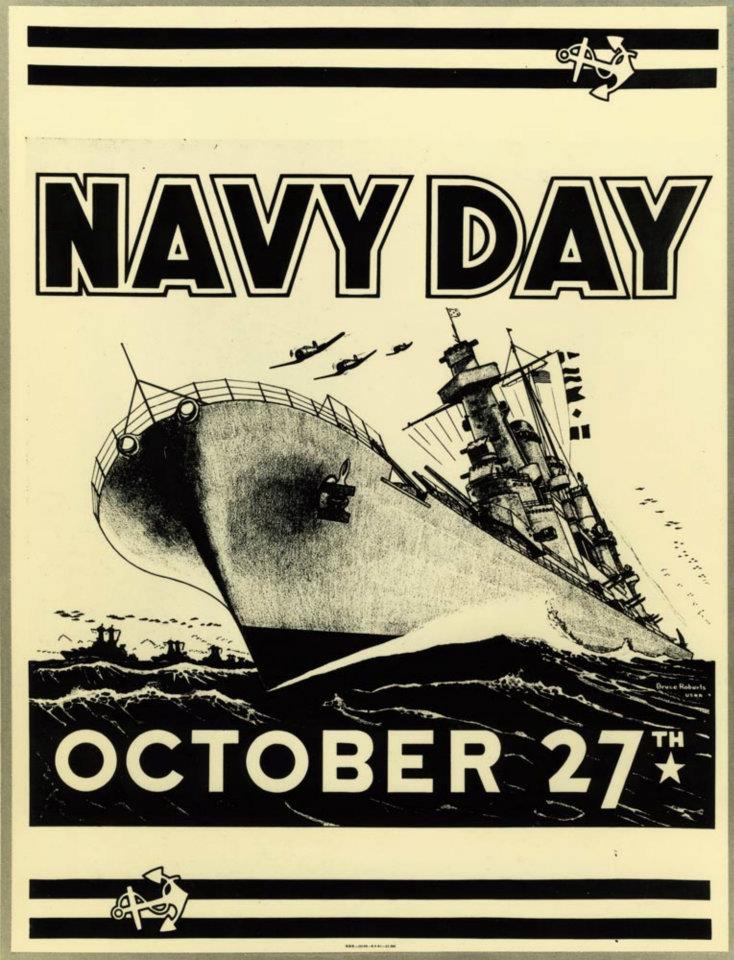
In the United States, the Navy League of the United States organized the first Navy Day in 1922, holding it on October 27 because it was the birthday of 26th President Theodore Roosevelt (1858–1919, served 1901–1909), who was a naval enthusiast/promoter of sea power and former assistant Secretary of the Navy just before the Spanish–American War of 1898. Although meeting with mixed reviews the first year, in 1923 over 50 major cities participated, and the United States Navy sent a number of its ships to various port cities for the occasion. The 1945 Navy Day was an especially large celebration, with 33rd President Harry S. Truman (1884–1972, served 1945–1953), reviewing the returning home American fleet in New York Harbor after victory in World War II.
But there were forces that still existed to bring the Navy back into line. As early as 1923, forces in Washington DC were attempting to gain efficiencies by amalgamating the army and navy into a single Department of War. The Admirals and Generals were successful in pushing back against any such union. Both forces saw a weakening of purpose and probably saw the limits it would place on advancement and promotions for their own staffs. That intransigence lasted for several more decades.
Department of Defense
In 1949, Louis A. Johnson, (1891–1966, served 1949–1950), second Secretary of the newly merged and created Department of Defense, directed that the U.S. Navy’s participation occur on newly established Armed Forces Day for the unified/coordinated uniformed services in May, although as a private civilian organization, the Navy League was not affected by this directive, and continued to organize separate Navy Day celebrations as before.
The Navy pushes back
In the 1970s, historical research found that the “birthday” of the earlier Continental Navy during the American Revolutionary War (1775–1783), was determined to be October 13, 1775, and so Chief of Naval Operations Admiral Elmo R. Zumwalt worked with the Navy League to define October 13 as the new date of Navy Day. I half suspect that the real purpose was to try and recreate the pride that had gone AWOL during the tumultuous times of the late sixties and early seventies. The race riots on board ships and stations had shaken the navy leadership. Even though the country as a whole was going through the same growing pains, a fighting force was never going to be effective in future wars if so much division existed within the ranks.
But like the country, the navy managed to weather the storm. The celebrations of 1976 seemed to help unify the Navy as we celebrated the nation’s 200 year anniversary. When Ronald Reagan took the help as Commander in Chief, pride and discipline returned with a vengeance. The next forty years were marked by a prolonged series of wins and public support returned. I was proud of my service during part of that period and even prouder to continue my support as a member of the Navy League and other veterans organizations.
I wonder for how long though? We face many challenges around the world once more. We probably do not have the number of ships and aircraft we will need for the next war. Technology is once more making advances that a slow moving bureaucracy can adapt to. The slow and cumbersome processes which may have served us well in peacetime will find themselves tested once the missiles start to fly.
But one thing I do know from experience and research.
This country was begun with an innate sense of the need for freedom. Reality reminds us that freedom is linked to the oceans that surround us. Free flowing commerce and freedom from attacks are two of the mainstays of that freedom. The only way to guarantee that freedom is to have men and women who are willing to risk their lives on and under the seas. I pray that they will always be given the support they need or freedom will be lost forever. After all, the United States and her Navy have been one of the sole forces in the world for over 248 years that come to the rescue. Whether it is tyranny, turbulence or tragedy, it has been our Navy that has been ready to answer the call. If we are no more, who will rise to the occasion?
So Happy Birthday United States Navy. I hope to be around for your 250th but rest assured I will be celebrating no matter where I end up.
And for my Navy League friends, I will see you on October 27 so we can celebrate Navy Day once more.
Mister Mac

 theleansubmariner
Happy Birthday U.S. Navy Submariner!
https://pacificparatrooper.files.wordpress.com/2023/10/navy.webp