And so, you master self then, laugh at fear – The Story of a Sub Man
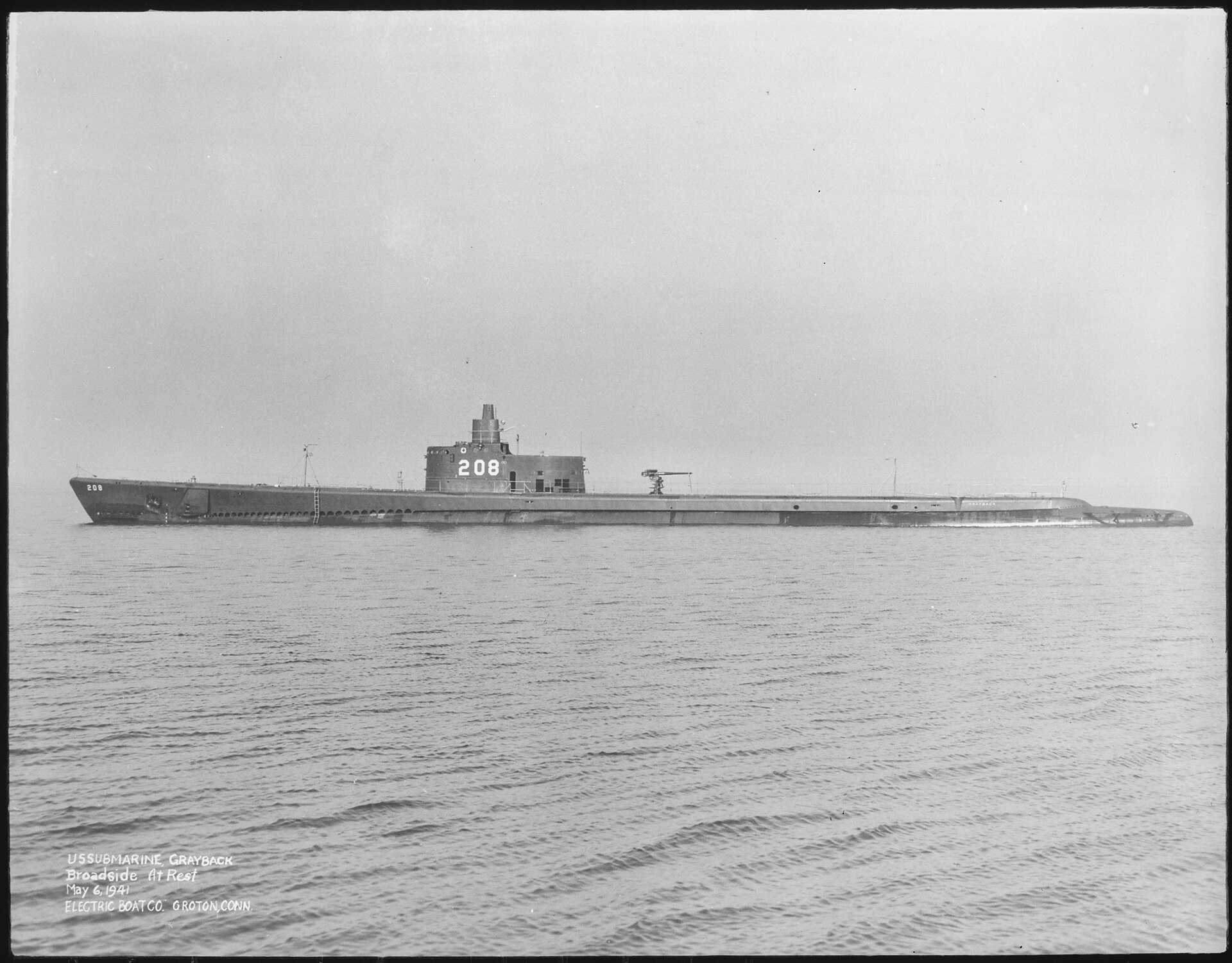
There was a total of fifty-two American submarines lost during World War 2.
The damage that the submarine force had inflicted on the Japanese and naval forces was staggering. But losing that many submarines was also a very high cost. It is one thing to look at an after-war report and see the cold hard numbers on a page. But the real impact was on the families of the men who never returned home. These men were someone’s sons and brothers and even in many cases fathers.
I wear my submarine veteran cap pretty regularly now that I am older. It’s a matter of pride for me to have once sailed under the oceans surface with some of the finest men I have ever known. Where I live now, there are a lot of former submariners so its an easy way for us to identify each other. So many times, walking around a grocery store, a complete stranger will stop me and ask which boat I was on. That nearly always leads to a great conversation about which boats they served on and our favorite memories. Debbie will just roll her eyes and keep on shopping while two old veterans talk as if they have known each other for years.
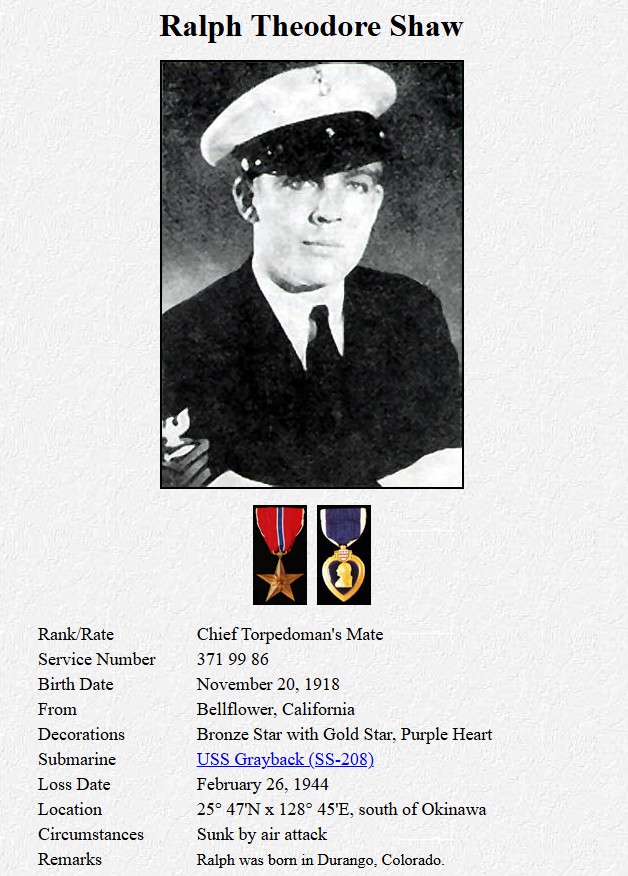
But in 1946, as my own father was finally making his way home from the Pacific theater, too many families were just learning the final disposition of their sons or brothers. One of those families was the Shaw family. Their son was on a submarine that he had been a plank owner on called the USS Grayback.
The Grayback’s story
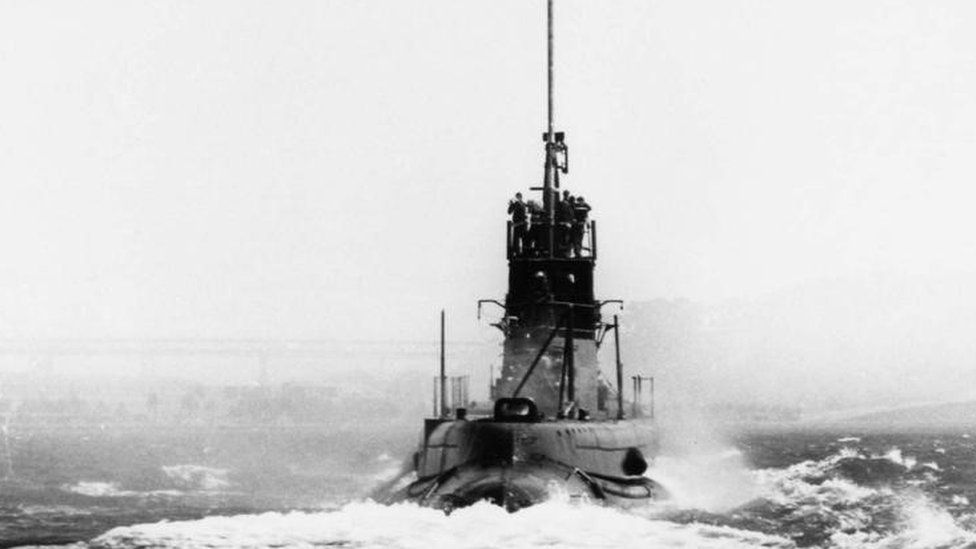
USS Grayback (SS-208), was a Tambor-class submarine, and was the first ship of the United States Navy to be named for the lake herring Coregonus artedi. She ranked 20 among all U.S. submarines in total tonnage sunk during World War II, with 63,835 tons, and 24th in number of ships sunk, with 14. She was sunk near Okinawa on 27 February 1944.
From captured Japanese records, the submarine’s last few days were pieced together after World War II. Heading home through the East China Sea after attacking convoy Hi-40 on 24 February, Grayback used her last two torpedoes to sink the freighter Ceylon Maru on 27 February. Later that same day, a Japanese aircraft carrier-based Nakajima B5N (Allied reporting name “Kate”) torpedo bombers, probably launched from the aircraft carrier Zuikaku spotted Grayback on the surface in the East China Sea and attacked, hitting her with a 250-kilogram (551 lb) aerial bomb. According to Japanese reports, the submarine “exploded and sank immediately,” but antisubmarine craft were called in to depth-charge the area, clearly marked by a trail of air bubbles, until at last a heavy oil slick swelled to the surface.
Grayback′s commanding officer John Anderson Moore was awarded his third Navy Cross posthumously after this patrol.
https://www.oneternalpatrol.com/uss-grayback-208-loss.html
On 10 November 2019, a private research group, Lost 52 Project, announced it had found the wreck of Grayback 50 nautical miles (93 km; 58 mi) south of Okinawa, in June 2019. The wreck was discovered about 100 nautical miles (190 km; 120 mi) from the coordinates established by the U.S. Navy in 1946 because of an error in its translation of the original Imperial Japanese Navy combat action reports. The discovery was officially verified by the U.S. Navy and the families of the deceased crew members were notified. The submarine sits upright on the bottom in 1,400 ft (430 m) of water. The deck gun was found about 400 ft (about 120 m) from the primary wreckage.
The wreck has severe damage aft of the conning tower, consistent with Japanese reports of a direct bomb hit in that area. The bow is broken off at an angle, and a portion of the hull near the stern imploded. The builder’s plate remains attached to the intact bridge.
One Father’s Memorial to a Son
The following letter to an eastern Connecticut newspaper was published on April 12th, 1946. Along with the father’s letter, several poems were also published.
The first was from his late son. The words he wrote are chilling in their depiction of what it had to have been like to survive a depth charge attack.
The second poem was written by his father after the boat was lost.
T. Shaw, Sub-Man
Foreword
Ralph Theodore Shaw, Chief Torpedoman’s Mate, United States Navy, was born November 20, 1914, at Durango Colorado; and died in the service of his country as of 12 January, 1946. (Official notice.)
“Ted” Shaw (as he was known in civilian life) was the average small-town schoolboy enjoying to the full athletics at the Bayfield High School, where he commenced to display talents for leadership in baseball, football and basketball. He also learned how a small squad by good teamwork could win their percentage of games played against larger schools with more players having better equipment.
Graduating in June, 1936, Ted decided upon a Navy career, enlisting 13 December, 1936; and served his boot training at the U.S. Naval Training Station, San Diego, California. Here, he started with distinctive promise by being selected as the Honor Man of Company 36-35 for the week ending 15 January, 1937.
Upon completion of this training, at his own request, he was assigned duty on board the U. S. S. Colorado; and on 28 April, 1937, made his rate as Seaman First Class. After two years on this battleship, he decided that submarine duty was his goal. In order to qualify, he extended his enlistment two years; and completed his course at the New London, Conn., submarine
school on 19 June, 1939. with a mark of 3.52. His big thrill came when his instructor, prior to the posting of final examination scores, told him; “Keep that lick up, Shaw, and you’ll make a damn good submarine man.” Because of his high marks, he was allowed choice of duty and selected Hawaii, being attached to the U.S.S. Nautilus. During his service on board the Nautilus, he attended Torpedo School at Pearl Harbor, completing that course; and soon rated as Torpedoman Second Class on 28 June 1940, with a mark of 3.87.It was on the Nautilus he received his Navy name of “Artie.” due to his initials R. T. and his ability with an accordion. Coming on board one day with his big new accordion, he was greeted by a shipmate with: “Here comes Artie Shaw with his one-man band.” That name stuck in the submarine service.
May 1, 1941, having requested transfer, he was assigned duty on board the new submarine U.S.S. Grayback, then in the yards of her builders, the Electric Boat Company at Groton, Conn. The Grayback was commissioned on 30 June, 1941; and with a full crew under Lt. W. A Saunders as commanding officer, started her shakedown cruise, going as far south as the Virgin Islands. On 9 October, 1941, “Artie” made his rate as Torpedoman First Class with a mark of 3.75; and now had charge of the forward torpedo room.
The Pearl Harbor foul blow caused the Grayback to rid herself of all excess furnishings and after stripping down to bare war essentials, she headed for active duty in the Pacific area, via the Panama Canal, arriving at Hawaii early in February, 1942.
After seeing with their own eyes the destruction of war bombing, it was a grim but determined crew on board the Grayback that started their first war patrol 15 February, 1942. A crew welded in teamwork, but wholly untried under war conditions. They were seasoned on their first patrol by destroying three enemy vessels and after severe depth charge attack, returned to base with the crew in the best of health and spirits” on 10 April, 1942.
It was after this next war patrol that “Artie” wrote his poem SUBMAN and mailed it to me, his father. This is real poetry; and his choice of words, phrasing, with the depth of feeling expressed are very remarkable when considering it his first attempt. (See Below)
War Patrols 2-3 were now made with a crew seasoned under fire; and the Grayback demonstrated that fact with a score of eighteen Nippon ships destroyed, of which eight were of warship type, including one large Jap submarine.
It was during these patrols that R. T. Shaw’s six-year enlistment period expired; and he reenlisted on board the Grayback. His Honorable Discharge from the Navy on 5 December, 1942, shows his final six-year average at 3.94. As his father, I naturally take pride in this high mark, for it shows what any high school graduate can attain in the U. S. Navy when he really studies and applies himself.)
The highlights of these war patrols 1-2-3 from 15 Feb. 1942 to 7 June, 1943 were:
Pharmacist Harry B. Roby’s appendix operation, with spoon and pliers, on Torpedoman William R. Jones, while in enemy waters. The sinking of a large Jap submarine in a night attack.
The rescue of Navy fliers from a Jap held island; and, later, their receiving heavy depth charge at
tacks, which resulted in the Grayback returning to the States for repairs in early June 1943.These repairs at the 12th Naval District, San Francisco, Calif., enabled R. T. Shaw, now Chief Torpedoman, to visit his parents residing then at Tacoma, Colorado. During his six short days’ visit in. July, 1943, “Artie” described some of the incidents of submarine life. These made a deep impression upon me; and after he returned to the Grayback, I started writing about them in verse form, trying to portray submarine war life from the subman’s point of view.
The Grayback returned to the Pacific area with her Skipper. Commander John A. Moore, a few of the original crew, and many new replacements. This submarine’s activities were varied from his date on; but we know that she departed from Midway on 3 February 1944 to patrol waters in the Yellow Sea. On 25 February 1944, off the Ryukyu Archipelago, the vessel reported having engaged the enemy without indicating that she herself had been damaged. From that date on she was unreported and was listed as Lost At Sea as of 23 March 1944.
From various unofficial sources and submarine “scuttlebutt,” I have pictured the last war patrol of this aggressive submarine in my verses LOST AT SEA.
T. Shaw. CTM, USN, loved the submarine life and his ship, the U.S.S. Grayback. He had a deep respect for his officers and made many friends in the submarine service. I have tried to portray his love of this service in verse form. Because so little has been written about our submarines and their exploits, I humbly dedicate my three verses: LOG OF THE GRAY
BACK, OVERDUE, and LOST AT SEA, to “The Silent Service” hoping that they may meet with submarine approval.RALPH R. SHAW
6012 Pepperwood Avenue
Bellflower, California.
12 April, 1946.
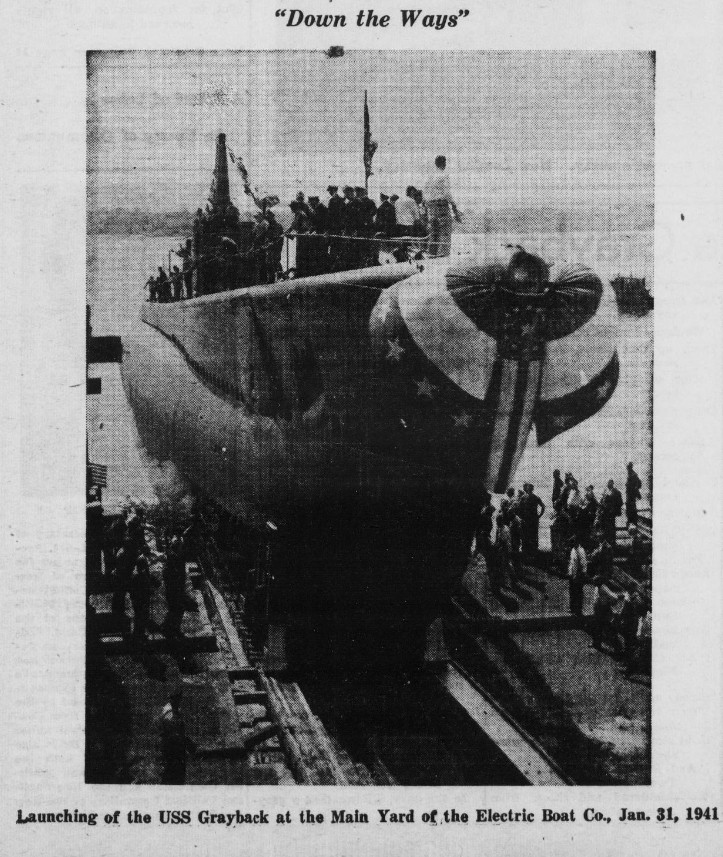
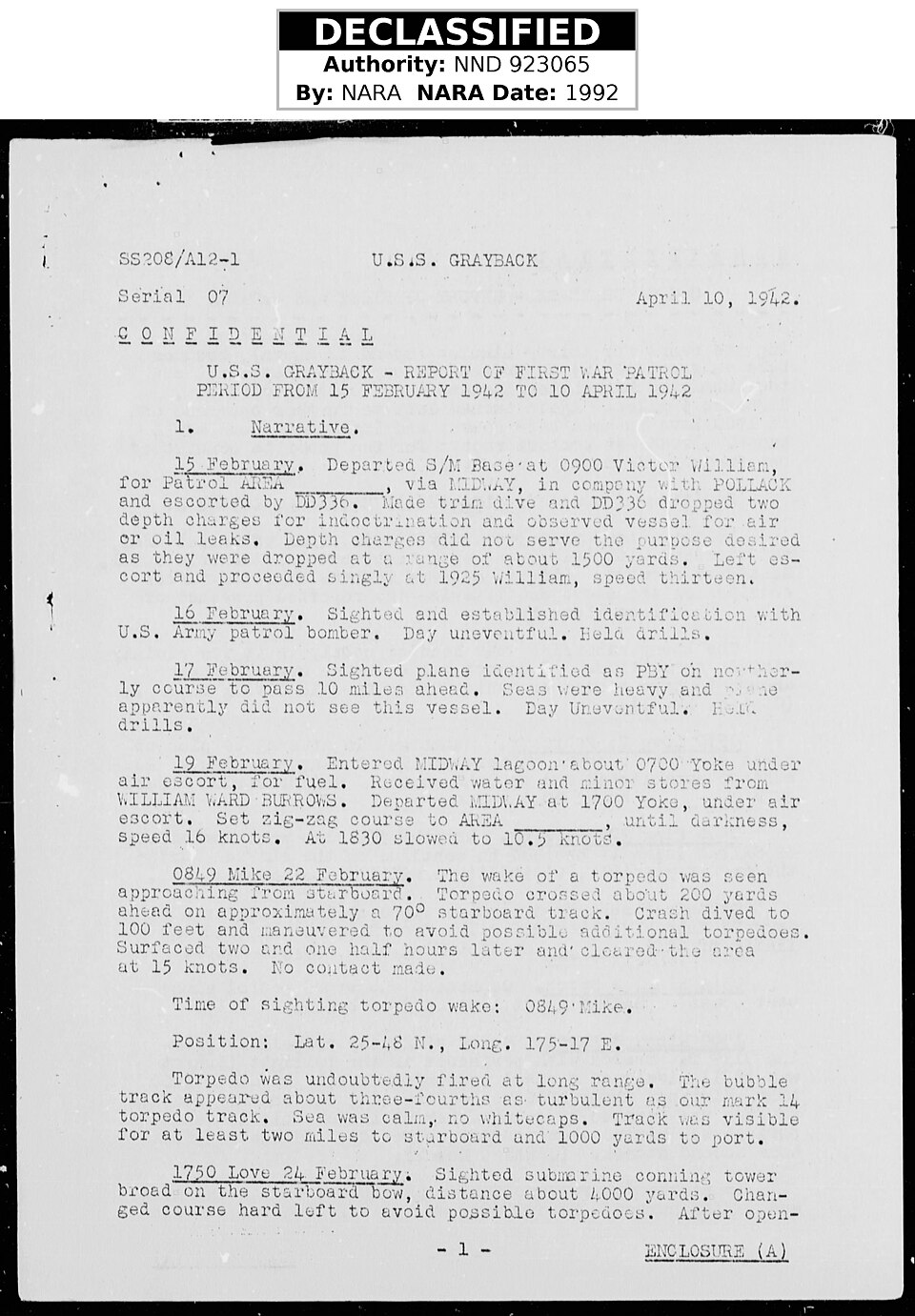
Eastern Connecticut News (Groton, Conn.), September 2, 1946
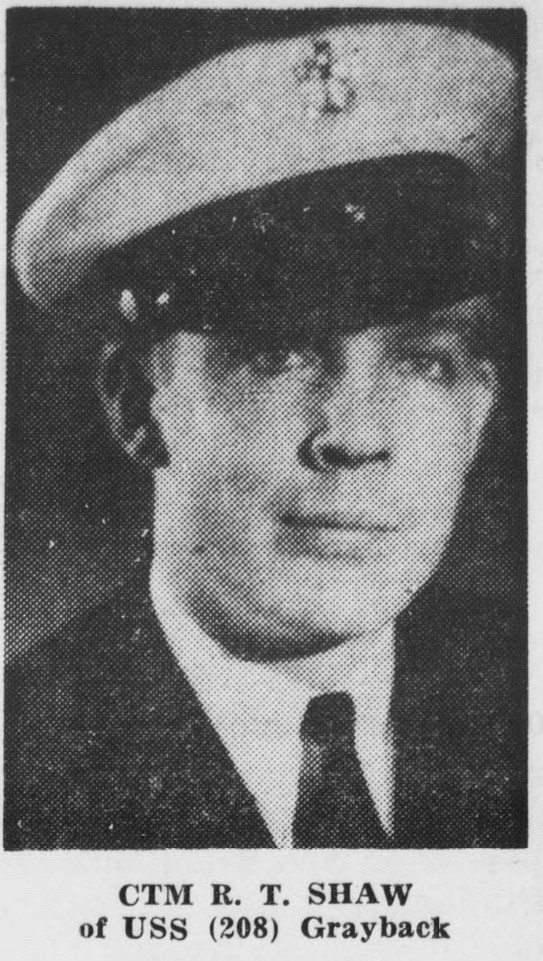
CTM R. T, SHAW of USS (208) Grayback
Sub-Man
By Ralph Theodore Shaw
CTM, USN
Courage: Not born of battle rage,
Amidst a flaming hell
Of bursting bomb and shell
Where Death has set the stage –
Courage: It is to wait—to clench the teeth and hear
The sullen steps of blind brute Death draw near.
To wait—to watch thin glistening walls of steel.
Drip beads of salty sweat along their seams: to reel
From shock that sends you sprawling — yet to rise
And bite the lips, and grin with steady eyes
And mutter: “Close!’’ And curse the pounding heart.
To wait—to see the weakening seams that part
To stabbing fingers of the seeking sea;
To hear that last burst seemingly to flee
Along the sodden halls of death.
To still the quaking heart and draw a breath
You never knew you held. And still to wait
But now to stir, and jest, and mock your fate,
Certain that the time will come again.
When you must wait and pray Death’s blows are vain.
Courage? What greater, since you yet can laugh;
Although you know your death may be
A silent one beneath the sea,
And “failed to return’’ your epitaph?
Laugh? Sure; To free all men is why you’re here;
And so, you master self then, laugh at fear.
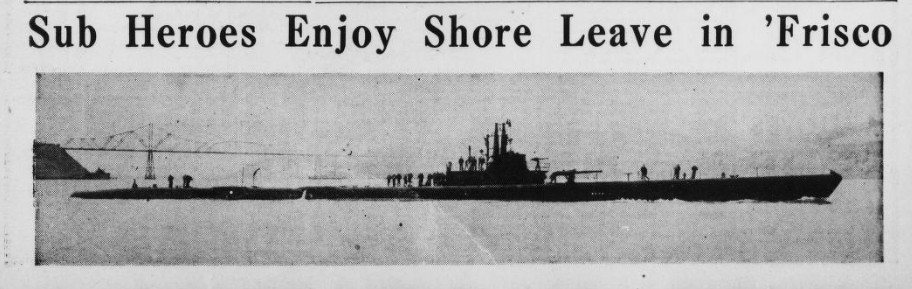
Poems on the Grayback
“Lost at Sea”
By Ralph R. Shaw
The Grayback eased out from “Island X,”
Where she’d fueled late at night;
And new armor steel that faced her deck
Hid the wounds of her last tough fight.
Jap flags painted on her tower wall
checked off eighteen Nippon ships
That we’d sunk in Pacific seas upon
Seven rugged hunting trips.
Of her crew, only two now “owned a plank,”
For we’d transferred many men;
Our skipper had served on other subs
Before Pearl, and on two since then.
Our last patrol, we’d topped our score,
Which had won him the Navy Cross;
And our sub that coveted award
From the President, our “Boss.”
We’d left far behind our shore leave days
For those of a fighting force;
And the new dawn’s haze hid us from sight
As our bow swung east, on course.
We’d soon submerge, for our skipper knew
How deadly could be this chore;
To relieve a sub in the Yellow Sea
Which was part of Nippon’s back door.
A drooping moon gave an eerie light
By night, as we dieseled by
Isle after isle, with some like a reef,
Some rising in mountains high.
And each of us felt that awful strain:
Radar probing throughout each night
Just feeling our way through Lord knows what,
All alert for a job done right.
Phosphoric crests of feathered waves.
Moon glint through cloud-drift bands,
Highlighted our shadowy gunner crew
Grouped where the deck gun stands.
Our skipper, topside, in reefer blue,
A night glass clamped to his eye,
Scanned closely each foot of a low black mass
Like a destroyer, standing by.
Then a blinker light ripping the heavy murk
Flashed a “call letter” message through;
And the code TURBOT—the sub we sought,
Brought relief to our weary crew.
We held steerage-way, as a stray moon beam
Sprayed the edge of her conning tower;
Our scuppers ran white with ocean spume
Flung high in a moonlit shower.
Our CO rode to them by rubber boat
Up their Jacob’s ladder tread,
Where their Chief held out a welcoming hand:
“Glad to see you, John,” he said,
“A bum radio had us in one bad hole
When you first appeared, you know.
We could see you set to blow us up.
“Hell, skit it. Come on below.”
He explained how tough enemy convoys were,
Destroyer escorted by the Nips:
“Depth bombed twice,” he added, “and rammed bad once,
But we sank some fourteen ships.”
This rendezvous made and “Good Luck” said,
The TURBOT left us alone
With the fearful task of sweeping clean
Every ship lane in that zone.
As our tally mounted, we found it True
That night runs proved best for luck:
We sank four freighters, a trawler, gunboat,
And our last, a Jap sea-truck.
Then we added more in the Gulf Chihli,
Were depth bombed in Lioatung Bay,
But slept safely in Hwang Ho delta maze,
Where we bottomed all one day.
Came the night our Chief broke “Silence-C,”
To report what we had done:
That we’d no more fish for future strikes,
Low on shells for our 3-inch gun.
HQ coded back: “Return to Base”;
Now God speed us on our way,
For Mitsubichis would seek us out
On the sea and in each bay.
We sped through the night and the moon was full;
To the deck watch we added three,
Who strained their ears for the high thin hum
Of Nip planes o’er the Yellow Sea.
On our second night some low black clouds
Gave Domei a fine chance to prove
Even night attacks could knock us out,
With their bombs laid in the groove.
Our guns flamed the sky with bursting shell,
But we couldn’t submerge our craft,
For the first Jap bored straight through our fire
And his egg hit the fantail, aft.
As our gunners fell, more took their place
And the losing fight roared on,
Until the Chief called: “Abandon ship!
Try for shore, before the dawn!”
It was then sparks cut in our radio wave,
Reporting damage in this attack:
That most of our crew had left the ship,
Though our gunners still fought back.
ENVOY
For the record: a scout sub’s periscope
Caught the whole of that hellish fight,
When this gallant ship with her battered hull
Filled and sank to eternal night.
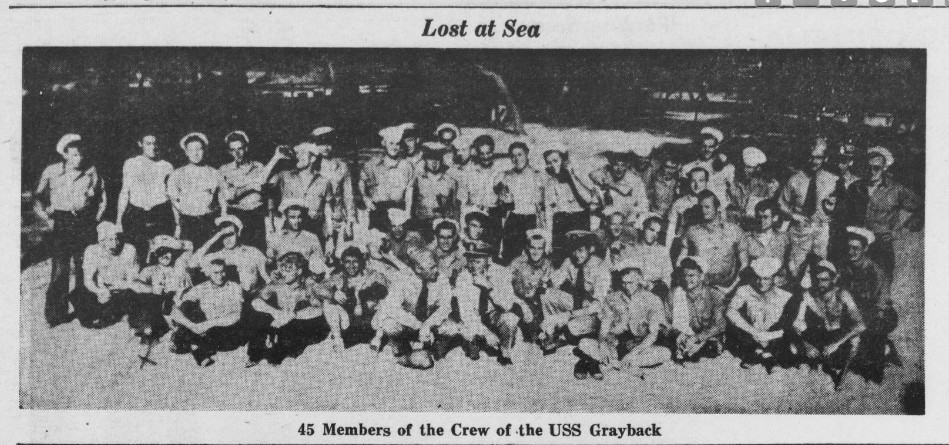
Ralph wrote several other poems about his son’s life on boat the Grayback. Without knowing the real story, his version as described in Lost at Sea was pretty close to what would be discovered later by examining Japanese records after the war was over.
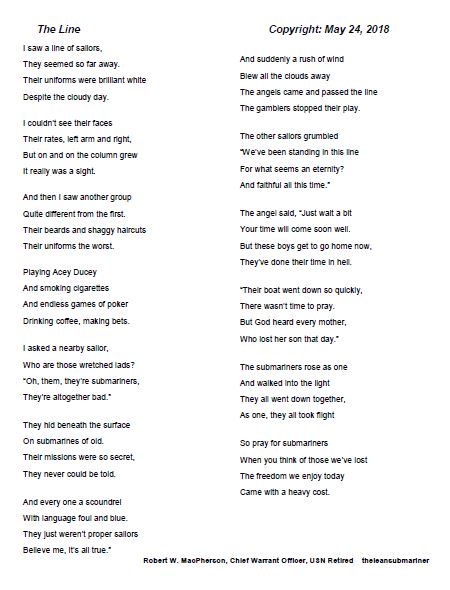
I can only imagine the grief he must have felt losing a son that was so dedicated to his submarine and the navy. But I truly appreciate the legacy that he left for generations that followed. I wrote my own poem about those brave men a few years ago. I can only imagine what their journey was like. But this was my own attempt to memorialize them:
The country owes a great debt to the men who chose to risk everything on submarines.
The men and women of today’s submarine service are also risking much so we can sleep peacefully in our beds at night.
Pray for their safe return.
Mister Mac

 theleansubmariner