Cold War Stories – The next war will be fought on our own soil
In 1984, there was a fictional movie called Red Dawn that portrayed an invasion of the United States. It was a very interesting look at what would happen in the country if an enemy was successfully able to bypass all of our defenses and take over a large portion of the continent.
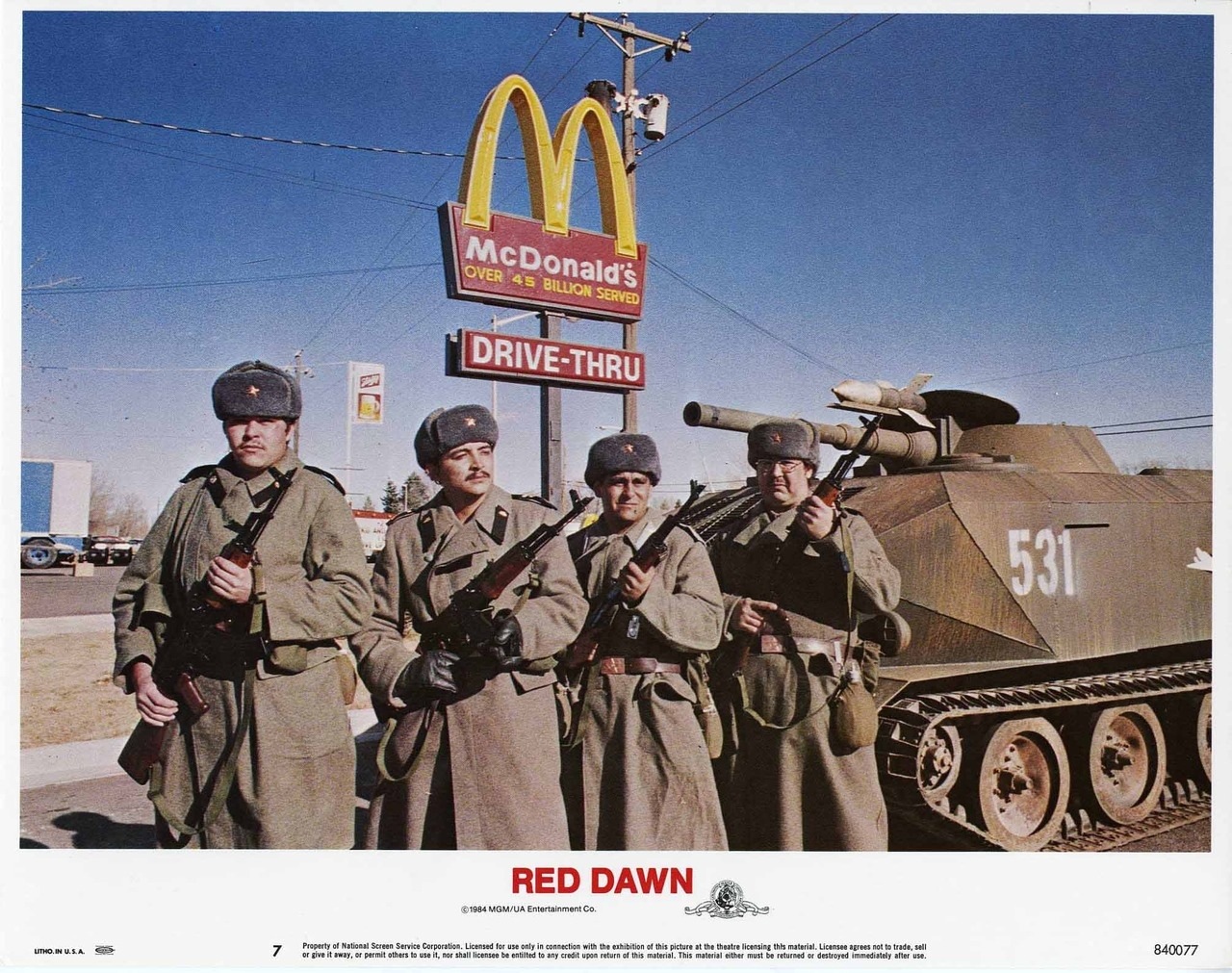
From the promotion: “Red Dawn (1984) unfolds in an alternate Cold War reality where Soviet, Cuban, and Nicaraguan forces invade a small Colorado town, prompting a group of teens to form a guerrilla resistance. Mixing teenage survival drama with war action, it quickly immerses viewers in high-stakes battles and themes of resilience. While dated in tone, it’s remembered as a tense, patriotic cult classic worth a watch for its unique premise and place in 1980s cinema history.”
As I remember the eighties, there were a number of movies that depicted Cold War scenarios including one that depicted a nuclear attack on the USA. That movie showed our own missiles already being launched as incoming USSR missiles were on their way. It was a graphic movie that showed how everyday life was changed forever by the explosions. All of the horrors of a post nuclear world were brought to life in the course of the movie including the struggle that the survivors would have faced once the explosions were over.
In 1946, the country was probably going through its own awakening once the devastation of the atomic bombs became more widely known. Browsing through newspapers online at the national archives, the usefulness and potential dangers of atomic power was covered multiple times. Some of the stories I found were actually pretty clairvoyant in what would happen in the still unknown future. Looking back over the years since then as the first Cold War played out, it’s as if some of the writers had a crystal ball.
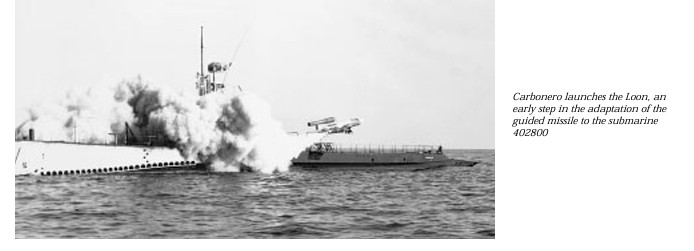
Keep in mind that in 1946, the first nuclear submarine had not made it off the drawing boards. Missiles were relatively new and there had not been a concerted effort to deliver a nuclear weapon that could be capable of flying the distances our current arsenal can achieve. But this article would end up being spot on despite the lack hard evidence at the time of writing:
SOME SCIENTISTS and military experts are more than a little worried over the concentration of industrial centers and key cities along the Atlantic and Pacific coasts because of the coming era of push-button warfare.
The experts say giant submarines could sneak within striking distance of the coast to launch rocket missiles and possibly self-propelled atomic bombs.
Submarines are expected to play an especially grim role in any possible conflict in the future because they are the most difficult of warcraft to detect.
Most airmen agree that even the latest bombers or fighters will be obsolete within the next decade. They hold to the opinion that the next war will be a short one, with the nation striking the first blow having an excellent chance of winning
Military leaders point out that after hostilities start the next time there Just won’t be time to prepare.
The Ypsilanti daily press (Ypsilanti, Mich.), January 16, 1946

This next article I found was also pretty visionary.
Behind the News – By Paul Mallon
The next war will be fought on our own soil. This is a logical expectation because this nation has no mental capacity for aggression, but only for defense and science has destroyed the value of our geographical ramparts (the two broad oceans and two vast, weak and sympathetic adjoining nations).
The invasion will come from Europe or Asia or both simultaneously. This is certain because the only nations which could conceivably oppose us politically and who have the military resources to challenge us are in those two continents.
Practical military theory would require an invader to lay down a bombardment of directed missiles across the great circle route of Arctic waste upon our larger cities. The logical point of attack would not be New York or San Francisco, but Chicago, through which all the great arteries of east-west travel run. and the Detroit area, origin of motor production.
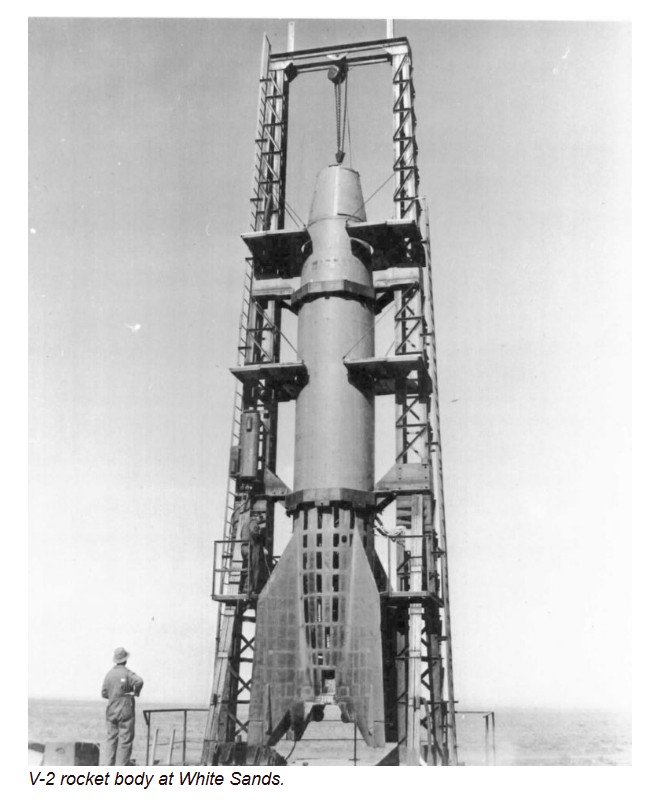
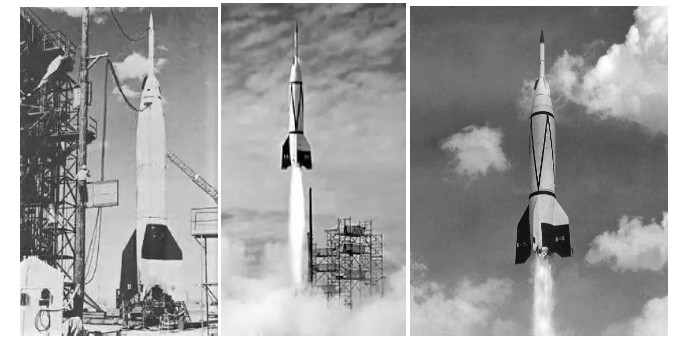
These conceivably could be severed and destroyed by missiles much larger than the V-2 probably including the atomic bomb. The prospect of attack no doubt would contemplate leveling the big auto plants and Chicago and its vast rail yards as flat and thoroughly as Nagasaki was destroyed. It could be followed by direct bombing attacks from airplanes.
The invading army would come entirely by air. An initial force of 10,000 to 20,000 planes carrying 40 or more men each could seize the destroyed area Their weapons and tanks would come by air as would their supplies. Daily reinforcements could build up their forces, conceivably within a week’s time to the power of a substantial army.
Greatest enemy hazard of the attack, no doubt, would be to secure air cover for the landed army, but this could be provided if fields along the route across the Arctic were seized simultaneously by the invaders and stocked with fighter planes and supplies.
Our problem would be to muster greater military air and land power at the points of invasion and build it up faster than the invaders could build up their forces, pushing planes, tanks and men in to annihilate the invading forces.
This, at any rate, is the bare nucleus of the next war’s prospects as of today. It seems to say primarily that unification of the armed forces is essential.
Complete co-ordination and immediate use of every weapon would be necessary. The navy would protect commercial sea and air lanes and bases in the oceans; but the primary responsibility would rest upon the air, land and supply forces of both branches of the service.
It would seem to require also the maintenance of a scientific and substantial air and land force equipped and ready to move at a moment, since speed is the critical point. The youth draft would be of little consequence in such a war. The war could well be over before such reserves could he mastered.
Now, science, terrified at its own discovery of atomic destruction, wants to prepare our defense on that score by outlawing the use of their weapon.
This no doubt will be done, but unless all the natural laws of war and human beings are simultaneously repealed, and men become angels all of a sudden, every effective weapon will be used in the next war as in all past wars
Detroit Evening Times (Detroit, Mich), January 7, 1946
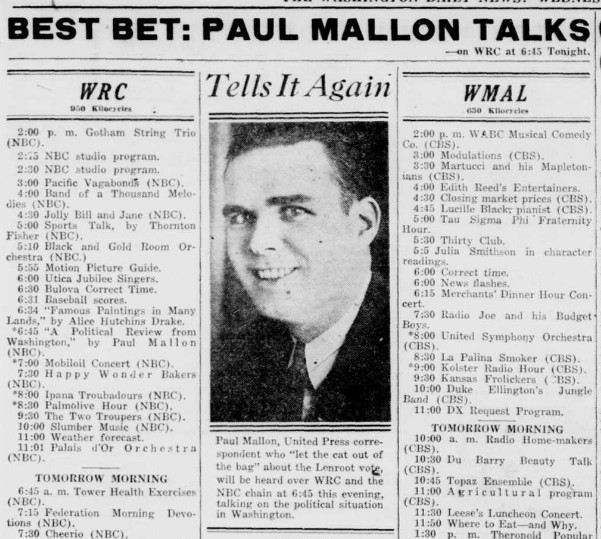
Paul Raymond Mallon, (the author) was a retired newspaper man and columnist, died in 1950 of a heart ailment at the age of 49.
He began a column called “News Behind the News” in 1930 and it was being published in 300 newspapers by 1947. From his obituary:
A United Press political writer here from 1923 to 1932, he first joined the UP in New York in 1920.
Interviewed Coolidge.
His first Washington assignment was the disarmament conference called by President Harding, which he covered for the UP.
One of his first major “exclusives” was an interview with President Calvin Coolidge in Vermont, before the world knew the President had taken the oath -of office.
One of Mr. Mallon’s most significant achievements as a newspaperman, was the part he played in the abolition of secret Senate sessions for consideration of nominations to Federal office. In April 1929, he published two secret Senate roll calls, one of them on the confirmation of former Senator Lenroot, Republican, of Wisconsin, to the United States Court of Customs and Patent Appeals. A Senate committee threatened him with contempt and jail for refusing to reveal the source of his information.
But the Senate ultimately rescinded its 150-year-old rule on voting on nominations in executive session.
Mr. Mallon was twice president of the White House Correspondents’ Association. In 1940 President Roosevelt ordered him banned from presidential press conferences because of references in his column which were interpreted as “unfriendly” by the then Interior Secretary Ickes.
The ban was lifted the same day after Mr. Mallon conferred with the President.
I typically try and find out about the original writer when I use their story as part of one of mine.
This writer’s life story struck a chord with me. I had a heart attack when I was 48 and it is only through the miracle of modern medicine that I am still alive today. His viewpoints about what might happen in the future are based on his life experiences and exposure to some of the most significant people of his time.
I have reread the last paragraph of his piece several times now. Not much has changed since he wrote it in 1946.

 theleansubmariner