Chapter Eighteen: Every Moment Mattered… Saving the Vestal
Navy Regulations Article 0802 Commanding Officer’s responsibility
- The responsibility of the commanding officer for his or her command is absolute, except when, and to the extent to which, he or she has been relieved therefrom by competent authority, or as provided otherwise in these regulations. The authority of the commanding officer is commensurate with his or her responsibility. While the commanding officer may, at his or her discretion, and when not contrary to law or regulations, delegate authority to subordinates for the execution of details, such delegation of authority shall in no way relieve the commanding officer of continued responsibility for the safety, well-being and efficiency of the entire command.
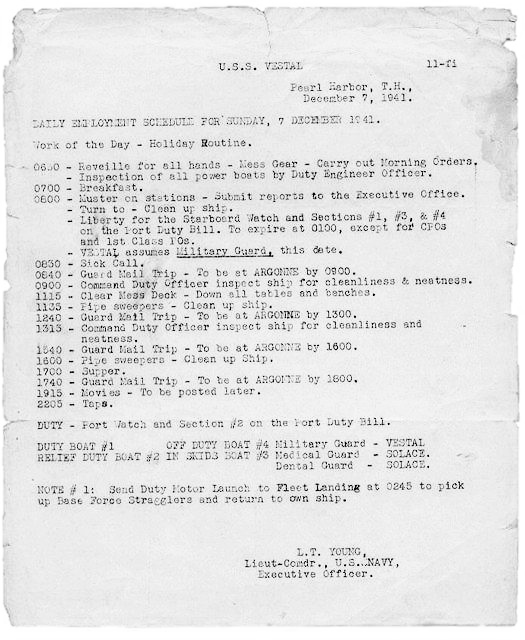
Imagine you find yourself in the cold and oil filled waters of Pearl Harbor surrounded with debris and dead and dying sailors.
Moments before, you had been standing on deck near one of your only functioning deck guns trying to stop the enemy planes sent to destroy you. One of those planes had hit the ship next to yours and the force of the resulting explosion had knocked you and nearly everyone else exposed on your ship into the water. Many would never see another morning. But you are alive. You wipe the oily water from your face and see that ship just yards away from where you are treading water. What would you do? Ford Island is not that far away and many men that morning chose to swim to her rocky shores and escape the conflagration on the nearby ships.
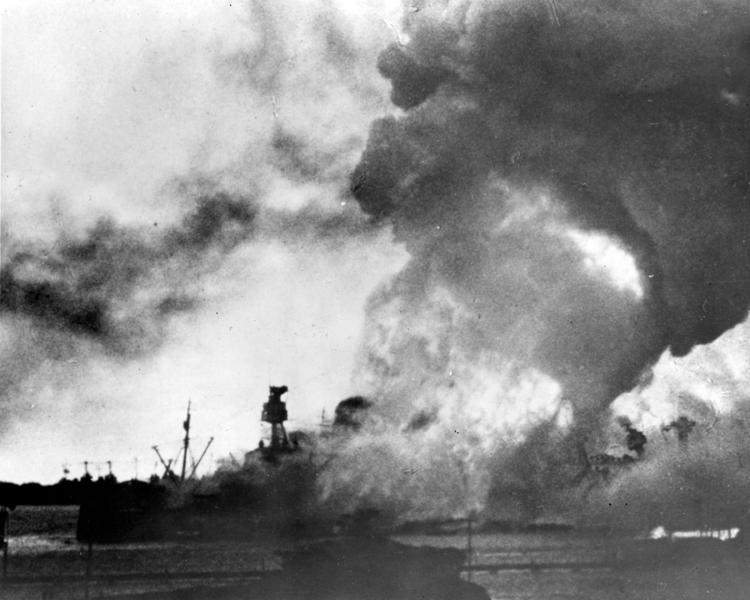
But the Commanding Officer of the USS Vestal saw no other choice but to swim back to his ship and try and fulfill his duty as the commanding officer.
Thirty years of training, command of submarines and a destroyer had all been a part of the preparation for just this moment. Duty on a number of battleships reminded him that the burning hulk of the Arizona possibly contained a frightening mix of unexploded ammunition of every kind in addition to over a million gallons of fuel when fully loaded. Even the lowest seaman in the Navy recognizes the inherent danger of fire to an afloat vessel. The circling Japanese warplanes alone should have been enough inspiration for any normal person to seek shelter. The attack was still in process and you would have no idea how large it was, whether the next wave would be Japanese battleships firing over the horizon into the helpless harbor or if Japanese paratroopers would at any moment come down from the sky armed with machine guns and mortars.
Cassin Young may have thought of some of those things. But what is known is that he swam back to his ship that morning. He climbed up onto the ship despite being water and oil soaked. He may have been shocked by the concussion of the blast that sent him and his deck crew in the water but he had the presence of mind to rally his men and reverse the order someone had given to abandon ship. His ship. The ship the Navy had taught him how to command and fight no matter what the circumstances.
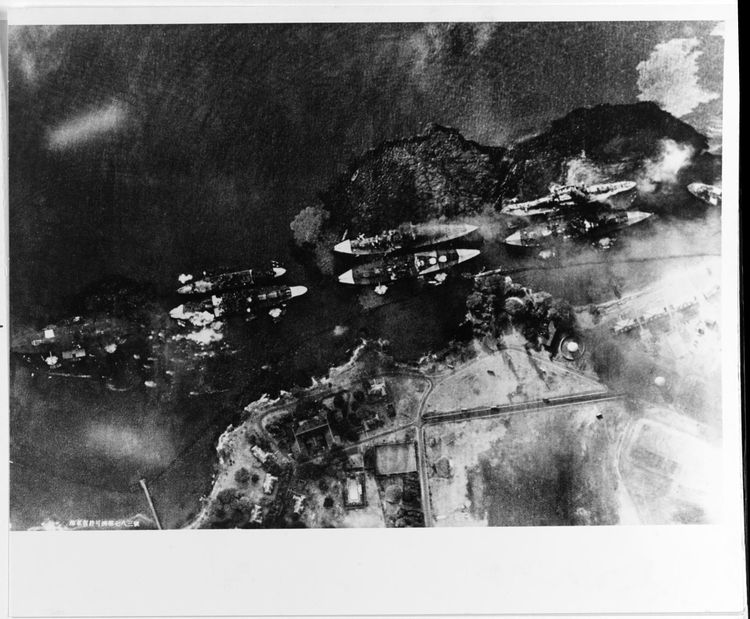
There have been many stories written about what happened in Pearl Harbor on that day.
Each have been told through the filters of the writers and those who related their personal stories to the writers.
Cassin Young’s story was captured in the words used to accompany his Medal of Honor.
“For distinguished conduct in action, outstanding heroism and utter disregard of his own safety, above and beyond the call of duty, as Commanding Officer of the U.S.S. Vestal, during the attack on the Fleet in Pearl Harbor, Territory of Hawaii, by enemy Japanese forces on December 7, 1941. Commander Young proceeded to the bridge and later took personal command of the 3-inch antiaircraft gun. When blown overboard by the blast of the forward magazine explosion of the U.S.S. Arizona, to which the U.S.S. Vestal was moored, he swam back to his ship. The entire forward part of the U.S.S. Arizona was a blazing inferno with oil afire on the water between the two ships; as a result of several bomb hits, the U.S.S. Vestal was on fire in several places, was settling and taking on a list. Despite severe enemy bombing and strafing at the time, and his shocking experience of having been blown overboard, Commander Young, with extreme coolness and calmness, moved his ship to an anchorage distant from the U.S.S. Arizona, and subsequently beached the U.S.S. Vestal upon determining that such action was required to save his ship.”
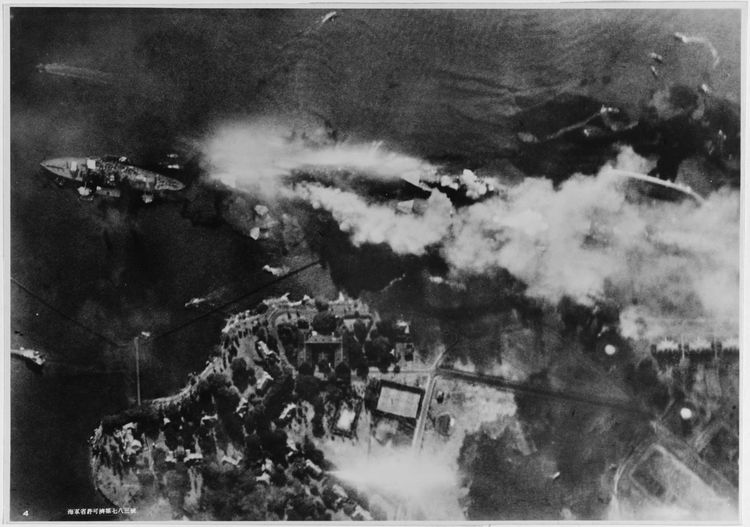
Anyone who has ever been through an explosion and fire knows the debilitating effects both can have on a man. The concussive effects make normal thinking nearly impossible and the heat and danger from the fire cause a natural reaction of flight in anyone approaching the source. But not Cassin Young. All of his training for the previous thirty years took over on that day. The lectures at the Academy, the experiences from commanding submarines and a destroyer and his sheer will built over the span of a career probably drove him back to that ship. All of his adult life, he had been preparing to defend his country and his ship. Nothing could have driven him away.
It’s only speculation, but Young manning the three inch gun made perfect sense at the time. The gun was the primary anti-aircraft weapon on board and it was jammed. Commander Young had served on a variety of ships and submarines and probably felt that his knowledge of the weapon was enough to help the crew gain ground in firing it again, he probably felt it was the right place to be. But the explosion on board the Arizona that propelled his into the water must have been stunning.
Commander Young, soaking wet and covered in oil, emerged from the burning sea fuming that the ship was not to be abandoned.
“Get back here,” he screamed at men trying to jump overboard. He ordered everyone to return to battle stations and prepare to get underway.
The Arizona was already on fire. Men were clinging to any lifeline they could to escape. The Executive Officer of the Vestal and already ordered the men to abandon ship but the new commanding officer would have none of it. He ordered the men back to their positions.
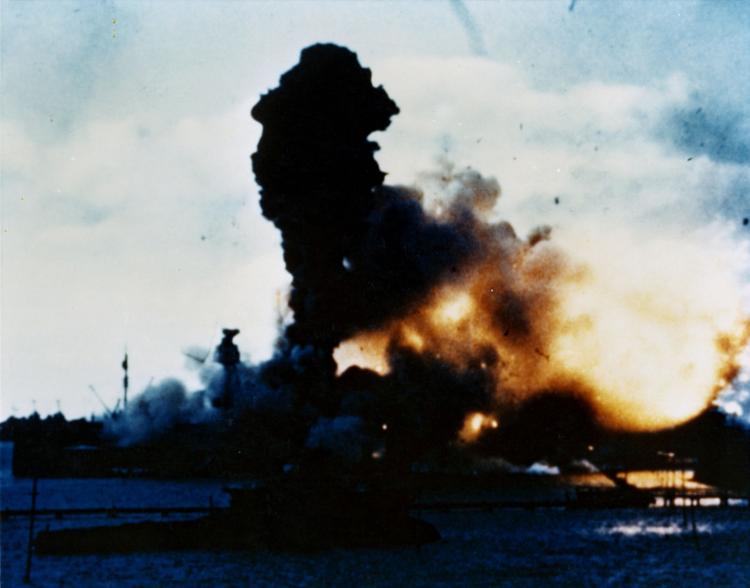
The chief engineer and his crew went back down into the dark and smoke filled engine room spaces, manned the leaking boiler room and relit the fires in an attempt to get any pressure possible from the damaged steam system. Anyone could see that staying tied up next to the burning Arizona would mean the end of the Vestal and her crew. The Arizona had the capacity to carry nearly 2300 long tons of fuel and Young was a former battleship sailor. Combined with the rest of the ammunition magazines that had not yet blown, he knew this dreadful mix of explosive power would have sunk the Vestal where she sat. The only escape was cutting the lines and getting as far away as possible.
Under normal circumstances it would take 250 pounds of steam pressure to get the ship under way on her own power. All the Vestal could manage that day was 50 pounds, but it was enough to turn over her engines and slowly begin moving. Other crewmen were ordered to cut the mooring lines to the Arizona, which was burning out of control and settling into the mud below, never to rise again.
The Vestal had already been hit by the enemy. Sitting tied up to the Arizona made her a prime target and she did not escape the blows of the circling aircraft.
From the after-action report:
“1. At 0755 sounded general quarters. Manned the 3″ anti-aircraft and 4 – 5″ broadside and 2 – 30 caliber machine guns. At about 0805 opened fire with 3″ anti-aircraft gun and both machine guns. After firing three rounds, 3″ anti-aircraft gun breech jammed; breech was cleared and one additional round was fired when blast from Arizona magazine cleared gun station killing one man. Machine guns continued firing on enemy planes until they withdrew.
2. 3″ anti-aircraft and after machine gun both fired at plane which released torpedo at Arizona and turned toward Vestal. This plane was seen by crew of the machine gun to burst into flame and disappear over Ford Island; this was substantiated by others in the vicinity. Whether the plane was hit by gun fire from Vestal or adjacent ships is not known.”
Once the ship was cut free from the dying Arizona, the realization quickly came that there was not enough steam for full propulsion.
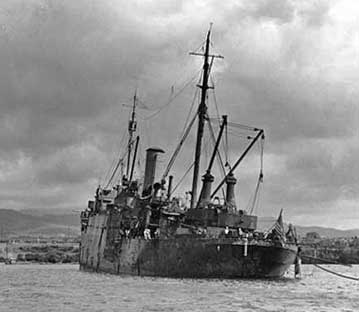
Another attack would leave the ship in an even more vulnerable position. The damage from the second bomb was affecting the ships stability as compartments became flooded and counter flooded to offset the effects.
Commander Young hailed a passing tug to assist Vestal in maneuvering the harbor. The Chief in charge of the tug had been a previous Vestal sailor. He brought his tug alongside and gently pulled the Vestal to safety. As damage reports came in it was clear that the ship would not stay afloat much longer. She was taking water from the aft bomb hit. She also began listing to starboard as the men frantically sealed compartments and shored up bulkheads. Captain Young made the decision to beach his ship to save it.
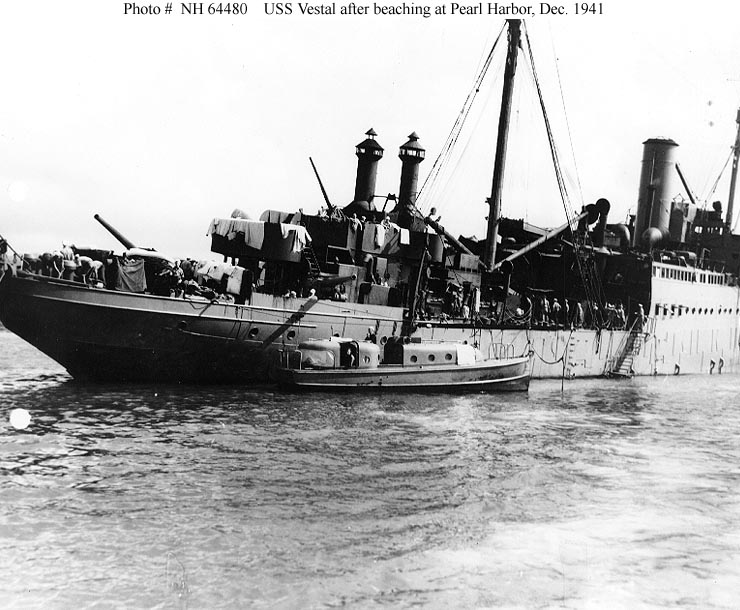
The horrible day ended for Vestal, aground but safe. That could not be said for all of her crew. Seven men were officially reported dead, many others wounded. A detachment from Vestal’s weld shop was sent to the capsized battleship Oklahoma that evening as desperate efforts were made to cut through the upturned hull and rescue sailors trapped inside.
The following weeks were busy ones for the crew of that repair ship.
Not only did Vestal require repair to her bomb-damaged hull and bulkheads, but the crew was also constantly called upon to assist in the repair of the fighting ships, which had a higher priority to dry dock facilities.
Damaged and bruised, she was still able to provide support over the next few months to the hulks and surviving ships in the harbor.
The Damage report on USS Vestal. Enclosure C to CINCPAC action report Serial 0479 Dated February 15, 1942 read:
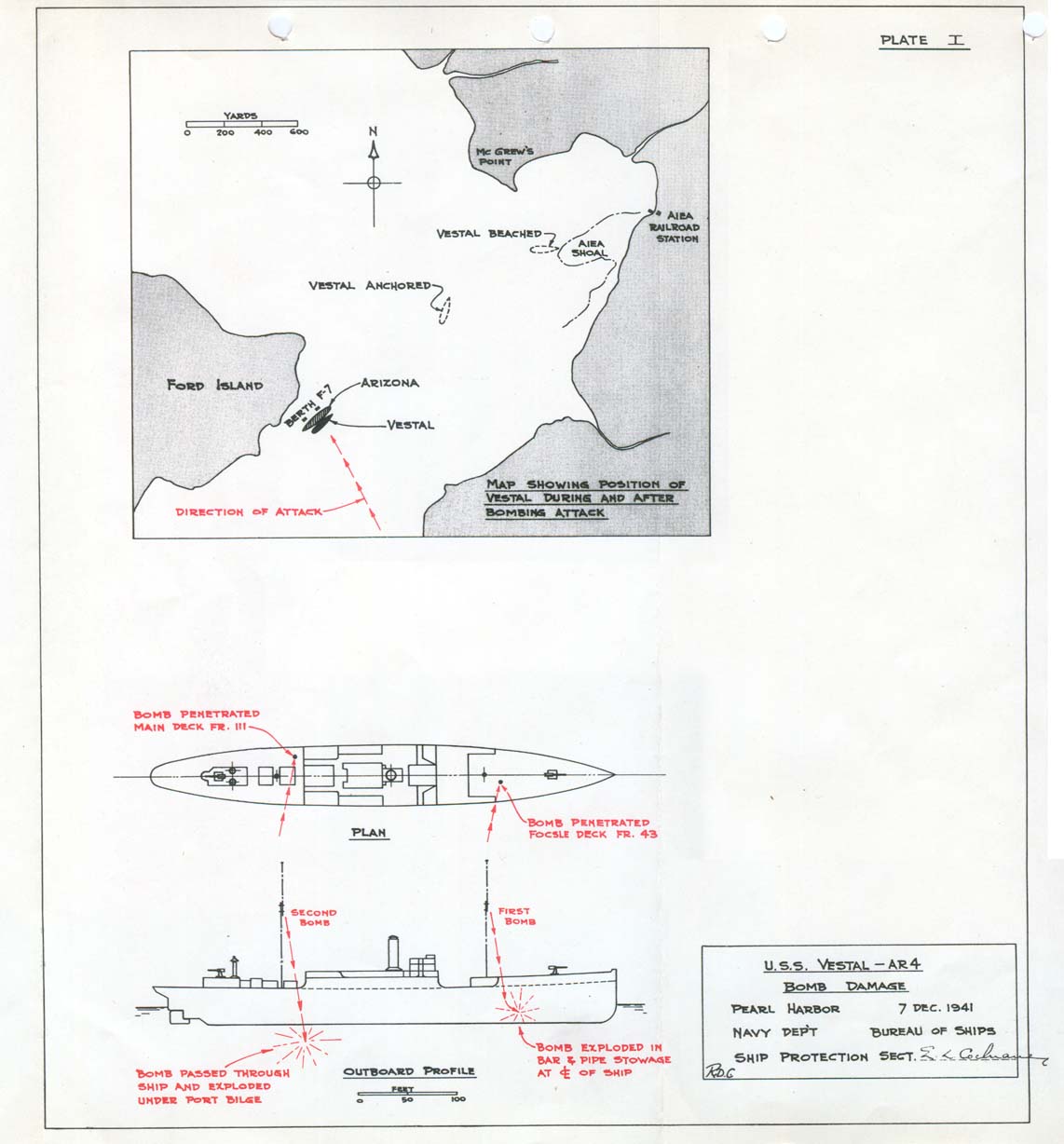
“Vestal struck by two bombs (probably 500 pounds). One bomb hit forward and exploded in the steel shape storage, which stopped a large part of the fragments and minimized damage considerably. The other bomb struck aft and exploded in the hold, causing a large number of fragment holes through the shell. Flooding aft caused the after part of the vessel to submerge almost to the main deck. The vessel was alongside the Arizona when the raid commenced and was beached at Aeia to prevent further sinkage. Temporary repairs have been completed during a short stay in drydock, and permanent work will be completed when a dock is available.”
The official report lists six dead from the attack on board Vestal. Some died from the fires aft and their bodies were indistinguishable because of the burns. Some died from the concussion that sent Commander Young over the side and into history. As had happened at several points along his career, this was not his moment to die.
The following report was filed by Commander Young:
USS Vestal, Report of Pearl Harbor Attack
AR4/L11-1/(066) U.S.S. Vestal 10-trb December 11, 1941.
From: The Commanding Officer.
To: The Commander-in-Chief, U.S. Pacific Fleet.
Subject: Report of action on December 7, 1941, in accordance with references (a) and (b).
Reference: (a) Art. 840 Navy Regs.
(b) CINCPAC conf. desp. 102102 of Dec. 1941.
- At about 0820 a torpedo was seen to pass astern of the Vestal and it apparently hit the Arizona whose bow extended about 100 feet beyond the Vestal. The Arizona also received a bomb hit forward almost simultaneously. Immediately following these the Arizona’s forward magazine exploded. This explosion started fires aft and amidships on the Vestal. Shortly after the Arizona was observed to be settling and the fuel oil between Vestal and Arizona was ignited.
- At 0830 orders were given to make preparations for getting underway – this had been anticipated by the Engineer Officer. At 0845 the forward lines were cut, the Arizona’s quarterdeck was awash, and Vestal got underway on both engines, no steering gear. Tug pulled Vestal’s bow away from the Arizona. The Vestal started to list to starboard and was taking water aft. She was maneuvered to position with south end of McGrew’s Point bearing 30°, distance 910 yards and at 0910 anchored in 35 feet of water.
- Soundings and draft readings were taken continuously; these showed the ship was settling aft and continuing to list to starboard. Draft aft increased to 27 feet and the list to 6 ½°. Because of the unstable condition of the ship due to large amount of free surface, the knowledge that we had two holes in the hull – subsequent inspections showed only one – ship being on fire in several places and the possibility of further attacks, it was decided to ground the ship. At 0950 got underway and maneuvered to position with Old Aiea Railroad Station bearing 73° true and West Tangent of McGrew’s Point bearing 320° true; ship grounded. Number 2 white spar buoy close aboard on starboard side amidships. Ship’s head 092° true. Depth of water forward 11 feet, amidships 18 feet, aft 27 feet. Draft forward 15 feet, aft 29 feet.
- Offensive measures.1.At 0755 sounded general quarters. Manned the 3″ anti-aircraft and 4 – 5″ broadside and 2 – 30 caliber machine guns. At about 0805 opened fire with 3″ anti-aircraft gun and both machine guns. After firing three rounds, 3″ anti-aircraft gun breech jammed; breech was cleared and one additional round was fired when blast from Arizona magazine cleared gun station killing one man. Machine guns continued firing on enemy planes until they withdrew.
- 3″ anti-aircraft and after machine gun both fired at plane which released torpedo at Arizona and turned toward Vestal. This plane was seen by crew of the machine gun to burst into flame and disappear over Ford Island, this was substantiated by others in the vicinity. Whether the plane was hit by gun fire from Vestal or adjacent ships is not known.
- Identified dead – Six
Unidentified dead – Three, one from 3″ anti-aircraft gun platform and two from stern of Vestal. These men may have been either Arizona personnel blown over by magazine blast or members of Vestal after gun crews; they were burned beyond recognition.
Missing – Seven.
Hospitalized – Nineteen. About twenty per cent of those hospitalized are seriously injured suffering primarily from burns and fractures.
- The conduct of all officers and enlisted personnel was exemplary and of such high order that I would especially desire to have them with me in future engagements.
- 1.The USS Vestal was struck by two bombs at about 0805 December 7, 1941, while moored port side to port side of the USS Arizona berthed at Fox 7, Pearl Harbor, T.H. One bomb struck the starboard side at frame 44 penetrating three decks, passing through the upper crew space, GSK stores A-16½, A-14½, and exploding in GSK stores lower hold A-9. The fire main and electric cables in crew space were cut. W.T. hatch to A-14½ buckled and stores in GSK stores and lower hold set on fire and wrecked. As far as can be ascertained there are no indications that this bomb or fragments caused any rupture in the hull.
- The second bomb struck at frame 110 port side, passed through the carpenter shop, shipfitter shop, shipfitters locker room (D-1½), fuel oil tanks D-80-P-F and D-82-P-F and left an irregular hole in the hull about 5 feet in diameter just inboard of the bilge keel. The above spaces (D-1½) flooded up to the level of the carpenter shop with fuel and water.
- Due to the bomb explosion forward and fire and water in GSK stores, practically all stores are damaged, the extent cannot be ascertained until completion of removal. Heat from this fire necessitated the flooding of the forward magazine containing 100 rounds of target and approximately 580 rounds of service 5″ ammunition.
- Damage as a result of the magazine explosion on the Arizona and the resultant fires on the Vestal were three life rafts, 6 mooring lines, 1 gangway, rigging and blocks and paintwork burned, stanchions bent, port lenses and windows broken.
[signed]
YOUNG.
Copy to: Combasefor.
Source: Enclosure (E) to CINCPAC action report Serial 0479 of 15 February 1942, World War II action reports,
Modern Military Branch, National Archives and Records Administration, 8601 Adelphi Road, College Park, MD 20740.
http://www.navsource.org/Naval/logs.htm
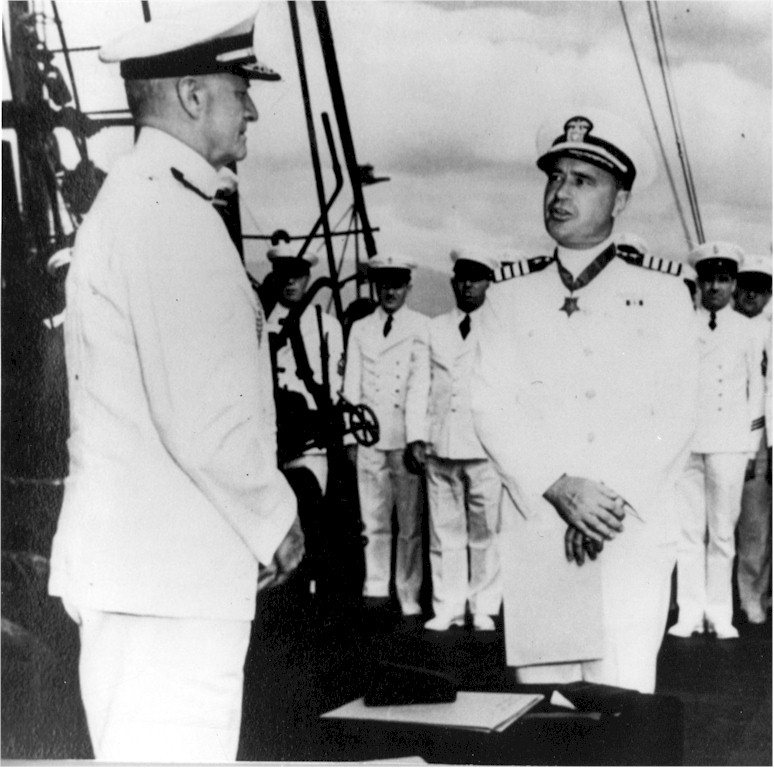
So it was that on April 18, 1942, the commander of the Pacific Fleet, Admiral Chester Nimitz, was piped aboard the still-damaged Vestal.
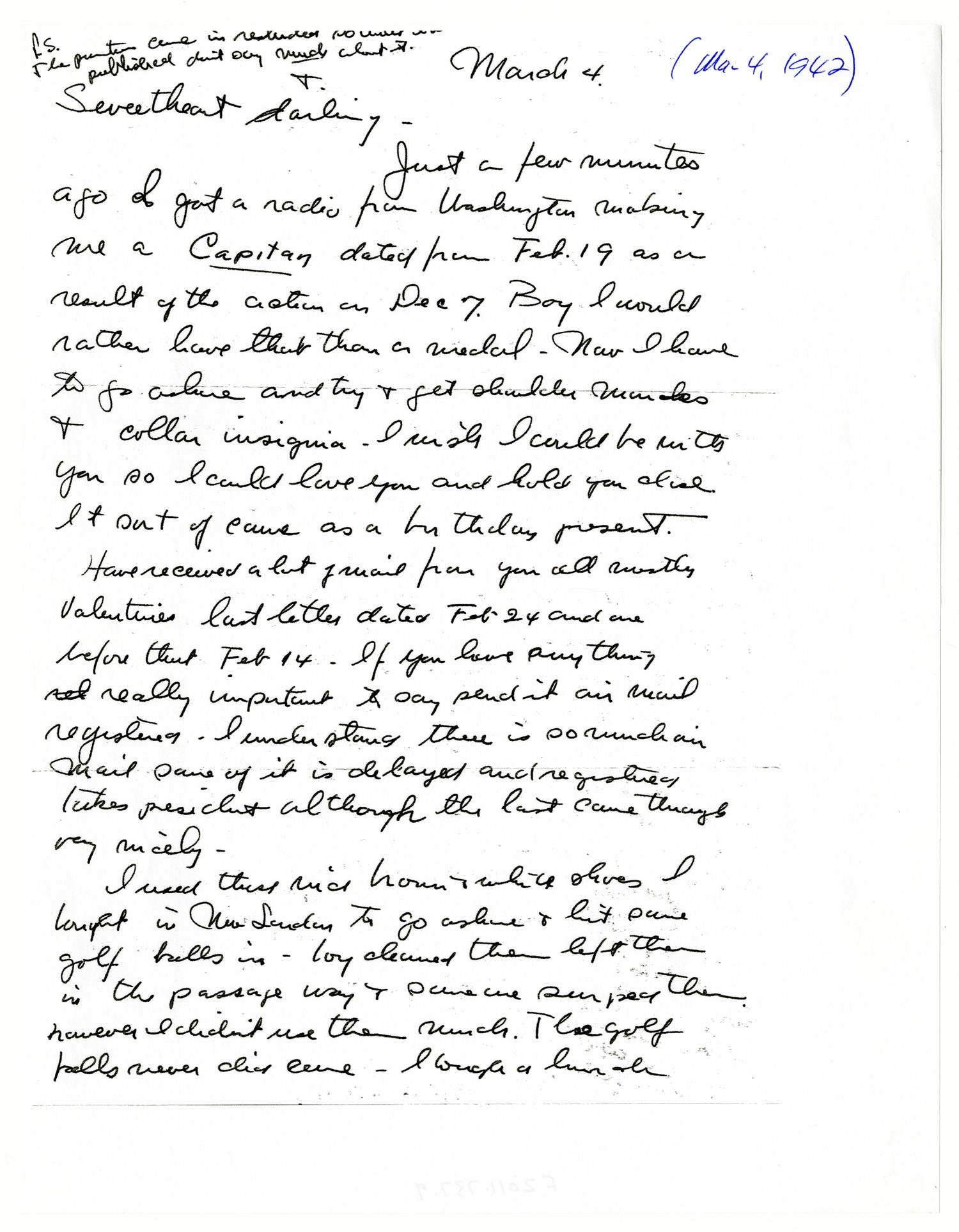
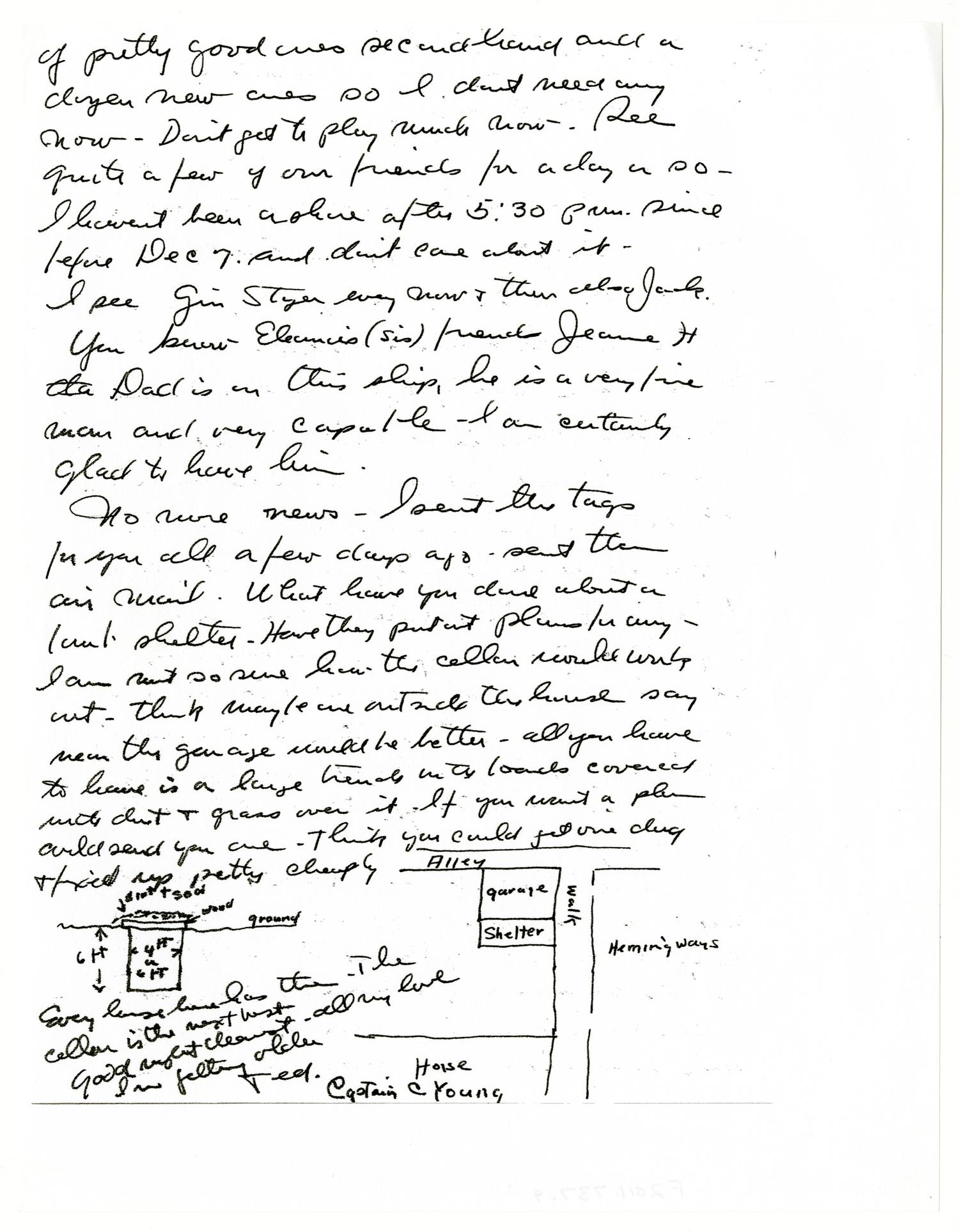
He had come to award the newly promoted Captain Young the Medal of Honor for his fearless actions on December 7. Vestal herself would be awarded a battle star for her courageous action under fire that day, a rarity for a service ship.
Repairs to the Vestal were finally completed in August 1942, and she was urgently dispatched to the South Pacific where the Marines had just begun offensive operations at a place no one had ever heard of — Guadalcanal.
The Vestal would be restored to full action and accompany the fleet over the next four years in the determined battles that would exact revenge. The newly promoted Captain Cassin Young would take her from Pearl Harbor to Noumea in the months to come. She would continue to provide the needed repair services that resulted from the fierce naval battles in and around Guadalcanal.

 theleansubmariner