Chapter Five: The Spanish Revenge
Being a Second Classman brought with it increased privileges for Midshipman Young and his classmates. They would also have a more comfortable setting to live and study in. A Second Class Suite with a bath as the boys called it in Bancroft Hall. Two stripes adorned each arm on his service uniform but those stripes represented having survived through all of the challenges of the first two years. Many from the original class were no longer present. Some were victims of the curriculum or honors violations that ended their journey before it had even begun. But enough were still here to help create a sense of brotherhood that only comes from lasting through all of the rocks and shoals along the way. The Army Navy game came and went, and the middies came out of Franklin field muttering that they would get them next year.
The academics changed as well.
The basic courses of English and lower-level Math were being replaced with more advanced and focused courses on Navigation, Ordinance and the important study of electricity. All of these classes brought the young middies closer to the realization that they were coming closer to being a part of the fleet. Studies gave way to spring and the athletics that came with warmer weather providing enough diversion to take the edge off of their cloistered existence. June week shortly followed and the graduation of the First Class to Ensign was about as exciting a time as a Second Class could hope for. It was the long-awaited signal that they were next in line.
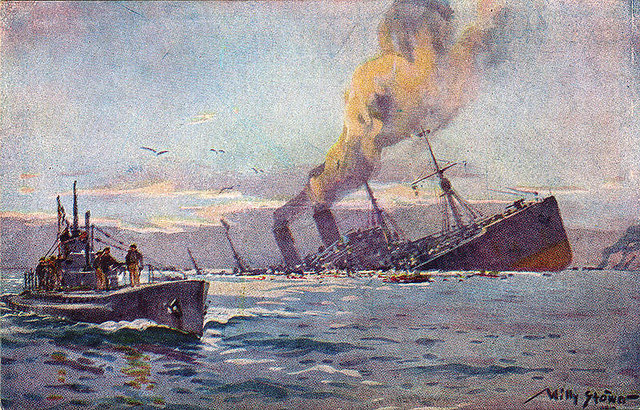
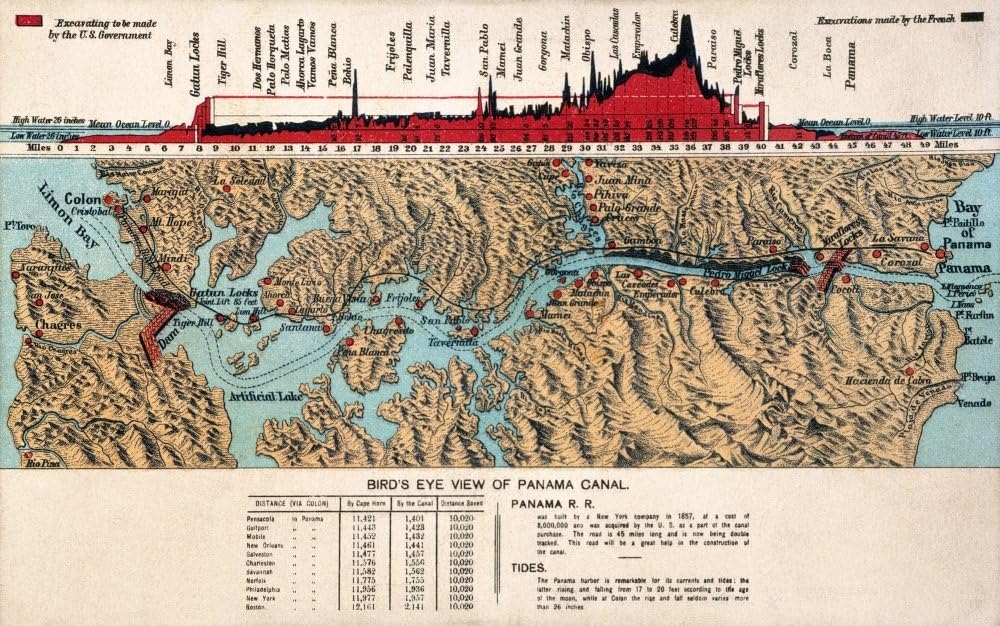
And none too soon. For ten months, the guns of Europe had been belching a black death, and the island nation of England was starting to feel the effects of the fledgling German submarine campaign. The summer cruise for the midshipmen was reflective of the changes in Europe. Instead of an adventure in the war torn climates, the training ships would head south and eventually west through the Panama Canal on their way to San Francisco. This would be Cassin Young’s first glimpse of the Pacific Ocean but it would be one of many trips through the waters on the western coast and beyond. The Battleships Missouri, Ohio and Wisconsin would act as shipboard classrooms for the midshipmen under the command of Rear Admiral Fullam, Commandant, departing on June 6th and returning on August 30th.
The lead up to graduation was not without some level of controversy, however.
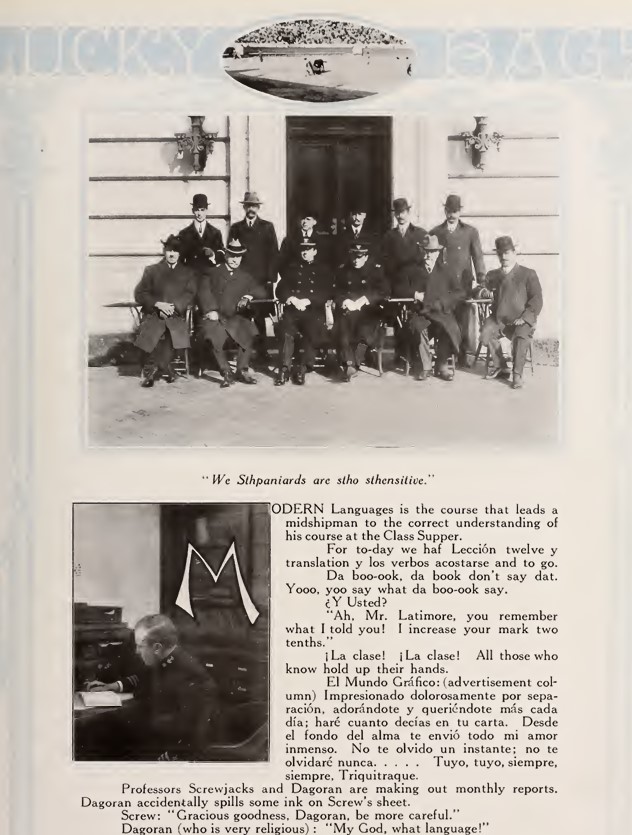
The forced inclusion of teaching Spanish for the entire four years of a midshipman’s life did not bring any sense of familiarity of the language to all of the middies. The Lucky Bag is very disparaging of the language arts as a whole but it was obvious that some of the lads were struggling more than others. The battle of 2.5 was the battle to maintain an overall grade point average high enough to receive a diploma. It is interesting that with the increased difficulty of many of the academic classes, the one that would seem to bring out the highest level of desperation would be one of a language that is spoken by such a large portion of the world.
The Spanish fleet could not defeat the American Navy in the late war but their home language was taking a toll of many of the midshipmen. This adversity tested enough of them to create an ambition to find an easier solution. The answer came in a way that equaled the gambling scandal of 1912. The first indication outside of the academy was an obscure news article on May 27, 1915 that simply stated that both the First and Second Classes had to be retested in their knowledge of Spanish. In an unprecedented move, the entire class’s previous testing efforts were cancelled and they were given a new exam. The resulting diminished grades confirmed that something had happened before the first exam that was troubling and problematic to the process.
When the former commandant Gibbons was relieved, Rear Admiral William F. Fullam took his place.
During the Spanish American War, Navy Lieutenant Fullam served aboard USS New Orleans (CL-22) during the Santiago Campaign- the blockading and bombardment of Santiago and San Juan; earning the Spanish Campaign Medal.
Chief among his assignments ashore was as acting aide to Secretary of the Navy Josephus Daniels, February 1913 – late January 1914, followed by duties as Superintendent of the United States Naval Academy, in which he assumed command on 7 February 1914 – until spring of 1915. Fullam had been selected by Daniels as the man to try and get the academy back into shape following the challenging years of his predecessor. He was well liked and respected by many in the old navy and it seemed like things at the academy were finally returning to a semblance of normal. He had little idea of what was going on in some quarters however. Faced with a curriculum that was much more taxing than that of the past, it appeared that both staff and students had developed some practices that were meant to ensure success. The practice was called doping or cribbing.
No written policies exist that show that these practices were openly encouraged or allowed. But the breaking news of the day indicated that something had definitely gone wrong. From the Lancaster, SC news on May 28th: “The entire first and second classes at the naval academy underwent a reexamination in Spanish today, because academy authorities suspected that the questions prepared for the test had been obtained beforehand by some of the midshipmen. The office where the questions had been kept, was recently robbed, it became known and several backwards Spanish students were found in the examination to have developed unusual familiarity with the subject. A thorough investigation is being made.”
Other articles of the same day mirror the seriousness of the offence and it was clear that the upcoming summer would be one of great interest to those inside and outside of the academy. By the 8th of June, the investigation was in full swing and early leaks of information indicated that this was not the first time that midshipmen were given access to questions before the exams. The investigation started as an internal Navy affair but quickly gained national attention. One of the unique things about the men who were students at the academy was their placement at the hands of the connected and powerful men of the day. Appointments were gained through members of congress and members of congress were elected through the support of the rich and famous parents of many of the young men. In later years, men could seek appointments from the ranks of enlisted but in the pre-1915 academy years, the only way to Annapolis was through the graces of someone who had influence.
The scandal quickly took on the resemblance of most major political wars.
The Navy lined up on one side with its unique view of what was required to raise a man to the level of an officer. Newspapers were the primary way of communicating in that day and age (radio had not been perfected to use in influencing the public yet). The politicians and powerful lined up on the other side with their access to their own favorable press and influence. What started out as a small group of misguided midshipmen quickly turned into a much larger group with multiple offences in question. No longer was it just the discovery of a few men with some “gouge” that helped them with a Spanish Language test, wholesale accusations were leveled that implicated many men were thought to have gained unfair access to materials for nearly all of the annual exam.
Rear Admiral Fullam quickly found himself in the center of a firestorm as the influential politicians and families rushed to the aid of their sons and constituents.
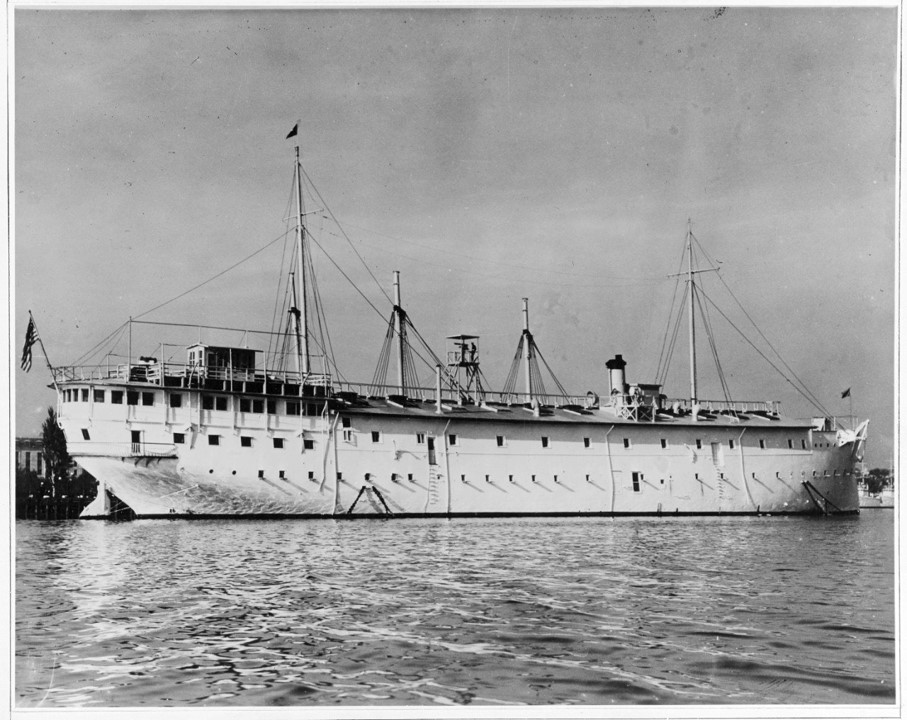
They were shocked to find out that their sons were being incarcerated in an old Spanish ship on the Severn River that was being used as a prison ship. Stories about the boys being kept below decks with no fresh air and little light shocked the nation and drew sympathy for their cause. The Navy’s internal investigation followed rules and orders of the day and were not as liberal as civilian laws in allowing the men charged to prepare for their defense. This smacked of unfairness and was crafted by the defense teams to show the un-American nature of the “trials”.
One of the first effects of the drama was to postpone the Annual Training Cruise.
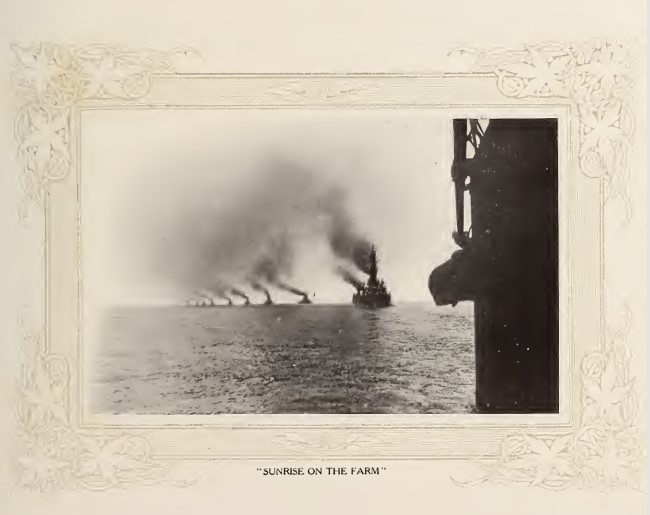
The three battleships (USS Missouri, USS Wisconsin and USS Ohio) that had been brought to the academy to embark the midshipmen on their annual cruise were all anchored and at rest while the drama unfolded. Day after warm June day, the ships sat waiting for someone to make a decision about the plan to move ahead. The cruise was to have started on June 6th, the day that most of the investigations began. For the next few weeks, the status of the entire training cruise was in doubt as authorities struggled to determine the depth and scope of the scandal. Each day, the drumbeats from both sides in their respective friendly newspapers grew louder and louder. One of the side issues that quickly rose to prominence was the old issue of hazing. Congress had long ago passed laws prohibiting the practice but testimony after testimony revealed that not only had the practice continued, it had become sophisticated in its cruelty and ability to be hidden from the leadership at the academy.
By June 12th, the two sides had squared off and began a series of counter attacks towards each other. Rear Admiral Fullam sensed the external powers were gaining influence over the civilian leaders of the Navy and stated to a midshipman that “he would rather go to sea in command of a collier than stay at Annapolis under such circumstances.” He also stated that we would resign his commission before he backed away from investigating this as a naval matter. Both statements would be used against him in the press and in the halls of congress before the ordeal was closed.
Considering the state of the war in Europe that was rapidly becoming a global conflict, it is surprising how much ink was spent investigating every aspect of the scandal.
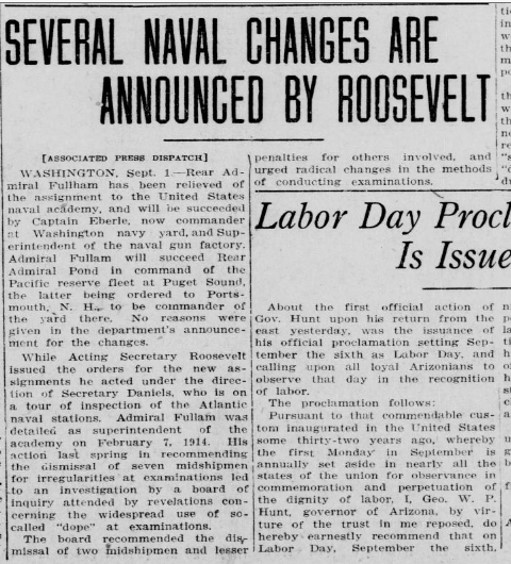
What is not amazing is the outcome. By July 3rd, seventeen more midshipmen were arrested and placed under guard. The Secretary of the Navy pressured the court to close its investigation, and the training cruise was allowed to get underway on the 6th of July, a full month after the scheduled date. Rear Admiral Fullam was in command of the three ships and they sailed away, leaving the hot month of June and an unresolved scandal behind.
It would be Fullam’s last official function as the head of the Naval Academy.

 theleansubmariner