Chapter Two: The First Year is always the hardest
The rains in old Crab Town had to be a welcome relief to the incoming Plebes. Even those who had an athletic background surely must have withered under the heat and humidity that accompanied the scorn of the upper classmen that were unlucky enough to get the assignment to welcome the new class of “Joe Gish” plebes. July of 1912 would be no different than most years and the oppressive heat combined with all the new smells and sounds were probably a shock to many of the young men.
But traditions were the real backbone of the Navy. Uniforms needed to be stenciled, shoes needed to be polished, standing at attention became a new torture and that Swedish Exercise was something to behold. This form of exercise had been around for decades since its early development by a Swede named Peter H. Ling. It was designed to stretch the body and create a better physiology for the young men that were destined to sail the ships of the Navy. But to the uninitiated, it must have seemed like a form of modern torture at first.
The focus on fitness was probably a reflection of the most famous fitness President of the age: Theodore Roosevelt. This former Secretary of the Navy was undoubtedly the most physically fit person to ever occupy the Oval Office. His personal determination evolved from his childhood battle with asthma so it is understandable that the young Plebes would be subjected to a rigorous exercise program right from the start. The fitness aspect was only part of the drill though. Inside each of the boys, a spirit of independence and pride still lurked. That same independence and pride unleashed could cause chaos in a well-regulated fighting unit that required strict obedience and close discipline. It was the edge that any fighting force needs to maintain their composure in the heat of battle where shells are flying close overhead and defeat is only a moment away for those less focused. These exercises helped to mold the boys into disciplined men.
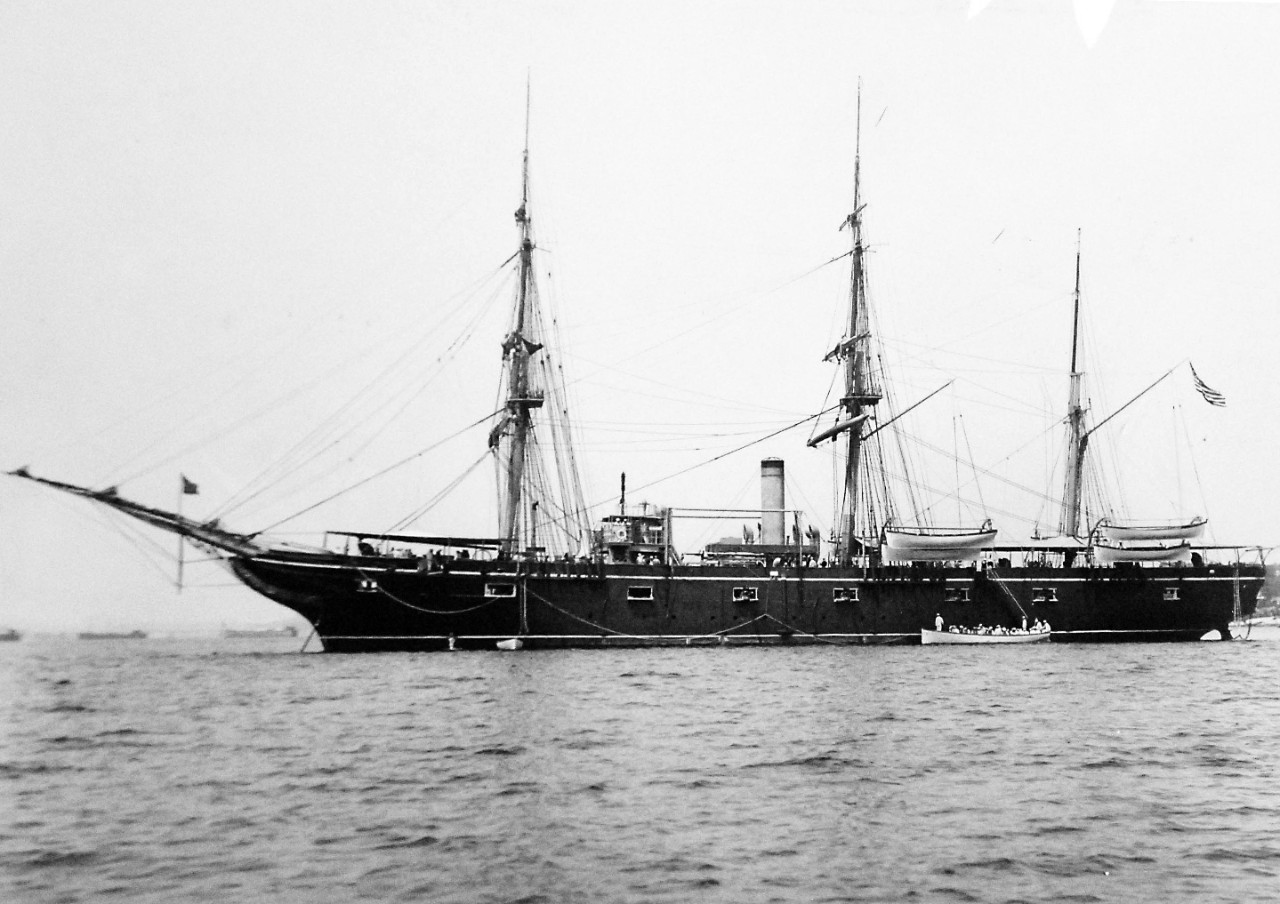
As Young and his fellow Plebes fit into their routine, there was a time-honored challenge that needed to be met. Even though change was in the air, some traditions needed to be upheld. On the twenty second day of July, the new members of this exclusive club gathered on the pier next to an aging ship that was used for training. The USS Hartford, which had been Admiral Farragut’s old flagship, was moored at the Naval Academy pier and served as a “Station Ship” for Annapolis. Each summer, the chosen boys for the new class that aspired to leadership would take the challenge to climb the highest mast of the old ship and spike their caps on the main mast.
The completion of spiking the main mast meant that the man who succeeded could wear the uniform of a midshipmen. The day was warm and humid but the excitement of the challenge was probably present in all of the boys. Climbing the mast of a warship was a tradition for the old sailing Navy and anyone who fancied himself a Navy man would welcome the chance to prove his skills. One of those men was a Plebe from Corsicana Texas named William L. Bullock. Mr. Bullock, with his Texas roommate Midshipman Allston, took his turn in line to show his skill and strength. The boys cheered each other on and sometimes jeered when a middy failed to reach the top.
But not Mr. Bullock. He scaled the mast to its very top and with a great fanfare reached the highest point of the mast and “transfixed his cap on the spike at the top.” The joy was short lived. As he started his descent, his hands must have become burned as he slid down a single rope. In obvious pain, he attempted to grab one of the other masts or another rope but completely lost his grip. He struck one of the crossbars and fell the remaining part of the 100 feet to his death.
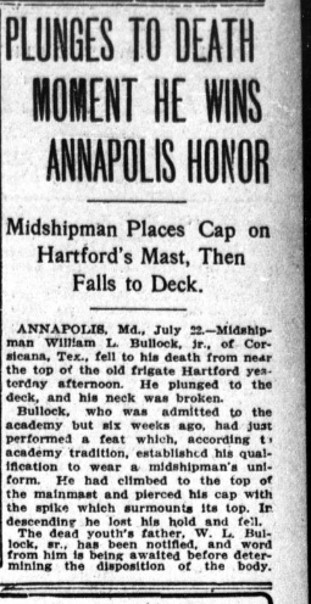
One can only imagine the shock experienced by the rest of the boys as the prostrate body of this young man lay on the wooden deck of this old ship. All of the joy from the previous moment vanished in an instant. The incoming class had not even been to their first class of instruction and they were taught their first lesson of Navy life. That lesson of course was that life itself is very fleeting. Nothing they would do over the course of their long or short Naval Careers would ever be routine. Dangers were waiting around every corner, even in the most routine things.
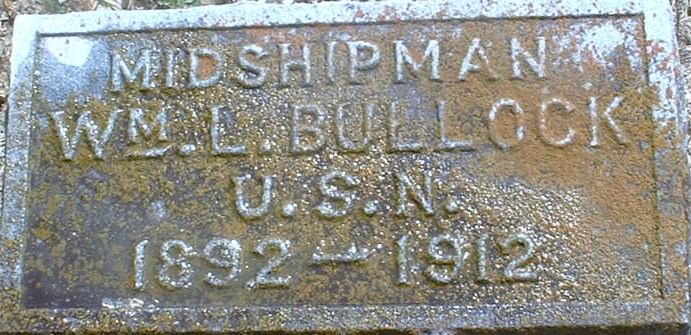
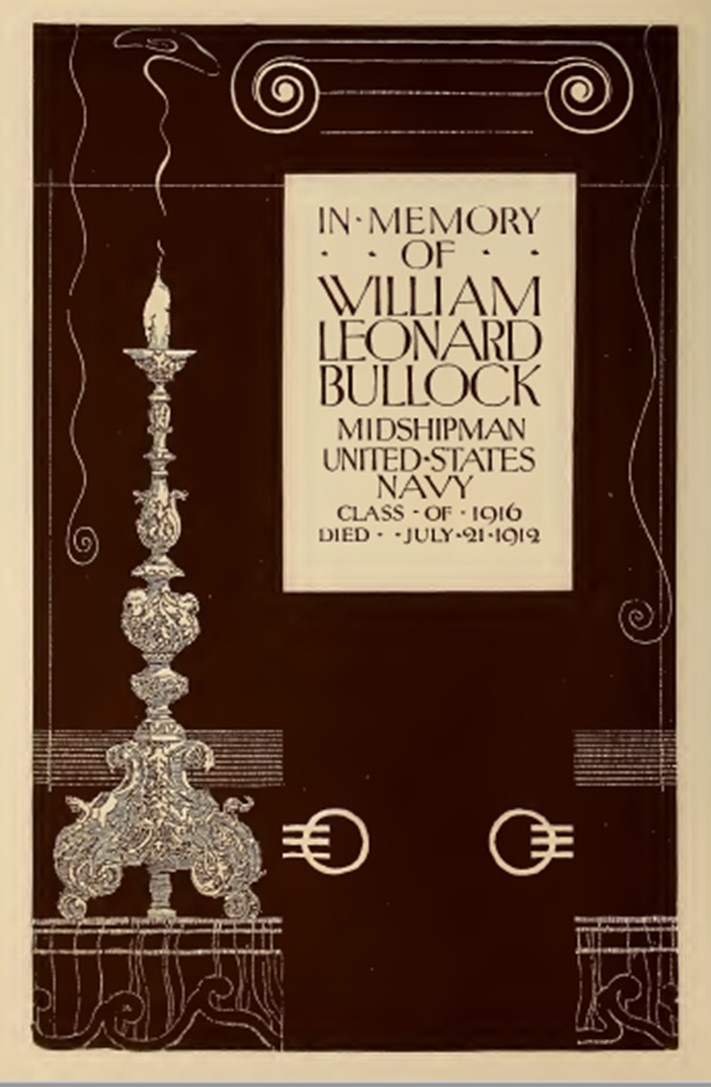
The lesson would come back to many of them in the years to come. For today, it was just enough to see death this close up and be reminded of our frailty. Midshipman Bullock would remain on the rolls for the entire four years the boys became men and he was graduated with his class posthumously.
The other casualty that day was the old Hartford. While no official Navy records indicate the reason for the change, she quietly sailed for Charleston on October 24 of that year to serve as a station ship. Her long and storied career would end in a quiet retirement in the Norfolk Naval Yard where she deteriorated so badly that she sank at her pier.
From a periodical of the day called The NAVY, August 1912 (NAVY Magazine)
LETTER FROM THE NAVAL ACADEMY
ANNAPOLIS, MD., July 31, 1912.
“The spirit of the Naval Academy now no longer sleeps in summer as it did in former years, when only on October 1st, after the summer cruise of the Midshipmen, it began to awake from its somnolence, as the academic year commenced.
Since the Fourth Class is formed in the summer months, and now numbers between 200 and 300 members, as large as the whole body of midshipmen mustered a little over a decade ago, the Academy has been full of interest and activity.
The work of examining the entrance papers and making the physical tests of the new midshipmen is onerous; coming as it does, on the very heel of the heavy strain attendant upon the annual examination of the four classes of midshipmen. These examinations are followed by strenuous work on the part of both of the instructors and the neophytes of the navy. From reveille at 6:30 A. M. to taps at to P. M., the Fourth Classmen are drilled and instructed in ” Setting Up, ” to correct in their physiques all imperfections.
They are instructed in practical seamanship, in boats under oars, in flotilla movements, in the manual of arms, and infantry tactics, and in swimming. The indoor exercises on rainy days include gymnastic work, learning the rigging, and knotting and splicing. In the evening, the midshipmen are given lectures upon the Academy Regulations, with which the new classes are always eager to become familiar. Indeed, so faithfully do the latest additions to the service study the regulations, that the upper classmen call the regulation book, ” the Plebe’s Bible. ”
The Fourth Classman has an anxious air about him all the time. He is in new surroundings and is always on his guard not to make mistakes against the written and the unwritten law.
It is only of comparatively recent date that such a high proficiency in swimming has come to be a requirement of the Naval Academy, and a midshipman must now be able to swim well before he is qualified to graduate from the institution. The diplomas of three midshipmen were withheld on the last graduation day, because they had not qualified in the art as provided in the curriculum of the Academy.
All of the midshipmen in the Fourth Class now forming, are classed as ” No. 4. ” These are taken across the Severn River every morning for an hour’s swimming lesson. Three strokes are taught; breast, back, and under water side stroke.
The midshipmen are first given ashore a thorough drill in each stroke, and are then sent to the water to put into practice what they have learned in the drill. When the novice masters one stroke sufficiently, and can swim the prescribed distance, he is given a trial in a six-minute swim. If he qualifies, he is then classed as No. 2. If he fails, but swims three of four minutes, he is classed as No. 3. Once having qualified on the time test and being classed as No. 2, the midshipman is next required to give his whole attention to the perfecting of the man’s stroke, teaching him harmony of motion and ease in his strokes. When this is accomplished, he is a ” No. I ” swimmer, and is henceforth allowed to go out to the float in deep water. Here he is taught diving from various heights and from the spring – board. All of the holds of the drowning man on his rescuer and the way to break those holds, are taught in a practical way; and also how to rescue a man and to bring him ashore. Resuscitation is taught and demonstrated, and the midshipmen take their turns as the operators in this branch of gymnastics, under the guidance of expert instructors.
Our midshipman of today does not intend to be behind his predecessors in skill and courage. Although the unfortunate accident on July 21st, by which Midshipman William E. Bullock lost his life, was a shock to the members of the new class of midshipmen now forming here, it did not at all destroy their nerve. On the Saturday following the occurrence, a half dozen of the Class of 1916, who had just entered the Academy, repaired to the U.S.S. Hartford, and climbed to the peak of the ship, and after the usual custom, spiked their caps on the truck, the top of which is 115 feet from the deck.
This feat is performed by ascending from the top of the ” Jacob’s Ladder, ” a hundred feet above the deck, up the royal mast for fifteen feet, and has to be accomplished by shinning up the mast.”
Moving In
Cassin and his classmates would move into their new accommodations later that summer and begin to understand the Spartan life that all midshipmen faced before them. As the yearbook would describe it, they came to live in a small box like compartment, enclosed by four bare-neutral tinted walls and lighted by a solitary window. Their only furniture would be an iron bedstead with a not too comfortable mattress, an empty locker that would soon be filled with neatly folded uniforms, an “efficient looking chair” and table for studying and an enamel white wash stand.
This room would be shared with another plebe and the pair would be together for much of the next four years. Cassin’s roommate was John Ernest Reinburg from Capitan New Mexico. The two boys would soon find out that their given names were a thing of the past. Besides the ignoble title of Plebe, they would also find their Christian names gone as well. Cassin became “Teddy” and John became “Dutch”. These names would follow them wherever they would go in the future that involved fellow classmates. Both men would rise to the rank of Captain before their careers ended. But on this first day, they were far from any rank or position of respect.
On this first of many long days, the two future leaders would have to satisfy themselves with the mundane task of filling that empty locker and doing so exactly as the Blue Book stated. Not a thing would be out of place or there would be a demerit or two in the offing. It’s hard to imagine for a civilian how important this activity is to a sailor. For the young Plebes, the ability to pay attention to the smallest of details would be part and parcel of their lives for the next four years. A wrinkle, a stray dust ball, an out of place part of a uniform would all bring the wrath of a senior member down on their shoulders.
Outside of the walls of the Academy, 1912 was a turning point in American Naval history as well. Teddy Roosevelt’s Great White Fleet ended in 1909 but was the beginning of the world’s recognition of America as a global force. The Panama Canal had drastically changed the way commerce and travel would impact the both country and the world. The ships of the great fleet that sailed around the world, however, were limited in their operational ability by their reliance on coal for their energy. In order to maintain their strength in the future, a changeover to oil would need to be accomplished. Plus, the emerging technologies of electricity and communication would prove to be of great strategic importance as navies around the world found new ways to take advantage of the technology.
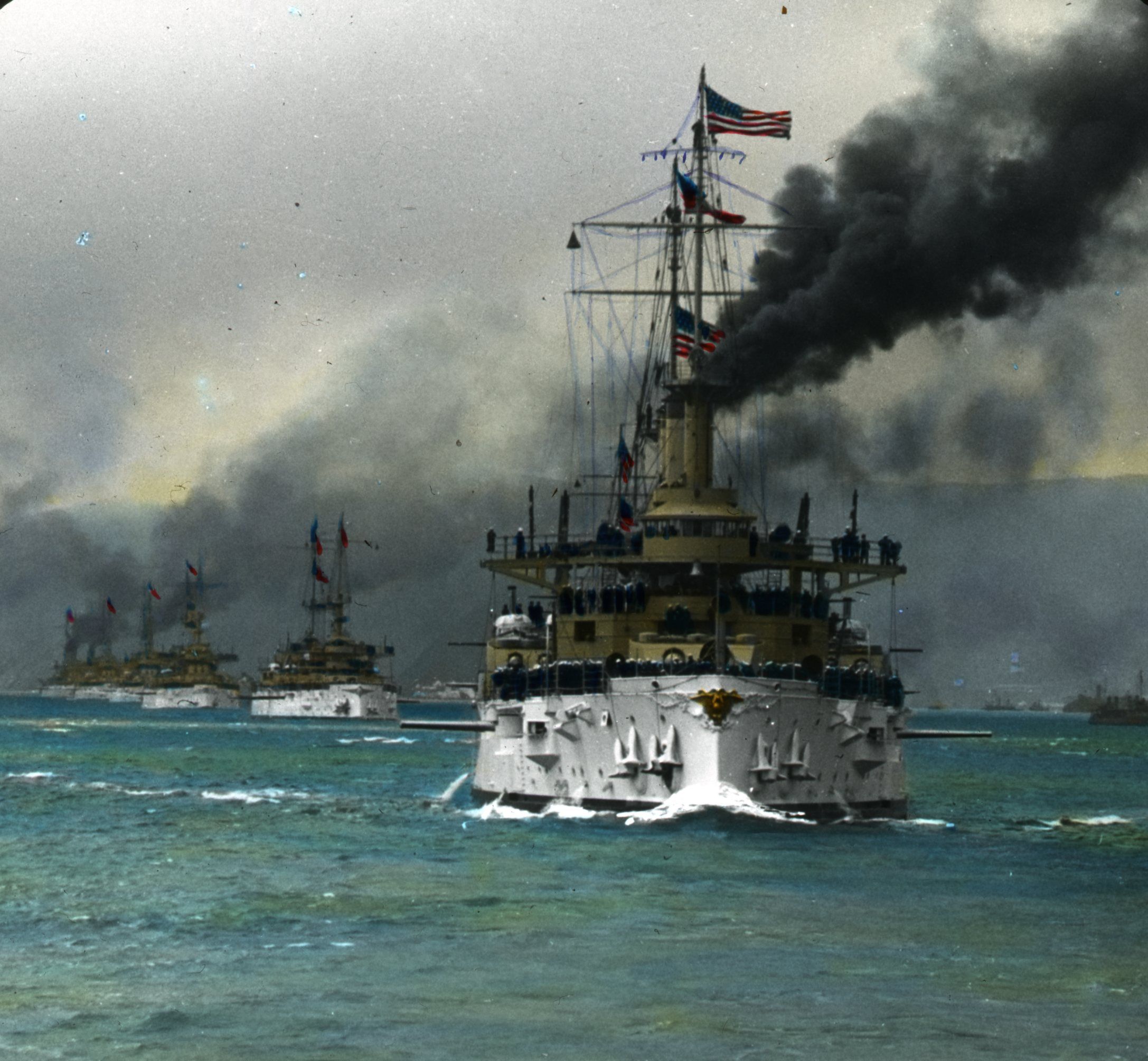
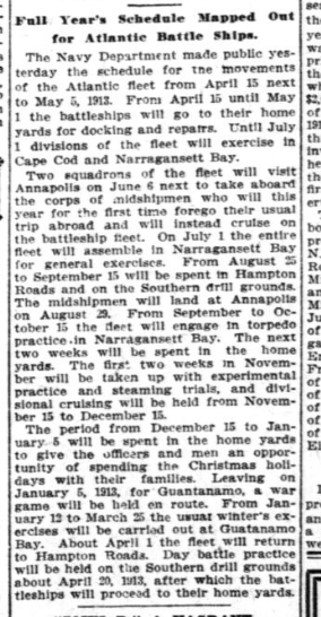
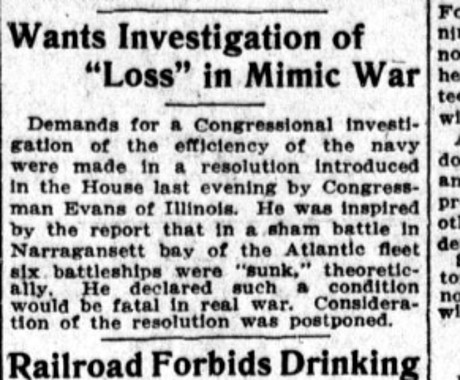
In 1912, Congress was struggling to determine if there were funding and public support to build the two battleships that were originally planned. It was not helpful to the Navy’s cause when results of the July maneuvers reached the ears of congress.
The annual fleet maneuvers were held near Narragansett Bay. These carefully planned “battles” were the way the Navy tested itself against any known threat. The well-choreographed exercises lined the big battleships in formation and moved them at high speeds while pretending to fight a phantom enemy. Something was different about these maneuvers however. The introduction of small and speedy torpedo laden surface and unseen subsurface vessels at one point caused alarming and unexpected results. So alarming were those results that Congressman Evans of Illinois introduced a resolution on July 28th demanding to know why six battleships were “sunk” theoretically during the event. Such a catastrophe in times of war would be nearly fatal for the fleet. The only thing recorded in Congress at that time was an indefinite postponement of the consideration of the root cause.
Rear Admiral Bradley Fiske wrote an illuminating article in November called “Thoughts on USN Tactics, 1912” The foundation for the article was how ill-prepared the fleet was for actual combat because of their preparations and lack of purpose for many or the annual maneuvers. Fiske was thought by many to be an incredible genius and tactician History records that he probably would have been the first Chief of Naval Operations had he not reached the age of 62 just prior to the creation of the rank.
His observations would impact many battleship commanders for years to come.
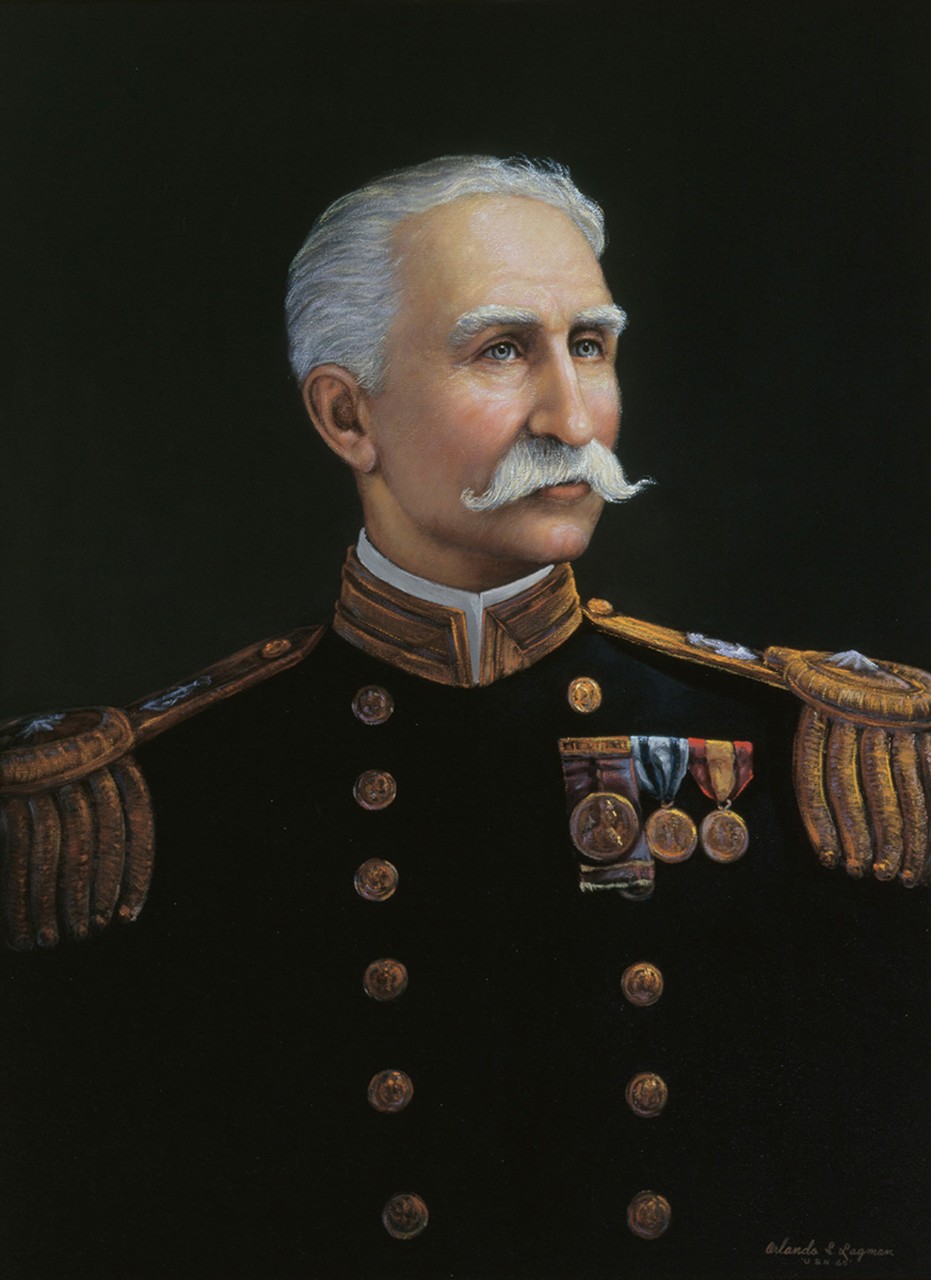
Two distinct recommendations would come back in the year he died (1942) which coincided with the year of the Naval Battle of Guadalcanal where Cassin young would meet his fate.
The first was the way ships should fight in an open ocean war.
His stern admonition was that the big guns were the ultimate arbiter of any battle as long as they were properly displaced.
The second had to do with night fighting. From his Paper:
“NIGHT MANEUVERS”
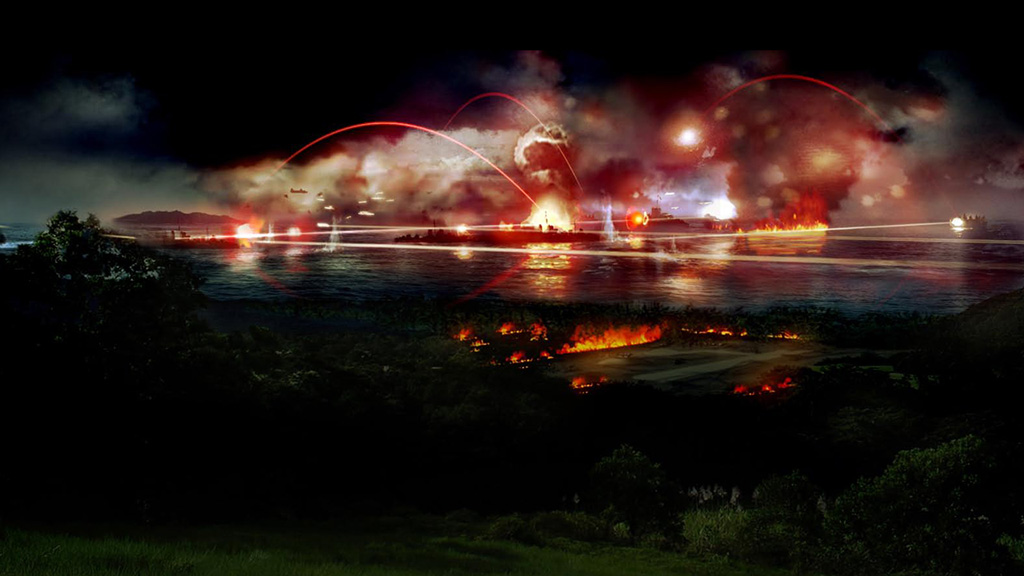
- We have been exercising at night maneuvers for several years, with little if any, definite result. We know little more than we did twenty years ago in regard to the best way to repel destroyers at night, and everybody seems to feel that about the only thing to do is to extinguish all lights, spread a “screen” out at least five miles away, and realize that if a destroyer gets within torpedo range we cannot prevent her from firing her torpedo at us.
- This being the case, would it not be better to drop these highly picturesque and laborious maneuvers for a while, and devote our time and our energies and our mental faculties to solving the practical and urgent problem of how to fight a column of battleships in the daytime?
- This will not prevent our putting out lights whenever we wish to do so, while cruising at night, and making whatever observations we wish as to visibility under different states of the weather, handling screens, etc. Apparently this is about all we can do, until some genius invents what may be called a “megaphote,” that will enable us to see in the night-time. Such an invention, by the way, does not seem theoretically impossible.
(Signed) B. A. Fiske”
The lessons Fiske tried to teach would ingrain themselves into the navy’s current and future development.
In his annual report to the President, the Secretary of the Navy would amplify the need for preparedness:
PREVENTION OF WAR.
That international efforts toward peace have accomplished nothing as to the limitation of armaments needs no argument.
If an efficient fleet of adequate size is maintained the country will be safe from attack and free to work out its destiny in peace and without hindrance. The recommendation for a continuing policy which will give the fleet desired is made with due regard for the almost world – wide movement for the settlement of international disputes by arbitration, in which movement this country has taken a foremost part. History of all times, including the present, shows the futility and danger of trusting to the good will and fair dealing, or even to the most solemnly binding treaties, between nations for the protection of a nation’s sovereign rights and interests, and, without doubt, the time is remote when a comparatively unarmed and help less nation may be reasonably safe from attack by ambitious, well-armed powers, especially in a commercial age such as the present. The economical system of a great commercial nation is so delicately balanced that even a threat of war is very disturbing and harmful, while a war with any other great power would cause incalculable damage. To avoid war and ensure peace the country must be prepared for war.
No person of intelligence who has studied international policies can be blind to the fact that the possession of great wealth, resources, and population does not carry with it immunity from attack should a nation’s interests clash with those of another better prepared.
“Experience has shown the wisdom of systematic preparation for war. If we wait until a crisis comes, it is then too late to make effective preparations, and the result is confusion, waste, and unnecessary loss of life.
In any war involving the United States the control of the sea will be of the utmost and deciding importance. Such control can be obtained only by an efficient Navy of sufficient strength. ”
WASHINGTON’S WORDS
“The United States ought not to indulge a persuasion that, contrary to the order of human events, they will forever keep at a distance those painful appeals to arms with which the history of every other nation abounds. There is a rank due to the United States among nations which will be withheld, if not absolutely lost, by the reputation of weakness. If we desire to avoid insult, we must be able to repel it; if we desire to secure peace, one of the most powerful instruments of our rising prosperity, it must be known that we are at all times ready for war. “
Mister Mac
UP Next: Chapter Three: Character is Built One Lesson at a Time

 theleansubmariner