I was visiting my favorite Library of Congress website today that features newspapers from the history of the US.
One of the featured stories on the front page of the Washington Times for August 1, 1925, was about how many American sailors married Australian women after a recent port visit. The story brought a smile to my face as I remember my one and only visit to the land down under. The USS San Francisco had been on a mission somewhere near Australia and part of our reward was to spend a few weeks in Perth.
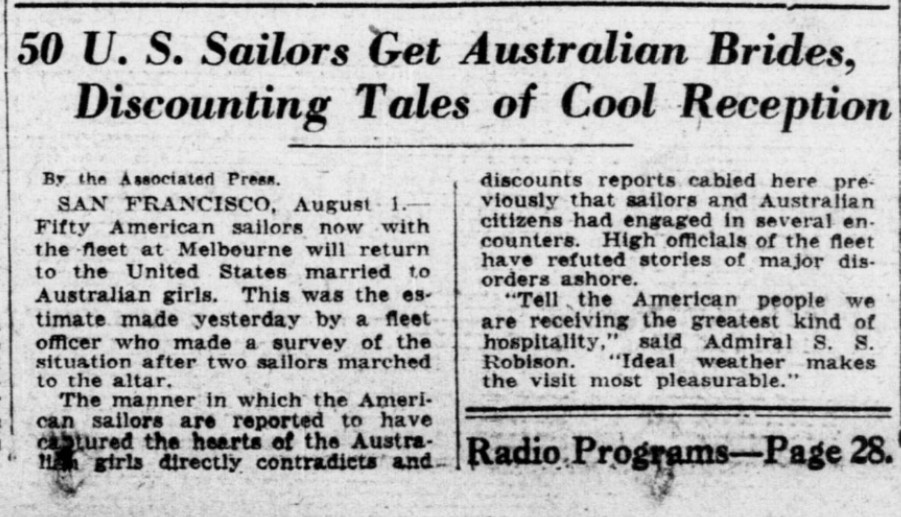
The people there were phenomenal. 1982 was really not that far removed from World War 2 when Australia was in the bull’s eye for the Imperial Japanese Army and Navy. The arrival of the Americans allowed them to repulse the attacks and defend themselves. Every person I met was grateful and kind (with the exception of one drunk good old boy who wanted to piss on my leg as I was making the shore patrol rounds in my dress whites. Note: he did not). To be honest, I don’t think any of our crew married any of the fine ladies they met there. And of course, anything that may or may not have happened there has now passed the date known as the statute of limitations.
But the story about the newlyweds really piqued an interest in me. SO, I did some more digging and learned some really meaningful things about that 1925 visit. It turns out, it was a really big deal. Using my typical search method, this popped up first:
Australia visit us navy 1925
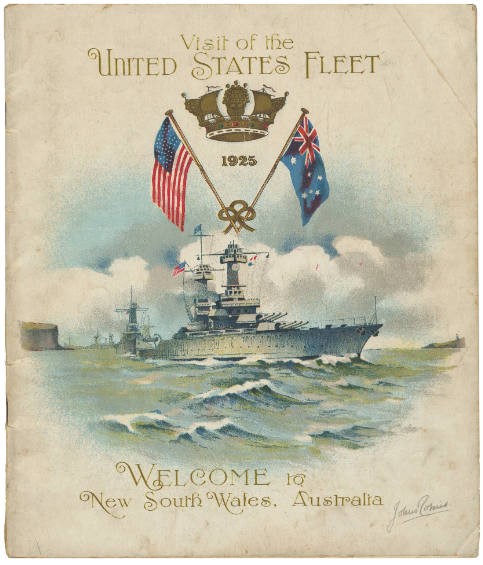
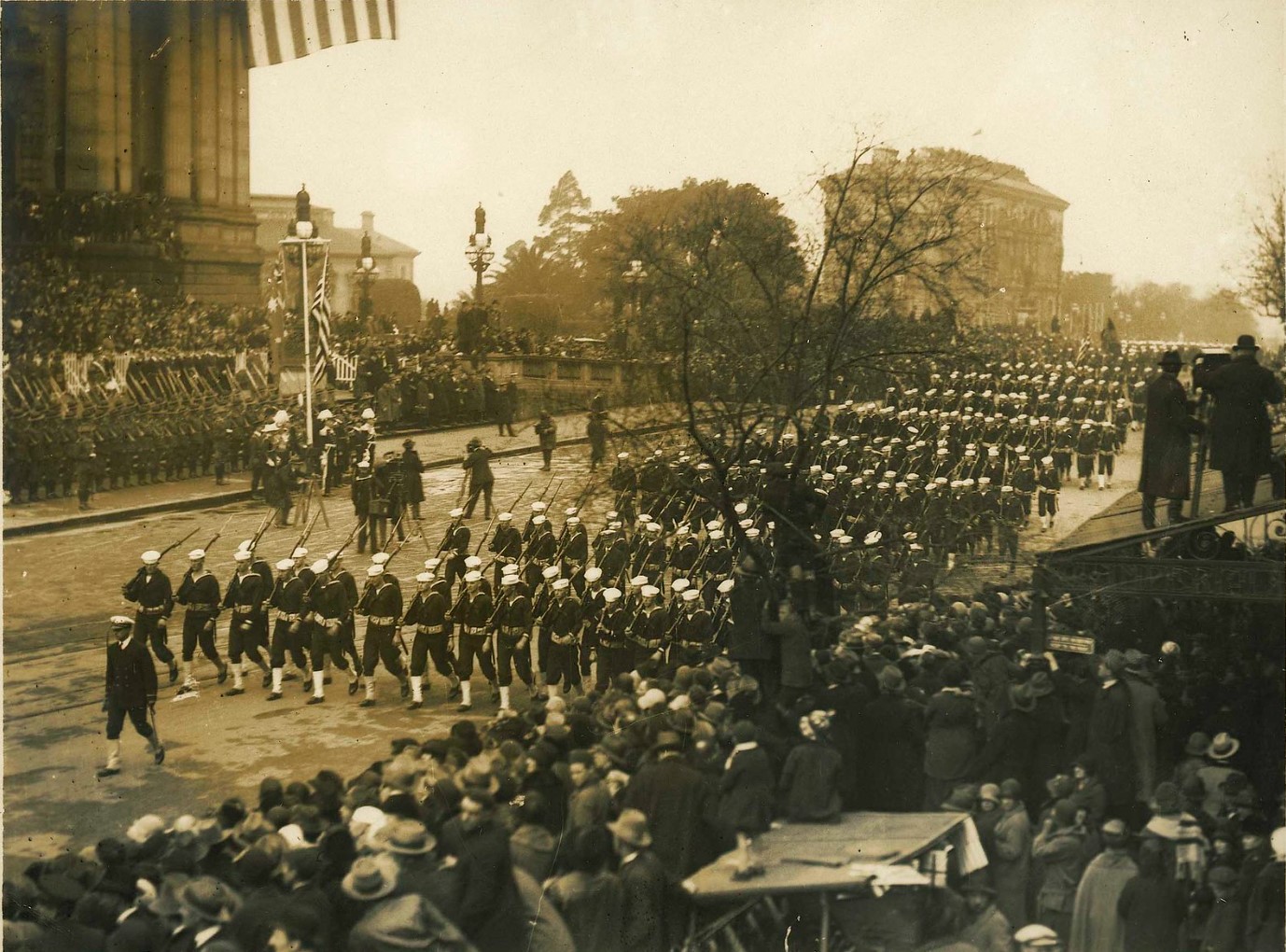
The visit of the United States Fleet to Australia in 1925 was a significant event that showcased the US Navy’s capabilities and its role in international relations. The fleet’s deployment was part of naval exercises off Hawai’i and aimed to test the USN’s ability to sustain long-range operations without shore support. The visit was a strategic message to Japan and Britain, highlighting the rising capability of the USN after the Great War (1914–18). The event was marked by parades, civic receptions, and aerial spectacles, with Sydney and Melbourne hosting large contingents of the fleet. The visit also included receptions for the squadrons of Admiral Coontz’s great Armada, extending cordiality to the Australian people.
Context: The Washington Naval Treaty had been in place for about three to four years when this visit took place. Massive amounts of US naval shipbuilding were stopped and many tons of ships already built were scrapped. This was a horrendous idea on the part of some well minded people. The Great War had been costly and the shipbuilding fever of many nations was costing millions of precious dollars. The thought was that if we just slow the building and limit the numbers and types of ships, peace will follow.
This exercise was not by accident.
The Japanese were already figuring out ways to get around the treaty that many of its people felt was a national disgrace. Japan had been limited from the beginning because the two major powers (US and UK) felt that Japan was only going to be a regional power. Both of the major powers had to defend the Atlantic and the Pacific against any future enemies so they needed larger numbers of ships.
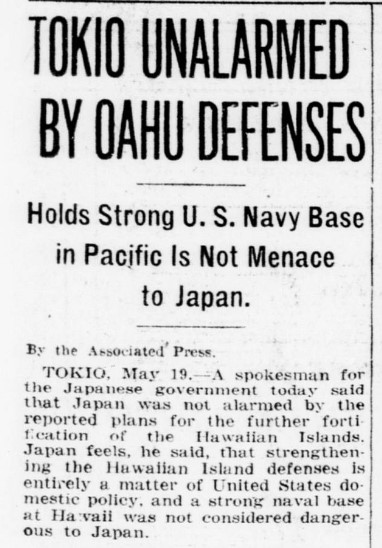
Japan was already looking beyond its borders. After the Great Kanto Earthquake, the military forces began to take power from the civilians. The recovery included the understanding that they would need more resources and lots more land outside of the home islands.
There had already been immigration problems with both the United States and Australia when it came to Japan. Japan also was concerned that the English were trying to fortify many of their far-flung ports and the Americans had just shown that Pearl Harbor was in need of improvements. The underlying tension was both national and racial as indicated in the stories below. I worn the reader that the year 1925 was still racially charged in many ways. In fact, I the summer of 1925 there was a Ku Klux Clan march of 200,000 people in Washington DC.
Washington Times – April 19, 1925
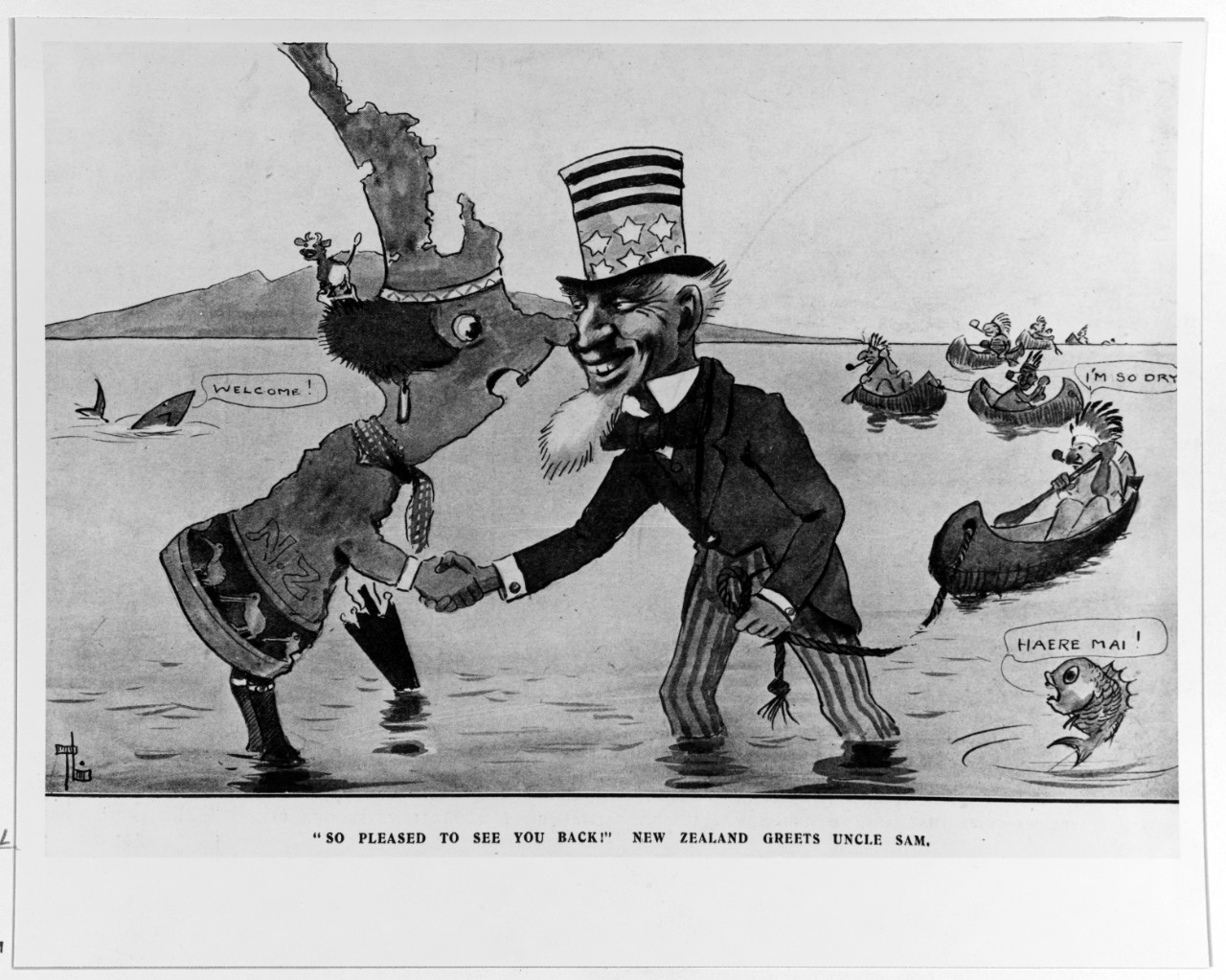
An urgent request to the Navy Department from Australia and New Zealand has caused the department to revise the itinerary of the cruise to Australian and New Zealand waters, approval of which was made this week by the chief of naval operations of the Navy Department. The new itinerary will include the Island of Tahiti of the Society Group under French control. Under the new schedule the light cruiser division, consisting of the U.S. ships Marblehead and Memphis, will accompany the Seattle to Tahiti, and, after calling at Galapagos Island, will proceed to canal waters, arriving at Guam on October 8. The Seattle will sail direct for San Diego. The U.S.S. Idaho, originally scheduled to remain at Honolulu during the month of July and to proceed to the Puget Sound Navy Yard for docking and overhaul, has been included in the list of ships to make the cruise to Australia. The Idaho will join Battleship *Division 4 on the cruise and will go to Sydney and Auckland. The visiting dates under the new schedule are as follows: Melbourne, July 23; the Sydney detachment is due at Sydney on the same date; Wellington detachment will arrive at Wellington August 11, while the Auckland detachment is due at Auck-land on August11. The additions to the itinerary are Hobart, Tasmania, Tahiti, Taio, and the Galapagos Islands. The revised schedule of arrival dates of Cruiser Division 2, composed of the United States ships Richmond, Marblehead, Trenton and the Memphis, is as follows: Melbourne.July23; Hobart, August 5; Wellington August 11.
Washington Times – April 23, 1925
BATTLE FLEET WILL GO ON TRIP TO AUSTRALIA
No change has been made in the plans of the Navy Department to send a portion of the battle fleet to Australia, despite the protests from various religious and pacifist organizations.
Secretary of the Navy Wilbur says that the maneuvers in the Antipodes will have the effort of cementing international relations rather than of developing a warlike spirit in the Pacific.
Mac Note: It should be no surprise that there were peace groups and religious groups opposed to war like maneuvers. Again, the memory of the horrors of the Great War were still fresh in the minds of many. The thought of any more protracted engagements around the globe was something that probably horrified the peace protagonists. I guess they have been with us forever.
(Antipodes – the parts of the earth diametrically opposite —usually used in plural —often used of Australia and New Zealand as contrasted to the western hemisphere)
Washington Times – August 8, 1925
Cruise of Fleet Emphasizes Nations’ War-Time Friendship
Friendship between Australia Cemented during the Great War in again emphasized as Uncle Sam’s fleet visits the people of the antipodes. Common interests of the two nations, both products of the pioneer spirit, are dwelt upon in editorial discussion of the significance of the fleet’s cruise and the enthusiastic welcome given by the Australians.
“Our millions who went across the Atlantic.” Says the Philadelphia Bulletin have not forgotten the gallant deeds of the swaggering Anzacs, with their chin strapped, lopsided sombreros, and the Anzacs are evidently determined to give the seagoing pals of their one-time comrades of the trenches a visit that will assure them for all time that they are always welcome in Australia.” Pioneering experience of the Australians “gave them Initiative and dash, and they appealed to the Americans,” according to the Ogden Standard-Examiner, which tells how the two armies “met shoulder to shoulder in the World War and found how near alike they were.”
Furthermore, Australia does not “speak of the ’empire’ in welcoming the American sailors.” The Louisville Courier-Journal observes, ‘but as a commonwealth of the British common-wealth of nations, as a self-regulated, self-important state.” The reason for this “brotherly feeling for Americans” is found by the El Paso Herald in the facts that “the physical countries. United States and Australia are much the same; the two peoples have developed under much the same environment: and ‘free and easy’ is a catch phrase pretty well descriptive of the temperaments of both. Further evidence of Australia’s position is observed by the Los Angeles Times, when it states: “In its message of welcome Australia speaks of the affinity be-tween the two ‘nations.’ Nor is any reference made to the British Empire. Australia greets us as a nation standing on its own feet.” “The visit of the fleet,” declares the Knoxville Sentinel, “has been seized as an opportunity to stage one of the greatest demonstrations of amicable relations between nations ever recorded. “It is a “courtesy visit, inspired by the commonalty of ideals between America and Australia,” according to the Long Beach Press Telegram. The enthusiasm of” the people of Kangaroo Land” is viewed by the Providence Journal as similar to that shown on the occasion of the visit of the Roosevelt armada, and the Journal notes, as indicating its importance, that “the British fleet has never shown itself in strength in their harbors, never has been represented by more than a few ships at a time.
he common interests of the two nations in the Pacific impresses many papers. “The Australians feel,” remarks the Lansing State Journal, “that America’s stake in the Pacific is such that so long as the United States remains steadfast in her rights in the great ocean the white people of the antipodes will never be forgotten.” In the greeting to the Americans the Charleston, S. C., Post also sees “a hint that Australia looks to the American Navy as a bulwark of white supremacy in the Pacific, over which there are always predictions of conflict, which, it. is to be hoped, will never be realized.”
The Lexington leader remarks more pointedly: “The hostility which is felt in the great island continent toward all efforts of the Japanese to encroach upon the preserves of the white man, and which is very intense, leads its people to regard America as the greatest safeguard against what is conceived to be a ‘yellow peril.’ On the other hand, the San Antonio Express cites the announcement by the New’ Zealand government of the social mission of the fleet and the fact that New Zealand “recalls Japan’s loyal aid during the great war.” A declaration that “the cruise is not a threat to any nation” is made also by the Pittsburgh Gazette-Times, and the Dayton, Ohio, News asserts that, “fears of certain American peace societies that the cruise of the United States Navy might be interpreted by other nations as a warlike gesture appear now to have been groundless.”
The thought that American citizens need to be reminded that they have a great Navy is expressed by the St. Paul Dispatch, with the added comment: “It is the most important cruise the Navy has undertaken in peace time since President Roosevelt sent the battleships around the world. It is an impressive demonstration of sea power. But this is secondary.
The Navy has a peace function; it is being realized in this mission to Australian waters.”
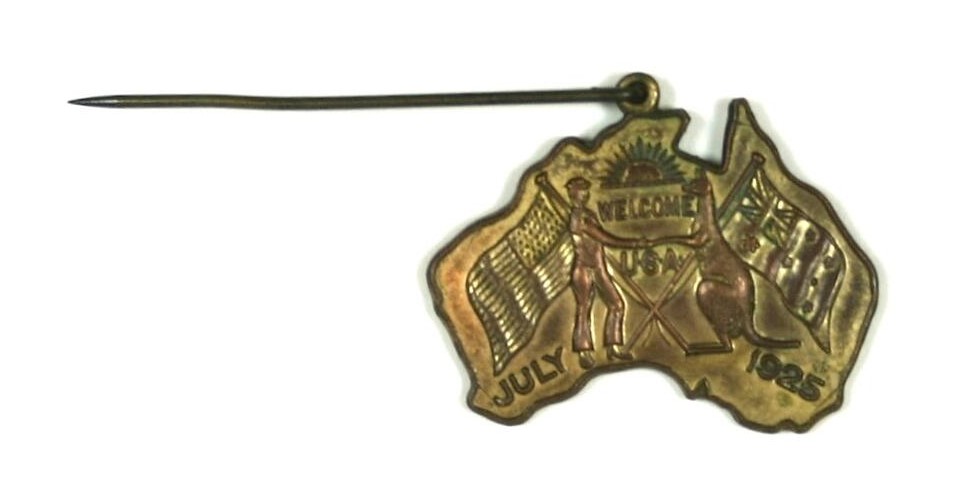
From the Victoria Museum Web Site:
“The fortnight long visit of the US Fleet from 26 July to 6 August 1925 still represents the largest single contingent of foreign naval vessels ever received in Australia. A total of 57 vessels of the United States Navy, carrying some 25,000 officers and crew under the command of Admiral Robert E. Coontz left San Francisco in early June 1925, sailing first to Hawaii where the fleet was engaged for several weeks in ‘war games’ before proceeding to Australia on 1 July, via Pago Page in American Samoa. Rendezvousing off Gabo Island on 21 July, the fleet divided into two contingents that headed simultaneously to Melbourne and Sydney.
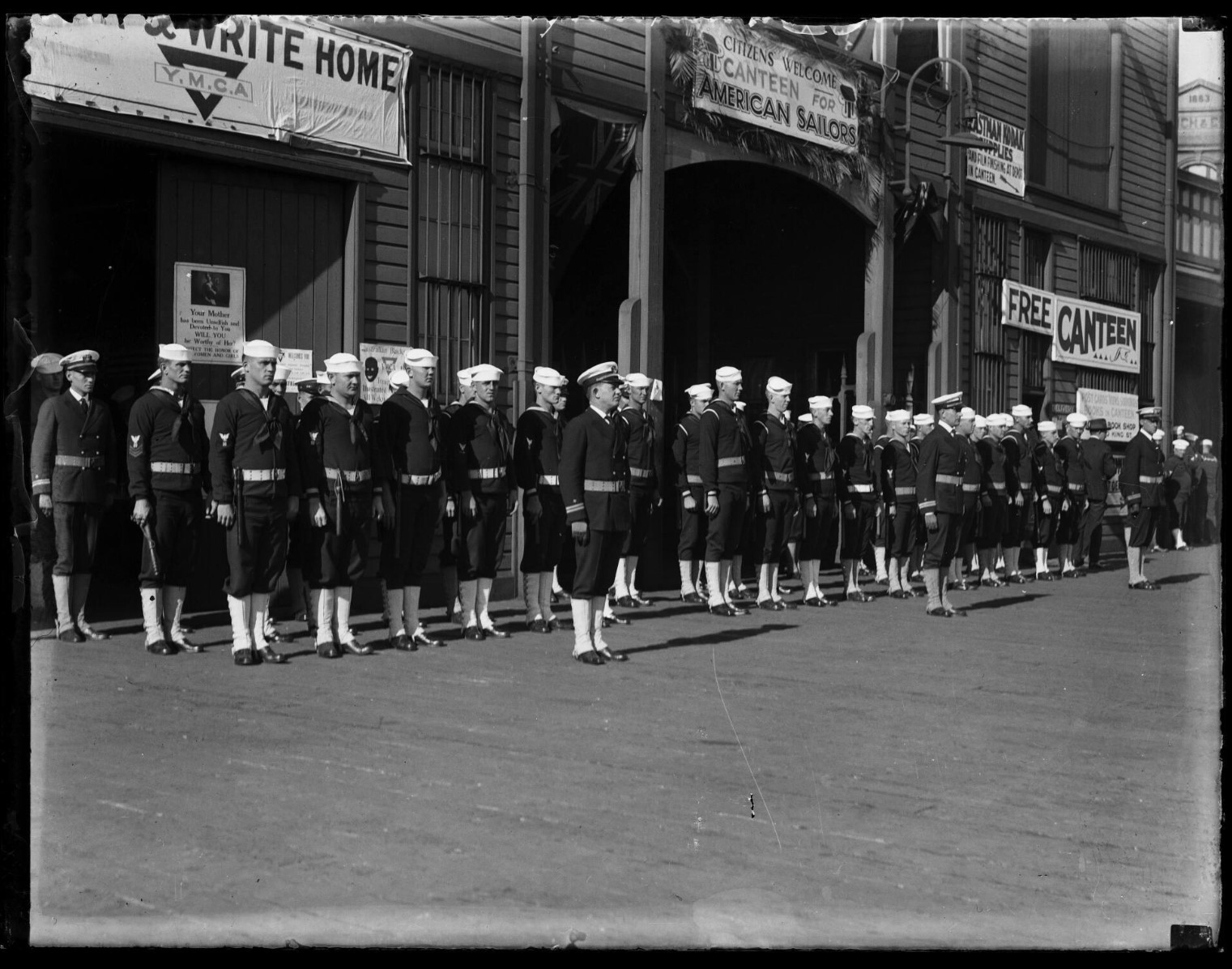
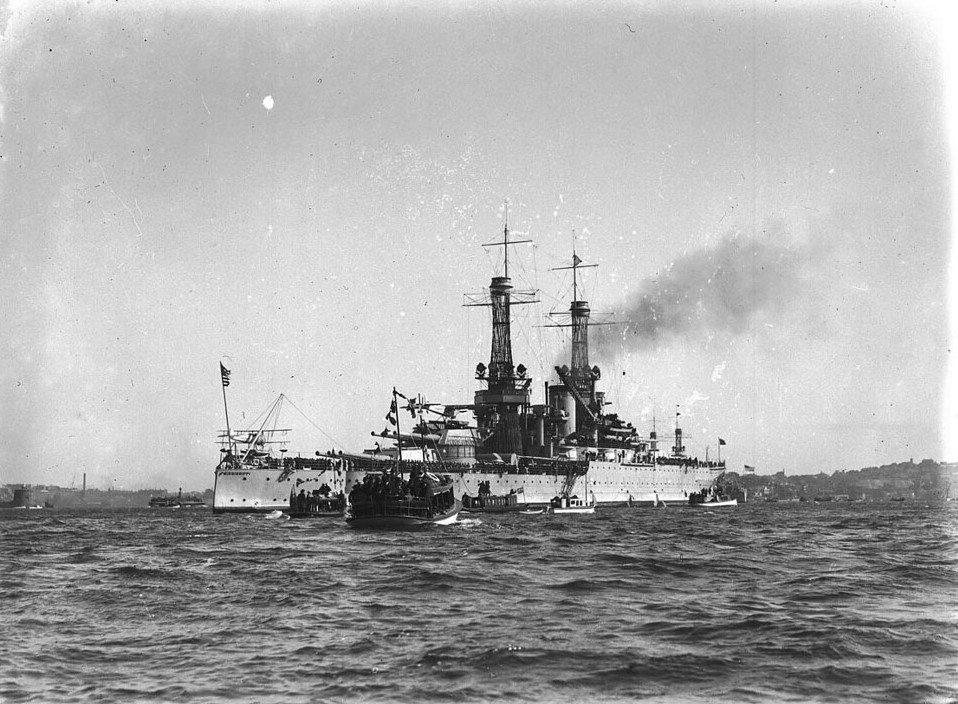
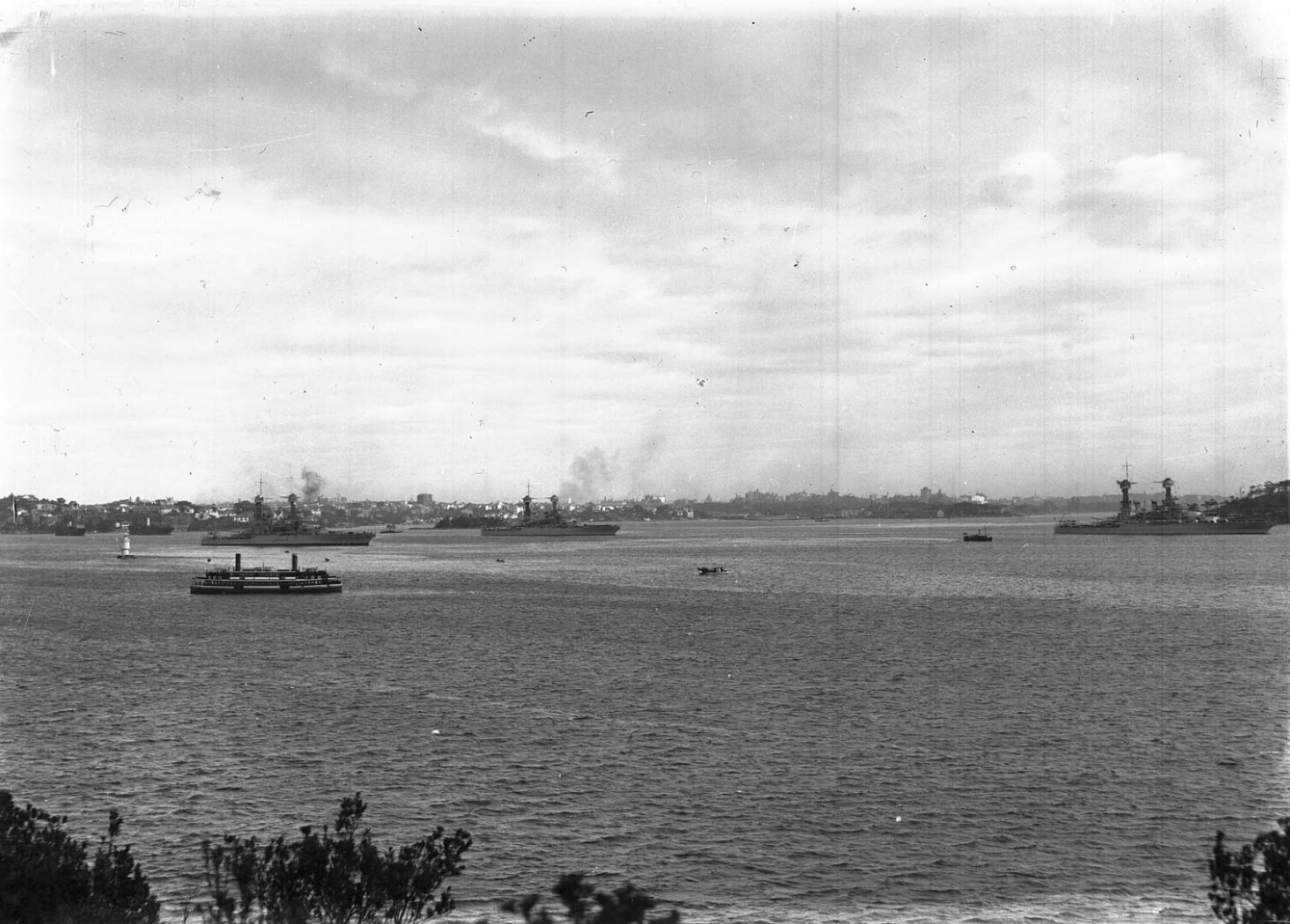
Melbourne, as the official capital of Australia and temporary seat of Federal Parliament at the time, received the larger contingent of 43 vessels, including the flagship USS Seattle, 3 battleships (USS Pennsylvania, USS Nevada & USS Oklahoma), 4 light cruisers (USS Richmond, USS Trenton, USS Marblehead & USS Memphis), 29 destroyers and 6 support ships. Meanwhile, Sydney with its deep-water harbour hosted the 8 largest battleships and remaining support vessels.
As the fleet approached Melbourne, the YMCA put out a call for families willing to host an American sailor for dinner and overnight accommodation. Witnessed by thousands of spectators lining the shoreline and aboard the excursion paddle steamers Weeroona and Hygeia, the fleet entered Port Phillip Heads at 10 am on 23 July and proceeded up the Bay to anchor in Hobson Bay and berth at the Port Melbourne piers and Victoria Dock.
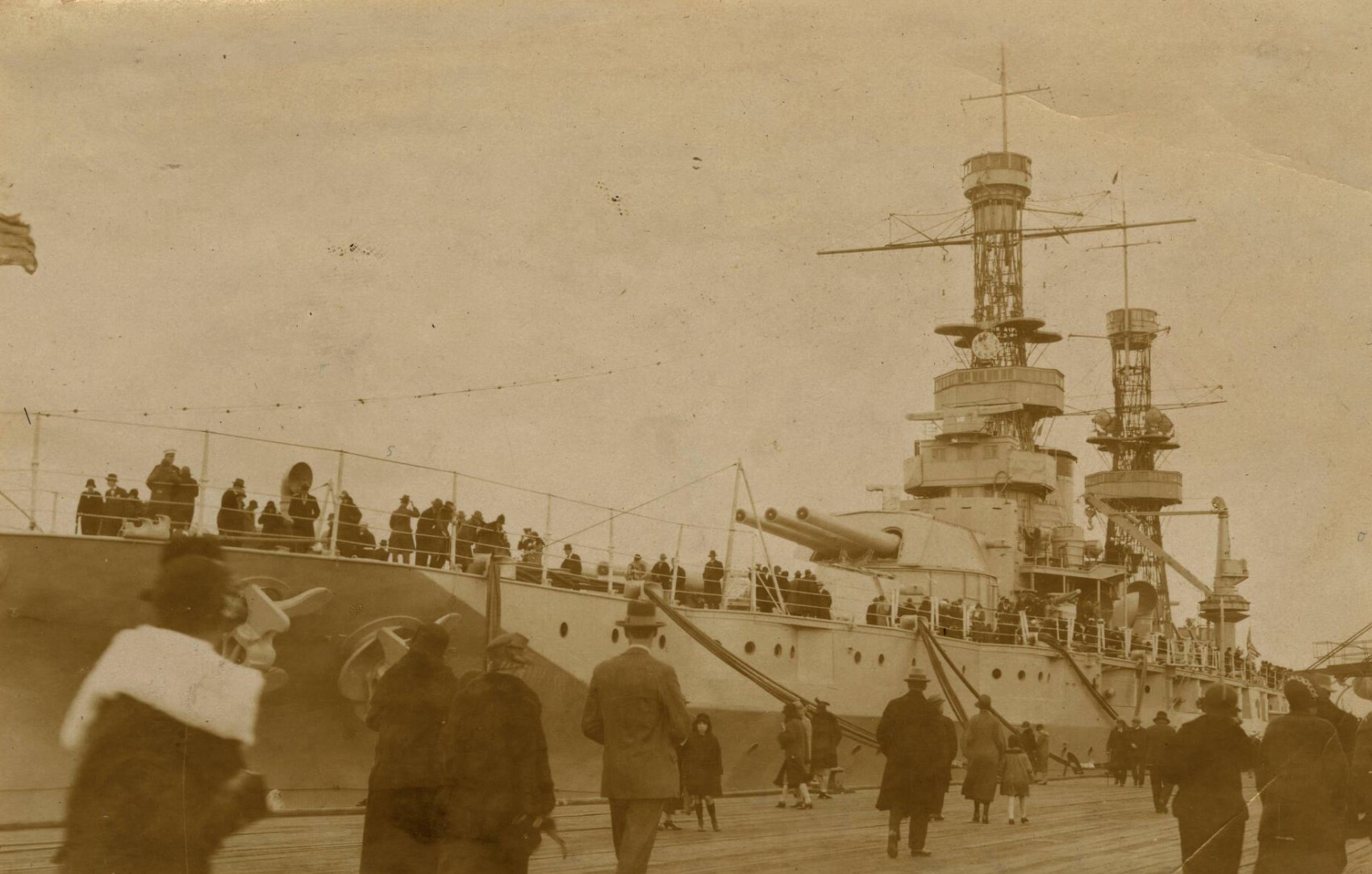
Entertainment provided for officers and sailors of the fleet while in Melbourne included: baseball matches at the Melbourne Cricket Ground and Albert Park; an official reception for admirals, captains and officers at Queen’s Hall, Parliament House; a Governor General’s Ball at Government House (Tuesday, 28 July); a Lord Mayor’s Ball for 3,000 guests at the Exhibition Building (Wednesday, 29 July); afternoon tea for 1,000 petty officers & seamen at Government House and a State Government dinner for admirals, captains and officers at Parliament House (Thursday, 30 July); a Race Meeting at Caulfield and Fireworks Display from St Kilda Pier (Saturday, 1 August); gala performances at many of Melbourne’s main theatres and cinemas; numerous motor and train day trips to destinations out of Melbourne and a farewell ball aboard the ships.
Four of the light cruisers left Melbourne on 1 August for a brief visit to Hobart, while the remainder of the fleet departed on 6 August, headed for various New Zealand ports. The visit was acclaimed as an outstanding success and played a significant role in strengthening Australia-American relations during the interwar years in the lead up to the signing of the formal ANZAS Alliance in 1941.”
23 July Eight of the US Navy’s battle fleet visited Sydney: USS CALIFORNIA, USS COLORADO, USS TENNESSEE, USS MARYLAND, USS WEST VIRGINIA, USS NEW MEXICO, USS MISSISSIPPI and USS IDAHO. (Battleships present at Pearl Harbor: USS Arizona, Oklahoma, West Virginia, California, Nevada, Tennessee, Maryland, and Pennsylvania. These vessels, representing the might of the U.S. Pacific Fleet, each met varying fates during the attack, from complete destruction to later restoration and service in the war effort.
Less than seventeen years later, the ships of the United States, Great Britain, Australia and New Zealand would be badly bruised by the Japanese all across the Pacific and South Pacific. It would take herculean efforts to repulse the Japanese forces and save the people of Australia from the same fate that many of their neighbors suffered.
The men and women of the ANZA alliance would work together with the United Nations to push Japan all the way back to their home islands and final defeat
Now, we face a new common enemy.
China has already been flexing their economic muscle and military prowess all across the globe.
Australia is truly once more in the bull’s eye. The same constraints they have always faced are once more playing a part.
Limited amount of shipbuilding capability and limited natural resources.
We have entered into a long-term agreement with the Australians and the British called AUKUS. Here in Charleston, men and women from the Australian navy are preparing for a future role on submarines that we have promised to provide. This is not out of the goodness of our hearts. They have invested a large amount of their national treasure in this venture. It is in our national interests to provide this asset to them. They are closer to the enemy and will play a vital role.
We have a new Chief of Naval Operations now. He is a submariner and a warfighter. During his confirmation hearings, he expressed concern about the elephant in the room.
Our submarine building is struggling to meet our own needs and the ability to get out of that struggle is elusive It needs to be fixed.
This must be a national priority. If we could build the forty-one for freedom boats in earth shattering speeds and put a man on the moon, the call is clear to match those efforts.
The Chinese (and others) will not wait quietly while we catch up. They are already spending an inordinate amount of money to dominate the Pacific. If you haven’t already contacted your congress critters, please do. Time is not on our side.
Maybe it never was.
Note: August 1, 2025 President Trump Posts “Based on the highly provocative statements of the Former President of Russia, Dmitry Medvedev, who is now the Deputy Chairman of the Security Council of the Russian Federation, I have ordered two Nuclear Submarines to be positioned in the appropriate regions, just in case these foolish and inflammatory statements are more than just that,” Trump wrote.
“Words are very important, and can often lead to unintended consequences, I hope this will not be one of those instances,” he added.

 theleansubmariner