Theleansubmariner will pass the 1,000,000 mark sometime later today.
The host server has a counter for individual “reads” meaning every time someone clicks on one of the stories I post.
When I started posting over fifteen years ago, I wondered if I would have enough interest in the stories I create. So this is a nice mile marker.
Today’s story comes in part from an article in the US Navy Magazine published in January of 1926.
The story was a reprint from something called the Submarine Flotilla Journal and was written by Lieut. F. A. Lawrence. https://babel.hathitrust.org/cgi/pt?id=nyp.33433009408398&seq=51&q1=submarine
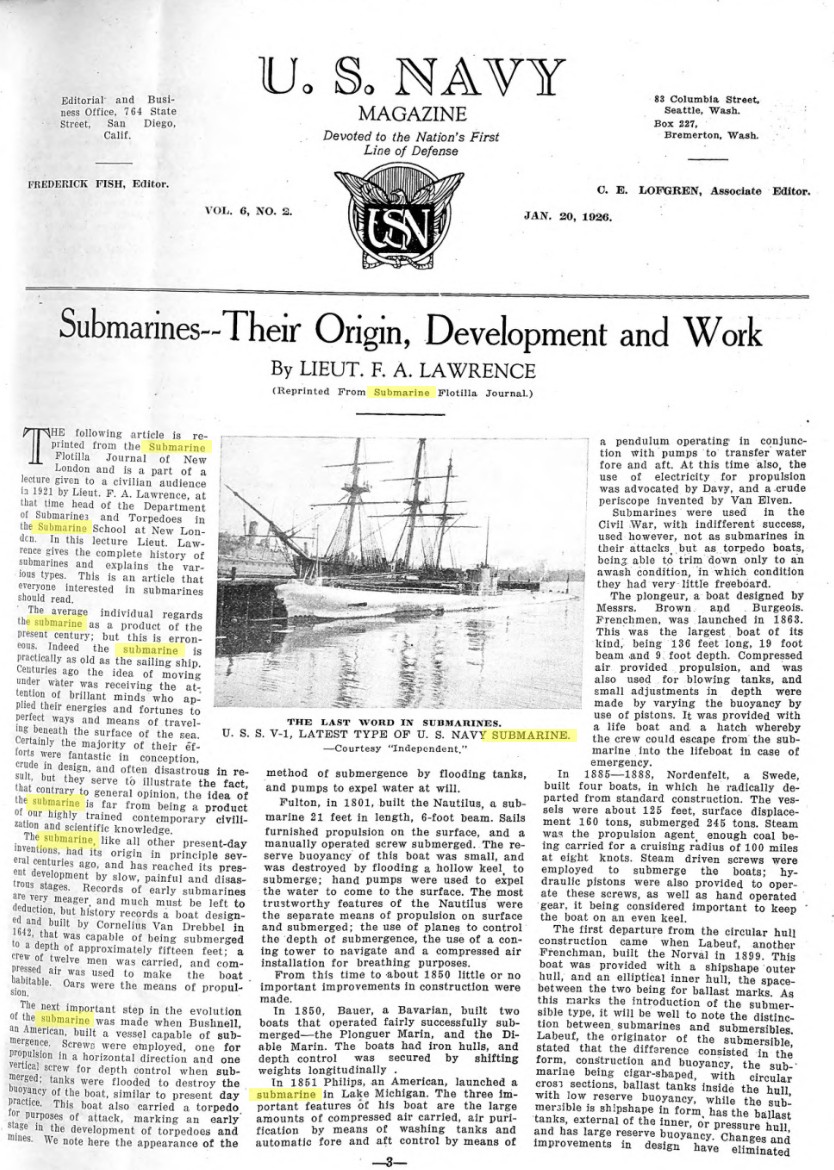
The story goes into detail about the early submarine development around the world but also has some very interesting descriptions of how submarines of that day operated. As I was reading the description, I was taken back to my own first dive over fifty years ago. I was under instruction on the planes and have some memories of what was going on in the control room.
No one needed to tell us to maintain silence, but each person had their tasks to do as the well-practiced script played out.
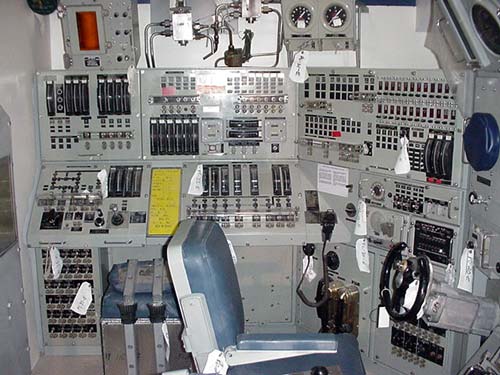
The watch standers all came down from the bridge with the last person clearly stating “last man down”. I can’t remember the exact sequence, but the Officer of the deck would order the diving officer to submerge the ship. He would also direct the dive team to make their depth to whatever depth he decided and the diving officer would direct the planes men. The Chief of the watch would open the forward and aft main ballast tank vents and reports from around the boat would be sent by sound powered phones to the control room.
I remember the smell of coffee and cigarettes too. I can’t remember if I thought to say a prayer as the depth gage started turning. I guess the confidence of everyone else and my desire not to look like I was afraid were the foremost thoughts I had. I had been in the Navy for over a year the first time I dove and had been through so much training up to that point. But as the boat leveled off, I was going through a mental check list of what to do if things went bad. Nothing did on that first dive.
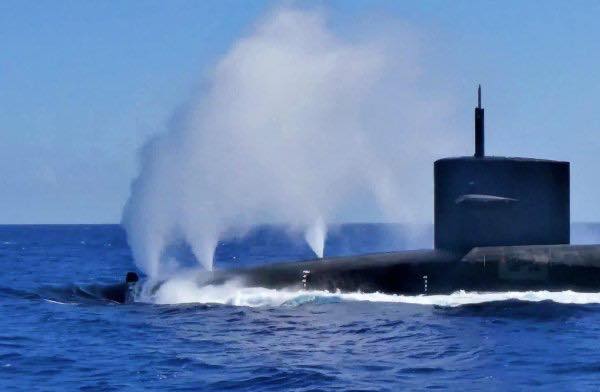
This next part is a description of a diving operation a hundred years ago:
No type of vessels in the Great War has played so large part or claimed such world-wide attention as the submarine. So far as the prevailing impression is concerned, this craft at first appeared to be possessed of almost supernatural power and to enjoy an immunity against all measures which were attempted to compass its capture or destruction.
But this character of invulnerability and omnipotence with which the underwater fighting machine became invested was due, for the most part, to the highly imaginative and romantic writer of fiction.
The erroneous impression thus created became firmly rooted in the average mind for the simple reason that the cool, calculating scientific worker has preferred to toil in secrecy, and has never attempted to dispel the distorted and fanciful views which pre- vailed until recently, concerning this craft and its possibilities.
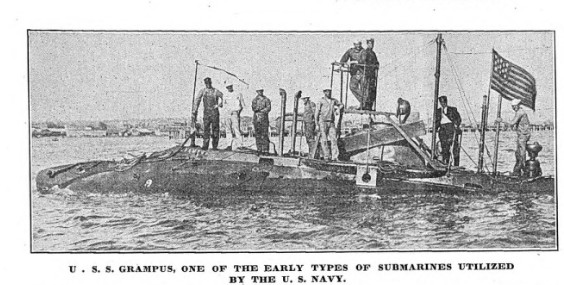
A submarine, in the most general acceptance of the term, is a vessel designed to operate at pleasure on the surface or submerged.
All submarines involve the following principles:
Surface buoyancy, or displacement is destroyed by the admission of water ballast into specially constructed tanks called ballast tanks. The tanks are located and are of such size that the boat will naturally submerge on an even keel and when these tanks are full the boat will have a very small percentage of positive buoyancy left, as about 75 per cent of the buoyancy is destroyed when fully flooding the Main Ballast Tanks.
I will try to describe how a submarine makes a stationary dive.
We are running on the surface on the main engines when the following orders are given by the Commanding Officer: “Rig for diving.”
Everything about the deck is secured. Lines stowed, deck locker and gun secured.
Take down the colors. Put up the diving flag.
Send below all navigating instruments. All hands except the quartermaster and C. O. go below to their stations and see everything in readiness by actual test.
Close all hatches except the conning tower.
” Stations for trimming down, ” is next. “Silence in the boat.”
Everybody stands by for further orders. C. O. stops engines and goes below, also the Q. M.
Reports come in from all stations. Ready forward, ready aft, etc. ” Flood main ballast tanks . ”
This last-named operation occupies less than a minute, when the B. Ts. are reported full, the air in the tanks having been expelled and replaced by water and are ready for blowing.
But still, we are not ready to run. still have about 25 per cent buoyancy which must be cut down to enable us to handle the boat with ease as we flood our auxiliary and regulator tanks, which can be so regulated that the boat will be perfectly balanced at what is called neutral buoyancy. In other words, the boat now is, as it were, suspended without support of any kind. In fact, if it were possible for a man to get outside and underneath the boat, he would be able to support the weight of the boat in the palm of his hand.
Numerous other tanks are contained in the vessel, such as the trimming tanks, which as the name implies, are used to correct the fore and aft trim, due to shifting of weights, such as men, stores, torpedoes, fuel, lubricating oil or fresh water.
The larger submarines are not so sensitive, but in the smaller types in use a few years ago, it was customary for the crew to remain at their stations without moving unless the Commanding Officer ordered a man to move forward or aft so many feet. In fact, we used to say we had to keep our hair parted in the middle, the boats were so sensitive.
There is a certain man still in the submarine service who has an extremely flat nose who says he got it in the following manner while serving on one of our first small submarines:
The boat had just come up from a sub- merged run, but the tanks were not completely empty. However, the hatch which was located in the after end of the boat, was opened, and the whole crew, about 12 men, crowded around the ladder leading on deck in a hurry to get out to get a smoke.
The weight of all these men, concentrated aft, brought the after end of the boat down sufficiently for the water to start pouring in the hatch. The men instantly about faced and ran forward, our friend in the lead, and did not stop until the extreme forward end of the boat was reached, where all naturally stopped with their noses flat against the bulkhead, which, of course lifted the hatch clear of the water. A good example of how easy it was to upset the equilibrium.
To get back to the subject:
Our ballast tanks are full. Fore and aft trim is correct, also the buoyancy. We are now ready to go ahead about our business, which is either a practice run, an attack on a real enemy and last but not least in the eyes of the enlisted man to earn the extra compensation every qualified submarine man gets for every time he submerges. Officers do not get extra compensation.
The rest of the article is pretty interesting and even has a few submarine poems from the era. This was my favorite:
SAM By Minna Irving
I pity the gobs, the Freds and Bobs,
The Toms and the Dicks and Bills,
Who swab the snow of a cruiser’s decks,
Or pose in a dreadnought’s drills.
I serve in a ship that makes her trip
And does her trick unseen,
And chills the heart of a foe with fear
I am Sam of the submarine;.
When the day is hot,
and the wind’s forgot
To unfurl the flag on the staff,
And white ducks wilt in the torrid sun,
And the ice water boils you quaff,
We dive below to the ocean’s depths
Where the light is dim and green,
And the sandy floors of the sea explore
In a wonderful submarine;
You can get a thrill when the air tanks fill
And under the foam she goes,
Where adventure waits with the sharks and eels
In a shape that nobody knows.
The hot oil smell and the slide and click
Of the valves and levers mean
You have left the sky and the sun behind
For the world of the submarine.


