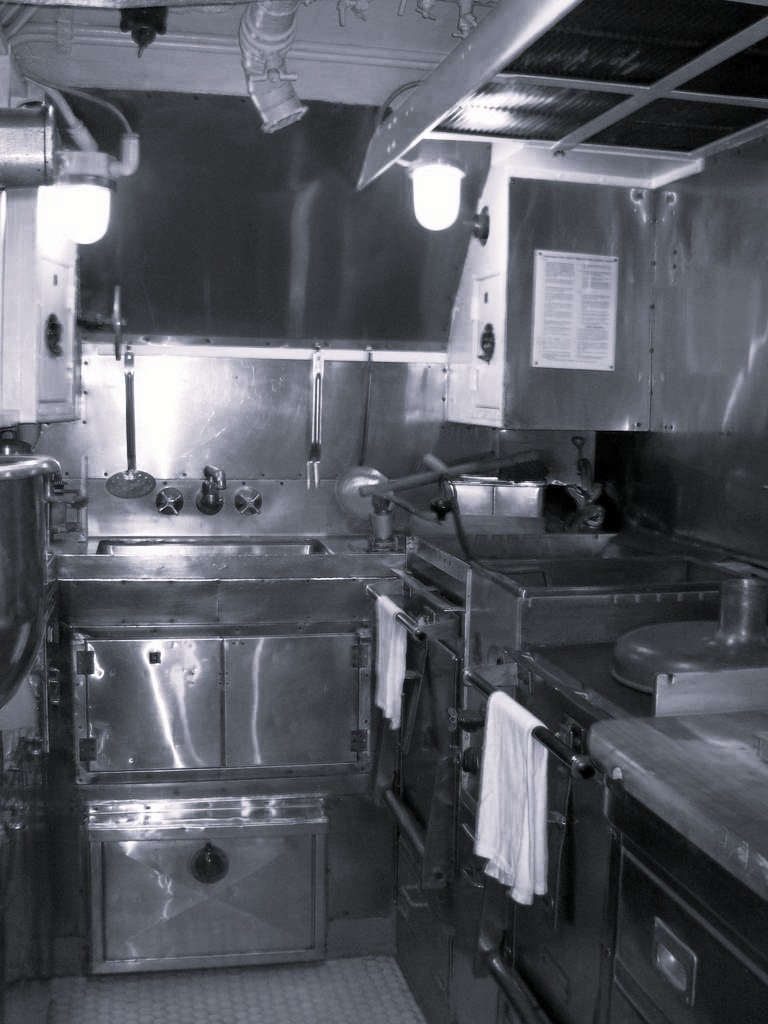
 The early American submarines were very small and lacked any significant ability to feed their crews for any length of time.
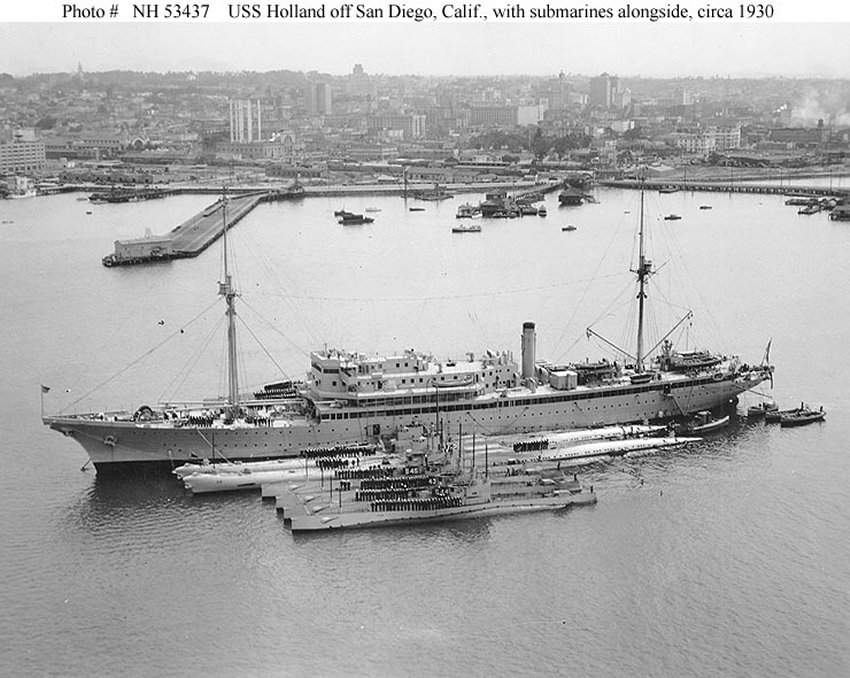
Since they were not seen as critical independent operators ranging the blue waters of the world, habitability was not as critical. More often than not, they were nested alongside larger tenders where the ability to feed and provide for the crews was more economical and offered more variety. That would affect their design for decades. But things began to increasingly turn around in the early 1930’s.
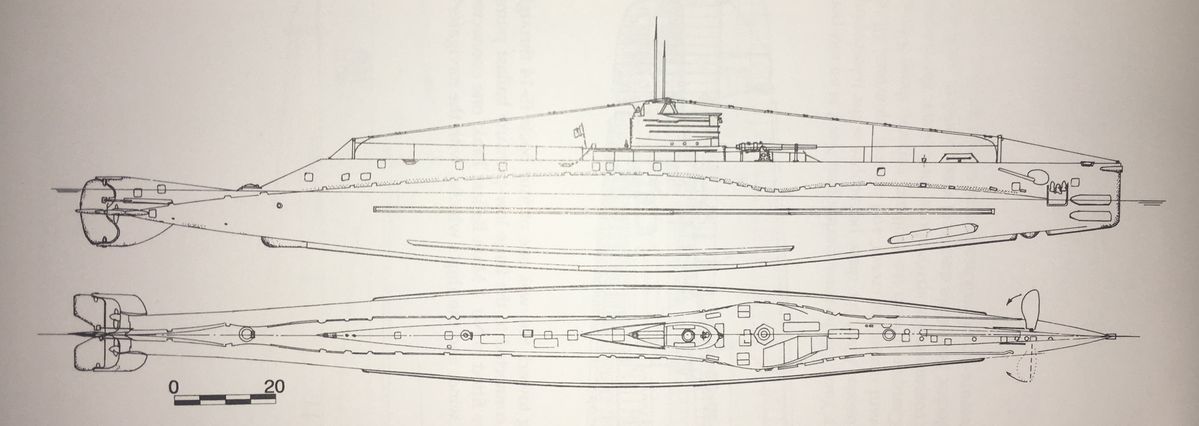
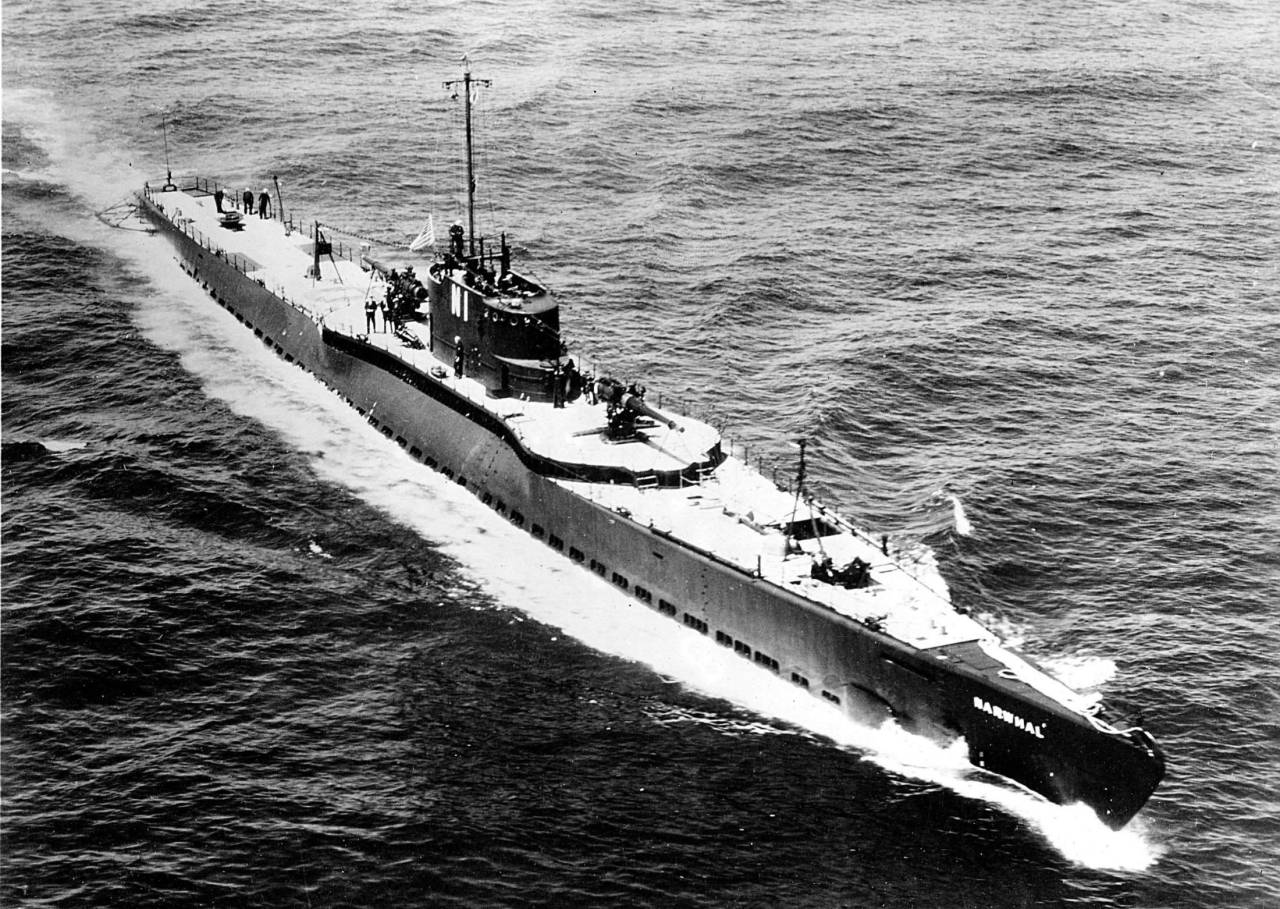
Commencing with the BARRACUDA Class of 1924 and continuing through the end of World War II, all submarines built by the U.S. Navy, with the exception of the 800 ton-type submarines MACKEREL (SS204) and MARLIN (SS205) completed in 1941, were of the fleet type, designed for high surface speeds and capable of operating for extended periods at sea and covering great distances. These fleet boats would operate independently beginning with the afternoon of December 7, 1941.
I’m sure the Navy supply organization began earlier than 1930 to account for the differences in requirements for submarine feeding verses the larger surface ships.
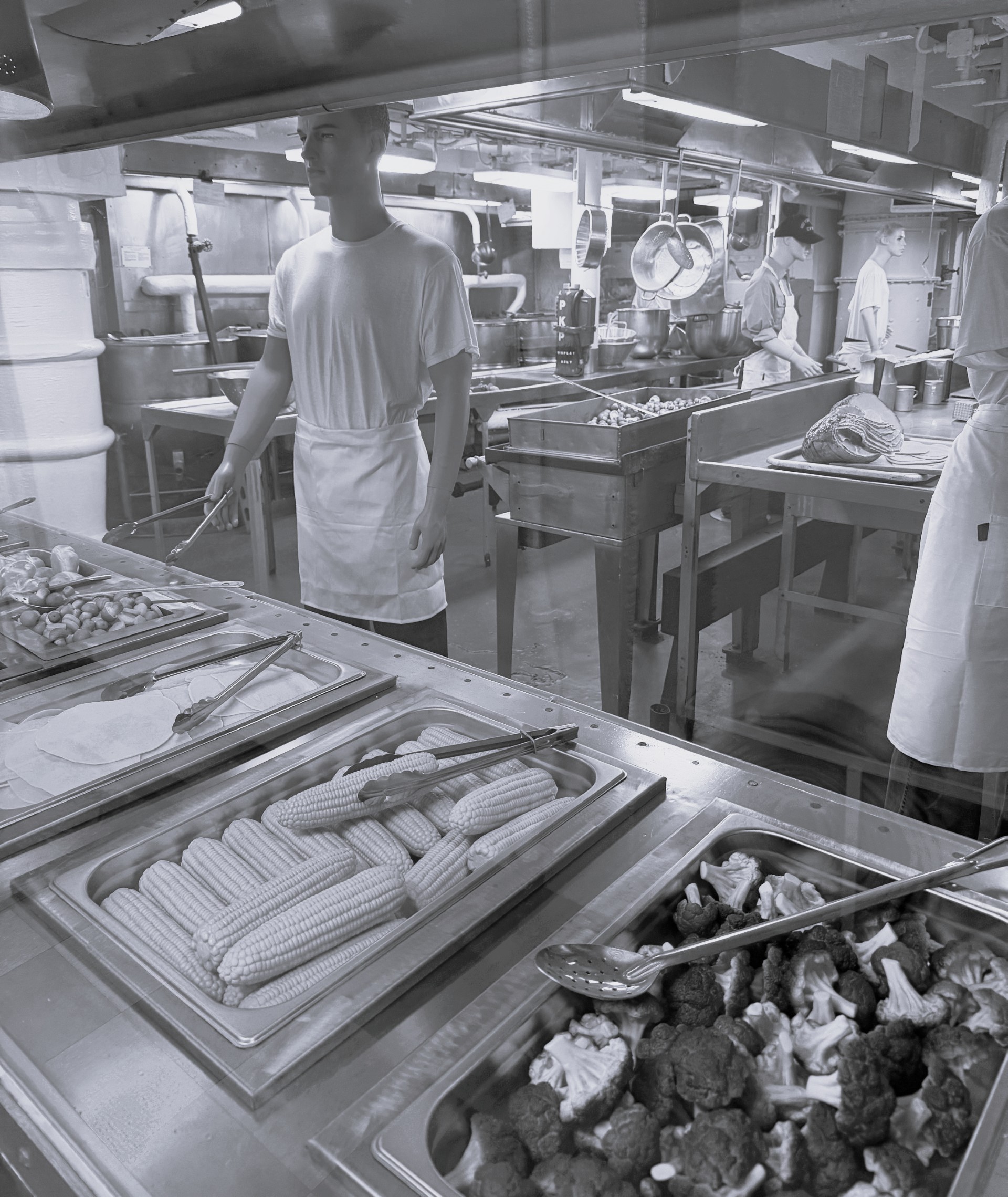
When I found this 1930 cookbook, the preamble defined that the recipes in the first part of the book were designed for hundreds of hungry sailors and the use of large galleys. But the last chapter of the book was dedicated to the smaller crews and lesser capabilities of the submarine galley.
I was fortunate enough to eat (and serve food) on everything from a George Washington Class ballistic missile submarine to the giant Ohio class submarines. The Ohio class (and I am sure more modern class boats) have galleys that can produce the highest quality meals for longer durations. The fact that many of the sailors need to go on the fat boy program from all that delicious food is testimony on the emphasis on excellence.
One interesting side bar about this era. The nation was in the throes of a depression.
From Proceedings magazine: One out of every six of the men who apply for enlistment in the Navy is successful in meeting the requirements. Of the 12,518 men who will enter the Navy this year over 30 per cent will be high-school graduates, over 70 per cent will have completed at least two years in high school, and all will have passed a rigid physical examination.
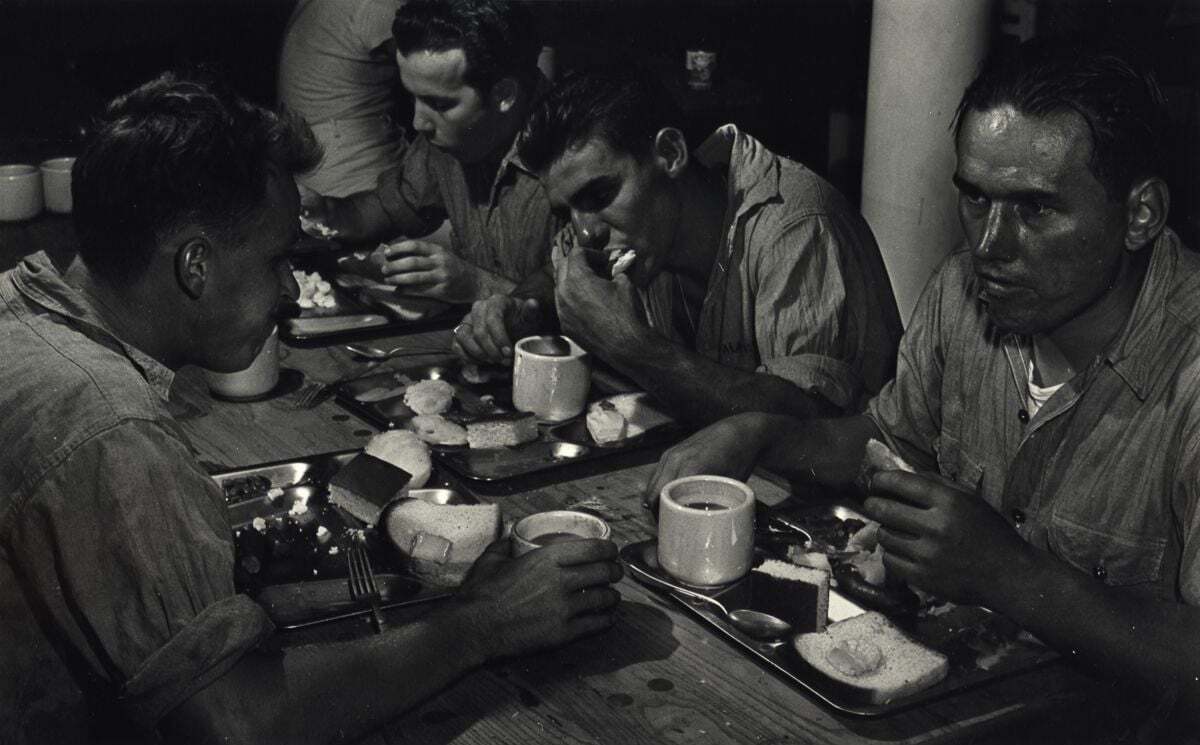
One thing to add was that food was a morale booster on board all of the ships and stations of the Navy. That was by design. Many years earlier, a teetotaller named Josephus Daniels dictated that no alcohol would be served on board navy ships ending a centuries long naval tradition that dated back to before the Revolutionary War.
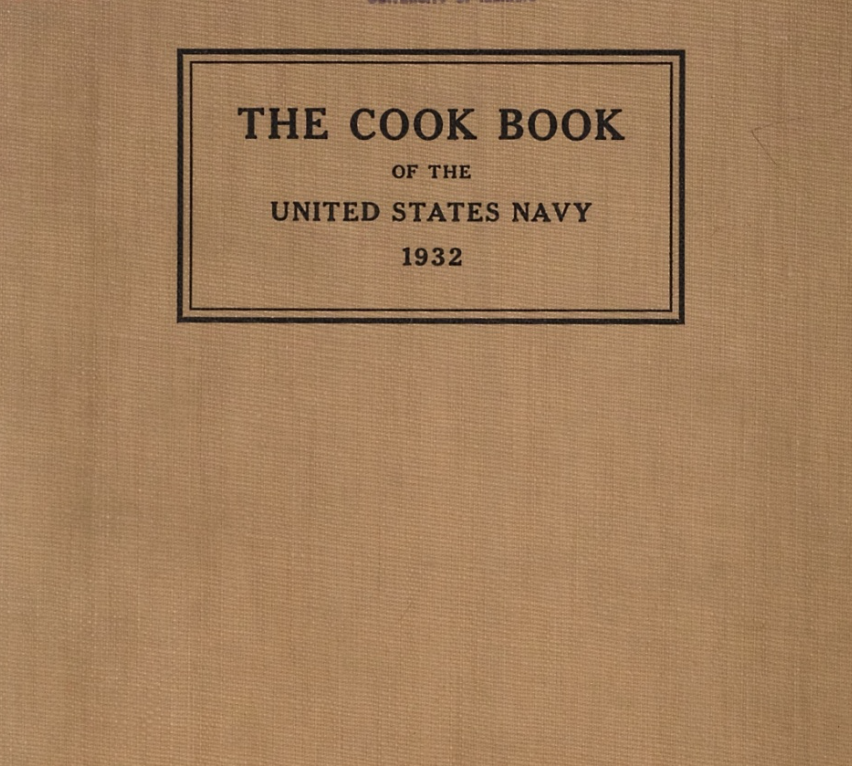
THE COOK BOOK OF THE UNITED STATES NAVY (1930)
The preparation of food on board submarines presents a problem much different from that on board the larger vessels and at shore stations. The limited amount of storage space, especially for fresh meats, fruits, and vegetables, makes it necessary that the submarine cook resort to a menu comprised largely of dry stores, canned meats, and canned fruits and vegetables. This applies to the submarine when on extended cruises only. When alongside the dock or tender or on short cruises the submarine bill of fare need differ but slightly from the usual ship’s menu.
The small refrigeration space makes necessary the utilization of every square foot of space. Thus, in planning for a long cruise it must be borne in mind that practically all fresh meats, fresh fruits, and fresh vegetables will be exhausted at the end of five to seven days.
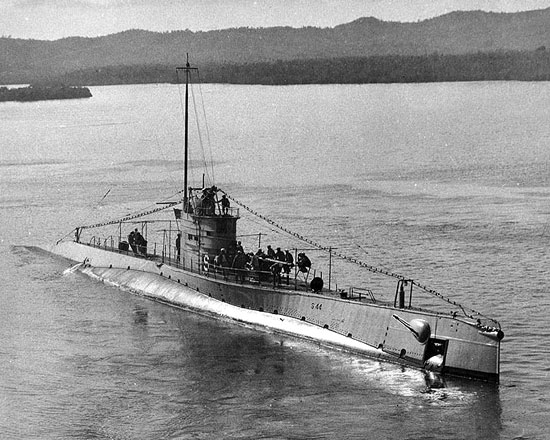
Storage conditions vary on the several types of submarines. On the Government type, which includes the S-10 to S-17, and the S-48, there is only about 40 cubic feet of refrigerator space, and frequently it is necessary to carry from 300 to 900 pounds of ice. The same is true of the Holland-type boats, which include the S-1 and the S-18 to S-41, although there is less refrigerator space. Both of the above types carry 44 officers and men. On the R-type boats (of which eight remain in commission at present) there are no ice machines, and fresh provisions cannot be carried more than five days under the most favorable conditions. This type of boat carries 33 officers and men. The V-type submarines have fairly adequate refrigerating facilities. The V-4 to V-6 (Barracuda, Bass, and Bonita) have a greater capacity than the V-1, V-2, and V-3 (Argonaut, Narwhal, and Nautilus), although the complements are the same about 88 officers and men. The Dolphin, not yet commissioned, will carry about 58 officers and men.
When provisioning for sea, dry stores should be taken on board in the smallest available package lots. Where practicable, obtain the No. 2 or No. 21 / ½ cans rather than the No. 10 size. To stock the latter size will result in waste and excessive loss from spoilage. The length of the cruise should be considered when planning menus and orders should be placed accordingly. Plan carefully and do not rely on arbitrary amounts. In order to conserve space all package meats should be removed from cases before being placed in refrigeration.
It is a peculiarity of submarine messing that the crews have a decided tendency for salads. Meat salads are desired, while vegetable and fruit salads are always welcome. However, salads must be properly chilled to be palatable. The advantages of salads include a lessening of food costs and the fact that they can be prepared in advance of meals and with a minimum of cooking. On long cruises it is often possible to get salads from canned combinations and such items increase the attractiveness of the menu.
The Bureau of Supplies and Accounts recognized the difficulties incident to submarine messing and, in an endeavor to provide a more varied menu for this class of vessel, published the following information in article 1351-3, Supplies and Accounts Memoranda.
SUBSISTENCE OF CREWS OF SUBMARINES; SUBSISTED ON BOARD SUBMARINE
(Additional precooked items for cruising submarines)
To afford greater variety in submarine menus, effect economy in use of electric current, reduce stowage space on board, and facilitate food preparation under adverse conditions when operating away from bases and tenders, the following special items will be available for use while cruising:
- Bacon, canned.1
- Beans, kidney, baked, canned.
- Beans, with pork, baked, canned.
- Cheese, American, processed (5-pound package).
- Chicken, whole, canned.
- Coffee, soluble. (See note .)
- Corn meal (package).
- Fish, canned (cod, haddock, mackerel, or tuna).
- Flour, graham (package).
- Flour, griddle cake, prepared (package).
- Grapefruit, canned.
- Fruit salad, canned.
- Ham, whole, canned.
- Juice, orange, canned.
- Juice, tomato, canned.
- Juice, lemon (canned or bottled).
- Milk powder, dried (whole milk).
- Soups, canned (four varieties, to include tomato and vegetable).
- Spaghetti, canned.
- Toast (moisture proof wrapping).
- Tongue, beef, canned.1
- Veal loaf, canned.
NOTES. – Coffee, ground, in 2 or 5 pound vacuum tins may be issued if circumstances warrant.
Items 1, 5, 13, 21, and 22 must be produced in plants under Federal supervision.
All items may be purchased in commercial containers of an available size best adapted for the purpose.
Supply departments of shore activities at which submarines normally base will arrange with commissary stores to provide in commissary store requisitions for such of these items as are not already covered thereby.
The commanding officer of a submarine preparing for a cruise will make letter request on the supply department of the yard, station, or base at which he is, for the quantities of such of these items as he requires. If not available from usual sources, will require, stating that he has a cruise in prospect. This request should be placed as far in advance of the date required as is practicable, as commissary – store contractors are usually allowed four days after receipt of order in which to make delivery.
The supply department receiving such a request will obtain from the commissary – store stock the items available and will order the remainder under commissary – store contract. No profit will be added to cost of these items thus procured from or through the commissary stores. Issue will be covered by expenditure voucher (S. and A. Form 71) in the same manner as issues of other provisions.
Submarine tenders may carry a limited stock of these items solely for issue to submarines while cruising. They will be requisitioned from the most convenient shore activity on which submarines normally base.
MENU
Standard items of the ration now obtainable at yards, on board tenders, and on contracts, should continue to be used whenever practicable, and in the usual proportions. This provision applies especially to fresh fruits and vegetables which are necessary to maintain the health of the personnel. However, the inclusion of the additional precooked items for use in submarine messes will provide a more varied menu than is possible under present conditions.
Any of the following items can be prepared from the additional precooked foodstuffs, and are suggested as a part of the menu. These dishes are in addition to those which can be prepared from the regular issue of provisions.
Breakfast:
Bacon, with or without eggs.
Beans, baked, with pork, canned.
Cereals, with milk.
Codfish cakes.
Coffee, soluble or ground.
Cornmeal mush, with milk.
Grapefruit, canned.
Griddle cakes, with sirup.
Ham, canned, with or without eggs.
Muffins, graham.
Toast (already prepared or to be made from field bread).
Dinner:
Chicken, fricassee or roast (canned).
Codfish or haddock, creamed (canned).
Coffee, soluble or ground.
Corn bread.
Dinner – Continued.
Field bread.
Fruit salad.
Ham, baked or boiled (canned).
Lemonade.
Soups, canned.
Spaghetti (as vegetable substitute) (canned).
Tomato juice, canned.
Tongue, boiled.
Supper:
Beans, baked, kidney (canned).
Coffee, soluble or ground.
Field bread or hot biscuits.
Graham muffins.
Spaghetti, canned (plain or Italienne).
Steamed mackerel, canned.
Tongue, canned, sliced, cold or hot.
Tuna salad.
Veal loaf, canned, sliced, cold or hot.
Welsh rarebit (using processed cheese).
NOTE. Milk can be made from powdered whole milk. In addition, it might be well to serve milk as a drink once each day.
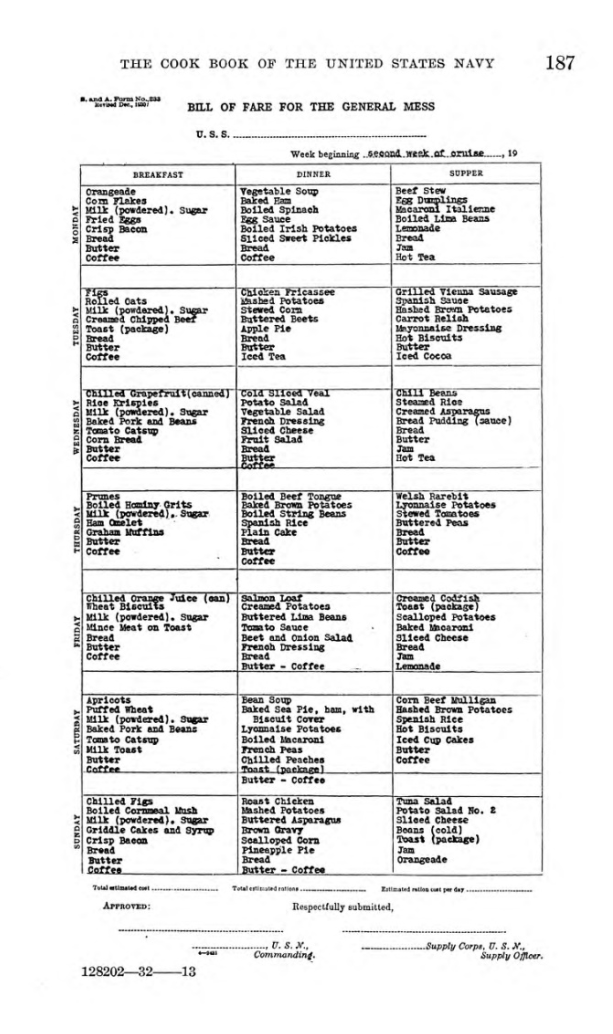
COOK BOOK
The Cook Book of the United States Navy contains many attractive recipes, together with valuable suggestions on the subject of mess management and dietetics. From time to time additional recipes will be published as an addenda to the cook book. All of these recipes are for 100 servings and therefore readily adaptable to the complements of the individual vessels.
BREAD
In order to provide palatable bread during extended cruises when baking facilities on board are necessarily limited, bakeries at submarine bases and on board tenders will, when considered advisable, prepare a sufficient quantity of field bread for issue to submarines. This type of bread will keep from two to three weeks, and, if properly prepared, has an excellent flavor. A formula for field bread may be found on p. 126, The Cook Book of the United States Navy.
REFRIGERATION
Where refrigeration on board submarines is inadequate or not dependable, care must be exercised in requisitioning fresh meats and other items of a highly perishable nature beyond the capacity of such refrigeration facilities. Records disclose a comparatively large number of surveys of this character from small vessels.
RATION ALLOWANCES
Commanding officers of submarines should exert every effort towards economy, as no increase in the present subsistence allowance for submarines is contemplated.
The following menus are illustrative of the possibilities of preparing meals from the ” additional precooked items ” listed above, together with the usual items of dry and canned provisions. Not a single item of fresh provisions appears hereon. A menu of this type is suggested as being particularly adaptable to the second week of a cruise.
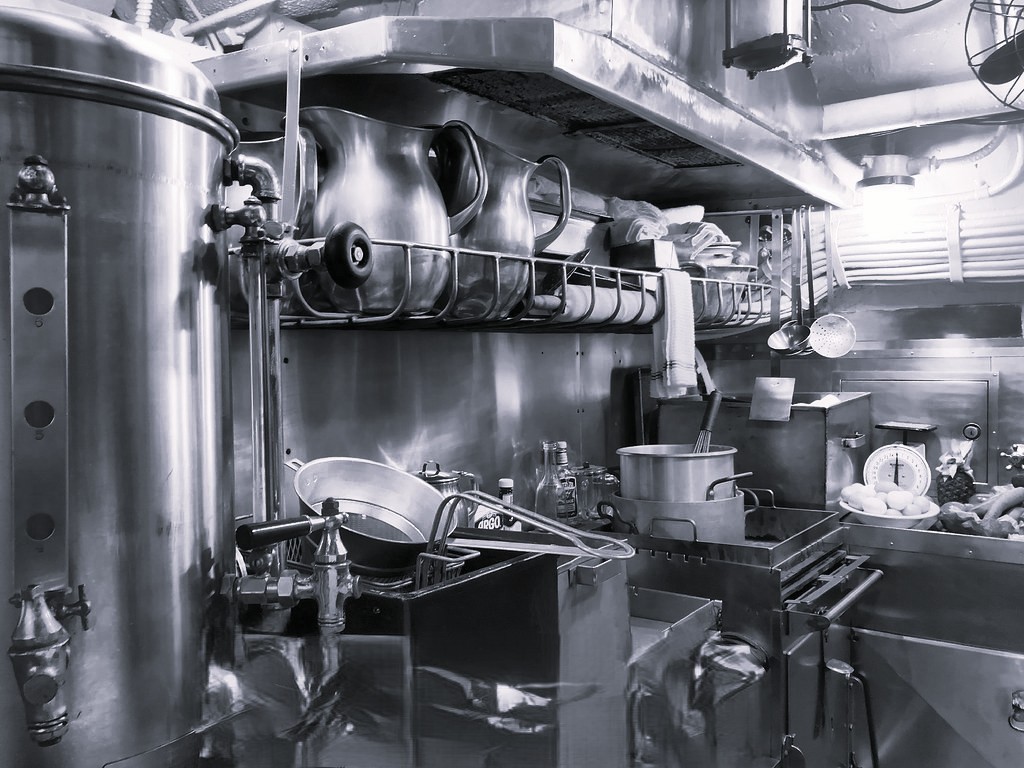
I remember with great fondness the many skilled and talented cooks and bakers.
My best memories are waking up to the smell of fresh cinnamon rolls and brisk navy coffee.
Through the chaos and sometimes boredom of submarine patrols and missions, the one thing that was a welcoming thing was knowing we were going to have some of the best food the navy every prepared.
Mister Mac


