From the beginning of the Cold War, the idea of using nuclear power for propulsion was something discussed on both sides of the conflict.
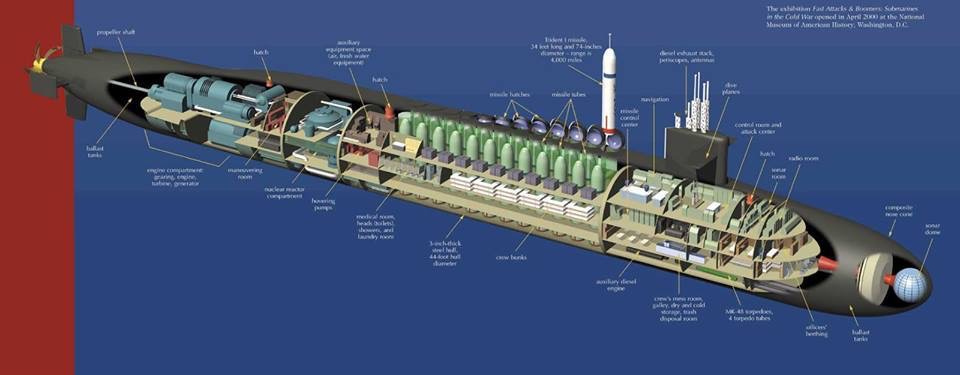
But just as important was the idea that having weapons delivery systems tied to submarines would be a game changer in any future hot conflict. The devastating effect of unrestricted submarine warfare was felt in the Atlantic and the Pacific. The German submarine force inflicted crippling damage on the allies and just as it had done in the first world war, the Kriegsmarine nearly brought England to her knees. In the Pacific, the American navy learned quickly how to use their submarine force in shutting down the free flow of commerce and supplies to an over extended Japanese empire.
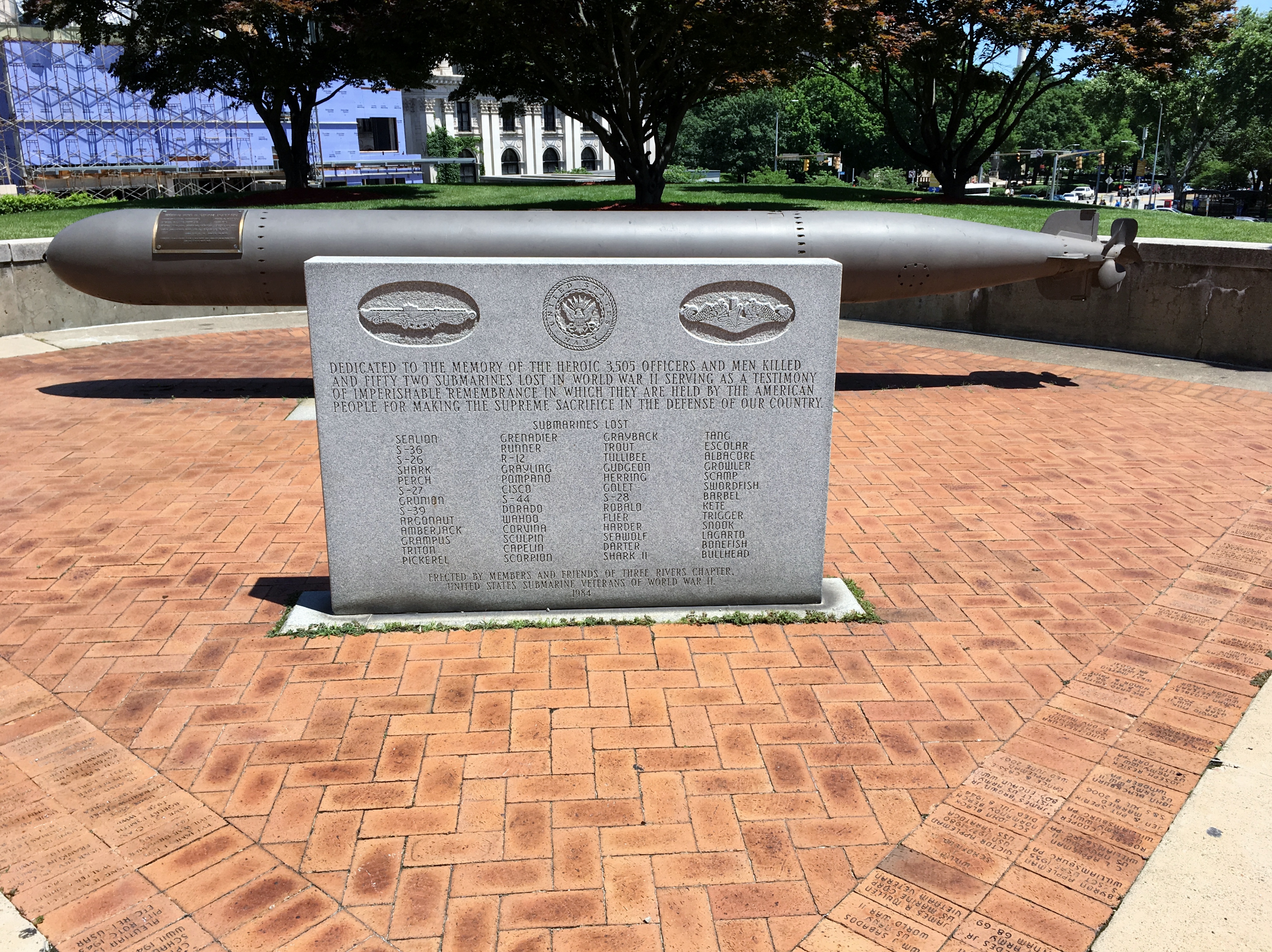
The weapon used of course was the torpedo. Despite early challenges to the American weapons, by war’s end, the deadly underwater missiles were responsible for choking Japan’s supply chain and shortening the war. The end of the war brought revelations on a new breed of torpedo on the German’s side that was even more potentially devastating. Many lessons would be learned by both the allies and the Russians once captured German boats were closely examined.
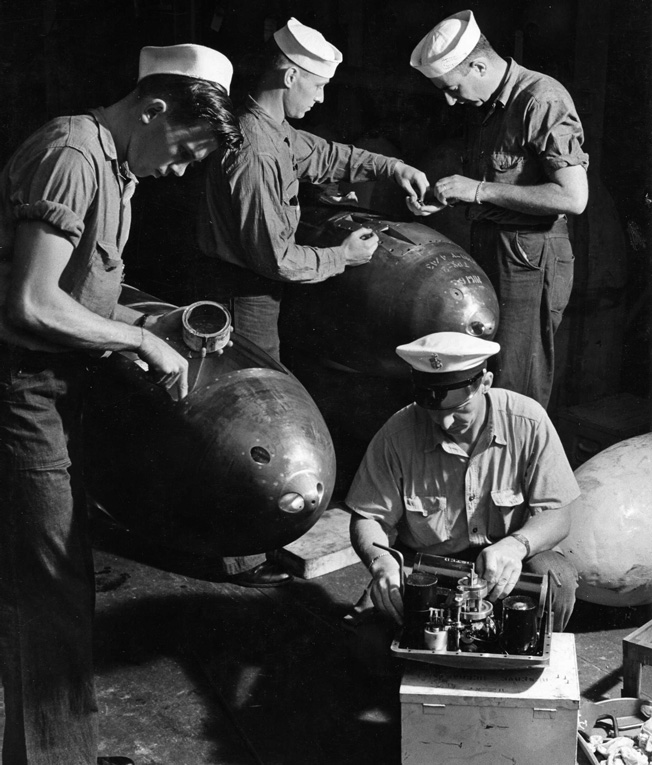
Tomorrow’s Submarines
If the advent of the atomic bomb has placed a great question mark over the future value of giant battleships and aircraft carriers, it has at the same time raised the submarine to a remarkable new level of importance.
During the war our own and the enemy’s undersea marauders were deadly in the extreme, but still their role was subordinate to that of our mighty surface task forces. In the era ahead, however, they may well become the dominant and most decisive part of sea power. The harnessed atom endows them with such tremendous potentialities that they have already come to occupy probably the most prominent place in the hard and revolutionary thinking now going on in the Navy.
Thus Admiral Nimitz, chief of naval operations and top commander of our wartime Pacific fleet, feels that the submarine may be the capital combat vessel of the future, a view shared by other key authorities, including Rear Admiral Bowen, the Navy’s director of research. It is being envisioned now as something of practically unlimited undersea cruising range and of a submerged speed heretofore thought impossible—a speed rivaling that of surface ships. More than that, the expert view is that this spectacularly increased range and speed will be possible at an extraordinary new depth, where submersibles of current design and structure would be crushed by pressure.
Such a new vessel is made possible, even probable, by the fact that it could be powered by atomic energy. As fuel this energy, besides being very small in quantity and hence a space-saver of first importance, would be entirely smokeless and give off no exhaust gases. In other words, since the supply of oxygen would not be affected, the submarine of tomorrow’ would seldom have to surface for air and in all likelihood would be not only bigger, much faster and much more far-ranging, but also able to stay submerged for weeks on end at depths greater than is possible today.
Obviously, a craft of this type would be extremely difficult either to detect or to attack, and as an offensive instrument it would have few equals. For as Admiral Nimitz has suggested it could cross oceans submerged, lurk unseen off the enemy coast “and from a safe depth bombard cities with effects not even Hiroshima suffered.” The bombardment, of course, would be with atomic or bacterial weapons launched as rockets or guided missiles from under the sea. According to Admiral Bowen, the Navy does not necessarily have all this in the blueprint stage at the moment, but he makes clear that there are no insurmountable technical obstacles standing in the way.
It is important to add in this connection, however, that if these submarines are built in the world of tomorrow, our own Navy is not likely to have a monopoly on them. Other powers will have them. too. In short, nearly everybody eventually will be able to destroy nearly everybody else if men and nations now’ engage in an atomic armaments race instead of working urgently together to establish some such international control as that recently suggested by a special State Department committee of experts.
Evening Star (Washington, D.C.), April 9, 1946
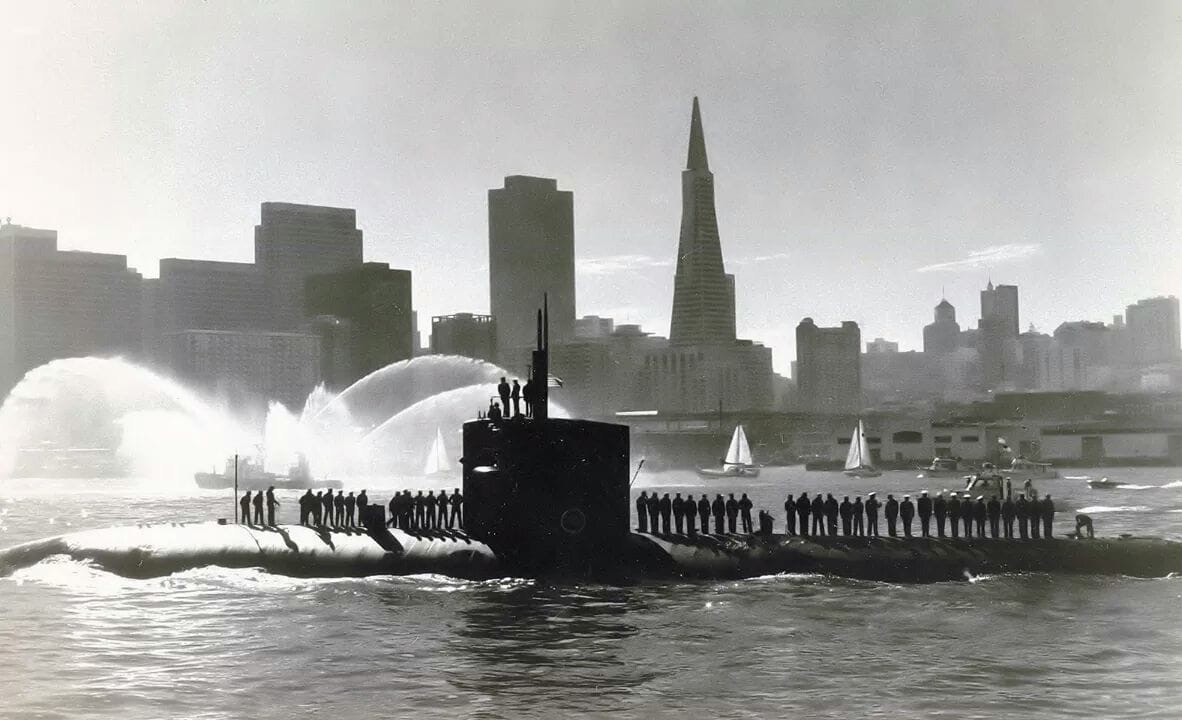
Son of Sub’s Inventor Says A-Bomb Dooms Surface Craft
Associated Press
MILFORD, Conn., Aug. 5. — The son of the submarine’s inventor believes the doom of the surface battleship has been written in the A-bomb tests at Bikini.
Thomas Alva Edison Lake, son of the late Simon Lake, said in an interview here that in the future only submarines will have any chance of escaping disaster through atomic bombing.
“The large surface-type battleship.” said Mr. Lake, an inventor in his own right,” is a thing of the past. So, too, will be the flattops and transport vessels. All such surface craft will be too vulnerable.
“In the future.” he continued, “aircraft and submarines will supplant surface vessels for wartime use.”
Mr. Lake predicted the development of submarines “capable of remaining unheard and unseen during any period of danger,” insulated against atomic radiation and detecting devices, “always a menace and capable of surfacing to launch aircraft, rocket bombs or atomic shells and. while under water, planting atomic mines and firing atomic torpedoes.”
He said he based his beliefs on what he termed “incomplete newspaper reports” of the Bikini tests.
He looked askance at reports that the test sent five subs to the bottom.
“I am most anxious to learn just how much real damage was done to the submarines at Bikini due to the explosion and not through faulty arrangements for resurfacing them
for examination after the blasts,” he said.
Mr. Lake, who is working on the development of a jet propulsion idea conceived by his grandfather. Christopher Lake, asserted “atomic bomb or not, the submarine will remain the most effective and least vulnerable naval weapon for any maritime nation such as ours.”
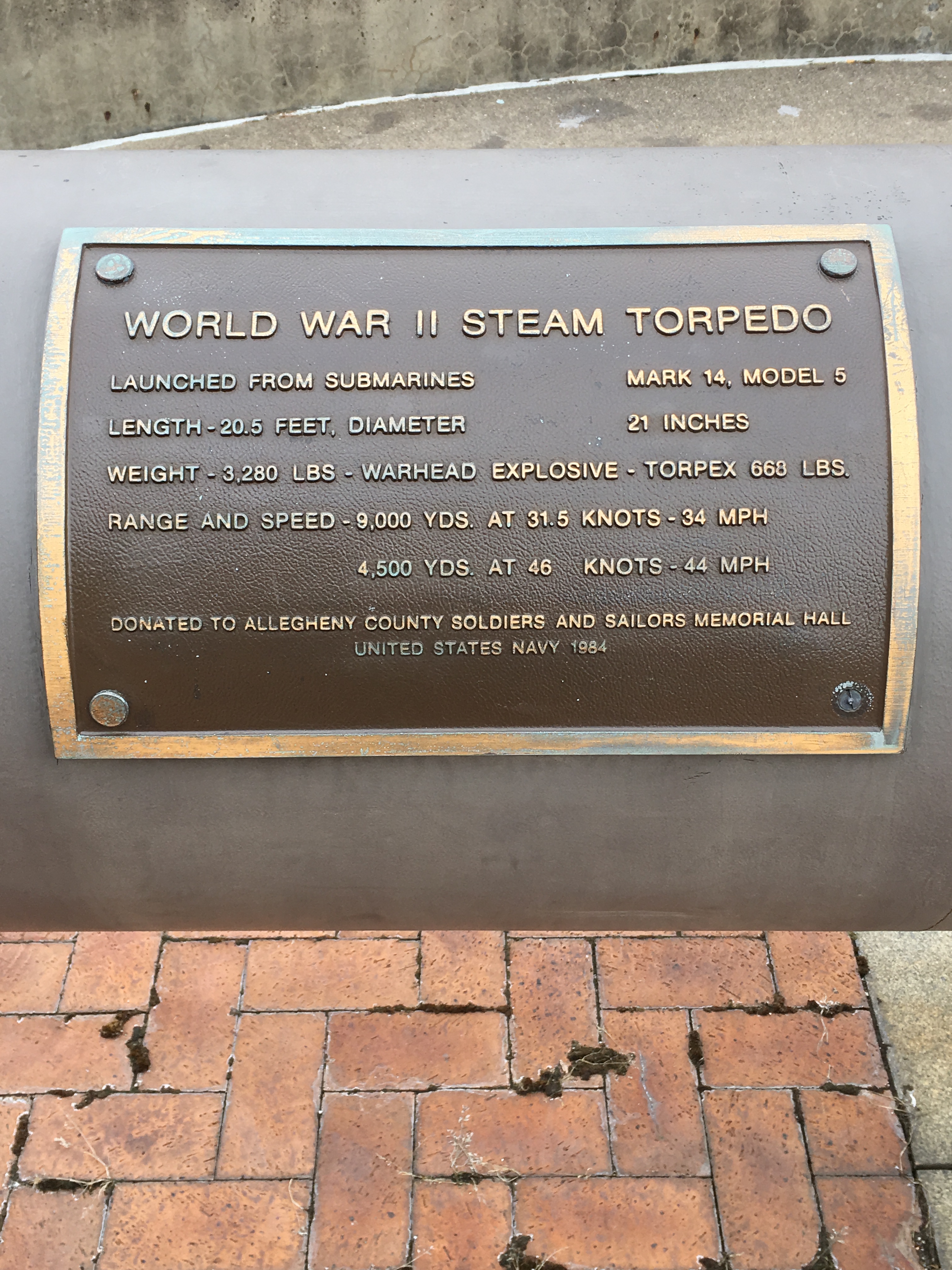
Note: Everything in this article comes from open-source information that anyone can easily find on the internet.
No classified information is included and I can neither confirm nor deny the existence of any of these weapons on the boats I served on fifty years ago.
Cold War Realities
During the Cold War, nuclear torpedoes replaced some conventionally armed torpedoes on submarines of both the Soviet and American navies.
The USSR developed the T15, the T5 and the ASB-30. The only nuclear warhead torpedo used by the United States was the Mark 45 torpedo. The Soviet Union widely deployed T5 nuclear torpedoes in 1958 and the U.S. deployed its Mark 45 torpedo in 1963.
T-15
The Soviet Union’s development of nuclear weapons began in the late 1940s. The Navy had put itself forward as the most suitable branch of the Soviet armed forces to deliver a nuclear strike, believing its submarine technology and tactics to be superior to the rest of the world. In theory, long-range submarines that can surface just prior to launching a nuclear weapon offer a large tactical advantage in comparison to deploying weapons by long range bomber planes that can be shot down.
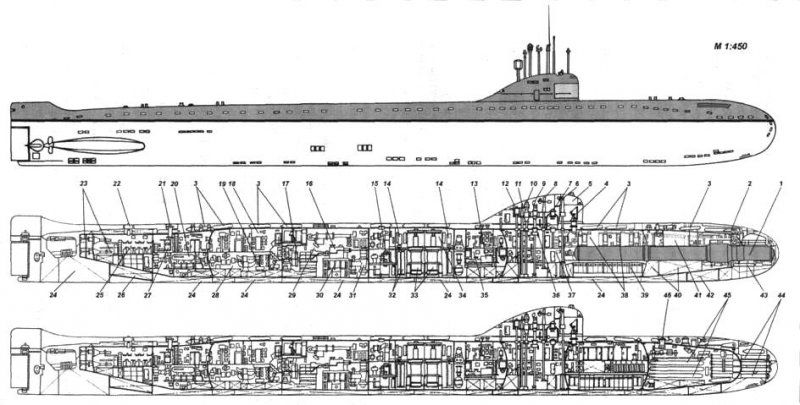
In the early 1950s, the Soviet Ministry of Medium Machine Building secretly initiated plans for incorporating nuclear warheads into submarine warfare. One concept, the T-15 project, aimed to provide a nuclear warhead with a diameter of 1,550 mm (61 in), which was completely incompatible with the traditional caliber torpedo already used in Soviet diesel-powered submarines. The T-15 project began in strict secrecy in 1951. Research and testing was contemporaneous with the other concept, the much smaller and lighter 533 mm (21.0 in) torpedo referred to as the T-5. Stalin and the armed forces saw benefits to both calibers of torpedo: the T-5 was a superior tactical option, but the T-15 had a larger blast. Meetings at the Kremlin were so highly classified that the Navy was not informed. The plans for the T-15 torpedo and for an appropriately redesigned submarine, named project 627, were authorized on September 12, 1952, but were not officially approved until 1953, surprising the Navy, which had been unaware of the central government activity.
The T-15 project developed a torpedo that could travel 16 miles (26 km) with a thermonuclear warhead. The 1550 mm T-15 design was 1.5 m (5 ft) in diameter and weighed 36,000 kg (40 short tons). The large size of the weapon limited the capacity of a modified submarine to a single torpedo that could only travel at a speed of 56 km/h (30 kn). The torpedo speed was hindered by the usage of an electric propelled motor to launch the warhead.
Discontinuation
The T-15 was intended to destroy naval bases and coastal towns by an underwater explosion that resulted in massive tsunami waves. The front compartment of the T-15 submarines held the massive torpedo, which occupied 22% of the length of the submarine. A submarine could only hold one T-15 at a time, but it was also equipped with two 533-mm torpedo tubes intended for self-defense. In 1953, the T-15 project presented its conclusions to the Central Council of the Communist Party, where it was determined that the project would be managed by the Navy. In 1954, a committee of naval experts disagreed with continuing the T-15 nuclear torpedoes. Their criticisms centered on a lack of need when considered along with existing weapons in the submarine fleet, as well as skepticism that submarines would be able to approach launch points close enough to the coastline to hit targets within 40 km (25 mi).
Project 627 was modified to provide reactors for a new vessel that would be capable of deploying 533 mm caliber torpedoes in the T-5 project. However, the termination of the T-15 program in 1954 was not the last time a large torpedo would be considered as means of deployment. In 1961, Andrei Sakharov revisited the idea after the successful testing of his new 52 megaton bomb, which was too large for aircraft. When he introduced the concept to the navy, they did not welcome the idea, being turned off by the wide area effect which would kill so many innocent people. Technological advances led to the weapon selection process favoring more tactical approaches that were amenable to quicker execution. After years of decline and reduction of stockpiles the Russian Federation in recent years seems to tend to lean toward an increase of its stockpile in terms of quantity and yield of nuclear weapons.
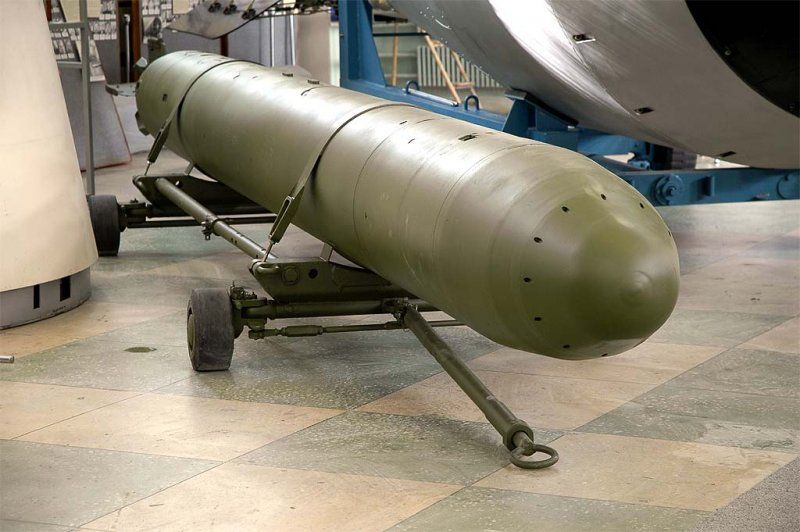
T-5
From the early 1950s, when the Soviets succeeded in engineering atomic bombs of their own, an effective means of delivery was sought. The T-5 torpedo carried an RDS-9 nuclear warhead with a yield of 5 kilotons. The first test of this warhead on the Semipalatinsk nuclear proving ground in Kazakhstan on 10 October 1954 was unsuccessful. A year later, after further development, a test on Novaya Zemlya on 21 September 1955 succeeded. On 10 October 1957, in another test on Novaya Zemlya, the Whiskey class submarine S-144 launched a live T-5 nuclear torpedo. The test weapon, code named Korall, detonated with a yield of 4.8 kilotons 20 m (66 ft) under the surface of the bay, sending a huge plume of highly radioactive water high into the air.[10] Three decommissioned submarines were used as targets at a distance of 10.5 km (6.5 mi). Both S-20 and S-34 sank while S-19 received critical damage.
In 1958, the T-5 became fully operational as the Type 53-58 torpedo. The weapon, which could be deployed on most Soviet submarines, had an interchangeable warhead for either nuclear or high explosive. This permitted quick tactical decisions on deployment. The T-5, like the US Mark 45 torpedo, was not designed to make direct hits but to maximize a blast kill zone in the water. The detonation would create shock waves powerful enough to crack the hull of a submerged submarine. However, like the U.S. Mark 45 torpedo, the T-5 was not optimized for deep diving and had limited guidance capability. As its thermal operational range was between 5 and 25 °C (41 and 77 °F), this decreased its effectiveness in the waters of the North Atlantic and Arctic.
On 27 October 1962, at the height of the Cuban Missile Crisis, the Soviet submarine B-59 was pursued in the Atlantic Ocean by the U.S. Navy. When the Soviet vessel failed to surface after broadcast communications, the destroyer USS Beale began dropping signaling depth charges as a warning to surface. The B-59 was armed with a T-5. The Soviet captain was not aware of this recent US to Soviet submarine signal instruction and believing that World War III was under way wished to launch the nuclear weapon. However, his flotilla commander, Vasili Arkhipov, who was using the boat as his command vessel, refused to endorse the command. After an argument, it was agreed that the submarine would surface and await orders from Moscow. It was not until after the fall of the Soviet Union that it was made known that the submarine was armed with a T-5. A fictional Soviet nuclear torpedo was deployed in the 1965 Cold War film The Bedford Incident.
Mark 45
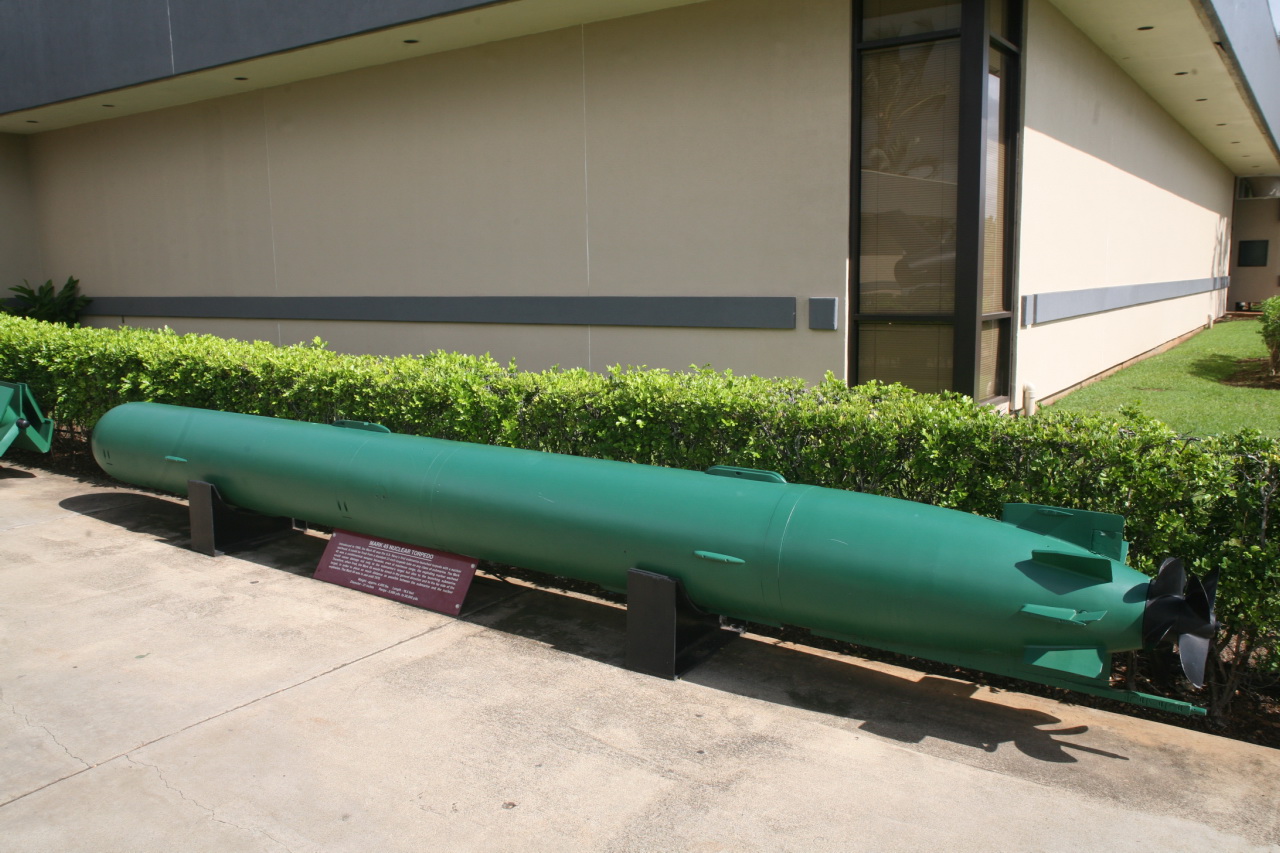
The Mark 45 torpedo, also known as ASTOR, was a United States Navy (USN) nuclear weapon. The Mark 45 replaced the Mark 44 torpedo, which was appreciably smaller, weighing about 193 kg (425 lb) and 250 cm (100 in) in length. The Mark 44 range was around 5,500 m (6,000 yd) and it could reach speeds of 56 km/h (30 kn). The initial design of the Mark 45 was undertaken in 1959 or 1960 by the Applied Research Laboratory, University of Washington, Seattle, Wash., and the Westinghouse Electric Corp., Baltimore, Md. The torpedo entered service in 1963.
The ASTOR torpedo would later be replaced by the Mark 48 torpedo which is the current US standard torpedo. It is not nuclear capable.
The Russian Federation has developed a new weapon called the Poseidon
Russia’s Poseidon torpedo is a nuclear-powered, nuclear-armed underwater drone designed for strategic second-strike capability, carried by specialized submarines like Khabarovsk and Belgorod.
Overview of Poseidon Torpedo
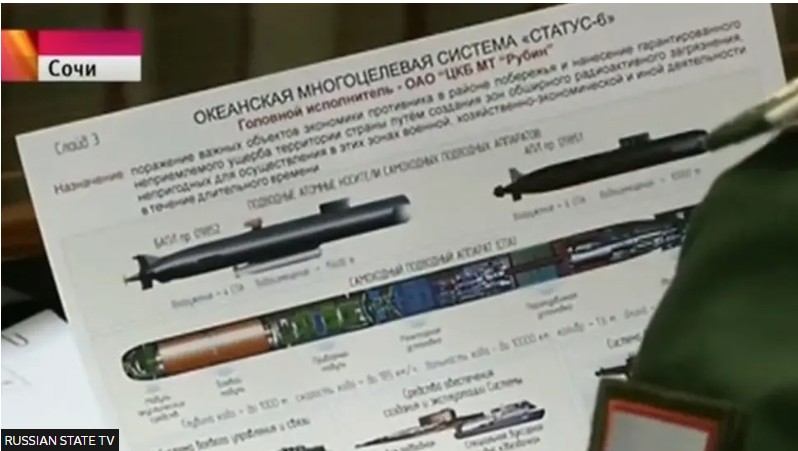
The Poseidon 2M39, also known as Status-6 or NATO reporting name Kanyon, is a nuclear-powered, autonomous underwater vehicle designed to deliver a multi-megaton nuclear warhead to coastal targets. Unlike conventional torpedoes, it can operate at extreme depths (up to 1,000 meters) and travel thousands of kilometers, making it difficult to detect and intercept. The torpedo measures approximately 20 meters in length, 1.8–2 meters in diameter, and weighs around 100 tons. Its nuclear propulsion provides virtually unlimited range, and it can reach speeds up to 100 knots (185 km/h), though sustained operational speeds are likely lower.
Warhead and Strategic Purpose
Poseidon is equipped with a multi-megaton nuclear warhead, with estimates ranging from 2 to 20 megatons, capable of causing massive destruction and radioactive contamination along coastlines. Russian sources have suggested it could generate a “radioactive tsunami” to incapacitate ports and infrastructure, though scientific assessments indicate such effects would be limited and dispersed. Its primary role is strategic deterrence, providing a second-strike capability to ensure retaliation even if Russia’s land-based nuclear forces are neutralized.
Submarine Platforms
The Khabarovsk (Project 09851) and Belgorod (Project 09852) submarines are the main platforms for Poseidon deployment.
Khabarovsk: Launched in November 2025, nuclear-powered, displaces ~10,000 tons, carries up to six Poseidon torpedoes, and is designed for stealth and long-range operations.
Belgorod: Modified Oscar II-class submarine, entered service in 2022, also carries six Poseidons, and serves as a “mother ship” for deep-sea operations, including seabed surveillance and deployment of unmanned systems.
Additional submarines, such as Ulyanovsk and Orenburg, are under construction to expand Poseidon deployment.
Strategic Implications
Poseidon represents a new class of nuclear deterrent, complicating NATO’s anti-submarine warfare and missile defense planning. Its autonomous operation, nuclear propulsion, and deep-sea stealth allow it to approach targets undetected, providing Russia with a credible second-strike capability. While some claims of “tsunami-level” destruction are exaggerated, the weapon’s combination of speed, range, and nuclear yield makes it a significant strategic asset.
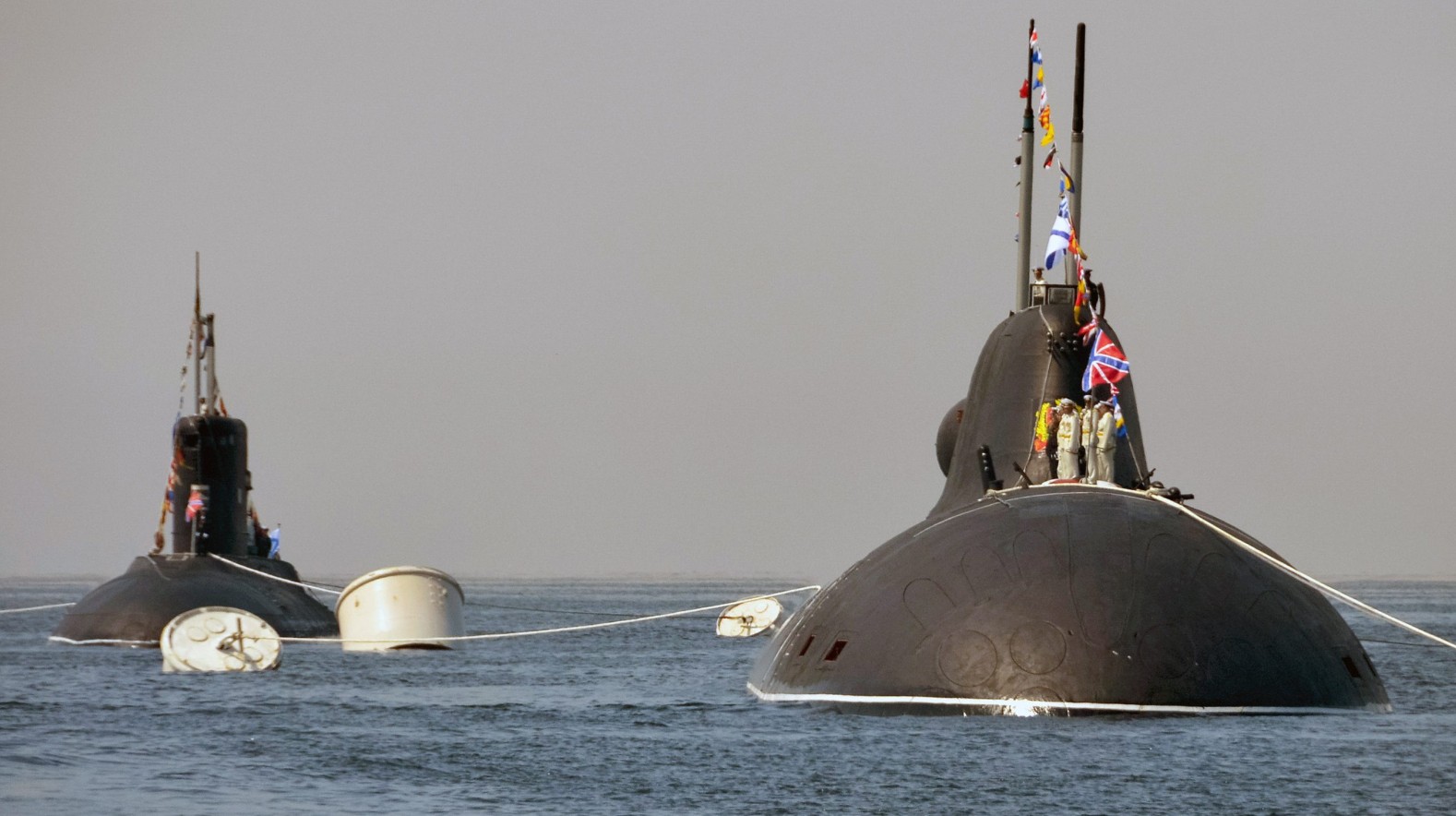
In summary, Russia’s nuclear submarine torpedoes, particularly the Poseidon system, are highly advanced, nuclear-powered underwater weapons designed to enhance strategic deterrence, ensure retaliatory capability, and challenge existing naval defense systems.
The continued advances in torpedo and nuclear weapons development will present challenges to planners for generations to come. Studying the book of Revelations has been an interesting look into what the future could look like. There are parts of the book that talk about a monster rising from the sea. One has to wonder if these are the monsters that were envisioned.

 theleansubmariner
Ah yes… ASTOR Disaster. I remember it well. ‘Nuff said.
BZ againl.
Bob