The Royal Order of Deep Dunkers
Up until today, I had only known of a few US Presidents that had submerged on board a submarine.
The first was Theodore Roosevelt who rode an early sub called the Plunger.
A partial list of modern Presidents that would have a connection with submarines is found here:
https://archive.navalsubleague.org/1992/presidents-and-submarines-2
Not all of the presidents listed would actually ride on a submerged submarine. But on November 21st, 1946, Harry S. Truman dove to 440 feet on board a submarine near Key West. But this wasn’t just any ride. Truman tested the deep on board a captured German U Boat on a 44-minute undersea cruise.

The Key West Citizen, Thursday November 21st, 1946
President Submerges 440 Feet Below Surface Of Sea Aboard Captured German Submarine
For 44 minutes this morning. President Truman was far below the surface of the Gulf Stream off Key West aboard a captured German submarine. The Nazi ship, guided by an American captain and crew which drew high praise from their Commander-in-Chief reached a maximum depth of 440 feet.
The submarine submerged at 9:30 and surfaced at 10:14. A German device which permits the submarine to recharge its batteries under water and remain submerged indefinitely was used. The sea is about 1000 feet deep where the dive was made some seven miles out.
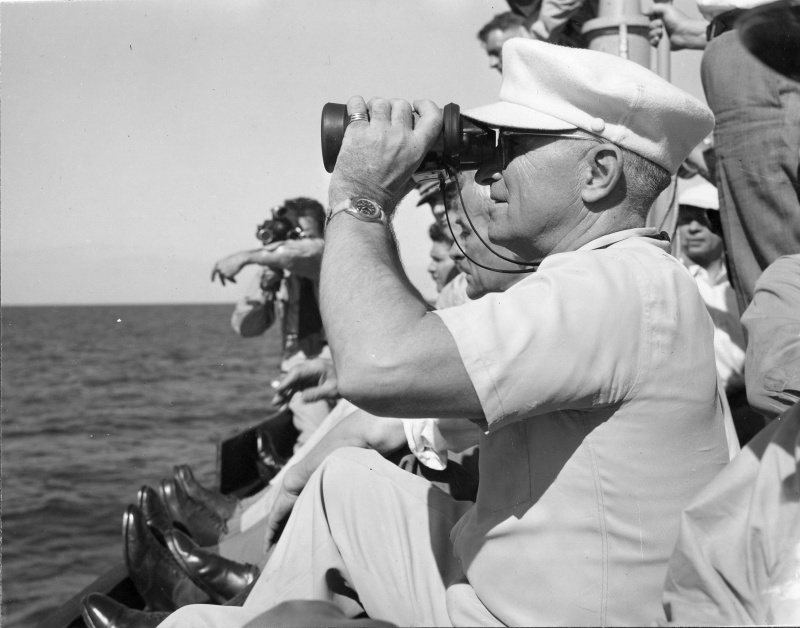
While the vessel was submerged, the President remained in the control room most of the time, where he expressed himself as tremendously impressed with the team work of the crew. After surfacing he watched the escort vessel drop depth charges which exploded fairly close by. The U-boat returned at 11:51 with the president standing on the conning tower.
When he came across the gangplank Mr. Truman appeared to be a trifle sun-burned. He was in fine spirits and unfolded a huge scroll entitled “Royal Order of Deep Dunkers,” to which he was admitted as a member following the 440-foot dive.
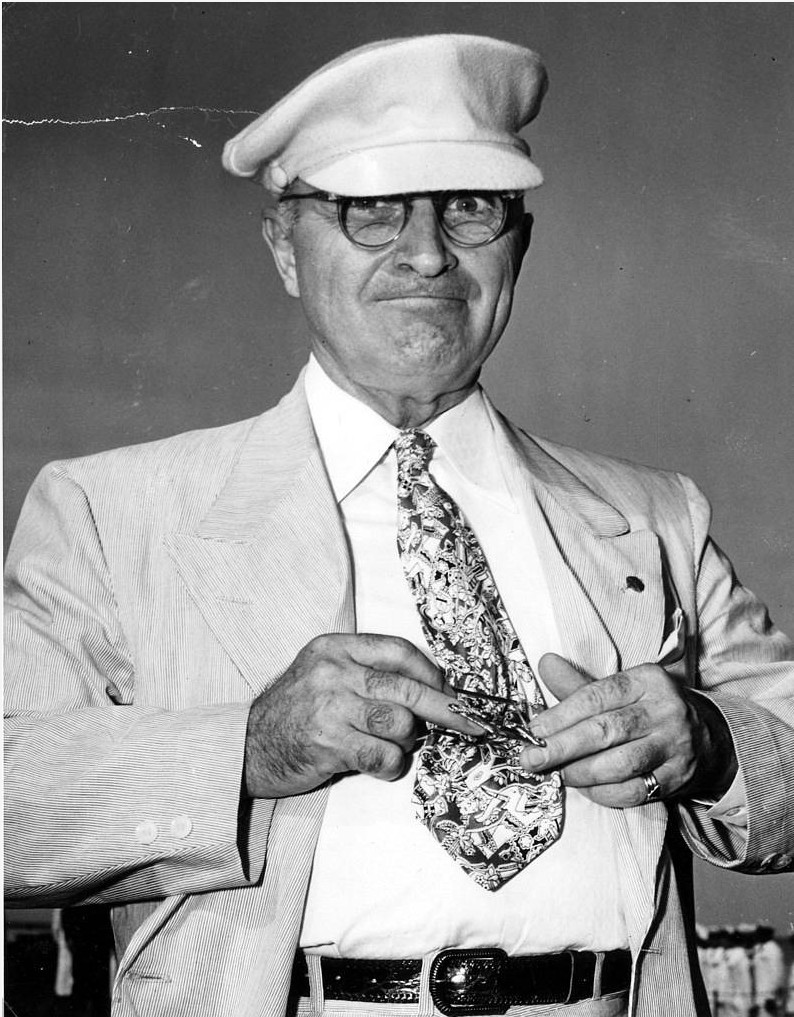
The President was waving his white nautical cap from the conning tower as the submarine slid out into the blue-green, sunlit waves of the Gulf Stream shortly before 8:30 this morning.
There was something significant in the scene as the President of the United States brushed past an Iron Cross pointed on the one time Nazi sea terror, U-boat 2513, and climbed nimbly up a ladder to the tower dominating the rest of the ship. Then, at a word from the President, that grey, sinister looking craft, operating smoothly under its new American masters, slipped obediently through the water.
Lt. Commander James B. Casler, of Chillicothe, Mo., young, ruddy-faced skipper of the Ü-boat. barked out the commands getting the ship on its way. From another dock, the U. S. S. Jack Wilkie, a destroyer escort, moved out to accompany the Presidential party.
The submarine trip marked Mr. Truman’s first sea voyage since he arrived in Key West Sunday night for a week’s vacation at the Naval Base. However, as the Presidential party was about to embark on the U-boat from the anti-submarine development center docks north of the old Craig docks, Press Secretary Charles Ross said that the fishing trip planned for tomorrow might even be moved up to this afternoon.
Leahy in Party
The President was accompanied, in addition to Ross, by Fleet Admiral William D. Leahy, his Chief of Staff, Maj. Gen. Harry Vaughn, military aide, Capt. J. H. Foshett, naval aide, John R. Steelman, special advisor; Brig. Gen. Wallace H. Graham, White House physician; Clark Clifford, Presidential counsel; Edwin A. Locke, special assistant and Lt. Col. Henry Myers, pilot of the President’s plane, the “Sacred Cow.”
Ross said that there was nothing new on the coal situation as far as the President was concerned. Mr. Truman is standing firmly behind the court injunction which Attorney General Tom Clark was granted by a Federal Court, restraining Lewis from calling out his soft coal United Mine Workers on strike.
The President arrived at the submarine dock at 12 minutes of eight aboard the 63-foot gasoline motored “Dolphin,” held in readiness by the Navy for Mr. Truman’s fishing needs. Dressed in a cool-looking pink T-shirt, open at the neck; tan slacks and brown shoes, he strode across the deck to the U-boat, conversing with Commander O. A. Scheirni, commanding officer of the antisubmarine development detachment.
Photographers had a field day, especially when Mr. Truman climbed up to the conning tower. As the Commander-in-Chief went aboard his blue and white flag carrying the National Seal was run up and the captain, Lt. Commander Casler, and crew stood in formation at quarters. After greeting the skipper and crew, Mr. Truman walked briskly the 20 feet or so to the vertical iron ladder ascending to the conning tower.
Climbs Ladder Nimbly
Placing both hands on a head high rung he watched his feet carefully for the first step and then climbed quickly up the ladder consisting of eight rungs a foot and a half apart. Neither Admiral Leahy, who followed, nor Steelman, second man to follow the President, reached the conning tower nearly as nimbly or with as little apparent effort as Mr. Truman. In fact, willing hands reached down and helped the Admiral up the last few rungs.
Smiling broadly, the President joked with photographers busily snapping pictures. As Commander Casler issued his commands releasing the submarine from its moorings, Mr. Truman took off his cap and waved it. He yelled to the newsmen and asked them if they would like to ride up to where he was. If not, he said, there was plenty of room inside.
Prior to leaving, the skipper of the submarine did not know whether he would submerge or not. He said he expected to return about noon. He had been given the President’s diet, for both breakfast and luncheon. The breakfast menu, Casler said, was to consist of tomato juice, one egg, bacon and milk. Calf’s liver was the luncheon dish. The submarine was scheduled to go to the “submarine operating field” some distance out in the Florida Straits.
Captured by British
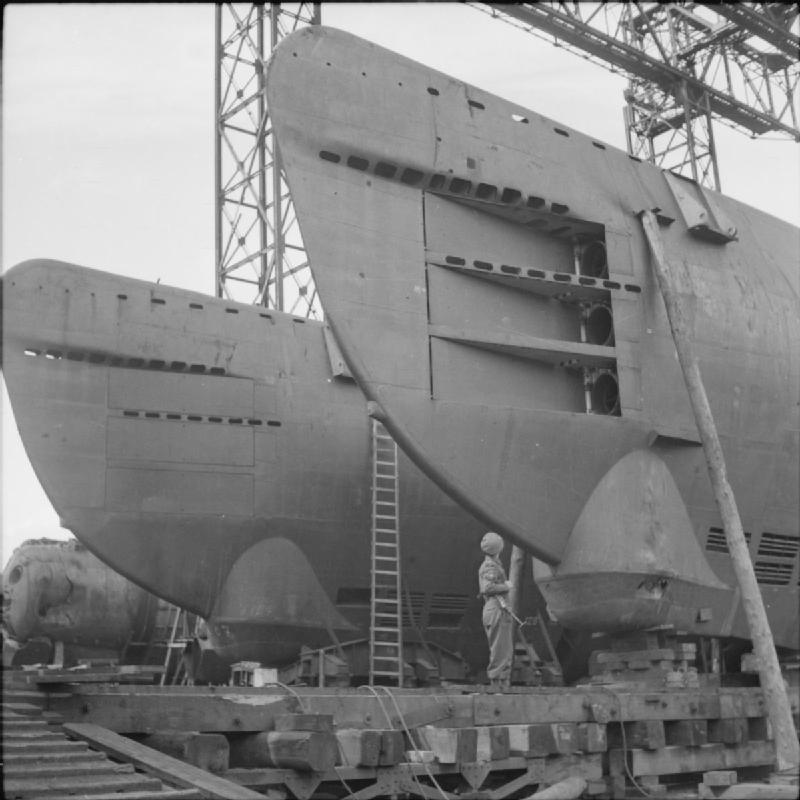
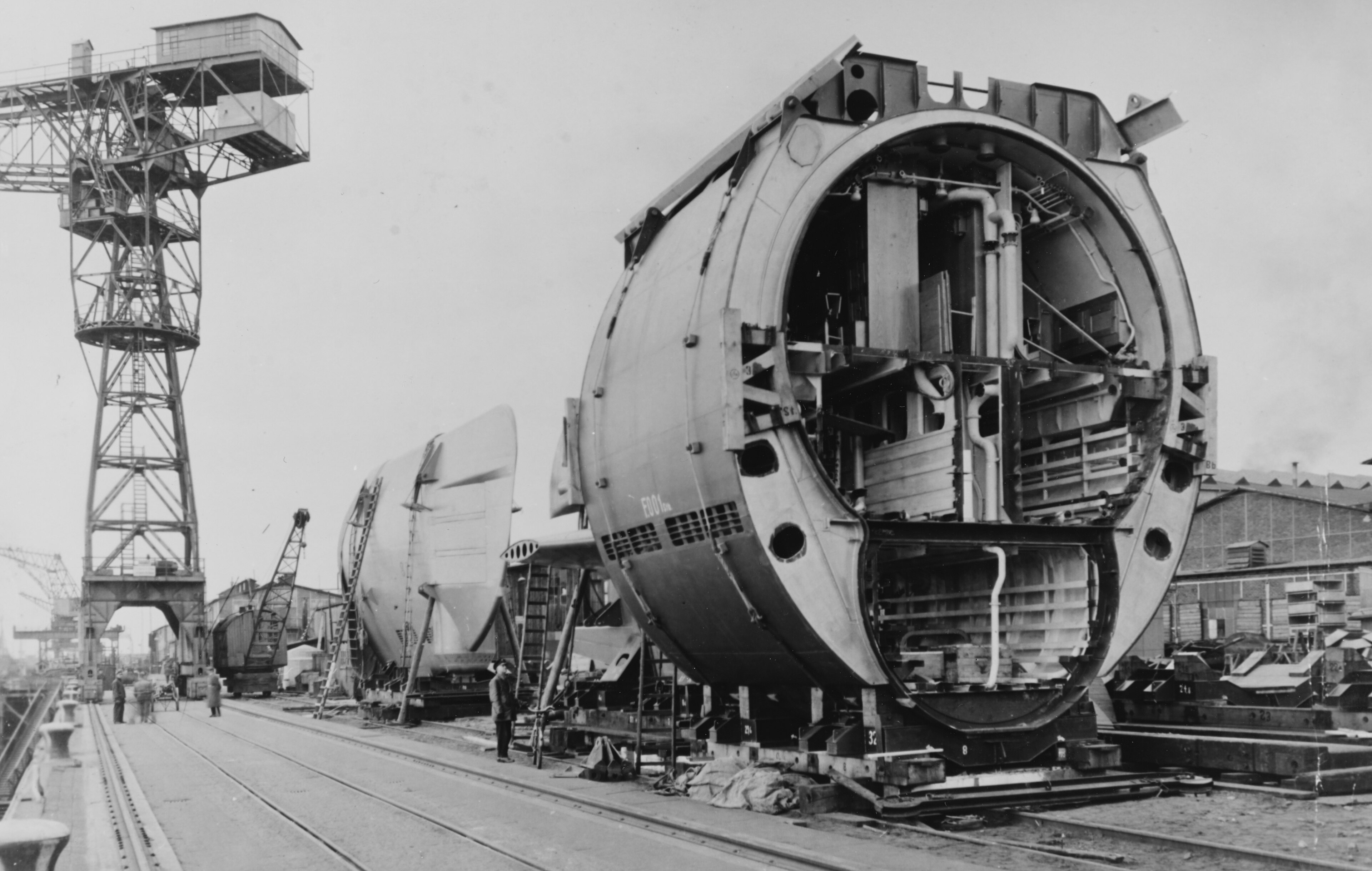
The submarine was captured by the British in Norway and taken to Londonderry, Ireland, where it was taken over by the Rainbow Division of the American fleet, a unit specializing in operation of captured submarines. After being taken to Portsmouth, N. H., it was overhauled and brought here where it has been used for experimental work since January. It is one of the latest model submarines turned out by the Nazis during the war. It was constructed on a mass production, assembly line basis of prefabricated parts.
On the conning tower is a Statue of Liberty standing against background and flanked by two shamrocks. The design stands dominantly over an Iron Cross. The U-boat carries a crew of approximately 15 men.
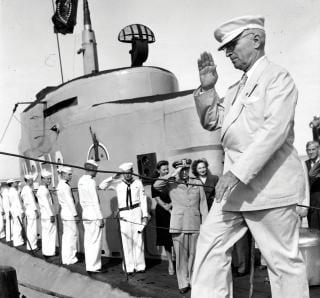
After his return this noon. Mr. Truman wise-cracked with correspondents when reminded that Commander Casler was a Missourian. The President remarked jokingly that Casler was another of the Missouri gang, referring to the group of White House aides, advisors and cabinet members many of whom are from Missouri.
Yesterday Mr. Truman personally drove the open convertible car put at his disposal some 30 miles to Big Pine Key and then back to Boca Chica where he inspected airplanes, climbed into the control tower and examined various devices while waiting for Mr. Steelman and Admiral Leahy to arrive.
Interesting note from a Naval Submarine League article about the trip:
The President’s trip began on a Thursday morning when he and a party of twenty-one boarded U-2513. Included in the group were Admiral Leahy, his Chief of Staff, and Rear Admiral Styer, Assistant Chief of Naval Operations. As U-2513 put to sea the President and his group had breakfast in the wardroom. U-1513 began its dive at 9:30 and, as it passed 100 feet, rigged for silent running and briefly went to flank speed. In twenty minutes, it descended 450 feet where it leveled off and cruised for about a minute. It then began to surface and about five minutes later was at periscope depth with President Truman manning the scope.
The trip developed some unanticipated excitement when the port engine flooded and smoke escaped into the after-battery room. The President stayed calm during the casualty and the sub surfaced without any other difficulty.
A little history about the U-2513
Kriegsmarine Service
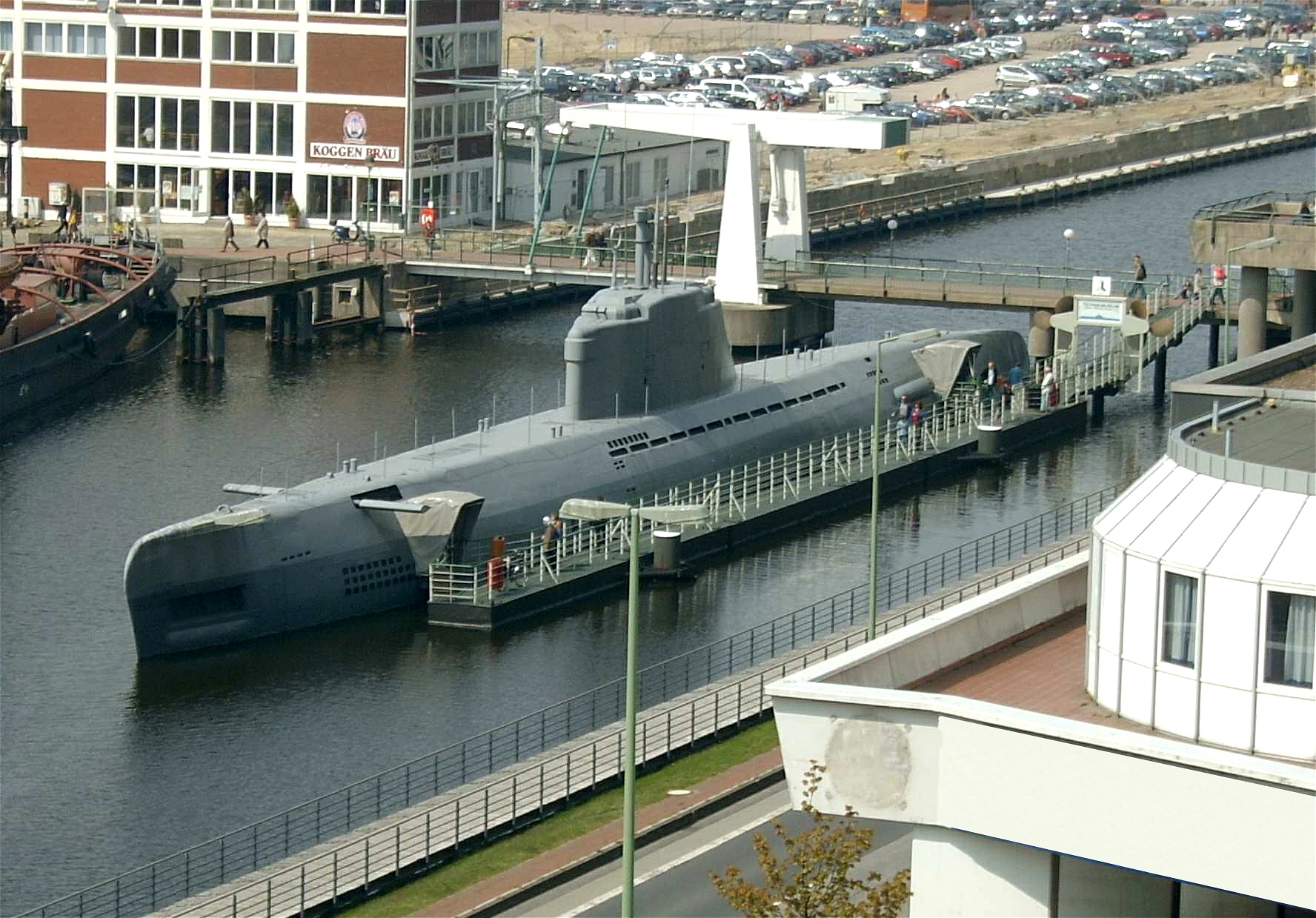
Her keel was laid down on 19 July 1944 by Blohm & Voss of Hamburg. She was commissioned on 12 October 1944 with Kapitänleutnant Hans Bungards in command. Bungards was relieved on 27 April 1945 by Fregattenkapitän Erich Topp, who commanded the boat for less than two weeks. Adolph Hitler would commit suicide in his bunker in Berlin on April 30th 1945 and the war in Europe was fast coming to a close.
U-2513 conducted no war patrols. On 9 May 1945, Topp surrendered his command at Horten Naval Base, Norway. U-2513 was taken to Oslo on 18 May, then to Lishally, Northern Ireland, which she reached on 9 June. In August 1945, the U-boat was transferred to the United States.
United States Navy Service
A year later, August 1946, U-2513 began an extensive overhaul in Charleston, South Carolina, which was completed late in September. On 24 September, she departed Charleston and headed for Key West, Florida. The following day, she began six months of duty which included both evaluation tests of the U-boat’s design and duty in conjunction with the development of submarine and antisubmarine tactics. The Greater Underwater Propulsion Power Program (GUPPY) would be initiated because of the results of these tests.
On 21 November 1946 President Harry S. Truman became the second American President (after Theodore Roosevelt to travel on a submarine when he visited U-2513. The sub went 440 feet (130 m) below the surface with the President on board, and a demonstration was made to him of the German schnorchel (a specialized submarine snorkel).
On 15 March 1947, U-2513 headed north from Key West, Florida, bound for the New England coast, and arrived at Portsmouth, New Hampshire, on 22 March. She remained there until 8 September when she began six weeks of operations from Portsmouth and New London, Connecticut, under the auspices of the Commander, Submarines, Atlantic Fleet. She concluded that duty on 15 October and departed New London to return to Key West. U-2513 resumed her old duties at Key West five days later and continued them until the summer of 1949.
In mid-June 1949, the submarine moved from Key West north via Norfolk, Virginia, to Portsmouth, New Hampshire, where she was placed out of service in July 1949. She remained at Portsmouth until August 1951 at which time she returned to Key West. On 2 September 1951, the Chief of Naval Operations ordered that the boat be sunk by gunfire. U-2513 was sunk west of Key West, Florida during rocket tests by the destroyer USS Robert A. Owens on 7 October 1951.
The final resting place of U-2513 is about 23 nautical miles (43 km; 26 mi) northwest of the Dry Tortugas, 70 nautical miles (130 km; 81 mi) west of Key West) in about 213 feet (65 m) of water at 24°52.015′N 83°18.594′W. She is reachable only by divers experienced in decompression diving at that depth. The site is rarely dived on due to its depth and remote location.
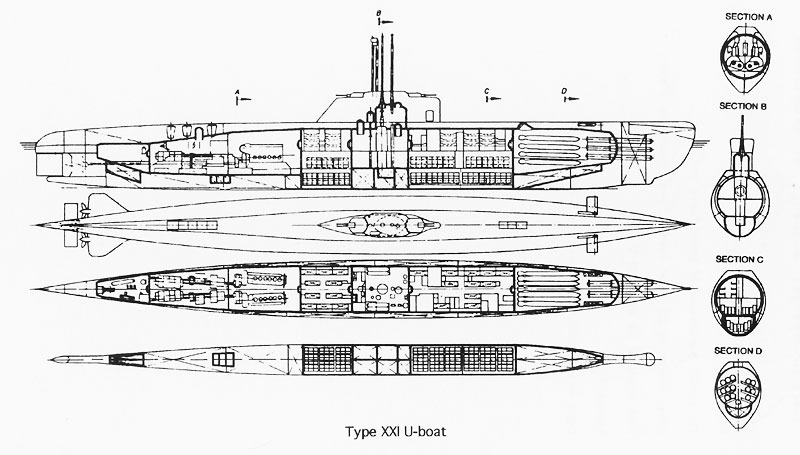
Type XXI Submarines
They were the first submarines designed to operate primarily submerged, rather than spending most of their time as surface ships that could submerge for brief periods as a means of escaping detection. They incorporated many batteries to increase the time they could spend submerged, to as much as several days, and they only needed to surface to periscope depth for recharging via a snorkel. The design included many general improvements as well: much greater underwater speed by an improved hull design, greatly improved diving times, power-assisted torpedo reloading and greatly improved crew accommodations. However, the design was also flawed in many ways, with the submarines being mechanically unreliable and, according to post-war analysis, vulnerable to combat damage. The Type XXI submarines were also rushed into production before design work was complete and the inexperienced factories which constructed the boats were unable to meet quality standards.
After the war, captured Type XXIs were examined by several navies, and many post-war submarine design were influenced by them. These include the Soviet Whiskey, Chinese Ming, American Tang, British Porpoise, and Swedish Hajen III classes.
The Type XXI design directly influenced advanced post-war submarines and affected the Cold War:
The Greater Underwater Propulsion Power Program (GUPPY) improvements to the United States Gato, Balao and Tench-class submarines. These improvements were incredibly important to extending the range and missions of the post war submarine fleet.
Several Soviet design projects, Projects 611, 613, 614, 633, and 644. These projects became known by their NATO codes as Zulu, Whiskey and Romeo submarine classes. These boats mark drastic improvements in the Soviet fleet and give headaches to many US naval planners for the decades to come.
The coming shadow of nuclear power would erase many of the advantages of the Type XX1 propulsion technology.
But even today, submarines benefit from the other advances that the Germans created.
As someone who has heard the command “Prepare to snorkel” many times, I can assure you of that.
Note: President Eisenhower, became the first Chief Executive to go aboard a nuclear submarine and the first to travel by nuclear power when he visited USS SEAWOLF (SSN-575). SEAWOLF, commanded by CDR Richard Laning, was the nation’s second nuclear powered submarine. The visit took place in September 1957 when the President was vacationing in Newport, R.I.
The rest of the Presidential histories can be found here:
https://archive.navalsubleague.org/1992/presidents-and-submarines
Mister Mac

 theleansubmariner