Look at that thing fly – submarine design in the modern ages
The sleek submarines of today are powerful examples of the evolution of naval ship design. What were once awkward frames surrounding the simplest of motive engines, are now the deadliest hunter killers that have ever ranged the oceans deep. The technology to create them largely did not exist when the United States Navy bought her first submersible in 1901 from Mr. Holland. Frankly, the materials used in the Holland were probably state of the art for her day but what we produce now is light years ahead of those pioneering adventures. I can almost hear Teddy Rosevelt exclaim his wonderment if he could step off the Plunger and onto a new Virginia class submarine. With his inordinate curiosity, he would probably slap his thing and yell bully as the new boat performed her own version of porpoising through depths that would crush the first submarine he fearlessly rode.
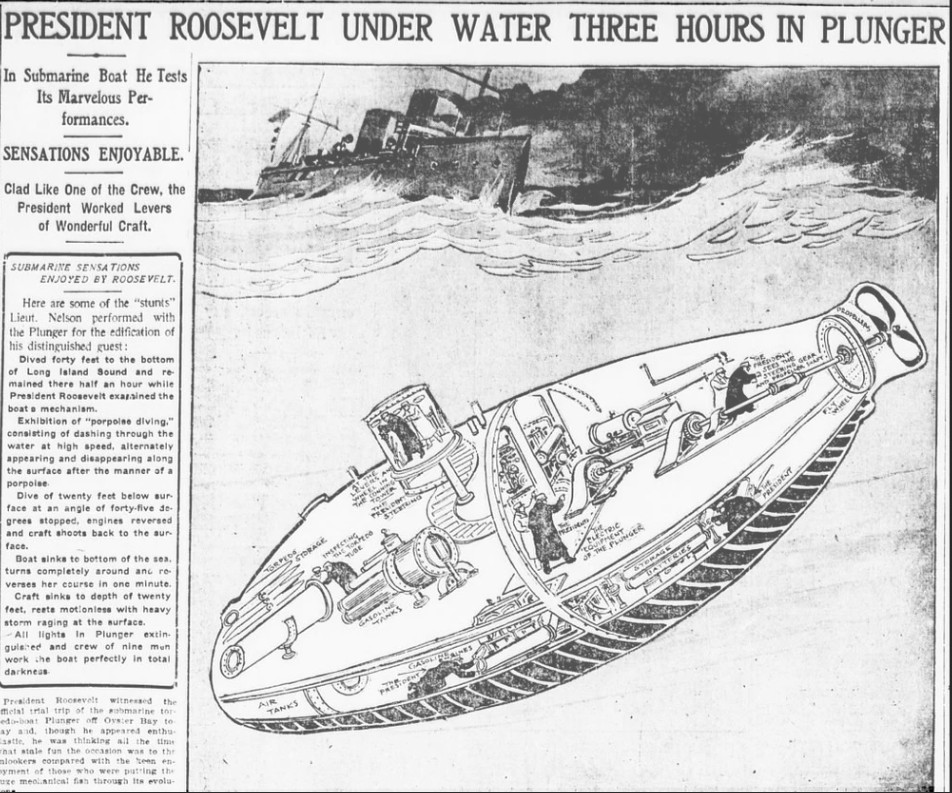
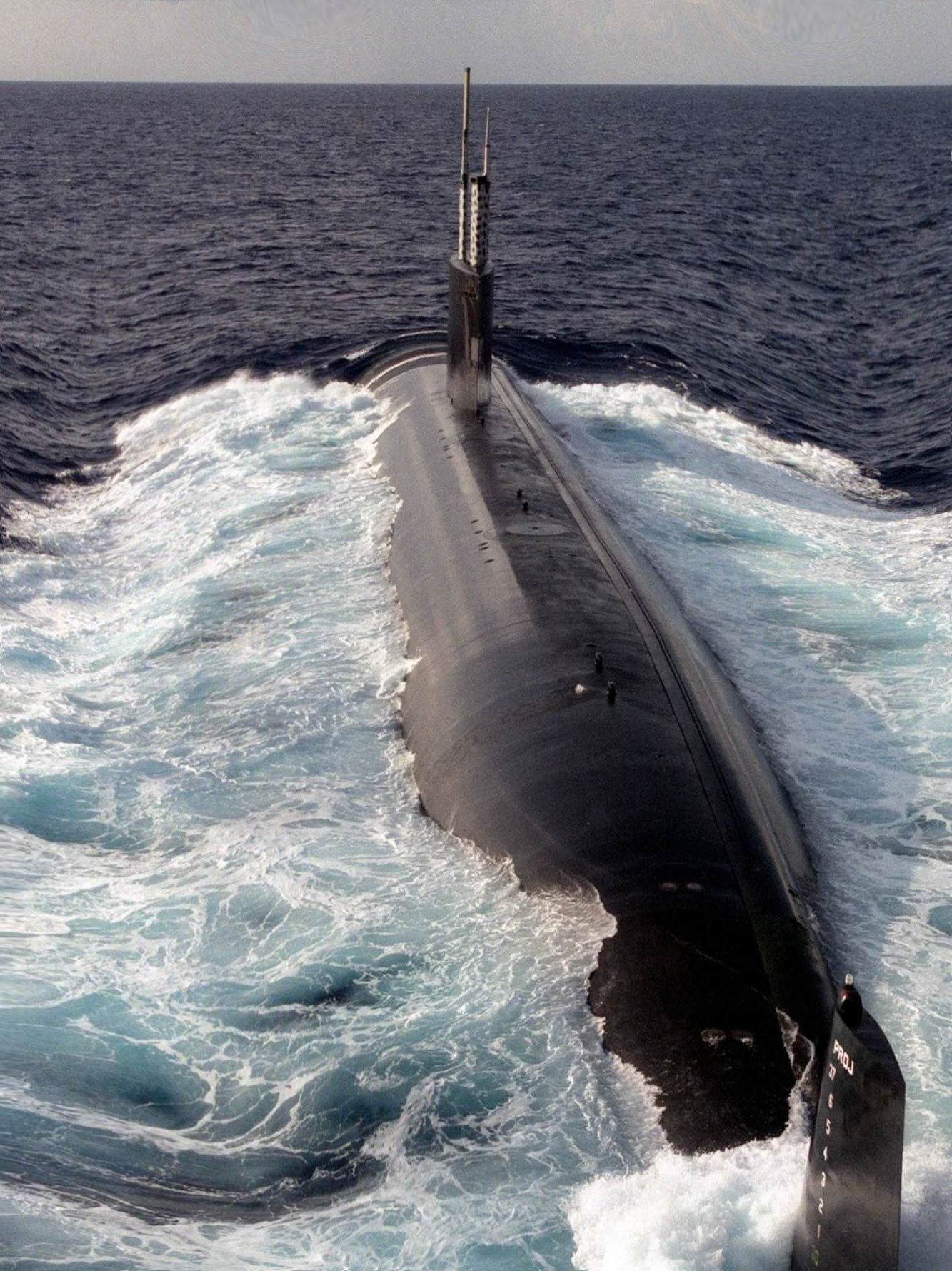
But the path to today’s boats went through many twists and turns. From the early gasoline powered motors to the newest advances in nuclear power, propulsion has led to something as close to being a real submarine as imaginable. Strengthened and more efficient batteries were certainly something that gained advantages. Weapons of today would shock the early inventers in both their speed and capabilities. Electronics of every kind have made everything from navigation to weapons support as superior as possible given today’s micro technology. One can only imagine how the application of AI to all of these areas will render a vessel capable of even more efficiency.
But one of the most significant advancements was in something less complicated than all of those advances.
That would be the shape of the hull.
Looking back over the past 126 years of submarine design, it is notable how much has changed. The ugly little hull of the Holland was functional but limited to manufacturing and materials available to the designer. The use of a slightly rounded hull helped the vessel to withstand limited depth excursions. Pressure applied to all surfaces once submerged can be increasingly strong with every foot or water the boat submerges into. Of course, not having the welding capability no less the strengthened material on today’s boats made her even more vulnerable.

The Holland was not going to be a true submarine regardless of her lack of long-term life support. She would always have to come up for air and her limited battery would force her to some up as well. The gasoline engine produced noxious fumes under any circumstances so the introduction of more efficient diesel engines would at least change that dynamic.
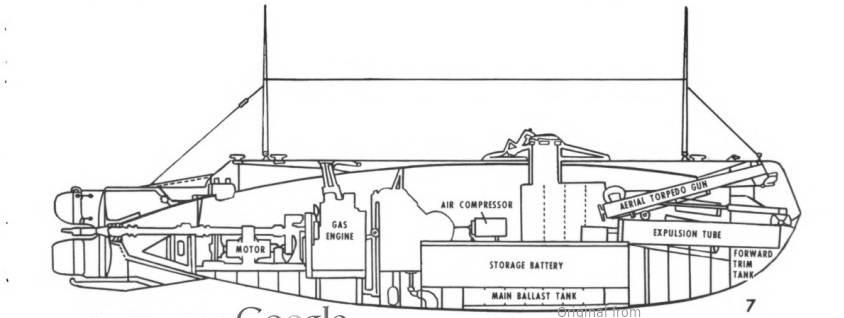
But the boats that would follow were a slow evolution in creating deeper diving and more maneuverable boats. These boats were increasingly more capable and faster. Their combination of diesel and electric power brought them closer then ever to a true submarine. But design changes and improvements came slowly in a largely bureaucratic system. Fortunately for the US Navy, the design board slowly allowed submariners to influence the design and construction of the boats that would lead us to victory in World War 2.
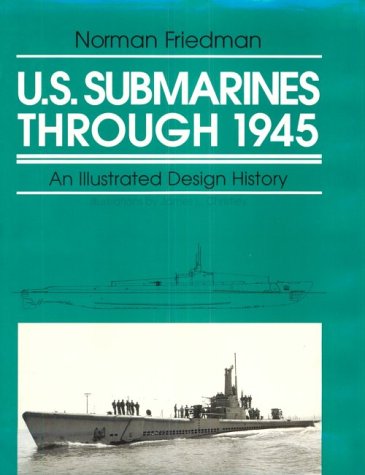
The single best book I am aware of about that evolution was written by Norman Friedman called “U.S. Submarines Through 1945”. Any good researcher has spent at least a few hours following that journey and appreciates the work Mr. Friedman did on cataloging the advancement of the submarine force up until the Cold War.
But the real experts were the men who drove those boats in combat and other missions.
You become intimately aware of your submarine’s characteristics when you ride her. From the minute she leaves the safety of a pier, she takes on a life of her own. Whether it’s a fast attack or a boomer, every boat responds to the sea and to the propulsion method that is driving her. As someone who rode both, I can tell you that I could feel the designers impact every time I went to sea.
The early boomers had some unique responses to different sea states whether on the surface or under the sea. But even the early boomers benefitted by the development that happened to submarines by the inclusion of a different type of hull design.
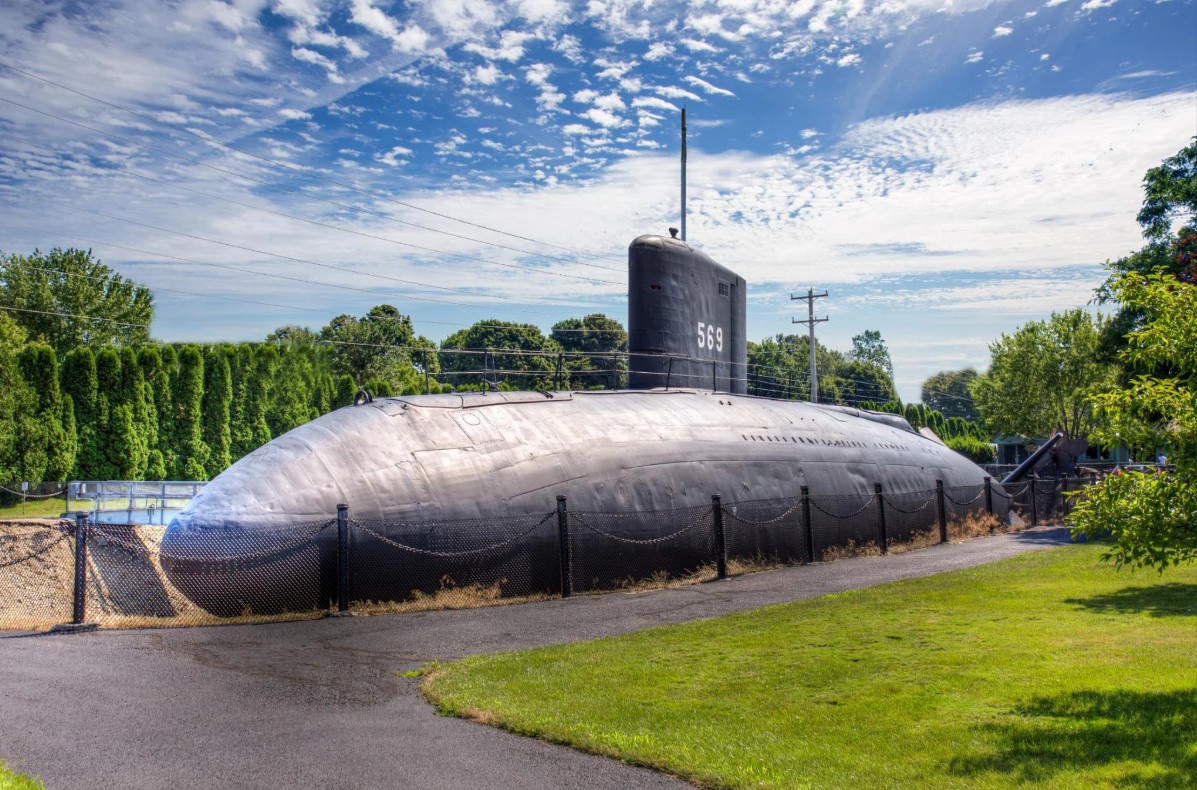
The Albacore Hull.
USS ALBACORE:
By Cdr. Harry Jackson, USN Assistant Design Superintendent, Portsmouth Naval Shipyard
The ” New Look ” In Submarine Design
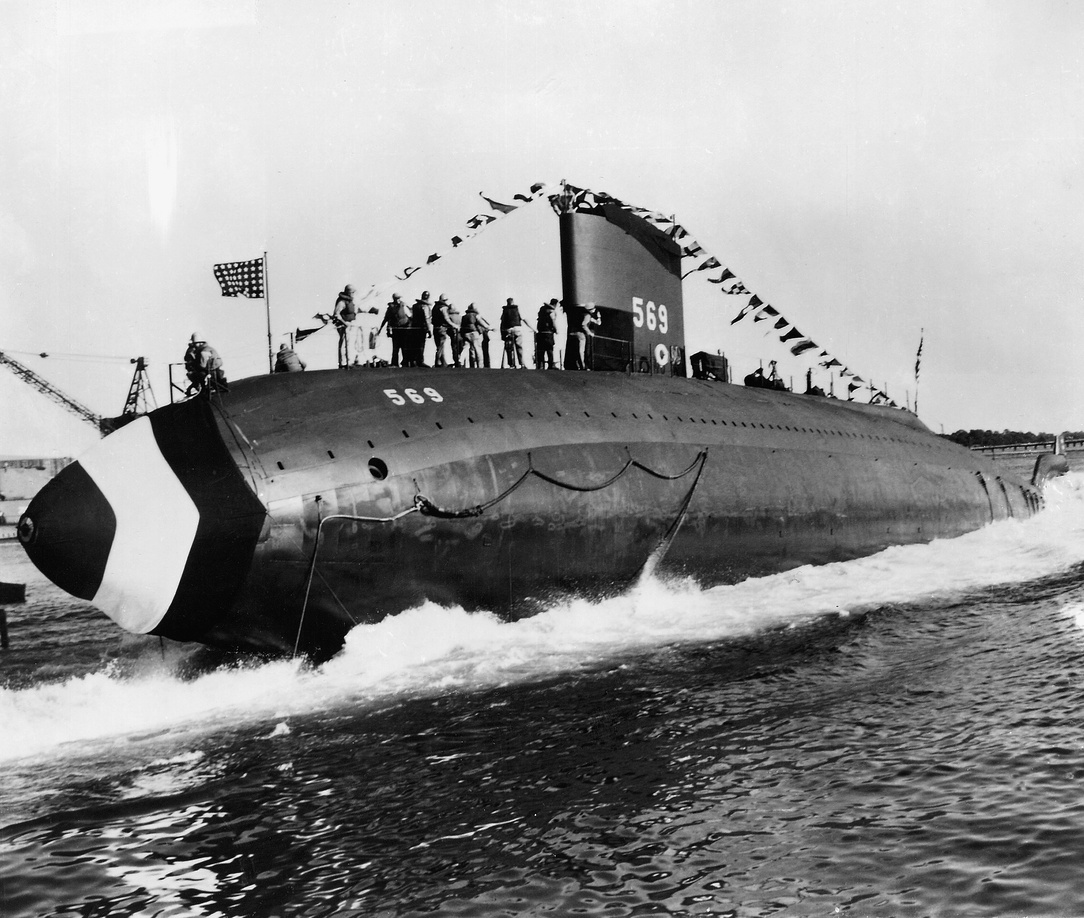
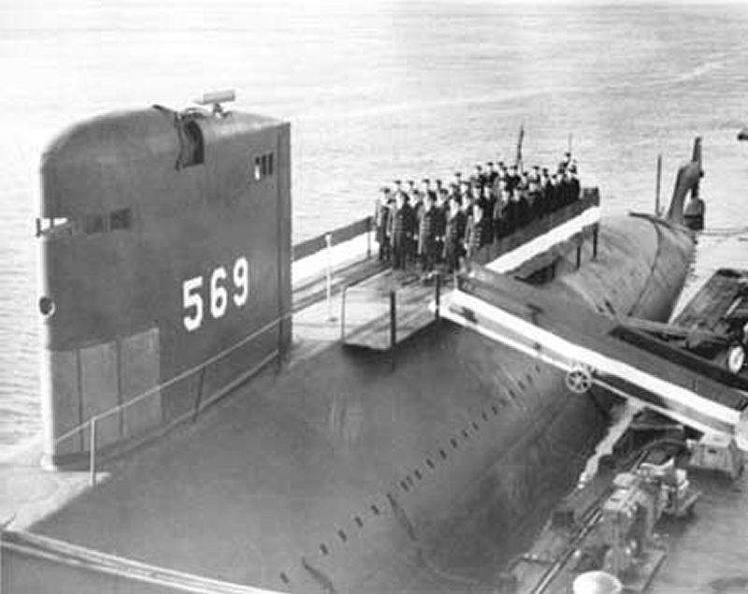
USS ALBACORE (AGSS – 569), which will be completed this month at the Portsmouth Naval Shipyard, is the result of broad and farseeing planning by the Navy Department in the field of undersea warfare. It is the realization of a long – recognized need for an experimental submarine to permit the Navy Department to develop and apply on a basis of realistic full – scale tests the many advanced technological possibilities now available. It is a submarine of advanced hydrodynamic form and is equipped with the most modern control devices. Instrumentation will be provided for obtaining data essential to the development of the submarine of the future.
USS ALBACORE was conceived in 1948. As a result of World War II operations, it had become evident that the United States needed a modern submarine that could make unusually high underwater speeds with much better maneuverability than the Fleet type.
The Bureau of Ships, with the assistance of the David Taylor Model Basin, set out to design a submarine whose hull form would permit the utmost submerged speed with a minimum of power. Safety, habitability, and control were of course emphasized but surface performance was subordinated to high submerged speed. A thorough study of airship research and other previous work was made. With this information and background, resistance tests were conducted on a series of streamlined bodies of revolution. As a result of these studies, two preliminary forms were selected; one was fitted with twin propellers and the other with only one. Model tests proved the latter arrangement to be more efficient. Using these tests as a basis, a third form was selected and fitted with various control surface configurations and then thoroughly tested for resistance, propulsion efficiencies, stability, and control.
Additional Tests Conducted
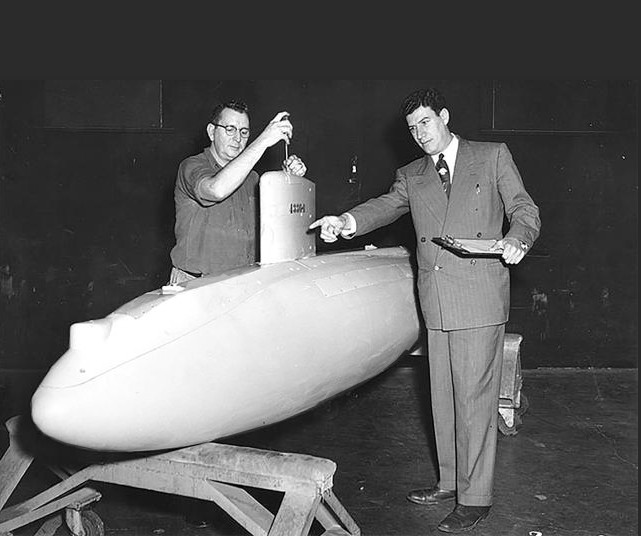
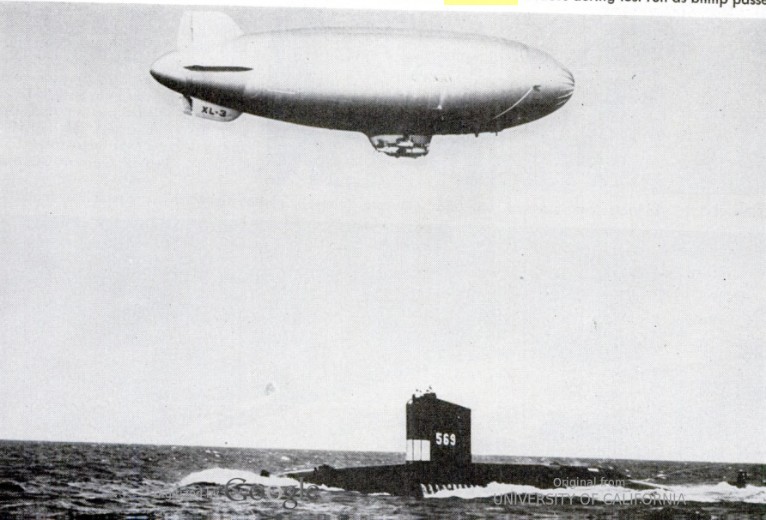
In order to obtain more information on this full form, additional tests were conducted by the National Advisory Committee for Aeronautics at Langley Aeronautical Laboratory, Langley Air Force Base, Virginia. A one – fifth size scale model was set up in a wind tunnel and studies of drag and lift were conducted. Further investigations were made to determine the dynamic stability of this model. From these investigations a hull form was evolved which is hydro- dynamically superior to that of any United States submarine yet designed. Compared on an equal volume basis, this hull form will require less than one – half of the shaft horsepower of a Guppy submarine to make the same submerged speed. USS ALBACORE will be faster submerged than any other United States submarine presently operating.
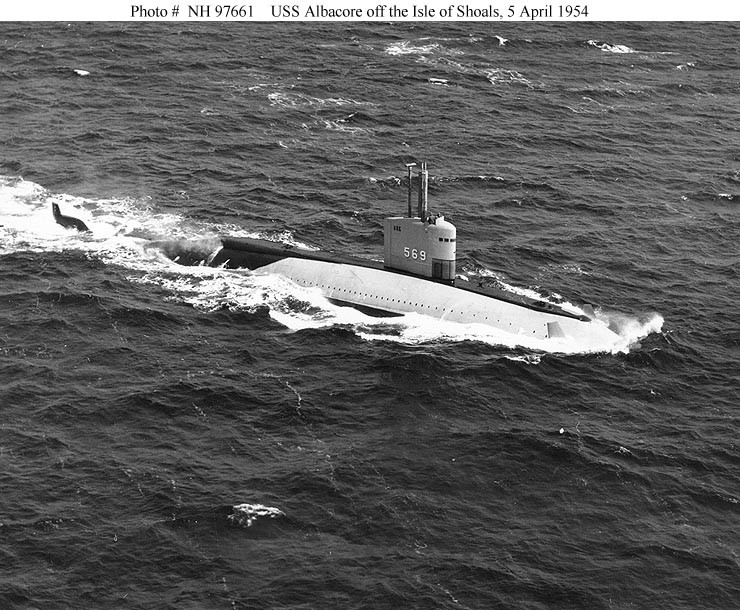
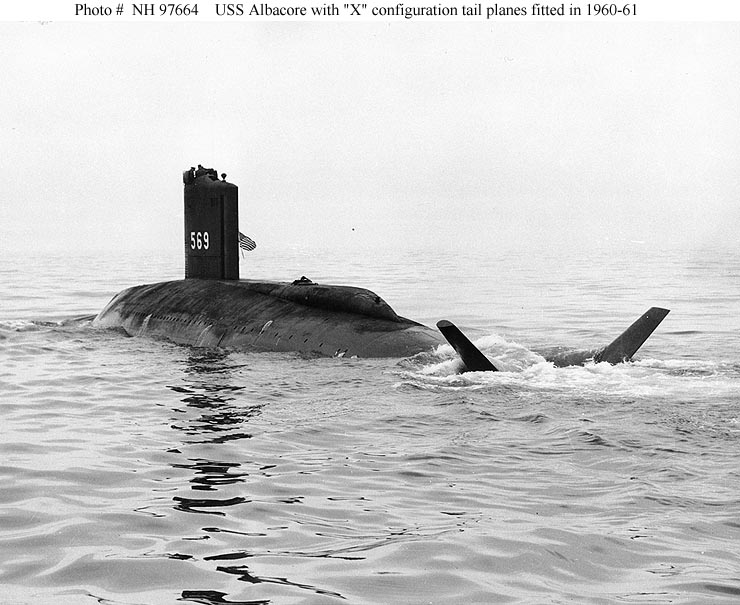
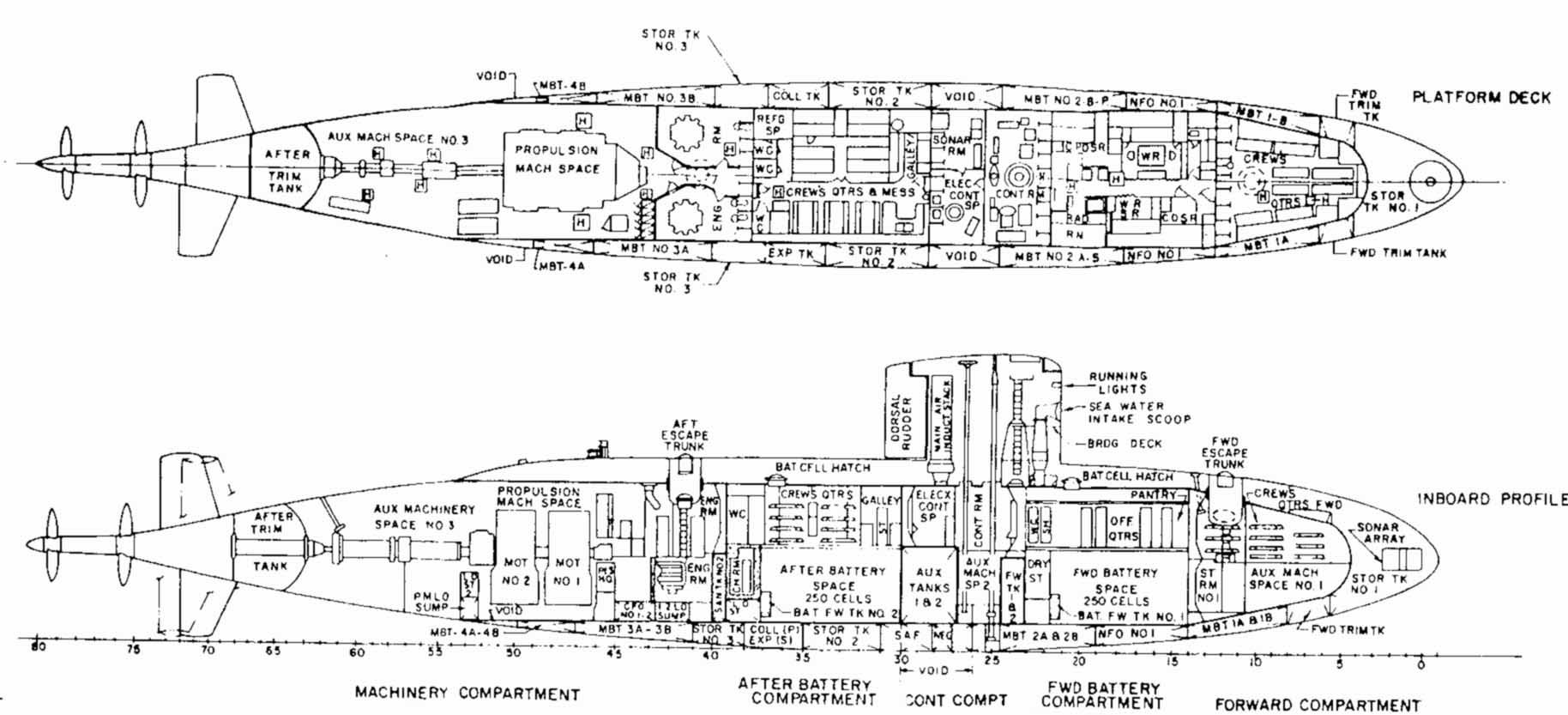
USS ALBACORE is considerably smaller than the conventical Fleet type submarine. All cross sections are as nearly circular as it is possible to make them, the only deviation being the raised superstructure which forms a walking platform, and the fairwater. The after-control surfaces are placed behind the propeller as in the conventional submarines. However, the single screw and extreme fineness in the stern require an unusual configuration of the stern diving planes and steering rudders.
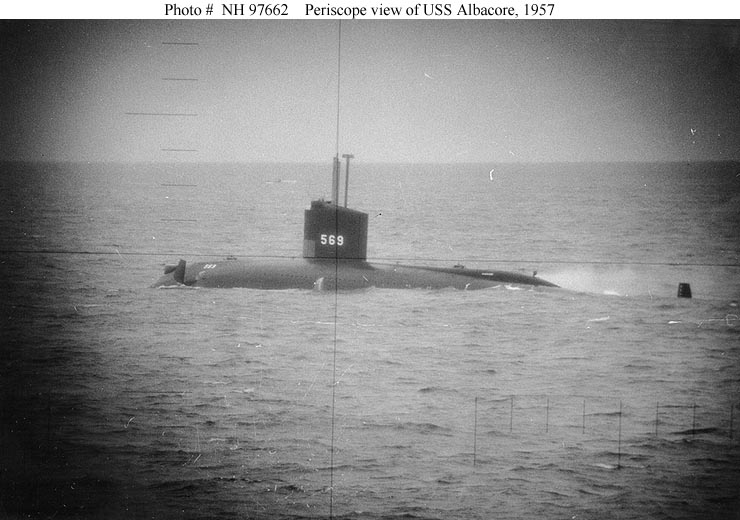
Many detailed design investigations were made consider to the vibration and structural characteristics of these appendages. A conventional diesel electric power plant was specified to expedite construction and reduce cost. The main propulsion components of ALBACORE are similar to those installed on Tang – class submarines. A Guppy – type storage battery is installed. The diesel engines are the lightweight, radial, pancake type. The hydraulic system has an operating pressure of 3,000 p.s.i. and incorporates solenoid – operated remote – control valves. The single large main motor consists of two tandem armatures operating on the same shaft.
Since USS ALBACORE is of such radical design, unusual methods of control are necessary to maintain satisfactory operating characteristics at high submerged speeds. The controls provided are similar to those provided in an airplane, using the stick control with the steering wheel at the top of the stick. It can be controlled by one, two, or three men. When two or three men are used to control the ship, one man does the steering with one or two men controlling the depth.
There are a number of factors which affect the resistance of any ship. These are, namely, skin friction, wave – making resistance, eddy- making resistance, roll and pitch, and wind and sea. For a submarine of the shape of USS ALBACORE, there is much less surface area exposed to the water than in conventional submarines and particular attention has been given to the smooth- ness of this surface. Since the frictional resistance is proportional to the area and smoothness of the hull surface, the frictional resistance of USS ALBACORE is much less than that of a Fleet type submarine. Wave – making resistance is a water surface phenomenon and becomes practically nonexistent as soon as the submarine submerges two or three hull diameters. Eddy – making resistance has been reduced to a minimum on USS ALBACORE by extreme fairing of all appendages.
The reduction in speed due to roll and pitch is also a surface condition which is eliminated when the submarine submerges. Similarly, the wind and sea effects also disappear. From this, one can see that it may require less horsepower to drive a given size ship completely submerged than is required on the surface. As submarine speeds become higher, the submerged horsepower does, in fact, become less than that required on the surface for the same speed. USS ALBACORE is the first submarine to be constructed where this condition does work was commenced in July of that year.
USS ALBACORE was authorized on 11 November 1950. On 15 November 1950, the Commander of the Portsmouth Naval Shipyard was directed to prepare the contract plans and specifications and to submit them to the Bureau of Ships for approval in time to commence construction on 1 July 1951. The contract plans were completed in the spring of 1951 and a result of the investigations to be conducted on USS ALBACORE; it can be predicted that great strides in the hydrodynamic aspects of submarine design will be made. Heretofore, all advances have been made as a result of Model Basin tests with very few tests conducted on full-size submarines.
The instrumentation to be provided in this vessel will give the answers that have long been required to obtain the utmost performance in any submarine. It will provide the basic information with which to build submarines which will outperform or outfight any that may be conceived by a potential enemy. The submarine of the future will be capable of traveling farther and faster than the present-day types.
That last statement has certainly been an understatement.
Modern day fast attacks and boomers have combined the lessons learned and resulted in machines that make the early boats look almost primitive in nature. I am nearing the end of my life cycle and will probably not live long enough to see what transpires next. I read as much as I can about future developments which include autonomous platforms and weapons that are even more autonomous. There may even come a day when the advancement of such weapons makes war fighting impossible of unnecessary. I somehow doubt it though. I am often reminded that the Nobel Prize money came from the guy who invented dynamite in order to make wars unthinkable.
If you would like to learn more about the Albacore, here is the link:
Mister Mac

 theleansubmariner