Chapter Ten: She married a Submariner
There was a custom that existed when ships were at sea to drink a toast at dinner on Saturday night to officer’s wives and sweethearts.
The second stanza to one of those toasts (that dated back to the Royal Navy) said:
Sweethearts and wives, those precious names
That make our hearts grow warmer.
Through every storm on sea and shore —
May the latter remain the former
When lightnings flash and billows role
And straining hawsers sever,
Out thoughts upon the reeling deck
Are with them both forever.
(from the Navy Wife, Chapter VI Engagements and weddings).
In the social announcement column of The Washington times. (Washington [D.C.]), July 24th 1919, Mr. and Mrs. Charles McFadden Jr. of Philadelphia announced the engagement of their daughter Miss Eleanor Hayden McFadden to Lieutenant Cassin Young, United States Navy. The Evening Star on August 3rd was made from the family’s summer cottage in Ocean City New Jersey that the couple would be wed in the early fall.
The actual wedding took place at Saint James Catholic Church in Philadelphia on August 30 at five o’clock in the afternoon and the announcement indicated that the newlywed couple would reside in New London Connecticut after a newlywed trip. The best man for the wedding was Lieutenant George Dorsey Price, one of Cassin’s running mates from the Class of 16. Price served on submarines and would relieve Cassin in the future on board the submarine S-51 before joining the Navy’s aeronautical service and taking to the skies.
The Class of 1916 began their naval academy career in a manner that was similar to the way it ended. The betting and hazing scandals that erupted into the public eye while they were plebes was only overshadowed by the cheating and hazing scandals of their senior year. Midshipman Price may have escaped allegations during the first, but he was caught up in the second in a way that could have ended his Navy career before it had even begun. The emphasis on languages during the modernization of the academy challenged Midshipmen Price along with many others. Newspapers in the summer of 1915 introduced the general public to many new terms like cribbing and gouging but the underlying current on both sides was that something had gone terribly wrong at the academy. By the time the investigations were in full swing, over fifty members of the junior and senior classes (second and first classes) were under investigation with many in actual imprisonment aboard the dreaded Reina Mercedes station ship at Annapolis. In the end, Price was one of the fortunate members who was spared further discipline. Newspaper reports on August 16th 1915 show that the charges against Midshipman Price along with a number of his fellow classmates were not sustained. Much of the leadership at the academy was summarily removed and replaced and no further incidents were recorded for the Class of 1916.
Wedding Day
The day of the wedding, it was already sixty-six degrees at eight o’clock in the morning. The Philadelphia papers called for slightly unsettled weather later in the day which more than likely mirrored the anxiety level of both bride and groom. Saint James Church was a well-known venue for weddings. The church itself was a part of old Philadelphia. It was is a columned, cruciform Gothic design highlighted by an ornate grey limestone exterior and twin flanking spires. Inside, the dark stained woods from North American forests was highlighted by plain clerestory windows, which let in a lot of natural light. The need for natural light was critical since the cathedral was not upgraded to electricity until some years after the Young-McFadden nuptials.
The men in the wedding party would have been dressed in their finest dress white uniforms and gloves (minus the left hand glove of the groom. The bride’s father would have been dressed in an oppressive grey waistcoat with vest that was the fashion of the day. Anne Briscoe Pye describes a typical wedding day best in her book “The Navy Wife”.
“We will assume that the bride-elect is from a very wealthy, socially prominent, civilian family. The setting is a historic old cathedral, at which the bride’s family has always worshipped. Perhaps a bishop will officiate, or some other high prelate assisted by several clergymen. A vested choir with a renowned soloist will furnish the music, and the entire church will be elaborately decorated by a florist. The chancel will be a bower of flowers, and the pews for the families and distinguished guests will be designated by ribbons or sprays of flowers tied to pew ends.”
Mrs. Pye goes on to describe in great detail all of the elegance and formality that is associated with a proper Navy wedding. Social customs from inside and outside the Navy would have been blended to make sure that the entire event was officiated with the maximum amount of decorum. But the finishing touch on a proper Naval officer wedding is the sword ceremony. This time honored tradition is done at the end of the wedding when the couple has been joined. At the rear of the church, the uniformed officers who make up the wedding party for a narrow path facing each other with swords extended above and to the center. This “arch of steel” is the customary launching point for the newlywed’s new life and is always expected.
Sometimes the ceremony is performed at the church but since this was a Catholic church, it would have been performed just outside of the main wooden entry doors. Why outside at only Catholic churches? According to Mrs. Pye “Because of the old law of sanctuary and refuge, as well as the nature of the church, it is considered to be a flagrant breach of military etiquette to draw a sword in church.
After the ushers are lined up, the command is given to “Draw Swords”. Only the brined and groom may pass beneath the swords. While Mrs. Pye does not mention in, the assumption is that now that they are joined together on this journey, no one else will be going with them.
The new Mrs. Cassin Young would find that being a Navy wife and the wife of a submariner would bring its own challenges over the next few decades. There were no handbooks for these first mates to follow but they followed the tutoring of the wives who had come before them and understood the importance of customs and traditions to a fine Navy environment. The Navy Wife handbook capturing many of the subtleties of the assignment as Navy wife would not be published until 1942 by Anne Briscoe Pye and Nancy Shea. The new Mrs. Young would be completely dependent on the wisdom of those wives she was surrounded by.
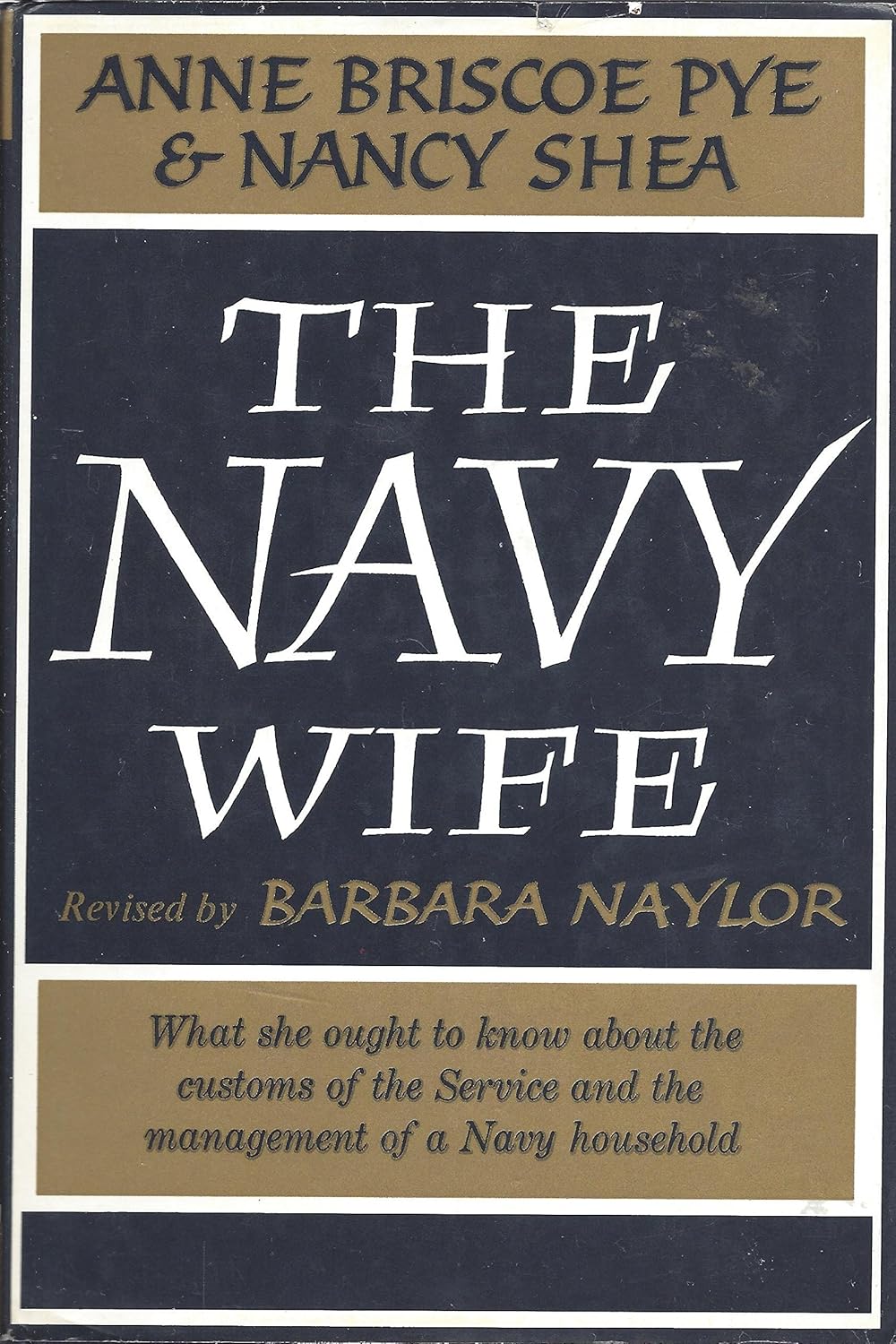
The advice in the book is timeless in many ways. Chapter III would have been useful in indoctrinating Eleanor into just what kind of life her husband had chosen for himself. She would have found that the submarine service is a small branch of a bigger navy but unique in its customs and traditions. Since the boats had only operated since the early nineteen hundreds, these customs were heavily influenced by the customs of the navy at large. Being smaller in size though brought advantages and disadvantages. Since they were smaller, the crew sizes were smaller. With less people to interact with, learning their names, peculiarities and habits came at a much quicker pace. This remains true even today. A submarine crew and their families are much closer than a ship that employs many times the size of people. The disadvantage is the exact same thing. Since there is a limit to how many people submariners interact with, every flaw and every weakness become apparent and are much harder to hide behind a mask of anonymity. Each man assigned to a submarine has a unique specialty including the officers and any strengths and weaknesses are highlighted in ways that can affect the success of the person and the boat.
The bond a submarine crew builds is also an important part of its operational edge. Every submariner is drilled the first law of submarining: Decisions must be made and followed by immediate action. Because of the nature of the environment a boat operates in, any hesitation could and will be fatal. Early submarines accidents were often tied to human related factors which resulted in tragedy. So the men who rode the boats were specially selected and given a significant amount of training to hone their skills and knowledge. One of the key characteristics of a submariner is a calm self-assurance that is evident even in situations filled with stress.
A Navy Honeymoon
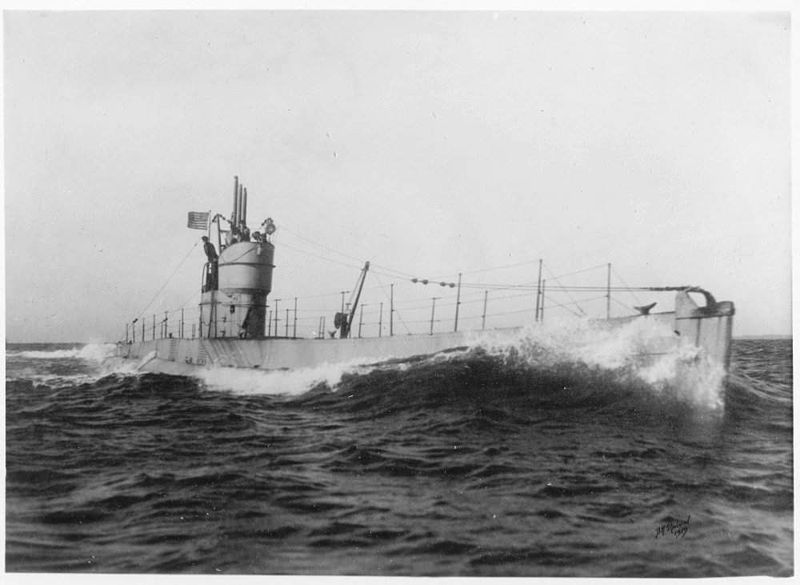
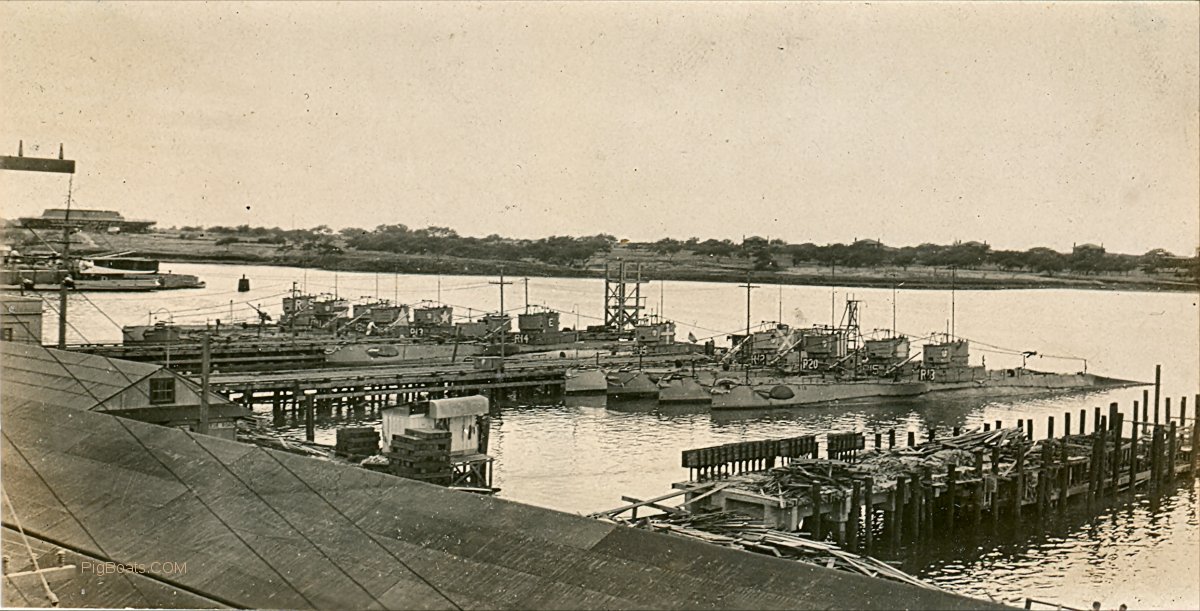
The newlyweds did not have much time to settle into their new quarters in New London. The boat that Young was assigned to upon graduation was the USS R22, part of a squadron of “R” class submarines stationed in New London at the close of the war. This class of boat was smaller than even the “S” class submarines that were started during the war. Limited in size and capability, they were still perfect for the type of work that they had been originally designed for. They would patrol the coasts of America and her territories and protect them from any potential enemies.
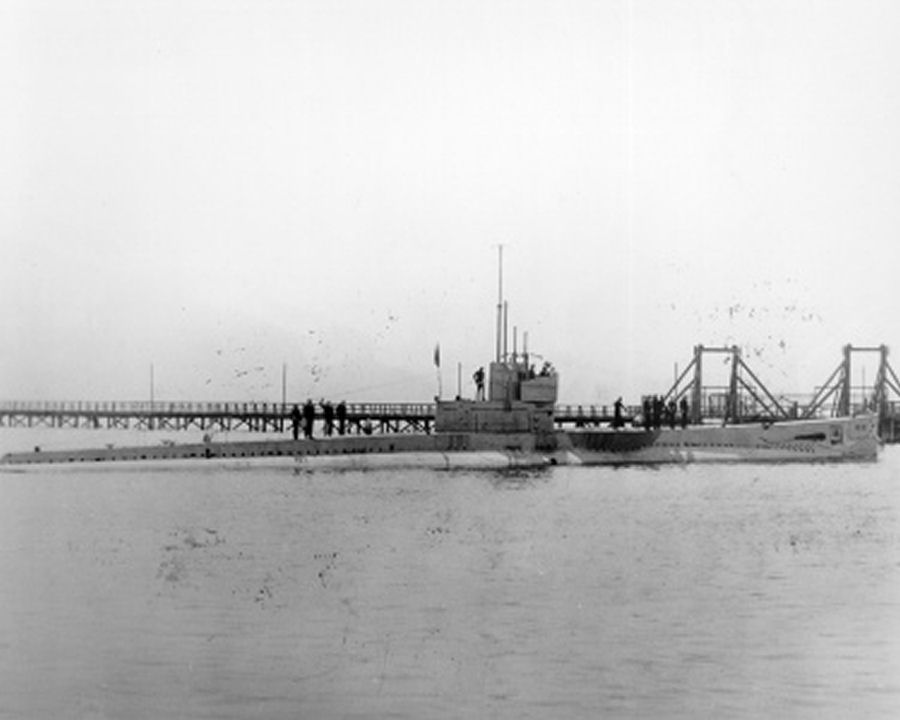
The sixteen submarines of this class had four torpedo tubes, one 3”/50 caliber deck gun and normally carried a crew of thirty officers and men. The R-22 (Submarine No. 99) was in the second flight of “R” class boats and was laid down April 19th, 1917 by the Lake Torpedo Boat Co. in Bridgeport, Connecticut. She was then launched on September 23rd 1918 and commissioned August 1st, 1919, with Lt. Comdr. Walter S. Haas in command (The same month that the Youngs were married).
Following her commissioning, the R-22 would operate in the New London-Newport area for two months.
Two key parts of the Secretary of the Navy’s fiscal year 1920 report would have an impact on the young’s future.
The first concerned a faraway base in Hawaii that was under consideration for improvements:
PEARL HARBOR FACILITIES CAN EASILY BE ENLARGED.
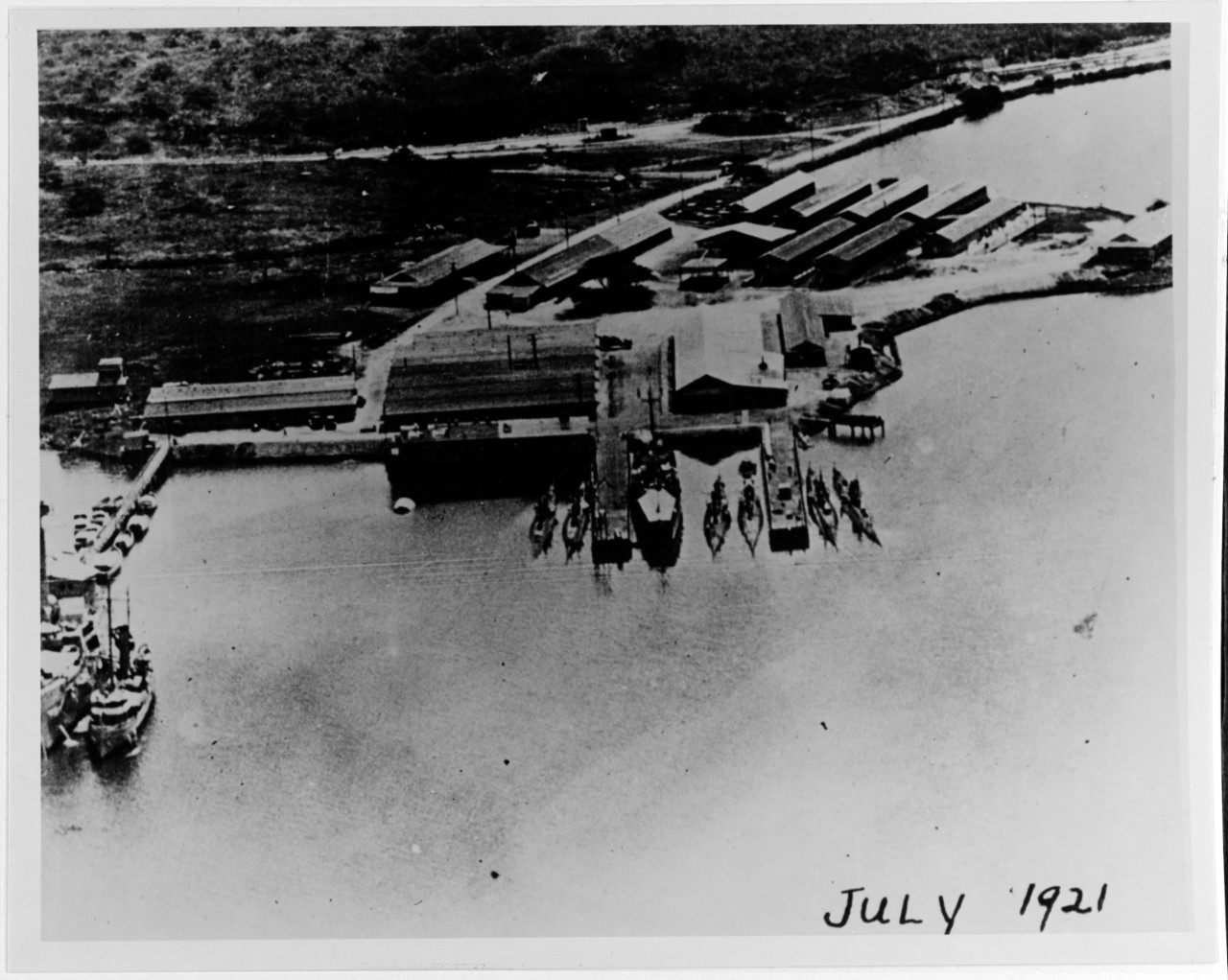
Pearl Harbor is an excellent location for a naval base and can be made a splendid haven, providing anchorage for many vessels. We have now a naval station and a thousand-foot dry dock, with excel lent facilities for docking and repairing ships of the largest size. But this is only the beginning of the development that should be carried out there. More berthing space, shop and storage facilities are needed for the upkeep of a large fleet. Dredging around Ford Island, so ships can pass to the north and east, will open up an extensive mooring space which will provide anchorage for many more vessels and will also enable capital ships to reach the docks with greater ease. Owing to shoals and shallow water around this island we are utilizing only a small part of the area in Pearl Harbor, which, with dredging, can be easily made to accommodate many more vessels, and with additional docks, warehouses, and repair shops, and the use of other harbors nearby, there can be developed in Hawaii an operating base which will accommodate a fleet of any size.
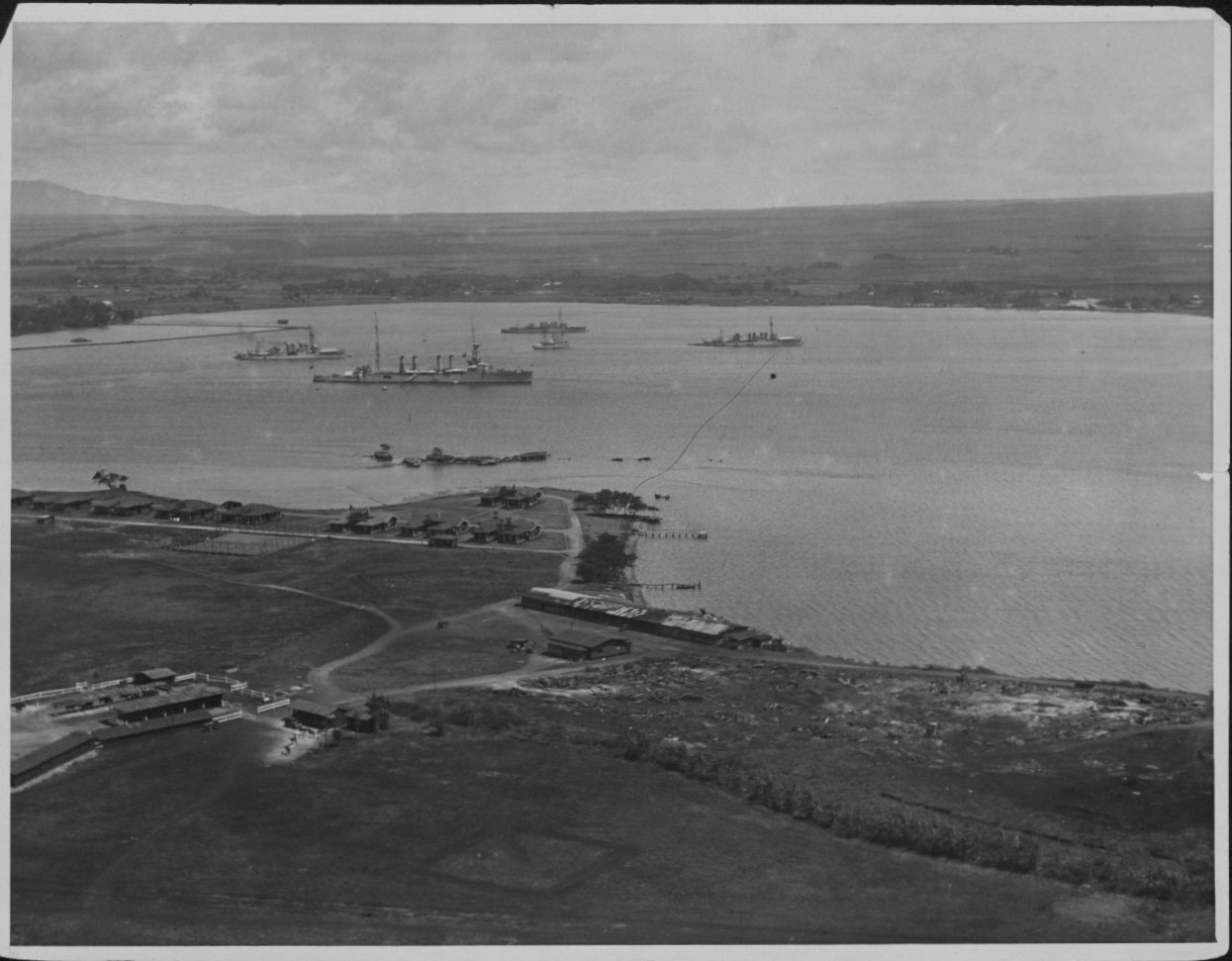
Hawaii is the key to the Pacific; its strategic location is well recognized; its possibilities have been carefully studied and set forth by naval experts; and its development on a broad scale as a fleet operating base cannot be too strongly urged.”
TT
The second significant change listed in the Secretary’s report had a more immediate impact on the new couple.
In a section requesting funding increases, the Secretary notes:
“Congress at its last session made a large increase in the pay of the officers and men, which necessitates a large increase in the estimates. It also made a new departure by authorizing the payment of transportation for the families of officers upon assignment to new duty and the transportation of their furniture. This automatically compels me to make larger estimates.”
At the completion of his submarine R22 fitting out and initial running in period, the Young family would find out how important the decision to fund transportation of their furniture and that pay increase would become. Their Navy adventure was about to really begin.

 theleansubmariner