Mac Note: If you are a big fan of progressivism and socialism, stop reading right now. This is one of those rare times where I invoke writer’s privilege – after all, it is my blog
One other thing: Some of the pictures are pretty graphic. SO, if you are easily upset, just another reason to pass this post on by. I won’t be offended, I promise.
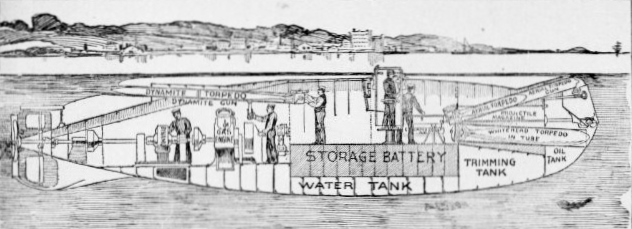
I was looking for an inspiration on submarine building this morning. I use a number of research sources and an article came up about The Submarine Boat Company. It was a fascinating find that dates back to 1922. As I have written about before, the 1920’s were difficult for the US Navy and the industries that were reliant on the navy for contracts. The Electric Boat company surely was suffering in the post war period and had branched out into a number of non-navy endeavors. During the frenzy of WW1 when new ships were being built at a dramatic pace, EB branched out beyond its submarine building to provide cargo ships to the war effort.
The Submarine Boat Company
The Submarine Boat Company did not build any submarines, its name was given from its parent company Electric Boat Company, which was started in 1899 by Isaac Rice. The Electric Boat Company initially built submarines based on John Philip Holland designs. (i.e. The USS Holland and the A Class.) These submarines were built at Lewis Nixon’s Crescent Shipyard in Elizabeth, New Jersey. Electric Boat Company first submarine was the USS Holland, commissioned by the United States Navy on April 11, 1900, becoming the first US Navy submarine commissioned.
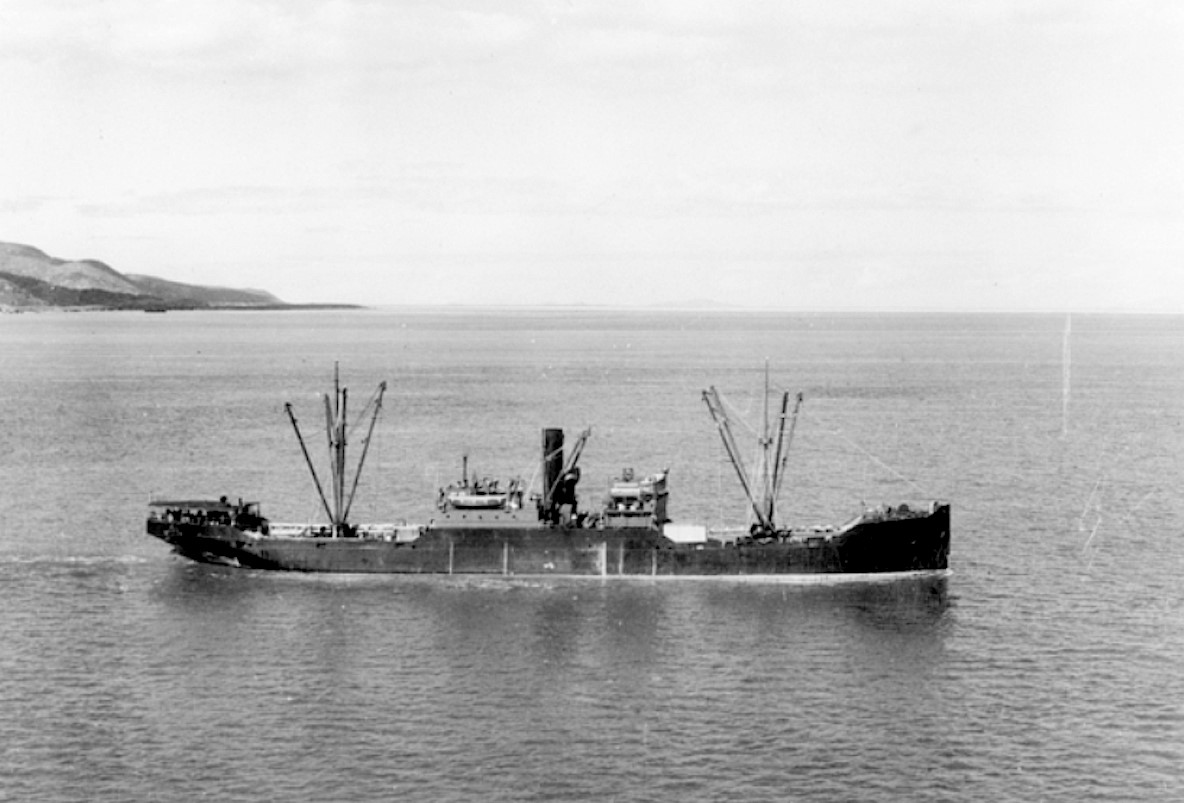
The Submarine Boat Company operated the Transmarine Corporation (Transco) or Transmarine Lines a shipping company from 1922 to 1930, with 32 ships and 29 barges they had built. Providing east coast, west coast, Texas, Cuba and South America with cargo shipping services. With the 206 DWT barges working on the New York State Canal System with five tugboats. Barges moved cargo from New York City to Buffalo, New York in seven to nine days.
Famine
In 1921, 30 million people in Communist Russia faced starvation. They froze, were lice infested, and diseased. Whole villages disappeared. Nevertheless, the Bolshevik Government often hesitated in sending relief in its drive to stay in power and bring about a new international social order. Foreigners were seen as agents of the west that were trying to subvert the new government. The revolution in Russia was meant to displace the wealthy and redistribute the wealth to the masses of peasants.
This was the first large scale attempt to redistribute wealth. Firey voices and convincing con men pushed the poorly educated people into a frenzy of revolutionary zeal. The ultra rich probably manipulated the system for centuries before the popular uprisings swept them from power. The richest fled the country for friendlier environments and purges began that eliminated those that were foolish enough to remain. But like any revolution, the systems that existed to maintain the infrastructure failed at a rapid rate. From industry to agriculture, the ability to maintain public works and support systems failed.
American Relief Administration and Russia
https://guides.hoover.org/ARA_SovietRussia
The American Relief Administration Russian operational records document the US-American relief mission to Soviet Russia during the famine of 1921–1923, in which more than six million people perished. The massive American intervention, which brought lifesaving food and medicine into the stricken country, rescued millions. Since its founding in 1919, the American Relief Administration (ARA) had already administered relief to seventeen countries in Europe and the Near East. The organization’s operations in Soviet Russia, however, were unprecedented in their scale and in the inclusion of a medical relief program.
Vladimir Lenin, the creator and first leader of the Soviet Union, had denounced Tsarist Russia for holding Russians and non-Russians in a “prison of nations.” His new Soviet Union would unite the exploited masses of the old Tsarist lands in a country that was “national in form, socialist in content.” The economic and political systems were to follow a socialist line of development in the pursuit of leading the people to communism, but the culture and traditions of the individual Soviet republics would be allowed to continue. The Russification of the Tsarist era was over, as was the Russian chauvinism that Lenin despised.
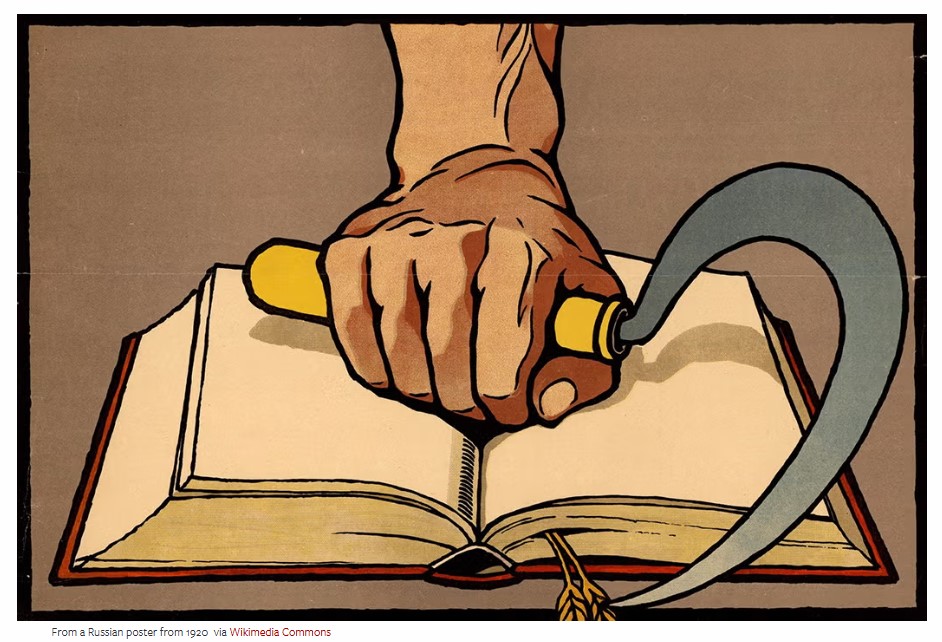
But like many revolutions, things didn’t work out so well in the beginning.
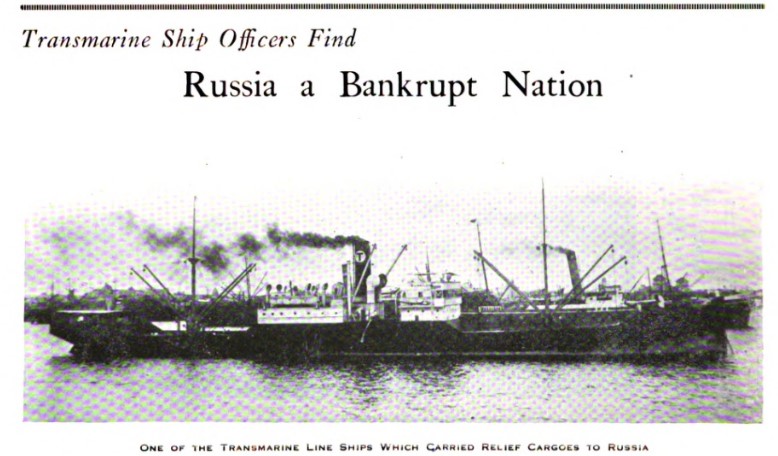
The Transmarine Line was one of the shipping companies that was engaged in bringing relief to the starving people in the USSR.
From an internal publication called Speed Up published by the Submarine Boat Corporation, Newark Bay Shipyard, Newark, N.J.:
Russia a bankrupt nation
SHIP captains of the Transmarine Line vessels returning from Russia are gaining first – hand information of conditions at the Russian ports. From these accounts it is quite evident that the utter demoralization of the Russian Government, and degradation of the people, is by no means exaggerated in our daily press. Several of the Transmarine ships brought cargoes of relief goods to Petrograd and Reval, while the balance went to Odessa and Novorossiysk, but north or south the story was the same, with the exception that probably in the south conditions are worse.
Actual conditions in the famine district, known as the Volga wheat region, where the famine has claimed its greatest toll, can only be pictured from the stories of American Relief agents returning. Visitors are not allowed beyond the city limits.
At Reval and Petrograd the stevedoring was done by medical students, art students, all classes of women; in fact, by a majority who were little used to manual labor. Under the Soviet regime there is little maritime protection for vessels in the Gulf of Finland and operating in the harbors of Petrograd and Reval. There are no buoys to chart the channel, and there is no attempt to protect docks, or ships from the hazards of collision with obstructions or other vessels. There are rumors of mines, but none were sighted.
It is difficult for American shippers now to come alongside of the loading docks, as muddy deposits have been allowed to block the channel. The docks and warehouses are full of American Relief material, and American representatives have had difficulty in eliminating pilfering. The sanitation systems of Petrograd Reval – and the same is true of Odessa and Novorossiysk are completely broken down. Sewers and drains no longer function. In the north the demand for fuel was so severe that the wooden blocks in the pavements were ripped up in large sections and burned. Where ever a peasant could steal a loose board from a warehouse, a public building, or a palace, he did not hesitate to take it. The severe winters evidently numb his conscience. Despoilation is not to be considered when warmth is wanted.
From the people’s faces it is reported that there was little evidence of starvation in northern Russian ports, and where money is worthless and manufacturing at a standstill, one of the prime interests of the people is to get enough to eat, regardless of the method or ethics involved. Black bread seems to be the principal food in the cities. But Petrograd and Reval are not all of Russia. In Odessa, when the grain trucks move through the city streets children follow in their wake to pick up the loose kernels that sift through the bags and drop on the wayside. As opposed to the people of Petrograd those in the south bear evidence of want, and without exception the children are emaciated and very miserably clothed.
The changing of an American dollar into Russian rubles is more or less of a civic event, and to the crews of the T Line ships this is an interesting experience, as the trader of a dollar receives 3,000,000 rubles for his one American greenback. One may judge the difficulty of a Russian workman to make out a living when it is considered that stevedores are paid one and a half million rubles a month, and the cost of one meal of cold meat amounts to 27,000,000 rubles The price of jewelry in rubles represents an enormous amount, but in dollars one can purchase a pure gem for about one – eighth of its value in America. Paper money has become of less value than the paper it is printed on, and now the smallest units printed are 10,000 rubles, one American penny being equal to 30,000 rubles.
The Soviet officials, while cooperating with the American Relief Administration in the disposition of food and stuffs and medical supplies, are extremely suspicious of every foreigner in the country, and for one to speak in any critical manner against the existing government in rather a dangerous procedure. All visitors are under surveillance, more or less, and very few are ever granted the right to travel about without fear of interference.
In all the cities there are hundreds of factories, but very few, if any, are in operation, owing to lack of morale, deterioration of machinery and insufficiency of capital. The foreign investor who may eventually rebuild the manufacturing industries of Russia has little guarantee at present that he would receive any protection for his investment, and therefore there is but little foreign money available to rehabilitate the factories and railroad equipment.
There are no lights in the cities at night, and one must travel at his own risk through the city streets. The risks involve several considerations; first is the liability of injury or death by highwaymen, and the other by accident, as the streets and sidewalks are in a deplorable condition, full of holes, some several feet in diameter, over which there is no light or warning of any kind.
To the visitor today Russia as a nation is completely bankrupt, not only financially, but morally and industrially. There is little hope for rehabilitation at all, until the people accept the principle that work is their own salvation, and that if one does not produce, he cannot exist.
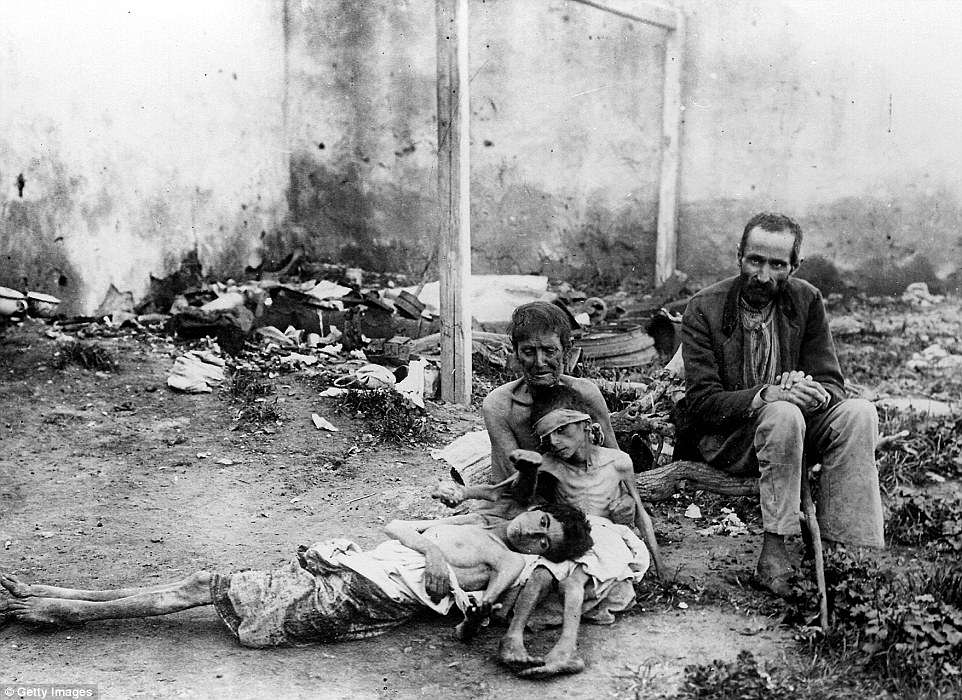
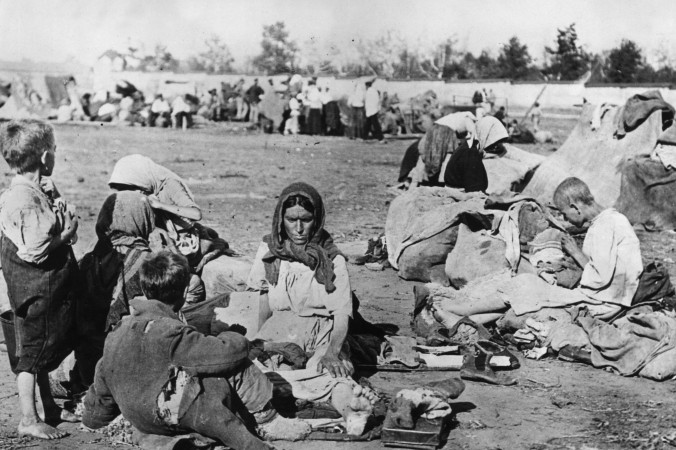
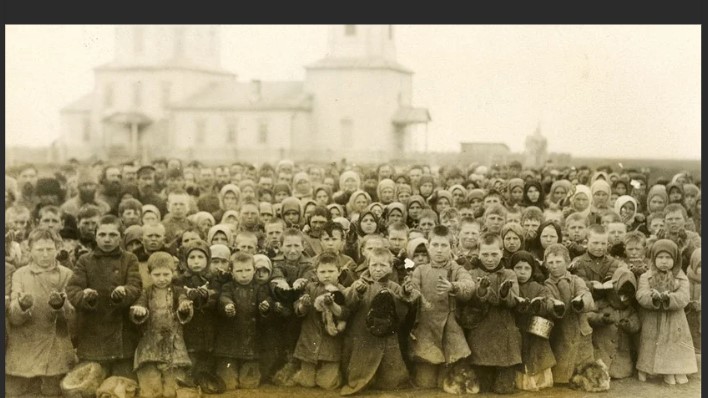
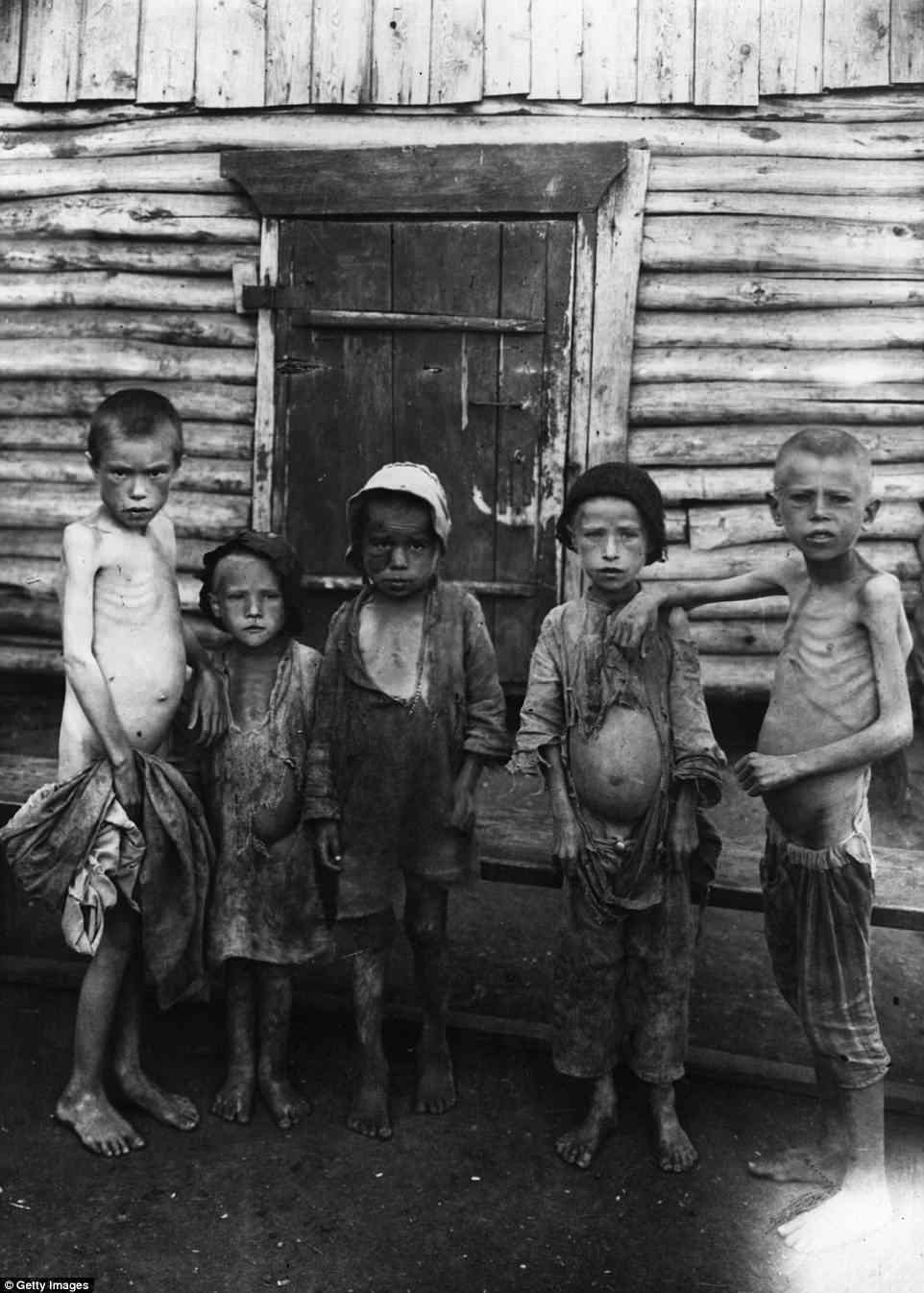
(Mac Note: I was tempted to include the stories about the cannibalism that was rampant, but the story was gruesome enough without that. You are welcome.)
Everything old is new again: “You say You want a Revolution”
Honestly, I used to hate that song. I pretty much have never liked Lennon and the song they wrote during the last culture war drove me further away from him.
You say you want a revolution
Well, you know
We all want to change the world
You tell me that it’s evolution
Well, you know
We all want to change the world
I watch the news to try and keep up with what’s going on in the world. I rarely do anything political on the blog since the world is so divided now. A number of years back I lost some regular readers and someone who had been a lifelong friend because we just weren’t in the same place. But this story today was something that just hit home hard.
A hundred years ago, an undereducated population was conned into believing socialism would remove the tyrants, redistribute the wealth of the nation, provide housing and food to the people who were in the most need and get rid of oppressive police states. It was supposed to bring a utopia unlike any other system had known and free the people to live their best lives.
And it was all complete bullshit.
Those same voices are crying out to the people today promising the same old garbage.
Just give us your votes and your support and we will have a revolution like you’ve never seen. But I see something that many of those people don’t. The ones arguing the most about taking from the rich are the ones who ride around in private jets and sleep in luxury hotel rooms. They have chauffeured limousines, fat bank accounts and many wealthy friends who prop them up. They speak the same words and lie with the same ease as their socialist predecessors. And if they are successful, we will find out that their methods are as bankrupt as their promises. They will disarm the population first and then replace the security forces with people of their own.
I hope I don’t live to see it.
But if I do, believe me when I say I will not go quietly into that good night.
The people on the progressive left probably need to remember that there are always two sides of any revolution.
And our side strongly believes in the Second Amendment.

 theleansubmariner
Amen!
Mac, the lyrics of the song seems to make you and Lennon (John) on the same side :
But when you talk about destruction
Don’t you know that you can count me out
But if you want money for people with minds that hate
All I can tell you is brother you have to wait
You tell me it’s the institution
Well, you know
You’d better free your mind instead
But if you go carrying pictures of Chairman Mao
You ain’t going to make it with anyone anyhow
I always though the message of the song was not “we need a revolution”, but rather “be careful what you wish for”.
ICFTBMT1(SS) Maxey, USN (retired)