For many years after my dad died, I kept a few mementos of his on my desk.
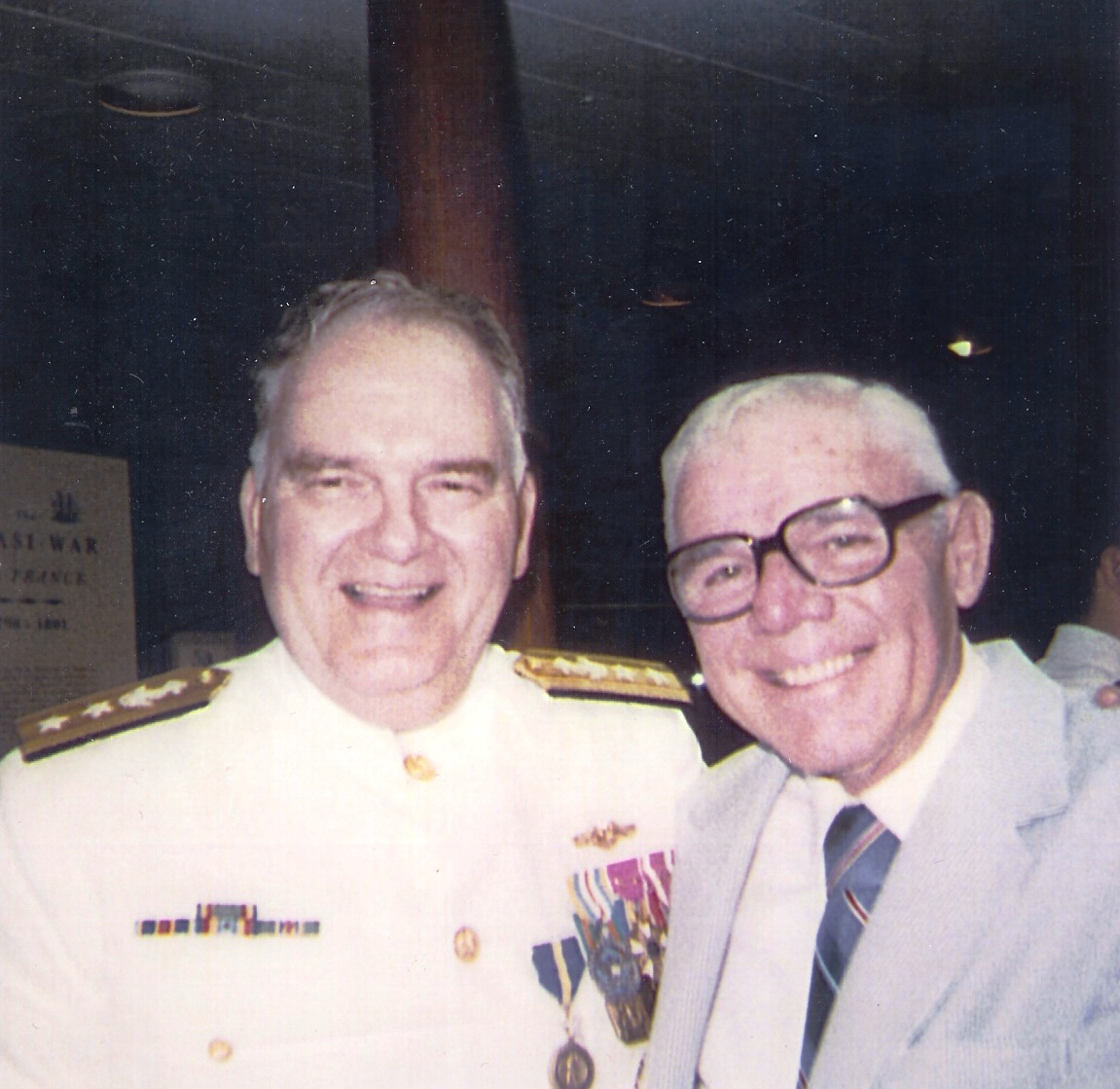
Mom had given me his wallet among other things and in the wallet was his driver’s license, a card from his days as a Red Cross volunteer, a veteran’s card from his discharge as a navy man and a laminated Navy League membership card. When Debbie and I moved back to western Pennsylvania, I followed a family tradition and joined the Navy League. The Pittsburgh Council was pretty large on paper but like many organizations, a small amount of people was actually doing things. I did find a home though and became the Vice President of Education which was right up my alley. I stayed in that role for a number of years until eventually I became president. That is when I really started to understand what made the NL unique.
From our friends at Wikipedia:
The Navy League of the United States, commonly referred to as the Navy League, is a national association with nearly 50,000 members who advocate for a strong, credible United States Navy, United States Marine Corps, United States Coast Guard and U.S. Merchant Marine.
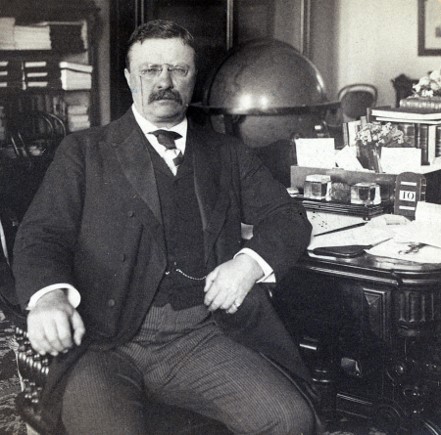
It was founded in 1902, at the suggestion of Theodore Roosevelt. The Navy League describes itself as “a civilian organization dedicated to the education of our citizens, including our elected officials, and the support of the men and women of the sea services and their families.”
The mission of the League:
- To foster and maintain interest in a strong Navy, Marine Corps, Coast Guard and Merchant Marine as integral parts of a sound national defense and vital to the freedom of the United States
- To serve as a means of educating and informing the American people with regard to the role of sea power in maintaining strong defenses.
- To improve the understanding and appreciation of those who wear the uniforms of our armed forces and to better the conditions under which they live and serve.
- To provide support and recognition for the Reserve forces in our communities in order that we may continue to have a capable and responsive Reserve.
- To educate and train our youth in the customs and traditions of the Navy, the Marine Corps, the Coast Guard and the Merchant Marine through the means of an active and vigorous Naval Sea Cadet Corps
I’ve done a number of presentations about the league and its founding.
In 1902, the United States was just beginning an expansion phase that would make it a global power. Teddy Roosevelt had high ambitions but realized that we needed to project power beyond our shores to make that vision a reality.
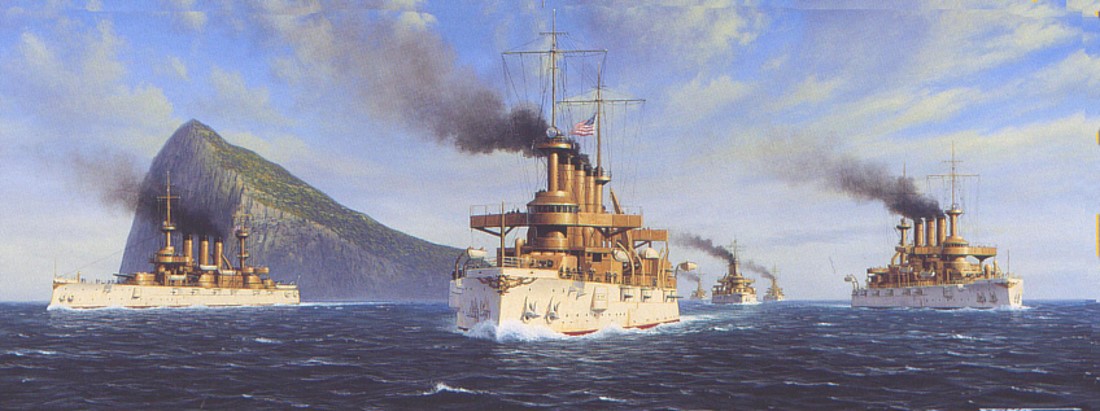
“It seems to me that all good Americans interested in the growth of their country and sensitive to its honor, should give hearty support to the policies which the Navy League is founded to further. For the building and maintaining in proper shape of the American Navy, we must rely on nothing but the broad and farsighted patriotism of our people as a whole.” Teddy Roosevelt
Why a Navy League?
NAVY LEAGUE OF THE UNITED STATES, a society founded on December 27, 1902 which according to its charter of incorporation has for its purpose “to acquire and spread before the citizens of the United States, through branch organizations and otherwise, information as to the condition of the naval affairs and equipment, and to awaken public interest and co-operation in all matters tending to aid, improve, and develop their efficiency.
Leagues Around the Globe
“It is well known that Navy Leagues of England, France and Germany are exerting powerful influences in the upbuilding of the navies of these countries and it is desired to build up similar influences in support of the United States Navy”
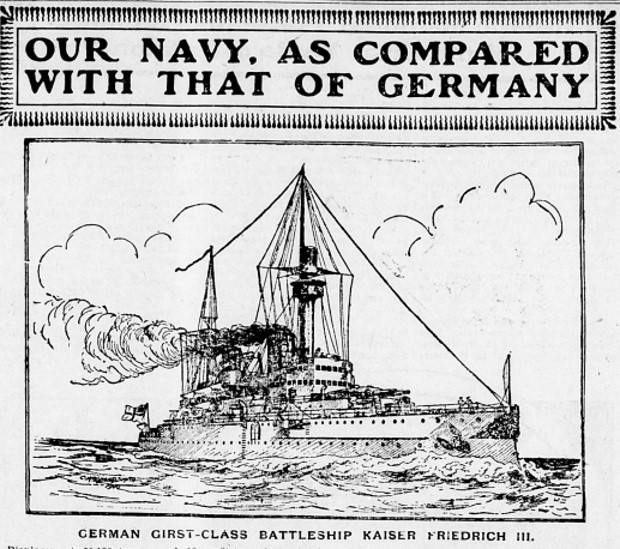
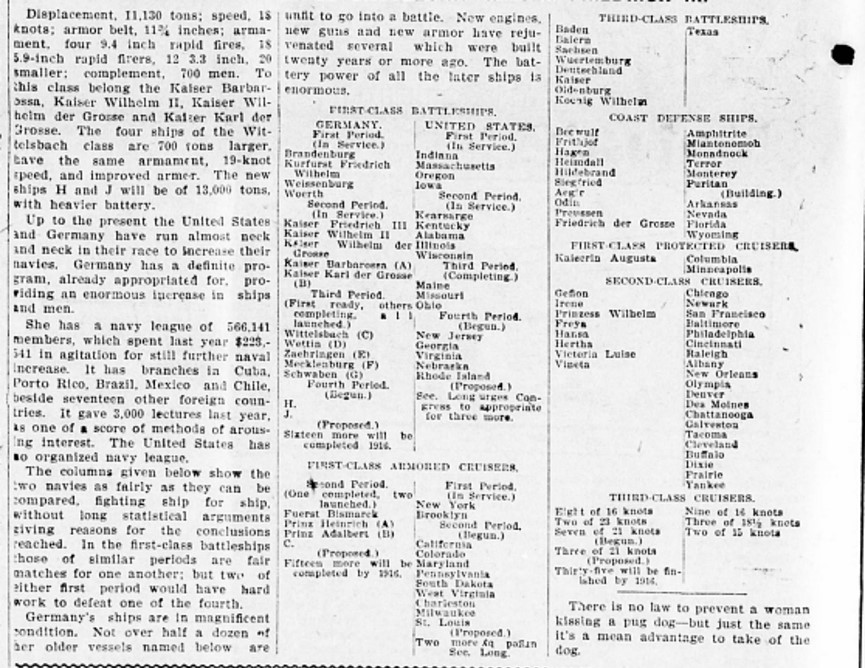
President Roosevelt had looked around the globe and saw that some of the countries that we would be in competition with had already developed their own support structures. Germany, for instance, had established local councils of their own navy league and driven the importance of individual participation all the way down to school children. Schools held fund drives where children would donate pennies towards purchasing new battle cruisers. Of course, there were large drives with the parents and businesses, but the involvement at all levels was the point. A naval league could involve people in the interior of the country that would probably never see the ships that resulted. But like every nation, sea going commerce and power were building blocks towards an international presence. its easy to forget that Germany was at one time an empire that had a presence around the globe. Having a strong navy was paramount to supporting the free flow of goods and services.
WW1
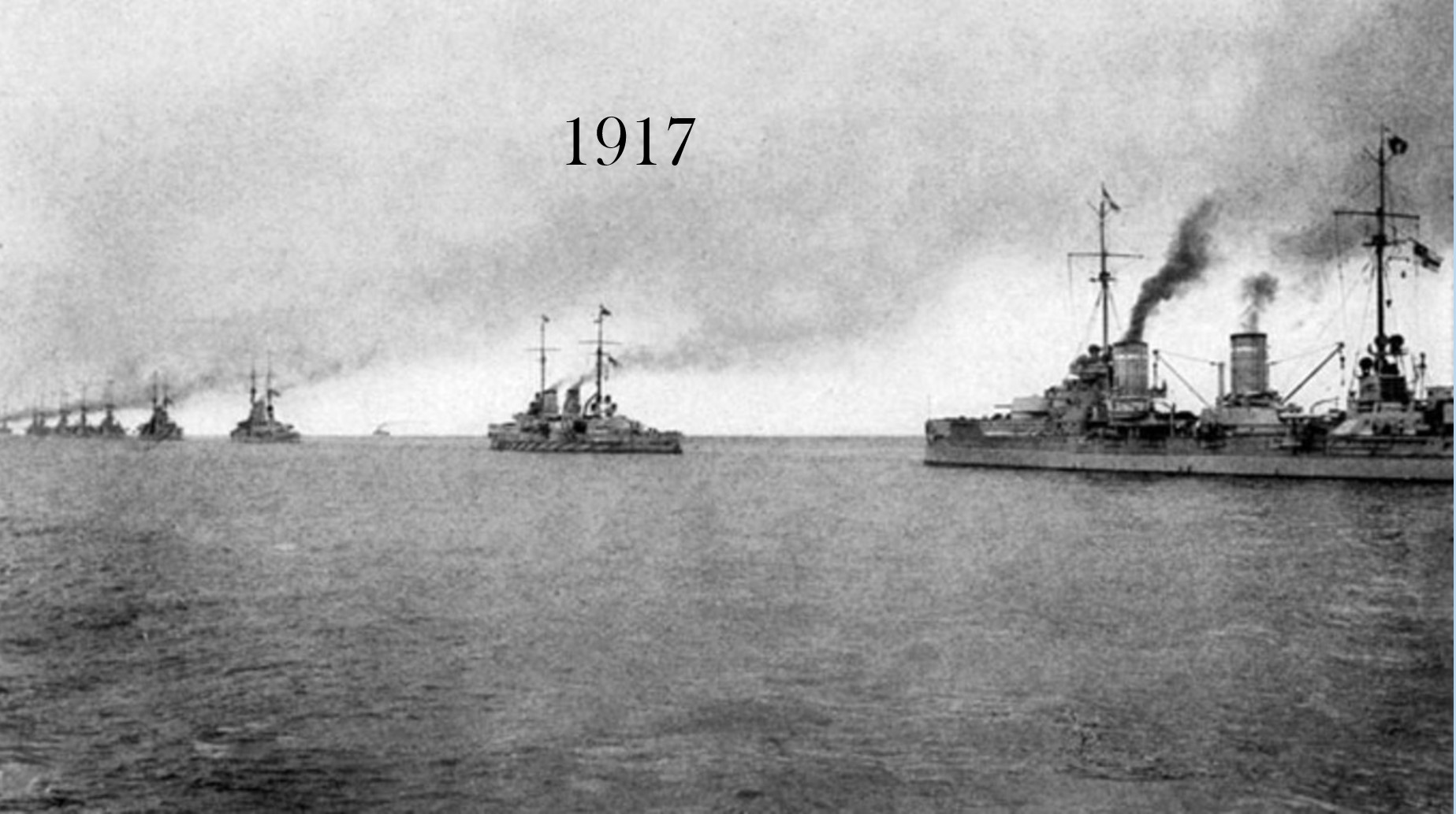
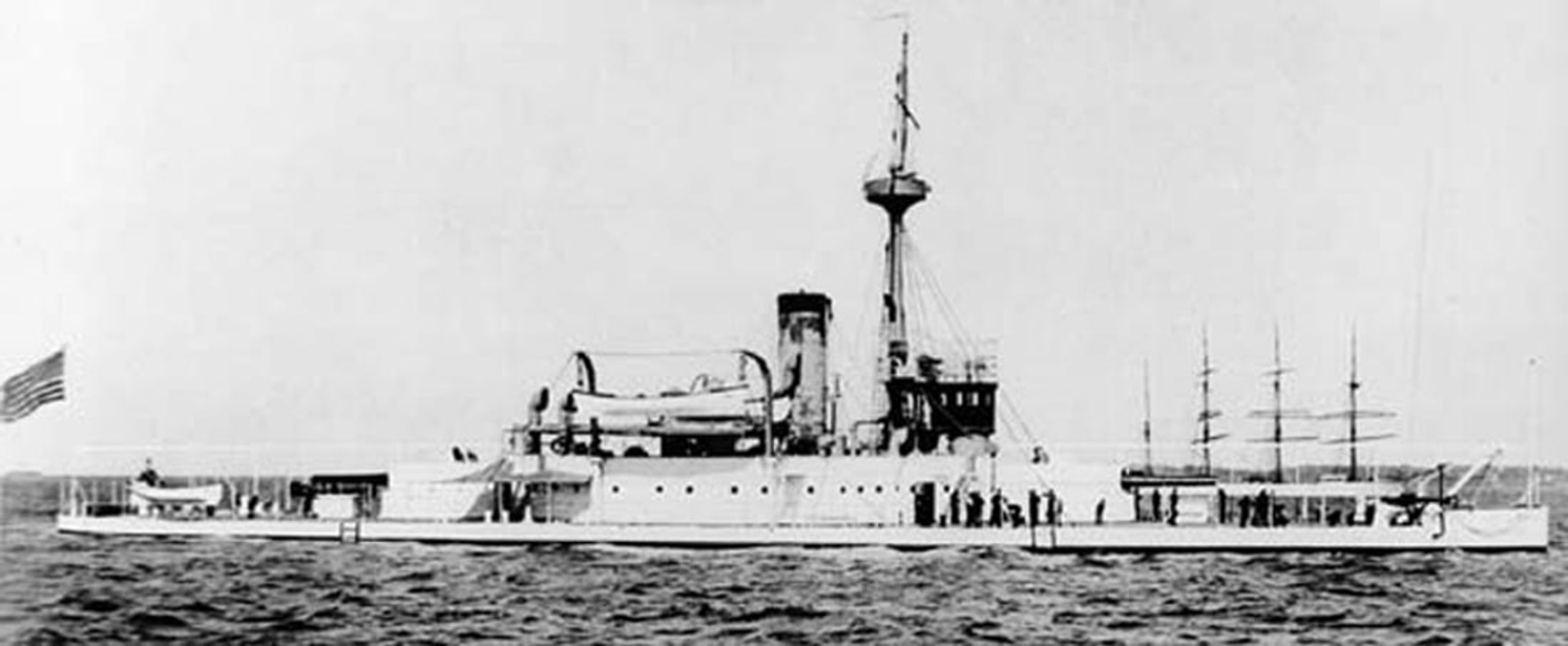
The United States had made some attempts to modernize prior to our entry into the war. Of course, there was a competing vision at that point since Wilson had campaigned on keeping us out of the European war. Our fleet was woefully under gunned and undermanned. In fact, when my Grandfather Mac was sent to sea, it was on an old monitor named the Amphitrite. The ship was so low to the sea and underpowered that she was constantly in danger of swamping
World War 1 brought many challenges and opportunities to the Navy League. The league wanted a voice in matters of the navy, but the Secretary of the Navy Josephus Daniels was not someone that desired their voice or input. They quickly became at odds because of personality conflicts between him and the NL leadership. At one point, he became so offended that he banned them from most of their traditional interactions with active-duty personnel. Undeterred, the league continued in its traditional role of trying to educate and influence members of congress. I have a personal bias against much of what Daniels did. But fortunately, in a constitutional republic, leadership changes frequently enough that no one person can last forever. In many ways, that was a blessing for the navy.
Women’s Suffrage found a new place to raise awareness
Washington Naval Arms Limitation Treaty 1922
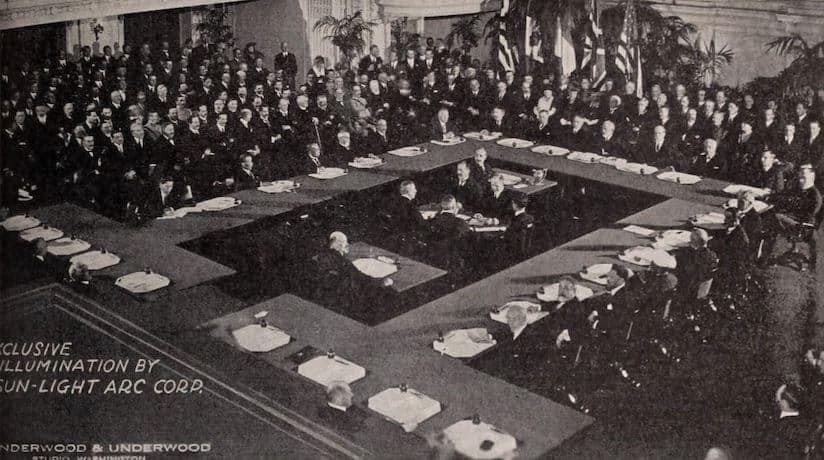
“The Contracting Powers agree to limit their respective naval armament as provided in the present Treaty.”
The Washington Naval Treaty of 1922 was well intentioned but, in many ways, probably made the march to the next war inevitable. While the size and weaponry of the last conflict were limited, the treaty opened a Pandora’s Box of new weapons and tactics that would make the Second World War even deadlier than the first.
The Navy Leaders and the members of the Navy League both had a vision of Naval Supremacy. Without so much as saying so, they also had a fear that the treaty disease would shrink the Navy to such a small size that it would be unable to meet the threats of a two-ocean war. Seeing so many first-class battleships destroyed, and new ones cancelled had to be a frightening prospect for this group. The country would in fact pay a price for the short sightedness of this treaty in the days following December 7, 1941. But in 1922, a plan was devised to make the navy more visible to the average person.
SO NAVY DAY WAS BORN
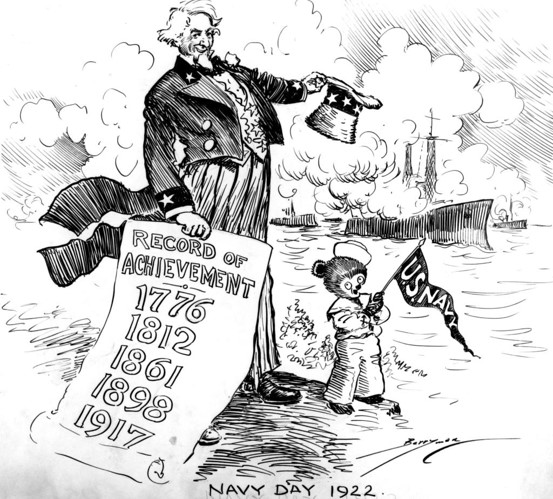
In the United States, the Navy League of the United States organized the first Navy Day in 1922, holding it on October 27 because it was the birthday of 26th President Theodore Roosevelt, who was a naval enthusiast/promoter of sea power and former assistant Secretary of the Navy just before the Spanish American War of 1898. Although meeting with mixed reviews the first year, in 1923 over 50 major cities participated, and the United States Navy sent a number of its ships to various port cities for the occasion.
The 1945 Navy Day was an especially large celebration, with 33rd President Harry S. Truman, reviewing the returning home American fleet in New York Harbor after victory in World War II. But something was about to happen that would change it forever.
An interesting video about the transition: https://www.msn.com/en-us/video/news/how-the-us-navy-went-from-6700-ships-to-just-300/vi-AA1GG1ta?ocid=socialshare
And just like that, Navy Day was broken
In 1949, Louis A. Johnson, second Secretary of the newly merged and created Department of Defense, directed that the U.S. Navy’s participation occur on newly established Armed Forces Day for the unified/coordinated uniformed services in May, although as a private civilian organization, the Navy League was not affected by this directive and continued to organize separate Navy Day celebrations as before.
In the 1970s, historical research found that the “birthday” of the earlier Continental Navy during the American Revolutionary War (1775–1783), was determined to be October 13, 1775, and so Chief of Naval Operations Admiral Elmo R. Zumwalt worked with the Navy League to define October 13 as the new date of Navy Day. However, Navy Day in the United States is still largely recognized as October 27, while October 13 is marked as the Navy Birthday. The period between these two dates constitutes a festive period of celebrations of the birth of the Navy.
The Current Situation
The global situation as I write this article is more dangerous than at any time in our history. The emerging technologies include weapons that could not have been imagined even in the wildest science fiction writer’s imaginations of just a century ago. Space is easily utilized now, and the depths of the oceans are becoming open to all manner of evil. Drones and artificial intelligence are quickly neutralizing previous strongholds at sea, in the air and on land. The struggle in Ukraine has ripped open any semblance of superiority on either side and revealed weaknesses in both strategy and technology.
From 1922 to 1941, the Navy league would remain a strong voice that kept the need for strong sea services alive. At the end of the second world war, they continued to remind the congress of the importance of maintaining peace through strength. Even as some voices tried to place the navy into a second-rate position, the Navy League kept up the pressure to ensure we had a strong enough force to counter each new threat. All during the Cold War and the conflicts that followed, the national level of the Navy League has continued to educate incoming members of congress about the painful lessons of the past. With the competing needs for human services and constituent desires (AKA PORK) our elected officials need constant reminders about the real threats in the world. Unlike World War 2, we will not have the luxury of playing catch up.
Our infrastructure is not there anymore. We have “BRAC”ed our way into a corner. Over 350 military installations have been closed in five BRAC rounds: 1988, 1991, 1993, 1995, and 2005. More significantly, we have closed or let fall into ruin much of our shipbuilding capacity. That includes civilian as well as military.

I would propose that we need the Navy League now more than ever
If we are to hold on to Theodore Roosevelt’s vision, now would be a good time to become more engaged and not less. But that will take effort on the part of the national organization and local councils. Have you considered how you can help?
Here is a starting point: https://www.navyleague.org/
Mister Mac
Navy League Member since 2013
(Second Generation)

 theleansubmariner