I’m still going through boxes of old paperwork and stuff I have saved over the years.
Some of the items include pictures and mementoes from my years in the navy.
One item that was in an old album was a faded copy of a Welcome Aboard letter from Charleston’s FBMSTC (Fleet Ballistic Missile Training Center).
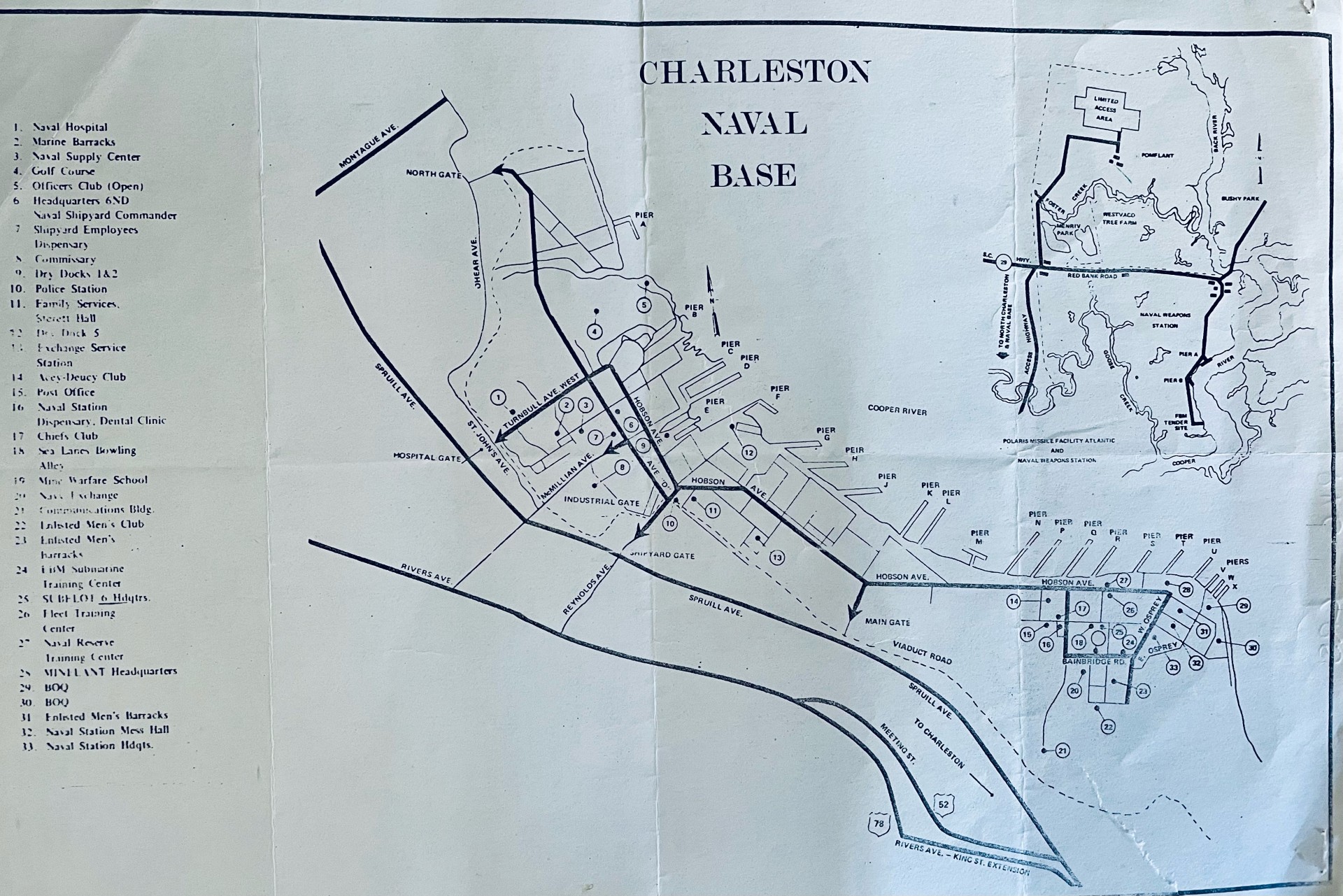
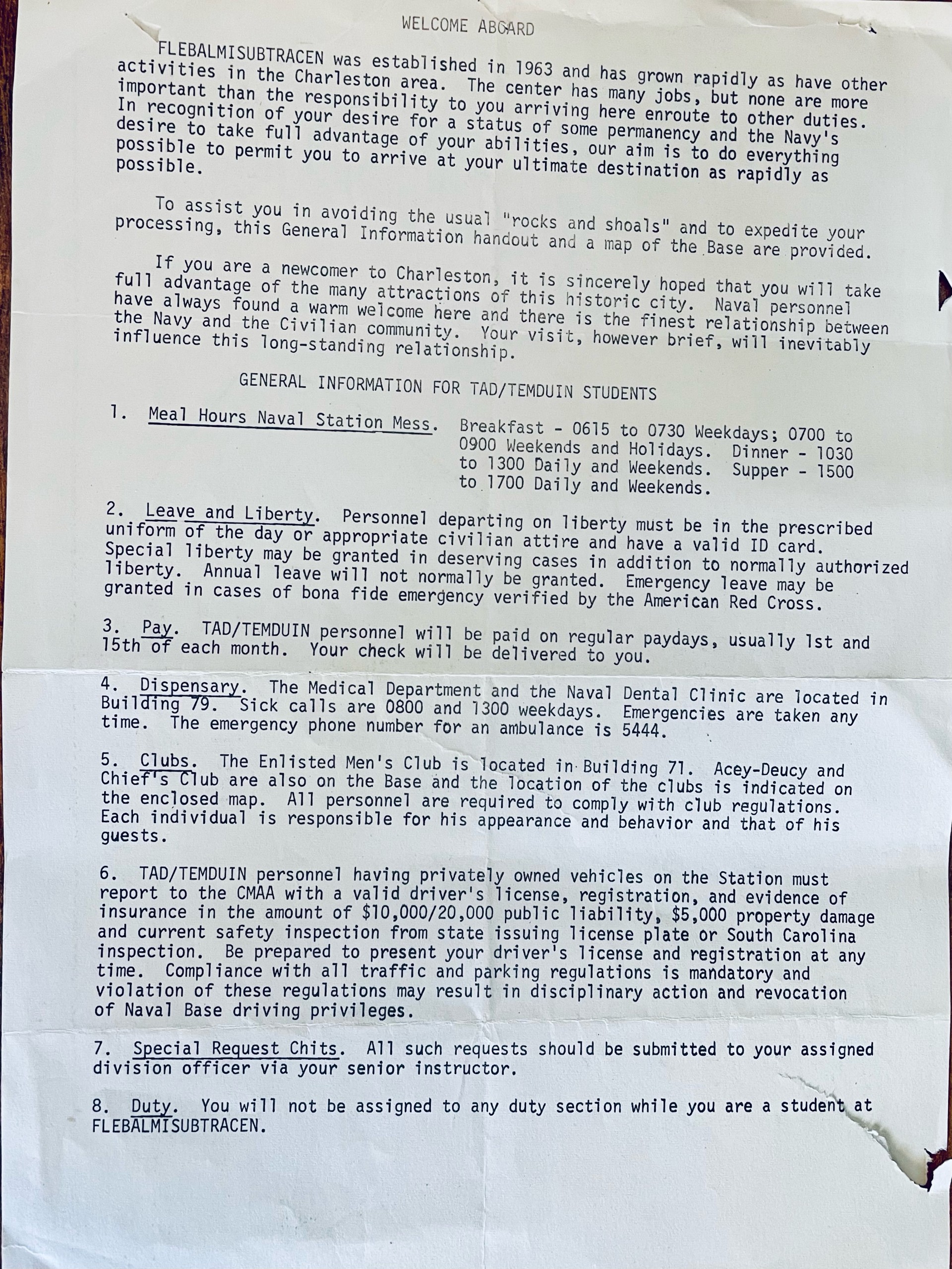
Since we have been back in the area, I have been to the waterfront area a few times and have looked for old landmarks where the base used to be. They aren’t that easy to find these days since so much of the base was turned over to the civilian industry. But Charleston was one of the most important bases during the Cold War. While her shipyard hosted many Fast Attack submarines, my belief is that it was the Boomers that gave her the primary mission. I know that the main east coast base is now at King’s Bay, but in my heart, Charleston will always be the place that I go back to when I think of my era as a Cold War warrior.
One of the Facebook pages I like to visit the most is the 41 for Freedom page. https://www.facebook.com/groups/28579577646
I’ve done a lot of posts about those boats and have a real affinity for the vision and work that went into the program. The very concept defied the logic and rules in place at the time. While nuclear power had been used for Nautilus and other boats, in many ways those boats were just extensions of the fleet boats that won the second world war. They could stay submerged longer and were faster for sustained periods of time. But their size and missions remained fairly close to later class diesel boats. And they cost a lot more.
Newer technology started creeping in, but sonar and radar were not as advanced as the propulsion system that drove the boats. What really changed the game was when the Russians put a small satellite into space and added a new threat to fighting wars.
I’ve discussed building the boomer program before but one thing about the entire concept was having two crew to man the boats – Blue and Gold.
Anytime you go to a gathering of submariners, one of the first things that happens is the partitioning off of what kind of submariner you were. The days of the DBF sailors are slowly dwindling down. Just like the brave men who sailed on diesel boats during WW2, the Cold War DBF sailors are sadly passing away. I’m a spry young 70-year-old and I have been watching the passage of so many folks from my generation. I hope we continue to celebrate their lives and achievements for as long as we are able but everyone of us has the same end of watch at some point.
The sad thing is that the same can be said about the 41 for Freedom generation. The sailing list grows shorter each year.
But the knock on FBMs for so many years was that those who sailed on them were “Part time” sailors.
There is some credence to that, but it doesn’t take into account the differences in the type of missions that were performed by Fast Attacks and Boomers. To be fair, I was both. I will readily admit to having seen a lot more of the world on my fast boats than on my boomers.
Over the years, I thought a lot about the mission and why boomers were actually better served by having two crews. The main mission of boomers was to never actually have to perform our main mission: deterrence. The enemy (and they truly were an enemy) had to be absolutely convinced that if they fired first, the reign of death that would follow would absolutely and completely render his homeland useless for a thousand years. Or more. This would come from multiple strikes from weapons with firepower unseen in the history of mankind. No living thing could survive the destruction that came unhindered from unseen locations all over the seas surrounding them. Millions of people would be instantly burned alive in a flash of white lightning and the survivors would be relegated to slow and painful deaths in the rubble that remained.
The submarine force then and now represents the most reliable part of the strategic triad. In this age, the vulnerability of the air force is made even prominent by the existence of electronic and kinetic weapons. The ability to intercede from space is not beyond the imagination either. Satellites and God knows what else are circling the earth in every imaginable dimension. Land based missiles have always been the weakest part of the triad since all of our ability to harden the silos is negated by increasingly powerful thro weights. Plus, the location of all of those silos is well documented by foreign agencies. You don’t actually think those spy balloons were somehow just blown off course, do you?
The boomer crews are highly trained and that buffer we call off crew is there for more than one reason. The time away from the boat allows the psychological tension to be relieved for an adequate amount of time. I remember after participating in my first missile practice shoot the stress we went through. I was pretty young and understood what our mission was. But feeling the missiles leave the boat made it a lot more real. When we got word back that all four landed as precisely as they did, I thought a lot about what it would have meant if they were actually armed and if we were actually at war. I had the honor of selecting one of the birds that would be used.
Later, after the actual launch, I thought about the guys who dropped the bomb on Hiroshima and Nagasaki. Yes, it was wartime and yes, I felt it was needed. But imagine how much you would have to blank out the suffering and destruction your hands help to create. Now magnify that with the potential destruction that would come from a full emptying of sixteen missile tubes with multiple warheads on ac one. I still have nightmares about that.
I had a great weapons officer on board the first boat. He was a Christian and I went to him aft struggling a bit with my internalized guilt. He reminded me that our first mission was to be ever ready to do the unthinkable to absolutely convince the bad guys we would deliver. That was the surest guarantee that our missiles would never have to be used. We talked for hours, and he convinced me that I shouldn’t quit. I’m glad he did. My life would be fundamentally different if I had.
I liked my Fast Attack life. When we went on missions, the tension was there but it was very different from the time on boomers. It was pure submarining without the distractions of carrying such a large unspoken burden. If you mathematically compare the days at sea between the two, there isn’t a whole lot of difference in the average comparison. Fast boats do get to stop every once in a while, in places most boomers can’t. I know every boat is slightly different and I am ready for the push back from those who spent way too much time at sea chasing too many shadows.
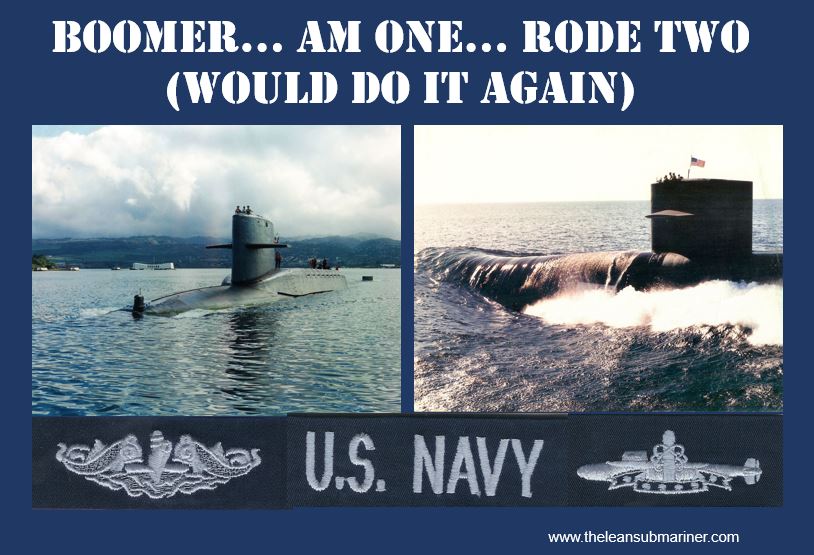
But I proudly wear my dolphins and my FBM pin with eight patrols. Both meant that I did something that less than 1% of the population ever did to ensure our freedoms.
Mister Mac

 theleansubmariner
I served on both fast attacks and boomers and enjoyed both.
Get Outlook for iOShttps://aka.ms/o0ukef
As always, Mister Mac, something well worth thinking about. I too have served on both. Also having missed the live-fire testing after the Alaska’s EOH in 2000-2001 and only having done WestPacs (with no IO) on my two fast boats, I haven’t had the immediate impetus to think about these things. Thanks for that. Seriously.
For those of you who might push back — different boats, different missions, same goal.
Well said Sailor