Port Call Alaska 1934 – Just Another Routine Port Call… Or Was It?
I love Alaska.

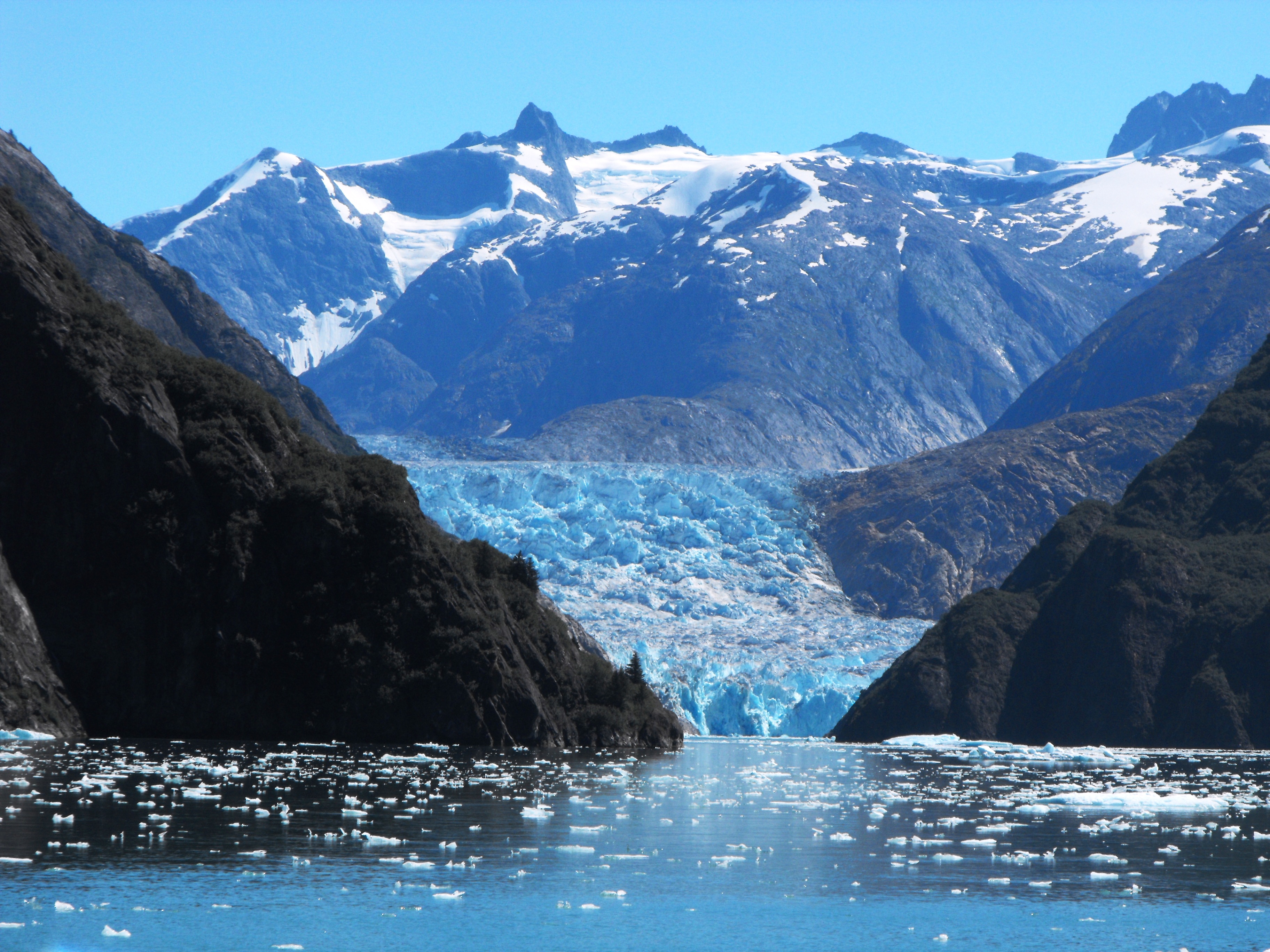
I had previously been on one boat that had travelled near the coast of the Last Frontier, but it wasn’t until many years later that I was actually able to see the forty ninth state up close and personal. Debbie and I took a cruise that traveled from Seattle through the inner passage and had a chance to stop off at several places along the way as part of the cruise.
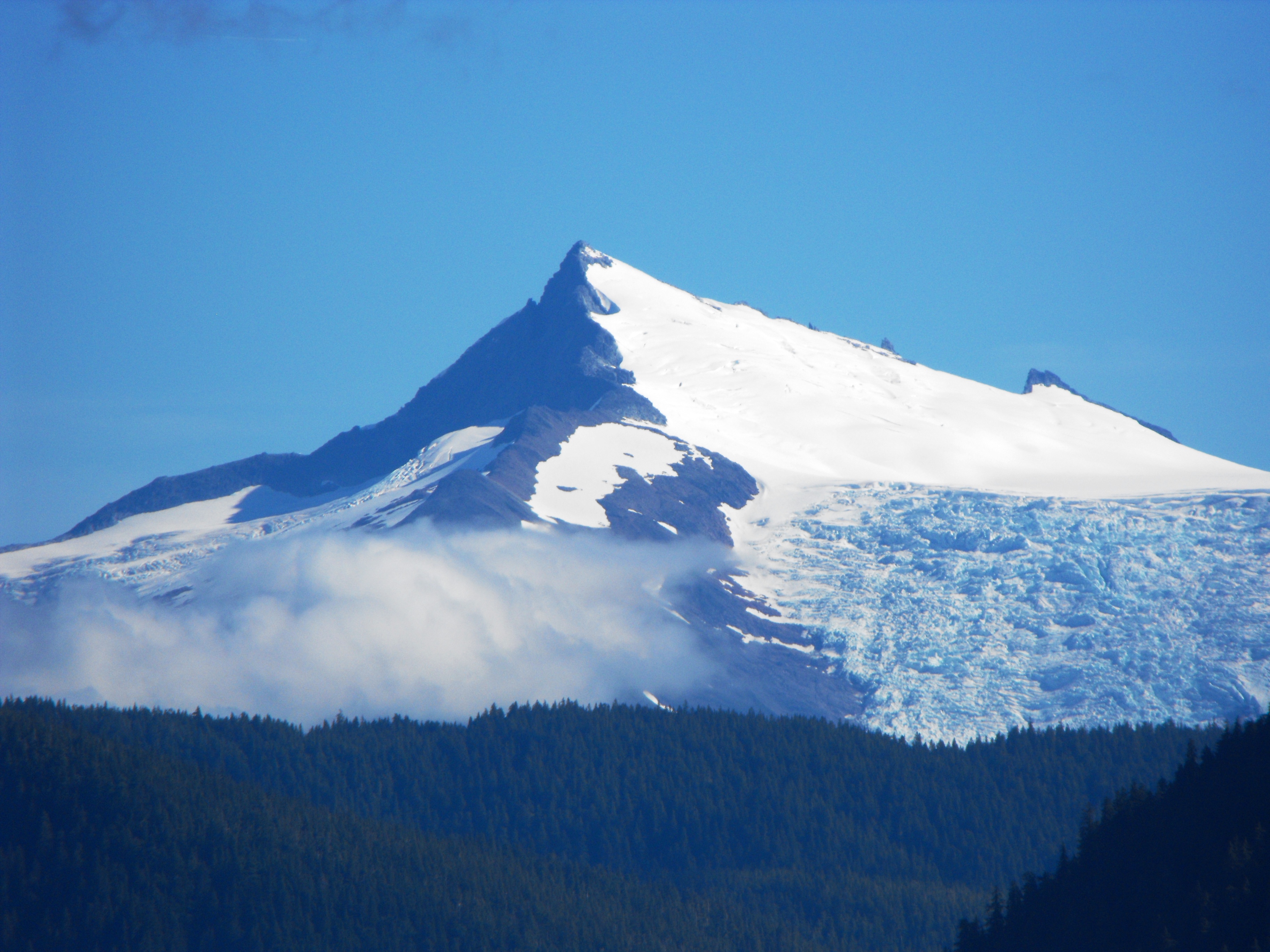
I really hope we get a chance to go back again someday but time and resources are always limited. There truly is nothing more inspiring to see than glaciers and the carved valleys where ships can sail in the bluest waters on earth. The wildlife is unsurpassed and just when you think you can’t say “wow” anymore, you round a bend and have to say it again.
I was cruising around the Library of Congress web site “submarine bureau” (my nickname, not theirs so don’t bother trying to look it up on your search engine) and found a great story about a submarine adventure in 1934.
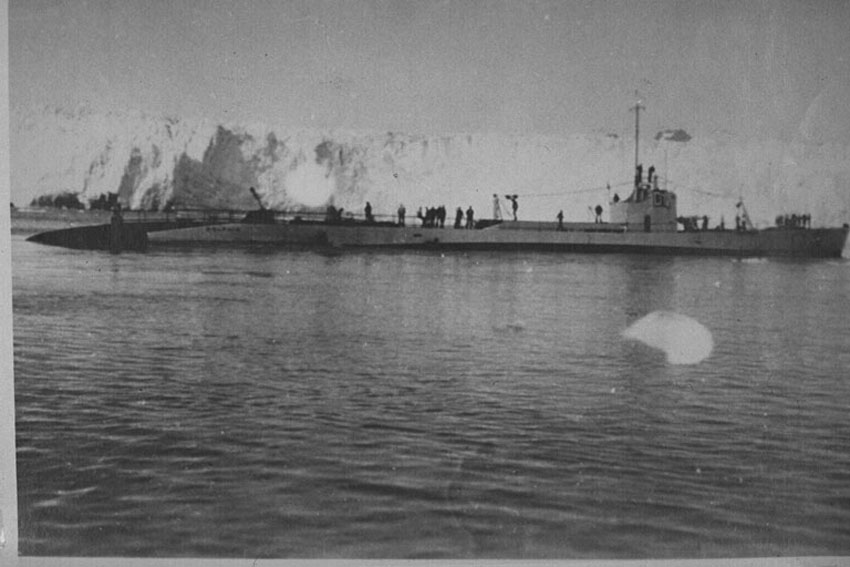
It was a series of newspaper articles from July of 1934 when a small submarine division and their mother ship, the first USS Holland submarine tender, which made a visit to Juneau and other Alaskan locations. The newspaper focused on the visit to the cities, but visits to the navy submarine historical archives clearly shows the boats were up to something else. The pictures of the boats in various waters around the territory tell a story all their own.
First submarine group visit.
This was the first time that a submarine group had visited this part of the country, and it must have been a very big deal. Having been on a number of port calls in my navy career, including to San Francisco for Fleet Week, I can tell you that a thousand memories came back to me of the fun and adventures we had.
Port calls are the reward sailors get for doing hard work in sometimes very harsh seas. They are great for the sailors and great for the host cities since the sailors come in with a lot of cash and a huge thirst for anything that has alcohol in it. I’d like to tell you we also get some of the local culture but that is probably not the first thing the average sailor thinks about when they are in their late teens and early twenties. Frankly, alcohol actually made be tied with something else for the single gobs, but that I will leave to your imagination.
The Daily Alaska Empire was the local Juneau paper and the whole edition was filled with articles and advertisements that focused on the visit. I selected a few of them to give you the flavor or the interaction between locals and crews.
To put this in context, you have to remember that the nation was still in the midst of a depression.
While Alaska had been spared some of the worst of the economic devastation, it was not without its own challenges. SO seeing a group of free spending sailors and officers on the horizon must have been areal blessing. Imagine having 1200 visitors come into a relatively small area at one time to party. It had to have been a pretty big deal. The total population in 1930 was just over 4,000 so having 1200 men on the combined ships visiting was also pretty remarkable.
Another thing that made Juneau a good place to visit was the end of prohibition. May 1 of 1934, Juneau greeted the return of legal liquor in the same way it endured prohibition – calmly. Sailors of that generation made port calls to a lot of countries that had not taken up the foolish attempt to ban liquor. But it had to have been nice for them to know that they were going to visit an American territory where the origin of the drinks was not so questionable.
My favorite quote from the series of articles comes from the Editorial:
“If there are those who might lift eyebrows at high spirits and lusty enthusiasm, we say: “Here are men who have spent years of their lives in training in specialized services, requiring a high degree of intelligence, skill and nerve. They are not mere gobs ashore for a carouse. They are the pick of the service, traveled men, if you please, who have observed life in the ports of the world. They are worth getting acquainted with.” So again, let us emphasize: “Sailors, Welcome! Enjoy Yourselves!””
https://chroniclingamerica.loc.gov/lccn/sn83045499/1934-07-27/ed-1/seq-1/
So here we go… Off to Alaska
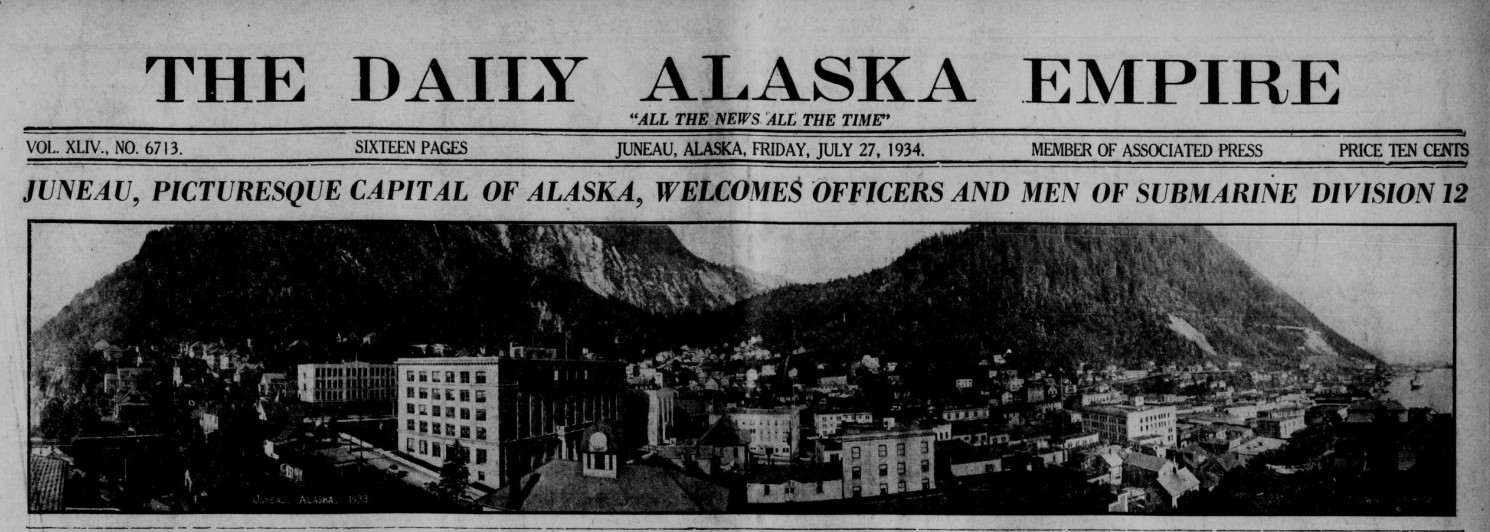
The Daily Alaska Empire, July 27, 1934
FLAGSHIPS AND SUBMARINES ARRIVE TODAY
Nine Naval Vessels to Remain in Port Until Next Monday
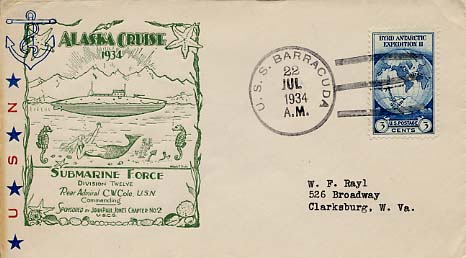
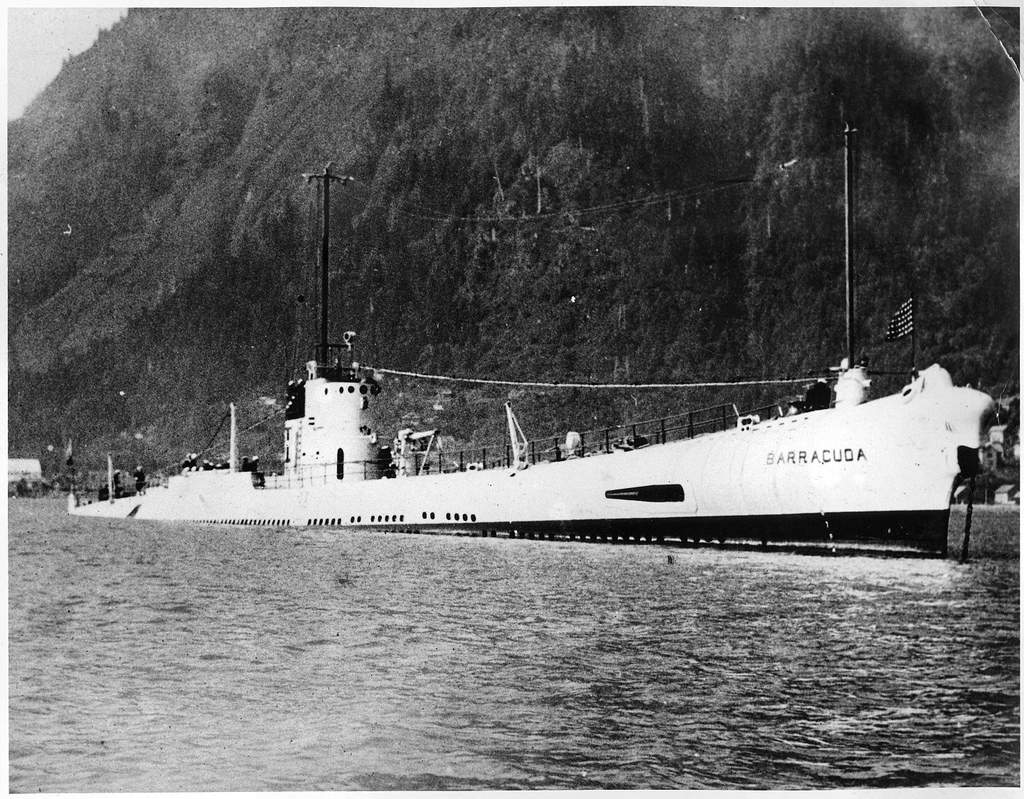
Led by the U. S. S. Bushnell, flagship of Admiral C. W. Cole, commanding officer of the. submarine forces of the United States Navy, the submarine mother ship U. S. S. Holland, and the submarines Nautilus, Bonita, Bass and Barracuda filed into Gastineau Channel this afternoon—between 1:30 and 2 o’clock, completing the ships of Submarine Division Twelve which will remain in port until Monday.
The flagship Bushnell tied up alongside the Government Dock while the Holland docked at the City Dock and the six submarines tied up alongside the latter, giving Juneau’s waterfront quite a metropolitan appearance.
Docking of the ships will add greatly to the convenience of visitors who call aboard the ships during their stay here, and eliminate the need of catching motor boats required to carry them back and forth while anchored in the stream.
The ships that came in this afternoon have visited Ketchikan and Sitka since their arrival in Alaskan waters and left the latter place yesterday morning bound for Juneau.
Courtesy calls were exchanged between Admiral Cole and Gov. John W. Troy this afternoon, shortly after the Bushnell docked.
Puget Sound and Alaska pilots who are accompanying the submarine fleet on its cruise of Alaskan waters are Capt. W. C. Ansell, aboard the U. S. S. Bushnell, flagship of the fleet; Capt. Ray Parwell, aboard the U. S. S. Holland, and Capt. Thomas Quinn, aboard the U. S. S. Narwhal.
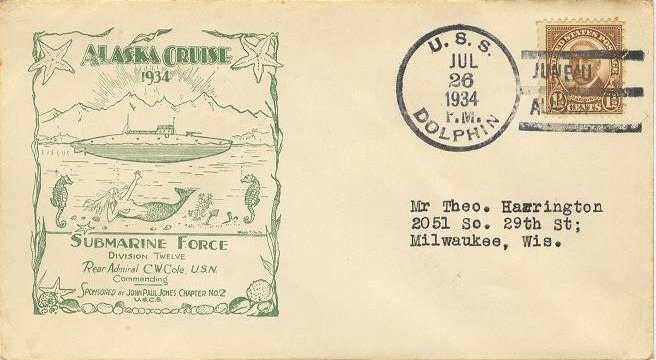
Another article captures the submarine story well.
Don’t They Look Peaceful as They Float in Channel, But in Wartime, They Do Things
Peacefully moored in the placid waters of Gastineau Channel this afternoon, six sleek, streamlined first line units of Uncle Sam’s fighting force, outwardly give little indication of their terrific war time effectiveness, or the astounding scientific and engineering development that has evolved the modem submarine from the little one-man hand powered submarine constructed by Dr, Cornelius Van Drebbel, a Hollander, which made a successful trip on the Thomas River in 1684.
A Sub In 1775.
Although Dr. David Bushnell, an American inventor and graduate of Yale in the class of 1775, nearly sank the “Eagle” in New York harbor during the Revolutionary War by the use of his one man submarine, “The American Turtle,” and Robert Fulton, another American inventor successfully demonstrated the blowing up of a brig in England in the presence of William Pitt, with a mine he had placed under the ship’s bottom by the use of a submarine, the underwater vessels failed to come into their own until the invention of the automotive torpedo.
Three Group Types
Modern submarines may be classed in three groups, fleet, minelaying and coastal. Fleet and coastal submarines use torpedoes as their chief offensive power. Mine laying submarines were found to be of great importance during the World War, for; in laying mines, the submarine was able to approach the harbor mouth unseen and lay down mine fields that either blocked the enemy or made it necessary for the enemy to delay the exit from the harbor until the mines were swept clear.
Coastal submarines are of great use in coastal defense or in operations at sea where fleet speed or long cruising radius are not required. The fleet submarine, of which the Narwhal in the harbor now is an example, though of long cruising radius, and speed are able to work with the fleet on long cruises, maintain station with the fleet in all weather, and act as a guard against submarine attacks from the enemy and take the offensive when the enemy is engaged, and also penetrate into the harbors of the enemy fleet and attack it, carry sufficient food, munitions and fuel for extended operations. The Narwhal carries food and supplies for more than 75 days, independent operation.
Blind, But Not Deaf
When completely submerged below the periscope, the submarine is blind, but not deaf, as numerous intricate devices pick up the presence of ships and large objects. The propagation of sound through water is more rapid and efficient than through air, because the water does not have so great a cushioning effect upon sound waves.
Huge Torpedoes
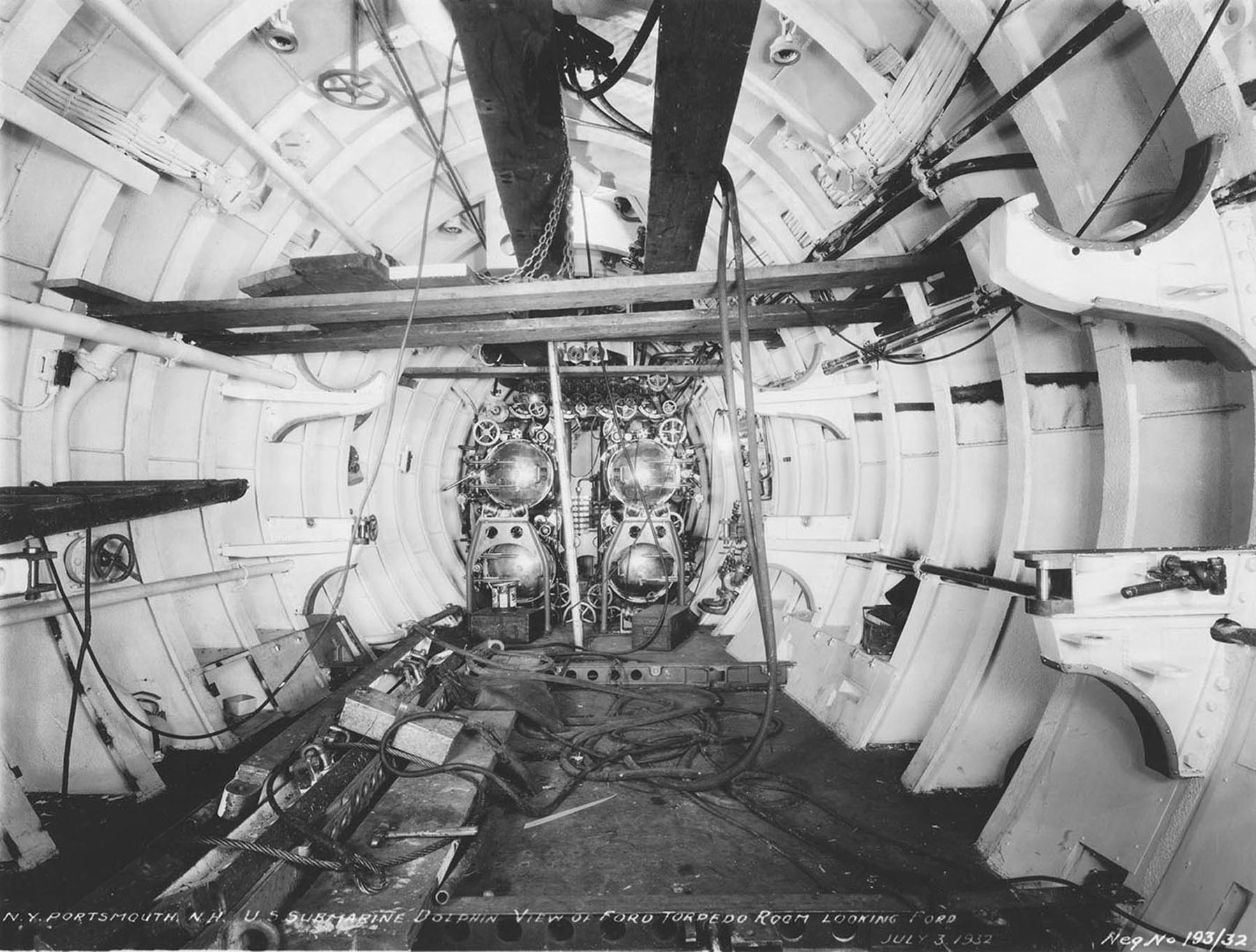
The Narwhal type of submarine has six torpedo tubes, four forward and two aft. Each of the torpedoes are 21 feet long, have approximately 500 pounds of T.N.T. in their nose, and after being discharged from the tube by compressed air travel with their own mechanism driving their own propellors. Their steering devises can be set so that after leaving the ship they will turn at the desired tangent in the direction of the target. This means that in quick firing the submarine does not have to maneuver so that the tubes will be facing the target. In addition to carrying 32 of the huge torpedoes, the Narwhal has two six-inch guns. In an emergency the Narwhal can completely submerge in one minute and fifteen seconds. Eleven thousand tons of water for submerging is taken aboard in forty seconds.
Diesel Surface Power
On the surface the ship is propelled by two ten cylinder diesels which, like many other devices on the submarines, are started and stopped by compressed air. On the surface the ship can make 17 knots an hour. Underwater Power When submerged 24ft huge man high, storage batteries furnish the electricity for the motors to propel the ship at a maximum speed of 10 knots, but generally. the submerged speed is two knots.
In an emergency very little preparation is needed for submerging. The muzzle of the big six-inch guns are covered, the telescopes, and if time permits, the breeches protected. The small power shore-boat has a berth in the hold of the ship. Hatches lead from bridge into the conning tower, and the crew on the bridge go through these rapidly to their stations in it.
There is a good chance that many of the inhabitants would not have ever seen a submarine up close before. Since the boats were open for tours (and many citizens participated in those tours) there is a great likelihood that they had questions. Honestly, many of those questions are the same ones that submariners of many ages have heard. Here is another article that talks about what those questions may have been:
What Questions Did You Ask? Here Is Our List and the Answers Also
Keen interest has been aroused among young and old Gastineau Channel residents in the undersea fighting craft of the country’s navy by the arrival here of the first submarines to cruise in Alaskan waters. Questions are rife about these unusual craft, not only as to the dry measurement and statistics but as to the life that is lived aboard them by officers and crew.
Among the most frequent questions asked by visitors to the submarines are: “Do you travel submerged?” “How often do you have to come to the surface?”. “Are the sleeping quarters comfortable?” “Where do you get food and fresh water?” “What is the sensation when you submerge?” “Why arc some ships black and some grey?” “How’ deep can you go?” The Empire reporter asked them all and more.
So, while we are a bit groggy with an attempt to overcome a vast ignorance concerning the grim looking war vessels, some of the answers were obtained and we won’t worry so much about the officers and men of the service getting proper sleep or fresh air in the future.
Sleeping accommodations aboard the submarines, while a little crowded are as comfortable as those on the destroyers Buchanan and Crowninshield which were in port early this month, and ships of their type.

“Do You Travel Submerged?”
The submarines do not travel submerged from port to port due to the fact that the battery capacity is so limited it would be necessary to come to the surface every few hours to recharge. However, while traveling on the surface, even at full speed, they are ready to dive at any instant and If an enemy vessel is sighted, a submarine can dive and be completely submerged in from 60 to 90 seconds. When they are cruising with the fleet on tactical work the submarines do remain submerged from 5 to 10 or 12 hours.

“How Deep Can Yon Go?”
Submarines of Division 12 are built to withstand a sea pressure at a depth of 300 feet, which is equal to a pressure of 165 pounds a square inch They are actually tested to that pressure by submerging that deep, though normally a submarine operates at a depth of 100 feet, coming. up occasionally to periscope depth, or approximately 60 feet, to look around.
Contrary to the layman’s belief there is absolutely no sensation experienced upon diving, other than a consciousness of a slight angle that might be taken by the submarine nor is there any change in atmospheric pressure within the ship from that experienced upon the surface.
Air in submarines will last for from 27 to 30 hours without employing the use of extra oxygen or chemicals for removing carbon dioxide which is generated by normal breathing. If these chemicals and the oxygen are employed the air in a submarine will sustain life for about four days.
Supplies Aboard
Food is kept fresh in refrigerating systems and chill rooms that will carry a supply of fresh food for a period of about two- and one-half months. Fresh water storage is not so great but the submarines are self-sustaining in that regard as they are equipped to make their own from salt water.
Sufficient fuel oil is carried aboard to cruise for from 12,000 to 15,000 miles. Incidentally the present cruise, which began at San Diego and included maneuvers with the fleet at Panama, is one of the longest practice cruises made by submarines of the fleet and before returning to San Diego they will go to Honolulu.
Letters and Numerals
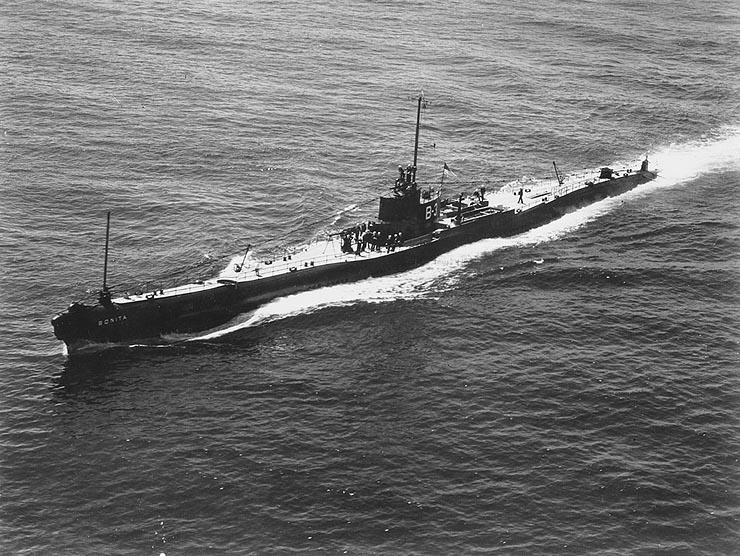
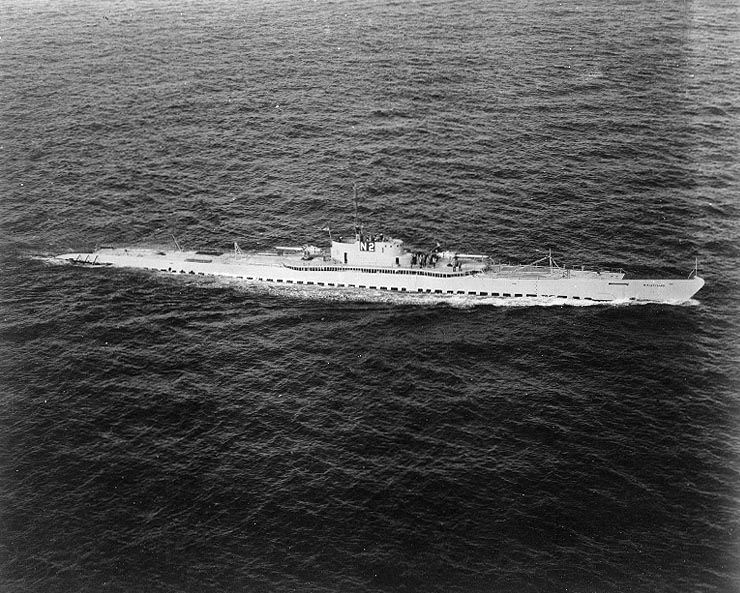
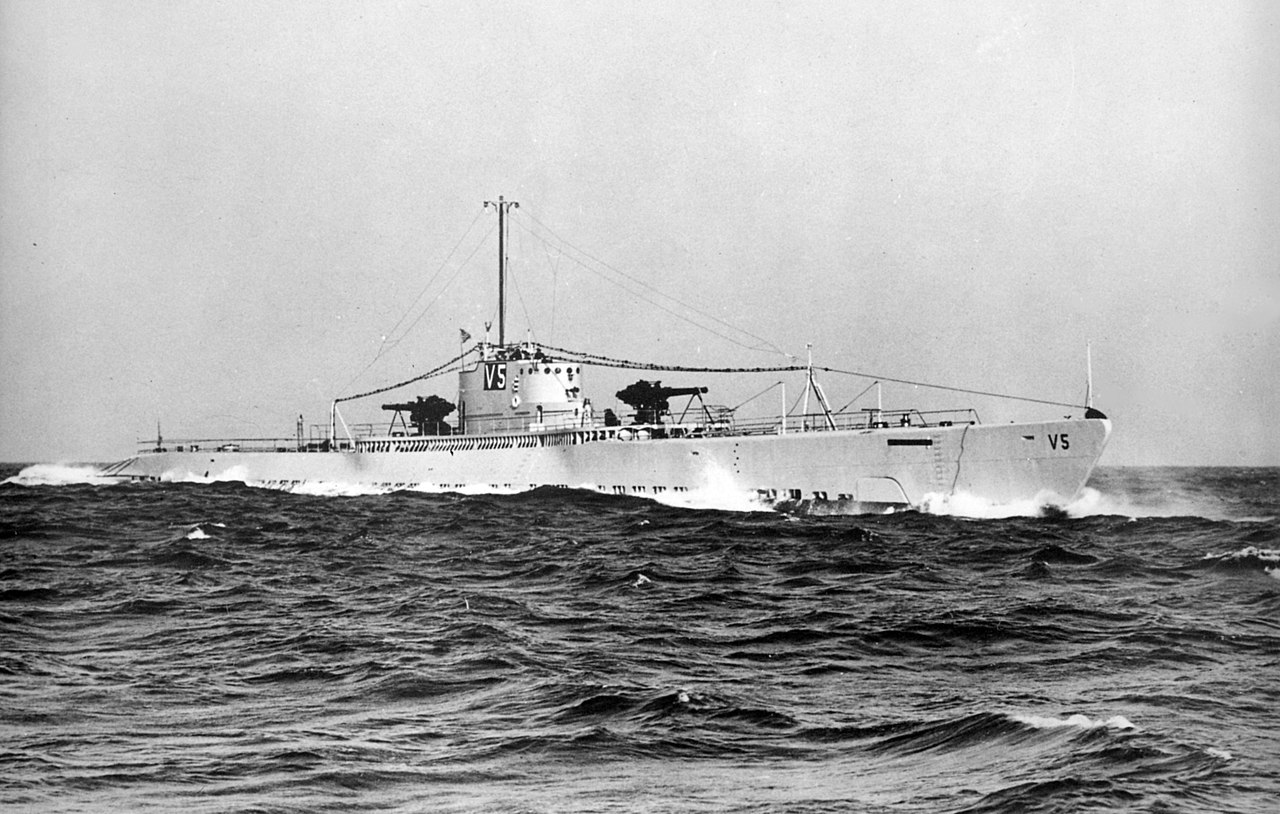
The letters and numerals painted on the sides of the ships suggest the name and general type of the individual submarines, the B’s are the Bass, Bonita, and Barracuda; the N’s are Narwhal and Nautilus and D is the Dolphin, these ships and others of their type are appropriately named after fishes. After consulting Webster’s, we discover that Narwhal means north whale, of which the male is very playful and constantly irritating the female, or so it is said. A Bonita is a mackerel-like fish found on both sides of the Atlantic; the bottle-nosed Dolphin is known to us as a porpoise and the Nautilus is a crusty shell fish found on the bottom of southern seas.

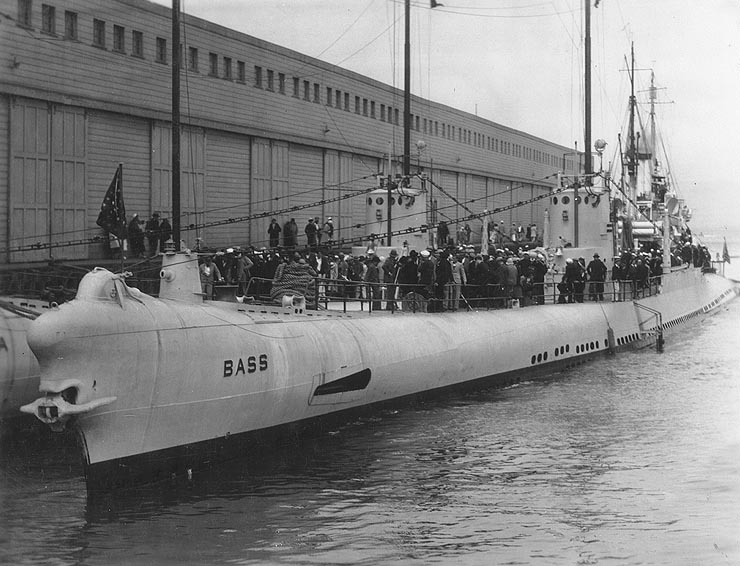
(Alaska Picture Caption: Tender and submarines at dock in Juneau, Alaska, July, 1934. At far left, tender Holland (AS-3), submarines (l to r) Bass (SS-164), Bonita (SS-165), Barracuda (SS-163), Nautilus (SS-168) and Narwhal (SS-167). The mill of the Alaska Juneau Gold Mining Company is in the background.
Entertainment Aboard
In addition to card games, bridge, cribbage, poker, checkers and chess tournaments and acey deucey, the navy backgammon, entertainment is found by men and officers cruising on submarines by reading, watching movies, reading the ship’s papers for which news is provided by navy press reports and listening to radios. Each submarine has a daily newspaper and four or five radios to help while away the hours. And. of course, they eat and sleep. The Empire reporter was not able to find a single mascot aboard, unless it really was a cockroach we saw, though we thought all naval ships had them.
Black Submarines
Two of the submarines are painted black, though the normal color is grey. This is an experiment to compare the visibility, submerged. from aircraft as compared to the regulation grey.
Safety Devices
We were vastly intrigued by the yellow marker buoys of which each submarine has two on deck, one on the forecastle and one on the stern and could never have guessed what was inside of them or what they were for. Imagine our surprise when we were told that they are released when a submarine is on the bottom and not able to come up and that each has a cute little brass sign on top saying, ‘Submarine sunk! Telephone inside.” This is so people on the surface can communicate with those in the submerged craft and the telephone wires are contained in the cable holding the buoy. SO now you’ll know what to do when you see one bobbing on the water while fishing or cruising.
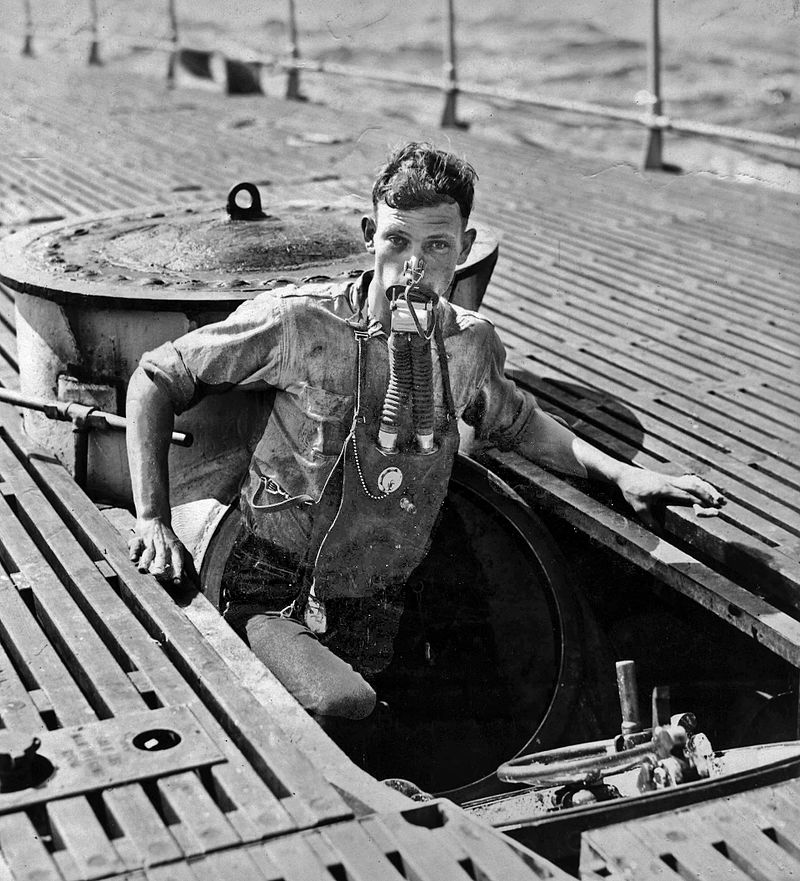
The buoys are not the only resource of the personnel in case of accident as each is equipped with escape trunks both forward and aft from which the men may leave the submarine after providing themselves with the famous “Momsen lung.” Another means of escape from a sunken submarine is the rescue chamber carried on the rescue ship Ortolan which can be lowered over a submarine hatch and secured to it so that the personnel can be transferred from the submarine to the rescue chamber, which is then hauled to the surface and the men removed. Six or eight at a time can leave the vessels by this means. The Ortolan carries out this drill regularly by actually removing men while ships are submerged.
Approximate Size
Both the Narwhal and Nautilus are about 270 feet long and have an approximate beam of 30 feet. They displace about 5,000 tons on the surface and about 4,000 submerged. The Bass, Barracuda and Bonita are about 340 feet long and have about 27-foot beam with a displacement of 2200 tons on the surface and 3,000 submerged. The Dolphin is the smallest of the ships here and is about 320 feet long and has a beam of 27 feet while it has a displacement of around 1600 tons on the surface and 2200 when submerged. They men and 5 officers to 80 men and 8 officers, depending on size.
The giant mother ship Holland is 530 feet long and has displacement of 12,000 tons.

Surface Speed
All of the submarines of Division Twelve have a surface speed of about 17 knots.
From the Editorial Page
WELCOME TO “THE FLEET.”
Not all of the American Fleet, it is true, cast its anchors in Gastineau Channel today. But a division of submarines is no weak portion of it, and this division which is cruising in Alaska waters for the first time is composed of the latest type and largest of Uncle Sam’s undersea craft.
With some 1,600 officers and men aboard, they have come as our guests, not merely guests of Juneau, but also guests of the entire Territory, for Juneau is its capital. They will be with us until July 30. Almost as soon as they depart, we shall be host to some 500 more, including aviators, pilots and mechanics from 12 of the Navy’s latest and biggest airplanes.
Thus, we are shown two of the most interesting branches of the Nation’s maritime forces—the one which does its fighting beneath the waves and the other above the clouds. It is a grand and glorious day for Juneau.
A day, or rather days, of holiday and picnic spirit. It is no small honor that we are paid in this sending of vessels and aircraft such a distance from their bases for a visit. To the men of the Nary we say, “Welcome.”
If there are those who might lift eyebrows at high spirits and lusty enthusiasm, we say: “Here are men who have spent years of their lives in training in specialized services, requiring a high degree of intelligence, skill and nerve. They are not mere gobs ashore for a carouse. They are the pick of the service, traveled men, if you please, who have observed life in the ports of the world. They are worth getting acquainted with.” So again, let us emphasize: “Sailors, Welcome! Enjoy Yourselves!”
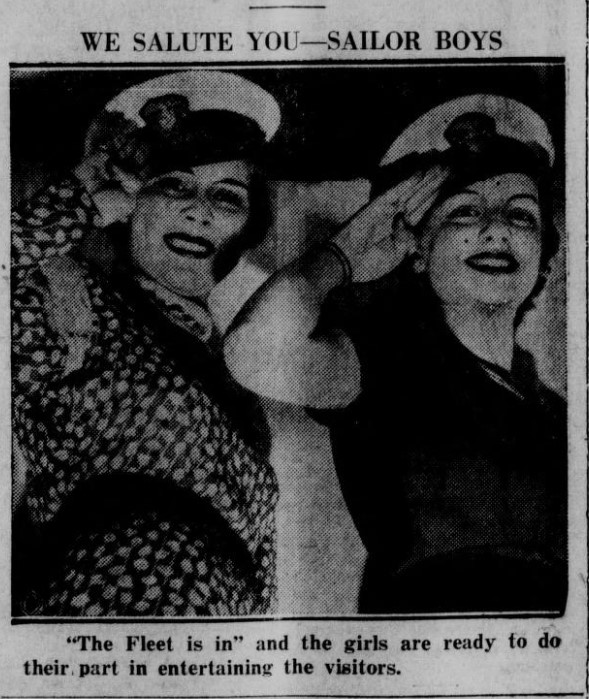
I’m sure they did.
I searched the following days articles and did not notice any recordings of liberty incidents. I suspect the press was probably told to put a lid on it even if anything had occurred at any of the local cabarets or roadhouses. Pity. I bet some interesting stories were carried away from Alaskan waters.
The question that came to my mind was why would the navy spend scarce dollars sending a group of San Diego submarines and their escort to Alaska?
First:
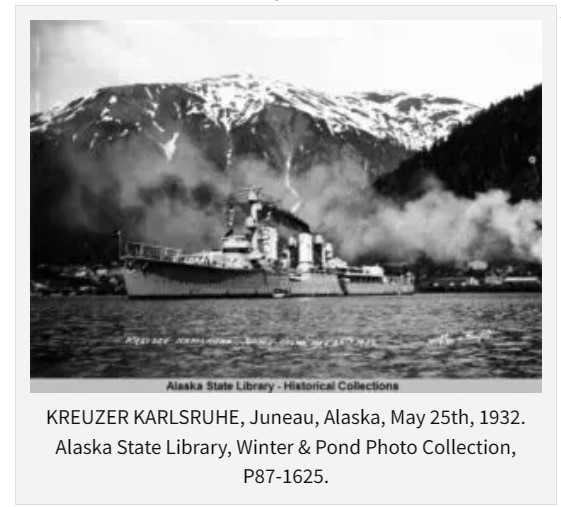
There is no direct evidence, but several interesting coincidences came to light as I was researching the story. The first was that not long before this visit, Juneau had another visitor. The German cruiser Karlsruhe, with a complement of 560 officers, cadets and enlisted men, dropped anchor in Juneau’s harbor May 19 for a visit of 11 days. Welcoming festivities included concerts by the ship’s band, and tours, receptions, and dances for the crew hosted by local groups. Like her sisters, Karlsruhe served as a training cruiser for naval cadets throughout the 1930s.
Germany was in the process of quietly rebuilding her naval forces so the visit of one of her warships must have peaked some attention in Washington.
Second:
The second thing that happened in 1934 was Germany’s involvement with Austria’s unrest. The Nazi party was becoming more and more open about Hitler’s desire to reunite the old alliance that caused so much havoc in 1914. The front page of the paper that announced the arrival of the American fleet also discussed the continued unrest in Austria. That unrest would eventually lead to Hitler’s dream of a united German-Austrian alliance.
American submarines were already operating in the far east and from both Hawaii and San Diego. This seemingly innocent port visit may not have been a frolic after all. I would love to hear from anyone who’s relative participated in either the submarine group or the city. Until then, we will just have to assume that what happened in Juneau stayed in Juneau. And maybe that’s best.
Mister Mac

 theleansubmariner