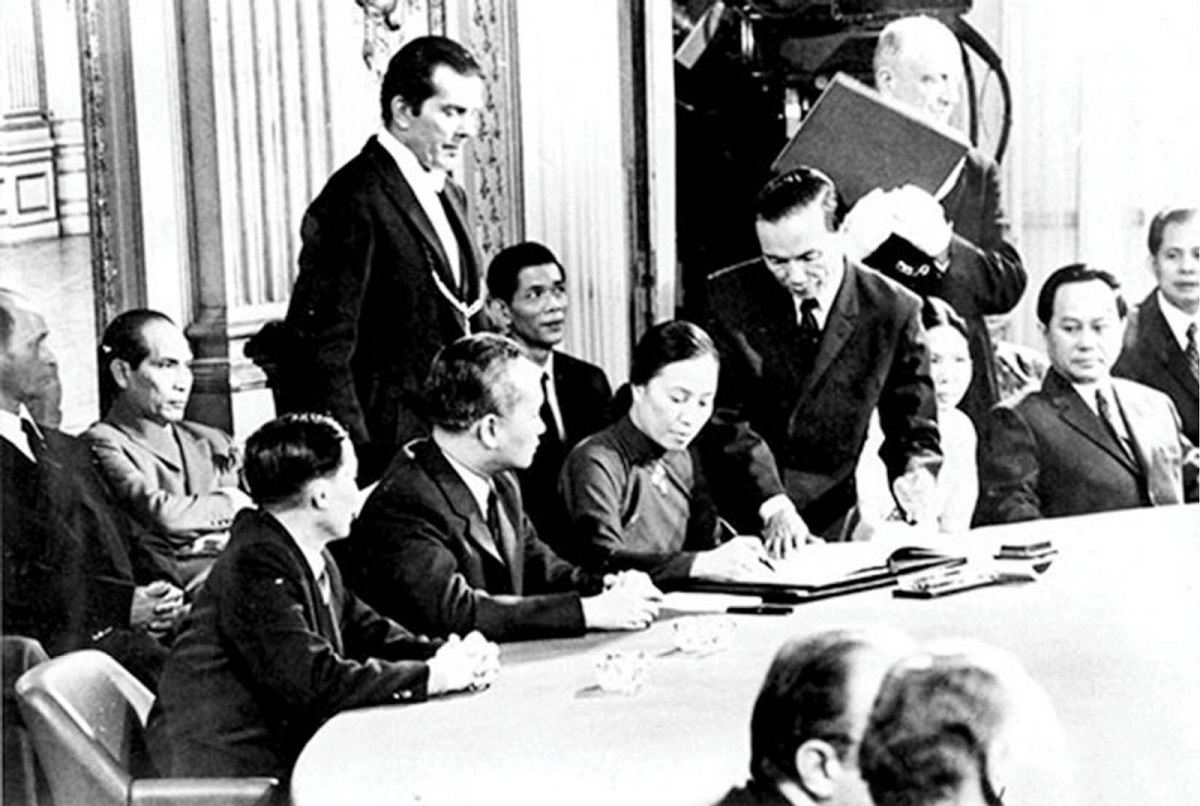
Well, at least the war is over.
Today is January 23, 2024.
I get messages from time to time reminding me of things that happened on this day. For instance, on this day in 1957, the first frisbee was produced, in 1922, insulin is first used to treat diabetes, and Richard M. Nixon declared the signing of a treaty in Paris that ended the War in Vietnam.
That last one is a little tricky since we still had a lot of forces in and around Vietnam and people were still being shot at. The 1973 Paris Peace Accords supposedly ended U.S. involvement in Vietnam, and two months later the last U.S. combat troops left along with prisoners of war held by the Vietnamese. The tricky part is that we lefty people there to complete the Vietnamization of the armed forces there. I actually traveled through Saigon by accident in March of 1975 and we still had a number of people there. But that is a story for another day.
I was in submarine school during that time and not sure I paid much attention to the news of the day. Frankly, when I was pulled into submarine training, it was all I could do to keep up with my studies and pre-submarine testing. Of course, I was glad in some ways but in other ways disappointed that I would not be able to serve in what was the greatest disruption of my generation. Heck, I wasn’t even nineteen. What did I know.
Vietnam Perspective
I often use the Library of Congress to help me understand events that happened on any particular day and in this case, I typed in the word “Vietnam”. A large number of references came up but this one caught my eye. It was about an author named Dwight Cooke, a journalist from the 1940’s and 1950’s, who had spent a large amount of time in Asia. The piece written was about his book which was published in 1954. I was reminded that many of the events leading up to our involvement in Vietnam actually started in 1954 when the French were unceremoniously ejected from their former colonial holdings.
One reviewer said this about Dwight Cooke’s book “There is no Asia”
“Documenting his thesis with a country-by-country report on Asia, radio-correspondent Cooke explains why America must not treat the Asian countries as a single unit, and gives constructive suggestions towards realistic, albeit multiple, Asian policies. Each country comes alive under his pen and is appraised in terms of their economic problems, social attitudes, and their relationship to us. Cooke chooses the Philippines and Pakistan first, then Korea and Thailand as the countries that understand best the advantages the West can offer. He believes we should work through them in order to influence the more recalcitrant countries. Indonesia, Burma and Indo-China- which have, among other complications, a Marxian bias. He speaks realistically too about Japan’s economic distress, and pitches this against the warning that the nations of Southeast Asia hate and fear Japan, and do not wish her to progress… Informative reporting, this is particularly important in its emphasis on how to achieve possible as well as useful foreign policies by the U.S.”
The Chapel Hill weekly (Chapel Hill, N.C.), March 25, 1955
Newsman Expresses Strong Opinions About Western Foreign Policy in Asia
“Unlike ‘America,’ or ‘Europe’, or even the ‘Middle East,’ there is no Asia,” says Colombia Broadcasting System news analyst Dwight Cooke. And in his recently-published book, “There Is No Asia,” Mr. Cooke tells us just what he means by that statement. (Doubleday, 320 pages, $4.)
“The only things the nations of Asia have in common,” Mr. Cooke continues, “are negative. They are not white. They are not well fed. They do not trust or admire the West.”-
Dwight Cooke visited every Asian country this side of the bamboo curtain gathering material for his book. It is an interesting hodgepodge of political, cultural, military, historical and other information about the countries of the Far East. It analyzes our friends, our enemies and the neutrals of Asia and suggests ways of winning the cold and hot wars being waged there.
At times Mr. Cooke does not seem especially objective, but it is hard to be objective about the things he discusses. He is an apologist for Syngman Rhee; he is a critic of Chiang Kai-shek. He greatly admires the Filipinos; he distrusts the Japanese. But in spite of all this, he provides information that enables the reader to better understand the complex and disturbing problems of the Far East.
I do not always agree with Mr. Cooke on his ideas of foreign policy in Asia, but I have to give him credit for being outspoken in his suggestions, regardless of how unpopular some of them might seem on this side of the world. On many points I do agree with the author, especially on his views regarding our surrender to the Communists in Indo-Chins and the tragic partitioning of Vietnam.
“Just as the truce in the Korean War automatically elevated Indo-China into the most dangerous spot in Asia,” Mr. Cooke writes, “so the truce in the Indo-Chinese War has automatically elevated Southeast Asia into the most dangerous spot in the entire free world. Thanks to the terms of the Geneva Agreement, we have no more than a meager fifty-fifty chance—at the very optimistic best—of keeping South Vietnam out of Communist hands.”
If South Vietnam falls, says the author, the likely consequences for the rest of Southeast Asia are predictable: The Communist will take over Laos and Cambodia, then move on Burma and Thailand. This is geographically and militarily logical, and I cannot quarrel with Mr. Cooke on his opinion More from the author on Indo-China:
“Now, thanks to stupid French colonial policies in Indo-China compounded by indecisive American policies in Asia, the non-Communist world has suffered its worst defect since Mao Tse-tung took over China. The partition of Vietnam is a far greater defeat than the partition of Korea, lor South Korea was left with a firm anti-Communist government and an equally firm leader, while South Vietnam is left with no real leader, no real anti-Communist government, and no real indication that the tragedy of errors which gave the northern half of the country to the Communists will not be repeated in the south.”
Dwight Cooke is equally at home behind a typewriter or behind a microphone. He is a smooth, effective, and entertaining writer. His subject matter is not only important but is quite interesting, and the same can be said for his ideas—whether or not you agree with them.
The future of the world as we know it will be decided in Asia. Much more should be written about that mysterious area on the other side of the globe; much more should be read and under stood about Asia by Americans. Mr. Cooke’s book is as good a starting place as any.—C.H.
Book Link: https://babel.hathitrust.org/cgi/pt?id=uc1.$b589765&seq=7
I wonder if any of the strategists at the time actually read Mr. Cooke’s book.
I briefly read the section on Indo-China and got a pretty good sense of what he was trying to say. From a personal perspective, I was born in 1954 so there was never a time in my life up to the fall of Saigon that it wasn’t part of my growing up. I was puzzled by the peace protests and saw my dad struggle with the same issues. He had fought in the Good War and could not understand why people were not supporting the troops.
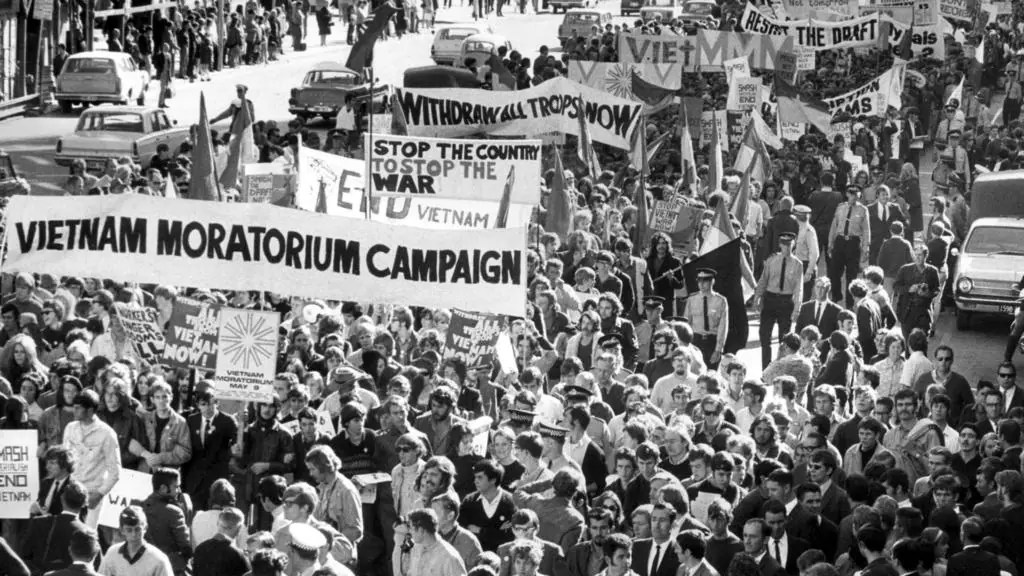
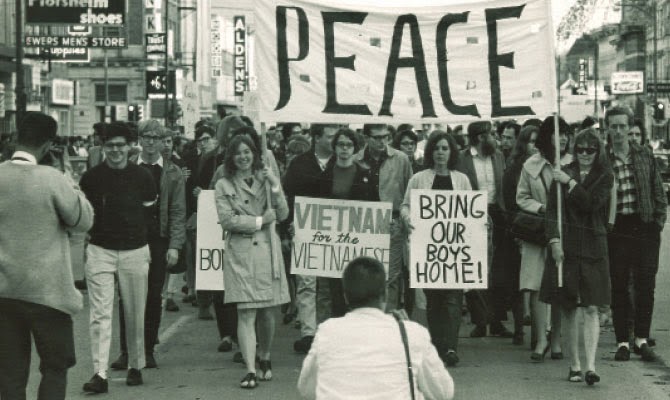
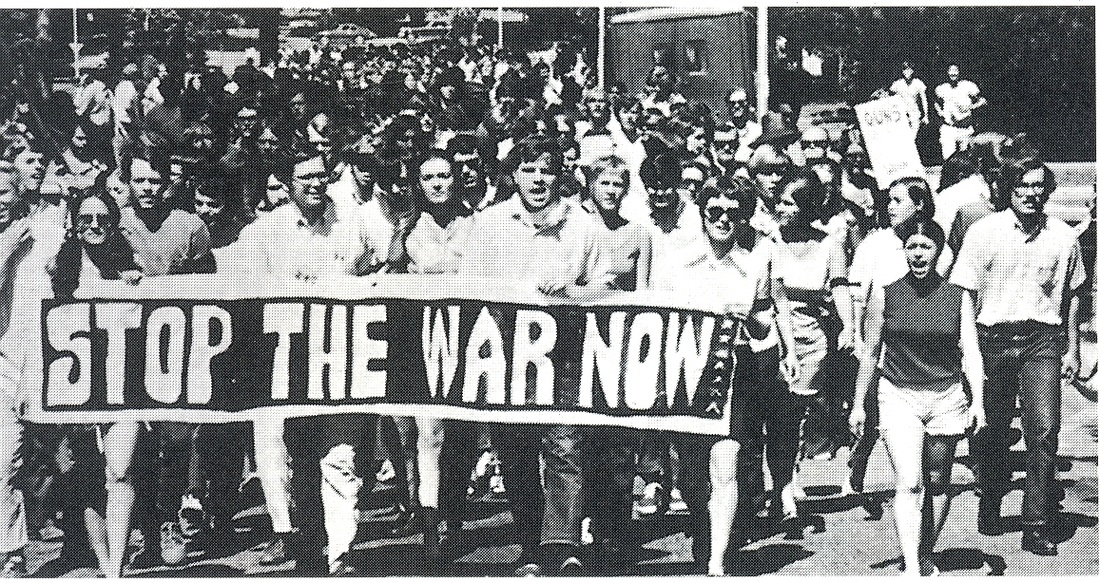
Much of what Cooke wrote came true.
While Vietnam is now a growing country, it did for a time fall deeply under a dark shadow of communist influence. Many people who fought in the war have gone back there now and the people seem to have survived and developed a quasi-capitalist economy. His predictions about the chaos came true and many people lost their lives as the communists and dictators took over.
Laos
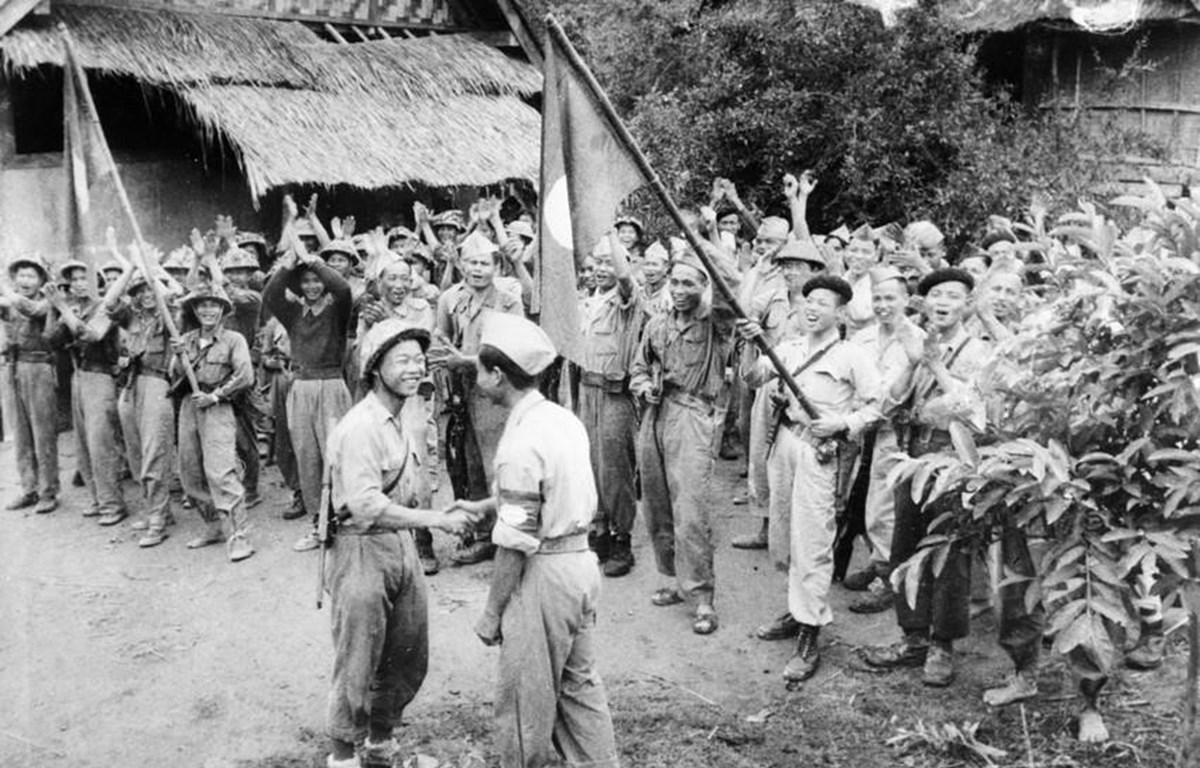
In Laos, by 1975, the communist Pathet Lao took control of the government, ending a six-century-old monarchy and instituting a strict socialist regime closely aligned to Vietnam. A gradual, limited return to private enterprise and the liberalization of foreign investment laws began in 1988. They are still tied closely with China and Vietnam.
Cambodia
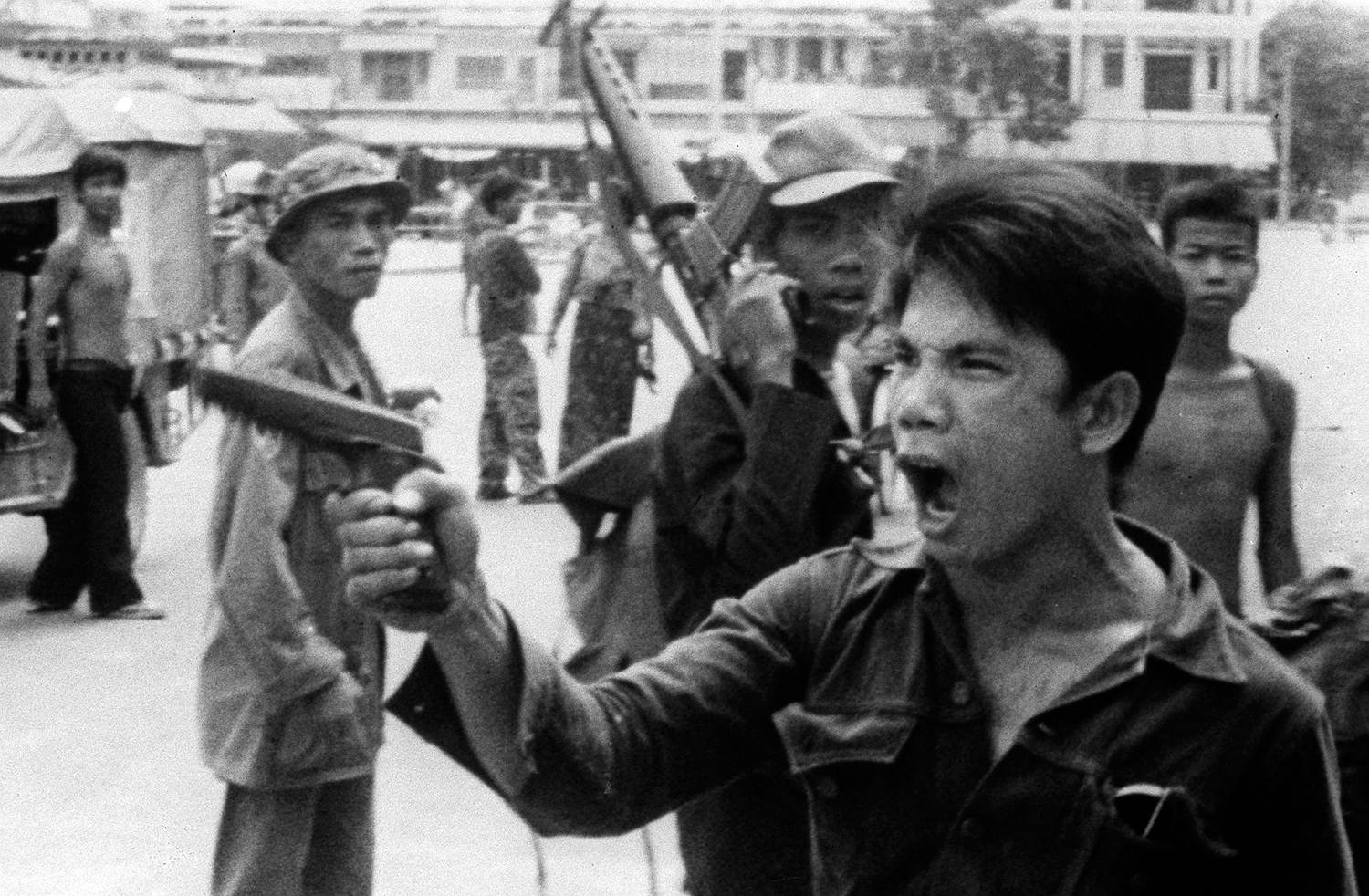
In April 1975, after a seven-year struggle, communist Khmer Rouge forces captured Phnom Penh and evacuated all cities and towns. At least 1.5 million Cambodians died from execution, forced hardships, or starvation during the Khmer Rouge regime under POL POT. A December 1978 Vietnamese invasion drove the Khmer Rouge into the countryside, began a 10-year Vietnamese occupation, and touched off 20 years of civil war. Today they are still tied closely with China and although capitalism is growing, their debt is closely tied to Chinese influence.
As I look at the world through the rear-view mirror, so much of what happened was predicted and dismissed. If the leadership (from Eisenhour’s time through Johnson) had really understood the people of that place we call Asia, could things have been different. Was it worth the cost of over 56,000 men and women and untold amounts of broken brothers and sisters? Or the billions and billions of national treasures? To be honest, the cost to the people there was incredibly high as well.
Like many of my generation, I was shocked by the rapid withdrawal from Afghanistan.
The agreement’s provisions were immediately and frequently broken by both North and South Vietnamese forces with no official response from the United States. Open fighting broke out in March 1973, and North Vietnamese offensives enlarged their territory by the end of the year. Two years later, a massive North Vietnamese offensive conquered South Vietnam on April 30, 1975, and the two countries, which had been separated since 1954, united once more on July 2, 1976, as the Socialist Republic of Vietnam
https://www.history.com/news/fall-of-saigon-timeline-vietnam-war
The Abandonment of an ally felt somehow familiar to that time in 1975 when I watched the hordes of vessels and American supplied aircraft bringing the evacuees from South Vietnam. The mass amounts of people in the island of Guam were staggering. Men, women and children seemed to be everywhere in the hastily constructed camps on the island. While the war was declared over and we were told it was Peace with Honor, I didn’t feel much honor back them. I still don’t.
Mister Mac

 theleansubmariner