Life on submarines has always been risky.
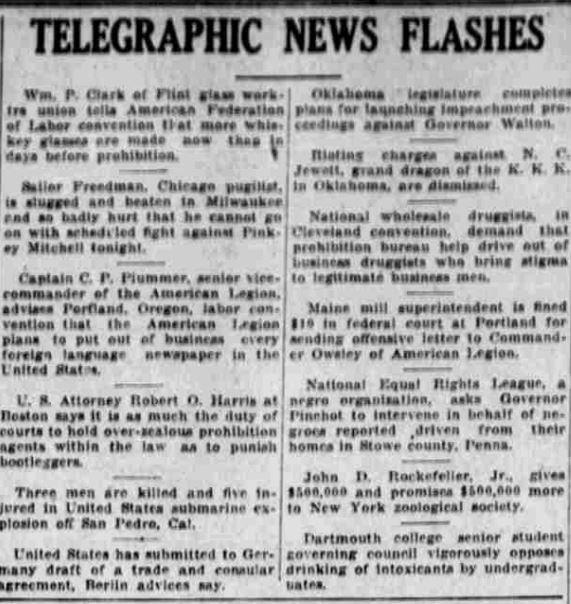
Whether it’s defying the physics of overcoming the sea’s depths or the nature of the machinery required to do so, every submariner undestands that the unexpected can be managed to a certain extent, but the uexpected cab still arrive with dire results. One hundred years ago today (October 11) a Telegraphic News Flash stated that:
Three men killed and five injured in United States submarine explosion off San Pedro California.
The News Flash was intersting to me for a number of reasons. First, I wasn’t familiar with the submarine base being at San Pedro which is in Los Angeles. Second, which boat was involved andd what happened. So today’s post concerns the answers to both things.
San Pedro Submarine Base
Naval Base San Pedro and San Pedro Submarine Base were United States Navy bases at the Port of San Pedro, California officially founded in 1919. While commissioned in 1919, the Navy started operating out of the port in 1910, by renting dock space at the City of San Pedro’s Dock No. 1 in 1914. The Navy had vessels stationed at the port starting in 1913. The San Pedro Submarine Base closed in 1923, with the end of World War I. Naval Base San Pedro became part of Naval Operating Base Terminal Island on 25 September 1941, which closed in 1947.
Establishment of Base
San Pedro Submarine Base was officially established on June 10, 1917 in response to the outbreak of World War I. San Pedro Submarine Base operated as a naval coastal defense unit. The USS Pike and the USS Grampus completed in 1902 were built in San Francisco, California. The Holland Torpedo Boat Company of New York City contracted Union Iron Works to build the two Plunger-class submarines. For three and half years the two submarines operated out of Mare Island Naval Shipyard in San Francisco Bay for training and testing.
In July 1910 the Pike and Grampus relocated to San Pedro Submarine Base. In 1913 the F-class submarines were stationed at the port of San Pedro. The submarines of the 1st Submarine Group, Pacific Torpedo Flotilla arrive in 1913. To support the submarines the submarine tender, USS Cheyenne and USS Alert were stationed at San Pedro Submarine Base. The submarine tenders had housing and a mess hall for the crew. To resupply the tenders, they would dock at the rented San Pedro Dock No. 1. On June 10, 1917, work on land facilities started to offer quarters, mess hall, freshwater supply, ship fuel, and storage. The 2nd Torpedo Flotilla, Pacific Fleet with Holland 602 type submarine began operating out of San Pedro Submarine Base. USS Cheyenne and USS Alert sometimes depart the port for short-needed support missions up and down the California and Pacific Coast.
San Pedro Submarine Base became a submarine School for enlisted sailors in October 1917.
The base had 525 Navy personnel stationed at the San Pedro Submarine Base. In 1917 the Navy also founded the Naval Reserve Training Station with the F-class submarines: F-1, F-2, and F-3.
All four F-class submarines spent their careers in the Pacific Fleet, primarily based in San Pedro Submarine Base, San Pedro, Los Angeles, California with a stint in Hawaii. F-4 was lost off Hawaii on 25 March 1915 due to a battery acid leak corroding the hull. F-1 and F-3 collided off San Diego on 17 December 1917, and F-1 was lost. F-2 and F-3 survived to be decommissioned and scrapped in 1922 to comply with the limits of the Washington Naval Treaty.
The base closed in 1923 and the submarines moved to Naval Base San Diego.

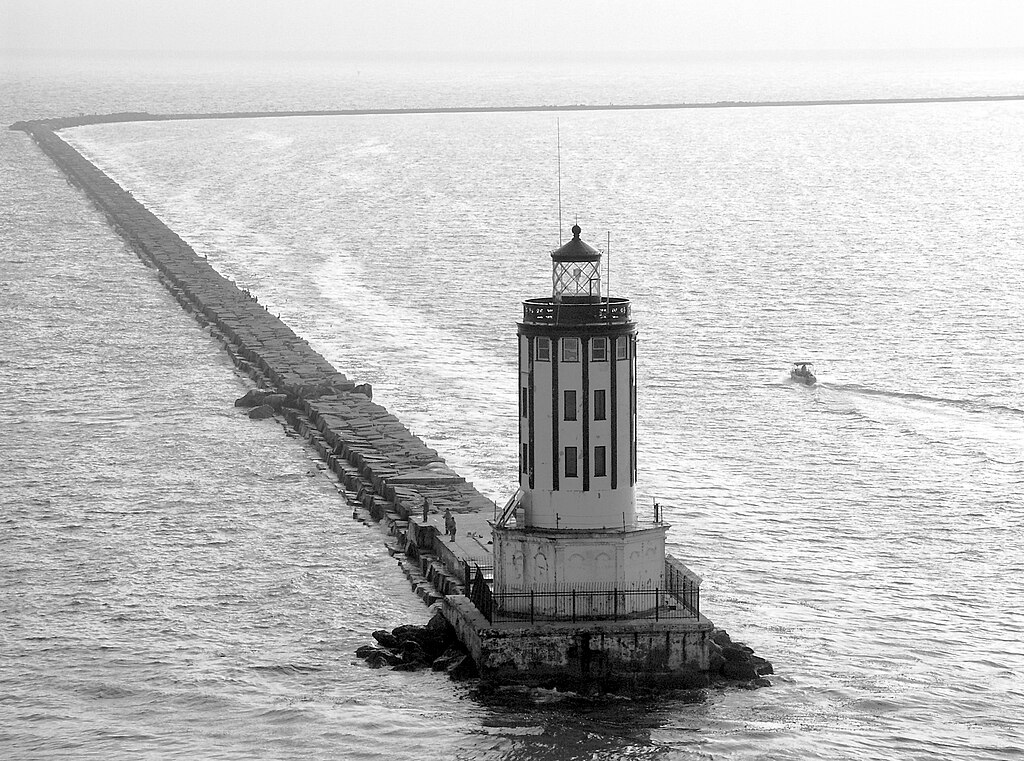
Naval Base San Pedro picture
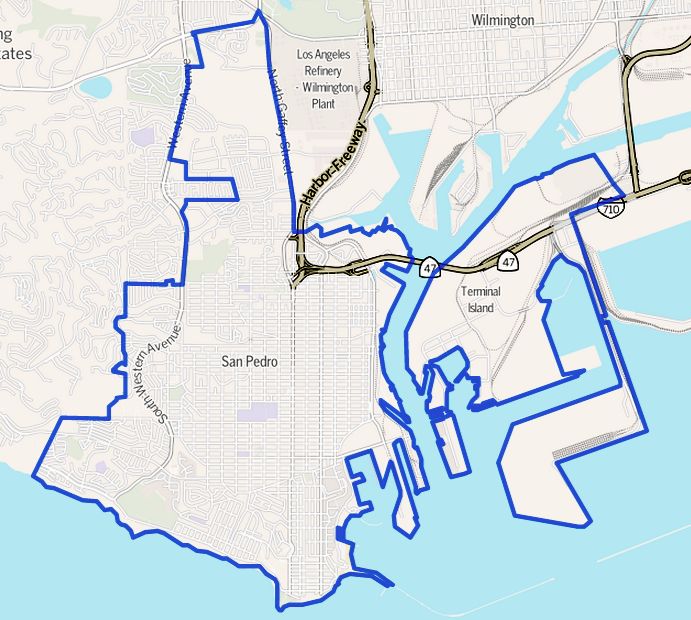
Map of the city of San Pedro, part on the southern part of Palos Verdes Peninsula and part on Terminal Island
The rest of the story
After World War I which Japan fought on the Allied side, Japan took control of German bases in China and the Pacific. In 1919, the League of Nations approved Japan’s mandate over the German islands north of the equator. The U.S. did not want any mandates and was concerned with aggressiveness. As such Wilson Administration transferred 200 Atlantic warships to the Pacific Fleet in 1919. The Port of San Diego, not yet developed, was too shallow to handle the battleships, so San Pedro Submarine Base became a Naval Base on August 9, 1919. San Pedro Submarine Base and Long Beach became fleet anchorage for the 200 ships. In 1940 President Roosevelt authorized the fleet at San Pedro to be stationed at Honolulu’s Naval Base Pearl Harbor due to Japanese war actions. The USS Farragut (TB-11) a training ship was based at San Pedro from 12 January 1915 to 14 April 1917.
Six submarines of the new R-class were ordered to the Pacific, arriving at their new base, San Pedro, California, in June 1921. These submarines included R-1 (SS-78); R-2 (SS-79); R-3 (SS-80); R-4 (SS-81); R-5 (SS-82); R-6 (SS-83) and R-10 (SS-87), which operated out of San Pedro for the next two years. They were joined by the last class of submarines to be homeported in San Pedro –those of the S-class.
The S-class submarines reflected the Navy Department’s prevailing warfare thinking of the time.

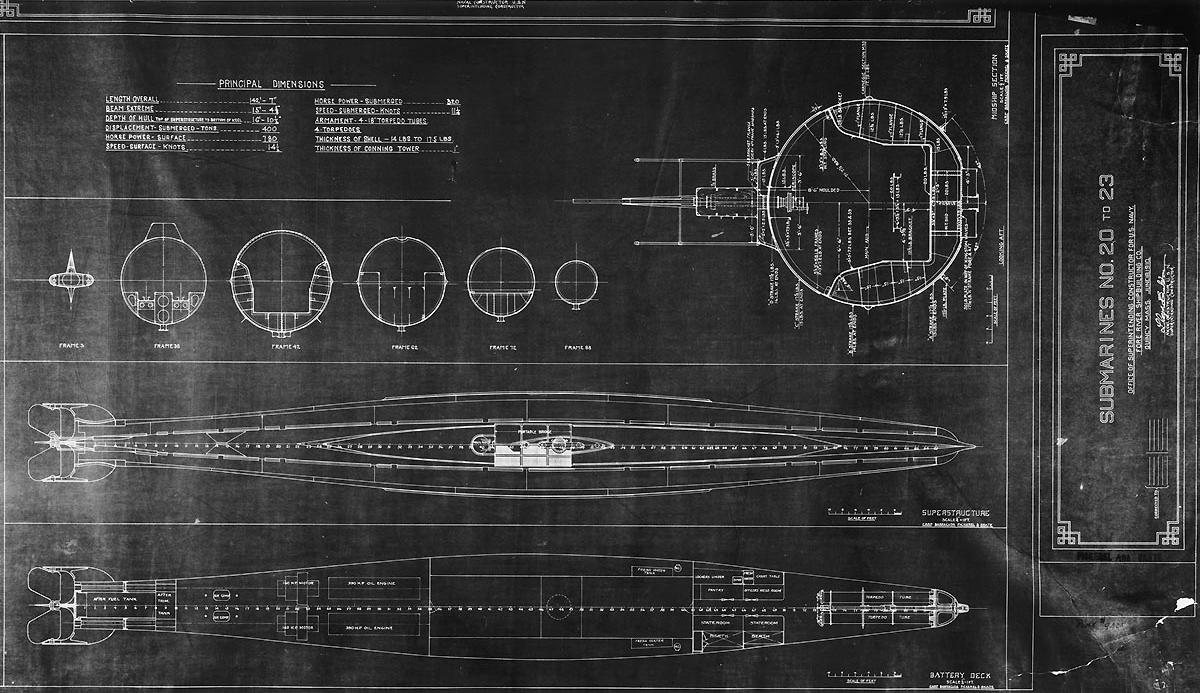
The submersible or submarine was no longer thought of as purely a weapon for coastal defense. The Navy now viewed the submarine as being a type of destroyer or torpedo boat that could operate with the battle fleet. On paper, these characteristics, adopted during World War I, brought the Navy one step closer to the “fleet submarine,” developed during World War II. Consequently, the S-class submarine in 1916, could do 15-knots on the surface.

The first of the S-class submarines to be stationed in San Pedro included the S-30 (SS-135); S-32 (SS-137); S-33 (SS-138); S-37 (SS-142) and S-38 (SS-143), being stationed there from 1922 to 1925. These submarines were built by the Bethlehem Ship Building Corporation, San Francisco, California, for the Electric Boat Company.
The Explosion
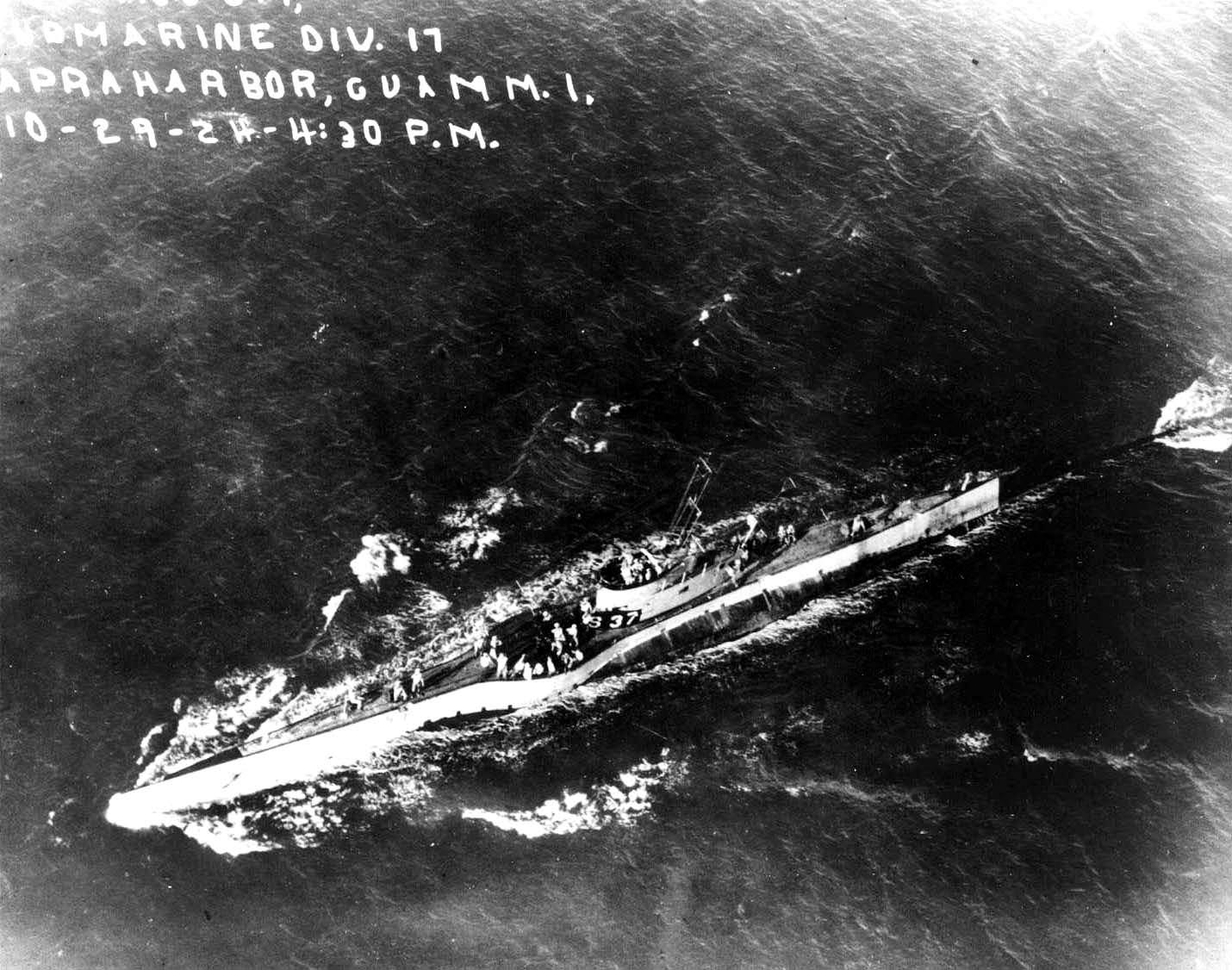
SS-37 (SS-142) was laid down on 12 December 1918 by the Union Iron Works, San Francisco; launched on 20 June 1919, sponsored by Miss Mildred Bulger, and commissioned on 16 July 1923, Lt. Paul R. Glutting in command.
After fitting out at Mare Island, SS-37 departed San Francisco Bay at the end of July and joined Submarine Division (SubDiv) 17 at San Pedro on 1 August. During that month, September, and into October, she conducted exercises and tests off the southern California coast. Then, as she was recharging in San Pedro harbor on the afternoon of 10 October, her training schedule was interrupted by an explosion in the after battery compartment. Dense black smoke and gas fumes filled the flame and arc-lit room.
Extensive material damage added to the difficulty of rescue operations in the gas-filled room. Three men were brought out. Two bodies were left behind. One of the rescued died before medical help arrived. Two of the rescuers were seriously injured.

The room was sealed. At 0500 on the 11th, pressure which had built up in the room, forced open the main hatch. The room was resealed. At 1030, the compartment was opened, but fire broke out again. The room was resealed for another hour. At 1130, the area was ventilated, clearing and repair work was started. On the 25th, temporary repairs were completed and S-37 started back to Mare Island, where the work was finished. On 19 December, the S-boat returned to San Pedro.

The aftermath
With the New Year, 1924, S-37 moved south and, with her division, participated in Fleet Problems II, III, and IV which involved problems of fleet movements, conducted enroute to the Gulf of Panama; Caribbean defenses and transit facilities of the Panama Canal, and movement from a main base to an advanced base, conducted in the Caribbean. After completing Problem IV, her division remained in the Caribbean until early April when it retransmitted the Panama Canal to return to the Pacific. Toward the end of the month, she returned to San Pedro and, on the 28th, she continued on to Mare Island. There the boats of her division, having been transferred to the Asiatic Fleet, prepared to cross the Pacific.
On 17 September, SubDiv 17, accompanied by submarine tender CANOPUS (AS-9) departed San Francisco. On the 26th, the ships arrived at Pearl Harbor; and, on 4 November, they reached Manila Bay. They operated out of Cavite for 16 years. During most of that time, the S-boats worked as a division, spending the fall and winter months in the Philippines and deploying to the China coast for spring and summer exercises. During the late thirties, however, hostilities increased in Asia, and the fleet’s S-boat schedule was altered to include more individual exercises and cruises. The submarines ranged throughout the Philippines and the Netherlands East Indies, and they made shorter deployments to the China coast. In 1940, the latter ended, and the boats intensified their exercises and patrols in the Philippines and participated in joint Army-Navy war games.
More about her service can be found here: http://www.hazegray.org/danfs/submar/ss142.txt
In addition to serving as a home for submarines, San Pedro provided Fleet support:
San Pedro from 1919 to 1940 became the home port for some Navy ships of the Pacific Battle Fleet. Some ships base at San Pedro: USS Wyoming (BB-32) USS Arkansas (BB-33) USS New York (BB-34) USS Texas (BB-35) USS Nevada (BB-36) USS Oklahoma (BB-37) USS Pennsylvania (BB-38) USS Arizona (BB-39) USS New Mexico (BB-40) USS Mississippi (BB-41) USS Idaho (BB-42) USS Tennessee (BB-43) USS California (BB-44) USS Colorado (BB-45) USS Maryland (BB-46) and USS West Virginia (BB-48); Aircraft Carriers USS Saratoga (CV-3) and USS Lexington (CV-2); Repair Ships USS Argonne (AS-10), USS Medusa (AR-1) and USS Vestal; and Hospital Ships USS Mercy (AH-4) and USS Relief (AH-1).
A number of US Navy destroyers built in California used the base for supplies and sea trials. US destroyers at the base included: USS Ward, USS Caldwell (DD-69) USS Robinson (DD-88), USS Schley (DD-103), USS Mugford (DD-105), USS Boggs (DD-136), USS Ludlow (DD-112), and USS Kilty (DD-137). Other US Navy ships also used the base for resupply and a repair facility.
Many of the ships would figure prominently in the coming war.
Some would not survive the first blows.
One of the ships that would move to Pearl Harbor was the USS Vestal. Right before the infamous day of December 7th, she would receive a new Captain who had lived in San Pedro for part of his time in submarines… Commander Cassin Young. More about him in weeks to come as I finish preparing my book for publishing.
Mister Mac

 theleansubmariner