
Editorial from the DAILY KENNEBEC JOURNAL
Wednesday, October 10, 1923
“I knew by the smoke that so gracefully curled
Above the green elms, that a cottage was near,
And I said, ‘If there’s peace to be found in the world,
A heart that was humble might hope for it here.’”
NAVY DAY
It is become a present-day custom to have a day fixed as an occasion to induce consideration of some topic, which it is thought needs consideration and is not in a way to get it otherwise. Navy Day is such an occasion. The day set is October 27, the anniversary of the birth of Theodore Roosevelt. Not only was he a friend of the navy, he was a believer in preparedness. Experience had taught him the significance of keeping “fit” and no public man ever better exemplified this in his own personal life than did Roosevelt. He realized to the full that to hold is the complement of to have, and without effort what we have slips out of our grasp. He made the effort in all he undertook, he was tireless in encouraging others to do so.
When our Government called in other governments to consider a practical reduction of the size of the big navies and a relief from the intolerable burden it otherwise was certain to become, it could say to the others, “we have a good navy but we will cheerfully reduce it to a size practicable for the self-defense of this country. We entertain no desire for aggression.” In other words we had something to give, we held a good hand and laid the cards on the table face up. That meant something. Those who sat about the board might not ignore it. An agreement was reached. An understanding implied if not expressed was that each party to the agreement would maintain its allotment. The wisdom of doing so was so apparent no one questioned its being done. Any party not doing it manifestly would be at a disadvantage if ever the matter of further limitation should arise, and limitation without mutual agreement surely would not be a safe undertaking.
Today our navy is not and under the terms of the limitation cannot be made an Instrument of aggression. Experience has taught the need of keeping it up to the standard and we should have a laudable pride in doing so. The cost of it, considering the insurance afforded, is reasonable. The dictates of good business, let alone the obligations to maintain our heritage, warrant it. We believe those who oppose it are either ill-advised or deliberately seeking an unworthy purpose.
The Daily Kennebec Journal had Republican leanings from the time it was established. One of the owners and editors of the weekly Kennebec Journal that preceded the daily was a young James G. Blaine, and he used the paper to promote his party’s politics before entering politics himself.
Higher Morals
In 1923, Harding was President and the country was wrapped up in a moralistic attitude. Included in that attitude was the abhorrence of war and the consumption of alcohol. The attitude towards war came on the heels of a world war and the attitude towards alcohol came from the strong temperance movement that viewed alcohol as the evil force destroying too many in a free flowing society.
The editorial was a celebration of the limitations placed on the navy in growth of capital ships. The navy was forced in the early years of the 1920’s to destroy many of its capital ships and scrap those that were being built. The cost of building and maintaining the fleet was prohibitive and money was already being curtailed throughout a war weary world.
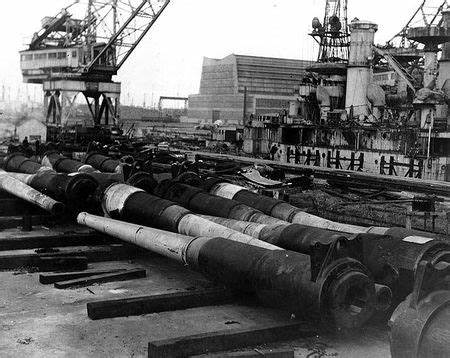
But the idea that the “War to End All Wars” truly lived up to its name was already being tested in the embers of flame left over from the conflagration. Germany was still smarting for the “betrayal” of its people by a fledgling government that replaced the Kaiser. Japan was bristling at the subservient role it viewed itself thrust into by the very Naval Arms Limitation it had been coerced into signing. All the good intentions in the world would not stop the resentments that were building across the globe.
While the admirals were unhappy, peace activists strongly supported the results and successfully worked for ratification. In the United States they included the World Peace Foundation; the American Association for International Conciliation; the Carnegie Endowment for International Peace; the Women’s Peace Society; the Women’s World Disarmament Committee; the Women’s International League for Peace and Freedom, and the Federal Council of Churches of Christ in America.
In their longing for peace, the good people failed to understand the need to be prepared for war as the only real deterrence to people who deliberately seek an unworthy purpose. It would only take them 18 years to find that out in a very real way in a place called Pearl Harbor.
In December 1935, the warnings about the future were already being seen.
“Non-Japanese experts said that because the British and Americans have not built up to treaty strength, while the Japanese have, Japan already possesses a modem, underage fleet of considerably greater strength than the treaty 5—5—3 relations.”
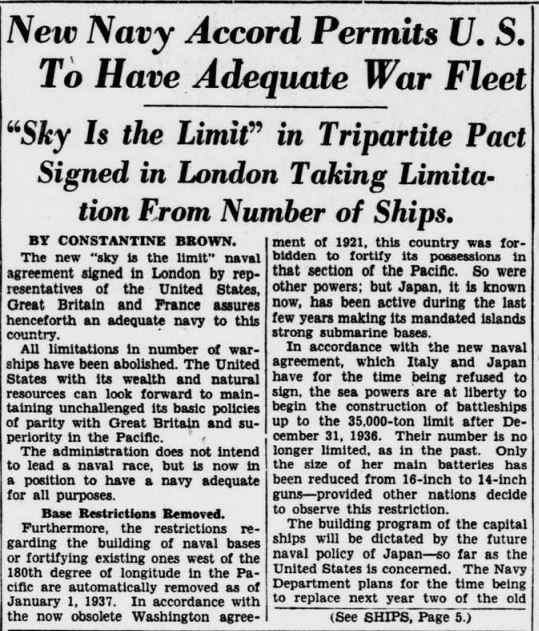
The recognitions of the danger was even more pronounced when the global view was taken into account. America and Britain would soon find that protecting their far flung areas of responsibility would be more challenging than any planners could have imagined in that time.


