Like many people in America recently, I have been following the televised reports of bombings in Iran.
To be clear, Iran has brough the attention on itself over the course of the last 47 years by being a less than desirable neighbor. Since the radical islamists took over their country, they have killed too many citizens of every one of their neighbors, their own country and of course Americans. I am fully aware of the meddling that our country did in the early nineteen fifties, but the bloodthirsty regimes that took over in 1979 have far surpassed anything that may or may not have transpired generations ago.
But like all despotic regimes, force has been used to curtail their path forward towards developing nuclear weapons.

Or has it been curtailed?
During the early days of the Cold War, the armed forces of the US and other countries began assessing how successful their efforts were. We know for a fact that a combination of air, land and sea forces combined knocked the Germans out of the war. Herculean efforts and tremendous human sacrifice finally brought the Nazi regime to an end. Even as the war ended, serious questions came up about how well strategic bombing had met its goals.
The numbers of planes and bombs used was staggering.
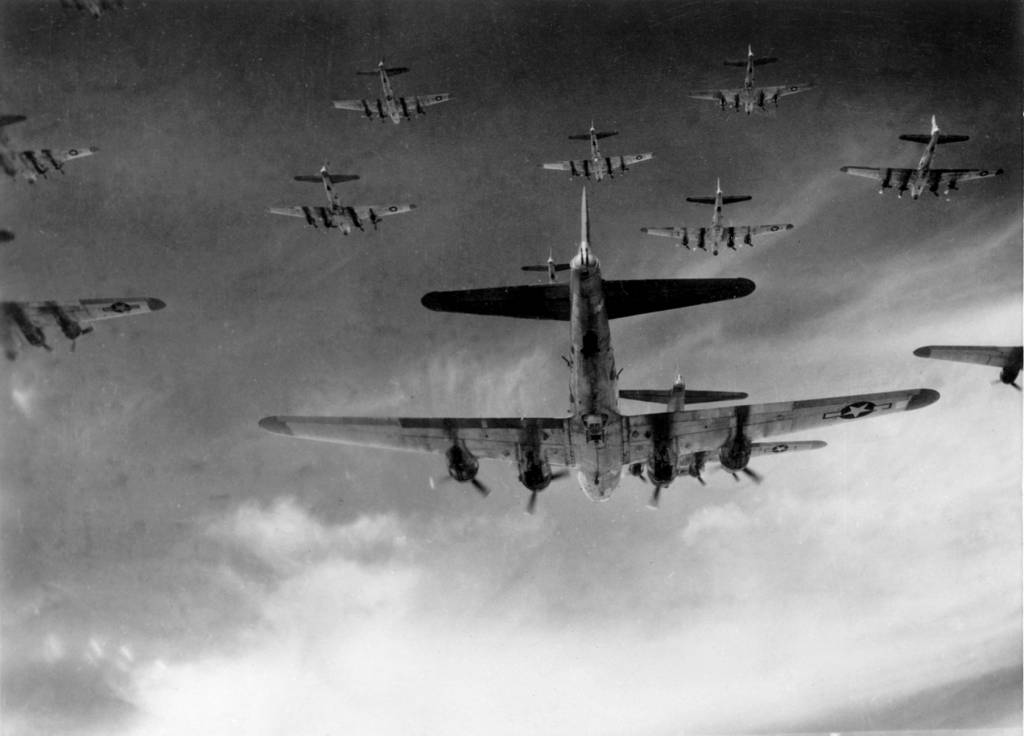
Thousands of bombers were used in late war attacks on infrastructure. Some of the targets most sought after were the bases where German submarines had operated out of with abandon. This weapon was one of the deadliest used to try and starve England of its lifelines of food and material. The battles at sea are legendary and even the effectiveness of technology on the allied side did not stop the menace completely.
In late winter and early spring of 1945, increased attacks were designed to rob the U-boats of their needed ports and repair facilities. This newspaper article from March 31, 1945 talks about some of the largest raids.
MIGHTY AERIAL FORCE STRIKES U-BOATYARDS
Large North Sea Ports of Bremen, Hamburg and Wilhelmshaven Are Plastered. London, Saturday, March 31. Strong force of RAF Mosquitos attacked Berlin again last night after the mightiest American aerial force sent aloft this year more than 2,300 bombers and fighters showered 4,000 tons of bombs in daylight attacks on five U-boat yards in Germany’s largest North Seaports of Bremen, Hamburg and Wilhelmshaven.
German radio alarms logged bombers over most parts of northwestern Germany last night, but the only definite target announced by the British Air ministry was Berlin, which was attacked for the 38th night in the last 39 nights.
The greatest U.S. attack of the war on naval installations yesterday strangled chances of the crumbling German army of getting seaborne supplies and reinforcements. It also dealt a massive blow against the Nazis’ spring submarine plan.
After Navy Units.
There was an indication—but no confirmation—that the attack by more than 1,400 Flying Fortresses and Liberators and a screening cloud of 900 fighters of the U.S. Eighth Air force was timed to catch large units of the German navy anchoring at Wilhelmshaven, last attacked by the Eighth on February 3, 1944.
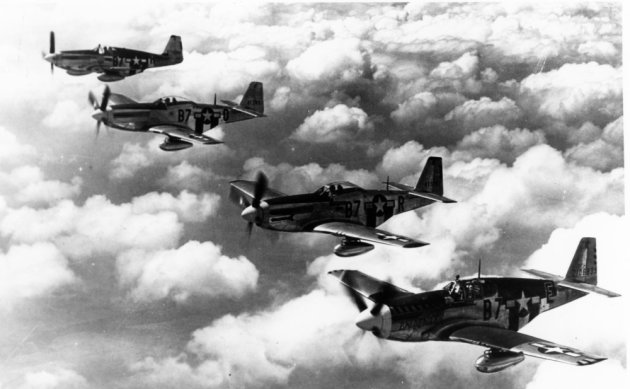
The armada aimed the explosives on the U-boat yards and other targets, including warships, and what was believed to be a flotilla of subs sheltering in Wilhelmshaven’s inner harbor near the government naval dockyard where the Nazi battleship Von Tirpitz was built. Some groups of Fortresses in today’s attack were jumped by a dozen enemy jet planes, attacking singly or in pairs, or as many as five abreast. Mustang escorts shot down at least six and destroyed five other enemy planes on the ground.
Wreck U-Boat Works.
Sub building yards struck included the Blohm and Vossand the Deutsch Weft yards at Hamburg, both working on250-ton prefabricated plastic U-boats; the Daschimag works at Bremen; a vast new concrete structure, near Farge, 16 miles downstream from Bremen, believed to be for the construction of prefabricated Ü-boats; and the navy dockyard at Wilhelmshaven, an important sub base.
At Hamburg, where most of the bombing was done through clouds, columns of heavy oil and smoke boiled up, said an Eighth Air force statement. At Bremen and the other objectives, where the weather permitted visual bombing, generally good results were reported.
The Lincoln Times (Lincolnton, N.C.), April 2, 1945
I remember watching the movie “Twelve O’clock High” which told the story of the air forces in Europe.
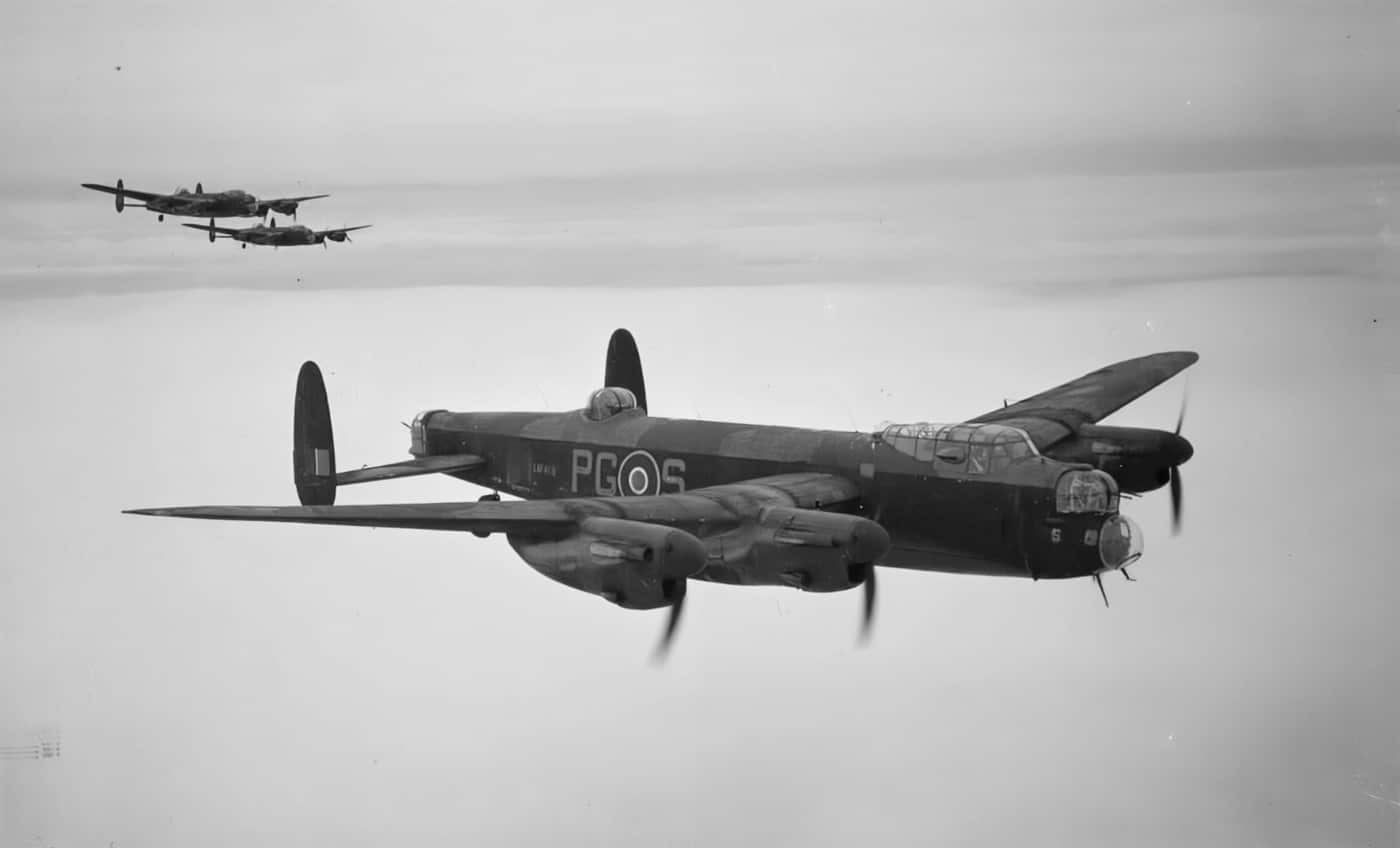
The large wings of the bomb groups would take off for the industrial centers of faraway German and fight their way through flack and fighters. By early 1945, the German air forces were greatly diminished and the presence of P-51 Mustangs with extended range greatly reduced the loss of bombers. But not all made it through, and not all made it home. The Germans had developed jet aircraft by that time, and we had our hands full dealing with them.
But at the end of each mission, pilots and their crews were debriefed as to their understanding of actual damage done. Most interesting to read in the newspaper report was that the attack on Bremen was done with good visibility, and generally good reports were noted.
But the story was slightly different in 1946 when the dust had settled.
Big Submarine Plant Still Stands Despite Heavy Allied Bombing
BREMEN, Germany, July 6, 1946
The world’s largest submarine assembly plant—a reinforced concrete structure rivaling Egyptian pyramids in size and weight —still stands today despite prolonged hammering with allied bombs. B-29 Superfortresses flying from England have dropped armor piercing bombs on its roof—14 feet thick in some places and 22 in others—without causing any apparent serious damage. The Germans built it as a U-boat spawning ground, having almost completed it when the war ended. It is reported that British and American planes soon would start an even heavier test bombing of the plant on the Weser River between Bremen and Bremerhaven.
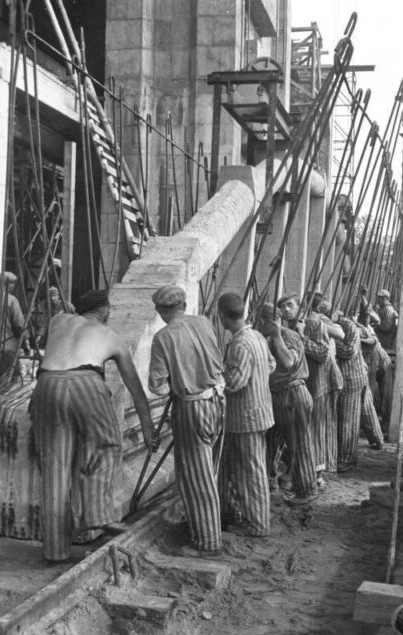
Valentin: The German U-boat Pen That Survived Multiple 22,000-Pound ‘Grand Slam’ Bombs
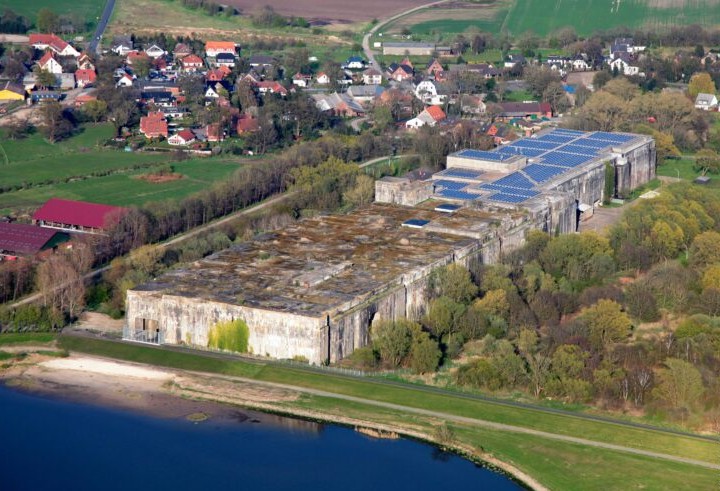
Valentin was one of the largest military projects undertaken by Germany during the Second World War. Construction began in 1943 along the Weser, between Rekum and Farge.
While Valentin was going to be used to house German U-boats, it was also intended to manufacture them. Bremer Vulkan was to oversee the production of Type XXI Elektroboots, with 4,500 Two of the bays were sectioned off by high walls that could be sealed through water-tight floodgates and flooded to create a pool depth of about 20 meters. The very last bay was the testing area, where completed U-boats would be checked for leaks and other issues. The gateway was located along the far western wall and, after opening the sliding bomb-proof door, led to the Weser.
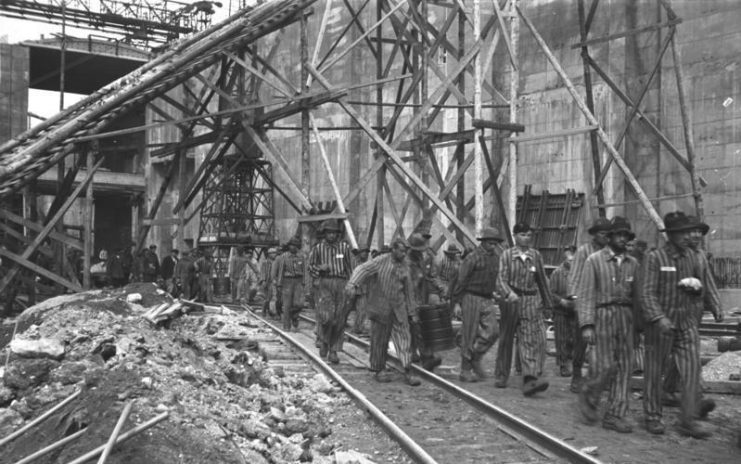
In March 1945, after nearly two years of construction, Valentin had reached 90 percent completion. It was to become fully operational that August, with approximately 14 vessels manufactured per month. forced laborers tasked with building them.
U-boats and other submersibles were never meant to be built from scratch at Valentin. Rather, eight parts were to be fabricated elsewhere, shipped to the facility and assembled on-site. The size of the pen allowed for 13 assembly bays, each responsible for carrying out one part of the assembly. They differed in size, depending on their intended use.
The bunker was 426 meters long and 97 meters wide, with 4.5-meter-thick reinforced concrete walls. Its overall height varied, measuring anywhere from 22.5 to 27 meters, depending on the spot, and its reinforced concrete arches were just as thick as its walls. Some areas were even thicker, including the eastern section of the roof, which was seven meters wide.
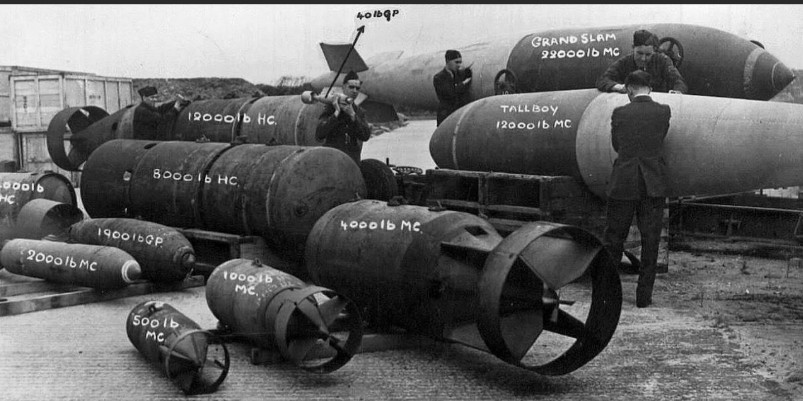
When World War II came to an end, Valentin was stripped of its machines and tools and, by 1946, had become the test site for bombings by the RAF and US Army Air Forces, in what was called Project Ruby. Testing was intended to determine the use of penetrating bombs on structures built from reinforced concrete, just like the U-boat pen.
Further bombings failed to destroy Valentin, so it was slated for demolishing via blasting. However, blasts could prove damaging to the nearby suburbs, so the structure remained standing. The final requiem of the effectiveness of even the heaviest bombs ever developed up to that point was documented in the US Strategic Bombing Survey conducted after the war was over.
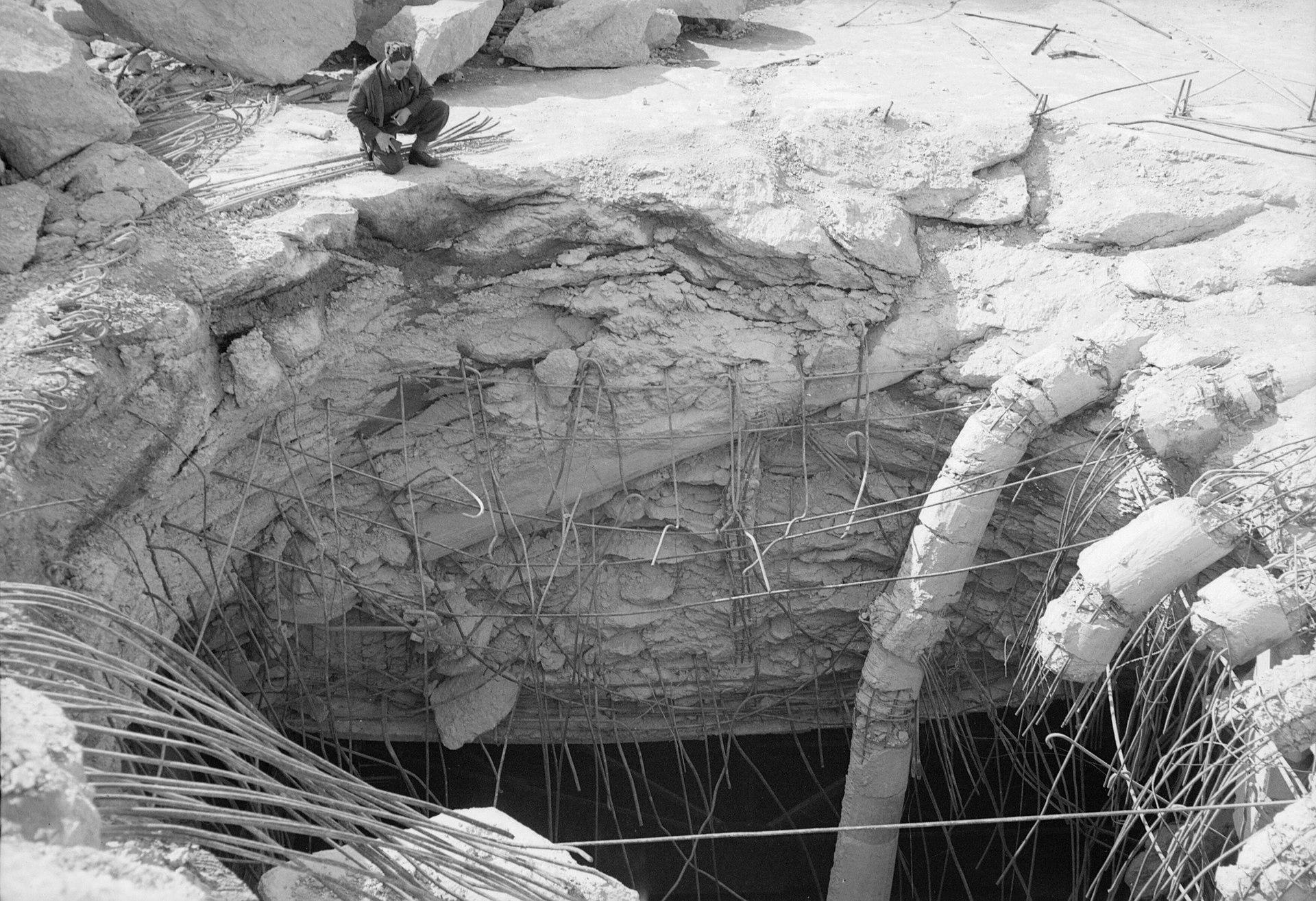
Parts of that report are here:
Bomb Damage Assessments: Physical Damage Division report (ETO) /
The United States Strategic Bombing Survey, Physical Damage Division (1947)
Effectiveness of high – explosive bombs against other installations.
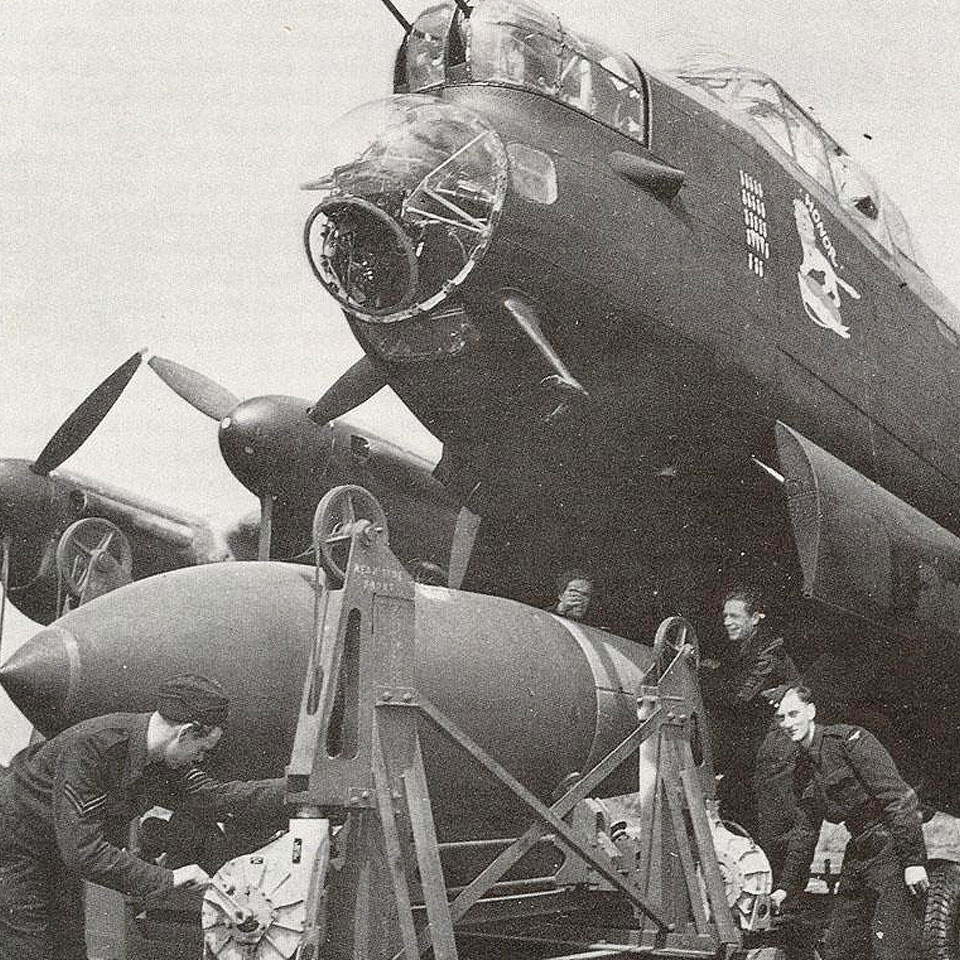
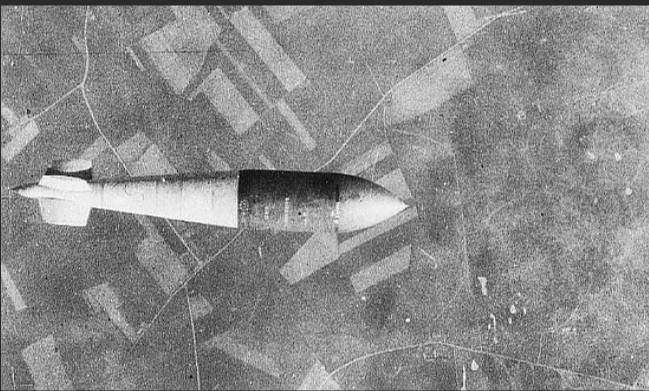
Submarine Pens. —PDD reports 10, 39, and 47 cover the results of bombing attacks on the submarine pens at Brest, France, and at Hamburg and Farge, Germany. In the first two instances, 12,000 – pound bombs were used; in the third, 22,000 – pound bombs. Little effective damage was done, and the pens were not rendered unserviceable. It is to be noted that the bombs used were British, and that the American Air Force had no bomb equal to a task of this kind.
(1) Submarine pens at Brest, France (PDD 10). This structure was constructed of reinforced concrete of excellent design and strength. It was 1,200 feet long by 600 feet wide and contained 15 submarine pens. Original construction had a flat, reinforced- concrete roof varying in thickness from 12 feet 8 inches to 14 feet. The protective quality of the roof, however, was supplemented on different roof areas. On some areas an additional 5 feet of reinforced concrete was ‘ poured directly on the original roof without bonding by reinforcement steel. On other areas precast concrete blocks were laid, and on still others a slightly pitched roof of reinforced concrete was constructed. In the last case an air space existed between the original roof and the supplementary protection.
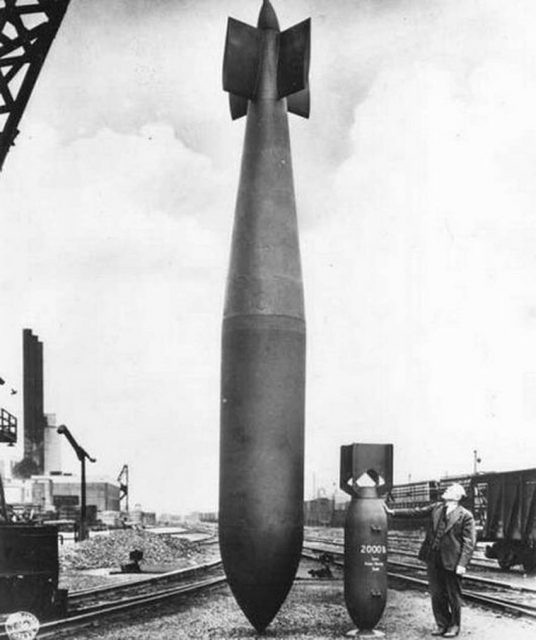
This pen received nine direct hits by 12,000 – pound (Tallboy) British bombs. Five were fuzed for 11- second delay action and four were fuzed 0.5- delay. In addition, two of the same type of bombs, fuzed 0.5 – second, detonated near the rear side of the pen. All of the direct hits failed to perforate the roof prior to detonation. Strikes on roof spans resulted either in craters with accompanying under – roof spalling or in hourglass – shaped openings. Strikes on areas directly over heavy partition walls resulted in roof craters above and spalling on the underside of the roof and on the partition wall. In no, case did serious structural damage such as roof collapse or wall cracking occur. Crane rails, air and electric lines, walkways, and handrails suffered minor damage from falling debris caused by roof spalls. The two strikes at the rear of the structure caused no damage to the main building but demolished a few nearby buildings of light construction.
It must have been humbling for the planners to realize that the best they had was not good enough.
The existence of nuclear weapons would supersede any failures of conventional bombing attacks. Of course, that means if you have the will to use them. MacArthur famously wanted to bomb the Chinese back to the stone ages in the Korean War. Cooler heads prevailed. Ther have been a few more times in the twentieth century where weapons release came close. But again, the use of nuclear weapons would unleash a fresh hell that might not be able to be contained.
In my mind, watching the destruction of Iran with many conventional weapons is a bit like looking into the past. How effective it will all be when the dust settles remain to be seen. Missiles still fly into our friend’s countries, our troops are still at risk, and we do not have control over the enriched uranium. Most importantly, despite taking the heads of many bad guys, more bad guys are filling their place.
They say you should always be prepared for the unexpected. I just hope we are prepared enough.
Mister Mac

 theleansubmariner