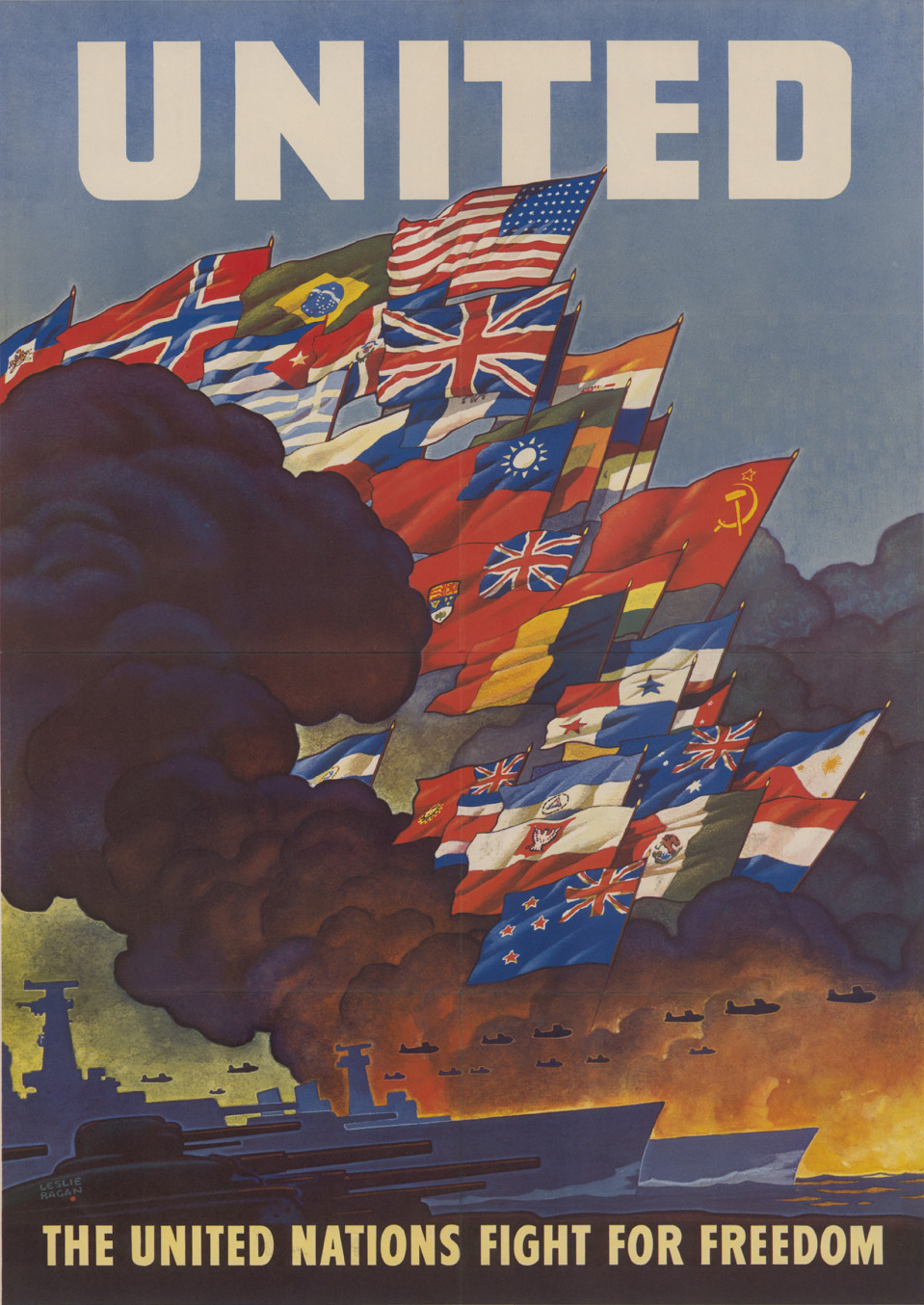
Cold War Stories – Sharing Atomic Secrets in 1946
Even prior to the formation of the United Nations organization in 1945, the shifting sands of power around the globe were creating doubts about the visions of the founders. Franklin Roosevelt had made the formation of this new organization one of his highest priorities. He had witnessed firsthand the failure of the world to accept the previous attempt at a governing body. The League of Nations was championed by one of his predecessors, Woodrow Wilson but failed to gain acceptance by the congress and ultimately the American people.
The failed League had been partially responsible for many of the circumstances that led to an even more catastrophic global conflict and leaders like Roosevelt felt that only a global organization like the United Nations could prevent World War 3.
While Roosevelt would not live to see his vision achieved, Truman and others would carry the mission forward.
Truman learned of the existence of the atomic bomb after Roosevelt’s death. Then Truman had to make the decision on using the bombs at his disposal to end the war with Japan. This spectacular leap forward in technology was something that opened up wide ranging questions that went well beyond the morality of using it for destructive means. Scientists within the organization that created the bomb also questioned how and when the information should be shared with others. With the United States holding every card (technology, equipment, scientific mastery and so on) they could easily bring the rest of the world to heel if they had been of such a mind.
By January 1946, the recurring question kept being asked: should the secrets of the atoms be shared with allies?
After all, it had been the combined forces of the allies that ultimately brought the axis to its knees. Would the power as great as mastering the atom be too great of a power for only one country? And to be honest, could we really trust our former allies?
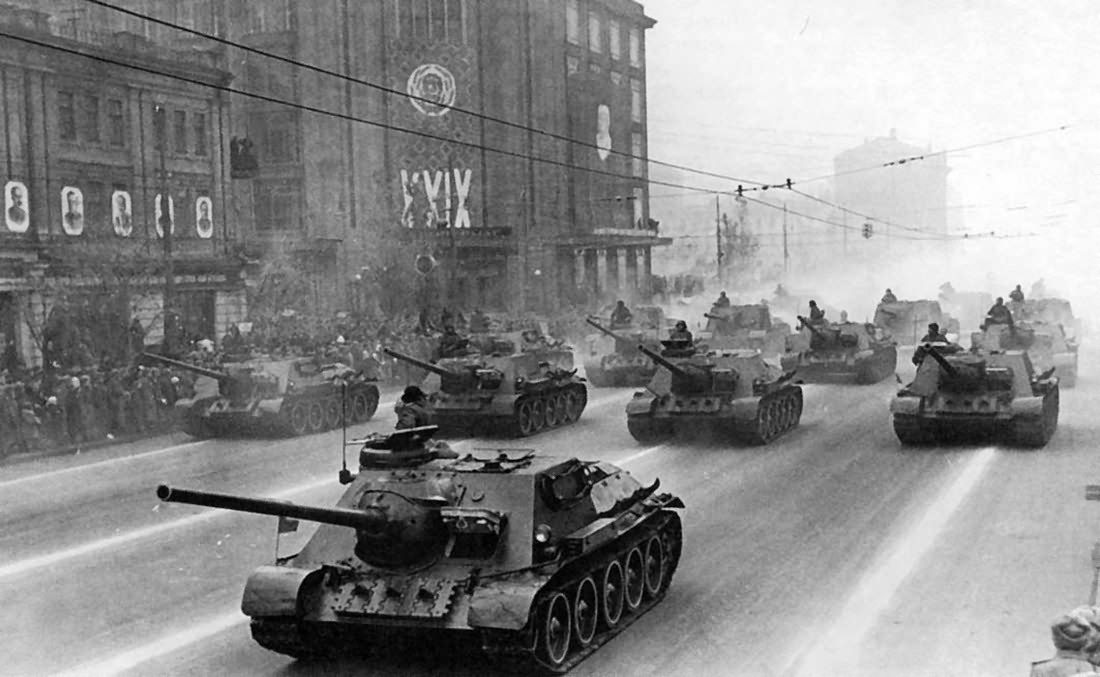
Roosevelt had a vision that the United Nations would ultimately be led by the four great powers of the allied nations.
Those included the United States, Great Britain, the USSR and China. But the China envisioned as a partner would not be the China that emerged from the great revolution taking place under Mao Tse Tung. By 1949, the old China would be a shell of its former self, relegated to a small island that is still debated to this day.
In 1946, it is now known that the USSR was getting secret information and technology related to the atomic bomb. That information was flowing form spies and misguided scientists that worried that the power in the hands of one nation was a pathway to more evil. America had already been ruled for much of the past twenty years by one party under Roosevelt. What if someone with a thirst for power was to rise to the leadership of the country. Some asked if it was beyond the realm of possibility that a corrupt politician could wrest power from the American people and change the global dynamics. To be fair, the same question is being asked about AI today. A concentrated force of men with no conscience could divert the power of this new technology and with the speed of our interconnected electronic world today change the course of the future.
SO, many conversations were occurring in every corner of the civilized globe. What was the world to do with this new technology? Who would control it and what would that look like? In some small ways, given the timeframe with which it occurred, wouldn’t it be a show of devotion to this new world order for the United Nations play a key role?
It was really a national discussion here in the USA in January 1946.
ATOMIC JITTERS
A warning against permitting atomic fears to sabotage the United Nations Organization was voiced last week as ultimate control of the bomb continued to stir sparks on both sides of the secrecy versus world enlightenment controversy.
On the side of early international control. Dr. Herbert Vare Evatt, Australia’s Minister for External Affairs, challenged the opinion that the bomb is “to hot” a problem for the UNO to handle and called for a clear-eyed international policy.
“It behooves us all,” he said in an interview in New York City, “to avoid confusion, to keep our eyes on the ball and go straight ahead and finish the job of the United Nations. The greatest danger of the atom bomb is that it confounds thinking.”
Dr. Evatt was striking covertly at sponsors of a trend, which, he said, used the atomic bomb fear for proposals to replace the UNO with “world government.” He declined to name particular persons, but observers saw a link between his arguments and recent expressions of Foreign Minister Ernest Bevin and Anthony Eden in the British House of Commons.
Both these leaders, it was pointed out, skirted the idea of World government “with references to “a merging of national sovereignties” and the ability of the UNO “to cope with the atom bomb problem.”
“The plain fact is”, said Dr. Evatt, “that the nations of the world are not yet prepared to surrender the rights of self-government in order to be governed by a central executive and a central legislature on which most of them would have a tiny and almost insignificant voice.”
EAST HARTFORD GAZETTE, JANUARY 4, 1946
“Wake Up, America!”
Should We Keep the Atomic Bomb Secret?
Moderated by Fred G. Clark, General Chairman American Economic Foundation
As debated by William B. Ziff, Author of “The Gentleman Talk of Peace”
And Hon. Claire Boothe Luce, Congresswoman, 4th District, Connecticut; Member, House Military Affairs Committee
ZIFF OPENS: The plan to internationalize the atomic bomb, unfortunately, is illogical and cannot be placed into operation. The illogic proceeds from the following real conditions:
- There is no international body to whose custody such a supreme weapon as the atomic bomb can safely be given.
- If such an international body existed, it would have to be in the nature of an international government toward which the United States, the U.S.S.R. and other existing states bore the relation of provinces.
In principle, if we internationalize the bomb, we are saying we should have no military advantage over any other nation. This is a fine principle, but if it is to be brought to its final conclusion; it would mean we should give up all military secrets of every kind. The big inferential question proceeding from this plan is the outlawing of war. If war is to be outlawed, a way must be found by which nations can give up all their immense and costly armaments, not just the atomic bomb alone. If a real condition exists whereby it is not safe for the U. S. to give up all armaments, then it is not safe to give up any part of them. This would seem to be a simple proposition in logic. I am sure that Mrs. Luce herself, who commands respect as one of America’s ablest legislators, will ultimately come to this view.
MRS. LUCE CHALLENGES: Internationalism of atomic knowledge is neither illogical nor unrealistic as a goal to be attained. A fundamental purpose of UNO is to keep world peace by control of all armaments. Today our possession of atomic knowledge gives us an advantage. Tomorrow some other scientific discovery may transfer that advantage to an unfriendly power. Only now, while we have this superiority in bargaining power, can we Insist upon authority being given UNO to inspect and report publicly upon all plants in every country capable of manufacturing weapons for mass extermination. This does not set up an international government any more than did the creation of the International Red Cross.
ZIFF REPLIES: If we are to throw our weapons out of the window at least we should have some absolute assurance of world order. This is not provided by the UNO which unfortunately has no more actual power than the International Red Cross. Law is synonymous with power and power is the product only of government. International law is no exception. An international agency capable of keeping the peace would have to have authority superior to that of the states composing it. If it did, it would be a world government. No League can be the custodian of weapons in a world without law.
MRS. LUCE OPENS: We should not keep the so-called “atomic bomb secret” unless compelled to do so by other nations. We should share it in every detail providing other nations will share with us all the developments they now have or will make in the future along the same line of scientific inquiry and invention. In practical terms, this should mean acceptance by the United States, and other members of the UNO, of the principle of scientific freedom, to be exercised by the exchange of knowledge through an international scientific committee or clearing house. I am for this. On November 14th of this year, I introduced in Congress a 46-word Resolution “favoring the creation of appropriate international machinery within the existing framework of the United Nations Organization for international control and reduction of armaments and weapons, especially those involving atomic power.”
Obviously, any such international armament board or committee would have the right to inspect at any time and without notice, the technical plants and industrial equipment of any nation. That is the only practical way in which such a board can fulfill its function with fairness and safety to all. It is the way financial institutions are controlled by government examiners in order to protect the funds of the depositors; and the lives and homes of millions of human beings now at the mercy of surprise atomic destruction should not have any less protection.
ZIFF CHALLENGES: When an international authority with teeth in it actually exists, none of the nations will need war-making machinery. But as long as the nations of the world are beating their ploughshares into swords in a new armaments race, the mere hope of world order is far from sufficient. It smacks of the unhappy idealism which left us unprepared before World War 2. So far, no Leagues have worked, and it is highly improbable that this one will. The present power actions of the Russians and British in different parts of the world cannot be reconciled with the thesis that they will be willing to make their policies submit to the authority of some international armaments board.
MRS. LUCE REPLIES: Mr. Ziff’s conclusion is one of despair. He feels UNO cannot be made to work for peace. I say we must try to make it work. I agree the test of UNO will be its ability to control production of weapons, including atomic bombs. That is why I introduced Resolution 101 to create international disarmament machinery within the UNO. Perhaps UNO cannot prevent war, but its horror and scope can be reduced if UNO begins to work now to control all weapons including atomic weapons. Until we know other nations will not agree to atomic control we must stick with UNO, which offers the only hope of securing such agreement.
Who was Clare Luce?

In 1942, Luce won a seat in the United States House of Representatives as a Republican comprising the whole of Fairfield County, Connecticut, the 4th Congressional District. She based her platform on three goals: “One, to win the war. Two, to prosecute that war as loyally and effectively as we can as Republicans. Three, to bring about a better world and a durable peace, with special attention to post-war security and employment here at home.
During her second term, Luce was instrumental in the creation of the Atomic Energy Commission and, during the course of two tours of Allied battlefronts in Europe, she campaigned for more support of what she considered to be America’s forgotten army in Italy. She was present at the liberation of several Nazi concentration camps in April 1945, and after V-E Day, she began warning against the rise of international Communism as another form of totalitarianism, likely to lead to World War III.
“The Gentlemen Talk of Peace” is a historical non-fiction book written by William B. Ziff.
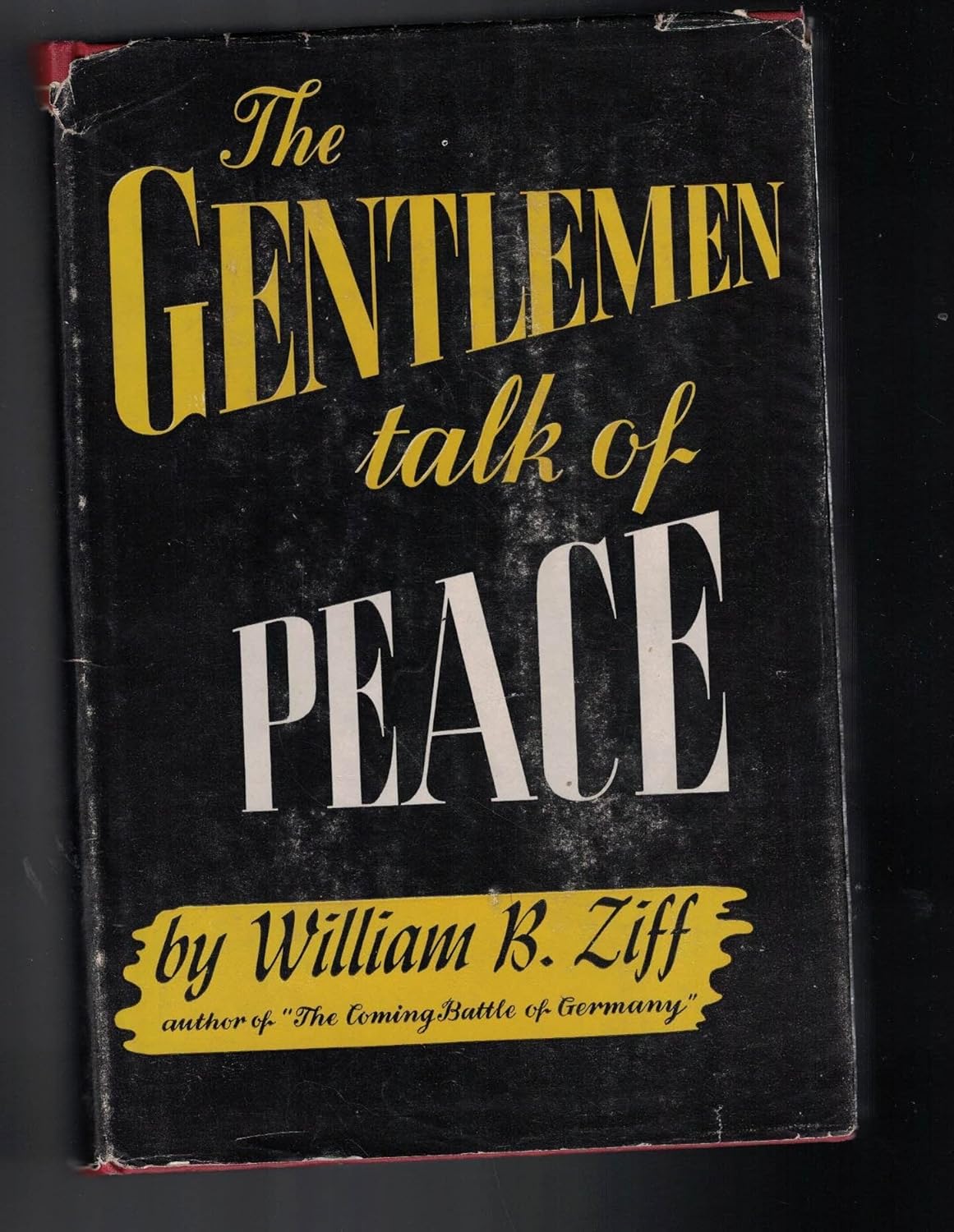
The book details the negotiations that led to the end of World War II, focusing on the personalities and motivations of key players such as Winston Churchill, Joseph Stalin, and Franklin D. Roosevelt. Ziff draws on a wide range of primary sources, including government documents and personal diaries, to provide a comprehensive account of the diplomatic efforts that shaped the post-war world.
In his book (which is a fascinating study of what post war Europe will look like) he talks about a new world order where the United States will need to bear in mind the changes of technology that the war brought to the potential dangers the US would have to counter. On pages 484-5 he says:
“In the north, Iceland and Greenland are direct steppingstones and would have to come permanently under our flag.”
Ziff also predicts that someday Canada will come into our union. One has to wonder if someone in the White House has read his book.
https://archive.org/details/in.ernet.dli.2015.151756/page/n3/mode/2up
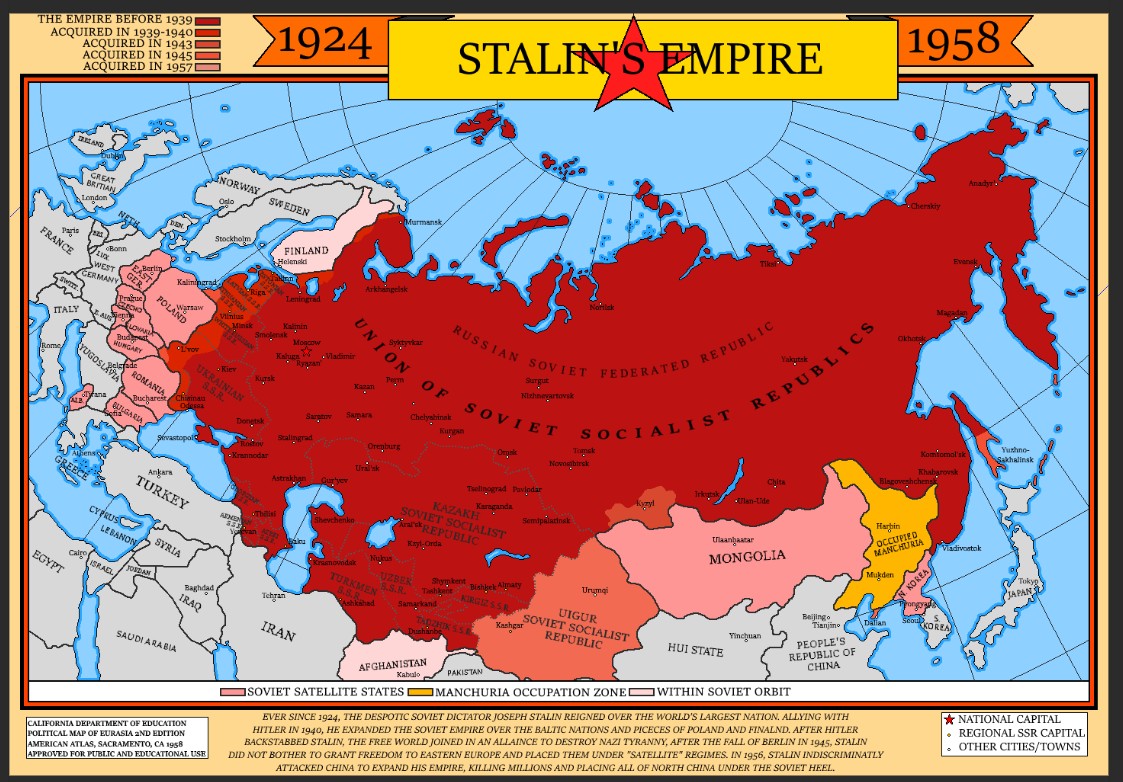
The Cold War Complicated the nature of the discussion
From about 1947 until 1989 the division of the world into hostile camps during the Cold War made agreement on peacekeeping matters extremely difficult. Following the end of the Cold War, renewed calls arose for the UN to become the agency for achieving world peace and co-operation, as several dozen active military conflicts continued to rage across the globe. The breakup of the Soviet Union had also left the United States in a unique position of global dominance, creating a variety of new problems for the UN.
The USSR would eventually get the technology to make their own weapons. Great Britain has been a partner with the Americans since the early days and has their own power. France would join later as would a number of countries that even today do not openly admit what is the worst kept secrets on the planet.
An Inside Job
Evidence is still emerging that Russian spies were active in Los Alamos and other locations. That story will have to wait for another day. Here is some information that has emerged:
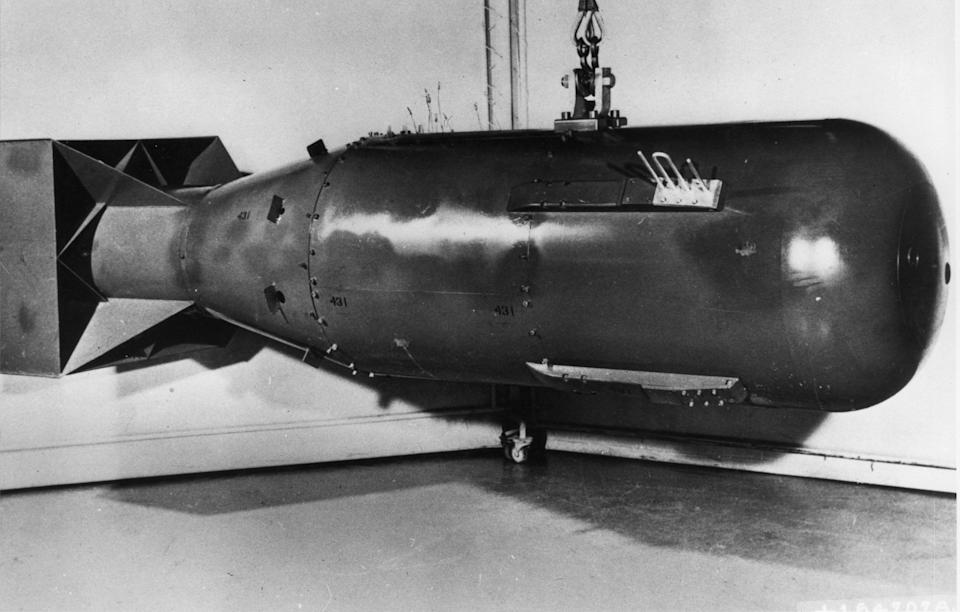
The one area that proves the wisdom of not being too open about sharing in the early days is China. Once Mao and his forces decimated the Republic and forced them into exile, their possession of an early atomic program would have made the middle years of the twentieth century even more chaotic. China tested its first nuclear bomb in 1964 and its first full-scale thermonuclear bomb in 1967. It carried out 45 nuclear tests before signing the Comprehensive Nuclear-Test-Ban Treaty in 1996.
The Federation of American Scientists and the Stockholm International Peace Research Institute estimate China’s stockpile at approximately 600 nuclear warheads as of 2025. This makes it the third largest stockpiler of weapons on the planet.
Since 2020, the People’s Liberation Army has operated a nuclear triad. Of its 600 warheads, it is estimated 376 are assigned to its Rocket Force’s Dongfeng intermediate and intercontinental ballistic missiles, 72 to its Navy’s Julang-3 submarine-launched ballistic missiles on six Type 094 submarines, and 20 to its Air Force’s Jinglei-1 air-launched ballistic missiles on Xi’an H-6N strategic bombers. A remaining 132 warheads await assignment. China is upgrading its triad with the in-development Xi’an H-20 stealth bomber, Type 096 submarine, and a transition towards missile silo fields.
The Genie is out of the Bottle. It can never be put back in.
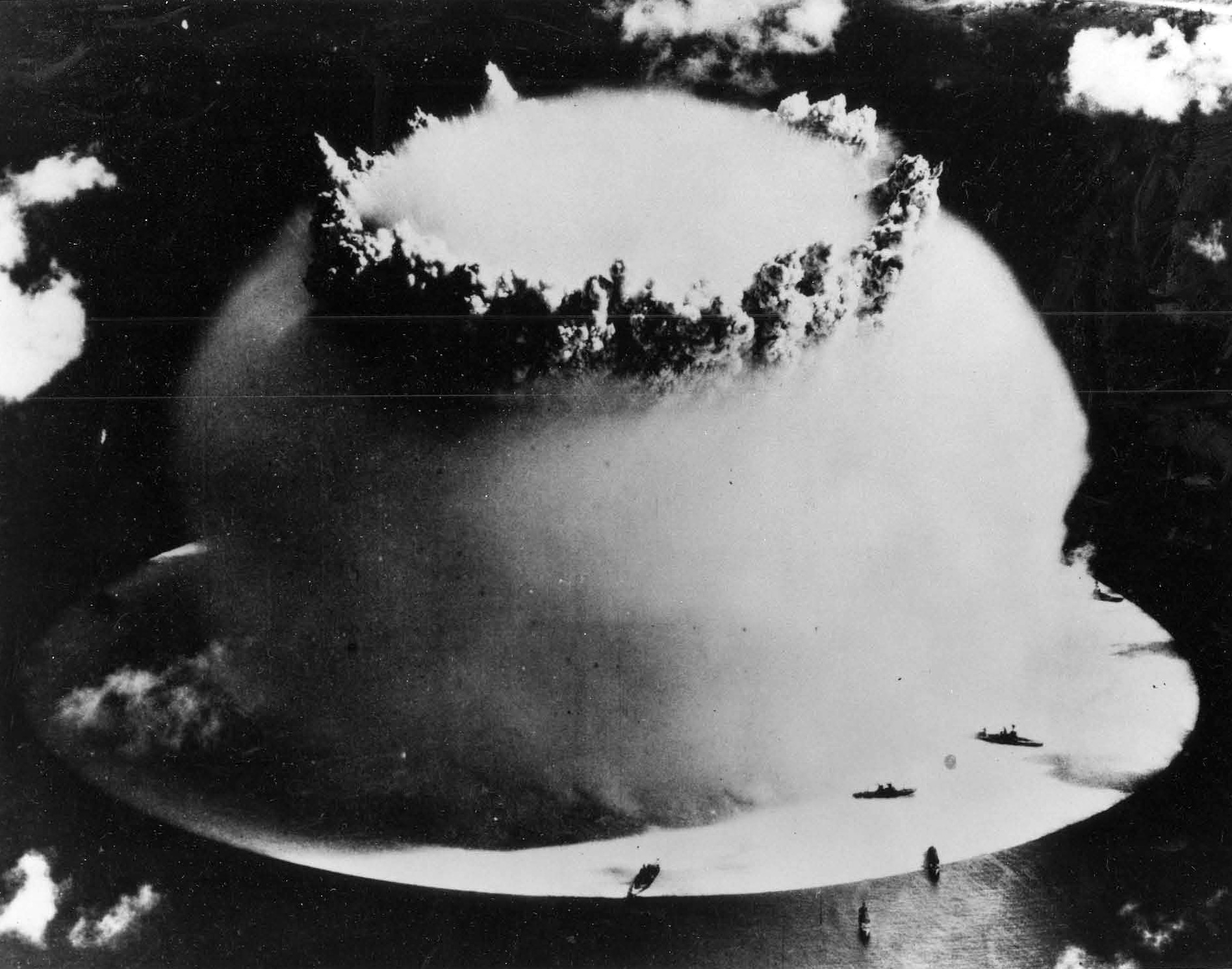
The most common definition of the genie and the bottle includes that if the genie is out of the bottle, something has been done or created which cannot be changed or stopped, especially something which some people regret. Whatever we think about nuclear power, the genie is out of the bottle.
In this case, the genie and the bottle refers to nuclear warfare. If one side used a nuclear weapon, the other side would retaliate in kind. This would continue to escalate with no end in sight. In other words, if the “genie” that was firing a nuclear warhead was let out of the bottle, there was no putting it back in.
Often, when I study the book of Revelations, I can imagine that John’s visions were meant to warn future generations about what the end days would look like. The times that he lived in certainly would have influenced his interpretations of what he saw. In the dreams I have frequently had since my days on ballistic missile submarines, John’s interpretations have a very personal meaning to me.

Revelation 9
13 The sixth angel sounded his trumpet, and I heard a voice coming from the four horns of the golden altar that is before God. 14 It said to the sixth angel who had the trumpet, “Release the four angels who are bound at the great river Euphrates.” 15 And the four angels who had been kept ready for this very hour and day and month and year were released to kill a third of mankind. 16 The number of the mounted troops was twice ten thousand times ten thousand. I heard their number.
17 The horses and riders I saw in my vision looked like this: Their breastplates were fiery red, dark blue, and yellow as sulfur. The heads of the horses resembled the heads of lions, and out of their mouths came fire, smoke and sulfur. 18 A third of mankind was killed by the three plagues of fire, smoke and sulfur that came out of their mouths. 19 The power of the horses was in their mouths and in their tails; for their tails were like snakes, having heads with which they inflict injury.

 theleansubmariner