New beginnings – again
We made the move to South Carolina over a year ago to downsize from a house that was too big to take care of and find more reasonable winters. I had been stationed for a short while at the Charleston Naval base and Debbie and I had visited South Carolina and particularly Charleston a number of times over the years. Despite the fact that the heat is pretty oppressive during parts of the summer, we took the gamble that we could manage that part in exchange for warmer winters.
So far that has been working out. A little snow last year only lasted a few days and overall, we have been enjoying our time here. We have ventured out to a number of areas in between routine trips to the doctors and have loved discovering what makes South Carolina a wonderful destination. Even the nearby passing of a few hurricanes has been manageable, and we have continued our long-standing tradition of keeping a bug out bag handy and the gas in the car rarely goes below a half before getting topped off. I’m very happy about the lower cost of fuel here. Pennsylvania taxes the heck out of gas and property taxes and at our age, it’s nice to have friendly relationships with lower prices on both.
I was checking out the Library of Congress’s newspaper collection today looking for stories from 1925. It’s one of my hobbies to mine the data in that collection. Anyone who reads my blog has seen that history is a great predictor of the future. It seems like the old adage from Proverbs remains sound: There is nothing new under the sun.
In the Washington Times for this date in 1925, a small snippet appeared as a filler on the editorial page.
Quite often, the news of the day was not enough to fill the page with new content so they would add pieces to fill the page.
This one appeared and caught my attention.
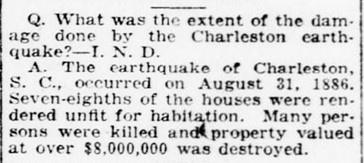
I have not studied local history very much, but we have toured Charleston and have seen the beautiful architecture. It’s surprising that there are some really beautiful historical structures that have managed to survive wars and hurricanes. In fact, one of the biggest occurred in 1885, just a year before the earthquake that was mentioned in this story. So, I did some digging and found the following story in my other go to resource, Hathi-Trust, an online book repository containing books and pamphlets from around the world.
The following comes from a book called The Charleston earthquake, August 31, 1886, by Carl McKinley.
(Note: There are a few dozen other books about the event, but this one was incredibly graphic about the day).
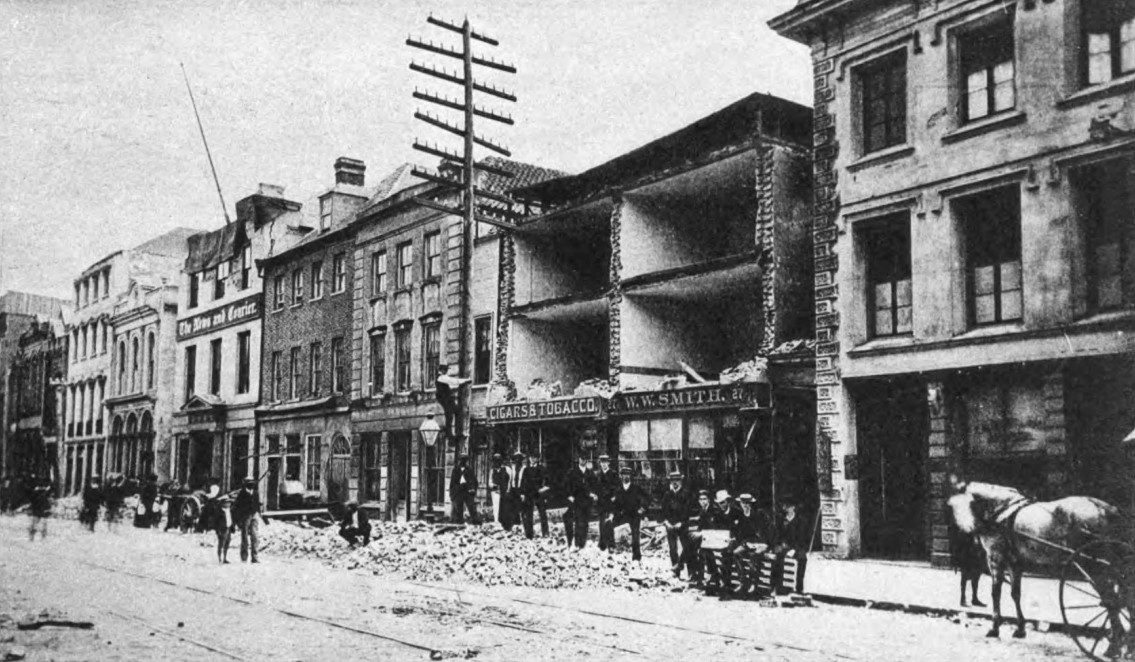
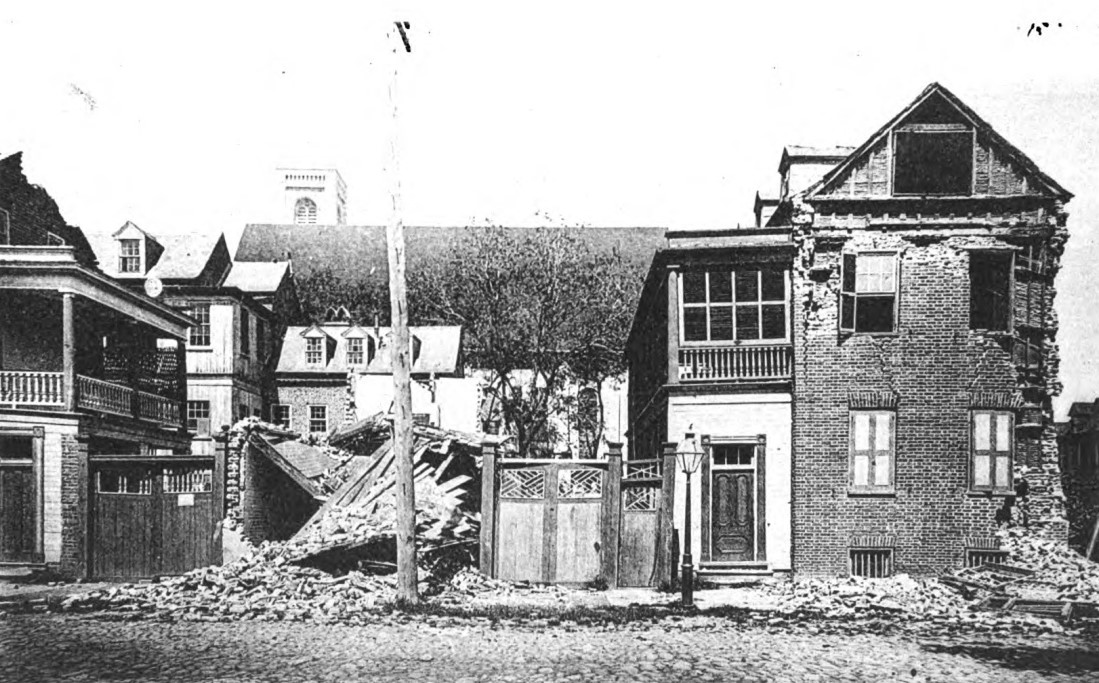
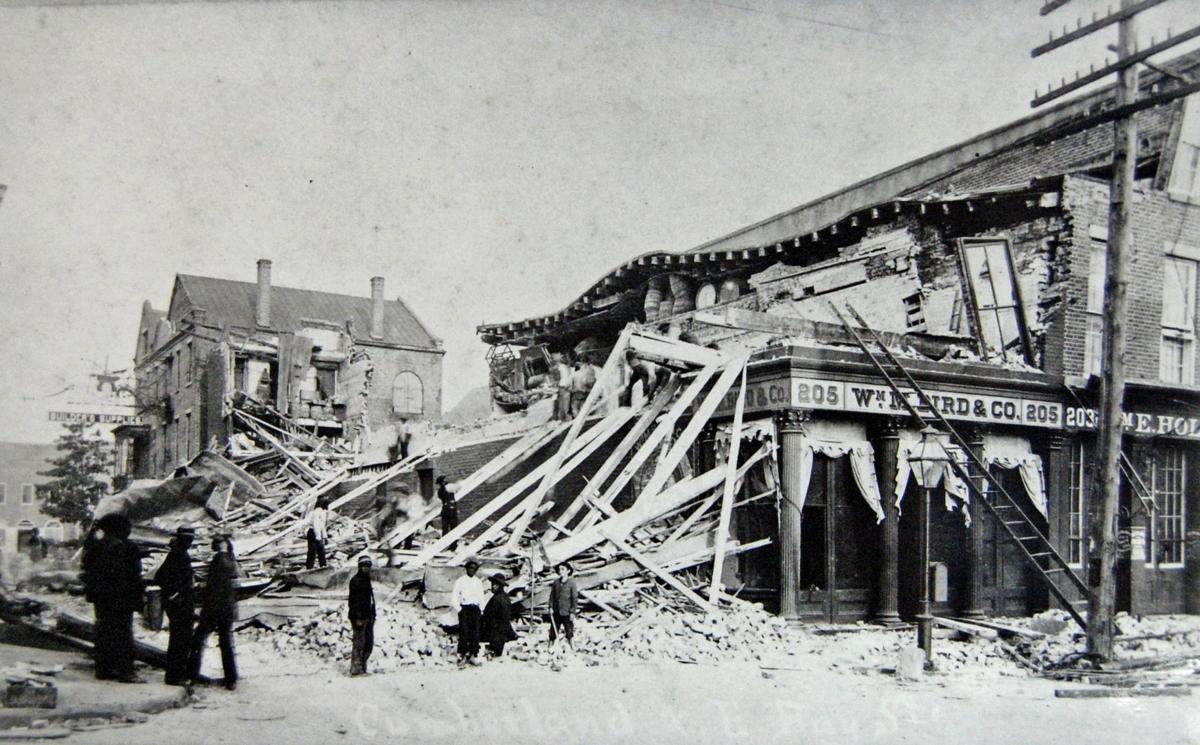
“The 1886 Charleston earthquake occurred on August 31, 1886, at approximately 9:50 PM local time. It is estimated to have had a magnitude between 6.9 and 7.3, making it the most destructive earthquake in the history of the Southeastern United States. The quake resulted in 60 deaths and caused $5–6 million in damages to over 2,000 buildings in Charleston and surrounding areas. This event remains one of the largest historic shocks in Eastern North America.
This is the most damaging earthquake to occur in the Southeastern United States and one of the largest historic shocks in Eastern North America. It struck about 9:51 P.M. local time on August 31, and damaged or destroyed many buildings in the old city of Charleston and killed 60 people. Hardly a structure there was undamaged, and only a few escaped serious damages. Property damage was estimated at $5-6 million [equivalent to about $137-165 million in 2020 dollars1]. Structural damage was reported several hundred km from Charleston, including central Alabama, central Ohio, eastern Kentucky, southern Virginia, and western West Virginia, and long-period effects were observed at distances exceeding 1,000 km.
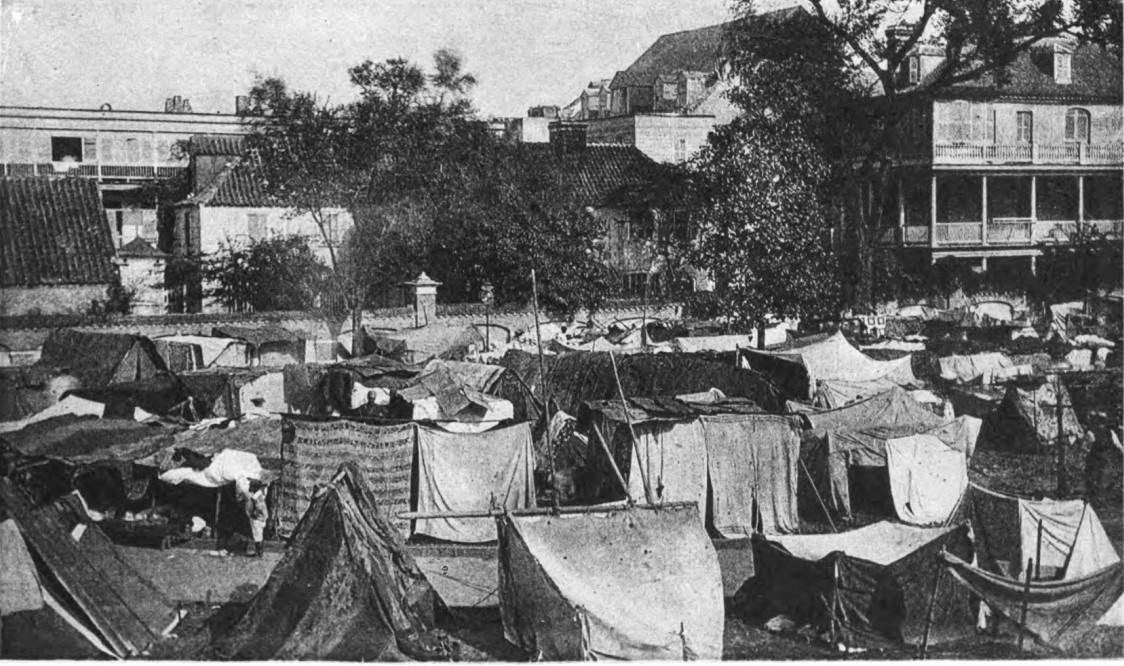
Effects in the epicentral region included about 80 km of severely damaged railroad track and more than 1,300 km2 of extensive cratering and fissuring. Damage to railroad tracks about 6 km northwest of Charleston included lateral and vertical displacement of tracks, formation of S-shaped curves, and longitudinal movement.
The formation of sand craterlets and the ejection of sand was widespread in the epicentral area, but surface faulting was not observed. Many acres (hectares) of ground were covered with sand, and craterlets as much as 6.4 m across were formed. In a few locations, water from the craterlets spouted to heights of about 4.5 to 6 m. Fissures 1 m wide extended parallel to canal and stream banks. A series of wide cracks opened parallel to the Ashley River, and several large trees were uprooted when the bank slid into the river.
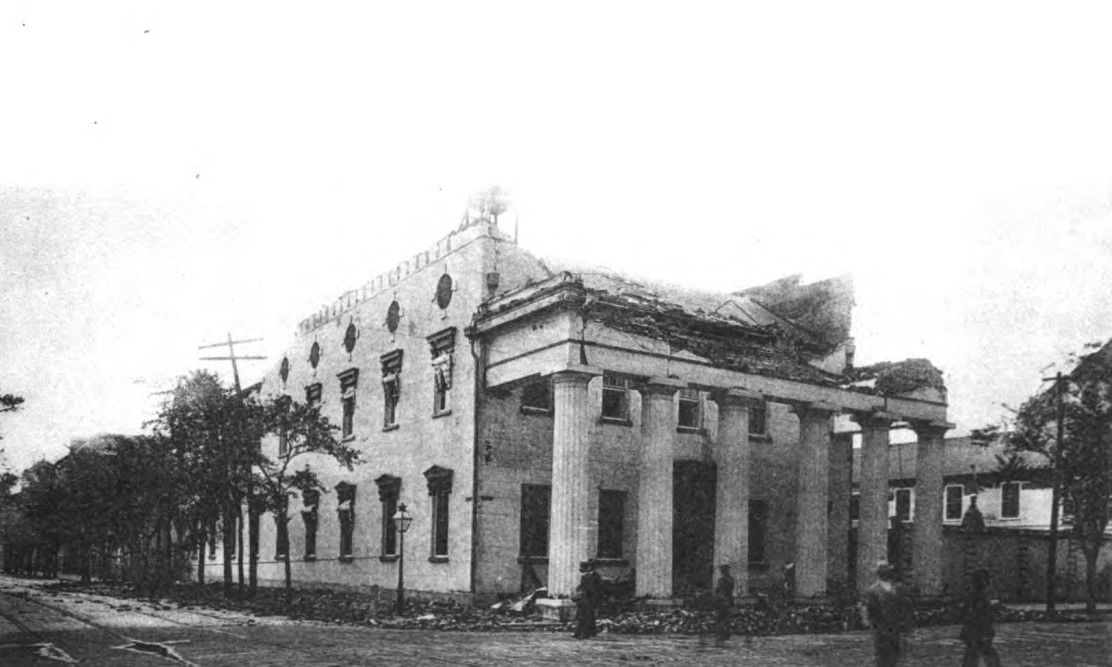
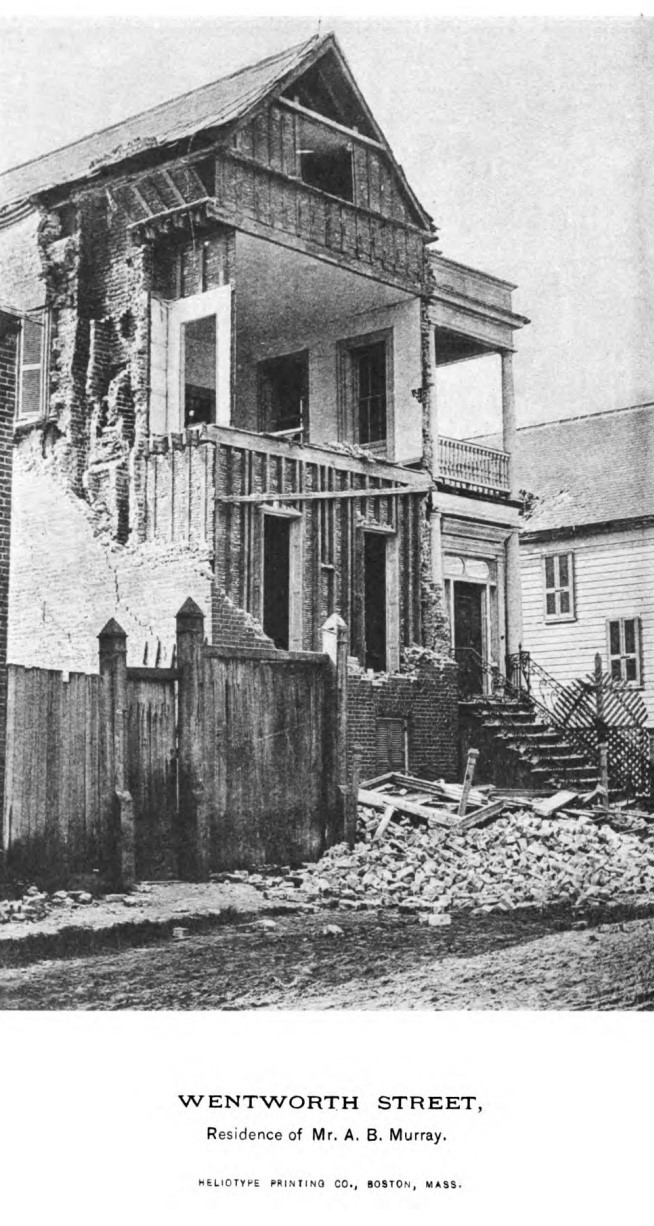
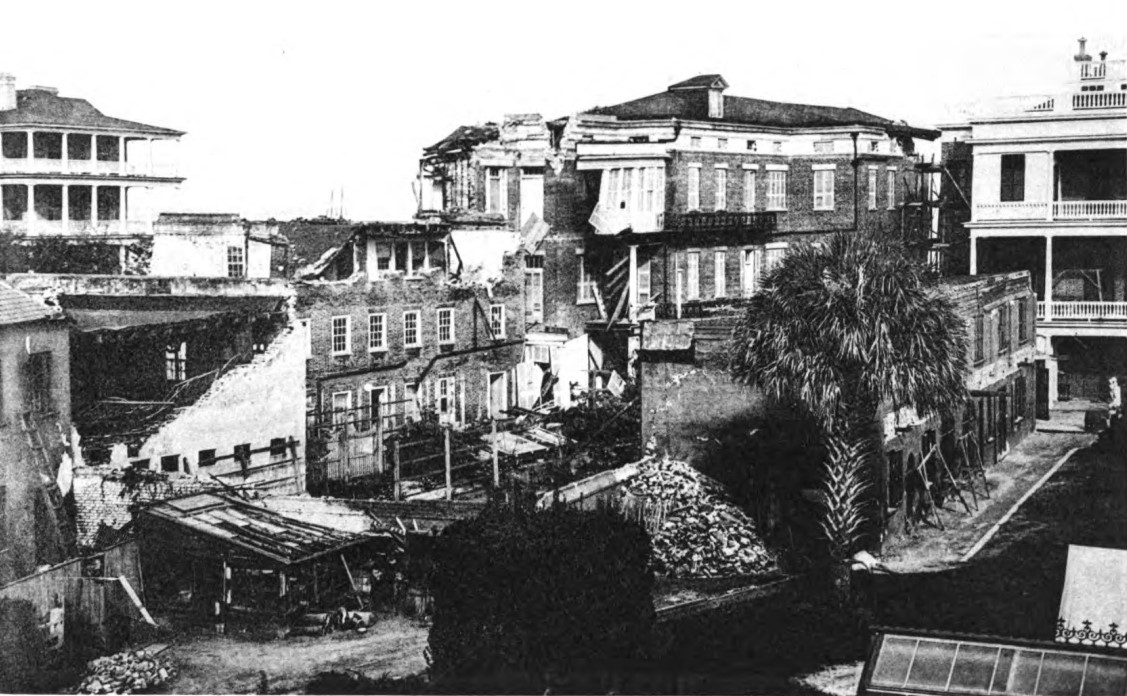

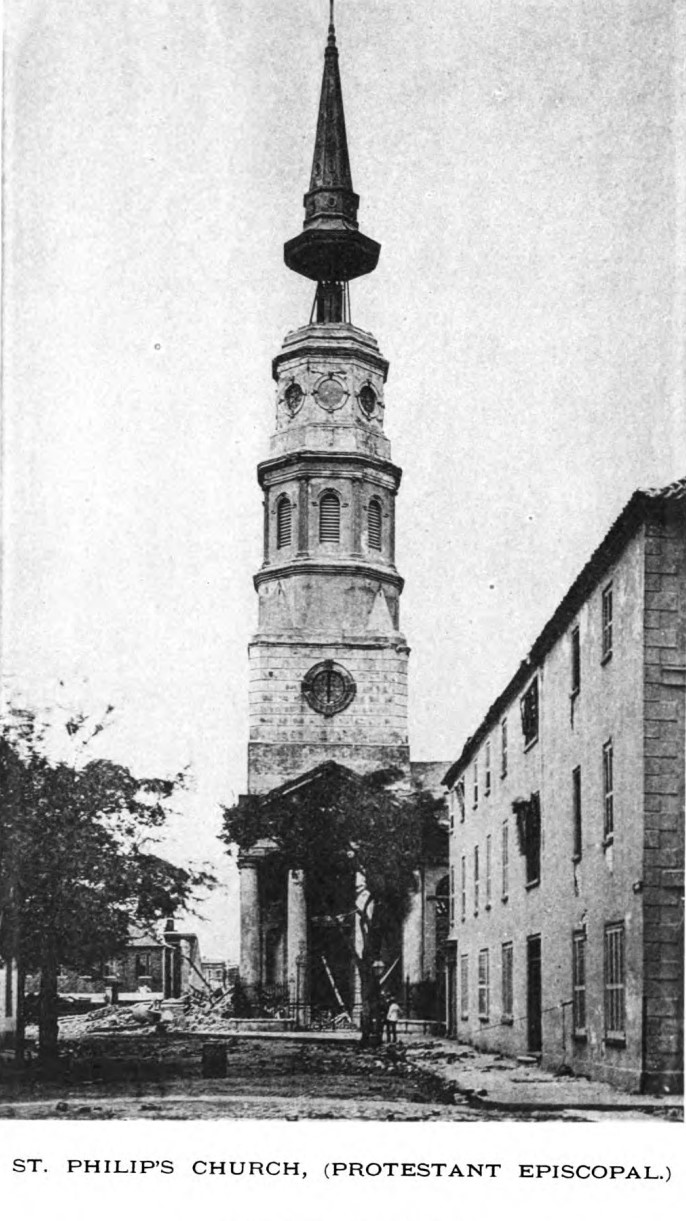
At Summerville, at that time a small town of 2,000 population located 25 km northwest of Charleston, many houses settled in an inclined position or were displaced as much as 5 cm. Chimneys constructed independently of the houses commonly had the part above the roofline thrown to the ground. Many chimneys were crushed at their bases, allowing the whole chimney to sink down through the floors. The absence of overturning in structures on piers and the nature of the damage to chimneys have been interpreted as evidence that the predominant motion was vertical.
The meizoseismal (maximum damage) area of MM intensity X effects is an elliptical area, roughly 35 by 50 km, trending northeast from Adams Run to northeast of Mount Holly and from Charleston to Jedburg, including Summerville. Middleton Place, about in the center of this ellipse, is at the southeast end of a zone (perhaps 15 km long) of microearthquake activity that still continues today. This seismic activity may be a continuation of the 1886 aftershock series.
The intraplate epicenter of this major shock is not unique for large earthquakes in the Eastern and Central United States. Other intraplate earthquakes include those at Cape Ann, Massachusetts (1755), and in the New Madrid, Missouri area (1811-1812). Earthquakes occurring along boundaries of plates (e.g., San Francisco, 1906) are well understood in terms of plate tectonics, but those occurring within plates are not similarly understood. This problem still is being studied more than 100 years after the earthquake.
This earthquake was reported from far distant places such as Boston, Massachusetts; Milwaukee, Wisconsin; Chicago, Illinois; Cuba, and Bermuda. (Ref. 38, 140, 289, 450, 526.)
Maximum observed Modified Mercalli Intensity (MMI) X
I had no idea that Charleston was so vulnerable to earthquakes.
To be honest, I have lived near San Francisco and in the Pacific Northwest, so earthquakes are not new to me. Even the beautiful paradise of Hawaii where I lived and worked over my twenty-year career in the Navy has many earthquakes that are mostly not felt. But Charleston? And not just beautiful little Charleston but a place where I now call home: Summerville.
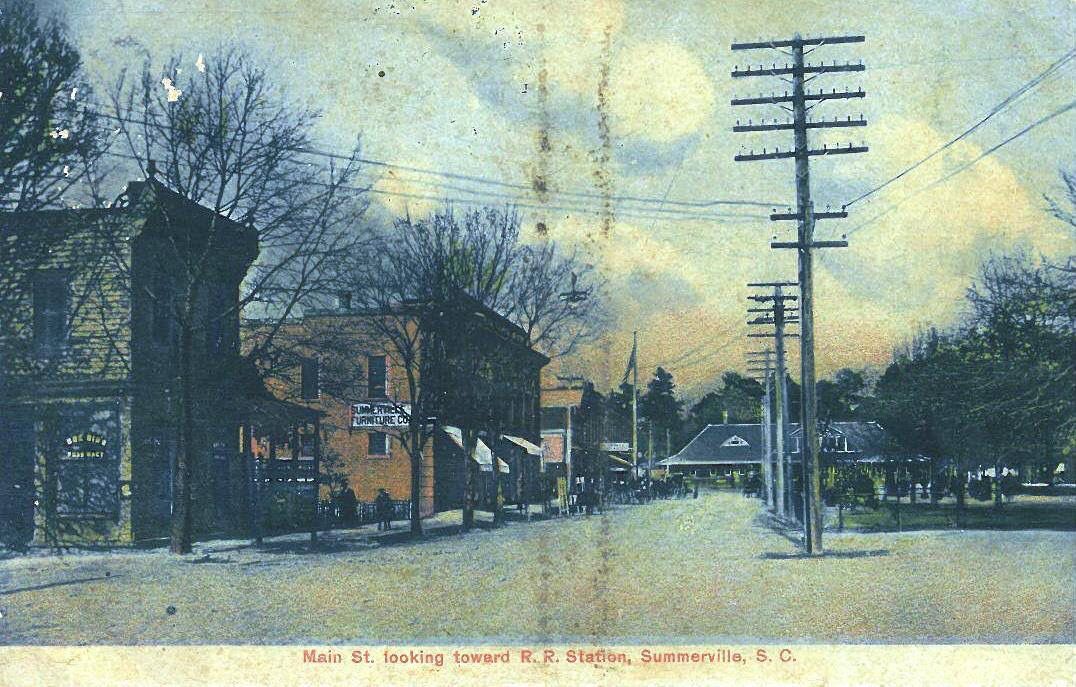
In the same books that relate about the damage to Charleston, the story of what happened in the village of Summerville really caught my attention.
“A SUMMERVILLE SENSATION.”
“The staid old suburb of Summerville was visited yesterday morning by what from all accounts, was a veritable earthquake. The first news of the matter was received in the city about 12 o’clock, when several passengers from Summerville came to Charleston and related the details of the occurrence. One of these passengers was interviewed by a Reporter yesterday afternoon, and from him were obtained the following facts:
It was about half – past 8 o’clock in the morning, the weather being fair and with not the slightest indication of what was in a few minutes about to transpire. All of a sudden, and without the slightest premonition of disturbance or danger, the shock of an earthquake was distinctly felt. It produced, of course, the utmost consternation, as it lasted for several seconds. People left their houses and ran out into the street to avoid the imminent crash of a falling house or a roof tumbling in on the inmates. The shock was particularly severe down by the depot, where, in some of the stores, Lowery’s, Emanuel’s and others, the articles were shaken from the shelves of the store to the floor. The shock affected a very large territory, inasmuch as every house within the town was shaken, and reports have been received covering a radius of at least four miles from Summerville, which state that the shock was everywhere felt within that limit.
Some of the people from Summerville who talked on the subject yesterday said that a rumbling sound was first heard in a northeasterly direction from the town, and that that sound was followed by an explosion resembling that of a cannon at a distance. From this circumstance it is said by some of the people of the town that the shaking up of the houses was caused by the explosion of a meteor in the neighborhood of the town. This, however, would have been accompanied momentarily by a sudden blaze of light which, according to trust-worthy authorities, did not take place. The prevailing opinion is that yesterday’s disturbance was a genuine earthquake. One gentleman stated that as early as 2 o’clock yesterday morning, he being awake, felt that something was wrong, as at that early hour he thought he felt the symptoms of the coming phenomenon. The people of Summerville did not soon recover from their fright from the sensational character of the unexpected performance.”
To this account may be added that of Col. J. H. Averill, Master of Transportation of the South Carolina Railway and Intendant of the Town of Summerville, which was published several months later, and was as follows:
” Friday, August 27, 1886, dawned brightly on our town, the well-known long whistle of the 8:05 A. M. train sounded as usual, and the majority of the gentle- men of the village had gone on it to Charleston, when there was heard a noise as of a distant explosion, and many houses were jarred and shaken as though something, had run into or against them. Many said it was an earthquake, while others said that an explosion had occurred at some of the phosphate works on the Ashley River, as the sound seemed to come from that direction (the southeast), and that the particulars would be heard when the employees came home at night. Our telegraph operator reported the occurrence to Charleston as an earthquake shock and was laughed at.”
Both of these accounts show that, while the inhabitants of the town were fully aware that some unusual and violent disturbance had taken place, even they were by no means unanimous in the opinion that it was an earthquake, while the few people in Charleston who heard of it were certainly not impressed with its serious character.
The second shock, which was also felt by some persons in Charleston, occurred about twenty – one hours later. Of this shock Mr. Averill says in the account above referred to:
* When those who had gone to Charleston in the morning returned in the evening and their families and friends had described the occurrence, they laughed at the earthquake theory and predicted that the morning paper would tell of an explosion at some point on the Ashley River. But before the paper was received all doubts were removed by a ” shake ” at 5:30 A. M. on Saturday. It aroused the entire village and started every dog in the town barking, and although many Charleston people still doubted, the people of Summerville were of one opinion, and that was that the town had been visited by two genuine earthquake shocks. It is said that an Italian workman at the brickyard said on Saturday morning: ” Two little shake; big one comes soon; ” but if he did say so it was not generally known, and it is very doubtful even if any attention would have been paid to his prophecy. On Sunday the shakes were entirely forgotten. ”
In the account headed, “A Summerville Sensation,” it is said that one gentleman stated that ” as early as 2 o’clock Friday morning he felt that something was wrong, and at that hour he thought he felt the symptoms of the coming phenomenon. ” The gentleman referred to was Mr. E. J. Tighe, whose account of what he observed has been since obtained, and is as follows:
” Mr. Tighe states that at about half – past one o’clock on the morning of the 27th of August, he was in his room and was undressing, preparatory to going to bed, when there suddenly came, as from below, a jarring shock that was of sufficient energy to cause a pitcher to rattle in a basin in which it was standing, and to produce the sensation of the whole house being lifted from the ground and settling heavily back into position.
” The first alarming shock in the village occurred a little after eight o’clock the same morning, and the incident was for the time forgotten in the memorable events which succeeded. A few days subsequent to the great shock, Mr. Tighe related his experience as having been probably the first intimation of the subsequent disastrous visitation. He was informed, however, by Mr. John Rugheimer, that fully two months before the 27th of August similar disturbances had been felt by himself and members of his family. Mr. Rugheimer, indeed, had mentioned the circumstance at the time, but his statements were received with but little interest, and the matter was forgotten until the incidents were so unpleasantly recalled by the great shock of which they were, in all probability, premonitory symptoms.”
Wow. It turns out that the quake which shook Charleston had an epicenter very close to Summerville. On the day after the Charleston quake, Summerville was also transformed into a less than inhabitable place. The after shocks were so terrifying that may people escaped by train to the upstate city of Columbia.
Over three hundred left on one train alone. Some never returned. The damage was widespread, and many phenomena occurred such as waterspouts from wells that had been dry just a few days before.
Summerville today is a beautiful but busy town.
Because of the growth that has occurred, it can no longer be called a village. In fact, Summerville and the surrounding community are growing at an alarming rate. New houses, new apartments and complexes are growing so fast, the infrastructure cannot keep up. We are fortunate that we are retired and rarely need to go out into traffic except for the occasional medical appointments. The roads are often too small for the increased traffic and folks that grew up here are constantly talking on social media about how they hate the invasion. Many are pretty unkind about the newcomers which I guess I understand.
But we have found a good rhythm here including a church we love and many new friends. Our participation in community and other organizations is rewarding and we are truly enjoying the milder weather. I believe the only way I will leave is in an urn when the good Lord calls me home.
The only slightly unsettling thing is this new knowledge about the potential for another shift of the plates that cause earthquakes.
A casual drive around the areas with all of the new construction makes me wonder what would happen if a major earthquake happened here again. Instead of the sleepy little village, now you would have hundreds of thousand of people dealing with the aftermath of such an event. We have hurricane evacuation plans and routes but those are only useful if you have time to use them and if they are still intact. Nearly all of the major arteries have complicated bridges and the trucks that deliver goods are seemingly endless. The other day, the entire city of Charleston was brough to its knees for an entire day when emergency services shut down a major bridge because of a guy threatening to jump. It was unbelievable. (The guy was eventually talked down but it took hours to straighten out the mess),
I’m not moving. I hope the quake never comes. But we will definitely review our disaster preparedness plans a bit more thoroughly in the coming days. We are able to self-sustain for a few months based on my current planning and preparedness. One thing that became obvious from the reports I have read is that stick built individual houses survived the shaking more than the brick structures. The shorter the house, the better. There was still damage but the smaller houses just fared better. Hopefully that remains true.
Mister Mac

 theleansubmariner
We moved to Summerville as a result of a company transfer in 1994. We chose Summerville, though I would be working in North Charleston. Because of the better schools there. And it worked out to be an excellent choice for my son not only for the schools, but because he soon got a job at the Summerville airport which led to him being an airline pilot today. That is another story, but now we need to see how I can relate this to Charleston and earthquakes.
We arrived in time for school to start in the fall of 1994, and it worked out to be a great choice. My son was attending classes at Summerville High in 1995 when it happened-an earthquake. The students were immediately evacuated from the school building until an engineering evaluation could occur. The engineers soon found a large crack in the wall of the library due to earthquake damage and everyone had to stay away from the building until the next morning when they were informed the library would be off-limits until repairs could be made. This quake did not damage Charleston, just the Summerville area.
Thanks for the response. I had not heard anything about earthquakes but am now aware that some of the insurance companies are trying to depart the area. I wonder what their projections are?
Mac
When our son was assigned to Sand Lance we visited Charleston often. My favorite local park was Dorchester State Park. Settlers from Dorchester, Mass. had built a small town which was destroyed by the quake, but their church’s bell tower still stands!