Chapter Seventeen: Sometimes course changes have unintended consequences
On January 31, 1938, Admiral Leahy would report to the Congress on the preparedness of the Navy in anticipation of increased funding requests.
HEARINGS ON H. R. 9218 TO ESTABLISH THE COMPOSITION OF THE UNITED STATES NAVY, TO AUTHORIZE THE CONSTRUC TION OF CERTAIN NAVAL VESSELS, AND FOR OTHER PURPOSES
STATEMENT OF ADMIRAL WILLIAM D. LEAHY, UNITED STATES NAVY, CHIEF OF NAVAL OPERATIONS
“A Navy cannot be created upon the outbreak of war. If it is inadequate upon the outbreak of war it cannot be increased to adequate strength in a short time. The largest ships require at least 3 years to build. Smaller vessels, particularly those that can be put in quantity production, can be built in much less time. Trained personnel for combatant ships cannot be quickly created.
Should war be forced upon us, the only combatant ships we shall have to begin that war will be those that are completed when war breaks out and those under construction and nearing completion. The first year or two of a war will have to be fought with the ships and men that we have when the war starts.
The political conditions in the world at this moment, both in Europe and in the Far East, are far more threatening than at any time since 1918, and no improvement is in sight. The major conflict in progress in China has resulted in many grave incidents involving the sovereign rights and interests of the United States and other third powers. The civil war in Spain continues unabated and the threat of a general European conflict is ever present. At our own doors nothing stands in the way of the possible exploitation of seizure of the republics of Central and South America except the Monroe Doctrine, backed by such naval forces as the United States may have and the use of that force if the necessity should arise.
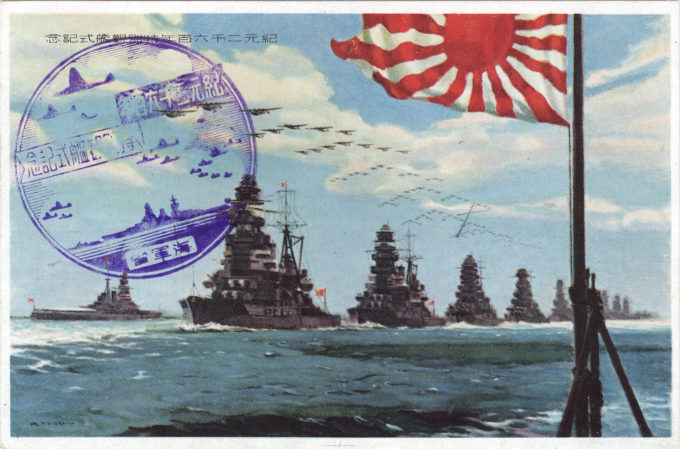
The Treaty of London of 1930 marked the beginning of the breakdown of the principle of limitation of naval armament by agreement, as initiated by the United States and established by the Treaty of Washington of 1922. The next 6 years, 1930 to 1936, witnessed the violation of treaties and the invasion of weak nations by those with aggressive policies. It is not surprising that the British Commonwealth of Nations and the Republic of France refused at the London Naval Conference in 1935 to be bound by any quantitative limitation of naval armaments, particularly as Japan refused to participate further in the conference after her demand for parity was rejected. Italy has so far not acceded to the London Treaty of 1936. Great Britain, as soon as she was freed from the limitations of the treaties of 1922 and 1930, immediately embarked on a prodigious re-armament program which includes not only the armed forces but industry as well. Japan, since December 31, 1936, has not been bound by any form of naval limitations and would not even enter into an agreement to exchange information regarding her naval program, as is now being exchanged under the London Treaty of 1936 among the United States, the British Commonwealth of Nations, and France.
Italy, whose delegates helped frame the treaty of 1936, is still withholding information regarding her naval construction. Germany and Russia both exchange information with Great Britain, in accordance with bilateral treaties. The recently concluded Italo – German Japanese anti – Communist protocol provides “The competent government agencies of the signatory states shall operate together in reporting to each other the activities of the Comintern, as well as to communicate instruction and defense measures to one another.” The complete break – down of international agreement as to the limitation of armament, and the initiation of at least one powerful armament bloc of three nations cannot be questioned.
In the face of international political conditions and our naval needs, the relative strength of the United States Navy, as compared with the naval strength of other naval powers, must be considered. Naval strength does not consist of war vessels alone. It comprises adequate personnel to man the ships; the actual material readiness of the ships; an efficient and adequate aviation component; reserves of men, munitions, and supplies; a sufficient number of suitable auxiliary vessels and an efficient merchant marine manned by a loyal personnel; as well as suitable bases located at strategic positions for the – repair, docking, and maintenance of the vessels and planes. No one factor can be neglected, as all are essential to real naval strength. :
The strength of the United States Navy is determined by law. The Vinson – Trammell Act, Public, No. 135 , Seventy – third Congress , states “ That the composition of the United States Navy with respect to the categories of vessels limited by treaties signed at Washington, February 6, 1922, and at London, April 22, 1930, is hereby established at the limit prescribed by those treaties . ”
The so – called treaty Navy established by the Treaties of Washington, 1922, and London, 1930 , and authorized by the Vinson – Trammell Act, was at that time considered to be sufficient in strength to provide adequate defense against attack by any single naval power, and not sufficient in strength to carry an attack to their shores . The navies of Great Britain, the United States, and Japan were by these treaties fixed at a strength ratio of 5 – 5 – 3.
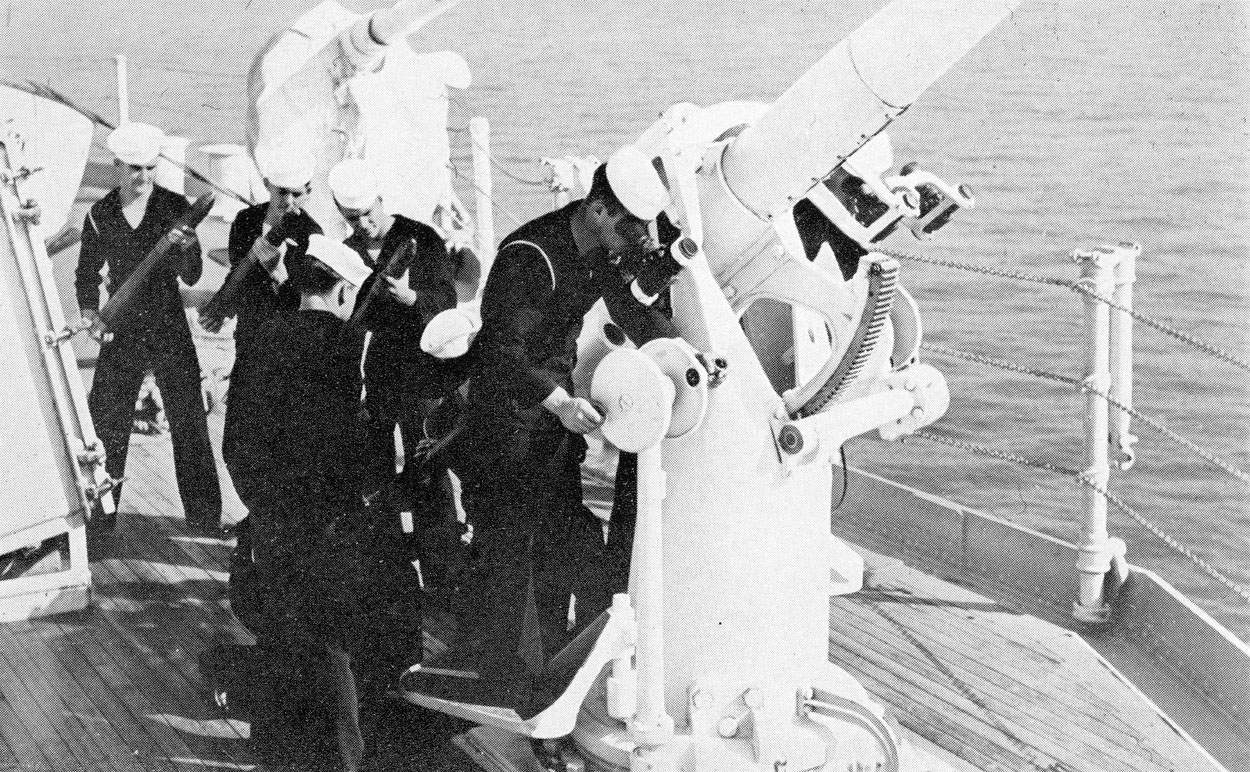
These ratios were assumed to provide a correct and adequate pro vision for defense against attack by any one of the treaty powers against any other.
It is my opinion that the proportion, 5 – 5 – 3, did at that time accomplish this safety precaution against attack and that if the treaties had been adhered to there would now be no occasion for increases in the navies.
Subsequent to the failure of the London Conference of 1935 both Great Britain and Japan have commenced enormous increases in their naval power which have completely upset the 5 – 5 – 3 ratio; and unless the United States commences without delay a comparable increase in its Navy we will in a short time have insufficient security against attack from overseas .
In addition to the rapidly growing naval power of Great Britain and Japan , Italy and Germany are also engaged in an extravagant naval building program , particularly in battleships which are the backbone of naval power ; and there is now in existence an Italio – German – Japanese “ Anti – Communist Protocol ” which must be taken into consideration by America ‘ s sea defense .
The moderate increase in naval power for which authorization is provided in this bill is necessary to provide defense against attack on our shores by possible enemies in view of foreign naval expansion now well under way.
There is nothing in this program that will permit of aggressive action, of policing the world, or of projecting an attack against the territory of any naval power.
It would require at least three times the proposed increase to prepare for aggressive action overseas with any prospect of success.
The proposed increase is not sufficient to guard against attack on both seas.”
Aloha to Hawaii
In June of 1939, the Young family would leave Hawaii for the last time. Cassin’s tour as the Commander of Submarine Division Seven was complete and all of them were on their way across the country once more for an assignment at New London. By the summer of 1939, the submarine base was growing again as the new submarines were starting to emerge from the various shipyards that were building them. As executive officer of the base, Young would oversee the improvements and expansions. In 1939 for instance, the budget for yard maintenance at New London was $1,301,440 (as compared to $653,000 at Pearl Harbor Submarine base) with an additional amount of $156,000 for improvements and additions. This was no small amount in an era where the country was just emerging from a depression. But the figures represented the important work that was identified as being necessary for the growing crises around the world. The budget would continue to grow in 1940 as more improvements were made under his watch and more submarines would be added. By 1941, the threat of a coming conflict would balloon the base budget to nearly $4,000,000 for maintenance and over $3,000.000 for improvements.
By September of 1939, all of the civilized world watched in horror as German troops and a revitalized air force swept across an ill-prepared Poland. Britain and France quickly declare a state of war and within a few days the United States launches a Neutrality patrol on the east coast. The situation in the Far East continued to grow more deadly between China and Japan and American planners find their attention being diverted between both coasts. Decades of disarmament were finally coming to an end for the Navy but the cost of delusional hopes for mutual adherence to these wishful treaties was painfully obvious to the planners. In July of 1940, Frank Knox became the Secretary of the Navy under Franklin D. Roosevelt. Knox had been a proponent of preparedness for many years and was the right man to help push through the plans and preparations for the coming conflict.
In an article written for the American Council on Public Affairs in early 1941, Knox outlined the path that had been taken by America since the end of the Word War that led to the current state of unpreparedness.
From the article:
“Starting in 1922, as a result of the Washington Naval treaty, we sank, scrapped, or demilitarized 31 capital ships, a total of 767,880 tons, as a peace gesture. The United States scrapped ships built or building, while Great Britain scrapped among other vessels, four “paper” ships, many of which would have been scrapped normally without the Washington conference. Japan scrapped 350,000 tons. The United States threw away the best part of the potential Navy in the world. From 1922-1927 our naval shipbuilding ways lay dormant. During those years while America was inactive, Japan had built and building, nearly 12 times as many combatant vessels as did the United States.
“In 1929, the Congress passed a bill authorizing the construction of fifteen 10,000-ton cruisers. The President, however, was empowered to suspend this program in the event of successful negotiations at a naval conference he was “requested to encourage.” In spite of this, some far sighted Congressmen believed it was essential that the United States have a strong Navy to protect our foreign commerce which had reached an annual total of $9,000,000,000 – equal to that of Great Britain.”
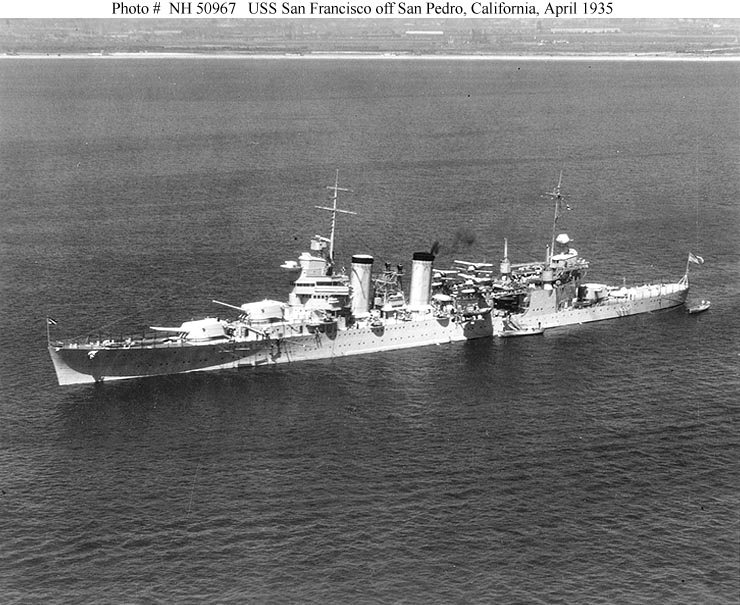
One of those 10,000 ton “Treaty Cruisers” was the USS San Francisco (CA 38) which would be commissioned in 1934. Originally classified as a “light cruiser” because of lack of armor, she was reclassified as a heavy cruiser after the 1930 naval limitations treaty because of her main battery of eight inch guns. The San Francisco was a workhorse for the fleet serving on both coasts up until 1941when she was engaged in operations in the Pacific. She was at the Pearl Harbor shipyard on the afternoon of December 6th with most of her ammunition removed while she waited for needed work on her hull and engineering plant. One of the unique features of the Frisco was that she had been modified in 1935 to serve as a Cruiser Division flagship. This included the addition of living and operation quarters for a Division Officer’s staff.
Secretary Knox also noted the continuation of the dismal results of adhering to further treaties for the Navy after 1930. It had become obvious even to the most optimistic observers that the Japanese were cheating. “Undismayed in our first experience in disarmament, we entered another naval limitation at London. The resultant London Naval Treaty of 1930 chopped 331,109 additional tons of our combatant forces from the sea. In the 1930 treaty, Japan again escaped lightly, gaining near parity with the United States… By 1932, however, Japan had more combatant ships in full commission or fully manned than any other nation. And by 1940, the Japanese had built many small ships which constituted a potential threat to the open-door policy in Asia.”
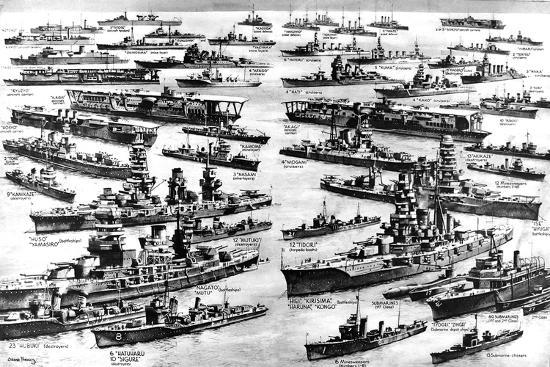
The bargain of reduced improvements on islands and possessions in the Far East must have begun to have an impact on the planners. Japan had been at war with China since 1931 and was expanding rapidly into other areas. A casual look at the map of the Pacific revealed that if Japan continued her expansion to critical areas, she col cut the Philippines and Australia off from the Americans. Even worse, under the wrong circumstances, the bases in the Philippines were vulnerable enough to fall in the face of a concentrated attack. This was critical from a logistics perspective but also from a communications perspective. The Philippines and other islands were key locations for the world wide radio communications network that helped America maintain an eye on the Japanese and other potential adversaries. Loss of the Philippines went beyond just a loss of an important ally. All defense plans to date included using those islands as part of the counter measure to a Japanese expansion.
Cassin Young and his contemporaries must have watched with alarm as American blindly followed the false path of disarmament during the nineteen twenties and thirties. In accordance with the Washington and later London Naval treaties, the United States scrapped and demilitarized one million ninety nine thousand combatant vessels of all types. From battleships under construction to an entire generation of submarines, America disarmed in an open way while other nations secretly found ways to side step the treaty provisions. Disarmament by example proved to be a failed policy and failed to stop or even slow the forces of aggression that were raising their heads in Europe and the Far East. The Navy was quick to recognize the need for more ships of all types in the early 1930s as Germany and Japan finally ended their charades and abrogated the terms of all of the limiting treaties. The United States tenaciously clung to the policies and it was only when Congress passed the Vinson Trammel Act of 1934 that shipbuilders were finally allowed and authorized to begin building the Navy back up to the limits of the various treaties. Further increases in 1938 and 1940 started the slow machine that would finally bring the Navy back to a stronger position. But the builders would need time. It is impossible to build a fleet in a day and the wheels of industry had been held in check for a very long period of time.
As previously mentioned, two of the Japanese ships that escaped both treaties were the battleships Hiei and Kirishima.
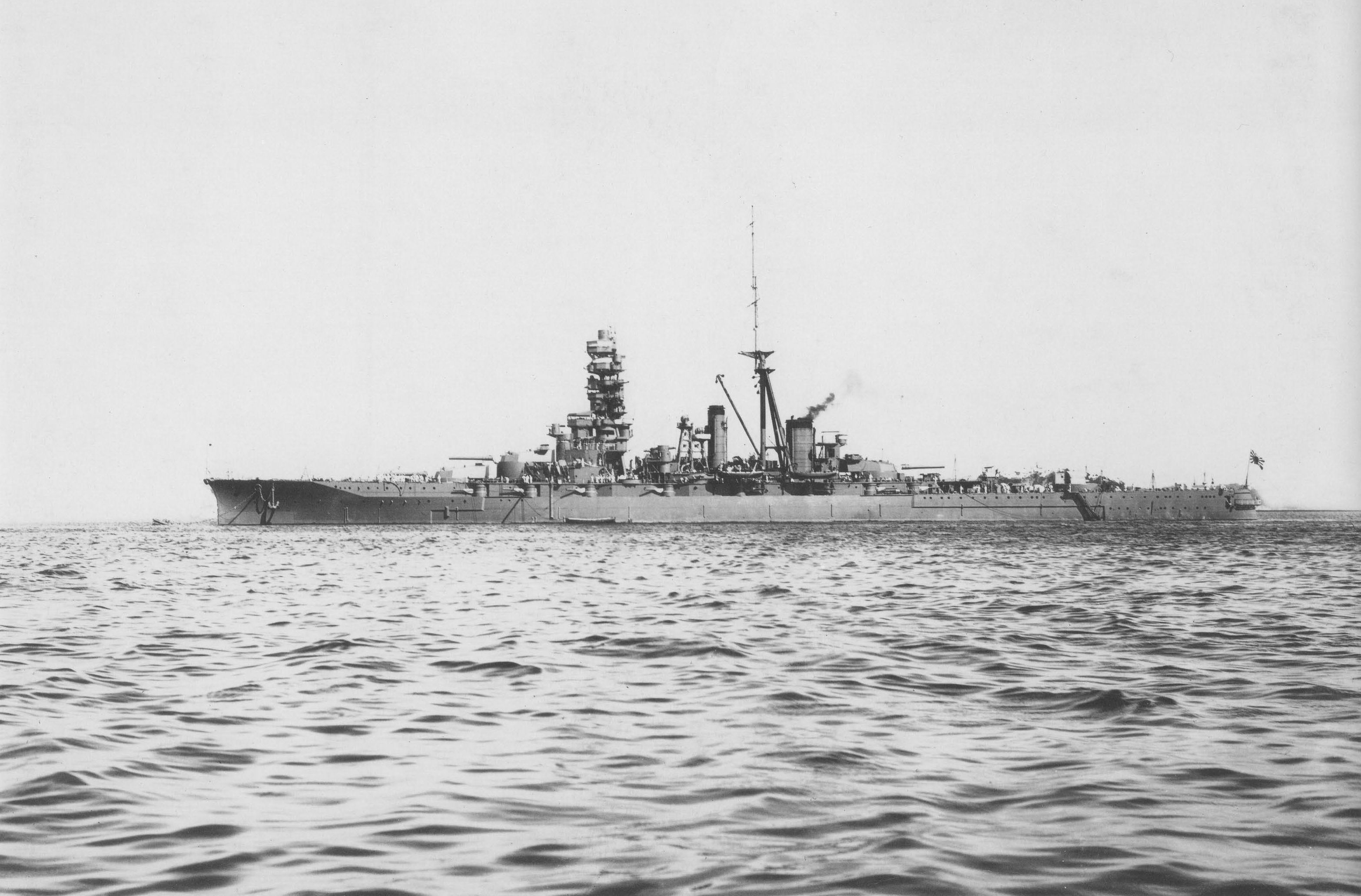
In 1929, the Japanese converted Hiei to a gunnery training ship (essentially a non-combatant) to avoid the fate of the scrap yards. She would further go on to serve as The Emperor’s transport ship until her next full scale conversion that completely rebuilt her superstructure, upgraded her power plant and laid the groundwork for improvements to her armament. In 1937, the Imperial Fleet dropped all pretenses and reclassified her as a fast battleship. At this point she was fast enough to accompany the aircraft carriers which made up the main element of the improved fleet.
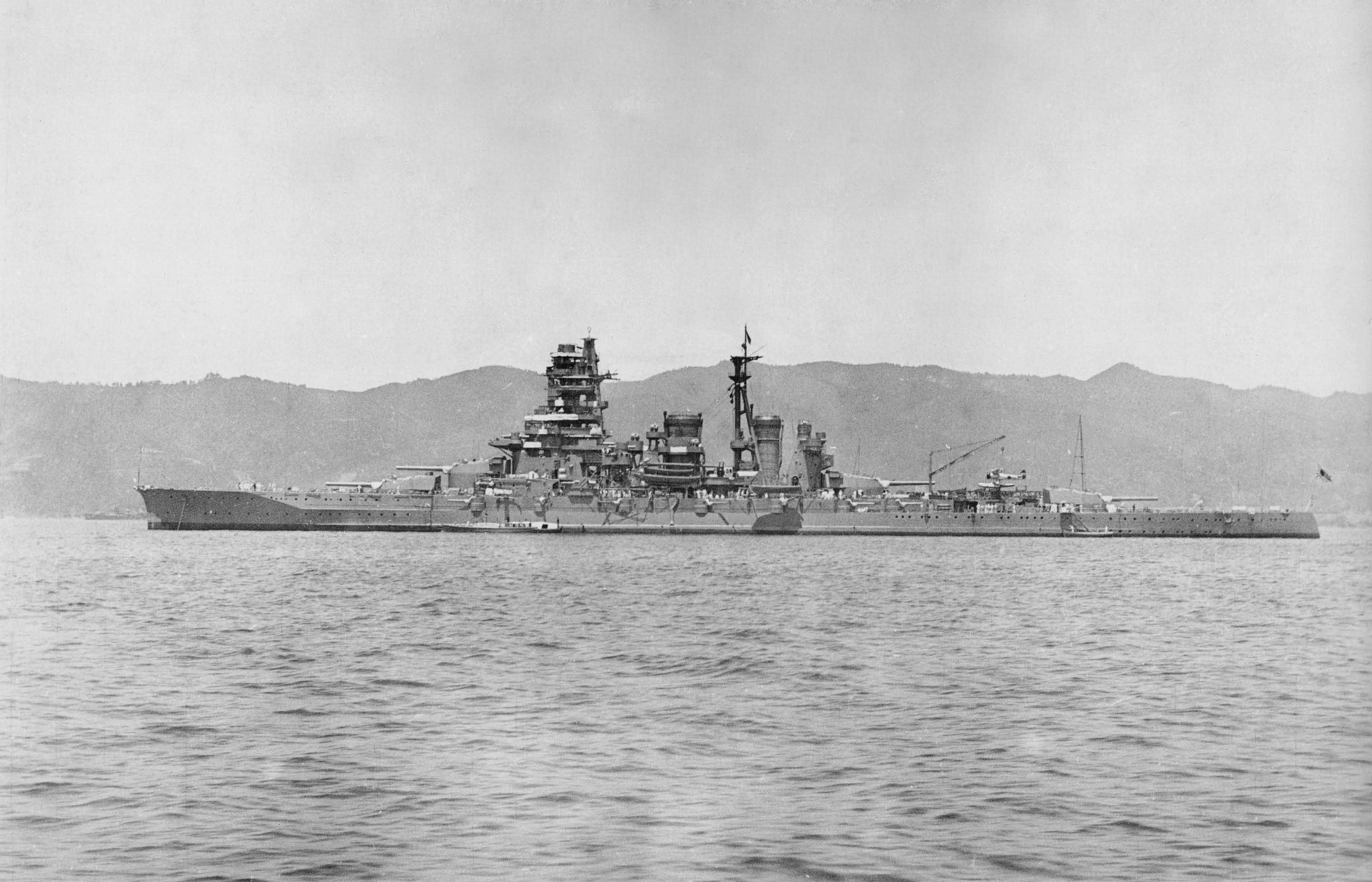
The Kirishima was converted from a battle cruiser to a fast battleship as the disarmament treaties began to unravel all over the world. She was modernized with new propulsion systems, and her weapons were continually refined to reflect the growing need of an Imperialistic Empire driven to expanding its conquests. As the Americans slowly started to wake up to the imminent dangers, Kirishima and Hiei practiced battle tactics in preparation for the combat to come. The specific tactics the Japanese would learn to perfect included would include night fighting in confined quarters. Japanese industry had not yet delivered the types of technology that would give their ships an advantage. Radar was primitive and unreliable. But the battle skills which were developed in previous conflicts would come into play in the dark waters near Guadalcanal. The ability to vanquish an enemy in the dead of night would play a crucial role in the battles to come.
In November of 1941, both improved battleships quietly sailed to Hitokapu Naval Anchorage and joined the massive fleet being prepared for the launch of war against the United States.
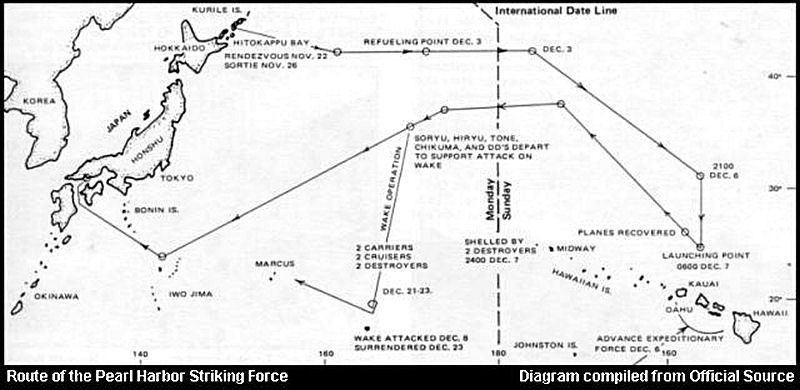
On November 26 (Japanese Date) she would sail along with the Battleship Kirishima and the six aircraft carriers that made up Vice Admiral Nagumo’s Task force on its way to Pearl Harbor in the Hawaiian Islands. No one alive on that day would be able to imagine that before the end of 1944, not a single capital ship from that attack would remain afloat. The only surviving ship that participated in the attack on Pearl Harbor would be the destroyer, Ushio. Ushio somehow escaped the fate of every other ship and was surrendered in Japan at the end of the war. But the damage those ships would wreak in those few short years would leave the lives of many sailors and ships scattered across the vast ranges of the Pacific Ocean.
Commander Cassin Young had probably heard about the Japanese fleet and a potential attack on Pearl Harbor as he settled into his new assignment on the USS Vestal. His previous assignment as Executive Officer at the submarine base at New London had ended in a way that seemed to spell doom for the Commander’s long career. Because of a conflict with the new Base Commander, his next assignment was a rather inglorious one.
Some history about the new base commander Captain Cutts.
In 1941, he was serving as both SUBMARINE SQUADRON ONE and SUBMARINE BASE, NEW LONDON. Captain Elwin Fisher Cutts (USNA Class of 1908) was a submariner early in his career and served aboard the USS Pigeon in the Far East in the 1920’s. His command before reporting to New London was Captain of the battleship USS Pennsylvania (BB 38) from 19 Jun 1939- 27 Feb 1941. He became the Commander of Submarine Base New London on 1 Apr 1941 through 21 Jan 1944. He was also Acting Commander Submarines Atlantic Fleet from 3 Jan 1942 – 30 Mar 1942 and according to the 1944 book titled United States Submarines, written by Robert Hatfield Barnes, he oversaw the launching of many submarines during his tour.
Commanding a first line battleship was certainly a noteworthy achievement. When you look over the rolls of men who graduated from the US Naval Academy, it is easy to see that not everyone reached that level. Captain Cutts had survived the peacetime Navy where congress cut money and men like so many chaffs of wheat. Gaining command of the Pennsylvania was something to be proud of. A follow-on tour at one of the bigger bases on the east coast must have also been a very large plum. There is even a famous picture of Cutts riding in the open limousine with President Roosevelt.
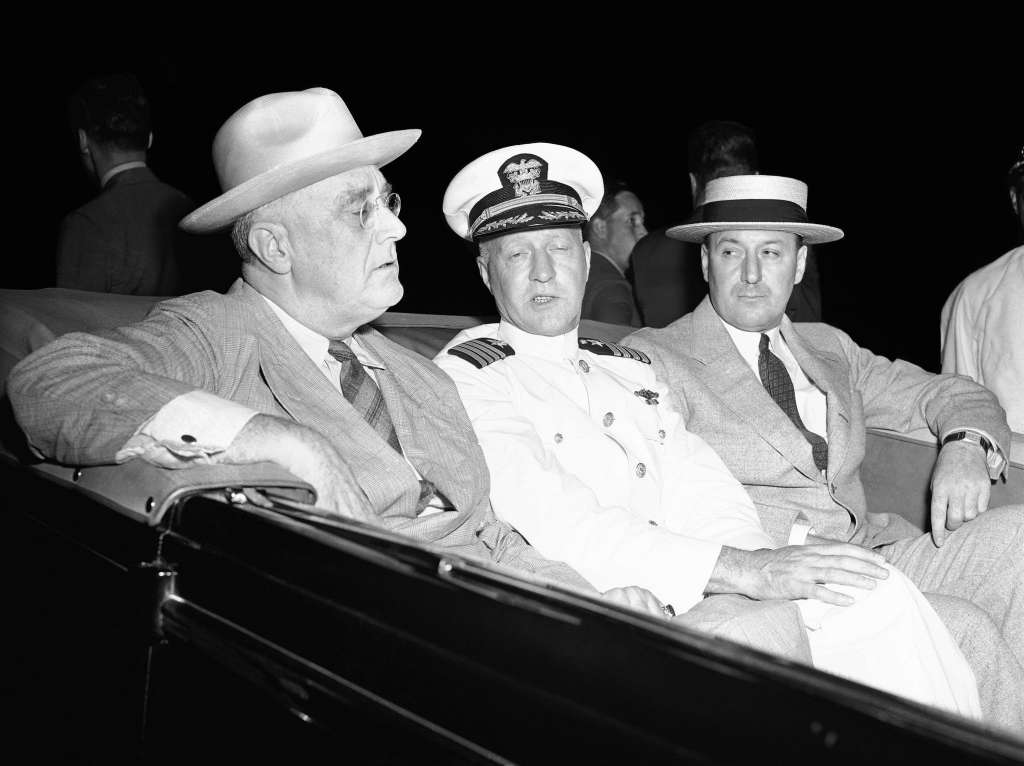
Navy wives at that time lived a unique life. Their society was very closed and the higher the rank and assignment of your husband, the more the wife would feel elevated. There are legends told of captains and admirals wives creating all sorts of disturbances when they were crossed by some underling.
Commander Cassin Young served as the Executive Officer of the submarine base from July of 1939 – November of 1941. His role as Executive was important since he oversaw the expenditure of millions of dollars in base improvements in the key months before the war began. He was a faithful steward of those funds and that cost him when Captain Cutts wife became insistent about upgrading her quarters. Since all of the housing units had been refurbished shortly before Cutts took over as CO, Young pushed back.
While there is no proof that he was going to be on the receiving end of a retribution, several facts are known. Instead of getting a shot at commanding one of the new warships that were joining the fleet every day, Young found himself being sent to serve on board one of the oldest ships in the Navy.
He was sent to Pearl Harbor to command an obsolete relic called the USS Vestal.
The ship was already one of the oldest ships in the fleet. She had originally been launched as a collier during an age where ships were powered by coal. In Cassin Young’s second year at the academy, Vestal was converted to a repair ship and eventually converted over to a fuel oil ship when Young was riding submarines in the 1920s.
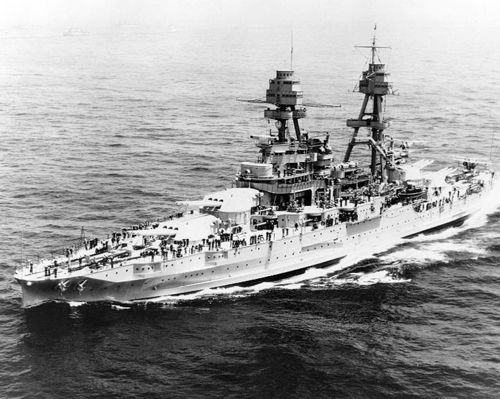
The belt tightening of the Navy kept the old ship sailing long past most of the ships she was designed to support. She followed the fleet from the east to the west and ended up in Pearl Harbor where Cassin Young finally caught up to her. On November 19, 1941, Commander Cassin Young reported on board the USS Vestal in Pearl Harbor as the new commanding officer. The morning of December 7th found the Vestal tied up outboard the USS Arizona. Despite the fact that it was a Sunday, routines on board Navy vessels went on. Reveille was at sounded at 6:30 am and breakfast at for the crew would start at 0700. The crew would muster to stations at 8, followed by shore leave for the starboard watch. The rest of the day would not be regular ship’s work but would include a mail call, inspections, and a movie in the evening above decks.
The new Commanding officer was just finishing breakfast and preparing for a relaxing game of golf with some friends. The beautiful weather promised a great day of fun and relaxation just before a hectic week ahead. With all of the stress of the moment, a distraction would probably be welcomed.

 theleansubmariner