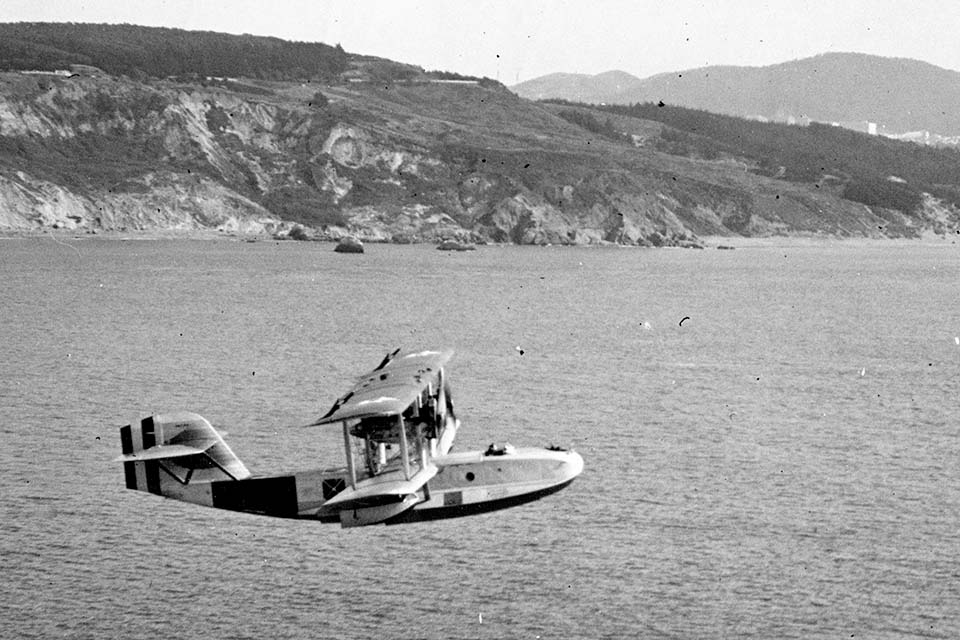
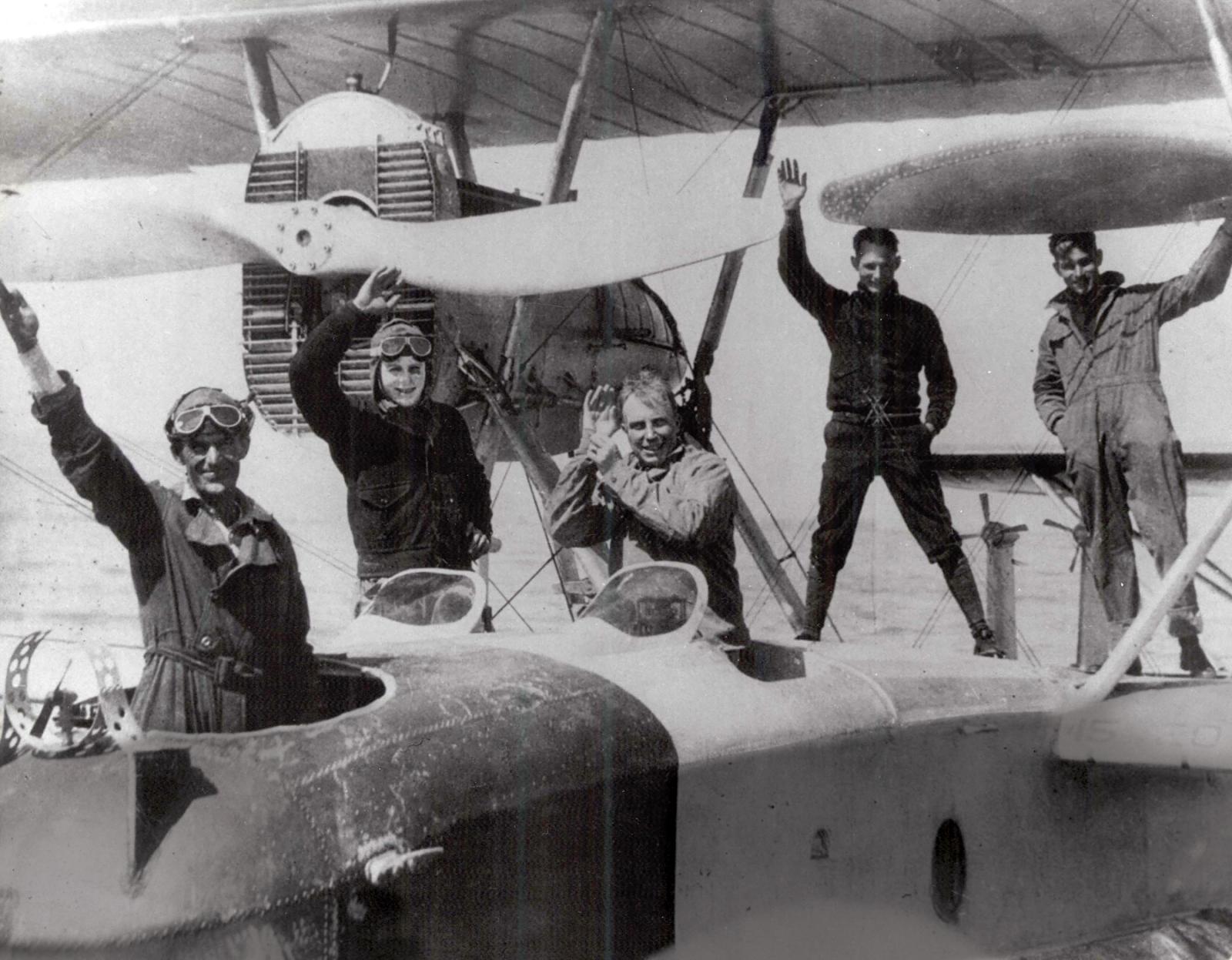
PN-9 No. 3, piloted by Lieutenant Allen Snody, departs San Francisco on what would prove to be a disappointingly short flight (National Archives)
Of all the submarine stories from history that have been forgotten over time, very few are as interesting as the one about a submarine rescuing an airplane in the Pacific Ocean which then then towed it to safety.
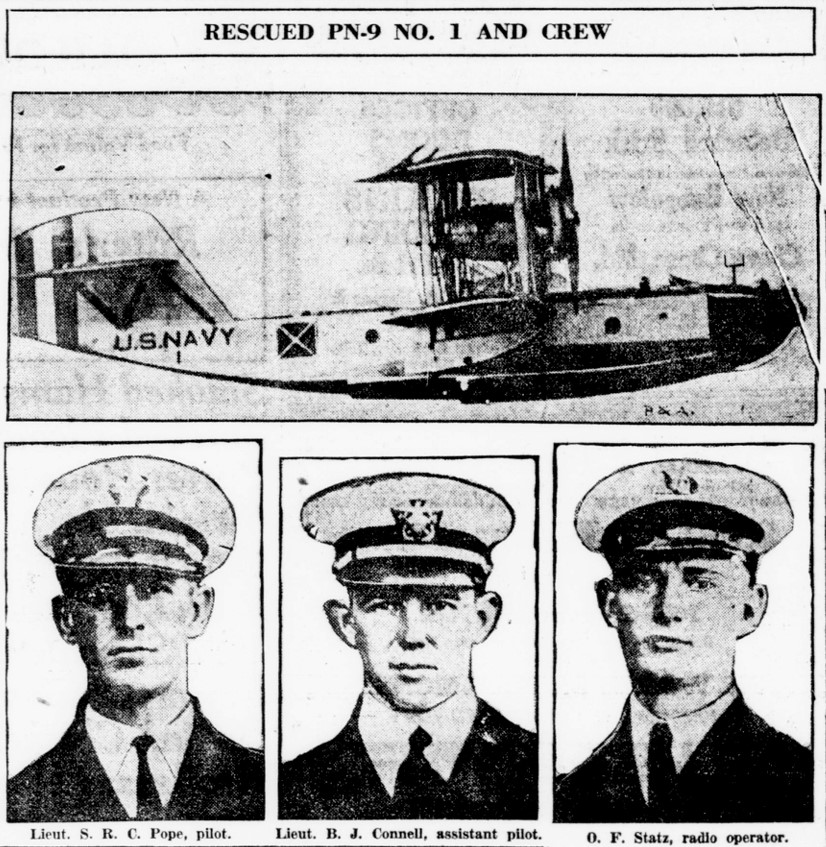
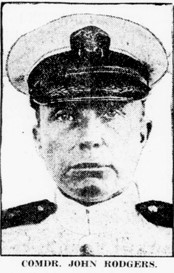
Nearly 100 years ago, flying between the continental US and Hawaii was still a dream. That dream was about to be become reality in 1925, But there would be a few bumps along the way. Even though aircraft development had surged between the Wright Brothers first sustained flight to the cross-country feats of the early nineteen twenties, flight to the Hawaiian Islands had not yet been accomplished. Interestingly enough, the commander of the mission was actually trained by the Wright Brothers before the mission.
The navy wanted to prove that it was not only possible but necessary to be able to travel by air to the outlying regions. Pearl Harbor had not yet become as large as it would be in future years, but it was a strategic outpost that provided logistical support to a fleet that was already being eyed as an important part of the nation’s defense in the east. Establishing a proven method of flying there would speed communications and access. The trip from the west coast to Hawaii in those days required slow moving ocean vessels. Even naval vessels required the ability to manage fuel for the long voyage.
But Hawaii was growing in importance. The harbors would provide fueling opportunities and safe haven for ships and submarines that were already being assigned there as a home port. Infrastructure on the bases was growing to support the new arrivals. Having an air route established would enhance the flow of people, communications and sometimes critical materials.
The navy was trying to prove that the planes it had developed were capable of the long flight. Three planes were originally set apart for the journey. But circumstances worked against them from the start.
This is a link to the story as told by John J. Geoghegan. I encourage you to follow the link and see the entire story.
PACIFIC FLYERS SAFE AFTER STARVING FOUR OF NINE DAYS AT SEA
Heroic Crew Heard by Radio of Hope Given Up.
RAIN AND TINY STILL GAVE WATER TO MEN
Forced Down in Sight of Ship, All Signals were Futile.
Story of Privation.
An amazing story of privation was pieced together out of the running line of cross conversation in the little hotel.
“We were forced to land at sea after the second day out from San Francisco,” said one member of the crew.
“We sighted a merchant vessel five miles off. Signals were sent up repeatedly and every effort was made to attract attention of the vessel, but it passed on.
“Our plane was able to pick up messages from the steamer, which failed to divulge its name, but drifted to the northwest. Then came the period of added suspense. After that no planes or ships were sighted until last Tuesday, when we saw a plane off the coast of Oahu.”
Bad Weather One Day.
“Our plane was seaworthy and stood the rough weather well,” said Comdr. Rodgers. “We experienced bad weather for just one day at sea. That was the third day after we were forced down. Rain and heavy seas made matters uncomfortable.”
The men told how Comdr. Rodgers shared his rations with them and refused to partake of theirs when his own were near exhaustion on the fifth day out. At the end of that day all were without rations, which originally consisted of 18 sandwiches to each man. three pints of coffee, three pints of soup, 24 lumps of sugar, six oranges and four canteens of water.
This was intended for the 26-hour trip to Honolulu. The emergency ration, 30 gallons of water, canned beans, hard tack, dried bread and prepared chocolate lasted several days.
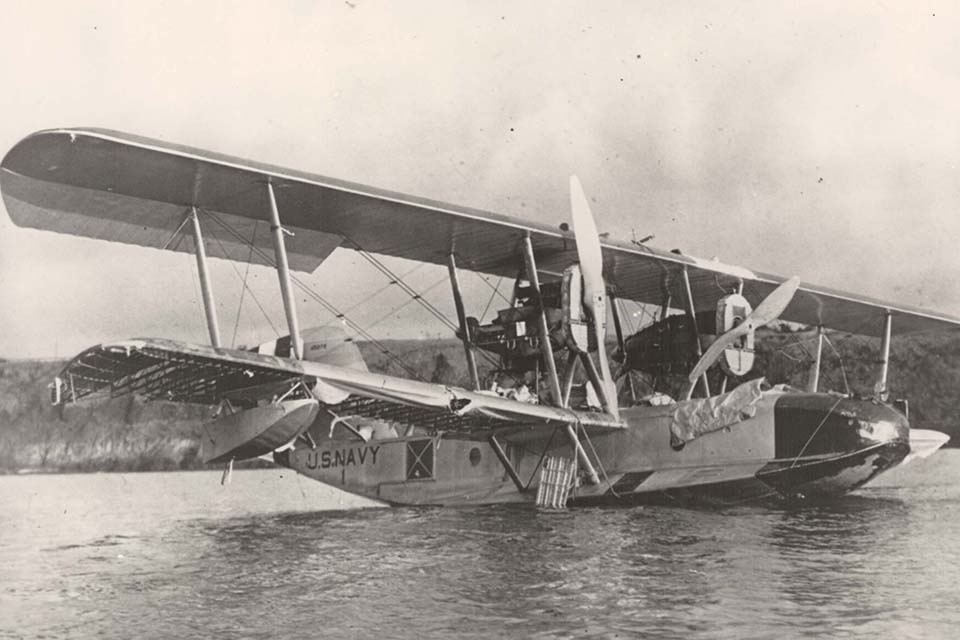
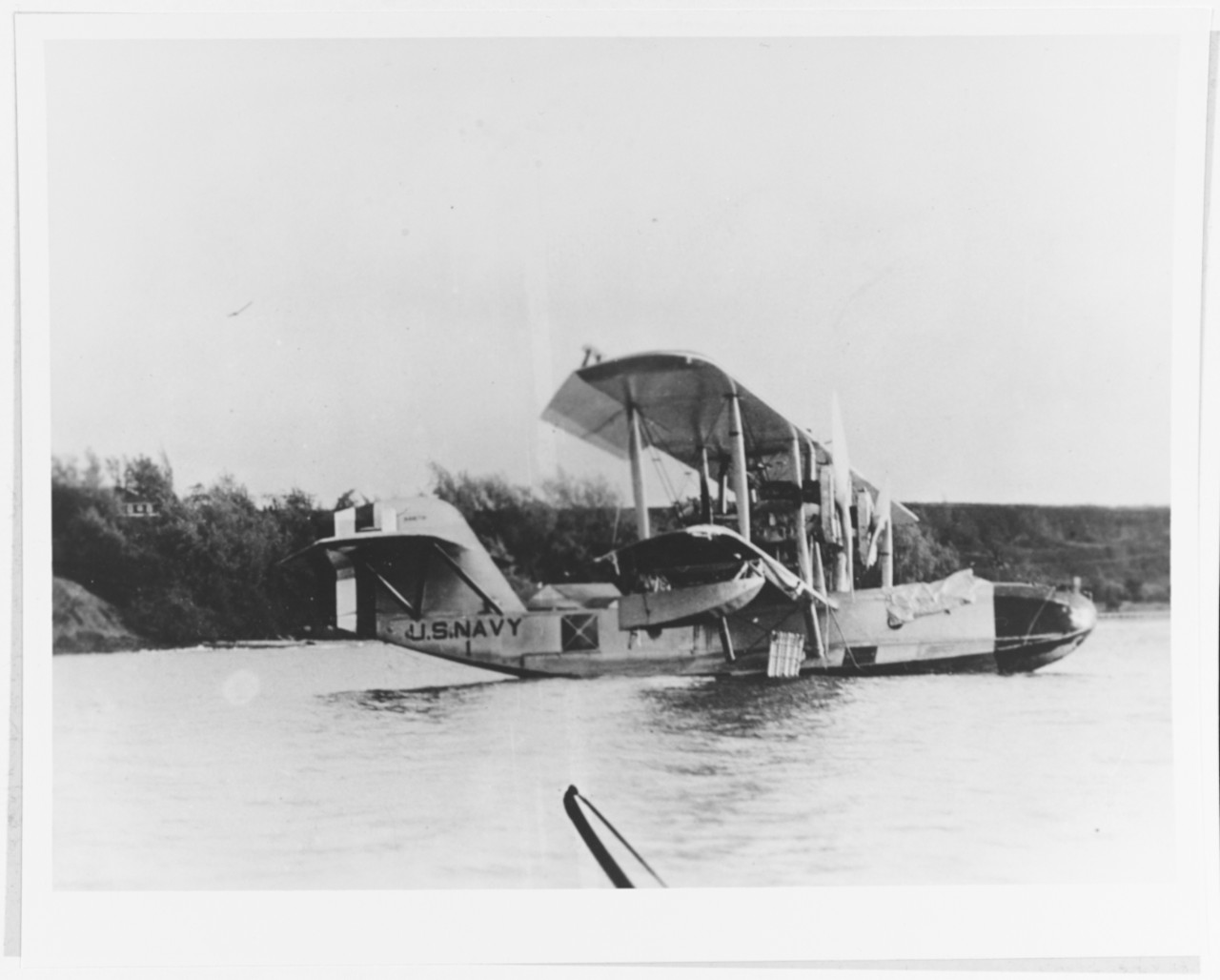
No.1 lies moored at Kauai following its epic journey. The PN-9 served as a sailboat after the crew fashioned sails from wing fabric. (State of Hawaii)
FOUND BY SUBMARINE.
Crippled Ship Buffeted by Choppy Sea for Nine Days. By the Associated Press.
HONOLULU, September 11. The cripple PN-9 No. 1. with its precious burden of trail-blazing adventurers, was found late yesterday, riding swanlike atop choppy seas, by a monster of the deep, the U. S. submarine R-4. Lost 218 and ½ hours after a plunge from the air, after 25 hours hurtling from San Francisco towards Honolulu in the first such flight ever attempted, the brave little force in every sense except officially had been given up as lost martyrs to man’s efforts to overcome the elements.
Today, their tiny craft towed by the submersible, was ashore at Nawiliwili Harbor. Island of Kauai, of the Hawaiian group, towards which the U. S. destroyer McDonough was rushing with medical officers to give any attention necessary.
Mac Note:
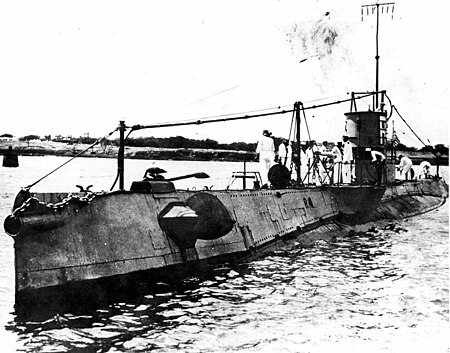
The submarine R-4 was built in 1917 and after operating in the Caribbean region, eventually sailed for Pearl Harbor. She was a diesel electric submarine that mainly operated during fleet operations and local coastal patrols. She was mainly designed for coastal defense and did not have any type of advanced radar in the 1920’s. The fact that she was able to find the plane when nearly the entire fleet (including airships from the USS Langley CV-1) is pretty much a miraculous story in itself. Interestingly enough, submarines would play an important role in World War 2 rescuing downed pilots including a future US President, George HW Bush.
From the US Naval Institute:
The Rescue
On the tenth day at sea, Kauai appeared in the distance, much to the crew’s relief. The day was spent steering the awkward flying boat toward shore, but by late afternoon PN-9 No. 1 still sat off the beach, separated from Kauai’s few bays by treacherous coral reefs. Rodgers did not want to cross these reefs with dusk approaching, yet he also did not want to be swept away from the island at night, possibly losing their only chance for a landing. Before Rodgers agonized too much over the decision, a submarine surfaced behind the flying boat, surprising the aviators. She was R-4, part of a Navy submarine guard line stretched across the channel between Oahu and Kauai. Wary of making an erroneous sighting, R-4 signaled to the flying boat: “WHAT PLANE IS THAT?”
The flying boat signaled back immediately: “PN-9 NO. 1 FROM SAN FRANCISCO.”
That night, R-4 helped tow the flying boat into Kauai’s Nawiliwili Harbor, where locals cheered from the beach.
Mac Note:
Rodgers refused the tow at first. He was still convinced that the lane could navigate to Kauai without help. He reluctantly allowed the submarine to tow them for most of the remaining journey. There has always been a little prideful tension between submariners and airmen. When I read this part, I wasn’t surprised.
By this time radio reports had been sent to Honolulu and reached the mainland United States, too, announcing the miraculous survival and rescue of Rodgers and his men. Residents of Honolulu were ecstatic over the news, dancing in streets and preparing for a massive celebration.
As Rodgers was transported to Oahu from Kauai on board the USS MacDonough (DD-331), he spoke of his regret for the flight’s failure. His fellow officers immediately admonished him, replying that the flight and voyage of PN-9 No. 1 was one of the greatest expeditions in both Navy and aviation history. This opinion was not unique. As Honolulu Advertiser journalist Charles Edward Hogue noted, Rodgers and his crew displayed the “indomitable spirit of the US Navy” during their ten hard days lost at sea. “Landsmen wavered between hope and despair during those days: old salts shook their heads dubiously, and shore staying officialdom feared the worst,” wrote Hogue. “But the Navy itself held fast: surrender is a word missing from its vocabulary.
I have flown many times from the mainland to Hawaii in the comfort of many jet airliners. The last time was first class which was incredible. We take travel for granted these days. But it was because of the pioneering men of the naval air service that we have made such progress. Their bravery and can-do spirit opened up the skies for generations to come. I can only imagine what will be written about our generation in a hundred years. With the proliferation of civilian space craft now, how long will it be that advanced methods of travel find their way into the mainstream. Maybe the Jetson’s flying cars aren’t that far in our future.

 theleansubmariner