This is the 125th year since the United States Navy adopted her first modern submarine.
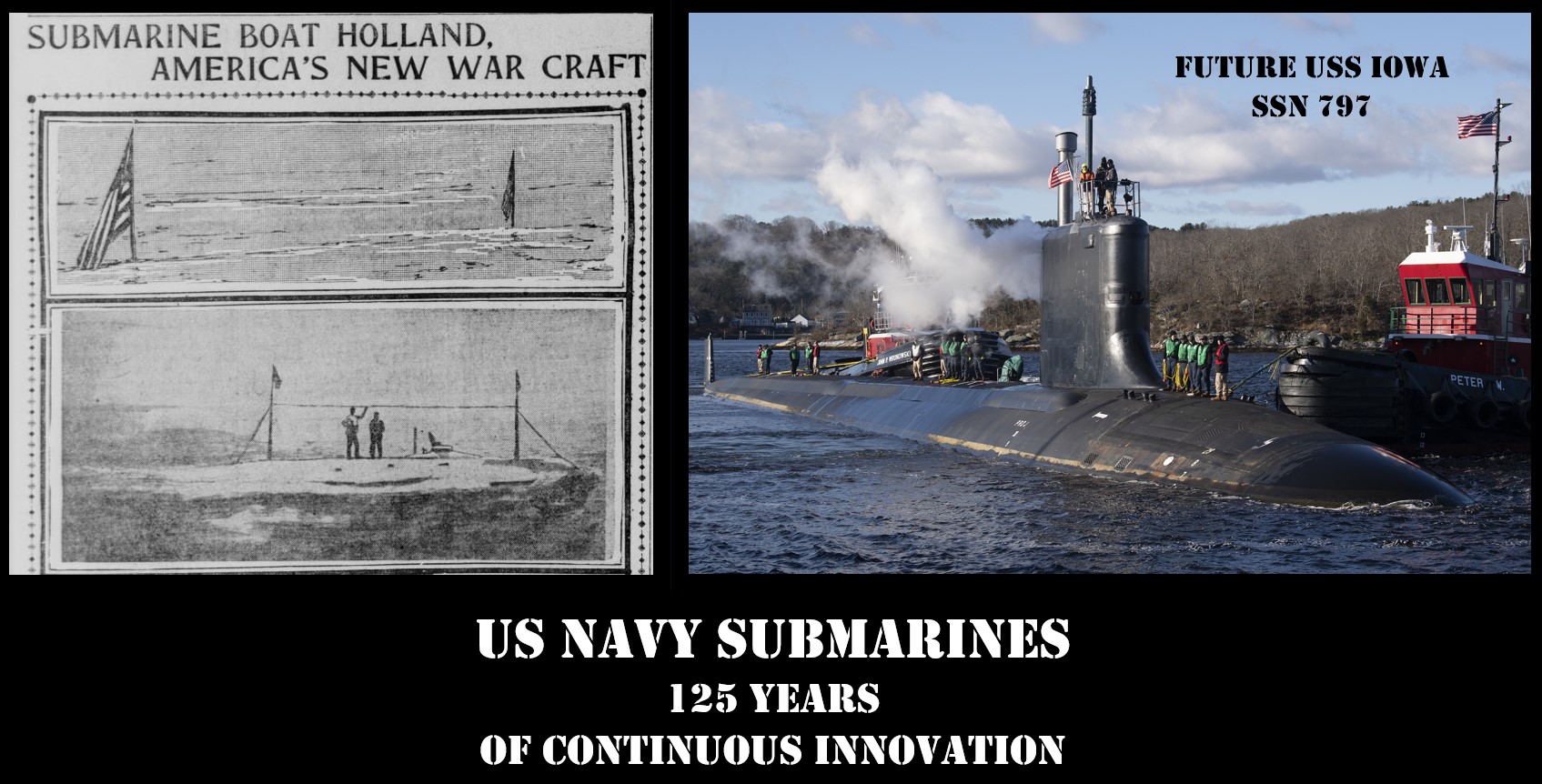
Of course, the country had seen other submarine warfare devices before (Turtle and Hunley among others), but the use of a machine with the ability to surface and dive as well as operate using motive powers was a great leap forward. The submarines of today have enormous capability and our crews are the best trained in the entire world.
But in 1900, many new devices and inventions were being introduced to the public.
Some of the innovations were just precursors to others that would follow in a much grander scale. In New York city, the first electric bus came online shortly before the great subway system called the Rapid Transit Railroad. That system would later connect all New York’s boroughs. The wright Brothers would begin their first manned glider experimental flights at Kitty Hawk that ushered in the new era of manned flight. The first Zeppelin flight takes place in Germany that July and Albert Einstein was close to publishing his theory of relativity.
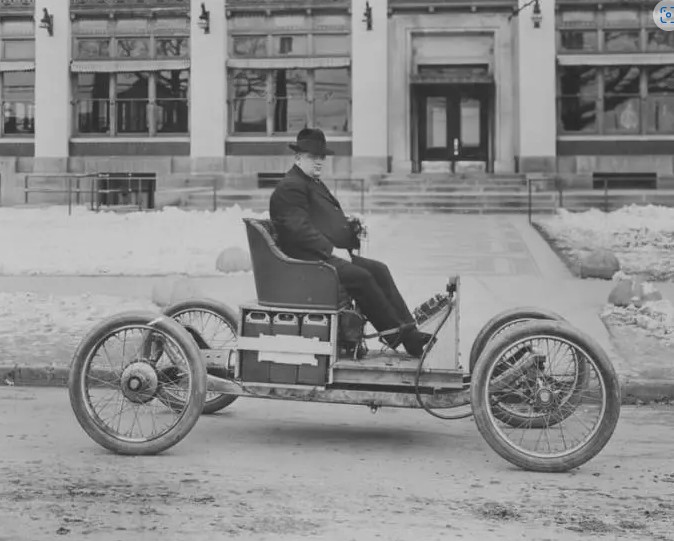
Henry Ford develops one of his first automobiles in conjunction with Thomas Edison in the early 1900’s. It was an electric model using one of Edison’s many inventions. The experiment lost money and was abandoned when Ford elected to use gasoline power as the primary motive. The interesting note is that Ford lost a significant amount of money on every electric vehicle produced. Some things never change.
TESLA’S Visions
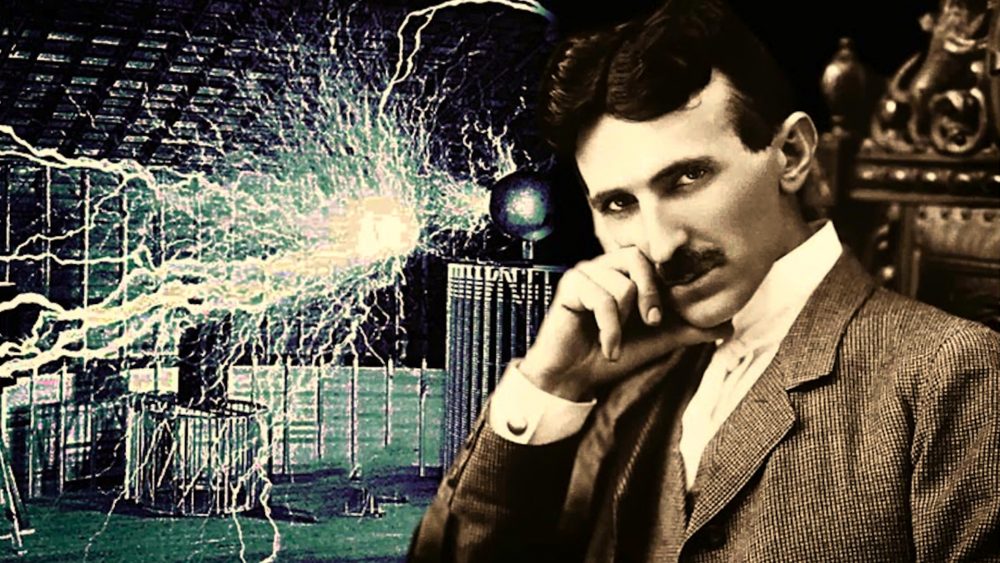
One of the other great minds of the age was Nikola Tesla. Tesla was a visionary that saw things in ways that most people will never fully grasp. I will readily admit that I was a mechanically inclined engineering technician with only the most basic understanding of electricity. It just wasn’t my strength. So much of what I have read about Tesla’s work is pretty high level. What did catch my eye is a series of articles about one of his inventions that I would not have thought possible of that age. The implications of this development could have been game changing had it been fully developed.
During the late 1800s to the early 1900s, command of the seas was still largely in British hands, but many other competing nations were racing to catch up. The main weapon was the battleship and that was factored into every major war and expansion plan. Air power and submersibles were still in their infancy and the idea that a battleship could be defeated by anything other than another battleship was laughed at. So, the potential threat of a new type of “weapon” would have been impossible for the Admiralty to grasp no less accept.
Tesla had other ideas. Not only had he been experimenting with electricity, but he had been thinking a lot about how simple it might be to counteract the growing threats at sea. He felt that mankind’s resources were being wasted on warfare and the ability to wage war. Nikola Telsa discussed what we now would call “drones” in an article in 1898
The Indianapolis journal, November 09, 1898, Page 5, Image 5
TESLA’S DISCOVERIES
ELECTRICAL INVENTIONS THAT PROMISE TO WORK WONDERS
Magical Contrivances That May Be Used Either for the Welfare or the Injury of Mankind.
SPACE MAY BE ANNIHILATED AND WHOLE FLEETS OF WAR VESSELS EASILY DESTROYED.
NEW YORK, Nov. 8.
Nikola Tesla, the electrician, in a newspaper interview, describes an application of electricity whereby, without the interposition of any artificial medium of communication, one man can control and direct with absolute exactitude the movements of any type of vessel, balloon or land vehicle at any distance that may be desired. From a station on shore or from the deck of a vessel under way a torpedo boat equipped with Mr. Tesla’s controlling device may be propelled either nor below the surface, maneuvered at will in any direction and finally brought into contact and exploded against the side of a hostile vessel at any point within the range of the vision of the operator. More than this, assuming that it was possible to accurately locate the position of the vessel which it is desired to destroy, the torpedo boat could be directed to it, even if the ship lay in the harbor of Southampton and the operator were stationed at Sandy Hook.
Mr. Tesla said that some months had elapsed since he had fully developed his device, for which he had applied fora patent. When it was learned that Admiral Cervera was bottled up at Santiago it was his intention to apply his mechanism to several launches and similar small raft loaded with high explosives and annihilate the fleet at anchor. Admiral Cervera, however, came out and met his fate under the guns of the American fleet before the necessary arrangements could be made. Then Mr. Tesla planned a raid on the Spanish vessels in Havana harbor, only to be thwarted by the proclamation of the suspension of hostilities.
“Hitherto,” said Mr. Tesla, “the only means of controlling the movements of a vessel from a distance have been supplied through the medium of a flexible conductor, such as an electric cable, but this system is subject to obvious limitations, such as are imposed by the length, weight and strength of the conductor which can be practically used; by the difficulty of maintaining with safety the high speed of the vessel or changing the direction of her movements with rapidity, by the necessity of effecting the control from a point which is practically fixed and from many other drawbacks which are inseparably connected with such a system.
“The plan which I have perfected involves none of these objections, for I am enabled by the use of my invention to employ any means of propulsion, to impart to the moving body or vessel the Highest possible speed, to control the operation of its machinery and to direct its movements from either a fixed point or from a body moving and changing its direction, however rapidly, and to maintain this control over great distances without any artificial connections be-tween the vessel and tho apparatus governing its movements, and without such restrictions as these must necessarily impose.
NO WIRES REQUIRED.
“In a broad sense, then my invention differs from all of those systems which provide for the control of the mechanism carried by a moving object and governing its motion, in that I require no intermediate wires, cables or other form of electrical or mechanical connection with the object save the natural media in space. I accomplish, nevertheless, similar results and in a much more practical manner by producing waves, impulses or radiations which are received through the earth, water or atmosphere by suitable apparatus on the moving body and causes the desired actions so long as the body remains within the active region or effective range of such currents, wave, impulses or radiations.
“Having explained to you some of the possibilities of the device,” continued Mr. Tesla, “I will now give you a practical example of the workings of the model before going into a detailed description of how I am able to produce these results.” Elevated on stocks on a table in the center of the laboratory stood a model of a screw propelled craft about four feet long and somewhat disproportionately wide and deep. Mr. Tesla explained that it was merely a working model which he had had made in order to exhibit to President McKinley and that no attempt had been made to follow the usual sharp lines of a torpedo boat. The deck was slightly arched and surmounted by three slender standards, the center one being considerably higher than the other two, which carried small incandescent bulbs, a third bulb being fixed at the bow. The keel consisted of a massive copper plate, the propeller and rudder being in the usual positions. Mr. Tesla explained that the boat contained the propelling machinery, consisting of an electric motor actuated by a storage battery in the hold; another motor to actuate the rudder and the delicate mechanism which performs the function of receiving through the central standard the electric impulses sent through the atmosphere from the distant operating station, which set in motion the propelling and steering motors, and through them light or extinguish the electric bulbs and fire the exploding charge in a chamber in the bow in response to signals sent by the operator.
“Now watch,” said the inventor and, going to a table on the other side of the room, on which lay a little switch box about five inches square, he gave the lever a sharp turn. Instantly the little bronze propeller began to revolve at a furious rate. “Now I will send the boat to starboard.” he said, and another quick movement of the lever sent the helm sharp over and another movement turned it as rapidly back again. At another signal the screw stopped and reversed.
THE EXPLOSON.
“During the day,” continued Mr. Tesla, his hand still on the lever, “we should steer our course by keeping the two standards in line, but at night we should depend on the electric lights which would, of course, be screened, so as not to be visible to the enemy,” and, at a signal, both tiny bulbs were illuminated. “Now we will assume that the boat has arrived within striking distance of the vessel to be destroyed and the bulb in the bow will serve to show that the explosion has taken place.”
As he spoke, he touched the lever again and the light flashed and was extinguished.
‘‘Imagine, if you can,” said Mr. Tesla, as he went back tohis desk, “what an irresistible instrument of destruction we have in a torpedo boat thus controlled, which we can operate day or night on the surface or below it and from any distance that may be desired. A ship thus assailed would have no possibility of escape. I can apply this system of control to any type of vessel and of any size. It is not even necessary to make a close approach to the vessel to be destroyed. At the distance of one hundred feet the explosion of two hundred pounds of dynamite will exert a shattering effect on a battle ship, but there is no reason why we should not load a vessel with two hundred or three hundred tons, or even more of dynamite which, exploded even a mile or so away, would raise a wave that would overwhelm the biggest ship ever built.”
Continuing his description. Mr. Tesla said: “As to that part of my invention which involves the production of suitable waves or radiations and the conveying of the same to a remote receiving apparatus, capable of being operated or controlled by their influences, it may be carried out in various ways which are, at the present time, more or less understood.
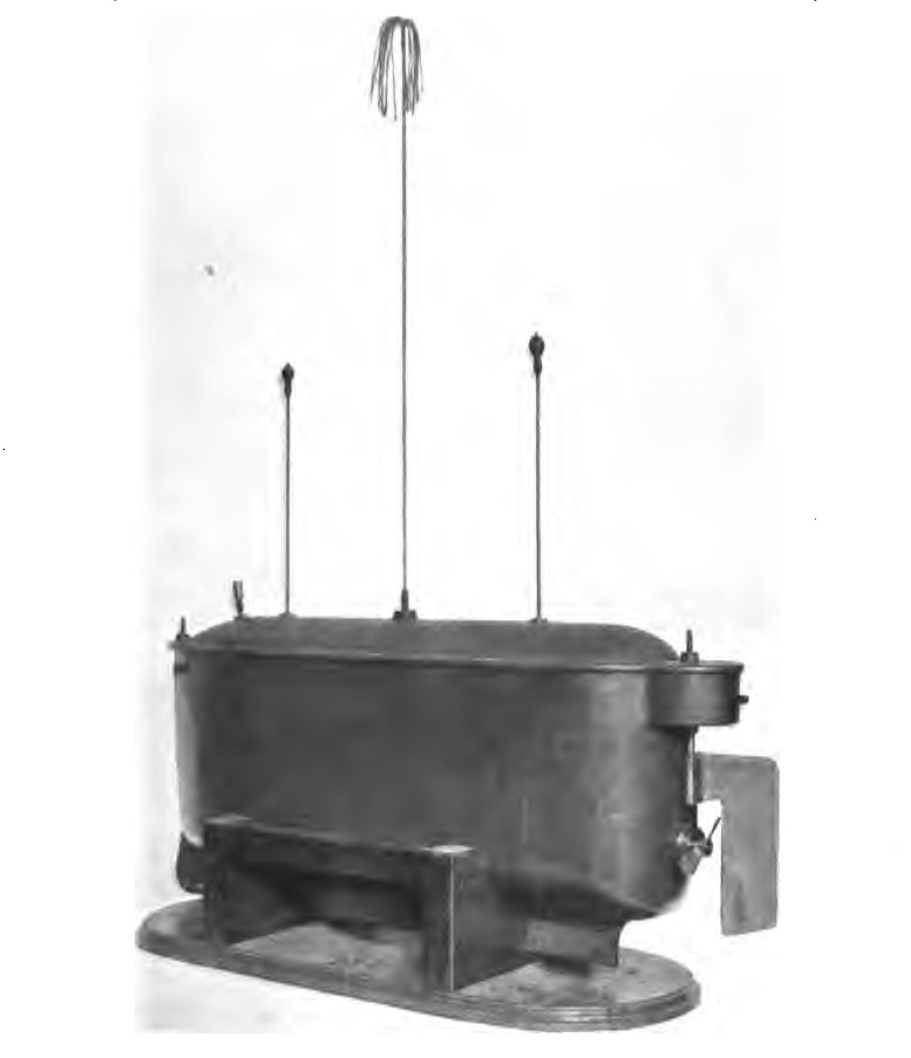
fig. 2. THE FIRST PRACTICAL TELAUTOMATON.
A machine having all its bodily or translatory movements and the operations of the interior mechanism controlled from a distance without wires. The crewless boat shown in the photograph contains its own motive power, propelling- and steering-machinery, and numerous other accessories, all of which are controlled by transmitting from a distance, without wires, electrical oscillations to a circuit carried by the boat and adjusted to respond only to these oscillations.
Tesla later wrote extensively on the three problems that were inhibiting human growth. The second problem: how to reduce the force retarding the human mass— the art of telautomatics. This expanded on his earlier writings about warfare and human growth.
From The Century Magazine 1900:
https://archive.org/details/centuryillustra04unwigoog/page/192/mode/1up
Universal peace is a beautiful dream, but not at once realizable. We have seen recently that even the noble effort of the man invested with the greatest worldly power has been virtually without effect. And no wonder, for the establishment of universal peace is, for the time being, a physical impossibility. War is a negative force, and cannot be turned in a positive direction without passing through the intermediate phases. It is the problem of making a wheel, rotating one way, turn in the opposite direction without slowing it down, stopping it, and speeding it up again the other way.
It has been argued that the perfection of guns of great destructive power will stop warfare. So, I myself thought for a long time, but now I believe this to be a profound mistake. Such developments will greatly modify, but not arrest it. On the contrary, I think that every new arm that is invented, every new departure that is made in this direction, merely invites new talent and skill, engages new effort, offers a new incentive, and so only gives a fresh impetus to further development. Think of the discovery of gunpowder. Can we conceive of any more radical departure than was affected by this innovation? Let us imagine ourselves living in that period: would we not have thought then that warfare was at an end, when the armor of the knight became an object of ridicule, when bodily strength and skill, meaning so much before, became of comparatively little value? Yet gunpowder did not stop warfare ; quite the opposite —it acted as a most powerful incentive. Nor do I believe that warfare can ever be arrested by any scientific or ideal development, so long as similar conditions to those now prevailing exist, because war has itself become a science, and because war involves some of the most sacred sentiments of which man is capable. In fact, it is doubtful whether men who would not be ready to fight for a high principle would be good for anything at all. It is not the mind which makes man, nor is it the body; it is mind and body. Our virtues and our failings are inseparable, like force and matter. When they separate, man is no more.
Another argument, which carries considerable force, is frequently made, namely, that war must soon become impossible because the means of defense are outstripping the means of attack. This is only in accordance with a fundamental law which may be expressed by the statement that it is easier to destroy than to build. This law defines human capacities and human conditions.
At the end of his lengthy article, he concludes the current state of the world and accurately describes its future:
The world moves slowly, and new truths are difficult to see. Certainly, by the use of this principle, an arm for attack as well as defense may be provided, of a destructiveness all the greater as the principle is applicable o submarine and aerial vessels. There is virtually no restriction as to the amount of explosive it can carry, or as to the distance at which it can strike, and failure is almost impossible. But the force of this new principle does not wholly reside in its destructiveness. Its advent introduces into warfare an element which never existed before— a fighting machine without men as a means of attack and defense. The continuous development in this direction must ultimately make war a mere contest of machines without men and without loss of life— a condition which would have been impossible without this new departure, and which, in my opinion, must be reached as preliminary to permanent peace. The future will either bear out or disprove these views. My ideas on this subject have been put forth with deep conviction, but in a humble spirit.
Fast forward to 2025
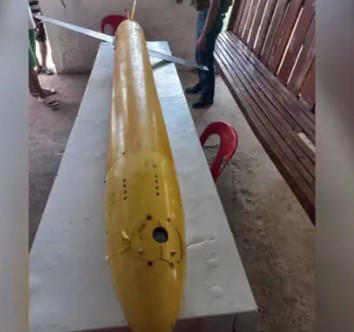
“On January 2, 2025, three local fishermen discovered a mysterious underwater drone off the coast of the Philippines, sparking serious concerns about national security. They found the drone, believed to be of Chinese origin, on Monday, December 30, in the waters near San Pascual, a town located in Masbate province, which lies in the central part of the Philippines.
Fishermen in the Philippines have made an unexpected catch: a suspected Chinese underwater spy drone. The discovery has raised concerns about China’s surveillance activities in the disputed South China Sea.
Three fishermen found the unmanned, torpedo-shaped drone floating in the waters off San Pascual in Masbate province on Monday.
Marked “HY-119,” the drone is believed to be a Chinese underwater navigation and communication system potentially used for surveillance and reconnaissance.
“Based on our open-source research… HY-119 refers to a Chinese underwater navigation and communication system,” regional police director Andre Dizon said. “It has an antenna and an eye that can be used for viewing.”
While the drone itself was unarmed, police have noted “potential national security implications” in their report. The drone has been turned over to the Philippine Navy for further analysis.
This incident comes amid heightened tensions in the South China Sea. China claims almost the entire sea, despite competing claims from neighboring countries and an international ruling that invalidates its claims. Recent months have seen an escalation in confrontations, including a December incident where Chinese vessels fired water cannons at a Philippine patrol vessel.”
Our defense posture has relied heavily on the nuclear submarine fleet for almost all of my life.
Both attack submarines and ballistic missile submarines are highly capable but incredibly expensive to build and maintain. But they can become targets for new types of technology and upset the entire strategic balance we depend on. I know that greater minds than mine are already looking at the scenarios that Tesla imagined over 125 years ago. I pray that the designers and planners are already looking at countermeasures for scenarios that might have been unimaginable in the days gone by. I believe that the enemy has already opened pandoras box. Imagine a swarm of drones powered by AI that is unhindered by human interference?

 theleansubmariner