UPDATED INFORMATION AT END OF POST (FEBRUARY 2025)
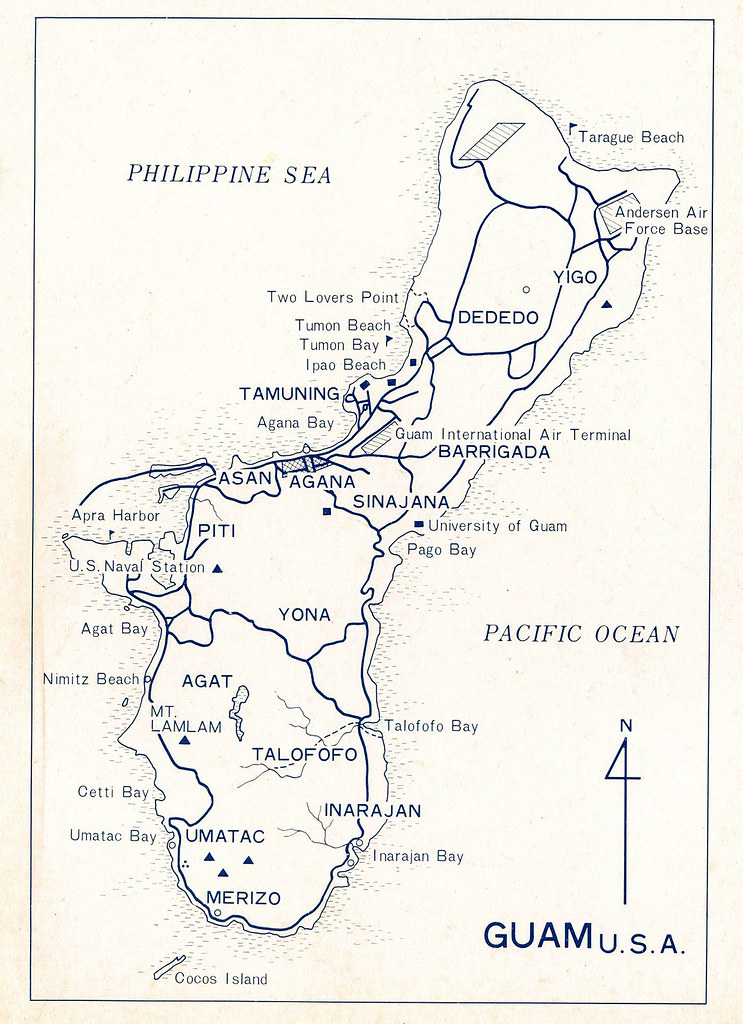
A little over fifty years ago, I came to the island of Guam for the very first time.
The crew flight from Hawaii was one of the longest I had ever been on. Frankly, it was THE longest in my young life. Along with the officers and crew, we departed Hickam AFB in our service dress white uniforms and crossed the wide Pacific Ocean to Guam. The Blue Crew had just completed an Off Crew period of training and relaxation. Now it was time to get back to work.
When we got to Guam, we landed at Anderson AFB. Anderson was still one of the busiest airports in the Pacific. Much of the traffic from Vietnam came through her airfields on their way to someplace else. During the long war, bombers from Anderson delivered powerful attacks on North Vietnam. Even in the fall of 1973, large groups of B-52 bombers would take off from her runways. The staging areas were always teeming with men and materials.

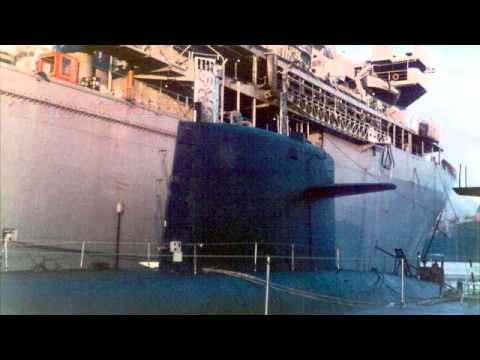
We grabbed our personal items and piled into the military busses that would take us to Polaris Point. The Marine Gate was the first indication that we were near to our new temporary home. Then it was a short drive to the USS Proteus, a veteran of the World War that had been retrofitted to service Polaris submarines.
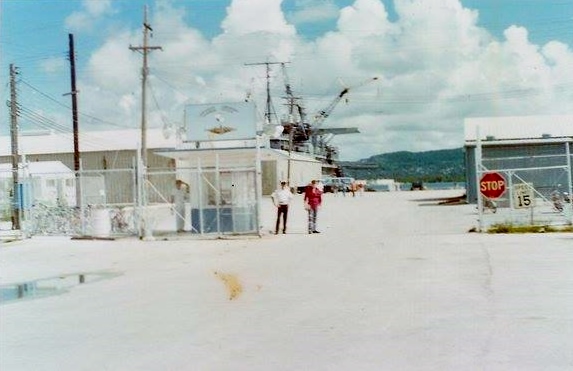
As was usual, we arrived before the boat returned with the Gold Crew. SO, we had a few days of time to kill living in the temporary crew berthing of the Proteus. It was not very comfortable. The racks were about five high and there was barely room to move from left or right. And if I remember correctly, it smelled pretty raunchy from the heat, humidity and body odor of sailors who had not had a bath in 30 plus hours.
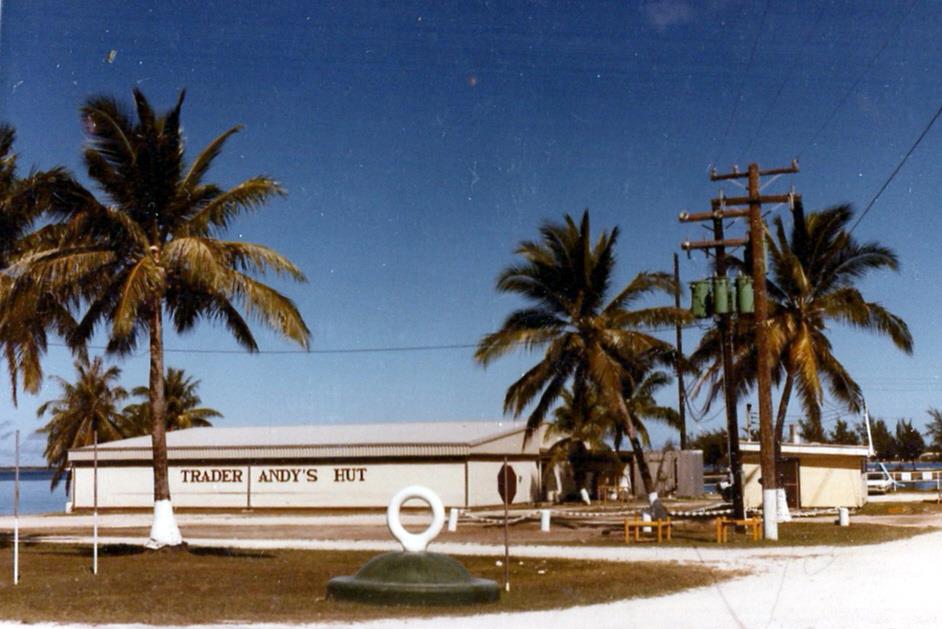
Liberty Call at Andy’s Hut
Fortunately, they did let us off for a few hours. The seasoned veterans knew about a place not far from the ship called Andy’s Hut. It was not a long walk from the ship, and it was the only place where you could get a beer. As I recall, it was 3.2 beer, but it was cold. It tasted a bit like it was infused with formaldehyde but if you drank enough, it gives you a small buzz. Then there was the walk back to the ship at night and hoping you didn’t get stopped on the quarterdeck. Fortunately, the tender guys were used to seeing less than sober bubbleheads and as long as you didn’t get belligerent, they gave you a pass.
The boat arrived a few days later and our trips to the Hut became fewer and fewer. There was just too much work to be done getting the boat repaired and ready for the next patrol. The few times we did make it off the boat were pretty focused on getting a few hours of relaxation at the ball field near the gates or swimming in the warm waters near the Hut.
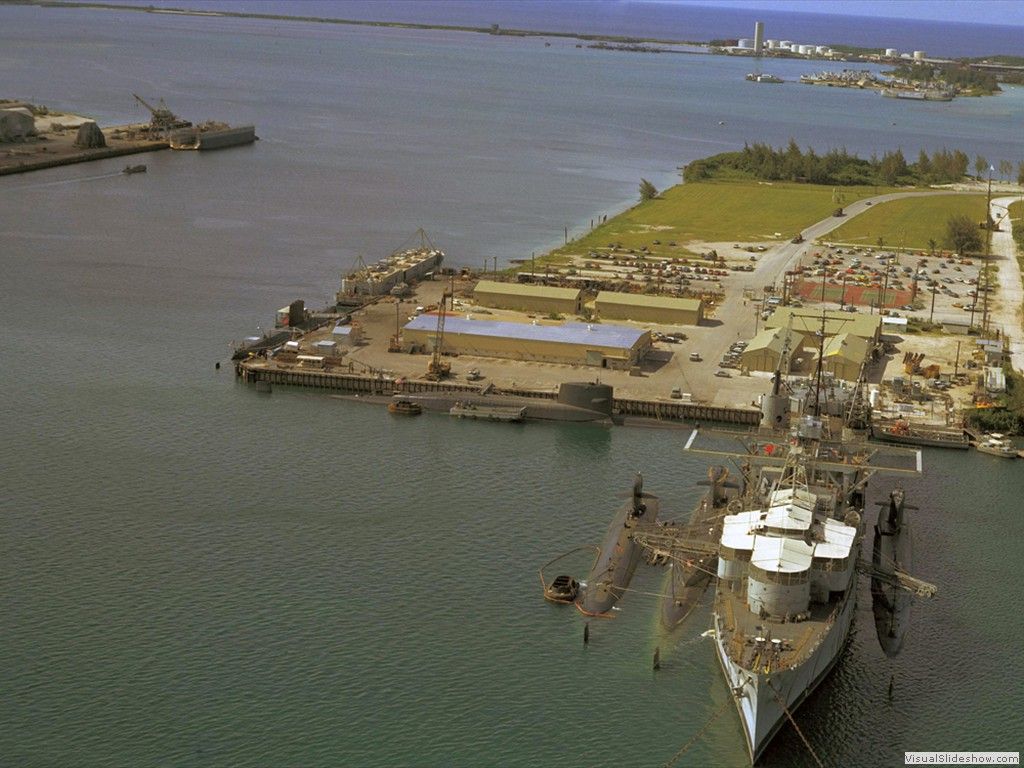
This cycle would continue for me for the next few years.
Polaris Point was a secure area. There were fences and patrols all over to keep any potential sabotage away. We routinely held security drills to make sure no enemies could get near the boat.
Guam is a typical tropical island where the rains and warmth combine to promote heavy growth of vegetation. Driving up to Polaris Point, there was always the sense that this place was different. From the turnoff road to the Point, the growth of vegetation was less and less. I was not a soldier, but even I could understand that the openness had to have been important to security. The term, “field of fire” means the area around it that can easily and effectively be reached by gunfire. Having a clear field of fire means no obstructions to vision. It never occurred to this kid from Western Pennsylvania that there might have been a chemical way to ensure that vegetation was kept in check. I mean, we did have weed killer, but it came in small containers and was only effective for a season or two.

PACT Act
In October of 2022, the government finally admitted, in a footnote to the PACT Act, that Guam was an area that Agent Orange was used. After decades of denial, the powers that be finally concluded that not only was Agent Orange present in Guam for transshipping, but that it was used in areas that many of us were present in. Including Polaris Point.
This was a pretty big deal. But even with the inclusion of the areas, many people found that it was a struggle to get included in the Act. While Congress included Blue Water navy units in the presumptive category, men who were stationed there bore the burden of proof to show they could have been exposed. Plus, the lengths one has to go through for a service-connected rating are tremendous.
https://www.va.gov/resources/the-pact-act-and-your-va-benefits/
I am one of those.
My conditions are typical of many of that age. Heart disease that started while I was still on active duty is only one of the conditions that I live with now. The list is too long and personal, but I was finally granted inclusion at a 90% rating last year.
I was incredibly fortunate to have an outstanding advocate. Westmoreland County Pennsylvania has a Veterans Affairs Office and the head is a friend named Matt. He is retired Air Force and he convinced me that with all of my presumptive conditions, I should apply. I was always reluctant to apply since i viewed the VA as solely for guys with service-connected wounds. Matt was very clear that not all wounds are visible and not all surface on the day the battle is raging. It was his guidance and work which helped me navigate the system. I am eternally grateful for his skills and knowledge.
I follow the progress of others I served with through Facebook. Recently, a friend posted a link to this article. I am posting it as a service to others. This is a story from 2017 that talks about Agent Orange and Guam. It was a shocking eye opener for me.
More veterans allege Agent Orange use at military bases
Pacific Daily News
Kyla P Mora, kmora@guampdn.com Jan 14, 2017
New accounts support the statements by Leroy Foster, 68, and Guam resident and veteran Gerard Laitres that Agent Orange was used on Guam — and not only at Andersen Air Force Base, but at Naval Station, Naval Magazine, Naval Communications Station, Naval Air Station, Navy Harbo, and the Marbo housing complexes.
Foster, who lives in Florida, has been reaching out for years to anyone who would listen to his story of personally spraying thousands of gallons of the toxic herbicide Agent Orange at Andersen during his 10-year hitch with the 43rd Supply Squadron Fuels Division.
Foster’s story has been supported by Ralph Stanton, who was stationed at Andersen from March 2, 1969, to March 31, 1970. In notarized testimony submitted to the U.S. Veterans Administration, Stanton described his job with the 43rd Civil Engineering Squadron as liquid fuel systems maintenance and repair.
Stanton and Foster regularly crossed paths at the base, as Stanton performed maintenance on fuel and delivery systems, including the cross-island pipeline Foster was assigned to spray.
Stanton remembered Foster because, he said, “The spray made me sick at my stomach, so I hated to see him coming our way.” Stanton would often try to leave if he saw Foster coming, but would sometimes just step out of the way, cursing, as Foster pulled through with his five-ton truck and 750-gallon tank spray rig.
Foster regularly wore rubber boots to his knees, rubber gloves to his elbows, a rubber apron to his ankles, a clear face shield, and no breathing protection.
The two men reunited online decades later. Since then, Foster has been granted service connection to Agent Orange exposure for his five cancers and numerous auto-immune disorders, but hasn’t been granted acknowledgment that he was exposed to Agent Orange on Guam.
According to Stanton and Foster, they have been trying to tell their stories ever since — to WFLA’s News Channel 8 in 2017, to StoryCorps in 2015, to The Daily Beast in 2013, to KPRG Public Radio Guam in 2012, to the Daily Kos in 2011, and to Marianas Variety in 2010.
They have petitioned their congressional representatives, offered their stories in support of the failed push to add Guam to expanded Agent Orange coverage in 2009, and formed groups to assist other veterans refused benefits based on exposure on Guam.
A handful of veterans have been granted service connection for ailments the VA acknowledged stemmed from Agent Orange exposure on Guam.
“There’ve been some cases approved on Guam. But the system is, if there were 100 cases proved this morning, you have to prove again that the Agent Orange was there this afternoon,” Foster said. “Somebody else’s case doesn’t have anything else to do with your case.”
That disparity will likely continue, unless Congress chooses to extend acknowledgment of Agent Orange exposure to Guam.
Guam Del. Madeleine Bordallo has supported such bills in the past, but no action has been taken. Bordallo recently requested a briefing regarding Agent Orange use on Guam, and has gained the support of Rep. Dennis Ross, R-Florida.
For Foster, that’s unacceptable. He says he’s not seeking benefits for himself, but for the truth to come out so the residents of Guam know what really happened. He said gaining that acknowledgment will likely be a battle, particularly because the VA has consistently based denial of claims.
“A lot of documentation was destroyed during Typhoon Pamela. There wasn’t a building standing at Andersen after that,” Foster said. “But aside from that, the records center will say there are no records. Well, no kidding, they were routine base maintenance records. They destroyed them after two years. They didn’t have to keep them.”
More evidence
Since Foster’s most recent interview, more evidence from veterans have surfaced, lending support to the claims of Agent Orange on Guam.
Public Affairs broadcast journalist Joseph McHale worked with Armed Forces Radio at Andersen AFB from Dec. 1972 to Feb. 1974. He often shot photos along the flight line, which required him to roll in the grass to get photo angles. As a result, he said, his “uniforms often became soaked in what smelled like fuel oil that was soaked atop the short grass.”
Out there on the flight line, he saw a man whose name he didn’t know — “a lone guy on a tractor of some kind, pulling some kind of lawn equipment. He was almost always there in daylight hours near the flight line. I now believe it was a guy spraying the grass.”
Veteran Victor Vreeland, 71, served from 1964 to 1995 – nine years active duty in the Air Force, 15 years reserve. From August 1966 to December 1968, he was stationed at Andersen.
Vreeland worked in the fire department and said once the 55-gallon drums Foster described had been mostly emptied of herbicide, they were reused to collect discarded hydraulic fluid and oil from aircraft. The drums were then brought to the fire department’s drill pits.
“They’d bring the barrels and leave them there. We’d get them and tip them over, open up the top, and roll them into the drill pits until they glugged out their nasty contents and then roll them out of there,” Vreeland said.
According to Vreeland, the barrels usually had two to three gallons of herbicide still in them, plus the discarded fluids mixed in. Vreeland wore leather gloves and shoes in the pits, and said that his hands and feet would go numb for days at a time.
The dumped fluids were mixed with diesel or jet fuel and then burned, says Vreeland.
Vreeland doesn’t remember labels on the drums.
“I can’t say honestly that I saw containers that said ‘Agent Orange.’ I just knew what that stuff was.” He identified it as the herbicide that were used on the vegetation around the perimeter, which “was all dead. It was an orange color.”
USS White Plains
Stephen Edmison didn’t know the name of the compound in the drums either, but he knew what to look for. Edmison’s Navy career, which spanned 1967-1988, included stints on the USS White Plains and USS Proteus. After traveling with the White Plains to Vietnam in 1968-’69, Edmison worked on Guam from 1970-’73, and again in 1977.
The White Plains, a supply ship, ran supplies back and forth between Vietnam and the Philippines. According to Edmison, it also delivered barrels of Agent Orange to Vietnam.
Although the Department of the Navy and Department of Defense denied that tactical herbicides, including Agent Orange, were transported on the White Plains, photographic evidence of barrels of Agent Orange being transported from the ship exists. And multiple veterans who served aboard the ship proved exposure to Agent Orange to the VA. Eventually, the White Plains was added to the “brown water navy” list of ships covered by a blanket acknowledgment of exposure to Agent Orange.
Distinctive markings
Edmison said he became very familiar with the chemical’s storage barrels, which he describes as very dark blue or black with a big orange band around the middle. So when he worked beach crew at Polaris Point while on Naval Base Guam, he recognized the telltale markings on drums kept in a garage near Trader Andy’s Hut, a favorite bar among Navy personnel.
“In back of the garage, we had two drums with the orange bands. Every two months, they would go spray down the security fence,” Edmison said. “They just had a little rig they took out on a tractor. We had a security fence about 300-400 yards from the ship and it went into the jungle. They’d go spray it, a 6 foot area we’d try to keep clear from the security fence.”
Edmison said he didn’t know what the contents of the drums were called; he just knew it was the herbicide he had transported to Vietnam. He didn’t learn the connection until he was diagnosed with prostate cancer.
“First thing they asked me was, ‘Have you seen any drums like this in your career?’ and they showed me a picture,” Edmison said. “I said, oh, yeah, we hauled them to Vietnam, and we had two of them in the garage to keep the jungle off the fence. I know what those are.”
Testimony
In written testimony submitted to Congress in Nov. 2009, Edward Jackson described his duties while stationed temporarily at Andersen from Nov. 1972 to May 1973. A bus and truck driver assigned to the 43rd transportation squadron, Jackson was occasionally tasked to drive a truck transporting 55-gallon drums of alleged Agent Orange.
“We were told these chemicals were herbicide, and included (Agent Orange), among some of the other ‘Agent Rainbow’ herbicides (Agents White, Blue, Purple, etc.). These herbicides were stored in the open on ramps on Andersen AFB. These drums of herbicides were used by the Civil Engineering Squadron to spray weeds and brush on the ramps, taxiways, revetments, runways, and other areas of Andersen AFB.”
Jackson testified the herbicides also were sprayed at Naval Magazine, Naval Communications Station, Naval Air Station, Navy Harbor and around his own barracks area at the Marbo complex.
Jackson stated his job occasionally included disposing of leaky barrels of Agent Orange. Drums with minor leaks were returned to Navy Harbor and loaded onto Navy ships for disposal at sea. Drums with major leaks were “determined to be dangerous to transport through the civilian areas of Guam between Andersen AFB and the Navy Base. So we would take these drums to an area called Northwest Field on Andersen AFB.”
Jackson would then back his truck up to the edge of a small cliff, from which he could see the ocean, and from which he estimated a 20- to 30-foot straight drop. “Just about anything you can imagine to be in a dump was in this huge pile, including drums of chemicals and AO that had been thrown over before I had done it.”
Jackson and others would “manhandle” the drums off the truck and over the cliff. He testified to doing this four to five times, dropping a total of approximately 20 to 25 drums.
Jackson said he didn’t think about the dumping for years after. Upon retirement, he was granted 10-percent service connected disability for arm numbness due to nerve damage. In May 2007, he was diagnosed with Hodgkin lymphoma. There was no family history of cancer, Jackson said.
Although he was granted a “non-service connected” disability, Jackson remained convinced that his Hodgkin’s was caused by exposure to Agent Orange. He submitted his testimony in support of including Guam in a proposed expansion of presumed Agent Orange exposure.
“Apparently there are some 188 veterans from all of the military services, who served in Guam, in a situation like I have,” Jackson wrote in 2009. “I do not see this as fair treatment for our veterans.”
Today and tomorrow
Now that I am in the system, they are taking pretty good care of me. The Pittsburgh, Westmoreland County and Monroeville VA clinics have been nothing short of compassionate and caring. My conditions will ultimately lead to my passing but at least I know that I am getting proper care for all of them.
I am incredibly proud of my service to my country.
Even with everything that has transpired, I would do it again. But I truly wish that the policy makers and politicians would make sure that when they send future generations off to war, they make sure to do everything in their power to protect the troops.
The chemical companies in particular are often the first to line up at the trough to make money off of war and other people’s misery. Maybe if a few more of them put on a uniform and had to deal with their witches’ brew of deadly poisons, they might be a little more careful of what they made their profits off of.
I would encourage you to examine your own heart and circumstances. If you have one of the presumptive medical conditions and you served in one of the areas identified in the PACT Act, get some assistance and get looked at. We all volunteered twice to defend this nation. We did not volunteer to be a test subject for the wildly successful chemical companies that profited so nicely at our expense.
Mister Mac

 theleansubmariner
It is sad the extent to which the government (in all of its myriad forms) conceals and then denies such effects to its personnel. My Dad was stationed there from 1956 to 1957 (AE on a Neptune), and as a 5 to 6-year-old kid, I loved the place! The ‘uniform of the day’ for my two brothers and me was shorts and sometimes flip-flops. From sunrise to sunset, we spent time wandering the jungle (stealing pineapple and sugar cane from the plantations); at one point, we came across a man who, as it turned out, was one of the last Japanese soldiers not to surrender. He would tell us stories of his home in Japan (he spoke better English than we did); probably, he was hoping we would turn him in, but we never did. It wasn’t until the 1970s that he was found and repatriated to Japan. He married his childhood sweetheart and then returned to Guam for their honeymoon!
I landed in Guam the day they found that gentleman that thought the world was still at war. I was doused with AO almost daily on the flight line. I read that dependents are now covered. Have u heard? 4233204081
Sandra,
I have not heard of any AO programs for dependents. I would suggest you start with your congress person as a point of contact.
Made five patrols out of Guam in the last half of 1960’s. Flew the United contract flight from Hickam to Andersen flight line by way normally, of Wake, with one exception, which was Eniwetok because of a C-141 crash, for refueling. Was all over Guam, though most of my time was on the boat doing refit activities. Did go to the ammunition facility club once, the Naval hospital a number of times with the corpsman for supplies, and the Navy base. Once even to a civilian party with my cousin, a B-52 mechanic at Andersen. Saw Bob Hope and company twice on Guam on their tour’s last stop before heading home in the 5 day crew change period. Kind of neat to leave on January 1 and arrive at Hickam on December 31 the year before you left, twice, arriving 1967 and 1968 after leaving in 1968 and 1969.
I got my Pact claim last year, with my presumptive conditions it was only a wait to have my claim reviewed and accepted.
Would you mind sharing how you proved to the VA you were on Guam? I made six patrols in the mid 70’s, however my service record says my homeport was Pearl Harbor. It does not say that the boat was forward deployed to Guam. I have seen on Facebook that others have had the same problem.
I have copies of deck logs provided by the National Archives and others. It’s been a long haul but the Archives and the Blue Water Section of the VA have been working on trying to correct this. Once they had the deck logs, they were able to review my service record and compare. It takes a lot of patience but in the end its worth it to try. 90% disability is where I am rated now but my advisor is still convinced it will go to 100.
If you go to this link and enter your ships name you should be able to see if they uploaded yours yet: https://catalog.archives.gov/search-within/594258
Thank you very much for the reply, I was starting to go the deck log route, unfortunately they have not been published for the years 75 thru 78. Thankfully I do not have any of the presumptive conditions. I was trying to get the information to save my wife the trouble if something were to happen.
I did want to say I am sorry that you are having to deal with medical issues related to agent orange. I hope you have good medical care and the God blesses you with improving health. I am about to turn 70 myself and there are no guarantees for any of us.
Reid, I got buddy letters stating that dates that we started going to Guam till my leaving the boat to get my discharge. The VA accepted the buddy letters when I sent in my claim. I have also had other bubble heads do the same thing and Never had a problem. I did 5 patrols out of Guam the last one ending in June of 1972.
My husband, Rik Spruitenburg, was diagnosed with Parkinson’s about 7 years ago. He recently filed a disability request with the VA under the PACT Act and was awarded a 30% disability based on his two tours of duty on Tecumseh and Ethan Allen stationed in Guam.
I would encourage you to continue to try and get the level increased. I am in my third round with the VA and my Veterans Service Officer has encouraged me not to settle until we have exhausted all avenues. I never advise paying a lawyer or law firm but each of the major Veterans organizations have people who are trained in the methodology needed to overcome the barriers. I am at 90 percent now, but my combined conditions are preventing me from working full time. The hard part for me was that I was providing a service to my community even at the young age of 69 but my heart can no longer support the requirements of the job. I wish you both well and hope that he is coping with the Parkinsons. My mom had it and I am fully aware of the challenges you face. I would not be surprised to find someday after more research is conducted that PD is related to the things we were exposed ot on submarines.
I was assigned to the Marine Detachment USS Hunley AS-31 in November of 1979 while it was stationed at Polaris Point .We provided security for when they had missile movements from sub to ship and visa versa. We also controlled access to the missiles for the techs while on ship.
We would have to do what they called beach sweeps before a missile move.Basically we would have to do patrols before and during movements through the jungle areas surrounding in and around the base. We could tell that the closer we got to the dock area, the jungle vegetation wasn’t as thick. It always smelled like diesel fuel and we just assumed it was from the subs. Unfortunately that wasn’t the case, a lot of us were exposed to agent orange being there and also we all swam at the beach there next to Andy’s Hut as it was a beautiful beach.
Unfortunately for us , little did we know that the water was contaminated also. We left our island paradise in June of 1980 as we set sail for Charleston South Carolina making a few port of calls during our journey and we also crossed the equator to become ShellBacks which was a time honored tradition in the Navy and Marine Corps for many years. Unfortunately for many of us we have more than memories of our time there and I truly hope that all of us can get the care and compensation for the exposure to the poisoned waters and jungles that we served honorably in.
Semper Fi
Jerry
Thanks for your reply to the story. The stories are starting to come out now and every one is important to someone else who has the after effects of the exposure. I hope you are getting the care you deserve.
Semper Fortus
Mac
My father was Chief Young on that ship on those days. We lived on the SAV base. Now suffering AO conditions but remain only a dependent. Am looking for anyone that has knowledge on what dependents can do.
ty
I’m working on it, unfortunately I don’t have much documentation proving that I was on the USS Hunley and that it was stationed at Polaris Point when I was stationed on it…I am finding more information like this website and other sites that have historical information on Navy ships deployment history.
The good news is that the Blue Water section of the VA has records of all the ships and submarines stationed in Guam. That is fairly recent. They also have access to all of the service records of people who apply. For the longest time, my submarine was not classified as being there because of classification of our missions. Now, they have the deck logs of my ship. https://catalog.archives.gov/search-within/594258 Enter the ship’s name (USS Proteus AS 19)
They may not have your year posted yet but that’s a good place to start. Once you have that ship’s log, then your service officer can start putting your claim in motion.
Thank You! I served aboard the USS Proteus (AS-19) from 1968 t0 1970. I worked in the Boat Shop, not the submarine shop but the small boat shop. We ran the Mike boats, 40 and 50 foot utility boats, OBM’s and the Torpedo Retriever (TR-1). I worked mostly out side and traveled all over the port, and walked to Andy’s Hut more times than I care to admit. Yes we walked and never wondered why the area between the security gate and the Hut was not jungle. Now I know! I have had hypertension for years and I am resubmitting my VA Claim. Thank you, and thanks for the photos they bring back memories of my 18 months aboard the Proteus. John Manahan USCG Retired E-9.
Thanks for your service. One thing most of us have learned since the PACT Act was signed is that you need to be persistent and patient. Work with a Service Officer that has experience and is certified. Best wishes and I hope you get the care they owe you.
Mac
what dates?
Thanks for the info!
Thanks for the article. My ship the USS Ramsey was in and out of Guam in Dec 1976 to Jan 6 1977. VA has been trying to find my deck logs for over two years now! Prostate & Bladder Cancer and residuals. I even have a buddy letter. Still waiting.
The blue water team should have access to your ship’s records. It takes some time. I hope your cancers can be managed but don’t give up
Mac
I was able to obtain deck logs from my submatine from from the national archives. Once you find the right place it is not that bad and they responded fairly quickly. Read these two pages and if you have a problem let me know, I might be able to help.
https://www.archives.gov/research/military/logbooks/reproductions
https://www.archives.gov/contact
Best of luck to you
I landed in Agana Guam in the summer of 1969 on a TWA flight at the naval air station on my way to my new duty station the USS Proteus AS 19. When I arrived aboard the proteus I was given a check in sheet to go the various stations and my last stop was the repair division, I was a E-3 Patternmaker assigned to the carpenter shop. upon my arrival at the repair division office (which by the way was in the carpenter shop) I handed my paperwork to Chief PO who was seating at his desk I noticed an officer sitting a the end of this narrow office, he turned looked at me and then at the chief and said who’s this asshole. I’m thinking holy shit I just got here and I’m in trouble already , the chief said LT your not going to like it it’s another f—-ing pstternmaker the LT went off I don’t need no more F—-ing Patternmakers I need welders, I need machiness I need pipe fitters, I got six of those lazy ass Patternmakers sitting over there, and then he asked where are you from I told him Manhattan Beach Ca asked me if I knew how to waterski and I said yes I know how to sail and surf also, he told the Chief send his ass over to the Yacht club we can use him over there. I’m thinking yacht club what the hell was that so this chief told me get your shit and meet me back up there in 15 minutes. Next thing I know I’m at a quiescent hut outside of the proteus security gate with a ski boat and a few small sail boats. It’s behind Andy’s Hut and that’s the beginning of a three year tour teaching sub sailors how to sail and waterski . This was a perk the navy came up with trying to keep the sub sailors from going to the bars and crap when the exchange of commands from the gold crew and the blue crews were taking place.
unbeknownst to me or to the other navy guys I worked with at the yacht club over the years that the harbour was loaded with nuclear waste that was being dumped in Apra Harbour so I was exposed to that along with agent orange and also iodine radiation. Being a patternmaker I was still called on to work aboard the proteus and the subs that were ported next to her upon the crew changes and if I’m not mistaken we had seven days to get a job done before the sub left on deployment. So as you can see everything was a rush to get shit done. I was in the nuclear reactor room replacing flooring on every sub stationed in Guam, they were all Fleet Ballistic Missile Submarines SSBN’s. I have recently submitted my paper work thru a VSO out of San Bernardino County and I’m finding the VA doesn’t do any research they sent a letter stating they didn’t see I was stationed in Guam. How could that possibly be since I spent 3 years there aboard two ships the uss proteus and the uss huntley.
I was released from active duty aboard the USS Huntley and I stayed on Guam for approx a year before I returned state side for good. Right after I was released from the navy I went to a night club with blue lights on there dance floor and when I walked up to dance with my date I lit up like a Christmas tree I had white dots all over my body I left that dance floor immediately not to return.
I just wanted to let you folks know your not alone in regards to our exposure to various toxins, I don’t have to many ailments but my blood pressure is higher then a kite I can’t hear shit and can’t see shit and I can’t sleep without my C-Pap mcchine.
Thanks for taking the time to read this!! Fred A Smith
li
Hi Fred. Thanks for your service and hopefully you will get the assistance you deserve. We were all exposed to many potentially hazardous items during our time in Guam. I was the last Auxiliary Division Officer on Hunley when we retired her in Norfolk in 1994.
Don’t give up on the blue water Navy group. It took many months for them to recognize my service in Guam, but they are getting better at it all the time. They have the records for all of the ships that served in Guam during the time you served.
Mac
I was in Guam on the USS Grant gold 1967-69. I’ve had zero luck getting anything from the VA except 10% for tinnitus. I have Afib, high blood pressure, Type 2 diabetes. Have had gall bladder removed and dorsal aorta replaced. My Service Officer in Tucson passed away so I’ll have to start over again next month.
Great article. I made a patrol out of Guam on the John Marshall. We arrived in Guam to relieve the Blue crew in July, 1980.
I developed laryngeal cancer in 2023. I filed a PactAct claim in August 2023. It has been 18 months since, and I am still stuck in evidence gathering, waiting on internal actions to be completed concerning my exposure.
it’s very frustrating.
Hi Ray, Same problem I am having trying to prove the John Marshall was in Guam in July 1980. I was there as well, gold crew, and trying to get Pact Act. Finally got a letter back from VA after 2 years of waiting and they said they cannot get the logs and have stopped trying to get them. I’m trying to find anything proving I was there as well. Let me know if you have any luck with your claim. Steve Winchester MT1/SS USNR-R Stephen-Winchester@msn.com
Stephen
Have you reached out to the John Marshall shipmates via USSVI? It sounds like someone is not being truthful since nearly all of the boomer deck logs are in fact available. We have had a lot of luck getting people connected through the Blue Water Navy desk. Also, are you working with a certified VSO? Most states (like Pennsylvania and South Carolina) have paid county VSOs that are certified to work with veterans. Mine was relentless and helped me get the help I needed. Please don’t give up.
Mac
Notice: Scanning of Vietnam-era Deck Logs
The National Archives and Records Administration (NARA) entered into an agreement on August 9, 2019 with the U.S. Department of Veterans Affairs (VA) to digitize U.S. Navy and Coast Guard deck logs from vessels with Vietnam-era service. See the press release regarding this agreement
Beginning on August 22, 2019, the VA began scanning more than 20 million images from the U.S. Navy and Coast Guard deck logs. While the scanning project is underway, U.S. Navy and Coast Guard deck logs from 1956 to 1978 will be closed to researchers, but individual deck logs will be made available for research as soon as possible after they are digitized. NARA expects the digitization to be complete by early 2020. The National Archives will also begin the process of making the digitized records available on archives.gov, after images are transferred by the VA.
This project will support the processing of veterans’ claims, including those related to the Blue Water Navy Vietnam Veterans Act of 2019, and eventually facilitate increased access to these records by researchers in a digital format without having to travel to a National Archives facility. Through this partnership, the National Archives will improve access to and discovery of these historically significant records.
https://historyhub.history.gov/military-records/navy-marine-corps-and-coast-guard-records/b/navy-marine-coast-guard-blog/posts/cold-war-submarine-records-part-iv-1946-92-submarine-deck-logs
It’s sad that spouses are not included Was there three years and during Typhoon Pamela
Thanks for the story and getting the word out pre-PACT Act!
I had no idea I was exposed until PACT was passed.
John B
LT, USN (RET)
DPSN, USS HUNLEY, Apra Harbor, 79-80
Oh, two presumptive conditions related to A.O.
Question, did our drinking water at Polaris Point come from main (Guam Lens) Aquifer? Full of toxins if so, so layer that on any A.O. exposure you had.
Regards,
John B.
HUNLEY ’79-80
LT, USN (RET)