
In 1964, I was ten years old. The movie, Voyage to the Bottom of the Seas had come out in 1961 but I only remember it from later showings on television when I was much older. The TV series that was born from that movie ran from 1964 to 1968 and I am pretty sure I watched each episode during its duration.

The early episodes were in black and white and were set in the future. By future, I mean that they were supposed to represent the futuristic age of the 1970’s. I had not remembered that part until I did a little research today and thought how coincidental that my own voyage to the bottom of the seas would actually begin in the 1970’s. You can imagine my disappointment in discovering there were no windows in the forward part of the boats I would sail in.
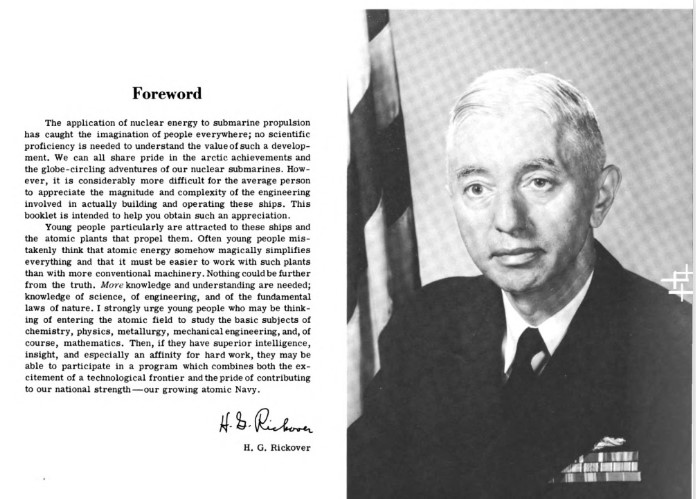
In 1964, the nuclear-powered submarine force was solidifying its place in the nations identify. We had led the field of nuclear power since the beginning thanks to the vision and drive of men like Admiral Rickover. The lessons of World War 2 gave birth to the idea of creating a deep diving and sustainable submarine that could maneuver at will without the need for good weather or fair seas. These underwater warriors could travel for seemingly limitless amounts of miles without the need for fuel and this made them a formidable new weapon in the race for global stability.
By 1964, the Soviets had built many long-range missiles and had a large bomber capability. Space had been invaded and satellites were already creating a problematic situation in the arms race. The need for an effective counterbalance was evident by this tie and the American government invested heavily in the nuclear submarine force.
But there were many things pulling on congress in 1964.
While the Vietnam war had not quite heated up to its later force, the country was going through many changes. The need for changes in the social structure of America was being pushed by President Johnson.
The Great Society was an ambitious series of policy initiatives, legislation and programs spearheaded by President Lyndon B. Johnson with the main goals of ending poverty, reducing crime, abolishing inequality and improving the environment. In May 1964, President Lyndon B. Johnson laid out his agenda for a “Great Society” during a speech at the University of Michigan. With his eye on re-election that year, Johnson set in motion his Great Society, the largest social reform plan in modern history.
The nuclear-powered navy, especially the submarine force, was a huge cost factor for the United States. The infusion of tax dollars was growing exponentially, and I am sure that planners were worried that the spigot would be shut off if the need wasn’t clearly articulated.
Up until this point, secrecy and security were paramount to the navy and the Atomic Energy Commission.
There are stories about the release of the model of the USS George Washington and Rickover’s reaction to the toy. To say he was furious would be an understatement. Yet the toy was widely sold and I have spoken to many submariners who admitted they had built one. I know I did. Twice. Once long before I served on her. And once when I came home. Trust me, Rickover had nothing to worry about.
So, it wasn’t a surprise for me to find this booklet published by the Navy and the Atomic Energy commission.
The booklet tells a story without telling too much detail. It draws the reader in and shows what life is like on the boats. It also cleverly sows the advance in technology up to that date which assures the American reader that the cost is worth the investment. Looking back 60 years, I can understand what they were trying to accomplish.
I have tried to capture the spirit of the booklet. I hope to hear from those who served on the boats of that day to confirm, challenge or correct what was published. As long as those three things are balanced with operational considerations not meant for the public. When I write these blogs, I always try to remember that we still have adversaries, and my tracking software clearly demonstrates that I often have visitors from the “People” of the east and others.
The Nuclear-Powered Submarine

The Nuclear-Powered Submarine
The advent of the atomic age has revolutionized our undersea Navy. The introduction of nuclear power has converted the submersible surface ship of yesterday to a true sub- marine capable of almost unlimited endurance. Events have followed swiftly since the pioneer nuclear submarine Nautilus entered fleet service in 1955. Records established by the Nautilus for submerged endurance and speed were soon eclipsed by submarines of later generations such as Seawolf, Skate, Skipjack, and Triton. Skipjack, first to incorporate the blimp-shaped hull, ideal for under- water mobility, broke all existing records to become the world’s fastest submarine.
The Navy reports, within security limitations, that today’s submarines travel in excess of 20 knots. Nuclear submarines also have opened up the waters under the Arctic ice pack for operations. In 1958 the Nautilus made a historic voyage from the Pacific Ocean to the Atlantic via the North Pole. The Skate has three times journeyed to the top of the world, twice surfacing at the geographic North Pole as well as making numerous surfacing’s in polar lakes.
The marriage of the nuclear submarine and the ballistic missile has been one of the most significant developments in the free world’s defense structure. Since 1960, nuclear submarines capable of submerged firing of the Polaris missile, armed with a nuclear warhead, have been patrolling the seas that constitute 70 per cent of the earth’s surface.
Missiles aboard the first two generations of Polaris submarines—the George Washington and Ethan Allen classes–have a range of 1,200 to 1,500 nautical miles. A new Polaris missile capable of hitting its target 2,500 miles away has been developed. These are aboard a third generation of Polaris submarines — the Lafayette and Alexander Hamilton.
USS Nautilus
USS Nautilus SS(N)-571 Authorization for the first atomic submarine was signed by President Harry S. Truman in August 1950. This was to be the USS Nautilus. The Chief Executive gave the world an idea of what could be expected from the ship: “The Nautilus will be able to move under the water at a speed of more than 20 knots. A few pounds of uranium will give her ample fuel to travel thousands of miles at top speed. She will be able to stay under water indefinitely. Her atomic engine will permit her to be completely free of the earth’s atmosphere. She will not even require a breathing tube to the surface.”
On January 21, 1954, the Nautilus slid into the Thames River, New London, Connecticut.

USS Triton
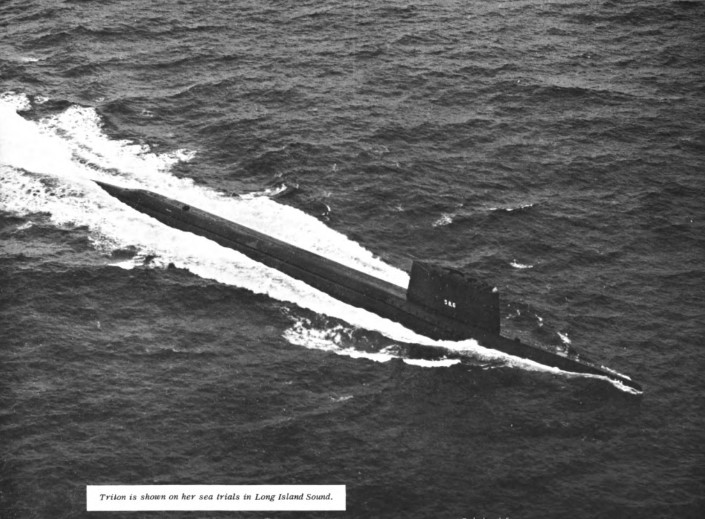
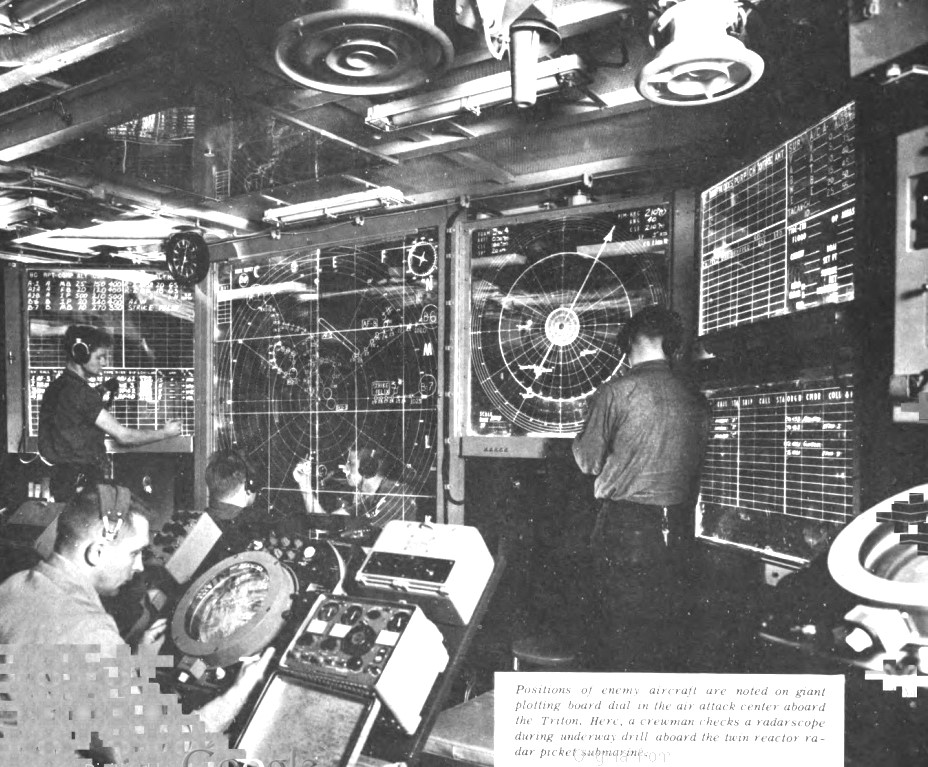
USS Triton SS(N)-586 > The world’s largest submarine —and the first to be powered by twin nuclear reactors — the Triton traveled 41,500 miles in 84 days before returning to her point of departure at New London, Conn. The President of the United States called the Triton feat “an extraordinary accomplishment.”
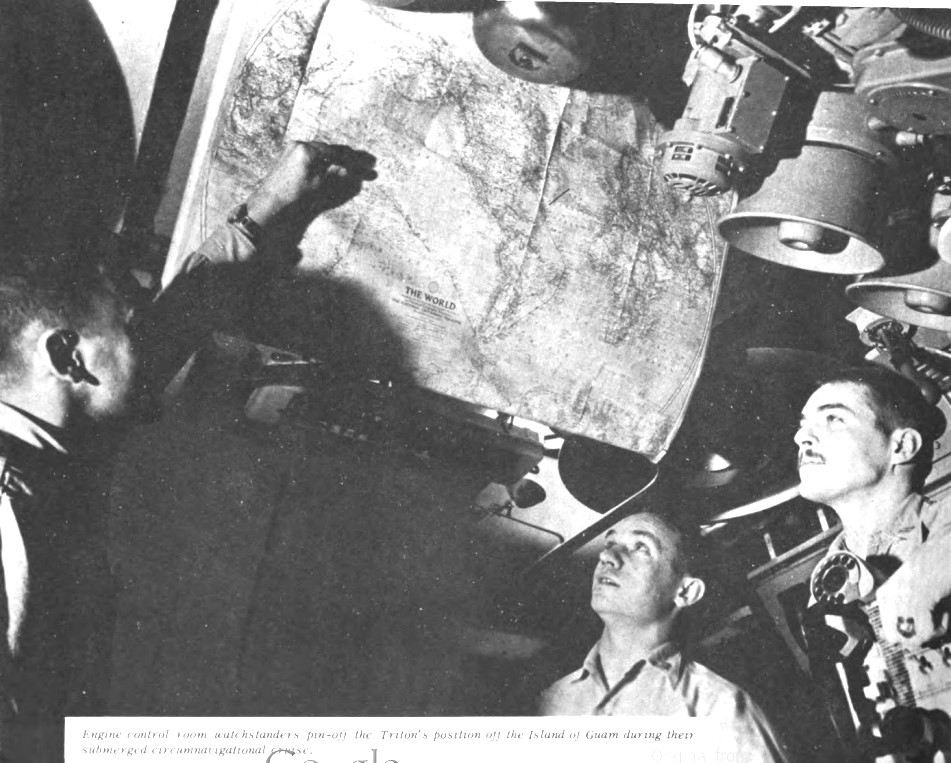
On February 16, 1960, on her shakedown cruise, she submerged off Montauk Point, L. I., and did not surface completely again until May 10. Heading for St. Paul Rocks, about 55 miles north of the equator and the reference point for the circumnavigation, the 447- foot, 7,700-ton Triton— comparable in size to a light cruiser -was soon to be following the course of the 16th Century explorer Ferdinand Magellan. Carrying a crew of 175 officers and men and eight scientific and technical personnel, the radar picket sub left St. Paul Rocks on February 24, intending to round Cape Horn in about nine days.
Off the Falkland Islands she changed course to rendezvous with the USS Macon and transfer a crewman suffering from kidney stones, thus adding some 2,000 miles to her voyage. Rounding Cape Horn on March 7, the Triton set a course for Easter Island, passed about 1,200 miles south of Hawaii, and arrived off Guam on March 28. The previous day she had paused to hold memorial services as her track passed about 100 miles from the spot where the first USS Triton was presumed lost on March 15, 1943, as a result of a Japanese depth charge attack.
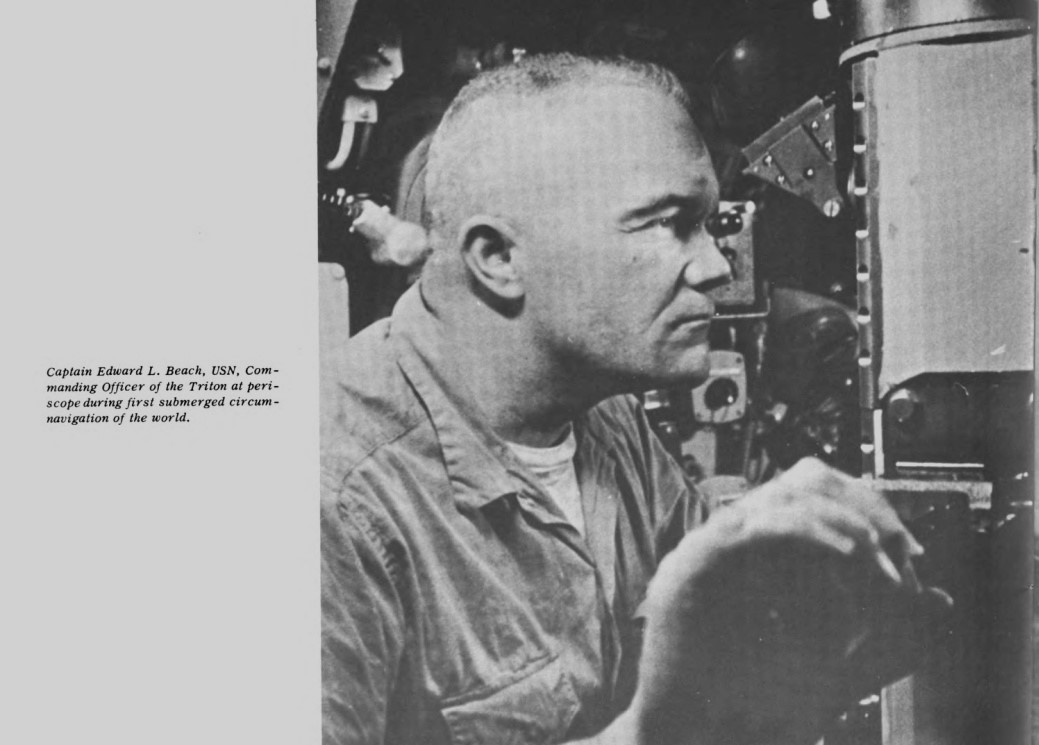
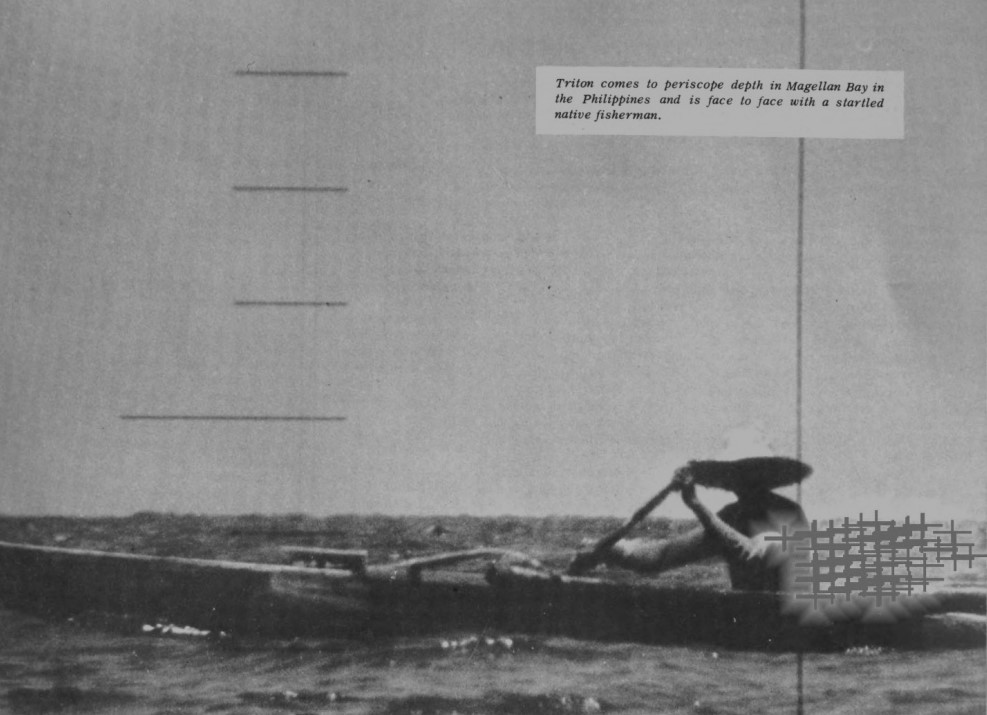
Leaving Guam, Captain Beach sailed the nuclear-powered radar picket sub to the Philippine Islands, passing near Magellan Bay on Macton Island, where the 16th Century navigator was killed. The Triton then turned south to the Indonesian Archipelago, passing through the Makassar and Lombok Straits, and then west-southwest to the Cape of Good Hope. She rounded the tip of Africa on April 17 and returned to St. Paul Rocks on April 25, completing her trip around the world. With the circumnavigation ended, the Triton continued submerged to a point off Cadiz, Spain, broached the surface briefly, and then returned, submerged, to the United States.
During the Triton’s 84 days of continuous submergence, many vital and valuable studies were conducted regarding atmospheric control, personnel, and habitability. She conducted hydrographic, oceanographic, magnetic, and gravitational surveys.
But in the last paragraphs of an underway narrative, Captain Beach made this point: The Triton’s undersea voyage “has accomplished something of value to our country. The sea may yet hold the key to the salvation of man and his civilization.”
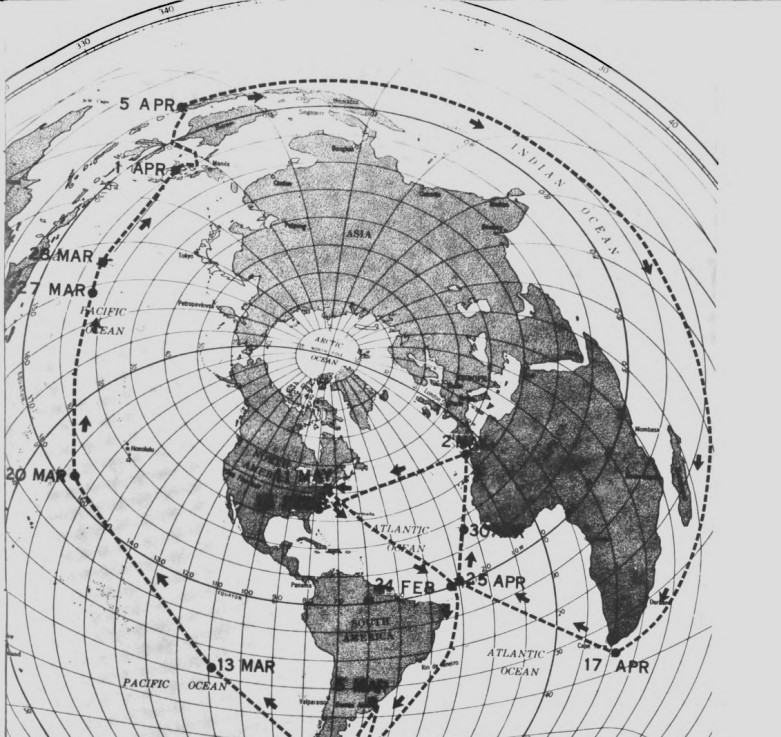
Course followed by the Triton, one of the world’s largest submarines, on her shakedown cruise in which she circumnavigated the globe submerged. Significant points in her itinerary, as shown on the chart were:
Feb. 16 Submerged off Long Island
Feb. 24 First arrived off St. Paul Rocks. Changed course to south to begin circumnavigation. Crossed the equator.
Mar. 5 Broached — partially surfaced — to disembark crew member suffering from kidney ailment. Crewman was transferred to USS Macon near Montevideo, Uruguay.
Mar. 7 Rounded Cape Horn.
Mar. 13 Observed Easter Island in the southeastern Pacific.
Mar. 20 Closest approach to Hawaiian Islands.
Mar. 27 Held Memorial service for first USS Triton lost during World War II.
Mar. 28 Observed Guam.
Apr. 1 Passed Mactan, Philippine Islands, where Magellan was killed.
Apr. 5 Transited Lombok Strait, Indonesia.
Apr. 17 Rounded Cape of Good Hope.
Apr. 25 Returned to St. Paul Rocks to complete submerged circumnavigation.
Apr. 30 Observed Canary Islands.
May 2 Broached at Cadiz to honor memory of Magellan whose voyage began at this point.
May 10 Surfaced off Delaware.
USS Ethan Allen SSB(N) 608
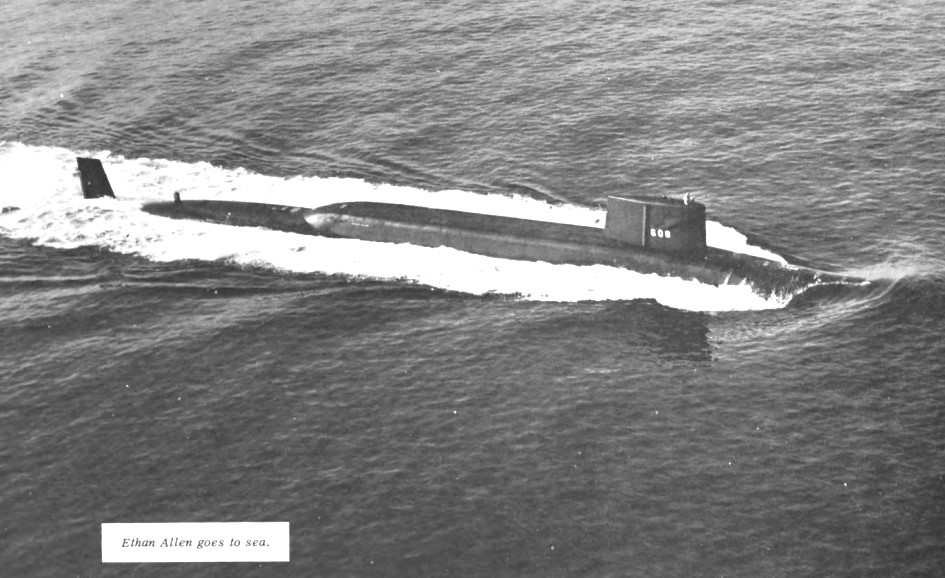
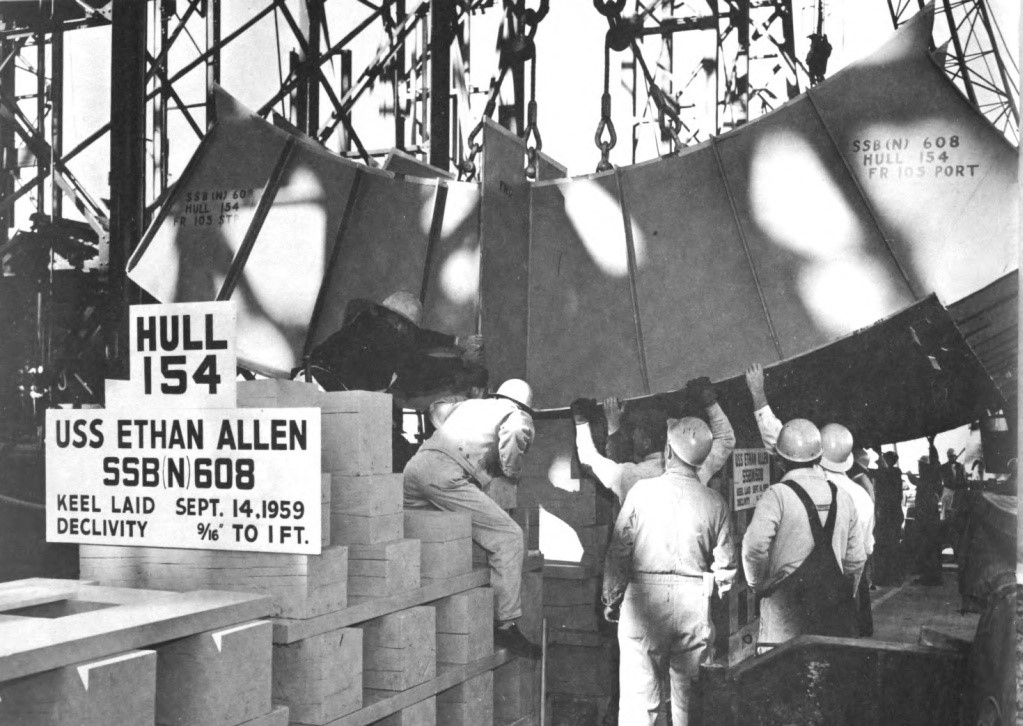
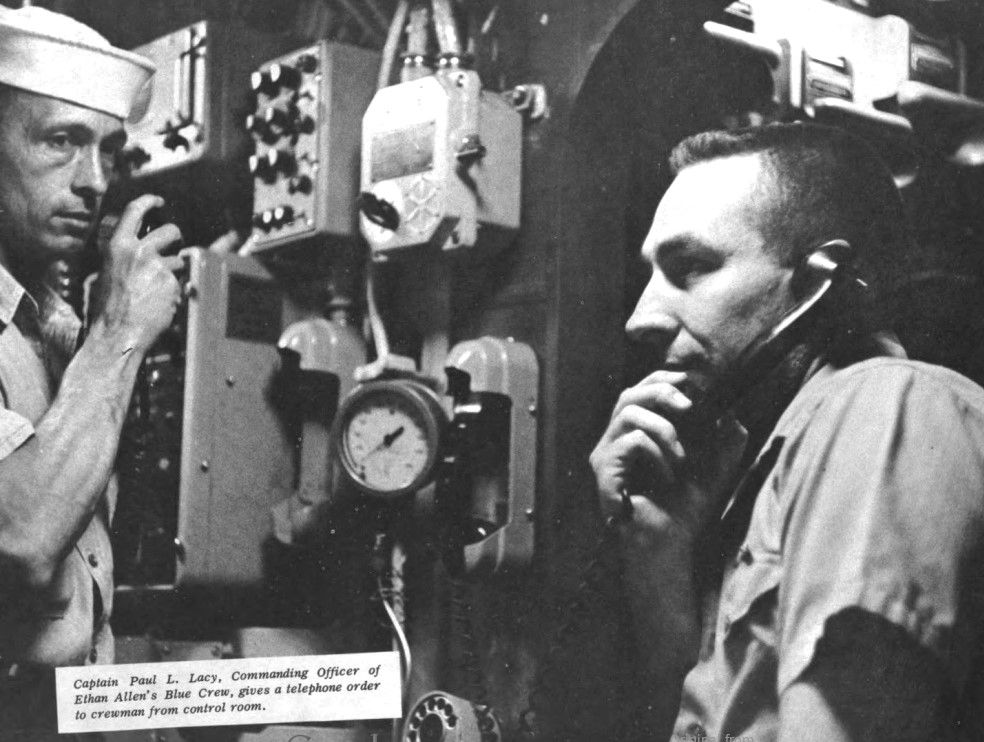
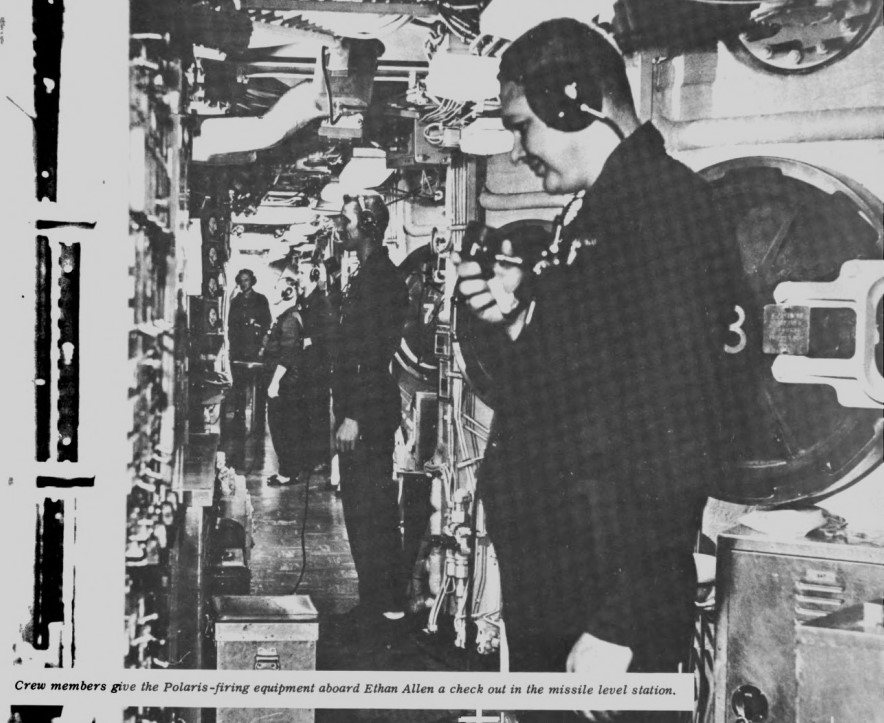
USS Ethan Allen SSB(N)-608 The Revolutionary War hero, Ethan Allen, first gave his name to a ship of the fleet in 1861. This earlier USS Ethan Allen was a bark-rigged wooden ship of 566 tons which was employed throughout the Civil War in blockade and raiding expeditions along the Atlantic and Gulf coasts.
The man who gave his name to the bark Ethan Allen and the present Polaris sub- marine lives in history as the State of Vermont’s champion of liberty and independence. At an early age Ethan Allen showed his independent spirit and aggressive leadership. Settling in Bennington, then New Hampshire Province, he began a vigorous effort for the recognition of a politically separate Vermont.
Continuing his fight for Vermont during the Revolution, Ethan Allen served as the colorful leader of the Vermont Militia, known to history as the Green Mountain Boys. In a historic raid he led his men across Lake Champlain and surprised the sleeping fortress of Ticonderoga. Capturing Fort Ticonderoga with all the dash and bravado for which he became famous, Ethan Allen contributed materially to the cause of American independence by preventing the southward advance of the British and by providing an appealing example of Continental success. The eventual victory in establishing Vermont as a separate state entitled Ethan Allen to an honored position in American heritage and earned for him the title of Father of Vermont.
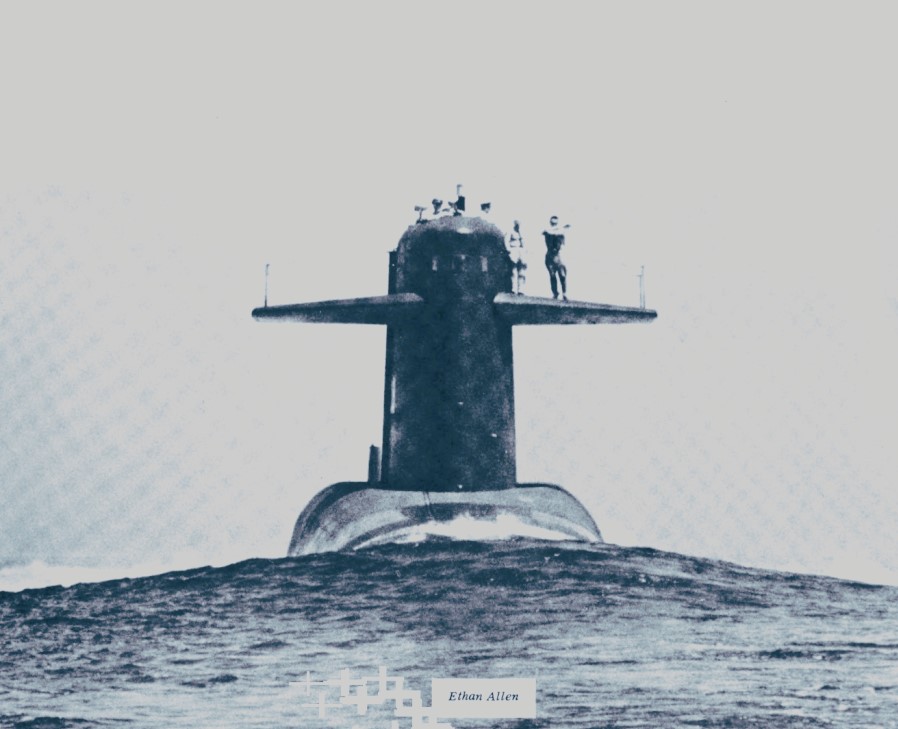
The USS Ethan Allen is one of the heaviest submarines built by any nation. With a length of 410 feet and a submerged displacement of 6,900 tons, she is comparable in size to a pocket battleship. Despite her size the ship is very quiet, maneuverable, and capable of submerged speeds in excess of twenty knots. She is capable of firing the 1500-mile Polaris missile.
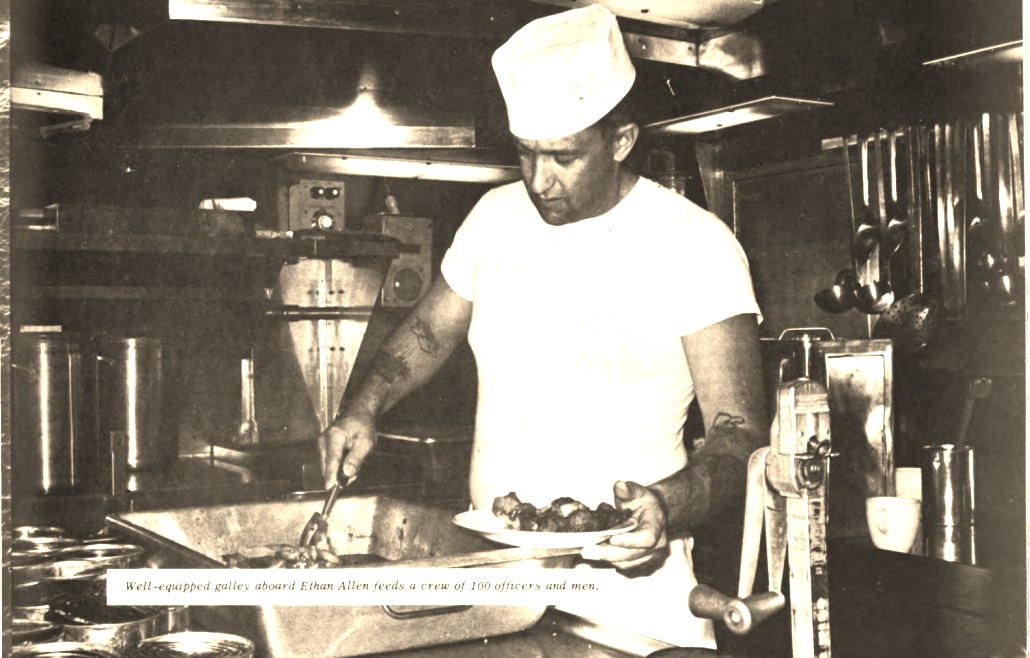
The ship is manned by 12 officers and 100 enlisted personnel. Two complete crews are assigned to the ship and conduct alternate patrols. The atmosphere within the ship is closely controlled so that the crew may live and work comfortably and efficiently. Oxy- gen replenishment is achieved by machines which generate oxygen from sea water. Other machines rid the ship’s atmosphere of contaminating gases and particles while still others provide air conditioning and air circulation throughout the ship. Fresh water is produced by the distillation of sea water. The most modern equipment for food preservation, storage, and preparation assures a steady supply of appetizing meals. Recreation and educational facilities are provided to occupy off-duty hours.



USS Skipjack SS(N) 585
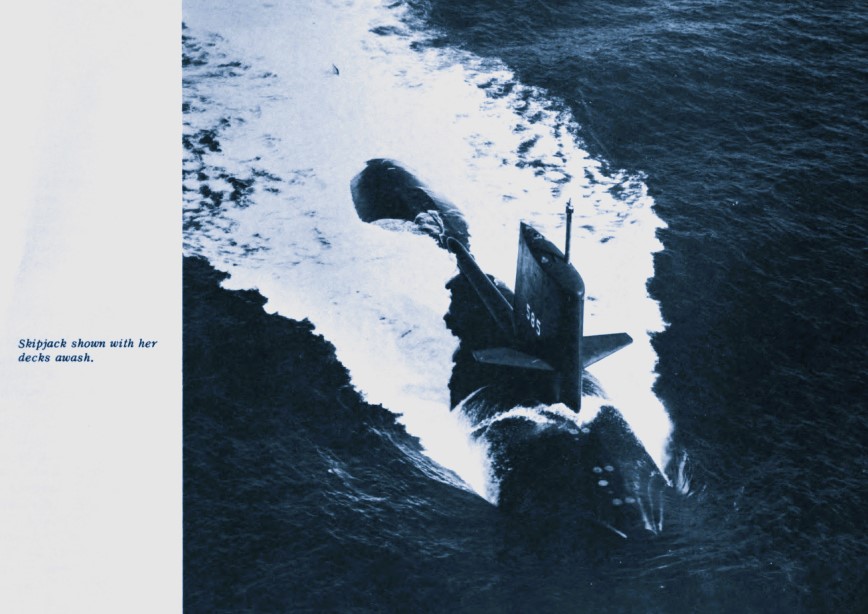
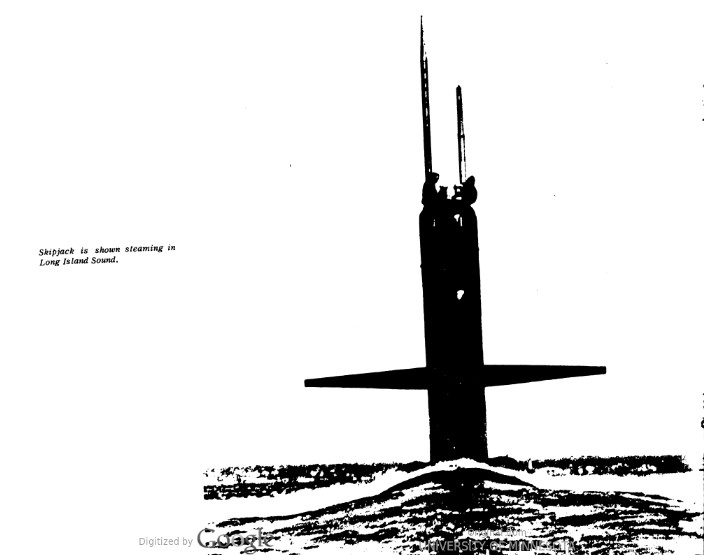
The USS Skipjack, radically different and speedier than any predecessor submarine, was the first of a new generation of fighting ships. Skipjack marks important milestones in many areas of research and development. Her blunt-nosed, football-shaped hull is in itself an important development-used for the first time in a combat ship. The adoption of this hydrodynamically superior hull shape, devoid of all superstructure, makes it possible for her efficient, nuclear power plant to give her the highest submerged speeds yet attained.
ENGINEERING PLANT DESCRIPTION
The nuclear propulsion plant in Skipjack is the result of a decade of developmental research by the Naval Reactors Branch of the Atomic Energy Commission and the Westinghouse Electric Corporation, who also provided the reactor plant for the first nuclear submarine, Nautilus. By careful engineering progress it has become possible to greatly reduce the size and complexity of the plant and to use a single, maximum-efficiency propeller instead of the usual multiple propellers of other warships.
Primary System. The reactor compartment equipment includes a reactor which gives up heat to the primary coolant water, which then is forced through the steam generator where it gives up heat to form steam. The primary coolant is then pumped back into the reactor where it is heated again. The primary coolant water is kept pressurized to ensure that boiling will not take place in the reactor.
Secondary System. The secondary system is the steam system. It is completely isolated from the primary system.
Steam rises to the top of the steam generator then flows back to the engine room where it drives ship’s service turbo generator sets (SSTG) and the main propulsion turbines.


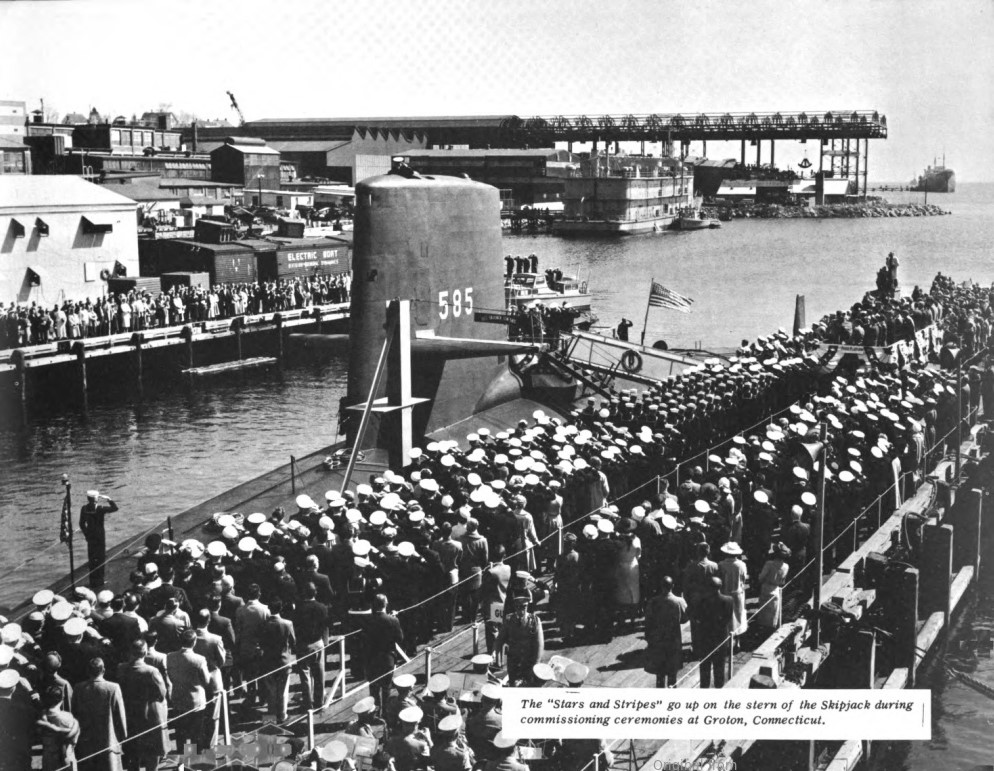
USS George Washington SSB(N)-598
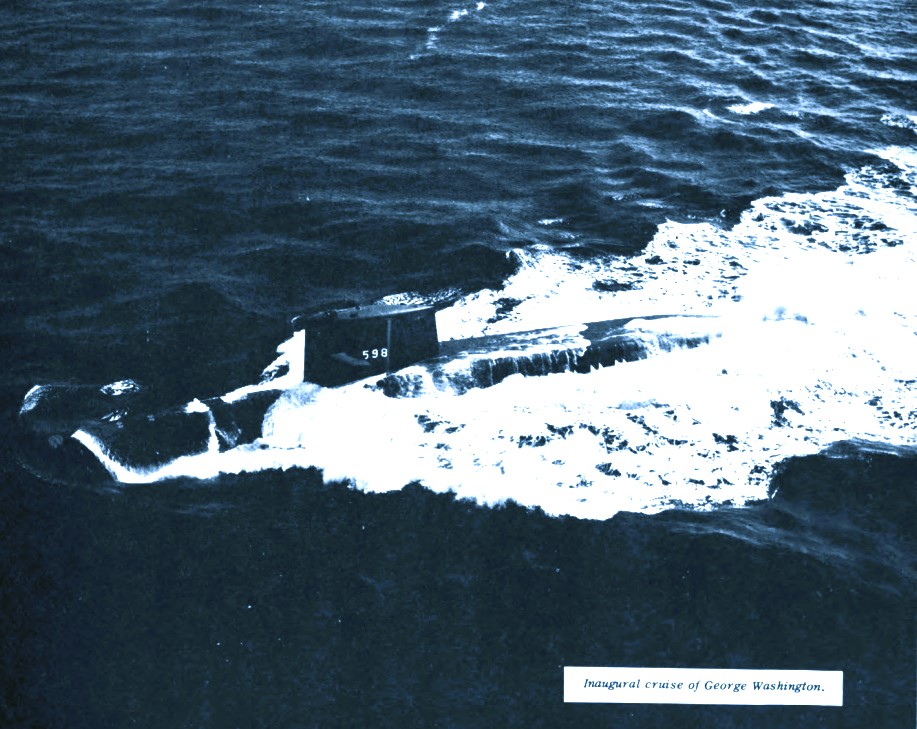
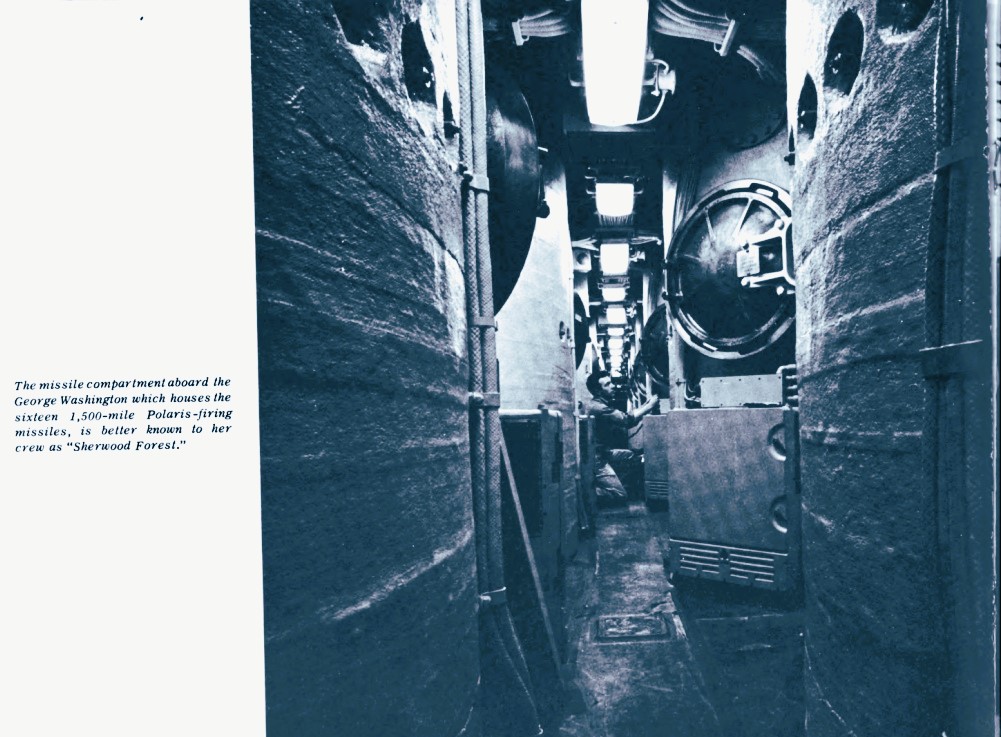
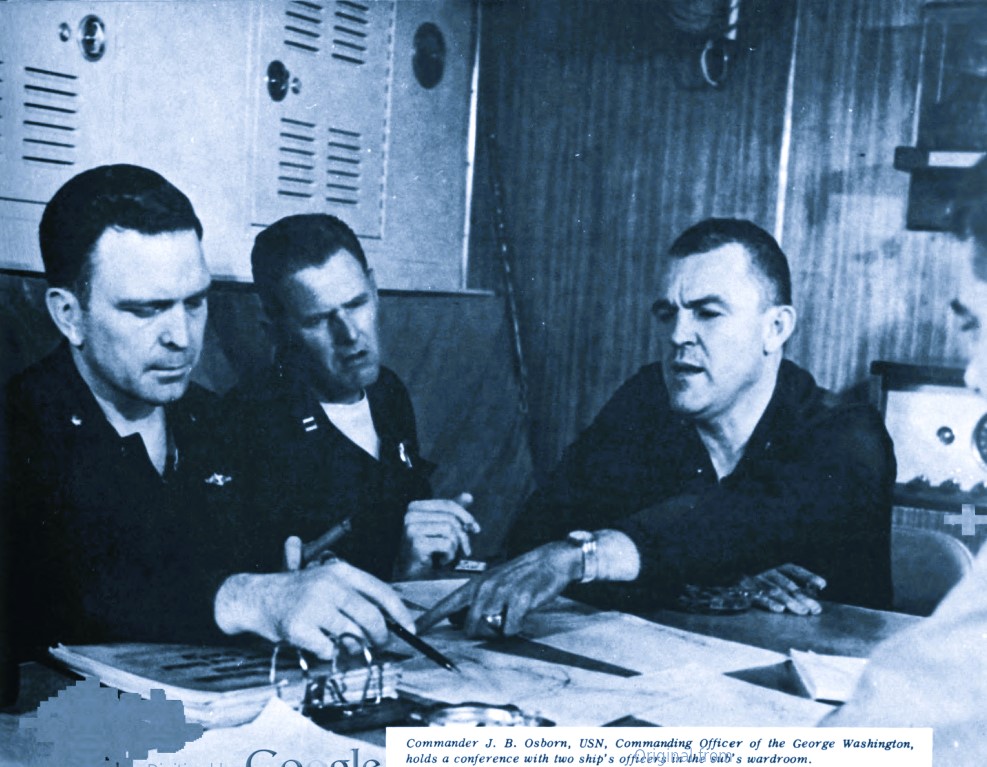
The USS George Washington was the First Fleet Ballistic Missile submarine. It is 380 feet long, has a surface displacement of 5,400 tons, and uses one large propeller. The submarine is powered by a Westinghouse designed water-cooled nuclear reactor, which generates steam to drive turbines. The turbines turn the propeller for propulsion and drive generators which supply the ship with all of its electrical requirements.
USS Lafayette SSB(N)-616
The Marquis de Lafayette was Marie Joseph Paul Yves Roach Gilbert du Motier. He was born February 6, 1757, and died May 20, 1834.
Lafayette and Sir Winston Churchill are the only men to whom honorary American citizenship has been extended. For his services to the colonies during the Revolution Lafayette was voted honorary citizenship by the legislatures of Virginia and Maryland. When the two states became part of the United States his citizenship was automatic.
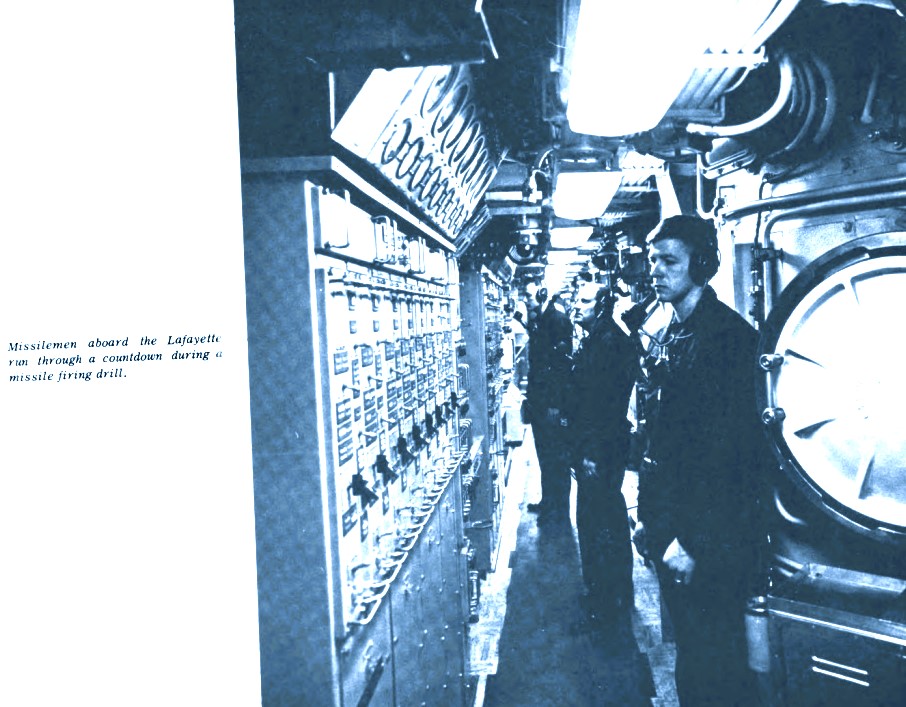
The USS Lafayette was the first ship of the third-generation Polaris submarines and embodies more sophisticated systems than its predecessors.
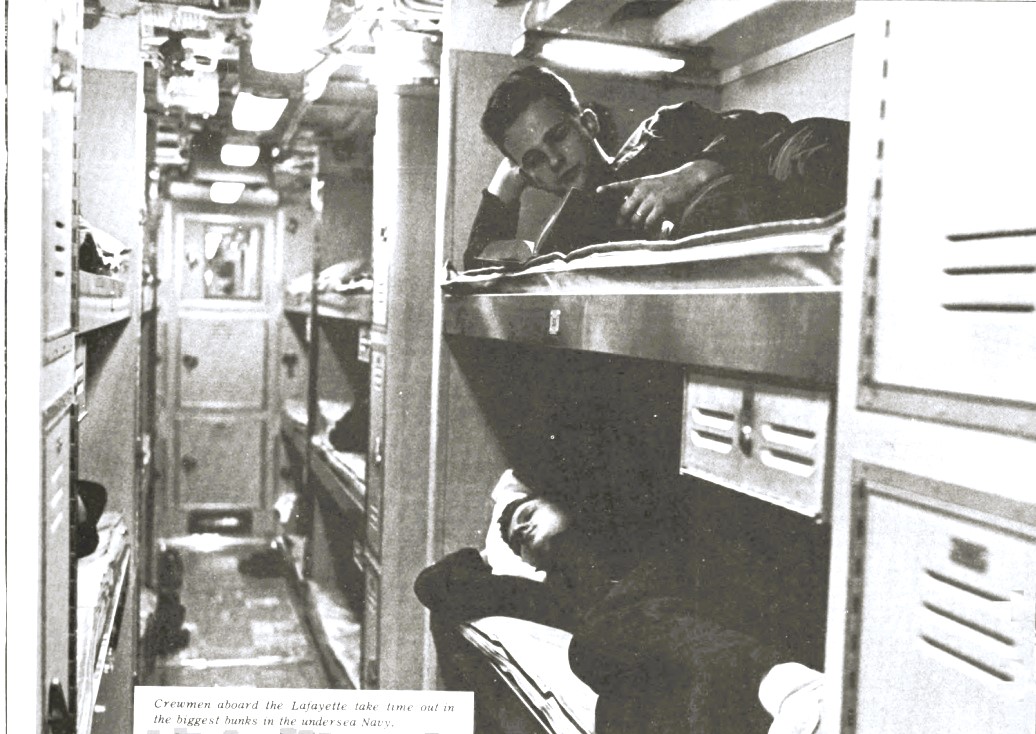
She is of the Fleet Ballistic Missile type, is 425 feet long, displaces 7,000 tons, and is capable of firing the 2,500- mile A3 Polaris missile. She is one of the fastest reacting and most comfortable warships afloat.
The Lafayette will be the first Polaris submarine equipped with the TRANSIT navigation system. Equipment aboard the ship will enable it to receive data from orbiting TRANSIT satellites, giving it a position fix once every four hours.
Submariners are among the Navy’s best fed, but pity the cook. During the course of an average Polaris patrol, the Lafayette’s cooks will prepare about 23,500 meals in a galley 9 x 15 feet. By contrast, a housewife cooks 5,475 meals per year for a family of five.

.
USS Skate SS(N)-578
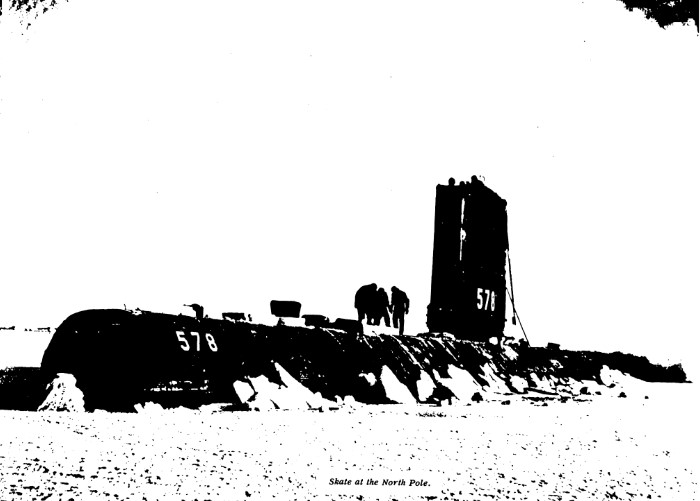
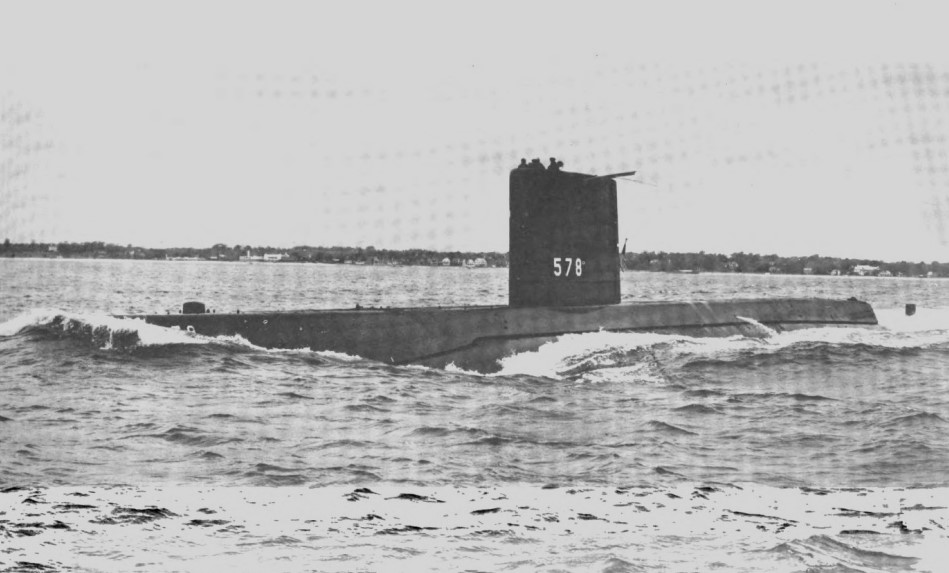
The USS Skate opened up the Arctic as a year-round operation area for submarines. She displaces 2,360 tons and is 268 feet long.
The Skate was the first to accomplish a winter passage under the Arctic ice pack. After traveling more than 3,000 miles under ice, the Skate crashed her sail through at the North Pole on March 17, 1959. The cruise proved that nuclear-powered submarines could operate under the Arctic ice pack and surface through it any time of the year.

This page contains an image.
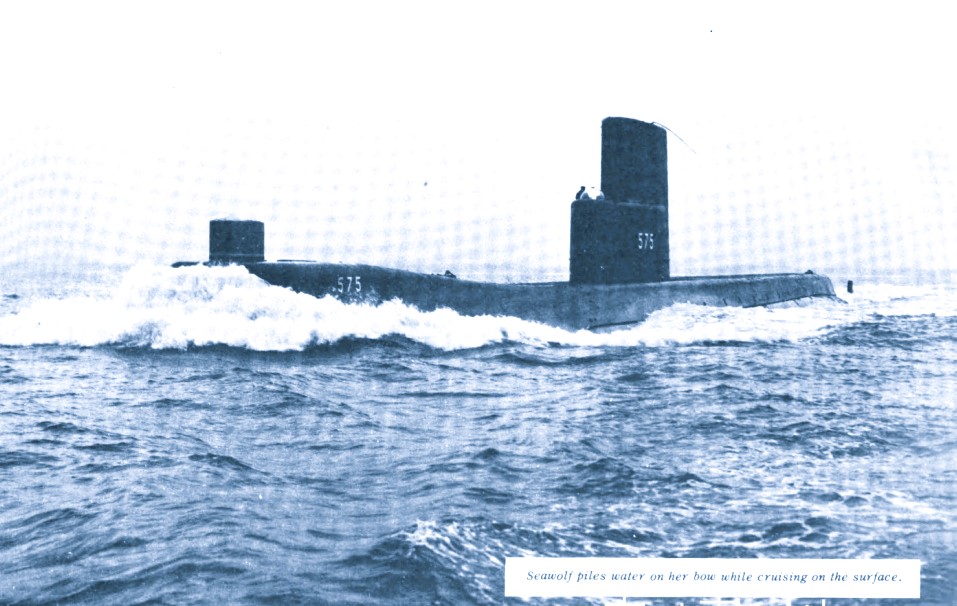
USS Seawolf SS(N)-575
The USS Seawolf was the world’s second nuclear powered submarine. She pioneered in developing new anti-submarine warfare techniques.
Her proudest achievement occurred between August 7 and October 6, 1958, when the Seawolf remained submerged entirely independent of the earth’s atmosphere. This 60-day endurance record earned Seawolf a Presidential Unit Citation.
Seawolf’s sodium-cooled nuclear reactor was shut down for the last time on December 12, 1958, and the submarine was placed “Out of Commission in Reserve” three months later as Electric Boat began the job of installing a pressurized water-cooled nuclear reactor.
On August 28, 1960, Seawolf got underway from her builder’s dock for sea trials and the start of a new career.
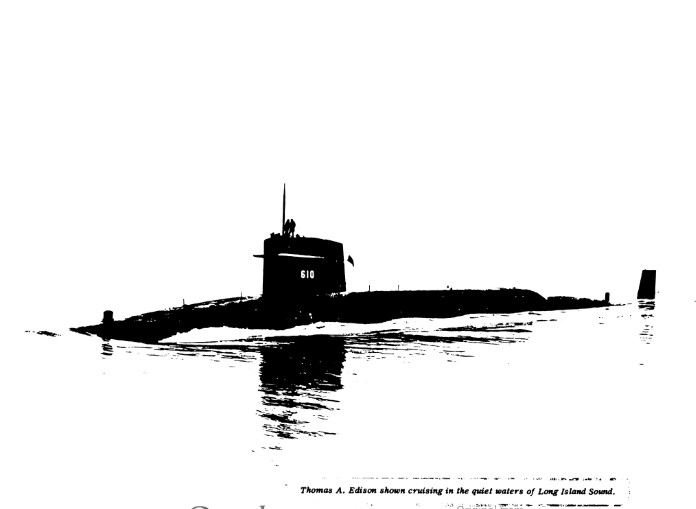
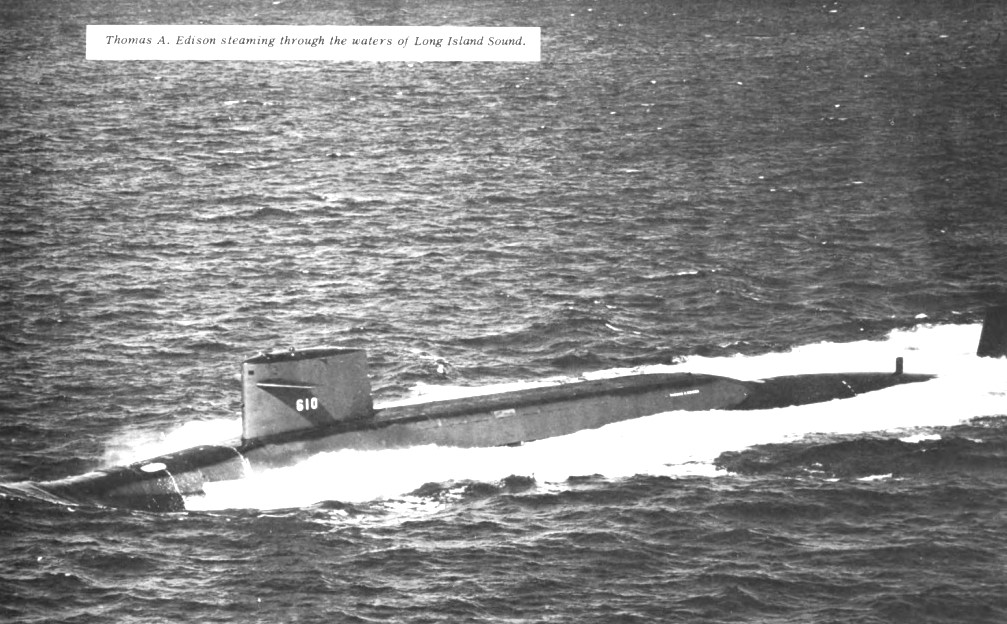
USS Thomas A. Edison SSB(N)-610
The Thomas A. Edison is the first U. S. Navy submarine to carry the name of an inventor—as well as an honorary admiral.
For while Thomas Alva Edison invented the electric light bulb, the phonograph, and 1,150 other items, the “Wizard of Menlo Park” also served with the Navy during World War I as a top civilian “officer.” The late Josephus Daniels, then Secretary of the Navy, called Edison to Washington in 1915 to head a group of 22 scientists who comprised the Navy’s first Naval Consulting Board — later to become the Office of Naval Research. Charged with designing new methods and devices to combat the U-boat menace and advising the Navy in scientific matters, the group eventually became known as the Edison Consulting Board. The Edison board’s contributions included surface-ship listening devices designed to detect U-boats and the installation of loudspeaker telephones aboard ship.
The most far-reaching accomplishment of the consulting group, however, was in Edison’s convincing Congress to appropriate money for the first Naval laboratory in which scientists could develop weapons for the country’s defense. Built near Washington, D. C., the Naval Research Laboratory has been instrumental in the development of radar and scores of other discoveries vitally important to the country’s defense.
The USS Thomas A. Edison is 410 feet long and displaces 6,900 tons. She is powered by a nuclear reactor and carries equipment unknown a few years ago, such as an inertial navigation system which enables the ship’s position to be determined with pin-point accuracy.
Two crews, designated “Blue” and “Gold,” each consisting of about 12 officers and 100 enlisted men, alternately take the ship to sea.
An advanced-design Fleet Ballistic Missile submarine, the Thomas A. Edison, is a member of our nation’s prime deterrent force. Her motto “Potentia Tenebras Repellendi” (Power to Repel the Darkness) well summarizes her mission.
The ship is divided into six watertight compartments. The forward-most compartment, the Torpedo Room, houses the torpedoes and torpedo tubes which provide the ship with a highly effective attack and self-defense capability. The Operations Compartment contains on the upper level the stations for ship control, navigation, and torpedo fire control. On the middle level the officers’ and chief petty officers’ living quarters and the crew’s dining and recreation area are located. The crew’s living area and the Polaris’ fire control equipment occupy the lower level. Aft of the Operations Compartment is the ship’s largest section, the Missile Compartment. The Missile Compartment houses the sixteen missile tubes with their associated systems and the ship’s stabilization gyroscope. The three aftermost of the ship’s compartments contain the engineering plant which provides the ship’s propulsion, electricity, and other necessary services using energy from the nuclear reactor. Some of the submarine’s components include 4,500 valves, 4,500 tons of steel, and 130 miles of cable.
Optimum utilization of the ship’s deterrent capability dictates operation in submerged patrols of several months’ duration. During these patrols the ship is completely isolated from the outside environment and completely dependent upon its own facilities for all its needs.

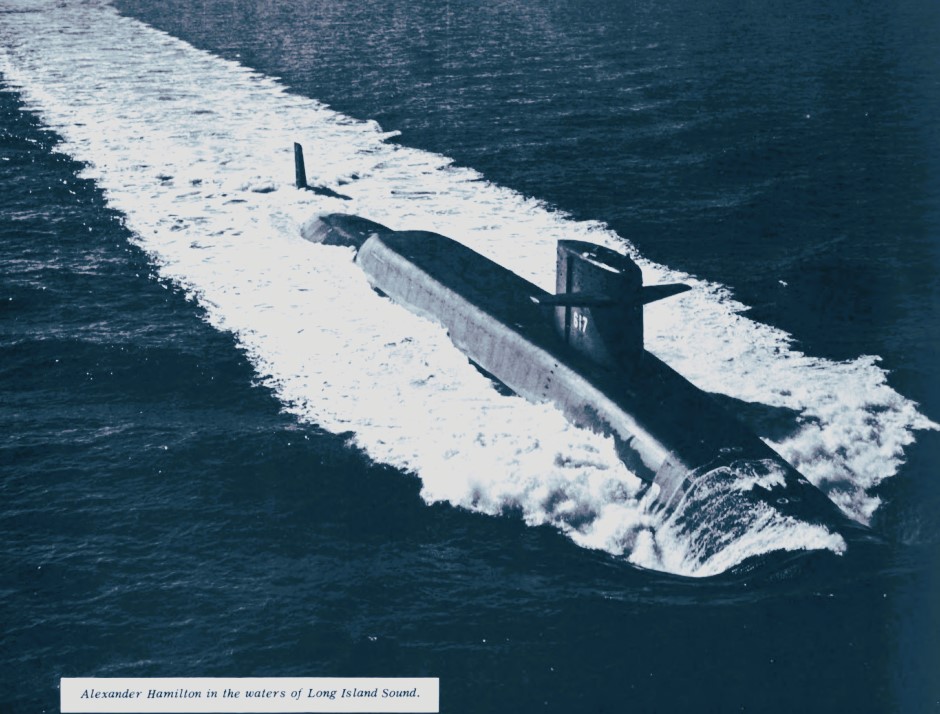
USS Alexander Hamilton SSB(N) 617
USS Alexander Hamilton Alexander Hamilton was a soldier, statesman, politician, writer, financier, patriot, economist, and scholar. He was born on January 11, 1757, on the Island of Nevis in the West Indies and later came to the colonies to attend the King’s College (now Columbia University) in New York. The Revolutionary War interrupted his studies, and he became intensely interested in the Colonial cause. He organized an artillery company and was awarded its captaincy on examination. His bravery during the campaign of 1776 came to the attention of General Washington who promoted him to the rank of lieutenant-colonel. During the ensuing four years Hamilton served as private secretary and aide to the commander-in-chief. Later in the war when he was again with a field command, his unit had the honor of capturing the first redoubt of the British works at Yorktown. Following the war, he turned to politics and law. He was instrumental in changing the collection of states from a loose confederation to a strong central Federal Government concept. He served as the first Secretary of the Treasury and in 1790 founded the Revenue Cutter Service, the forerunner of the present-day United States Coast Guard. For more than a decade following his Federal service, Hamilton continued in politics in New York State and ultimately became embroiled in a feud with Vice President Aaron Burr, a political antagonist of long standing. On July 11, 1804, Hamilton was mortally wounded by Burr in a duel at Weehawken, N. J. His loss was a blow to the country, for it silenced the voice of one of our outstanding creative thinkers.
The USS Alexander Hamilton is the first ship of the United States Navy to bear the name. A revenue cutter of the same name did operate under Navy jurisdiction during the Spanish-American War, but she never lost her identity as a revenue cutter. She was the second in a line of four revenue cutters named Hamilton, or Alexander Hamilton, in honor of the First Secretary of the Treasury who established the Revenue Cutter Service.
The Alexander Hamilton is the second of the Lafayette class Fleet Ballistic Missile submarines. She is approximately 425 feet in length, 33 feet wide, displaces about 7,000 tons, and carries 16 Polaris missiles stowed in eight pairs of vertical launching tubes in the space immediately aft of the sail. The ship has ample air conditioning equipment for the benefit of machines and personnel. Special atmosphere purification equipment removes irritants from the air and maintains the proper balance of oxygen, carbon dioxide, and other atmospheric elements during prolonged submerged periods. Electrolytic oxygen generators permit the submarine to manufacture all of its oxygen from sea water.
The Alexander Hamilton has two crews, designated the Blue and Gold, of about 125 enlisted men and 12 officers each. These crews alternate as on-ship crew for the deter- rent patrols. The off-ship crew enjoys scheduled leave periods and benefits from re- fresher training prior to their redeployment.
Navigation System. Two positions must be known for success in missile launching – target and launcher. This places great importance on navigation since the position of the launcher is the position of the ship and is continuously changing. Several navigational methods complement each other in the FBM submarine to provide a very high order of accuracy in determining ship’s position. At the heart of the system is the Ship’s Internal Navigation System (SINS) which integrates ship motion, speed, and headings to give a continuous report of the ship’s position.
The ship has three SINS, each checking on the others. Similar systems guided Nautilus and Skate on their historic voyages beneath the polar ice in 1958, Triton on her 84-day underwater cruise around the world, and more recently, Seadragon and Skate in their rendezvous at the North Pole in the summer of 1962.
Fire Control. The fire control system feeds a wealth of coordinated information to the missile guidance system. Ship location, local vertical, true north heading, target lo- cation, and trajectory to be flown are continuously supplied until the very instant of firing.
Communications. Radio communications with submerged submarines have been possible for a number of years. The systems used have been devised with special care to protect the locations of the submarines and leave the advantage of concealment unimpaired. Recent tests have again demonstrated that the Navy’s world-wide communication system has the power and coverage necessary to exercise command of the always- submerged Fleet Ballistic Missile submarine.
Training. The average pre-commissioning training period of Fleet Ballistic Missile personnel is about 18 months. Of this period, about nine months are devoted to formal study at the U. S. Naval Guided Missile School, Dam Neck, Virginia. After a thorough grounding in transistors, electronic circuitry, Boolean logic, and digital computer theory, Hamilton personnel receive intensive training in the maintenance of advanced systems.
Personnel not intimately connected with the Navigation or Weapons Departments also participate in rigorous training programs to permit the full support of the tactical systems at all times. The training programs continue at sea and, on shore, off-crews are provided with training facilities in the home ports of the various SSBN Squadrons.
The Alexander Hamilton is powered by a nuclear power plant which consists of a nuclear reactor with its associated circulating water and steam cycles and auxiliary machinery. The primary system is a circulating water cycle and consists of the reactor, piping, primary coolant pumps, and steam generators. Heat is produced in the reactor by nuclear fission and is transferred to the circulating primary coolant water which is pressurized to prevent boiling. This water is then pumped through the steam generator where it transfers its heat to the secondary water to form steam. It is then pumped back to the reactor by the primary coolant pumps where it is heated for the next cycle.
The secondary system is the steam-producing cycle and is made up of the turbines, condensers, and steam-generator feed pumps. It is completely isolated from the primary system. Steam rises from the steam generators, then flows to the engine room where it drives the ship’s service turbo-generators which supply the ship with electricity and the main propulsion turbines which drive the propeller. After passing through the turbines, the steam is condensed, and the water is fed back to the steam generators by the feed pumps. There is no step in the generation of this power which requires the presence of air or oxygen. This fact alone allows the ship to operate completely divorced from the earth’s atmosphere for extended periods of time.
Nuclear Submarine Historic Firsts
Jan. 17, 1955 USS Nautilus sent historic message – “Underway on Nuclear Power”- at 11:00 A.M.
Sept. 25, 1957 USS Seawolf the first nuclear submarine to take a president of the United States (Dwight D. Eisenhower) for a cruise.
Mar. 4, 1958 USS Skate made the fastest trans-Atlantic crossing from the United States to England. Traveled 3,161 miles in 203 hours (2,828 under water)
Mar. 29, 1958 USS Skate made the fastest trans-Atlantic crossing from the United States to England. Traveled 3,161 miles in 203 hours (2,828 under water).
Aug. 1-5, 1958 USS Nautilus made first submerged polar transit from Point Barrow, Alaska to Greenland Sea, traveling 1,830 miles under ice. Crossed the Geographical North Pole on August 3, 1958 at 7:15 P.M.
Aug. 12, 1958 USS Skate crossed “under” the North Pole. Submerged under ice pack in Greenland Sea on August 9th; surfaced through the ice 9 times; returned to Greenland Sea on August 19, 1958.
Oct. 1958 USS Sargo was first nuclear submarine to sink a ship on maneuvers off Hawaii. Sank the LST-561 (Chittenden County).
Oct. 6, 1958 USS Seawolf surfaced after 60 days without contact with earth’s atmosphere. Logged over 13,700 miles submerged.
Mar. 17, 1959 USS Skate was first ship to surface at the North Pole. Conducted memorial services for the late Sir Hubert Wilkins.
Aug. 14, 1959 USS Skipjack went deepest and fastest in sea trials off the East Coast.
Aug. 24, 1959 USS Skipjack was the first nuclear submarine to go through the Strait of Gibraltar.
Feb. 9, 1960 USS Sargo surfaced at the North Pole and planted the Hawaiian State Flag.
Mar. 8, 1960 USS Halibut was the first nuclear submarine to launch the Regulus missile.
May 10, 1960 USS Triton made first submerged circumnavigation of the world, following route of Ferdinand Magellan – 41,500 miles in 84 days.
July 20, 1960 USS George Washington successfully fired two Polaris missiles while sub merged off Cape Canaveral, Florida.
Aug. 25, 1960 USS Seadragon charted the Northwest Passage. Surfaced at the North Pole where the crew played baseball.
Nov. 15, 1960 USS George Washington embarked on the initial armed Polaris missile patrol, ahead of schedule.
Mar. 8, 1961 USS Patrick Henry first polaris submarine to arrive in Holy Loch, Scotland, set a new underwater cruising record of 66 days and 22 hours on patrol.
Apr. 18, 1961 USS Theodore Roosevelt first ballistic missile submarine to transit Panama Canal.
Nov. 8, 1961 USS Ethan Allen set a missile firing record by successfully launching six out of six Polaris A-2 IRBMs, off Cape Canaveral, Florida.
May 6, 1962 USS Ethan Allen fired first Polaris missile with a nuclear warhead at 6:45 P.M.
Aug. 2, 1962 USS Skate and USS Seadragon, after effecting an historic rendezvous under the ice, surfaced together through an opening at the geographic North Pole
June 22, 1963 Tecumseh, Flasher, John Calhoun, and Daniel Boone launched, marking the first time that four nuclear submarines were christened on the same day.
Descriptive text and photographs used in this booklet were supplied to the U. S. Atomic Energy Commission by the General Dynamics Corporation. USAEC Division of Technical Information Extension, Oak Ridge, Tennessee.
The people who assembled this booklet gave a very complete description of the various elements of the new nuclear submarine force and its assets at the time. With each entry, various capabilities were spelled out with just enough detail to inform the reader about the technologies that were emerging. One can’t help but think that these details were being revealed just so that the reader would be convinced of the absolute need for advanced systems like these to deter the enemy.
It’s been years since the end of the Cold War, but I can’t help but think that a secondary purpose was accomplished by being so transparent with the details. The Soviets were well known for gathering the information that might help them better understand the threat from the west. I wonder what they thought after getting a few copies of this booklet.

 theleansubmariner
How well I remember that show! My memories of that and my natural inclination to boost budding officers (Naval Academy ride-along) got me in a bit of trouble one summer day in 1975. We’d come out of the shipyard, and after our initial trials and shakedown were put to use, giving some Middies a week of submarine life. I was doing some maintenance back in ERUL with one particular know-it-all ‘supervising’ when he asked me the purpose for the locked door in Ops Upper Level just forward of the captain’s stateroom and the Yeoman’s office. I told him he wasn’t cleared for that information and to hand me a tool I needed. Over the ensuing days, he and three of his classmates kept pestering me (and several others who must have sensed blood in the water as they went along with my scheme). Finally, they ‘wore me down’, and I told them I would explain, but only if they promised that they would volunteer for submarine duty. They did and I asked them if they’d ever seen “Voyage to the Bottom of the Sea.” Two had and gave a brief summary of what the show was about. They then asked me what that had to do with that old show; I looked left and right and then told them that was where the windows were located. Their eyes lit up when I told them I would wind up in Adak, Alaska, if they told anyone what I’d told them. Within two hours an announcement over the 1MC, “Petty Officer Shook, report to the Wardroom, NOW!” The captain and the engineering officer were there (with all of the middies) and they both took turns excoriating me for leaking sensitive information to non-quals who were not even officers or permanently attached to the submarine service. They then turned to my victims and told them to erase such knowledge from their heads because if any word of this got out they would be tossed out of the academy and sent to Vietnam on PBR duty.
I wish I could have seen them when they learned some years later that a stupid enlisted man had pulled this on them.
Later the engineer spoke to me to try and limit my nonsense, laughing as he said it.
Great story Tony. Those guys probably went on to become admirals…lol