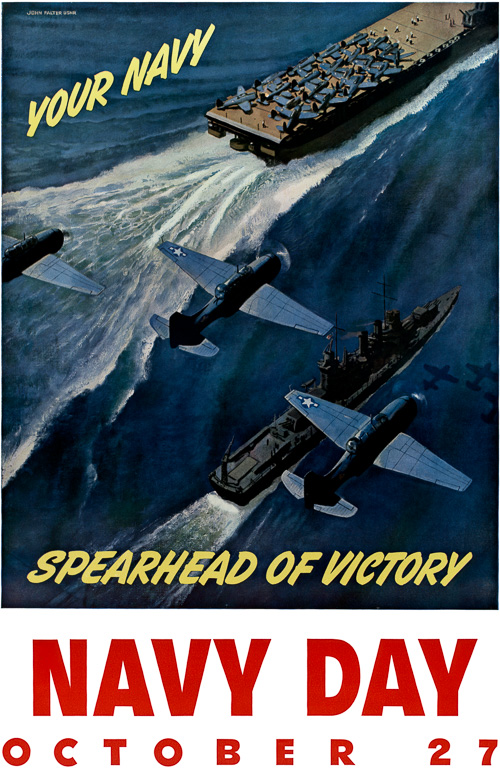
In October 1943, the country had been at war for nearly two years.
The strength and power of our industrial base was at nearly full speed and in every corner of the land, the equipment and supplies needed to fight a global war were being produced at a furious pace. Patriotism and nationalism were used in highly effective ways even though after two years some chinks in the armor were starting to appear.
The Smith Connally Act
“In June 1943, Congress passed the Smith–Connally Act (or War Labor Disputes Act) to ensure continued wartime production. Sponsoring legislators drafted the bill, which provided presidential authority to seize productions of wartime industries, in response to 1,200 recorded strikes from December 1941 through the late summer of 1942. But employees, union leaders, industrialists, and politicians largely viewed it as a useless law that only increased tensions between labor and employers or as an overuse of presidential power.”
“Between 1943 and 1945, Roosevelt would use the Smith–Connally Act to intervene in labor disputes and ensure the production of goods to support the war effort—a lasting example of the unique power of the president during World War II and the evolving relationship among the government, workers, and industry.”
https://www.nationalww2museum.org/war/articles/smith-connally-act-and-labor-battles-home-front
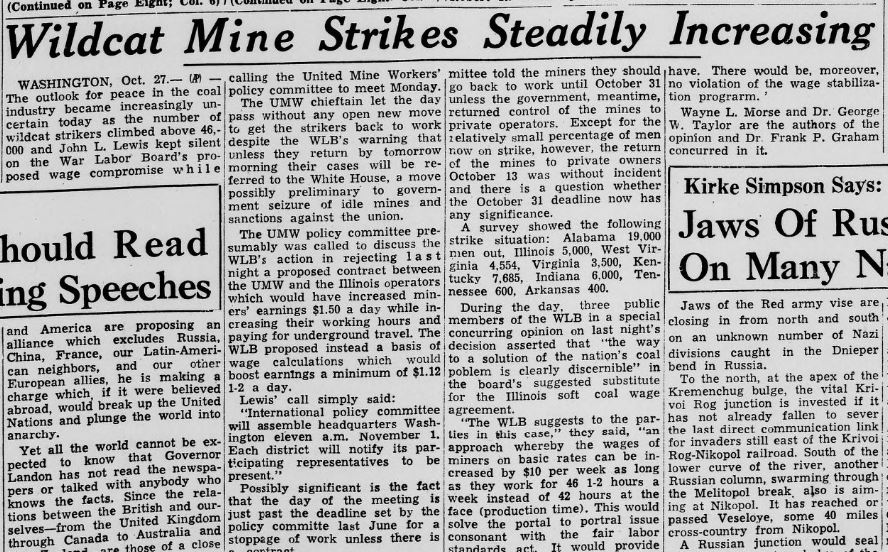
National Support was critical to the Navy
The most difficult thing for the Navy was one of its oldest enemies: the limited ability of its citizens inland to understand why it needed so many ships. When you live in a land locked place like Westmoreland County in Western Pennsylvania, it’s easy to forget that even in the early days of the country, sea power and commerce on the seas played a critical role. After all, land was plentiful which meant farming and agriculture were more than enough to sustain the early settlers.
Minerals and energy sources were also plentiful which made many of the non-coast regions nearly immune from the same things that pushed and pulled coastal towns and cities. But the surge of migrants and growth across the country would introduce the need for markets far from the farms and mines. The river system leads to the sea and the sea leads to markets. Commerce must be protected and eventually that includes having a navy that can project that power wherever commerce flows.
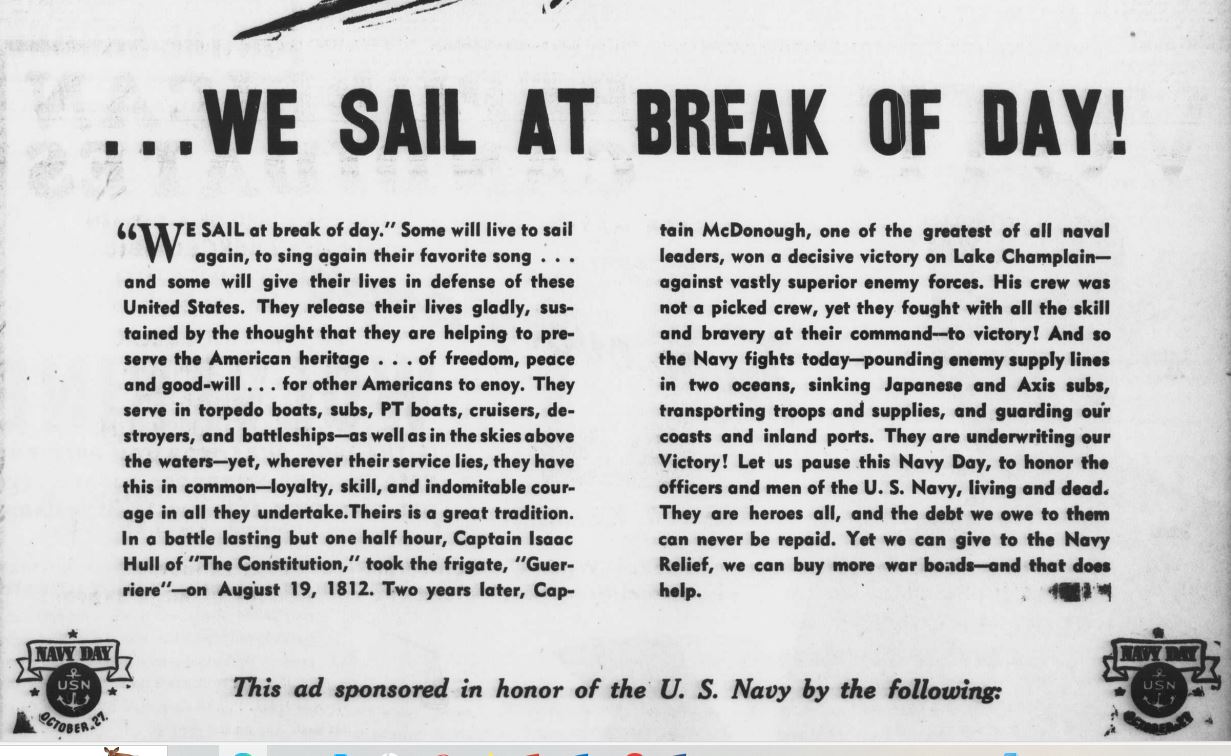
But navies were expensive
Throughout the country’s history, the size of the navy has ebbed and flowed at the whim of whoever was in power at the time. Since we are a representative republic that often pretends to be a democracy, political leadership has not always been the best steward of a strong defense. In the 1920’s, weary of a world at war, many politicians saw a chance to disarm the military with the added side benefit of saving money. I’ve written a number of articles about the Naval Arms Limitation Treaties and their disastrous effects on America’s national defense posture, but it was never clearer than in 1943. The fleets were stretched to the limits in the face of multi front engagements and the need to get the right forces to the right places in force.
So the Navy Day speeches were all designed to set the stage for continued support after the fight was won. Many stunning naval victories had been won by October 1943 but the brunt of the fighting would occur in the coming year.
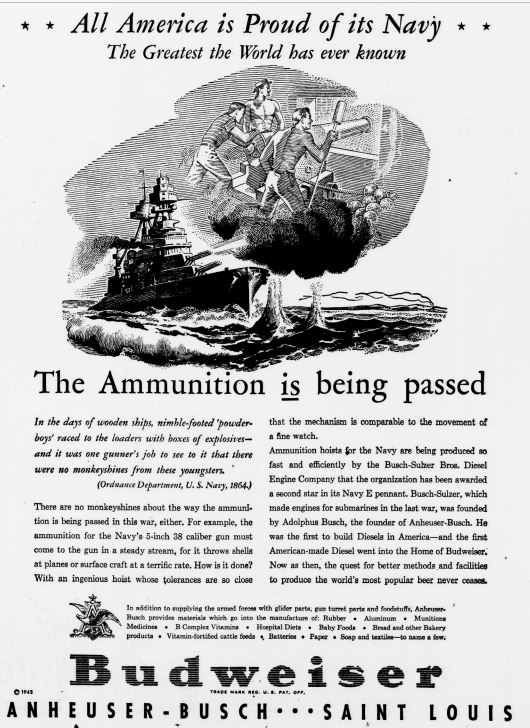
So two messages went out on October 27. First, if we were to win, the over twelve hundred labor strikes were a real and present threat to the men and women in uniform. Second, once the war was won, disarming was a really bad idea. From the Washington Evening Star, October 28, 1943:
Navy Day Speakers Warn Nation Against Disarming After War
Navy Day speakers throughout the Nation yesterday coupled a plea for our maintenance of the world’s largest fleet after the war with a warning that strikes must not be permitted to retard wartime production of ships and planes.
To confront the rest of the world undivided, Secretary of the Navy Knox, in a speech at Philadelphia last night, suggested to leaders of the Democratic and Republican parties the adoption of a “substantially identical declaration on International policy” in their platforms. Such an agreement, he added, might “equip us with what we have never had—continuity of foreign policy.”
Highlights of various Navy Day speeches follow:
Rear Admiral Randall Jacobs, chief of naval personnel, at Chicago:
“The men who are fighting in our new Navy are determined that the American people will not scrap ships in the future. The mission of the Navy is to defend this Nation, its people and its institutions against aggression.”
Must Play Larger Part.
Rear Admiral W. H. P. Blandy, Navy chief of ordnance, at Atlanta:
“Two wars in a generation are sufficient proof that America must play a larger part in world affairs after the close of the war. America is no longer immune by choice. We are in world politics to stay, whether those politics are to be operated within the bounds of international accord or on the basis of the law of the jungle.”
Josephus Daniels, former Secretary of the Navy, at Raleigh, N. C.:
The United States now has the largest navy in the world, and “we have resolved never again to be guilty of the folly” of letting it be scrapped, former Secretary of the Navy Josephus Daniels said in a Navy Day address here today.
Daniels said that Theodore Roosevelt had pioneered the strengthening of the Navy, and that Woodrow Wilson had built it to be the world’s strongest, but that our action following the last war was “stupid blindness.
“There was but one of two courses for this country to adopt after the armistice—enter the League of Nations or possess incomparably the greatest navy in the world,” Daniels said.
“Of only two wise courses, we chose neither. With stupid blindness we refused to take our seat at Geneva, and we cannot escape, in part, responsibility for the present holocaust. Not content with that lack of vision, we proceeded to scrap the big navy we were building and let it revert to the lower than second place.”
And now, he said, “we have built the largest navy in the world – on the sea, under the sea, and in the air—and have highly resolved never again to be guilty of the folly of scrapping it.
Daniels also praised the work of women in the Navy, who, he, said, “by their service have proved the wisdom of their induction.”
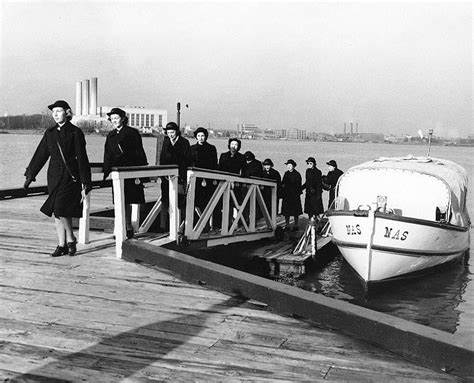
Rear Admiral G. D. Murray, former commander of the carrier USS Enterprise, at Chicago:
“Men who have faced death and who are still face to face with death—men who have seen their shipmates blown into eternity—these men have a definite feeling that somewhere, somehow, something is wrong when the word ‘strike’ appears concerning any industry vital to the successful conduct of the war in which they are playing so vital a role.”
Must Meet Obligations. Rear Admiral Ben Moreell, at Baltimore:
“We must be willing and able to exert sufficient force, if need be, to support and make effective the obligations which we have assumed under our national foreign policy. We must have available the naval forces with which we can when necessity demands, police the highways of the world.”
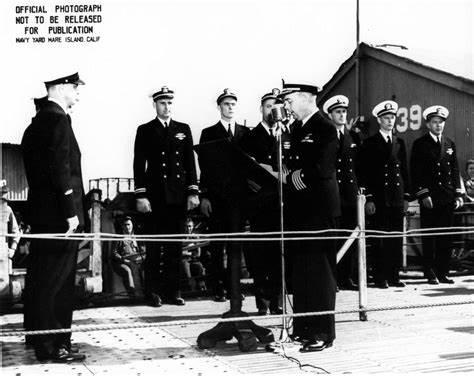
Admiral William J. Leahy, chief of staff to President Roosevelt, at Richmond, Va.:
“The United States Navy is now the most powerful one on earth. Through a miraculous performance of sacrifice by the whole of America, our power has been multiplied, we are taking the offensive on all the battlefronts, and the jubilation of our enemies has turned to fear.
“It is for all the people of the United States to decide whether or not we shall have a repetition of our altruistic gesture of 1921 when we volunteered to destroy our finest warships for an illusory notion that human nature can be changed by kind words, hope and a signed paper.”
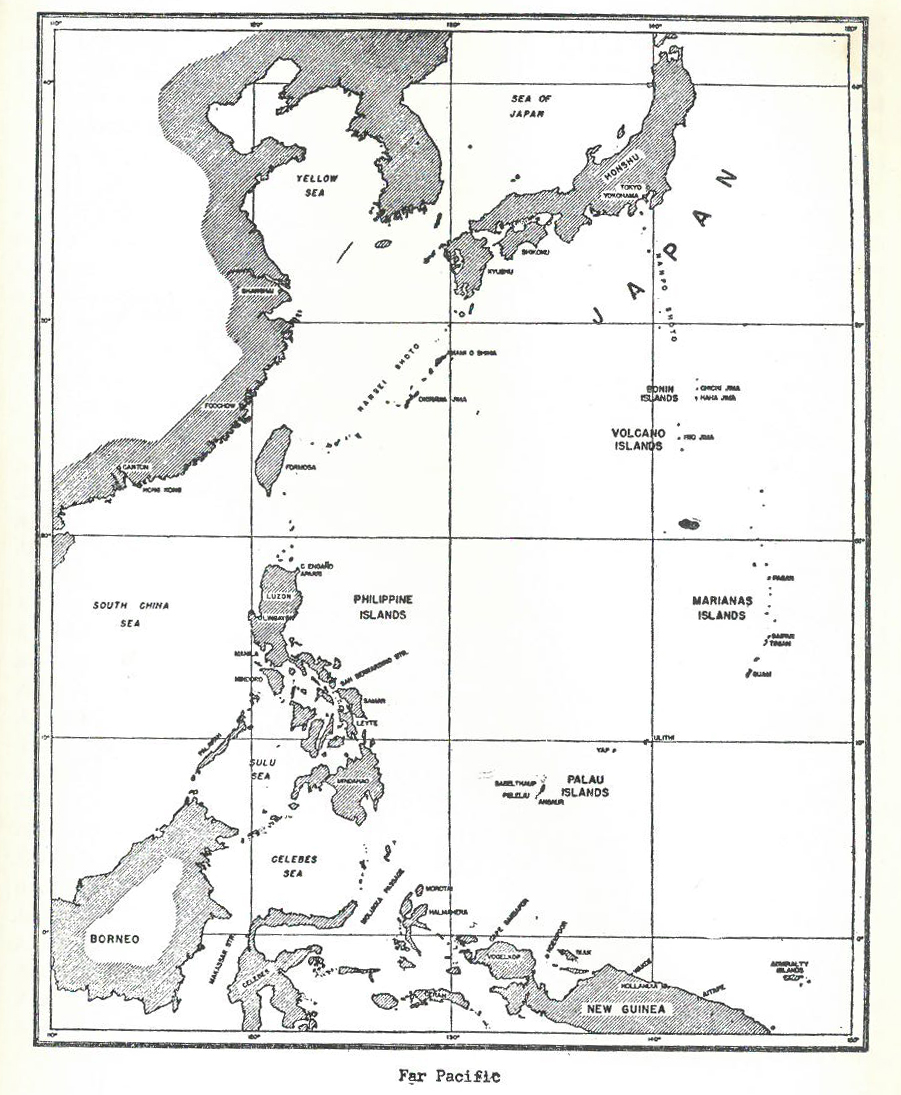
U.S. Sole “Island Power.” Rear Admiral C. M. Cooke, Jr, Navy chief of plans, at Portsmouth, Va.:
“It seems certain that the armed power of the United States must be used after, as well as during, the war is giving effect to our policies, We are now the only ‘purely island power’ in a strategic sense. With the development of the air arm. Great Britain and Japan no longer are island powers in the strategic concept of past centuries, during which they were immune from attack except sea-borne or sea transported attack.”
Addressing the Navy League dinner at the Mayflower Hotel last night, Eric A. Johnston, president of the United States Chamber of Commerce, urged the country’s leadership to “assume our share of the responsibility for world order,” adding. “Never again shall America be caught with her defenses down.”
A Navy Day dinner was held by the District Chapter of the Naval Reserve Officers’ Association last night at the Army Navy Country Club.
Comdr. Leroy C. Simpler, commander of the “Fighting Squadron 5.” which shot down a number of Japanese planes, and Lt. Comdr. T. P. O’Connell, veteran of 11 naval battles in the South Pacific, told of their experiences in combat.
Lt. Comdr. T. D. Gatchel, president, presided.
Labor and management after the war
My grandfather was a Navy man from World War 1 and my Dad would serve later in the Second World War. I was able to transcribe all of their letters into a book I wrote about Dad’s service. Grandpa Mac was a superintendent at one of the steel mills in McKeesport that made war materials. In the few letters that he wrote, he lamented about the selfishness of the mine and mill workers who were demanding extra pay while the men and women still in the line of fire had no such ability. It was a resentment that would carry through to Dad’s generation and beyond.
On January 20th, 1946, 800,000 steelworkers of the CIO walked out in the largest single action in America’s history. Of that number, 227,000 were in the Pittsburgh District and picket lines soon appeared at the Irwin works and National Tube Works where John’s father was a foreman. The strike occurred despite President Truman’s attempts to forestall them by conducting a fact finding effort. By the next day, all of the mills in the area were silent for the first time and production levels hit a fifty year low. Phillip Murray, in a national broadcast accused the steel companies of “an evil conspiracy” to destroy labor unions.
Phillip Murray was an emigrant from Scotland who rose from being a coal miner to head of the United Steel Workers of America Union. Prior to the war, he had also risen to the top of the CIO (Congress of Industrial Organizations) replacing the infamous John L. Lewis. As the head of the unions, he had supported Franklin Roosevelt during the war, but spearheaded efforts to advance the cause of his members against the companies they worked for. During his term of office, the USWA grew to over 2500 local unions including steel and aluminum workers.
Today, 2023, nearly all of the steel mills are graveyards where virtually no one works. Western Pennsylvania and too many other areas are now known as the rust belt. Competition from foreign countries and so many other factors caused the demise of our country’s industrial base. But there is also a fair share of blame for both management and labor.
The country learned very little from the advice given on October 27, 1943.
Immediately after the war, the active navy was once more shrunk. Even with the beginning of the Cold War, the need for newer ships and materials would be subject to the same thought processes that naturally occur every time the guns are silenced. As I look around the globe today with the growing threats from new and old enemies, I wonder if we will be able to meet the next threats.

 theleansubmariner