Air Mail like None Other
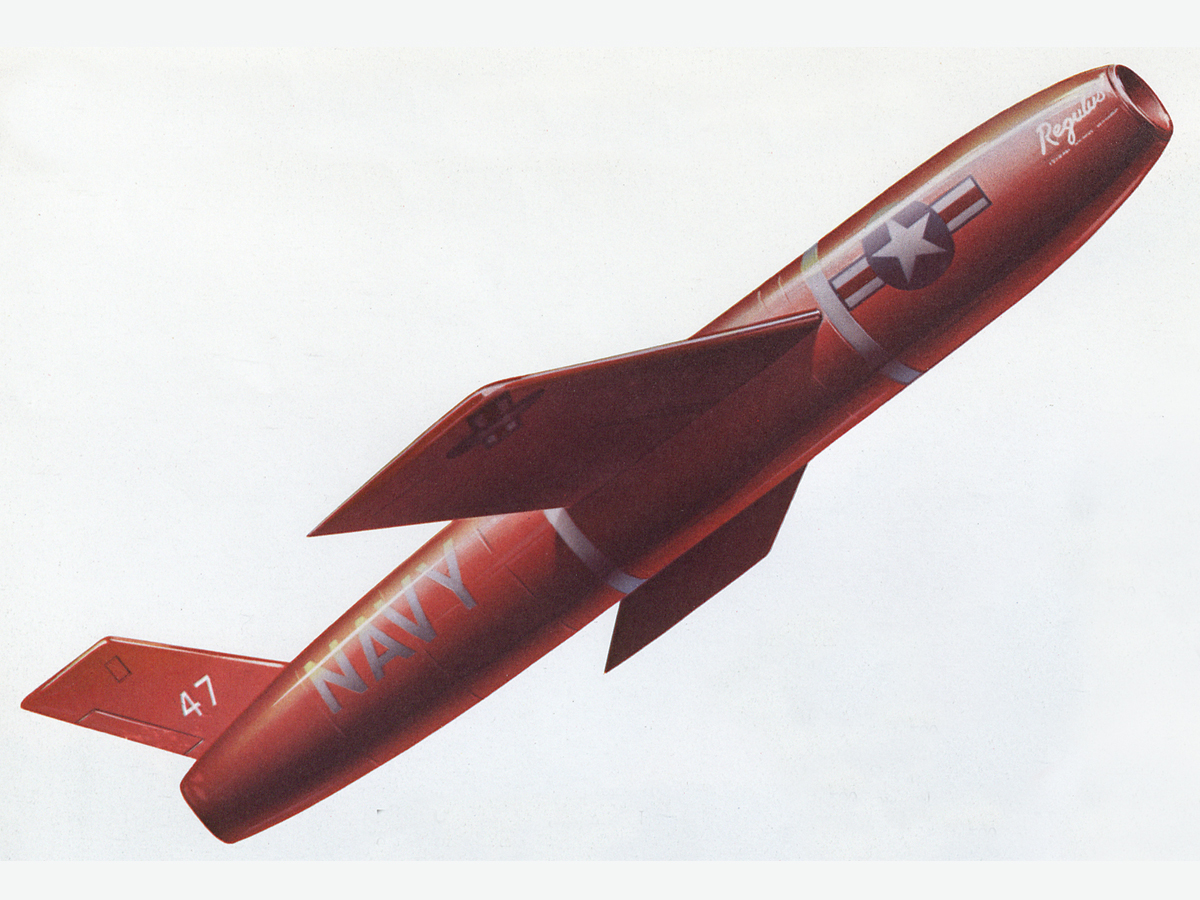
Of all the submarine stories I have ever read, this one ranks with the most unusual. In 1959, the world was still reacting to the Soviet advances in space. The Navy had invested a significant amount of money on the Regulus Missile system as a way to counter Soviet threats. In the background, the Polaris program was about to come on line and change everything. But this story involves another use for the Regulus that is really just a foot note in history.
The story comes from the Postal Service Historic Library and shows an amazing feat that certainly should have a place in history. For the first time in history, mail was delivered using a missile fired from a navy submarine.
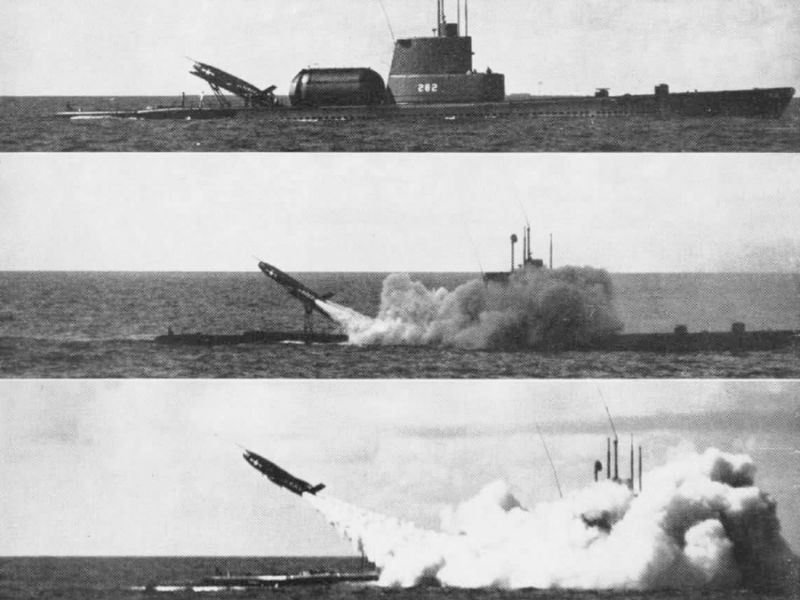
The USS Barbero was a Balao class submarine that was a veteran of World War II. She was converted in 1955 allowing her to launch the Regulus I nuclear cruise missile. She was thus redesignated SSG-317. Barbero was enlisted to perform this most unusual delivery in the summer of 1959.
The following story comes from the USPS library article:
“Throughout its history, the Postal Service has explored faster, more efficient forms of mail transportation. Technologies now commonplace – railroads, automobiles, and airplanes – were embraced by the Post Office Department at their radical birth, when they were considered new-fangled, unworkable contraptions by many. One such technology, however, remains only a footnote in the history of mail delivery – missile mail.
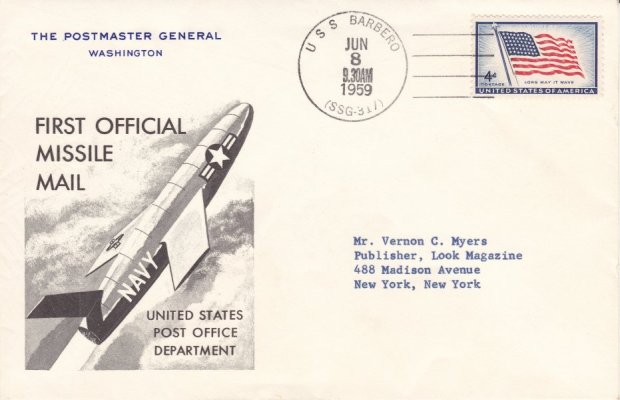
On June 8, 1959, in a move that Postmaster General Arthur A. Summerfield heralded as “of historic significance to the peoples of the entire world,” the Navy submarine USS Barbero fired a guided missile carrying 3,000 letters towards the naval auxiliary air station in Mayport, Florida. Racing along at about 600 miles per hour, the guided missile traveled the more than 100 miles from the deck of the submarine off the coast of Florida to the air station in about 22 minutes. The letters, in special commemorative envelopes, were all from the Postmaster General to leading government officials and prominent citizens with a special interest in the Post Office Department.
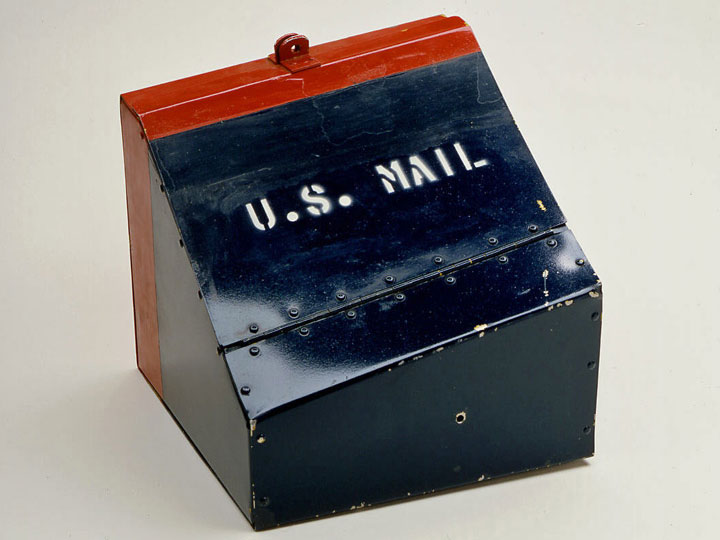
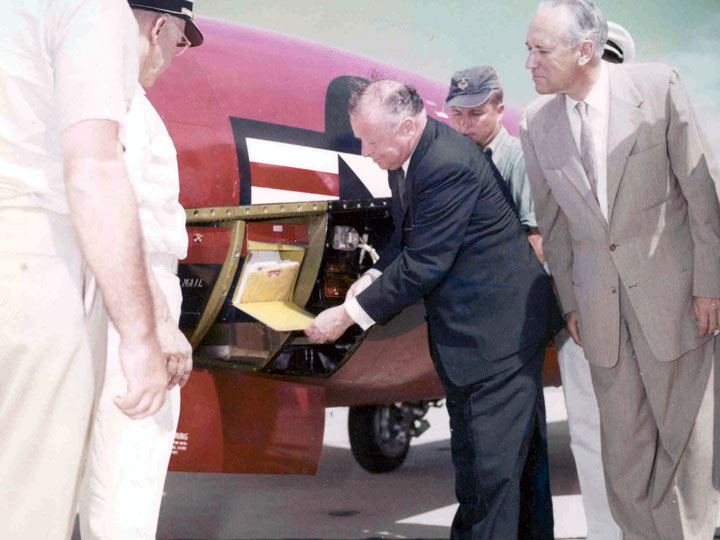
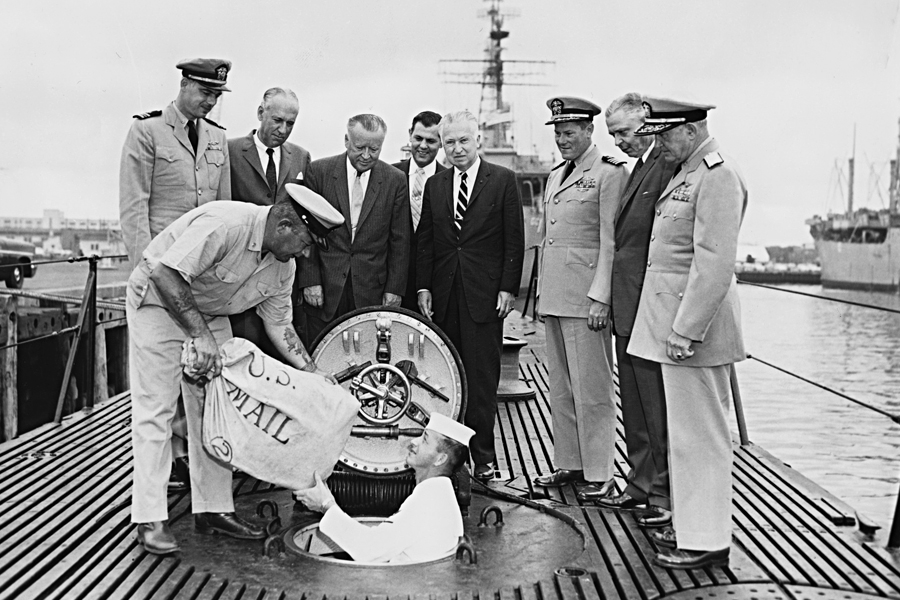
To achieve this feat, the US Navy fired a Regulus I missile from the USS Barbero (SSG-317) and directed it to land at the Naval Auxiliary Air Station at Mayport, Florida, near Jacksonville. While the sub was docked at Norfolk, Virginia, Postmaster General Arthur Summerfield helped place two blue and red metal containers, holding 3,000 letters, inside the sub’s missile prior to the flight.
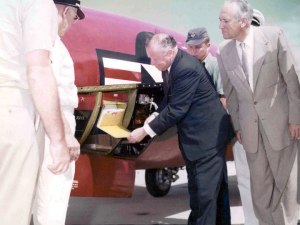
Racing along at about 600 miles per hour, the guided missile traveled the more than 100 miles from the deck of the submarine off the coast of Florida to the air station in about 22 minutes. The letters, in special commemorative envelopes, were all from the Postmaster General to leading government officials and prominent citizens with a special interest in the Post Office Department.
“Before man reaches the moon,” Summerfield was quoted as saying, “mail will be delivered within hours from New York to California, to England, to India or to Australia by guided missiles.”
“The 1959 event was widely-publicized as the “first official missile mail” to distinguish it from earlier rocket flights. The earliest known unofficial transportation by rocket of U.S. Mail took place on February 23, 1936, when two rockets transported mail about 2,000 feet across a frozen lake towards the Hewitt, New Jersey, Post Office, from Greenwood Lake, New York. The rockets crash-landed before reaching their destination and slid along the ice; the postmaster of Hewitt obliged by removing the two bags of mail and dragging them the rest of the way to the Post Office.”
The missile was fired from the submarine shortly before noon and arrived at Mayport twenty-two minutes later. The 3,000 letters inside the missile were identical letters from the Postmaster General that were addressed to President Eisenhower, Vice President Nixon, cabinet members and top federal officials, all members of congress, Supreme Court justices, U.S. governors, postmasters generals from around the world and the officers and crew of the Barbero.
Summerfield’s letter was an enthusiastic announcement of the experiment, which had not been publicly announced beforehand. Summerfield’s office received several letters from stamp collectors who complained that they had not been given the opportunity to place items aboard the flight. In the four decades since the flight, some of the Regulus I letters have found their way into public hands. Some made their way to dealers that year and were sold at over $100. The letter addressed to the secretary of the Smithsonian Institution remains in the National Postal Museum’s collections.”
A different kind of message was delivered
While it was really an experiment, many view the action as a covert message to the Russians that the American Navy was fully capable of launching a missile with a certain degree of accuracy and have it arrive at a location of their choice. The technology was still new, but the guidance system was fully capable of delivering a weapon with a thermonuclear weapon from a distance of 600 miles. This particular shot was only 100 miles but it clearly showed the potential lin an age where missiles and planes were being built at a rapid pace o both sides of the iron curtain.
The space used for the containers was space that was originally designed to hold the missile’s nuclear warhead.
Postmaster General Summerfield’s enthusiasm did not translate into a monumental shift in mail delivery systems. The 1959 USS Barbero test firing was the only time a missile of this type was used to carry mail in the US.
I wonder what the stamp price would have been had they continued?
Mister Mac

 theleansubmariner
22 minutes to make the flight, only to be lost or delivered two weeks later.
There are pictures of the Regulus Missile Landing. I had not even thought about them having that ability. The story goes that the two boxes were very carefully handled once the mission was complete. It may be one of the only times in history the mail actually did arrive on time and with perfect accuracy.
Mac
Reblogged this on Tales of an Asia Sailor.
Those Balao Class boats had interesting conversions after the war. Two others, USS Perch SS-313, and USS Sealion SS-315, predecessors in the series to Barbero were both converted to further explore another mission that had popped up during WWII. The Ohio class SSGN conversions, which are descendants of Barbero have also been converted, to fulfill tge missions of the other two. Perch and Sealion became APSSs or submarine troop transports to land special forces (UDT, Force Recon, and SEALs when they came into being) from submarines. That occurred a number of times with fleet boats (and others) during WWII.
Perch and Sealion were converted by removing torpedo tubes and putting troops bunks for 65 troops in their place. Like all post-war boats their 5” guns were removed, but Perch and Sealion kept their 40 mm canon and carried .50 caliber machine guns. The forward engine room was also converted and had a magazine for ammunition for the guns and other uses for troops.
The two boats also had storage space for around 8 rubber boats in some deck lockers and outboard engines for the boats in the old forward engine room.
Initially the two APSSs provided training for UDT and Marines, later including the newly formed SEALs. Sealion continued to provide training for SubLant operating at SubRon 6 for part of her career and later out of Key West. Perch however did more than training and participated in covert ops in both the Korean and Vietnam Wars as she was the Sub Pac assigned boat and out into action the training that was developed by both boats.
As an aside, Sealion had sunk the only Japanese battleship sunk by a US submarine in WWII, the Konga, and carried a Presidential Unit Citation. Because of that she became Admiral Grenfell’s SubLant Flagship. It was interesting to see an admiral’s flag flown on that old diesel boat with the Shark, Scorpion, and Triton, all much newer nuc boats, tied up at D and S piers in Norfolk.
Great information, thanks