Not for glory, but for victory
Submarine tenders are near and dear to my heart.
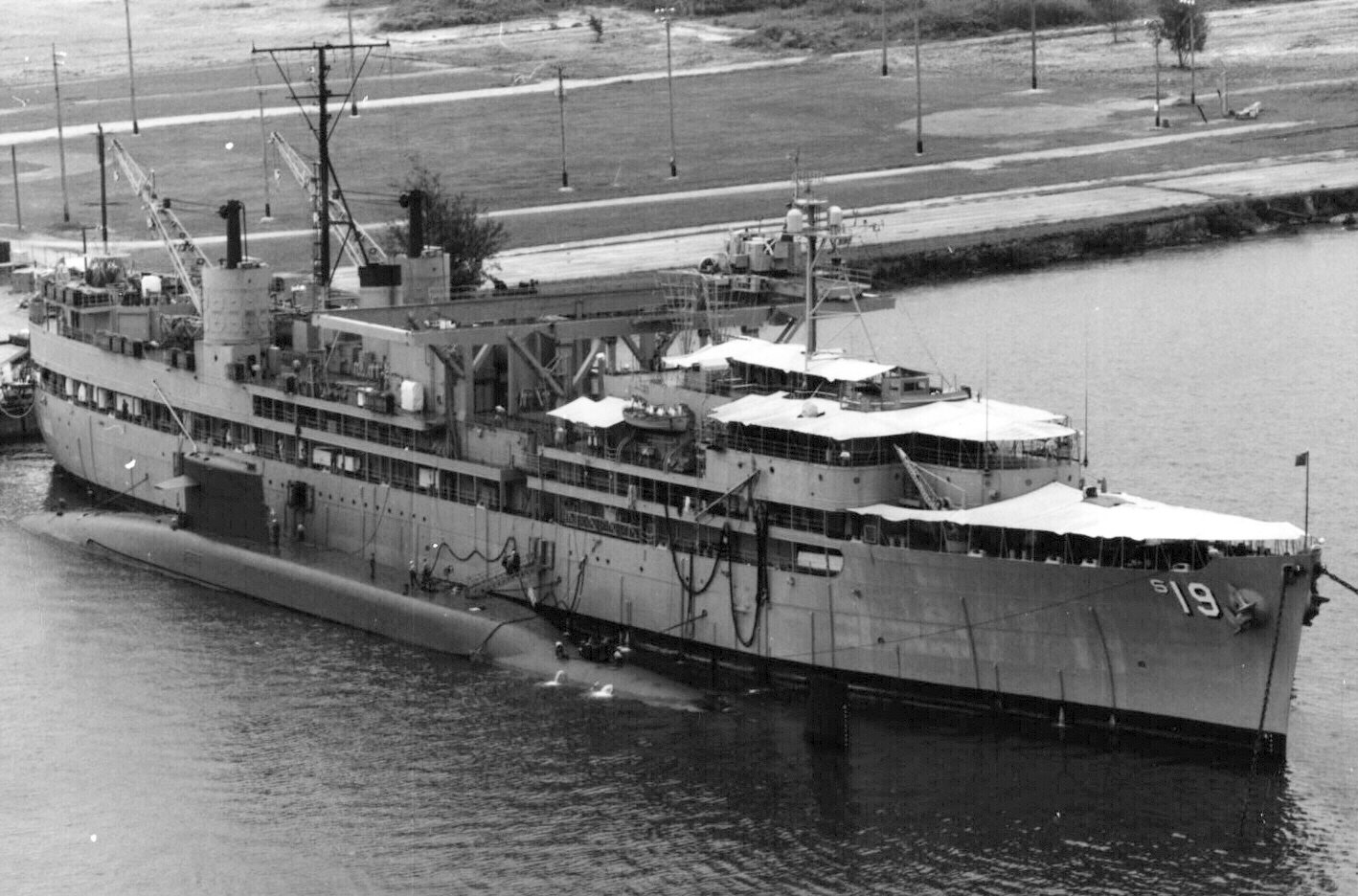
My seagoing career was launched and finished on the decks of two Cold War era tenders (USS Proteus and USS Hunley). Although Proteus was actually built as a World War 2 era tender, she was later converted to support the more modern 41 for Freedom fleet and provided long standing services. She was flexible enough to adapt to one more use as the boomers were replaced by Tridents. In the early 1980’s I would cross her decks once more as a crew member of the fast attack submarine USS San Francisco.
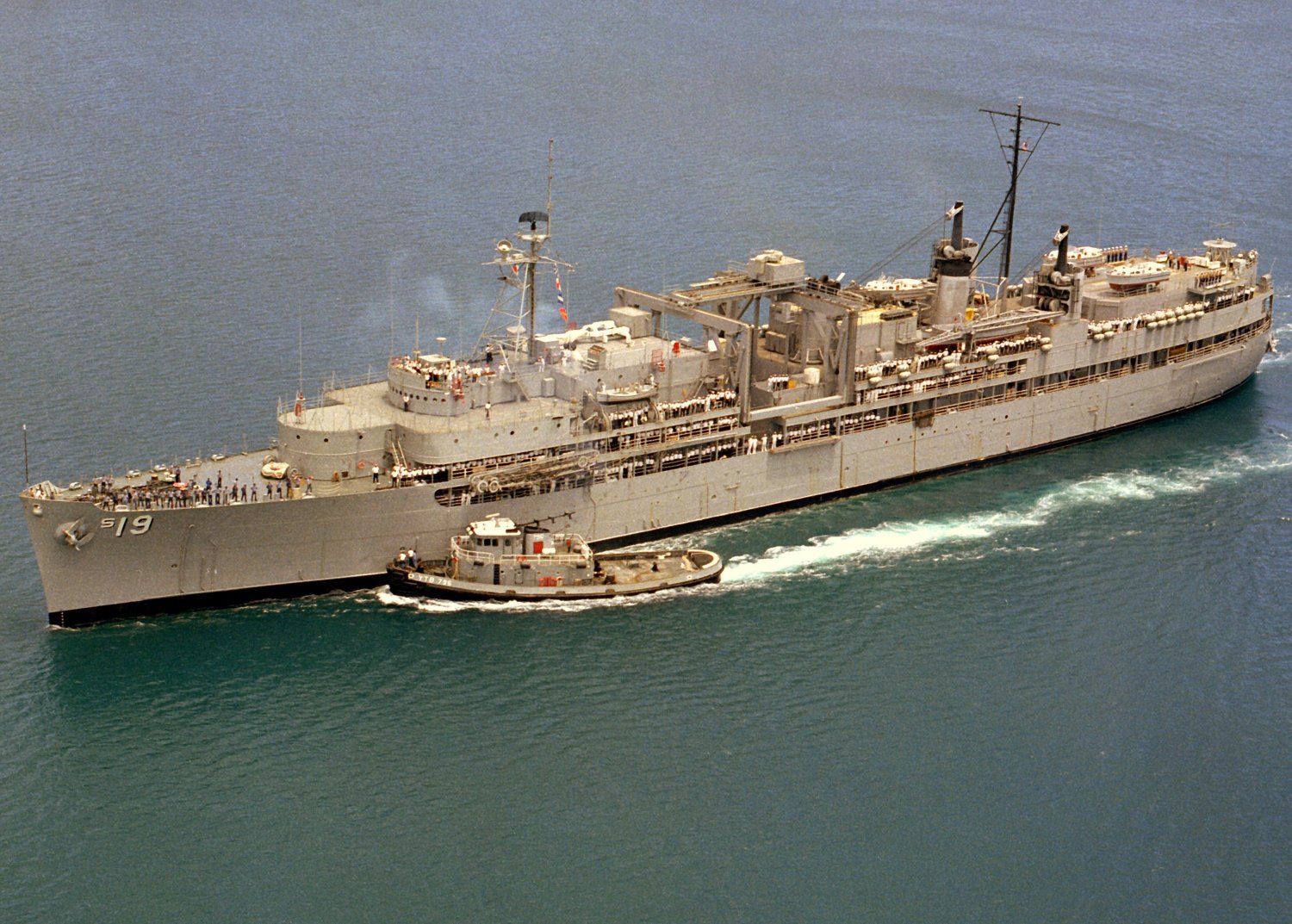
Tenders were a valuable asset for the navy as the navy learned how to use the submarine.
Originally, submarines were of limited depth, speed and range. The inventors did not have the technology at hand to create the types of vessels that modern submariners operate. The evolution from gasoline power to diesel power was a great advance but the need for fuel and replenishment was still vital in the years leading up to the arrival of nuclear power.
Tenders provided nearly all that the submarines would require. Food, fuel, repairs and repair parts, weapons and many othere essential services vital to keeping the fleet supplied. While more advanced diesel boats could sail for extended periods of time, limited space for extra weapons and the essentials tied them to either a base or to a tender capable of meeting their needs.
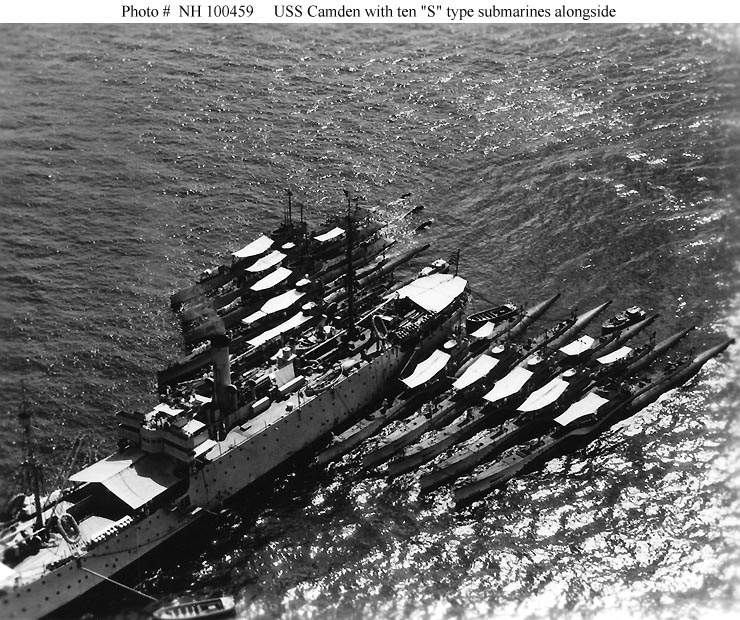
Prior to Pearl Harbor, submarines were still viewed as limited in their capabilities. The large battleships were the backbone of the fleet and submarines were viewed as not much more than the extended eyes of that force. Despite the lessons of lone U boats and Wolf Packs that were used to great success in the Great War, the American Navy did not yet understand the crippling capabilities of submarines when used in the proper fashion.
Thos lessons would come later as the sunken battleships lay in the mud of Pearl Harbor.
By 1937, the Navy was short of modern tenders. The country was still recovering from the Great Depression and budgets were tight. Not all in the country wanted to see us engaged in a war and Hitler had not yet invaded Poland. But the fleet had suffered through too many years of paucity and the extended war games performed each year demonstrated weak areas. Having enough auxiliaries was one of those. And so it was that Admiral Leahy came to Congress and attempted to show them what was needed.
As Chief of Naval Operations from 1937 to 1939, he was the senior officer in the United States Navy, overseeing the expansion of the fleet and preparations for war. The following was from the official transcript of May 1937:
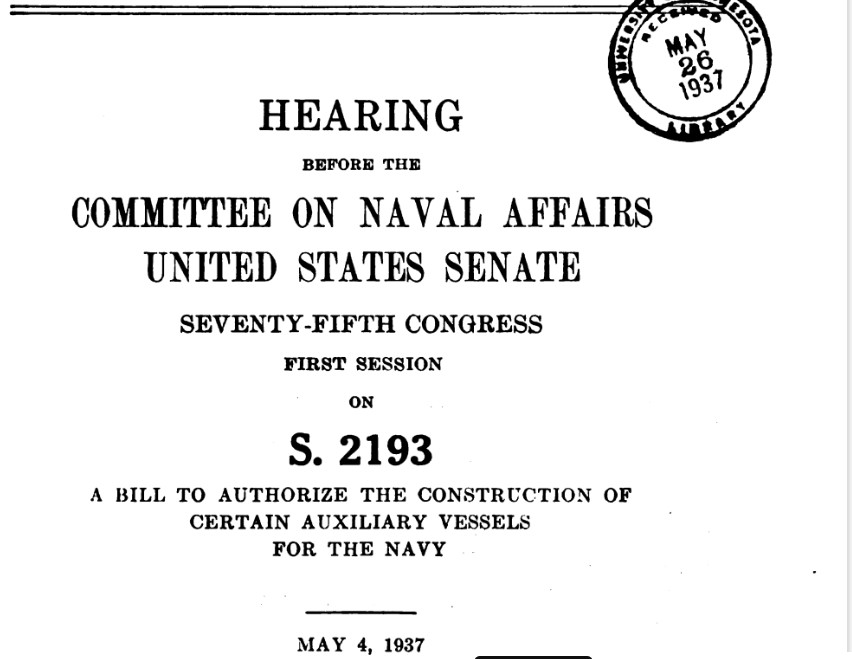
Construction of Certain Auxiliary Vessels for the Navy
Tuesday May 4th, 1937
The CHAIRMAN. We will proceed with the hearing. We have on schedule for this morning docket 143, S. 2193, to authorize the construction of certain auxiliary vessels for the Navy. This bill was introduced at the request of the Navy Department. (The bill is as follows:)
(S. 2193, 75th Cong., 1st sess.)
A BILL To authorize the construction of certain auxiliary vessels for the Navy Be it enacted by the Senate and House of Representatives of the United States of America in Congress assembled, That for the purpose of furnishing or replacing auxiliary vessels urgently necessary for the proper maintenance and operation of the Navy, the President of the United States is hereby authorized to undertake the construction of about thirty-six thousand and fifty tons (light displacement tonnage) of such auxiliary vessels as follows:
(a) One seaplane tender of about eight thousand three hundred tons;
(b) One destroyer of about nine thousand tons;
(c) One mine sweeper of about six hundred tons;
(d) One submarine tender of about nine thousand tons;
(e) One fleet tug of about one thousand one hundred and fifty tons; and
(f) One oiler of about eight thousand tons.
Chairman: Admiral Leahy, will you come forward, please?
…
Senator Davis. What are these auxiliary vessels used for?
Admiral Leahy. May I come to that, sir? I cover it very fully in this text.
Senator Davis. Very well.
Admiral LEAHY. Auxiliaries under the London Treaty, 1930, were an exempt class; that is, they were not subject to limitation pro- vided they did not exceed certain requirements as to speed and armament. They were defined as “naval surface vessels not specifically built as fighting ships which are employed on fleet duties or as troop transports or in some other way than as fighting ships.”
Under the London Treaty of 1936 they are defined in the same way but the limiting requirements as to armament and speed have been changed to permit higher speed and heavier armament.
The purpose of fleet auxiliaries, taken as a group, is to give mobility to the fleet so that it can operate in any part of the word and to provide the service of supply back to the home bases in the continental United States.
All of the vessels, except the oiler and the tug, included in this bill are types that cannot be obtained from the merchant marine upon the outbreak of war. It would be possible to convert merchant vessels into these special types in an emergency, but only after the attendant delays, which would depend upon the location and availability of the vessels selected and the amount of conversion necessary to alter them for the particular purpose. Generally speaking, transports, oilers, tugs, and bulk cargo ships require very little conversion. The other types all require considerable alterations.
My Comments: Not much has changed since those days. The oceans have not shrunk and the need for mobility has certainly not decreased. Creating vessels suitable for the tasks intended requires dedicated resources such as shipyards, materials and trained builders who can react I a short amount of time. With our current shipbuilding and repair capabilities, many of our front-line ships now are stuck in the pipeline awaiting service. Imagine the disruption that would be cause if we suddenly needed to build tenders and support ships in addition to overcoming the existing backlog.
Later in the hearing after discussing destroyer tenders and mine warfare ships;
The CHAIRMAN. Proceed, Admiral.
Admiral LEAHY. As to submarine tenders, submarine tenders, like destroyer tenders, are mother ships for the submarines based on them. The submarines are even more dependent on tenders than are destroyers because the submarine, designed to operate both on the surface and beneath the surface, has the interior so cramped with machinery that space is very limited for the accommodation of personnel or the stowage of spare parts, provisions, ammunition, and similar essential items.
The complement of a submarine is based on the number of men required for battle and watch-standing duties. Since the number must be kept at a minimum because of lack of space, the complement cannot include the artificer specialists re- quired for material upkeep.
The submarine is dependent, therefore, on the tender for not only the general overhaul of machinery, torpedoes, optics, and general construction work, but for assistance in routine upkeep as well. All the shortcomings of the submarine have to be provided for in the tender. She carries their doctor, their paymaster, and other personnel for whom there is no room on the submarines. The submarine tender is specifically a supply, repair, provision, and ammunition ship for a squadron of submarines.
There are six submarine tenders in the Navy as follows:
Name Displacement Tons Designed Speed Knots Launched
Camden. 9,000 12.0 1900
Beaver 6,250 16.5 1910
Bushnell 3,580 14. 0 1915
Canopus. 8,000 13.0 1919
Argonne 11,100 15. 5 1920
Holland 11, 570 16.0 1926
All are in commission except the Camden. The Canopus tends the submarines of the Asiatic Fleet, the Beaver the United States Fleet submarines at Pearl Harbor, and the Holland the United States Fleet submarines at San Diego. The Bushnell is the flagship of the commander, Submarine Force, and the Argonne is the flagship of the commander, Base Force.
The latter has not been used as a submarine tender for several years, but has been used as a tender for all the tugs and mine sweepers of the Base Force, takes care of all the target rafts and target gear, and all the camera observation parties for target practice.
The Bushnell and Holland are the only vessels that were built as submarine tenders. The Bushnell was designed more than 20 years ago, when submarines were less than a third of the size of modern submarines. She is too small to tend modern submarines and is not used as a tender. The Holland is a modern, serviceable submarine tender. The four other vessels are converted merchant vessels.
The Camden is old and burns coal. The Beaver is too small but has good speed (16.5 knots).
The Canopus is slow (13 knots).
The Argonne is a serviceable vessel.
Tonnage in the submarine category since it was increased by Japan’s action in invoking article 21 of the London Treaty of 1930 is now 68,298 tons. This allows for 47 underage submarines of about 1,450 tons, the approximate size of the submarines we are now building. We consider that the proper ratio of modern submarines to a tender is 12 to 1. On this basis 1 tender is required for the 6 submarines maintained on the Asiatic station, leaving 41 other submarines which would require tenders.
But since about 6 are always employed at the submarine school, New London, and are shore based, 3 tenders could serve for the remaining 35 submarines. One submarine tender is proposed in this bill, which, with the Holland and Argonne, will be sufficient for all submarines, except those on the Asiatic station. It is not proposed at this time to replace the Canopus on the Asiatic station by a new tender. The new vessel should be considered as a replacement for the Beaver. The proposed vessel will be of 9,000 tons, light displacement, and 16.5 knots speed.
The CHAIRMAN. A submarine tender is supposed to serve how many submarines, Admiral?
Admiral LEAHY. Twelve.
The CHAIRMAN. I note the commander of a submarine fleet uses a submarine tender as his flagship.
Admiral LEAHY. He uses a vessel intended for a submarine tender, but it is not a suitable vessel; it is not assigned as a regular tender to a squadron of submarines.
The CHAIRMAN. Off the record. (Discussion off the record.) You do have to wonder what else was said that day. Since it was off the record and all of the parties present are no longer alive, we will never know.
Of course, December 7th would change all of the equations.
But what was the fate of these early tenders?
USS Camden (AS-6) was actually decommissioned at Philadelphia on 26 May 1931.
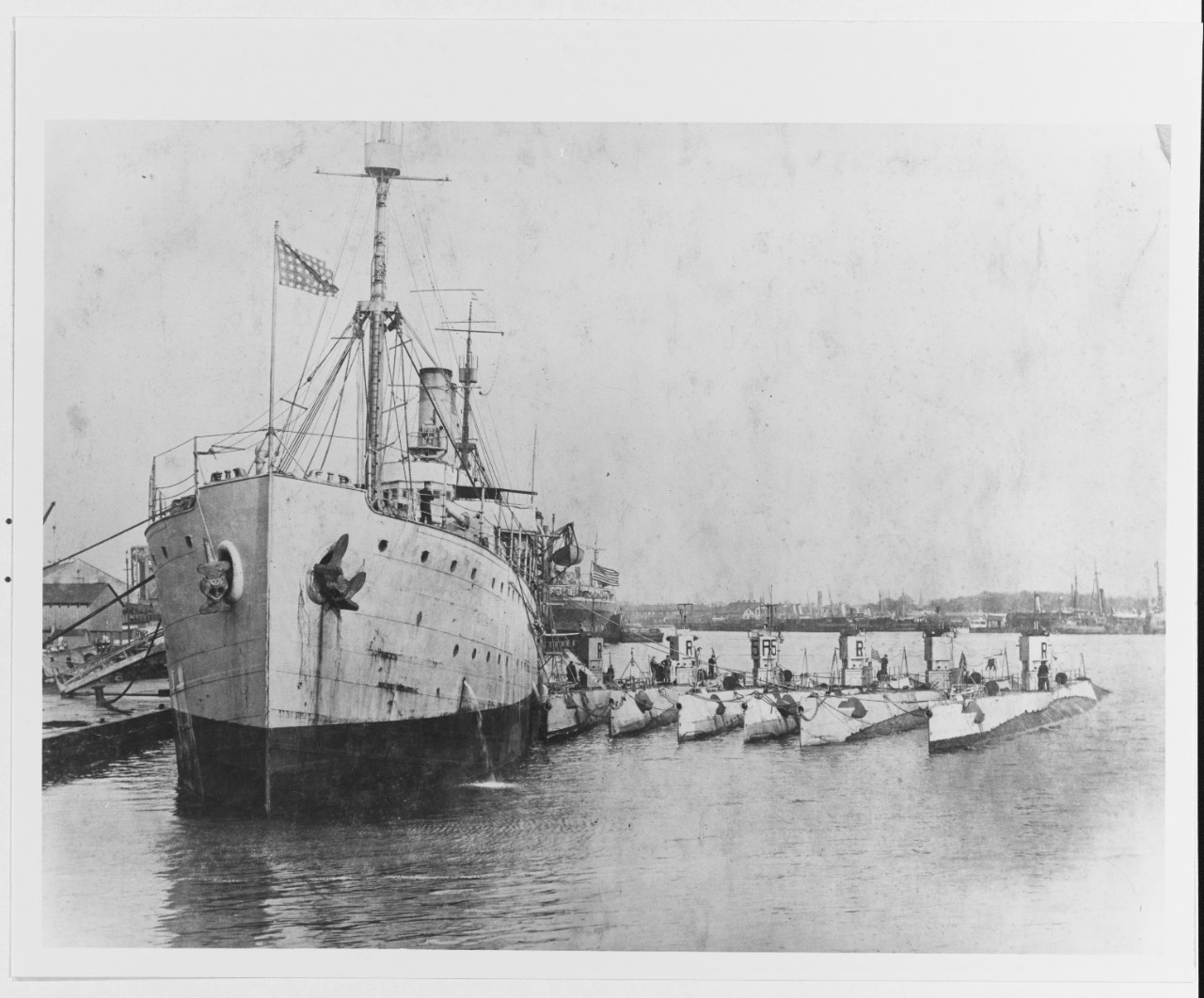
USS Beaver (AS-5) served in both the Atlantic and Pacific during the war.
She survived the war and was scrapped in 1950.
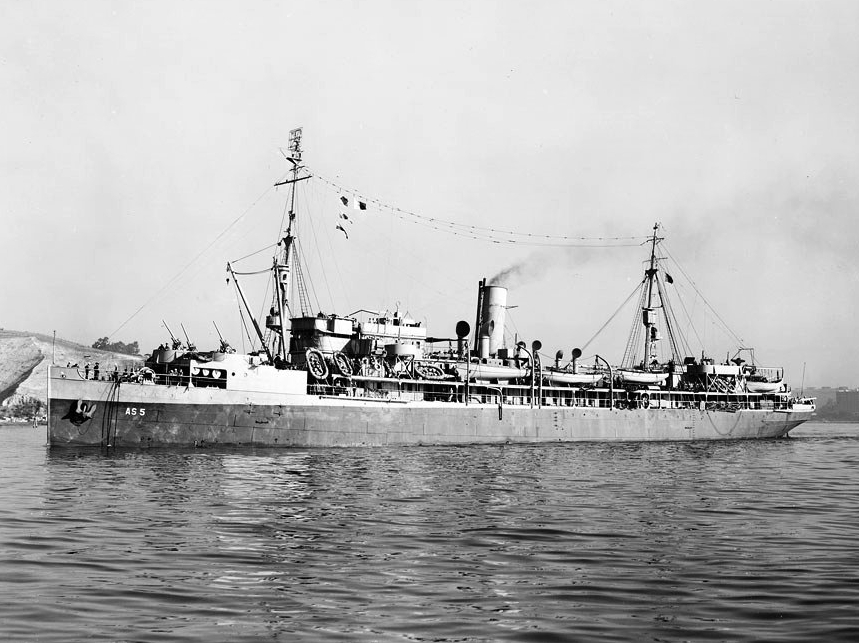
USS Bushnell (AS-15) was a Fulton class submarine tender in service with the United States Navy from 1943 to 1948 and from 1952 to 1970.
She was finally sunk as a target ship in 1983.
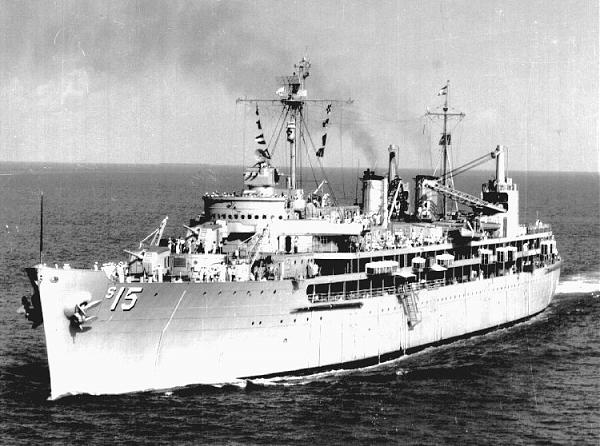
USS Canopus (AS-9) was in the Philippines when the Japanese attacked.
She provided valuable service until she was bombed and was later scuttled.
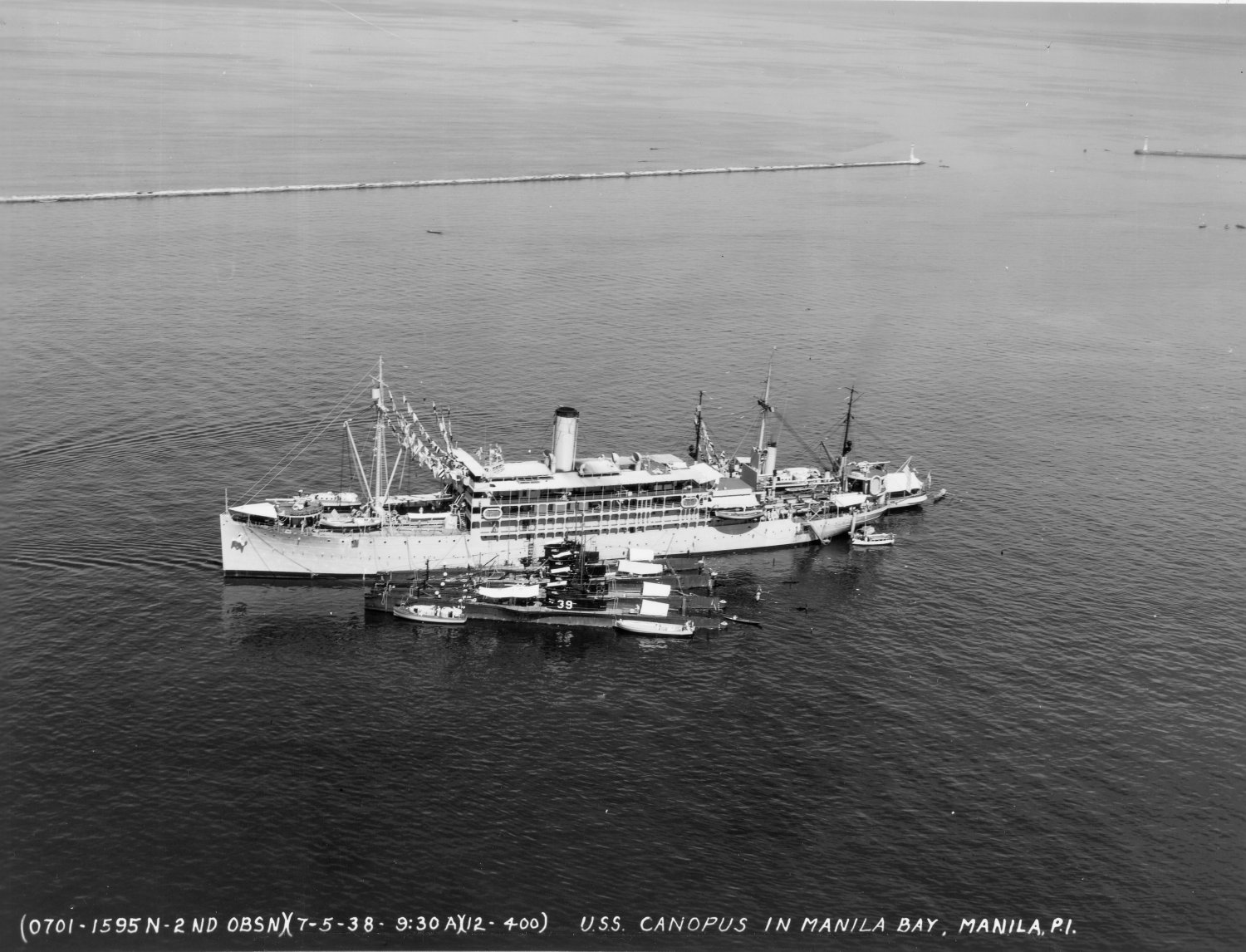
USS Argonne (AS-10) Was at Pearl Harbor on December 7th.
She would serve as Halsey’s flagship for a time during the Battle of Guadalcanal.
Argonne remained in the western Pacific through the end of hostilities with Japan in August 1945, and briefly served with the occupation forces in Japanese waters before returning to the United States.
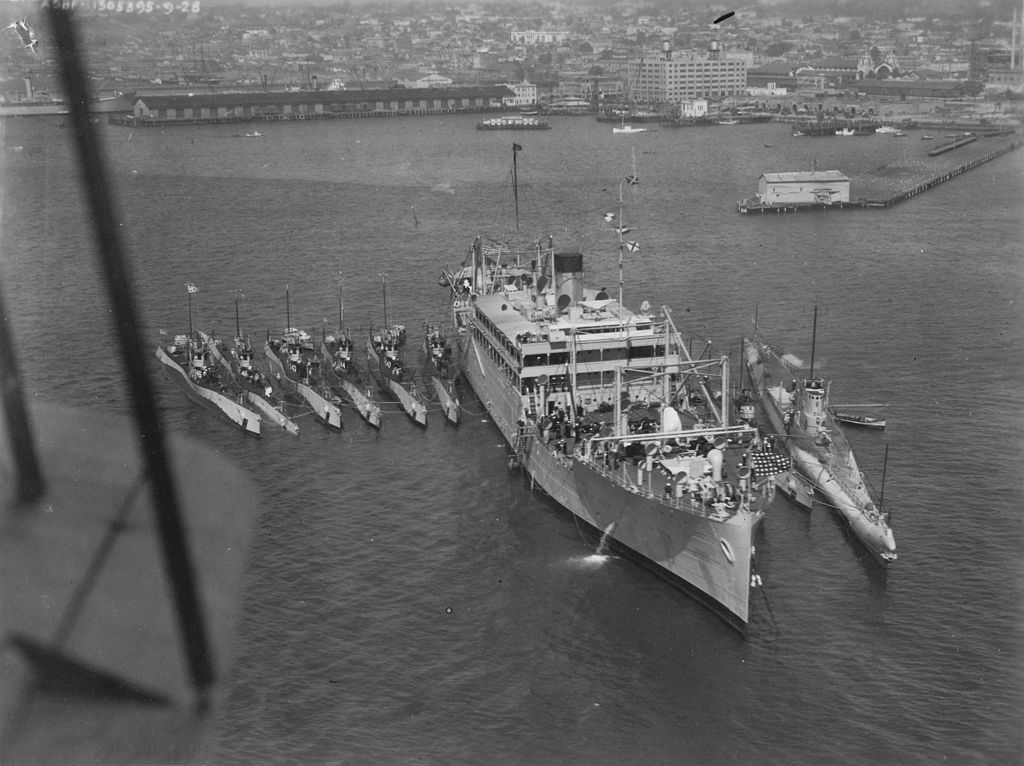
USS Holland (AS-3) was also in Manila at the beginning of the war but escaped to Australia. She served throughout the war and was scrapped after decommissioning.

I would end my own career serving onboard the USS Hunley (AS 31) as she also came to the end of her service life.

Hunley was a Cold War Warrior built from the keep up for a specific mission.
By the time I arrived, her primary mission as an FBM tender had already shifted over to Fast Attacks. The Trident program including two distinct bases built to serve them made the old boats obsolete. The range of both the submarines and her primary missile systems also made tenders no longer need for support.
Today, the Navy uses a blend of military and civilians to operate the few remaining tenders. Building a new submarine tender will be as difficult and complicated as it must have seemed in 1937. But if war ever comes again (and sadly I believe it will) I hope we can provide enough support to the war fighters. I guess time will tell.
If you want a really great look at the world of Tenders, there is no better place than https://tendertale.com/

 theleansubmariner